
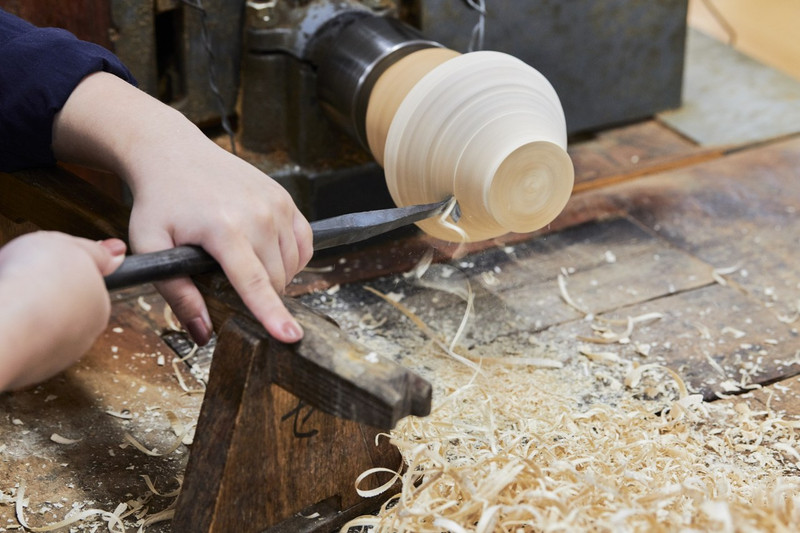
A Yamanaka bowl begins before the lacquer.
Before the black, red, or transparent surface catches the light, a craftsperson has already chosen the direction of the wood, mounted it on a lathe, and shaped the vessel from within. The thinness of the wall, the balance in the hand, and the line of the rim are decided at this stage.
On this page
2. What Yamanaka Lacquerware Is
3. Why This Town
4. What the Lathe Decides
5. The Decoration
6. A Tradition That Adapted
7. Choosing a Piece
8. Who It Suits, and as a Gift
9. Living With Yamanaka Lacquerware
10. Editor's Picks
11. A Note from the Shop
12. Frequently Asked Questions
13. In Closing
1. In the Hand
A turned wooden bowl often feels lighter than its size suggests. That lightness is especially noticeable when the bowl is lifted repeatedly during a meal, or brought close to the mouth for soup.
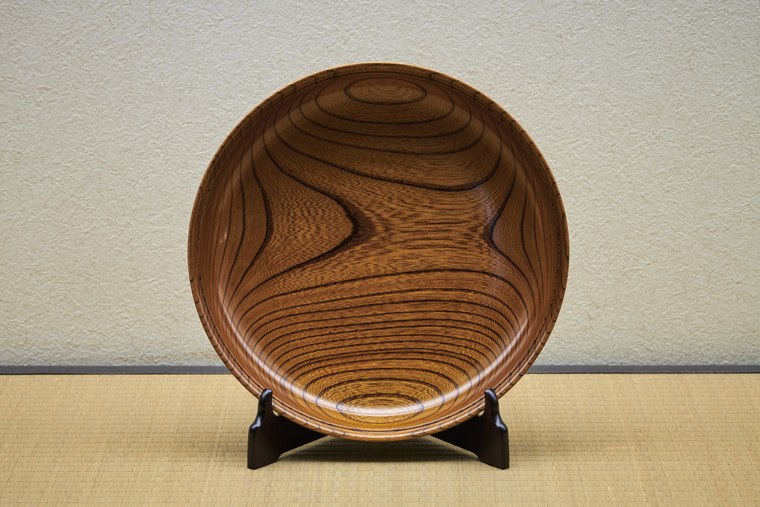
The rim tells you something as well. A finely turned rim can feel almost quiet against the lips, with none of the heaviness of a thick edge. In a soup bowl, that small difference changes the way the bowl is held and how the warmth of the contents reaches the mouth.
A lidded bowl adds another kind of pleasure. The lid should meet the body with a calm, precise fit, so that opening it becomes part of the meal rather than a purely practical action. The covered form holds a little pause before the food is seen.
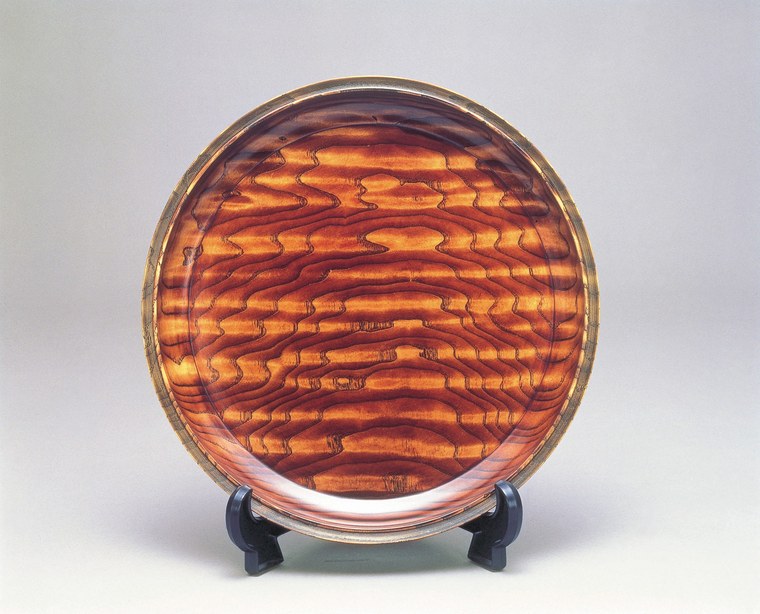
Then there is the wood itself. Grain may appear clearly through a transparent finish, or remain only as a suggestion beneath a darker surface. Either way, the shape of the vessel has already been decided before the lacquer is applied.
These are things you can notice without knowing the names of the techniques. Hold the piece if you can. Look at the rim, the balance, the way the lid settles, and the movement of the grain. The history of Yamanaka begins there.
2. What Yamanaka Lacquerware Is
Yamanaka lacquerware is made in and around the Yamanaka Onsen district of Kaga, Ishikawa Prefecture. In the local description of Ishikawa's three major lacquerware centers, Wajima is associated with lacquering, Kanazawa with maki-e, and Yamanaka with kiji — the wooden body beneath the finish.
That description is a way of pointing toward each region's particular strength. It does not mean that Yamanaka makes only wooden bowls, or that Wajima and Kanazawa do not make other kinds of work.
The name Yamanaka can refer to traditional wooden lacquerware and to modern lacquerware made with molded resin and contemporary coatings. The material line for each piece is therefore useful. A regional name tells you where the work belongs; it does not, by itself, tell you what is underneath the surface.
3. Why This Town
The tradition is generally traced to the late sixteenth century, when groups of woodturners settled at Masago, upstream from Yamanaka Onsen. They made turned wooden vessels for everyday use, using the surrounding mountains as a source of timber.
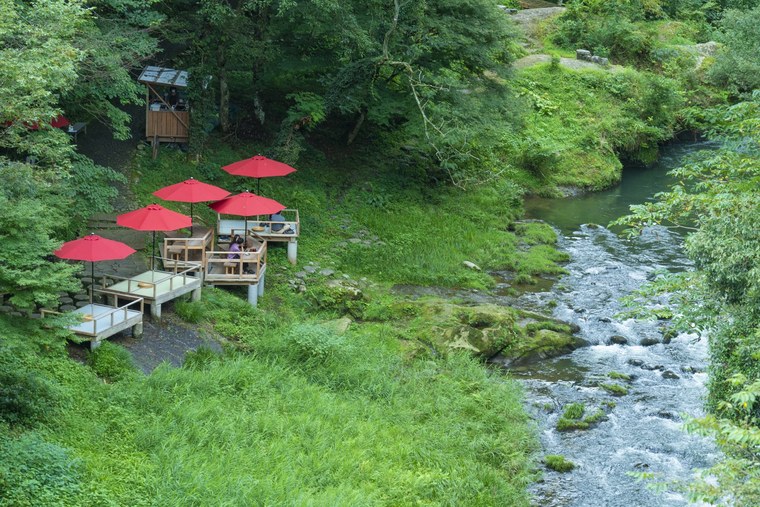
The connection with the hot spring town developed later. By the middle of the Edo period, vessels made in the area were being sold to visitors as souvenirs. Lacquering and decorative techniques were then introduced from other centers, including Aizu, Kyoto, and Kanazawa.
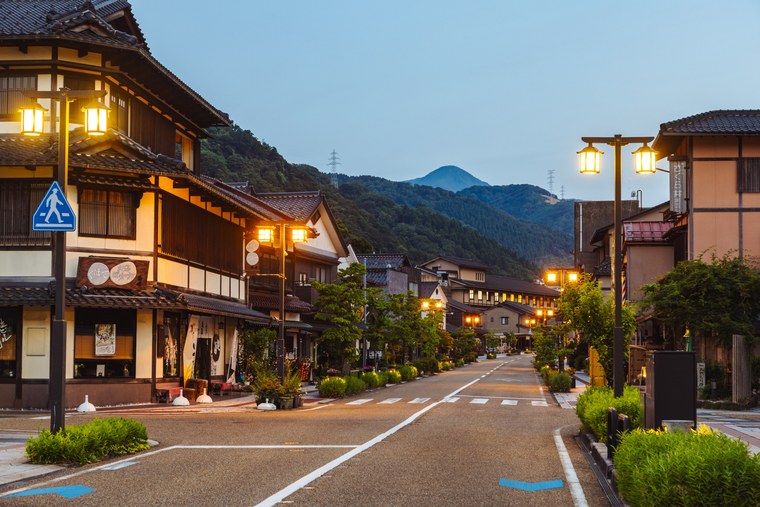
The order matters. The wooden body came first. The lacquer and decoration widened what those forms could become, but they were added to an existing culture of woodturning.
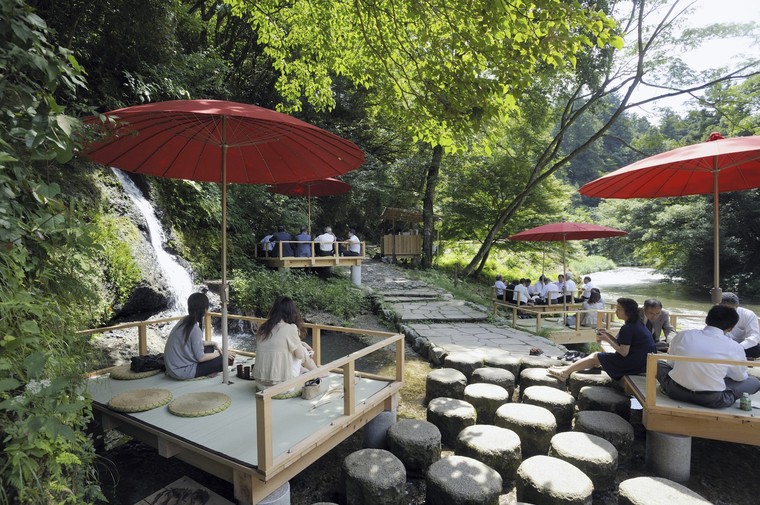
Yamanaka is now known for the scale of its turned wooden production. The region's own trade association describes it as having the largest production of turned wooden bases in Japan.
4. What the Lathe Decides
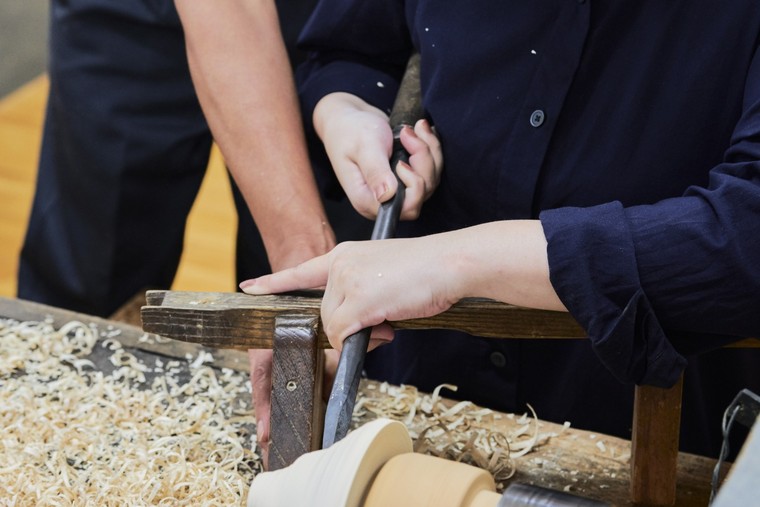
In Yamanaka, hikimono means a wooden object shaped while the material turns on a lathe. A blade is brought steadily against the rotating wood, cutting the form from the outside and inside.
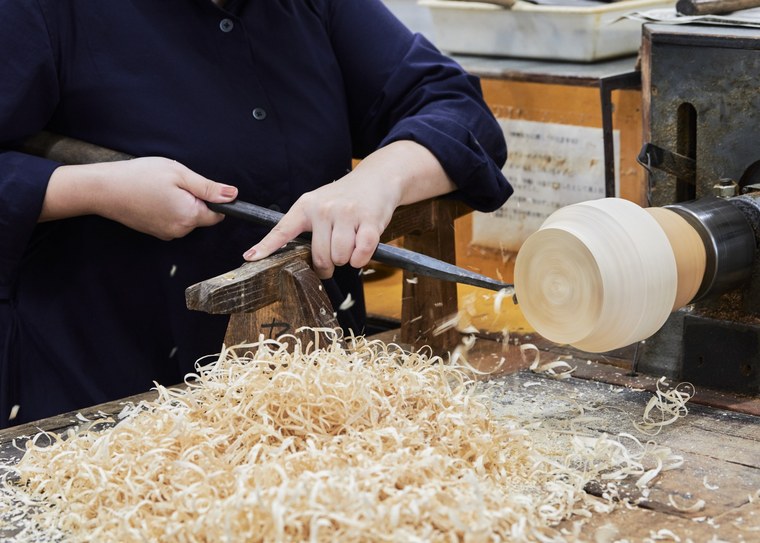
One of the region's important practices is tategidori, or vertical wood selection. The vessel is laid out in the direction in which the tree grew. This can reduce distortion as the wood dries and gives the finished piece a stable structure.
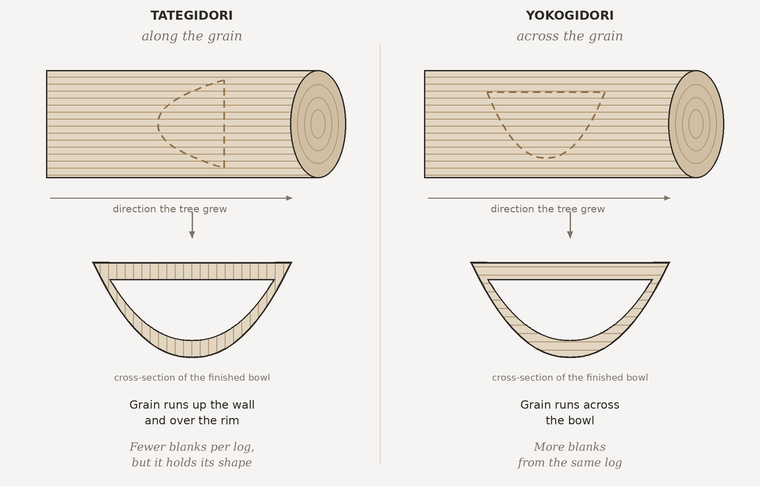
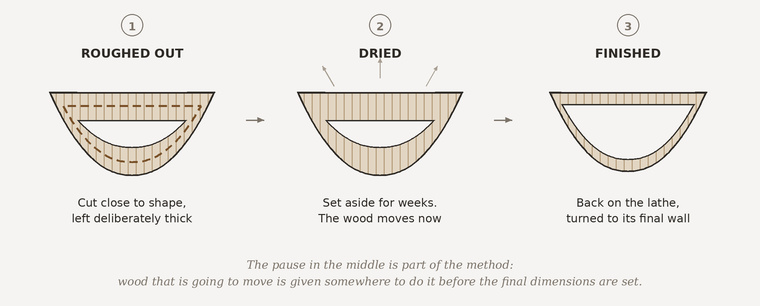
The process is not always completed in one sitting. A blank may first be roughly shaped, left to dry, and then returned to the lathe for its final dimensions. Allowing the wood to respond before the last turning helps the maker control the shape that will remain in use.
The region is also known for usubiki, or thin turning. Some pieces are made thin enough for light to pass through the wall. That degree of thinness is not a requirement for every Yamanaka vessel, but it shows the control that the material and the tool demand.
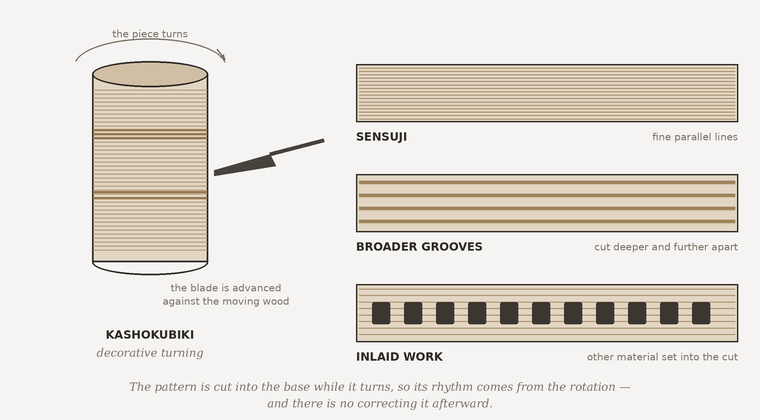
Kashokubiki, or decorative turning, cuts patterns directly into the rotating wooden surface. Fine lines such as sensuji and broader grooves are made by controlling the tool while the wood is moving. The pattern comes from the turning itself, rather than from a design painted onto the finished surface.
These names are useful when they help you see the piece. Their importance is not that they make the object sound complicated. It is that they explain why a bowl can feel light, why a rim can be so even, and why a pattern can follow a curve with such regularity.
5. The Decoration
Once the wooden body has been shaped, the surface may be finished in several ways. Some pieces are left with the grain visible through a transparent finish. Others receive layers of lacquer or a colored coating before decoration is added.
Traditional maki-e is made by drawing a design in lacquer and sprinkling gold, silver, or colored powder over it while the lacquer is still wet. The powder settles into the lacquer and is fixed as the surface hardens.
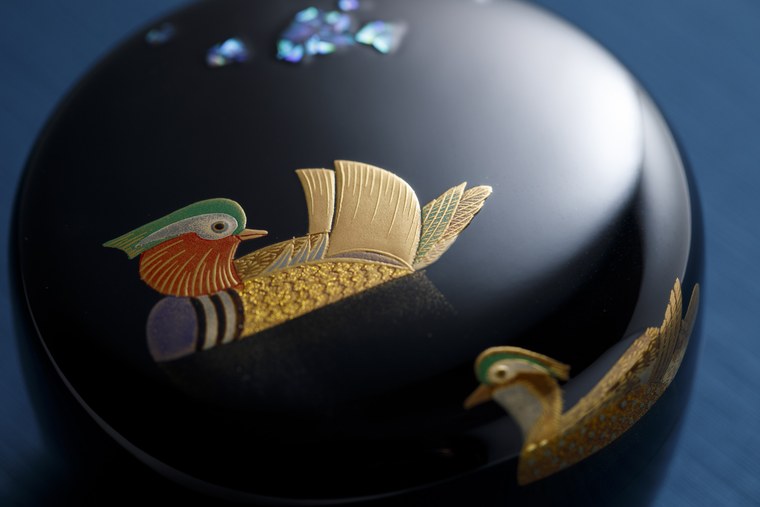
There are several forms of maki-e. In hira-maki-e, the decoration remains relatively level with the surrounding surface. In taka-maki-e, parts of the design are built up so that the raised areas can be felt with a fingertip. National craft records name this raised decoration among the region's characteristics.
Modern Yamanaka lacquerware also includes printed and powdered decoration. The region's official production description identifies screen printing as the center of this process, while also describing color layering, metal powder, and hand-applied elements. It is therefore too simple to divide every decorated piece into "handmade" or "machine-made."
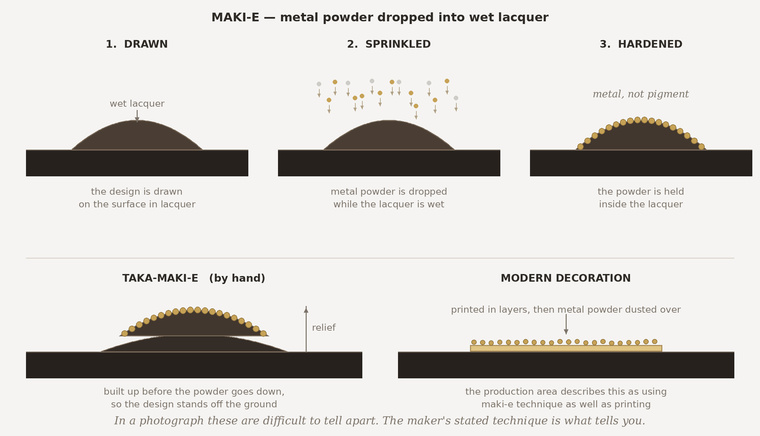
The practical guide is to read the maker's description. If a maker names hand-drawn maki-e, a particular artist, or a specific decorative process, that information tells you more than a photograph can. If the description gives only a general name, let the technique remain open rather than guessing from the appearance or the price.
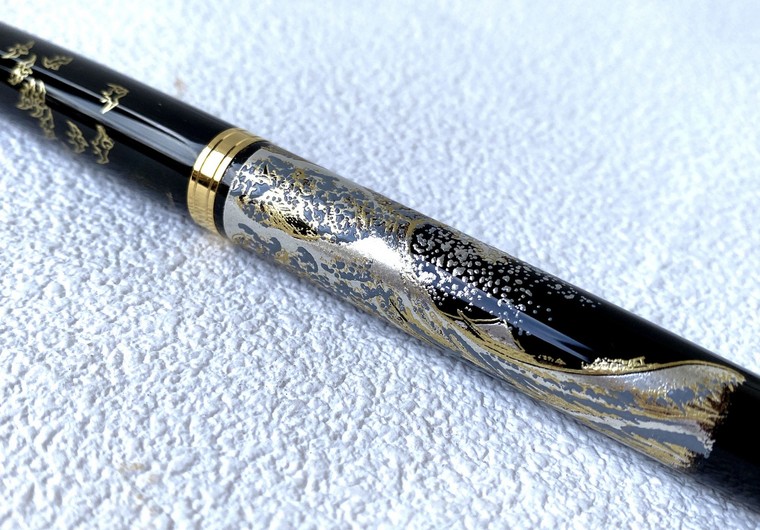
The decoration should still be understood as part of the object's use. A pattern on a tray is seen from above as it gathers small bowls and cups. A pattern on a hair ornament moves with the wearer. A wave on a pen appears each time the pen is picked up. The surface is not separate from the life of the object.
6. A Tradition That Adapted
Around 1958, producers in Yamanaka began incorporating plastic materials into what is known as modern lacquerware. Molded resin made it possible to produce forms at a different scale and price, with different handling requirements.
This did not erase the older wooden tradition. It created another branch of production alongside it. The same region could continue making turned wooden vessels while also producing objects with molded cores and contemporary coatings.
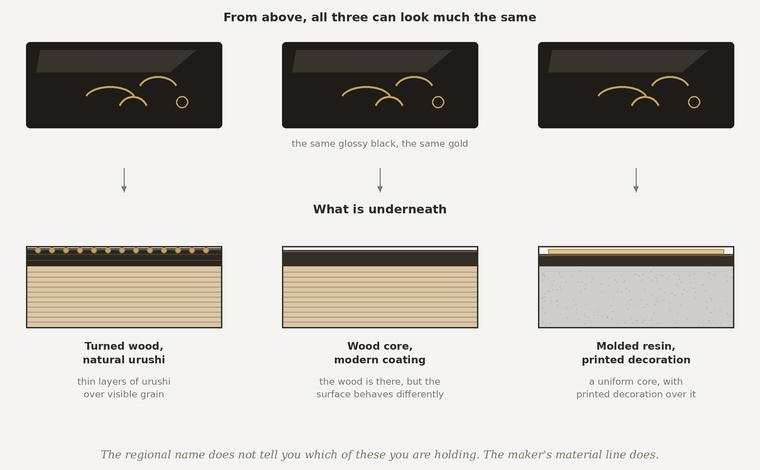
The distinction is useful, but it does not need to become a judgment. A turned wooden bowl offers grain, lightness, and the small variation of a natural material. A resin piece may offer a consistent form and an easier fit for a particular setting. The right question is what the object is made to do, and whether that suits the way you will use it.
Yamanaka was designated a traditional craft of Japan on May 10, 1975. The designation has specific requirements, including natural urushi, particular types of wood or equivalent material, and shaping with a lathe and turning tools. Modern resin products and synthetic coatings fall outside that designation, even though they are made in the same region and may be sold under the Yamanaka name.
That distinction helps explain the range of objects available today. It also shows how a craft region can preserve an older foundation while responding to changes in daily life.
7. Choosing a Piece
Begin with the use rather than the label. A bowl that will be lifted during a meal should feel balanced in the hand. A tray should have a surface and size that fit what you expect to place on it. A lidded bowl should feel comfortable to open and close.
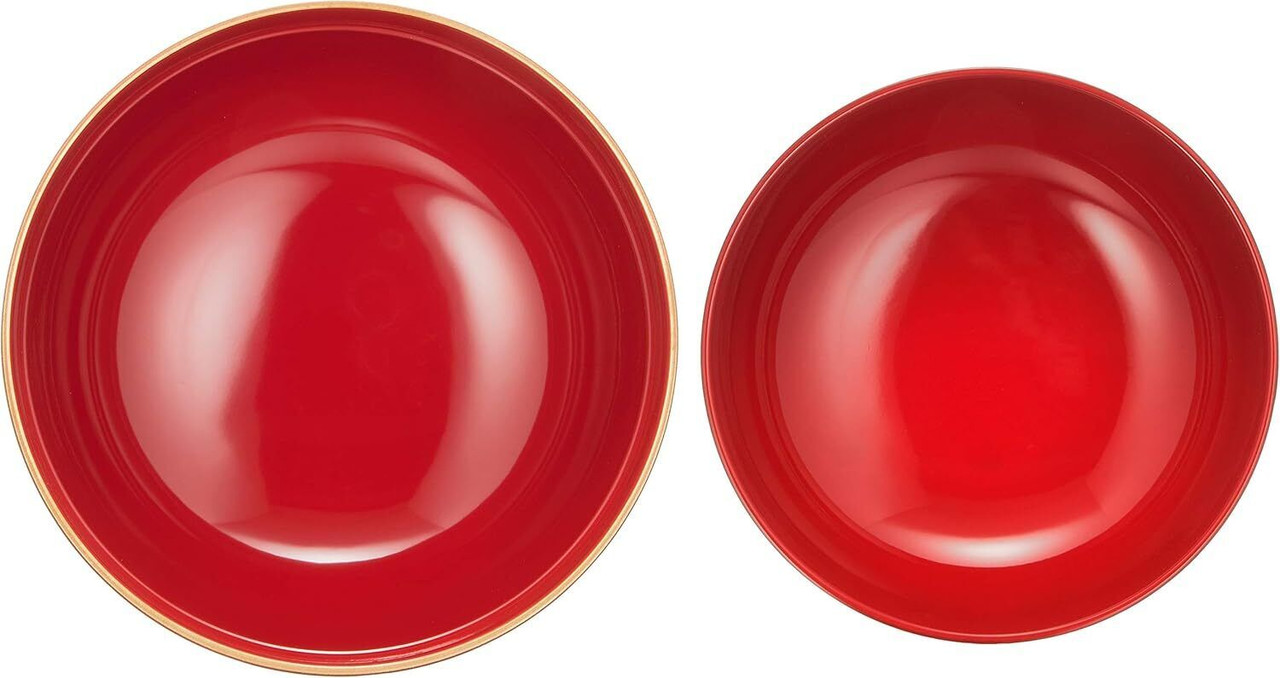
Then read the material description. Look for the maker's own wording about natural wood, resin, urushi, urethane, or another coating. Natural wood and turned wood are separate claims: an object can be made from wood without having been shaped on a lathe.
This matters for our current Yamanaka selection as well. Most of the pieces we carry are contemporary lacquerware. Natural-wood pieces are more limited, and those we have are mainly chopsticks rather than bowls or trays.
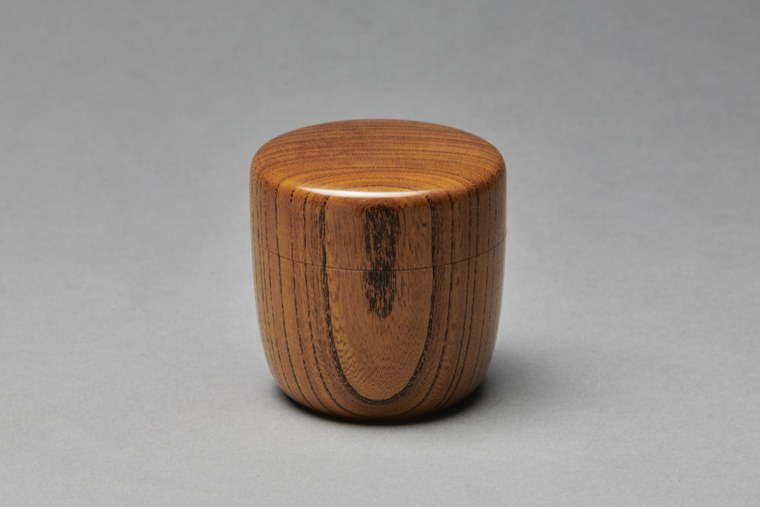
The photograph is useful, but it is not a material specification. Grain can be reproduced by a surface treatment, and a dark glossy finish can cover more than one kind of core. When the listing is clear, use the listing. When it is not, leave the material unconfirmed.
You may also want to consider how much ceremony you want the piece to bring into the room. A bowl used every day becomes familiar through repetition. A New Year's set appears less often, but its appearance becomes part of the memory of the occasion.
If you are comparing several kinds of Japanese lacquerware, our beginner's guide gives a broader explanation of urushi, resin cores, and modern coatings.
8. Who It Suits, and as a Gift
Yamanaka lacquerware suits someone who notices small physical differences: the weight of a bowl, the warmth of a rim, the way a lid meets its body, or the change in a wood grain from one piece to another.
It can also suit someone who does not yet know much about craft. A first bowl does not require specialist knowledge. It only needs to feel right when held and useful when placed on the table.
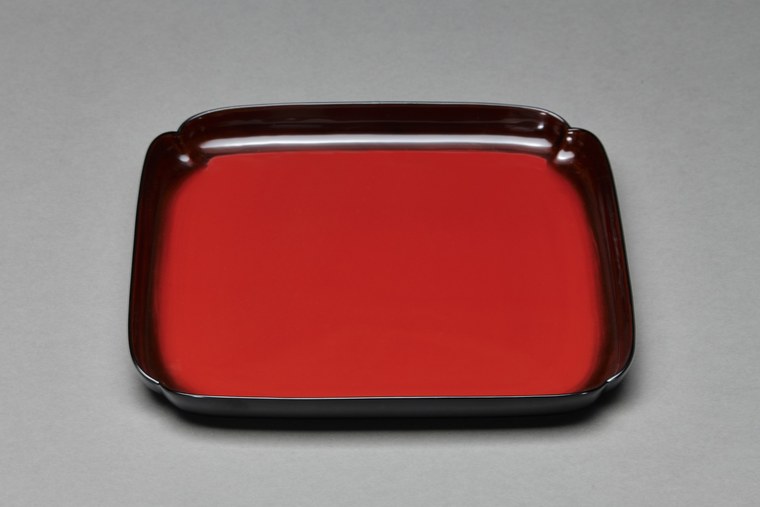
For a host or a cook, a covered bowl or serving tray gives the meal a sense of order without asking for display space when it is not in use. For someone who enjoys New Year customs, a tiered otoso set carries a seasonal rhythm into the home.
A small lacquered object can be a quieter gift. A hair ornament or fountain pen brings the surface into daily movement, where the decoration is seen in changing light rather than under a fixed display lamp.
A gift does not have to announce its value. Sometimes the better choice is something that will be taken out at a particular time each year, used carefully, and remembered when it returns from storage.
9. Living With Yamanaka Lacquerware
Follow the care instructions supplied with the piece. As a general habit, wash gently by hand, avoid leaving the object submerged, and dry it rather than allowing water to stand on the surface.
Keep lacquerware away from strong heat, prolonged direct sunlight, abrasive scrubbers, and sudden changes in temperature. A resin core does not automatically make a piece suitable for a dishwasher; that depends on the finish and the maker's instructions.
For more detailed guidance, see our article on washing and caring for Japanese lacquerware. For wooden or lacquered chopsticks, our guide to wooden and lacquered chopstick care is more specific.
Because wood is a natural material, grain and color can vary from one piece to another. Those differences are part of the object's character rather than a defect to be corrected.
10. Editor's Picks — Five from Yamanaka Today
Five pieces from the modern side of the town's production, for five different jobs. The materials given are the makers' own.
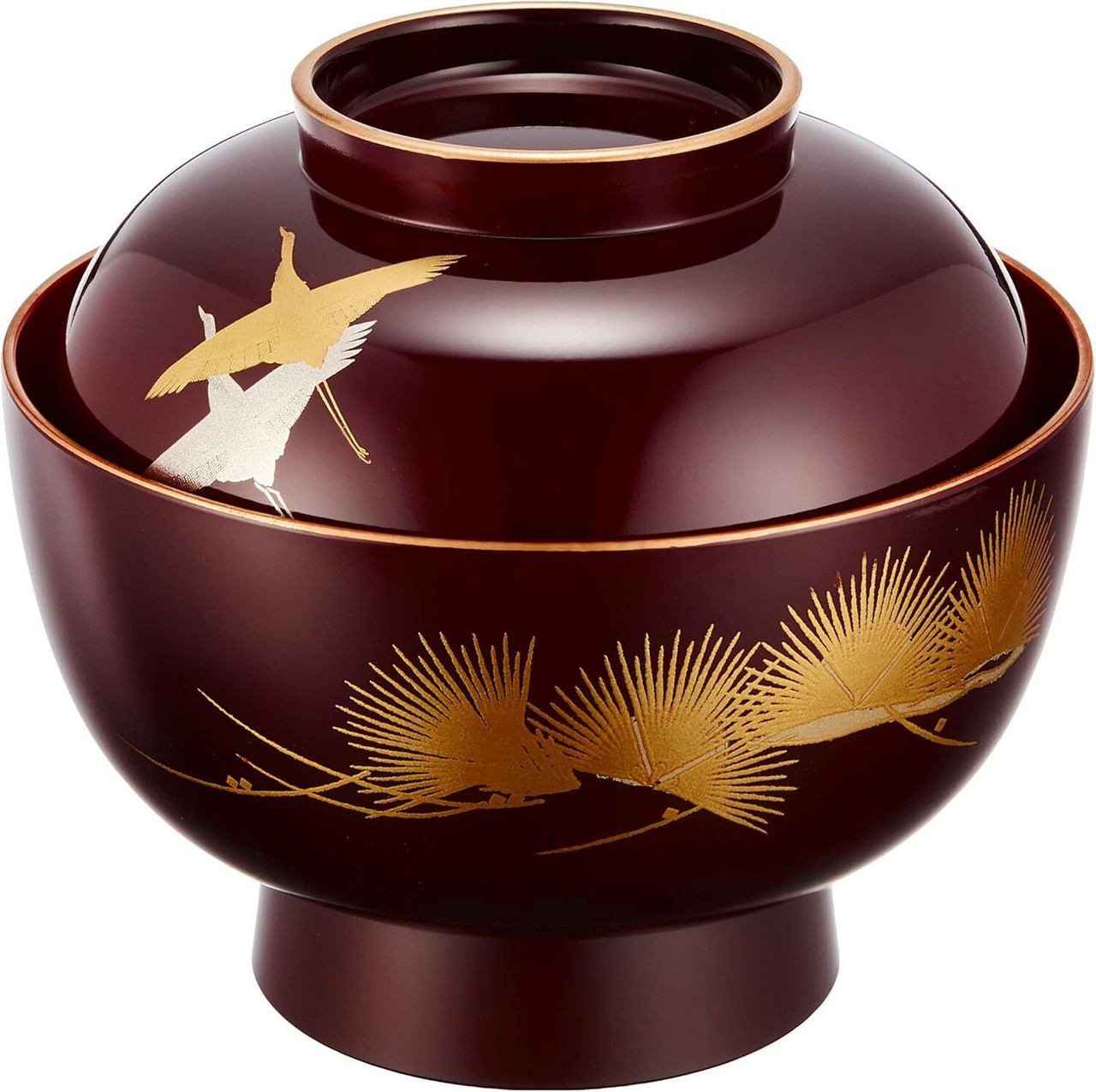
Pick 1 — For the table: a lidded zoni bowl. A covered bowl with cranes across the lid and a gold pine branch around the body. It is made for zoni, the New Year soup with rice cake, but it can also hold broth or another dish that benefits from arriving covered. The maker lists the material as phenolic resin. It is a piece for someone who enjoys the small ceremony of opening a bowl at the table. (See the zoni bowl) — Zoni bowl, Tamari Gold Crane — $79
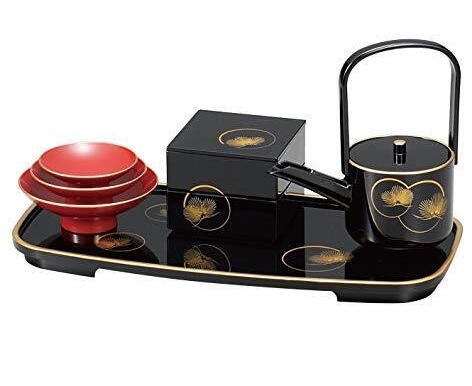
Pick 2 — For New Year: an otoso set. A black set including a spouted server, three nesting cups, a small tiered box, and a tray. Otoso is spiced sake traditionally served on New Year's morning, with the cups taken in turn. The maker lists ABS resin and urethane. It is a seasonal set, suited to a household that enjoys bringing out a familiar object once a year. (See the otoso set) — Otoso set, pine leaf motif — $199
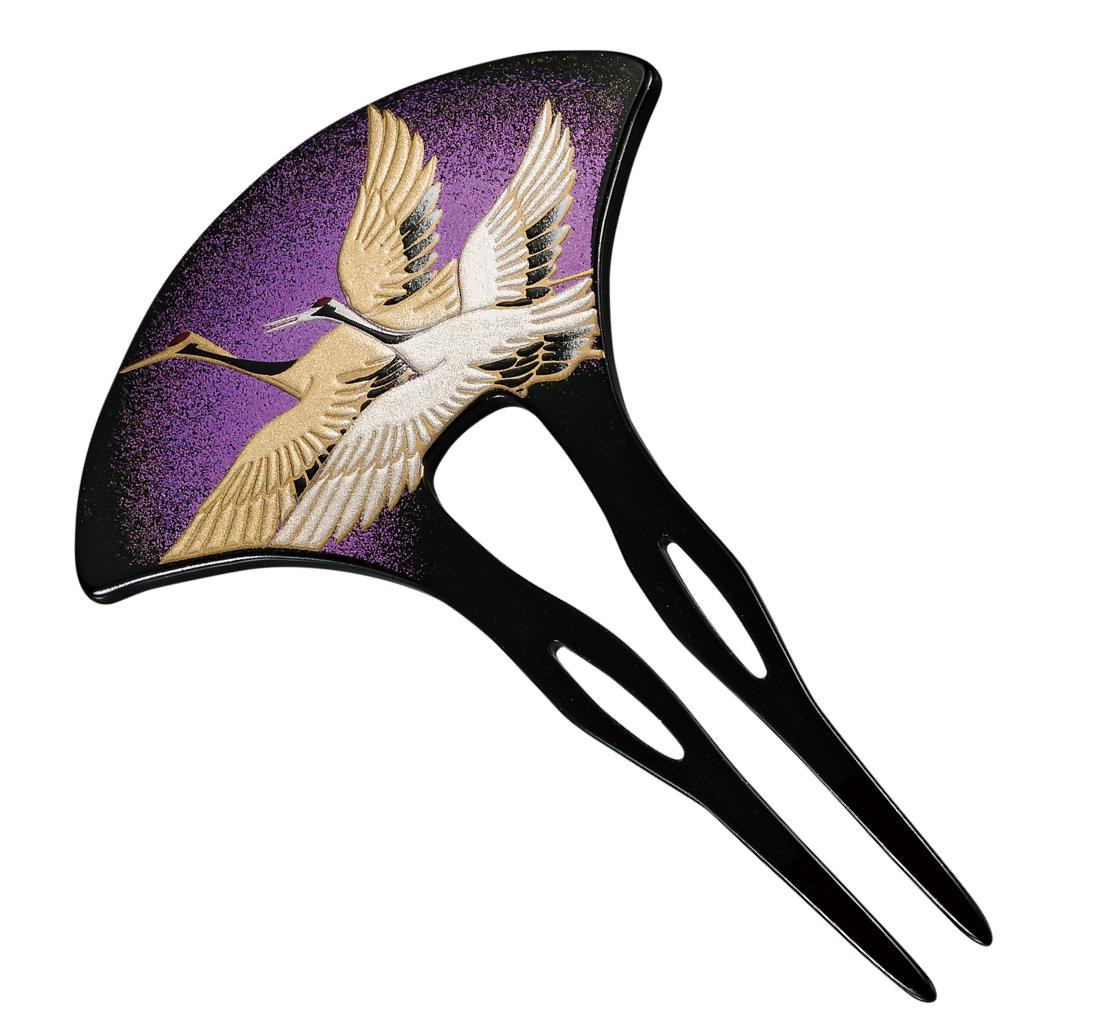
Pick 3 — To wear: a lacquered hair ornament. Two cranes in gold and white cross a purple ground. This is a two-pronged kanzashi rather than a comb. The maker lists acrylic resin and urethane. Its decoration is experienced in movement, catching light as the wearer turns. (See the kanzashi) — Kanzashi, flying cranes — $65

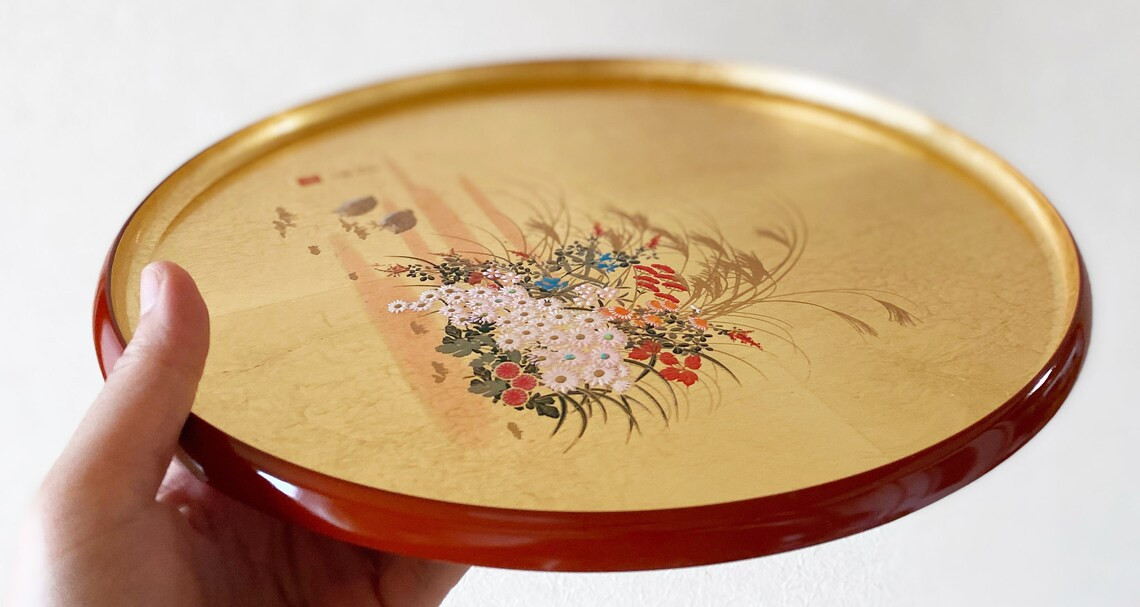
Pick 4 — For serving: a round tray. A gold ground carries autumn grasses, chrysanthemums, and two small quail. The red rim closes the circle. The maker lists phenolic resin and urethane. It is a serving piece that gives a group of small vessels a clear place to gather. (See the tray) — Round tray, Gold Miyabi — $110
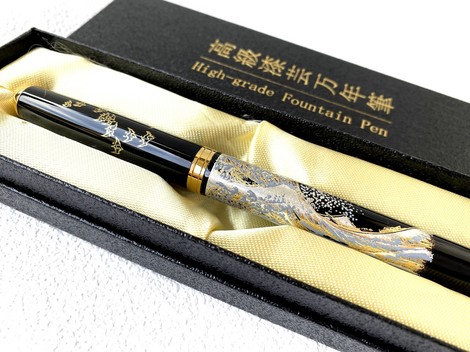
Pick 5 — For the desk: a fountain pen. The black barrel carries a wave in silver and gold, with small plovers on the cap. It comes in a presentation box. The maker lists aluminum with a urethane coating. It is a modest way to bring a lacquered surface into the daily rhythm of a desk. (See the fountain pen) — Fountain pen, wave motif — $98
11. A Note from the Shop
The Yamanaka name covers more than one material and more than one kind of finish. Some pieces begin with a turned wooden body and natural urushi. Others are made with modern materials and contemporary coatings.
We give the maker's material description wherever it is available. That is the most reliable way to understand a particular piece. The important thing is not to make every object answer to the same standard, but to know what kind of object you are holding and what kind of use it invites.
12. Frequently Asked Questions
Q: I'm new to lacquerware — how do I choose my first piece?
Choose something that will be used often and held comfortably. A small bowl, tray, or pair of chopsticks can teach you more about lacquerware through daily use than an object that stays in a cabinet. Look at the material description, then pay attention to weight, balance, the rim, and the way the surface feels in the hand. You do not need to identify every technique before choosing a piece.
Q: Is a less expensive piece lower quality, or harder to use?
Not necessarily. Price can reflect the material, the amount of handwork, the scale of production, the decoration, and the form of the object. It does not provide a reliable way to identify the technique used. A less expensive modern piece may be made for regular handling and easy care. A more expensive wooden or highly decorated piece may offer a different experience. Read the maker's description and choose according to the use you have in mind.
Q: Is Yamanaka lacquerware still made and used in Japan today?
Yes. Yamanaka continues to produce both traditional wooden lacquerware and modern lacquerware made with resin cores and contemporary coatings. The objects are used as tableware, seasonal items, gifts, accessories, and desk objects. The tradition remains active because it has continued to make room for different materials and different forms of daily life.
Q: Is every Yamanaka piece made from wood?
No. The regional name includes traditional wooden pieces and modern products made with molded resin. Check the material line for the individual item. Natural wood and turned wood are also different descriptions: a wooden object is not necessarily a turned object.
Q: Can Yamanaka lacquerware go in the dishwasher?
Only when the maker specifically says that it can. A resin core does not, by itself, determine whether the coating can withstand a dishwasher cycle. When the instructions are not clear, gentle hand-washing is the safer choice.
Q: How is Yamanaka different from Wajima?
The difference is one of emphasis. Yamanaka is especially associated with the wooden body, woodturning, and the techniques used to shape it. Wajima is especially associated with layered lacquering and reinforced groundwork. Both regions make a wider range of objects than these short descriptions suggest.
Q: What is otoso?
Otoso is spiced sake traditionally drunk on New Year's morning. It is served from a small spouted vessel and taken from nested cups in turn, with the order varying by household and region. An otoso set usually includes the server, cups, a tray, and sometimes a small tiered box.
13. In Closing
The first thing to notice in Yamanaka lacquerware is often the surface. The deeper story begins underneath.
A light bowl, a fine rim, a well-fitted lid, or a line of grain that follows the curve of the vessel all carry the decisions made by the woodturner. The lacquer and decoration add another layer of expression, but the character of the piece has already begun in the wooden body.
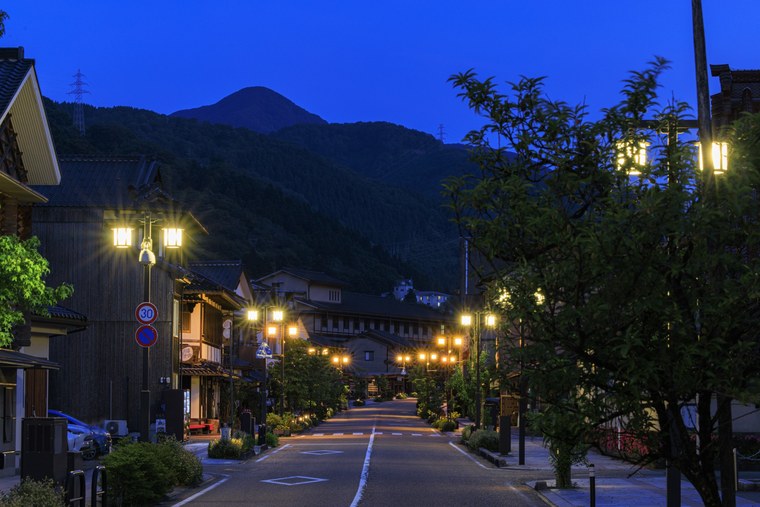
Yamanaka has changed over time. It has made room for new materials, new uses, and new kinds of decoration while continuing to value the work of shaping a vessel well.
If you would like to continue from here, you may also enjoy our guides to Japanese lacquerware, lacquerware care, wooden and lacquered chopsticks, Takaoka metalwork, and placing vessels for a Japanese meal.
— from Osaka, Team Manekineko-Ai