
Some pots are made to be light in the hand. A piece of Nanbu ironware is the opposite — it asks you to slow down and listen to the water.
Pick up a piece of Nanbu tekki and the weight is the first thing you notice. It is cast iron: dense, cool to the touch, and darker than almost anything else on the shelf. Many pieces carry a field of small raised dots — the arare, or “hail,” pattern that people most often associate with the craft. It feels less like ordinary tableware than like a small tool made for years of use.
If you are new to Nanbu ironware, two questions usually come first. Is this something you boil water in, or something you brew tea in — and are they the same thing? And is bare iron difficult to live with, always on the edge of rust? Both questions have calm answers. The short version is that the most important thing to check is not the name or the shape but the vessel's purpose, its interior, and the heat it is made for; and that daily care comes down to pouring the water out and drying the piece well. Below is how to tell one iron vessel from another, how to choose, and how to keep one for years.
On this page
1. Nanbu Tekki: Material, Patterns, and Place
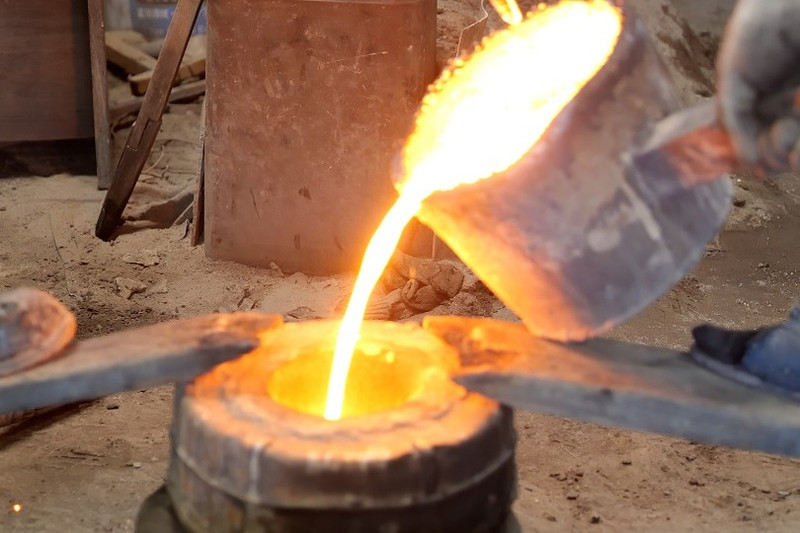
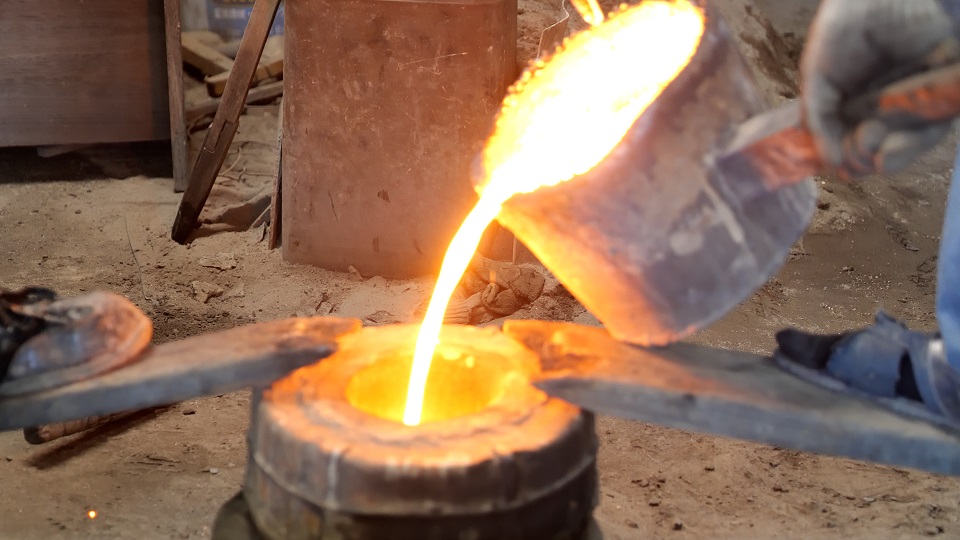
The material itself makes the first impression. Nanbu tekki is cast ironware from Iwate Prefecture, in the north of Japan's main island — traditionally centered on two areas, the city of Morioka and the Mizusawa district of Ōshū. Molten iron is poured into molds, cooled, and finished by hand, and the result has a presence that thin metal never quite has: substantial, still, and quietly dark.
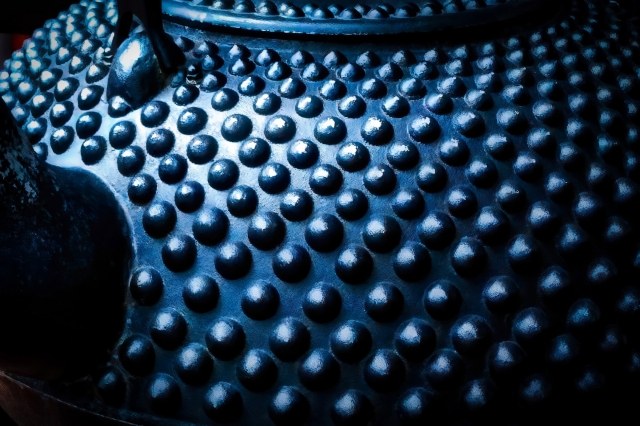
Run a thumb across the surface and you often find the arare pattern — rows of small, even, raised dots. It is the most recognizable face of Nanbu ironware, a decorative motif sometimes described as increasing its surface area. Not every piece wears it; you will also find plain surfaces, brushed and combed textures, and, on some teapots, color. The traditional color is black, but reds, blues, and greens are made as well.
Put simply, “Nanbu tekki” is not one object but a whole family of cast iron — kettles, teapots, pans, and more — from a single region with a long casting tradition. What draws most people in first, and what this guide is mainly about, are the two vessels made for water and tea.
2. One Craft, Two Vessels — Tetsubin and Iron Teapot
Here is the single most useful thing to understand before you buy, because it is the thing most often confused in English. Two cast iron vessels can look almost identical on a shelf and be made for completely different jobs.
A tetsubin is an iron kettle — a vessel for boiling water. Its interior is not enamel-lined; instead, the iron surface is finished according to the maker's method, often with a heat-formed oxide layer created through a process such as kama-yaki. Because the water meets an unenameled iron surface, a small amount of iron may dissolve into it, depending on the kettle, the water, and how it is used. Water heated in a tetsubin is often described as tasting softer or rounder — a description many users and makers give, and one you are best placed to judge for yourself.
A typical iron teapot looks similar but does a different job: it is made for brewing tea, not boiling water. Its interior is usually enamel-lined, which separates the brewed tea from the iron and makes the pot easier to clean — and it also means the pot is not intended for direct heat. You warm it with hot water boiled in a separate kettle, add tea, and let it steep.
The reason this matters is practical. A tetsubin is made for boiling water over an approved heat source; an iron teapot is not put on direct heat at all. The safest way to tell them apart is not the name printed on the box or the shape of the pot, but three things you can check directly:
| Tetsubin (iron kettle) | Typical iron teapot | |
|---|---|---|
| Main use | Boiling water | Brewing tea |
| Interior | Not enamel-lined; the unenameled iron is finished by the maker (often a heat-formed oxide layer, e.g. kama-yaki) | Usually enamel-lined |
| Heat | Made for boiling water — always check which heat sources the piece supports | Not intended for direct heat or induction |
| Iron in the water | A small amount may dissolve into the water, depending on conditions | Iron generally does not pass from an enamel-lined interior |
| Basic care | Empty the water and dry well after use | Rinse or clean gently per the maker; dry the outside and rim |
Keep those three columns — use, interior, heat — in mind and the shelf sorts itself out, whatever the product name happens to say.
3. A Short History — Two Roots, and the Birth of the Tetsubin
Nanbu ironware did not begin as a single story. It grew from two roots in what is now Iwate.
In Morioka, the craft is often traced to the mid-seventeenth century, when the local lords are said to have invited a kettle master from Kyoto to cast kettles for the tea ceremony, and supported the founding families of casters who followed. In the Mizusawa district of Ōshū, iron casting is said to reach back much further — to the age of Fujiwara no Kiyohira, nearly nine centuries ago. The two traditions developed separately and were only later gathered under the single name we use today.

The tetsubin itself came later than the tea-ceremony kettle from which it descends. It is generally credited to the third-generation Koizumi Nizaemon and is said to have taken shape around 1750: the large ceremonial kettle was made smaller, and a spout and a handle were added — turning a formal object into something for everyday use. Nanbu ironware was designated one of Japan's traditional crafts in February 1975, and it remains a living craft, still made and still used.
4. Choosing a Piece
With the two vessels clear, choosing is mostly a matter of matching the piece to your table.
Start with use. If you want to boil water — for tea or for coffee — you are looking for a tetsubin. If you want to steep and pour tea at the table after boiling the water separately, you are looking for an iron teapot. This one decision settles most of the others.
Then size. Iron vessels run from small teapots of around 0.3 to 0.5 liters, made for one or two people, up to kettles of a liter or more for a household. Remember that the listed capacity may be the full capacity rather than the recommended working volume: a kettle should not be filled to the brim, so follow the maker's filling guidance and leave room for boiling. Remember, too, that cast iron is heavy before it is even filled — a one-liter kettle can easily weigh well over a kilogram once filled — which is part of the pleasure, but worth picturing in your own hand.
Then the heat source, especially if you cook on induction. Not every iron piece is made for every stove: some tetsubin are suited to gas and induction (IH) hobs, and some are not, so always check which sources a particular piece supports before you buy. An iron teapot, as above, is not meant for direct heat at all.
Then the details — the interior finish, which varies by workshop; the surface, whether the classic arare dots, a brushed pattern, or a plain field; and, on teapots, the color. None of these change what the piece is for. They are simply where your own taste comes in, once the practical questions are settled. You can see the range in our Nanbu ironware collection.
5. Living With Iron — Use and Care
Bare iron sounds demanding. In practice a tetsubin asks for a small, steady habit rather than any real effort, and most worry about rust comes from not knowing what is normal.
When a piece is new, a tetsubin is usually prepared by boiling water in it two or three times, until the water runs clear, before using it for drinking; using it often over the first couple of weeks helps a protective mineral scale build up inside. Because a tetsubin's interior finish can vary from one maker to another, it is worth following whatever first-use guidance came with the kettle, rather than assuming one routine fits every piece. An iron teapot generally needs only a rinse with lukewarm water before its first brew.
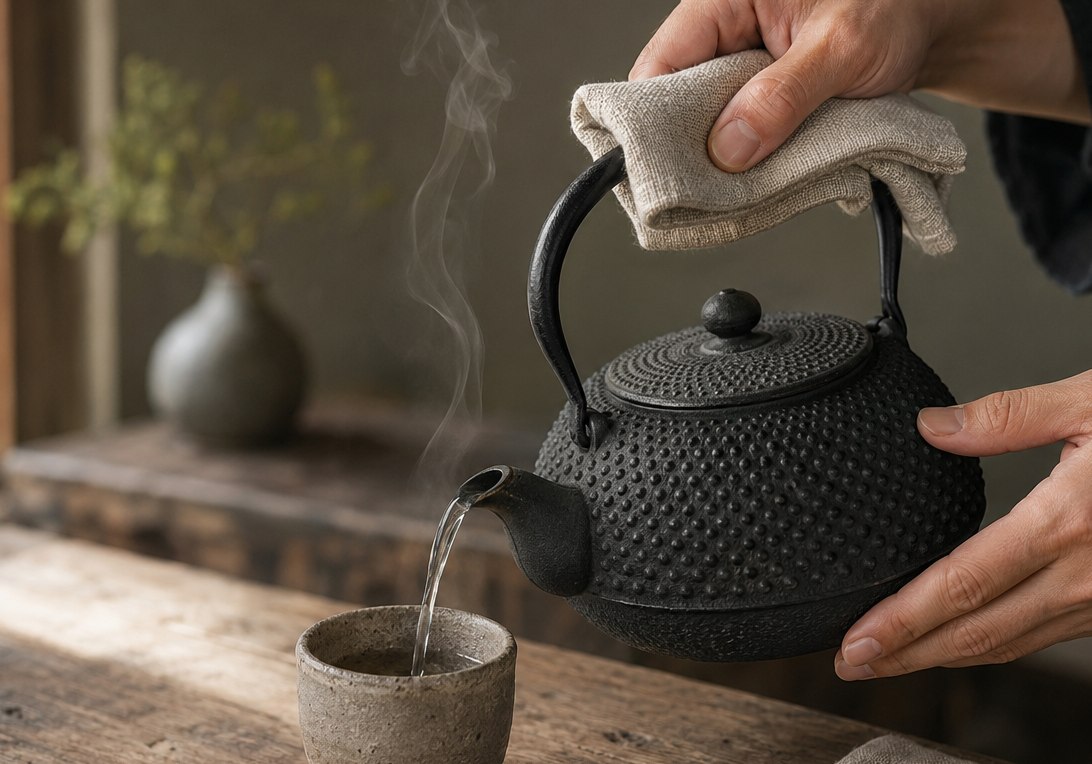
In daily use, the single most important habit is this: after you finish, empty out the water and let the piece dry well. Leaving water standing inside is what invites rust. With a tetsubin, take the lid off and let the piece dry from its own residual heat; a very short spell over low heat can help, but only where the maker allows it, and residual heat is the gentler default. Wipe the outside with a dry cloth. And whatever you do, do not scrub a tetsubin's unenameled interior.
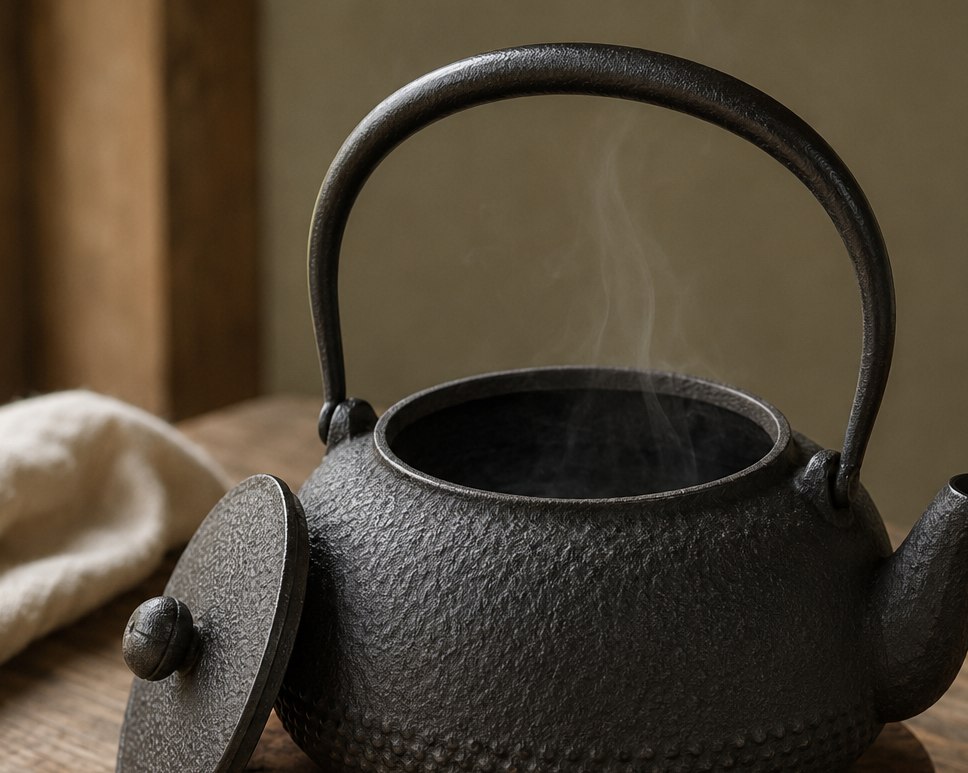
That last point deserves a moment, because the inside of a well-used iron kettle is meant to change, and the changes are easy to mistake for problems:
- A little reddening inside is not automatically a fault. If the water you boil still runs clear and has no off smell, the piece is generally fine to keep using.
- A pale, chalky-white film that builds up over time comes from minerals in your water. How much appears depends on the water where you live. It is not dirt, it helps protect the interior, and it should be left in place, not scoured away.
- If the water turns cloudy or takes on a distinct metallic smell, some makers advise simmering sencha (green-tea) leaves in a tetsubin with an unenameled interior to settle the surface — never in an enamel-lined teapot. Follow the maker's instructions for the amount, heat, and time. This applies when the water is actually cloudy or smells metallic, not simply because a little reddening has appeared.
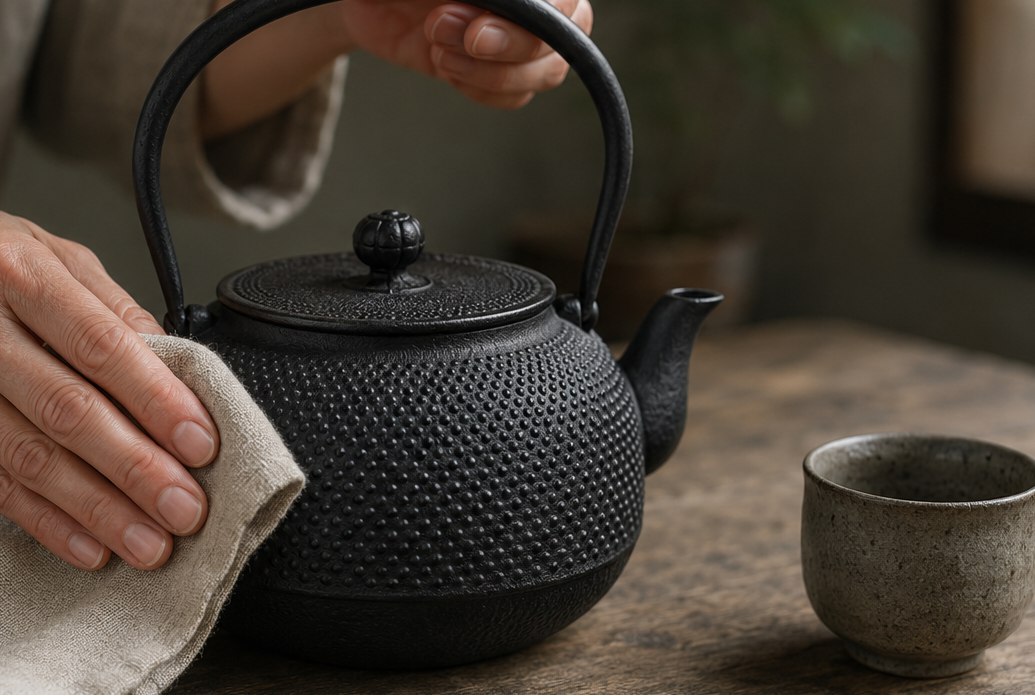
The two vessels are cared for a little differently, and it is worth being precise about it. For a tetsubin with an unenameled interior, empty it, dry it well, and do not scrub the interior. For an iron teapot, rinse or clean it gently according to the maker's instructions, then dry the exterior and rim. An enamel-lined interior resists rust far better than unenameled iron, but the pot is not rustproof; the outside and the rim can still rust if left wet, so it too should be dried after use.
One last, ordinary caution: the body, lid, and handle may become very hot in use, so use a dry cloth or mitt as directed for the particular piece.
6. Editor's Picks
These are examples, not recommendations. Exact specifications, prices, and availability may change.
Three pieces from our collection, chosen to show the two vessels side by side and to step up from an easy first teapot to a kettle worth giving.
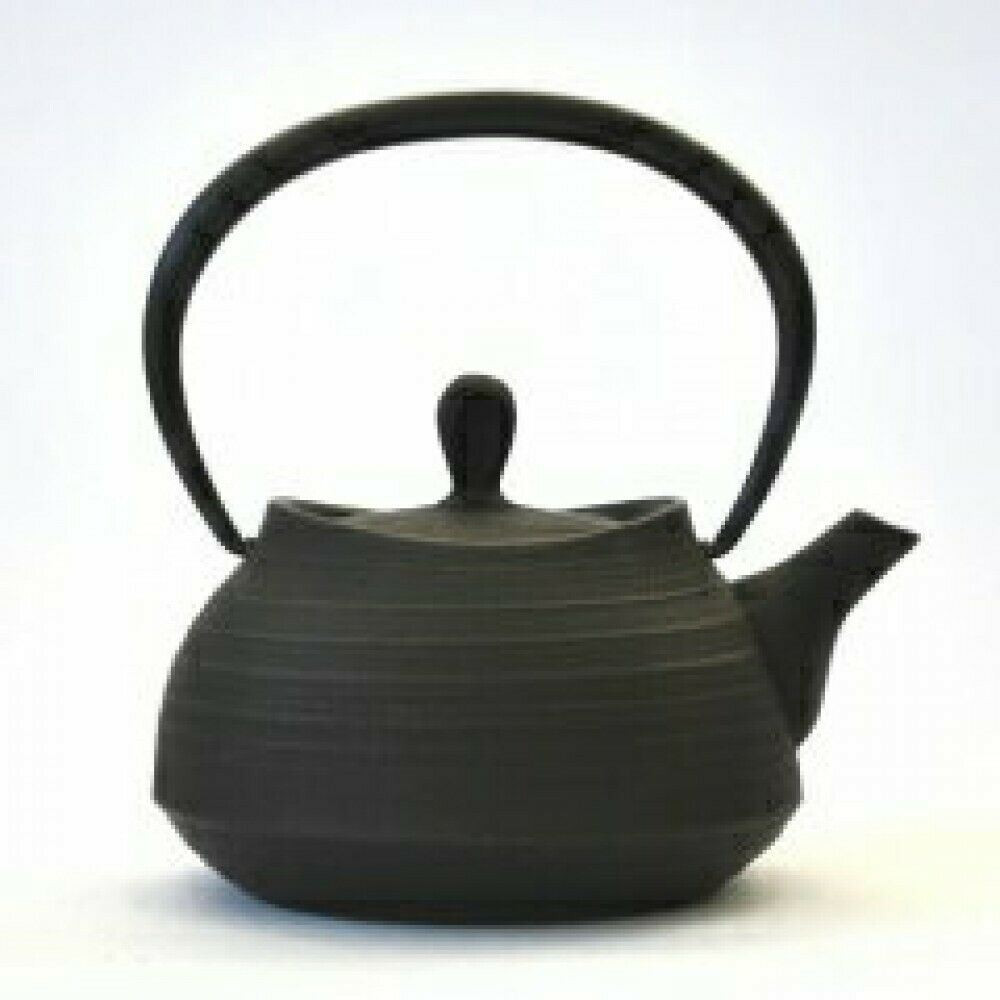
Pick 1 — For Brewing: an Enameled Iron Teapot. A small Nanbu iron teapot with an enamel-lined interior, made for steeping and pouring tea at the table rather than for the stove. An easy, forgiving way to bring cast iron into daily life, since the enamel-lined interior requires little more than gentle rinsing and thorough drying. (Brewing · enamel-lined · not for direct heat · approx. 0.4 L) (See the teapot)
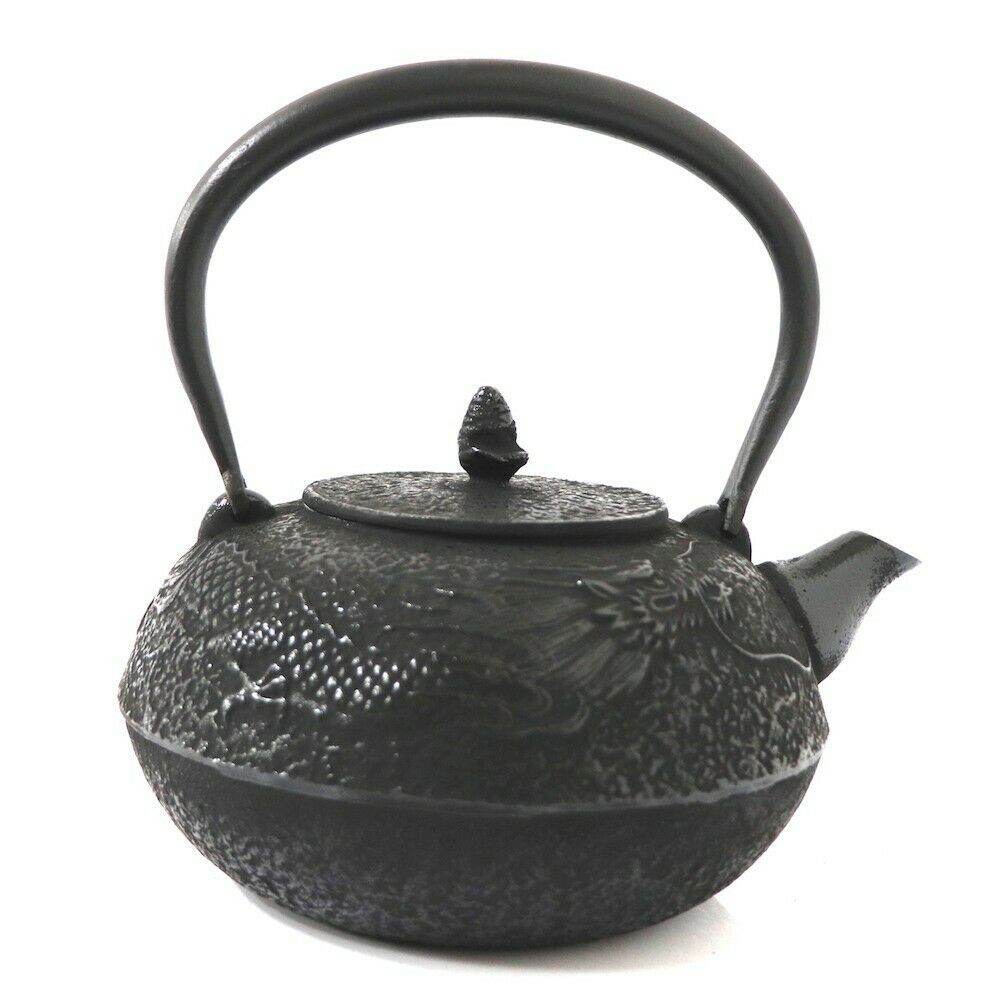
Pick 2 — For Boiling: a Classic Tetsubin. A traditional iron kettle with an unenameled interior and a bold cast motif, made to sit over a heat source and boil water the traditional way. This is the piece people picture when they think of Nanbu tekki, and the type often associated with water described as softer or rounder in taste. (Boiling · unenameled interior · check heat source · approx. 1.3 L) (See the kettle)
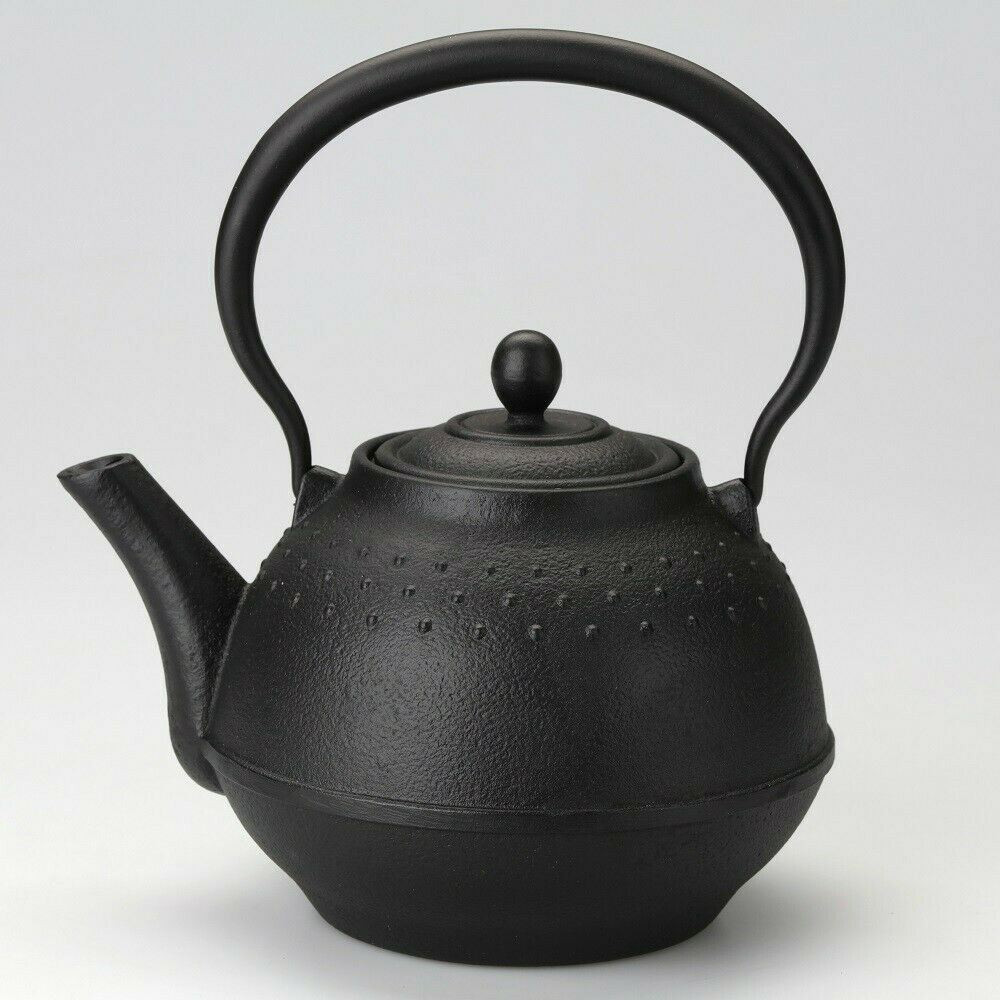
Pick 3 — For a Modern Kitchen: an Induction-Ready Tetsubin. An iron kettle stated to suit both gas and induction (IH) hobs — an option worth considering for a kitchen that uses induction, provided the kettle's stated compatibility matches your hob. A considered choice for a new home or a milestone. (Boiling · unenameled interior · gas & IH as stated · approx. 1.0 L) (See the kettle)
7. A Note from the Shop
If there is one thing we would gently pass on, it is not to fear the inside of an iron kettle. The inside of a tetsubin slowly changes with use — a little reddening here, a pale, chalky film there. These are not mistakes to fix in a panic. Before anything else, just pour the water out and dry the pot well; that daily habit is the most important care of all. We are here mainly to translate what the iron is doing, and to help you find the piece that belongs on your table.
8. Frequently Asked Questions
Q: I'm new to this — should I choose a tetsubin or an iron teapot?
Start from what you want to do. If you want to boil water — for tea or coffee — choose a tetsubin, an iron kettle made for heat. If you want to steep and pour tea at the table, after boiling the water separately, choose an iron teapot, usually enamel-lined, which is made for brewing and is not put on direct heat. The vessels can look alike, so check the use, the interior, and the heat it supports rather than the name alone.
Q: Will it rust, and is it hard to care for?
Iron can rust, but caring for it is mostly one habit: after use, empty the water and dry the piece well. With a tetsubin's unenameled interior, do not scrub the inside; a little reddening or a pale, chalky film there is normal, and if the water still runs clear and smells clean, the piece is generally fine. An enamel-lined teapot rusts less readily and can be cleaned gently per the maker's guidance, though its outside and rim should still be dried.
Q: Can I brew tea directly in a tetsubin?
A tetsubin is primarily made for boiling water. Tea can react with the unenameled iron and may discolor both the tea and the kettle's interior, so use it for water unless the maker specifically states otherwise. Brew the tea separately in a teapot.
Q: Is Nanbu tekki still made and used in Japan today?
Yes. It grew from two casting traditions in Iwate — around Morioka and Mizusawa — and was designated one of Japan's traditional crafts in February 1975. It is still made in Iwate today, with many processes carried out or finished by skilled craftspeople, and still used every day — from kettles on the stove to teapots at the table.
Q: Can I use it on an induction (IH) hob?
Sometimes — it depends on the piece. Some tetsubin are made for both gas and induction hobs, and some are not, so check which heat sources a particular kettle supports before buying. An enamel-lined iron teapot is not intended for direct heat or induction at all; it is warmed with hot water and used for brewing.
Q: Does it really make water taste better, or add iron?
Water boiled in a tetsubin, whose interior is unenameled iron, is often described as tasting softer or rounder, and a small amount of iron may dissolve into the water, depending on the kettle, the water, and how it is boiled. How noticeable this is varies, and it is something you are best placed to judge for yourself. An enamel-lined teapot generally does not pass iron into what it holds.
Q: Can I put an iron teapot on the stove?
As a rule, no. A typical iron teapot is usually enamel-lined and made for brewing, not boiling, and is not intended for direct heat or induction; heating it that way can damage the lining. To boil water, use a tetsubin. If you are unsure which one you have, check whether the maker lists it as suitable for a heat source.
9. In Closing
Nanbu ironware rewards a slower kind of use. Once the two vessels are clear in your mind — the tetsubin that boils and the teapot that brews — the rest is easy, and the daily care is little more than pouring out the water and letting the iron dry. Begin with the piece that suits how you actually drink, use it often, and let it settle into your kitchen over the years. If you'd like a hand telling a kettle from a teapot, or choosing a first piece, we're always glad to help — you can browse our Nanbu ironware and Japanese kettles anytime.
For more from Japan's metal workshops, see our guide to the metalwork of Takaoka — and look for more of Japan's craft regions to come.
— from Osaka, Team Manekineko-Ai