
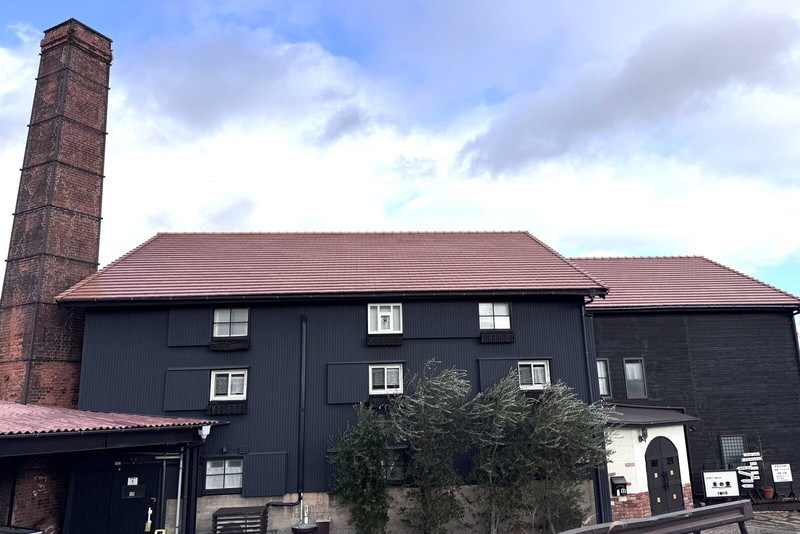
Look long enough for a good Japanese teapot, and the search tends to lead back to the same place: a stretch of the Chita Peninsula, southeast of Nagoya, where the clay itself is part of the reason the tea tastes different.
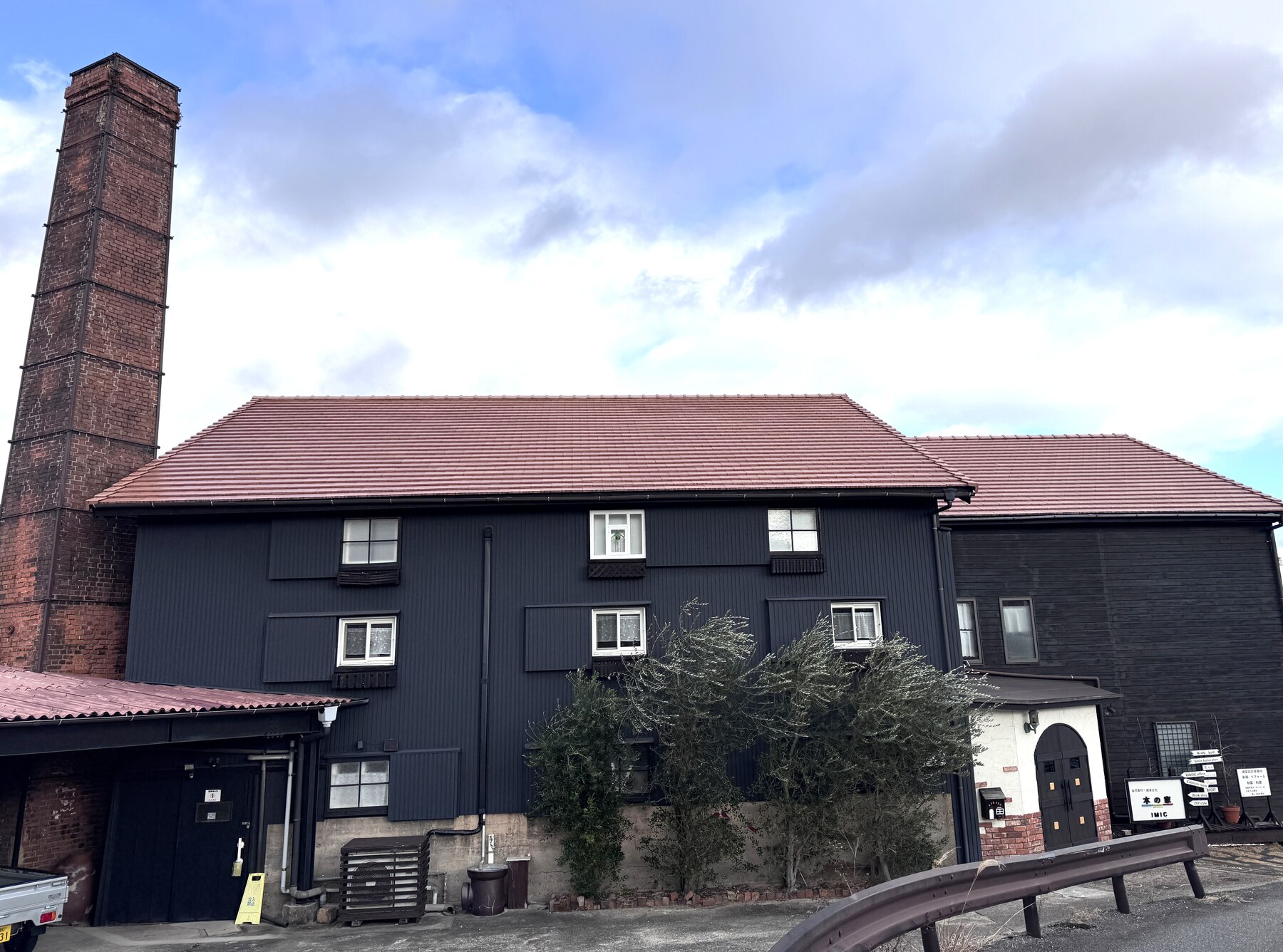
Tokoname is one of Japan's Six Ancient Kilns, a group of pottery regions that have been firing clay more or less continuously since the medieval period. For most of that history, Tokoname was known for large, practical vessels — storage jars, roof tiles, and drainage pipes — made possible by a stretch of iron-rich clay running along the peninsula. The teapots the region is best known for today are a comparatively newer chapter, but they've become the reason most people encounter Tokoname ware at all.
This guide covers what Tokoname ware is, why this particular stretch of coastline became a pottery center, and — since a Tokoname teapot is usually a purchase people want to get right — how to think about choosing a kyusu, the Japanese term for a small teapot used for steeping green tea.
On this page
1. What Tokoname Ware Actually Is
Tokoname ware (常滑焼, Tokoname-yaki) is the pottery of Tokoname, a city on the Chita Peninsula in Aichi Prefecture. It's one of Japan's oldest continuously active pottery traditions, and one of the so-called Six Ancient Kilns — a group that also includes Shigaraki, Bizen, and three other regions whose kilns trace back to the medieval period without a significant break.
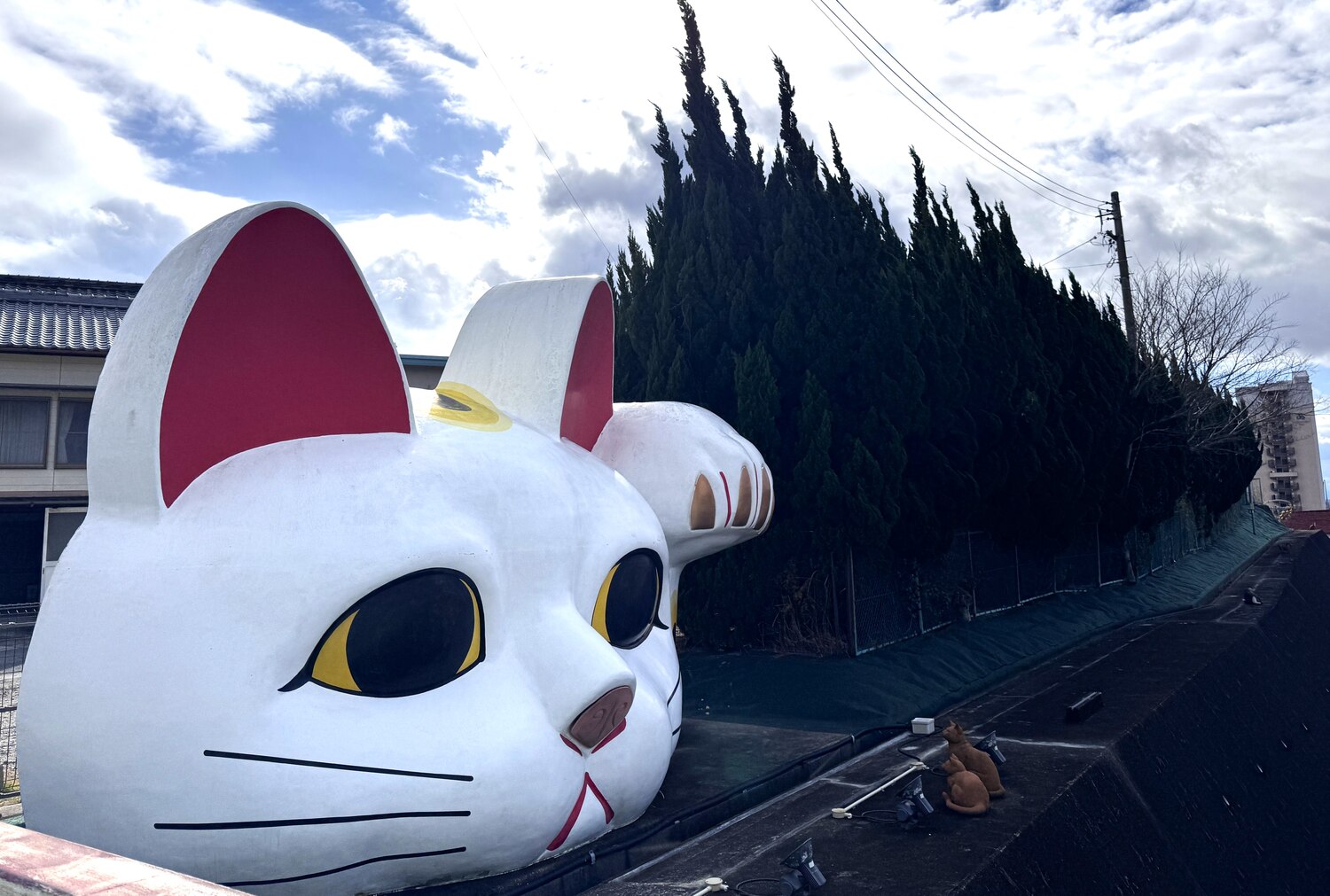
The clay is the throughline. It's high in iron, which — depending on the clay preparation and firing — can produce reds, browns, deep blacks, and other earthy tones, and in the region's signature unglazed teapots gives the surface its color without any glaze at all. Beyond teapots, Tokoname's kilns have also produced storage jars, roof tiles, ceramic pipes, garden and bonsai pottery, and — as anyone who has shopped for a maneki-neko lucky cat will recognize — a large share of Japan's ceramic cat figures. Tokoname is not a one-product region, even if the teapot is what most people are looking for by the time they arrive here.
2. Why This Clay, This Coast
The Chita Peninsula sits on clay deposits formed by the ancient Tokai Lake system. That clay is unusually rich in iron oxide, which helps give much of Tokoname's unglazed ware its characteristic earthy color.
Location did the rest. Facing Ise Bay, Tokoname had become one of Japan's largest kiln centers by the medieval period, for a simple logistical reason: bulky, heavy pottery — storage jars, in particular — is expensive to move overland but manageable by boat, and the bay gave Tokoname's kilns a route to markets across the country. That maritime advantage, more than any single technique, is a large part of why Tokoname grew into one of the six kiln regions that never went quiet.

3. A Short History
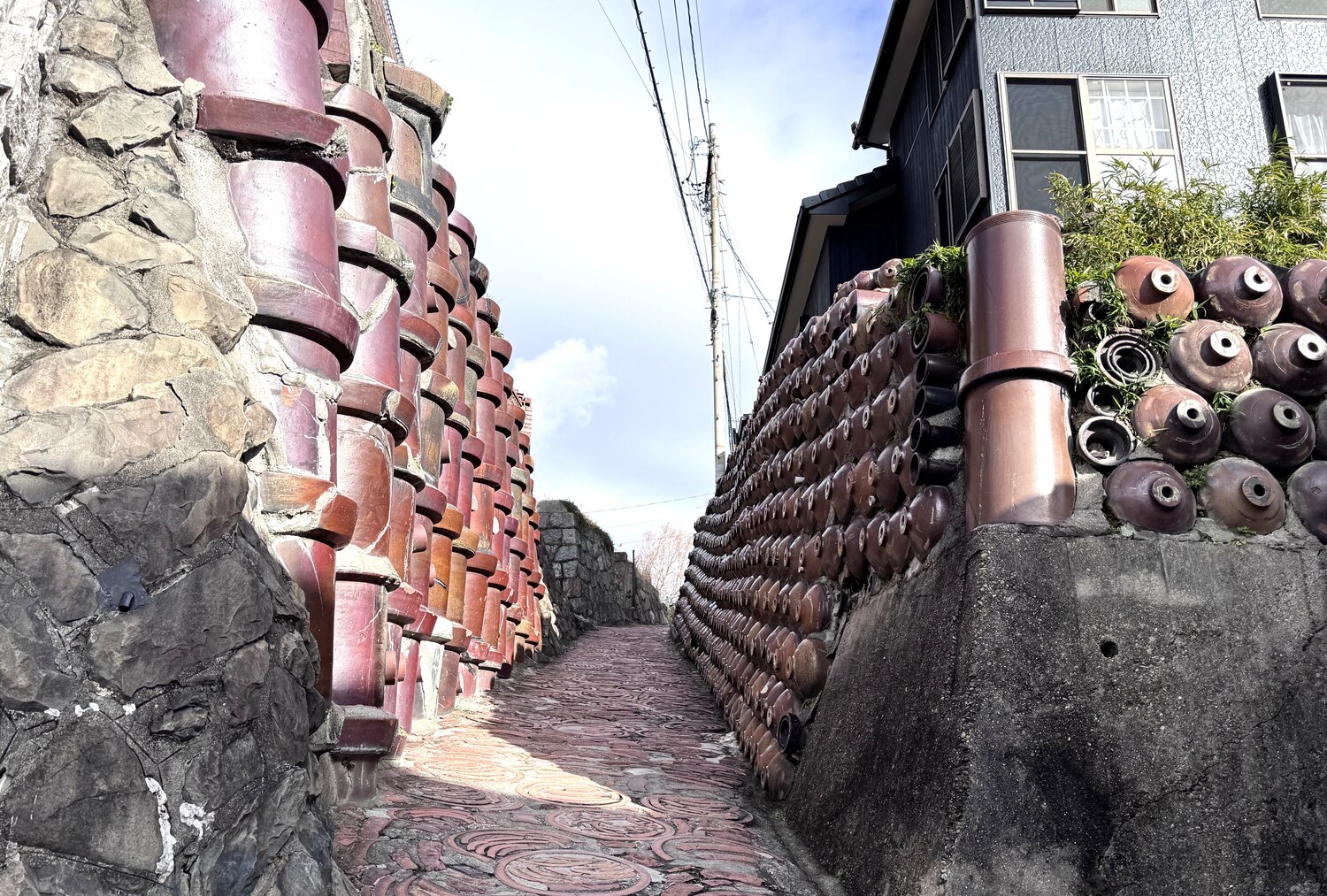
That large-vessel tradition continued for centuries with little that would look, to modern eyes, like the teapots the region is known for today.

The shift toward smaller, refined wares — and eventually toward teapots specifically — is generally placed in the nineteenth century, as tea culture in Japan spread beyond a wealthy minority and the region's unglazed clay began to be recognized as well suited to steeping green tea. Some accounts point to specific figures and dates behind the region's early shudei (vermilion clay) teapots, but the sourcing on those specifics is inconsistent enough that we'd rather not repeat a name or a year we can't stand behind — the broad picture is on firmer ground than any single origin story attached to it.
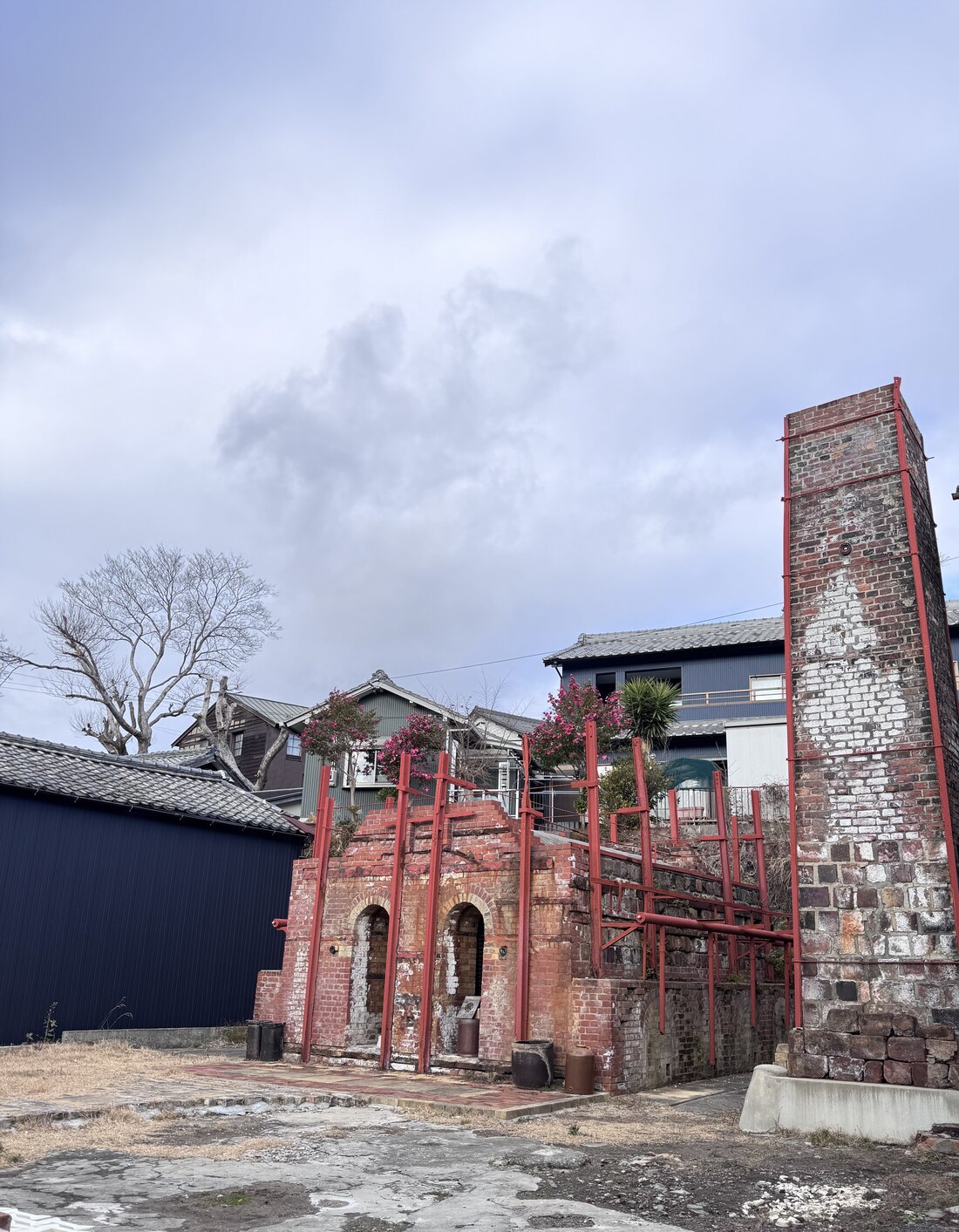
The industrial side is better documented. Tokoname's large-vessel tradition carried it through the Meiji era and into the twentieth century as a major producer of drainage pipes and roof tiles, and postwar demand for teapots grew alongside it. By the second half of the twentieth century, Tokoname had become, by most accounts, Japan's leading kyusu-producing region — a position it still holds.
4. Reading Tokoname Ware
The clearest sign of a classic Tokoname piece is shudei — literally "vermilion clay" — a reddish-brown, unglazed ceramic body whose characteristic color develops through the iron content of the clay and the firing process, rather than from any paint or glaze. That's also part of why the shade varies somewhat from piece to piece and kiln to kiln.
Shudei is what most people picture when they think of a Tokoname teapot, but it isn't the only thing the region makes. Glazed and more decoratively painted pieces exist as well, including teapots finished by artisans from other regions in collaboration with Tokoname's potters. As with most pottery regions, it's worth checking a maker's own description rather than assuming a single look defines the whole tradition.
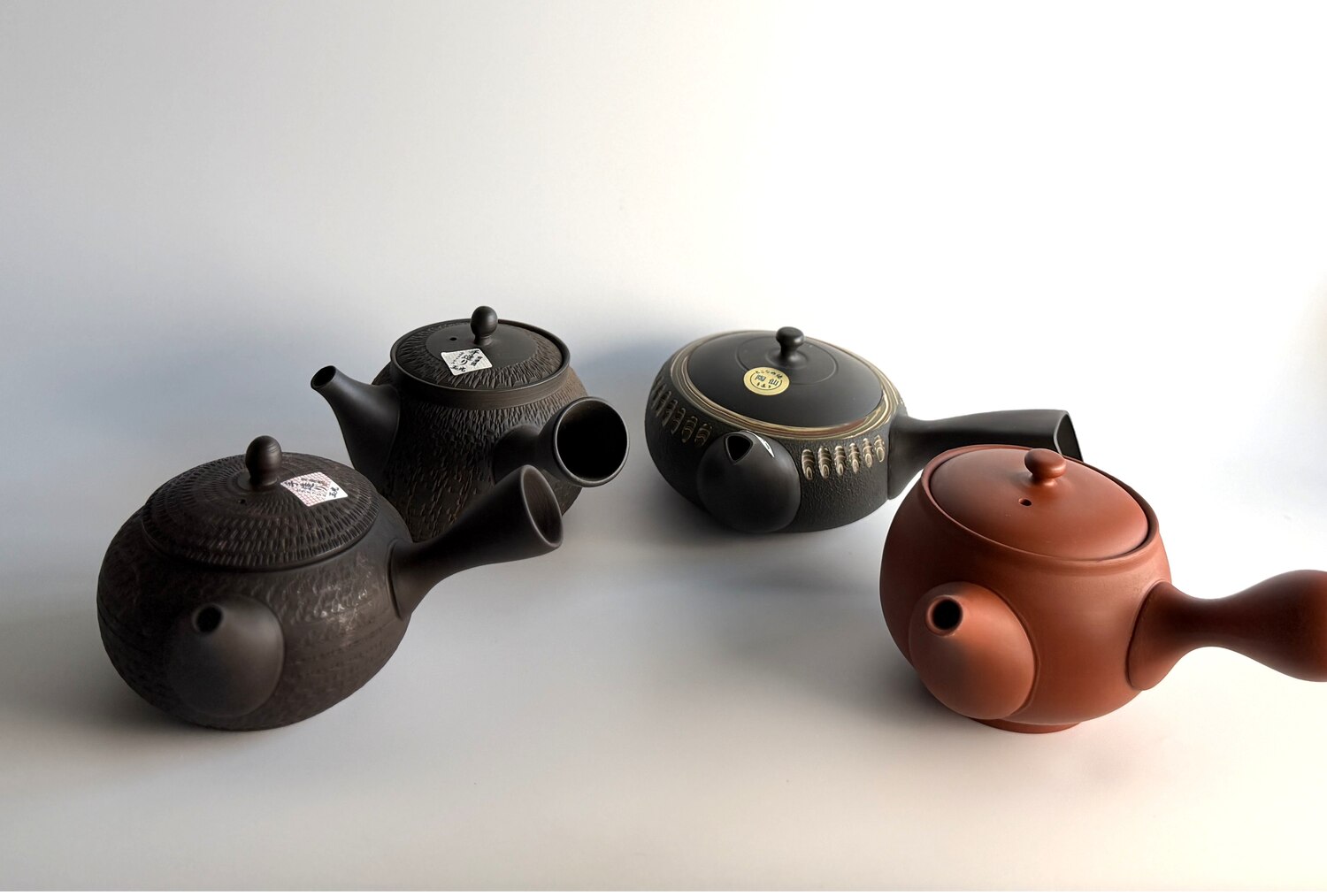
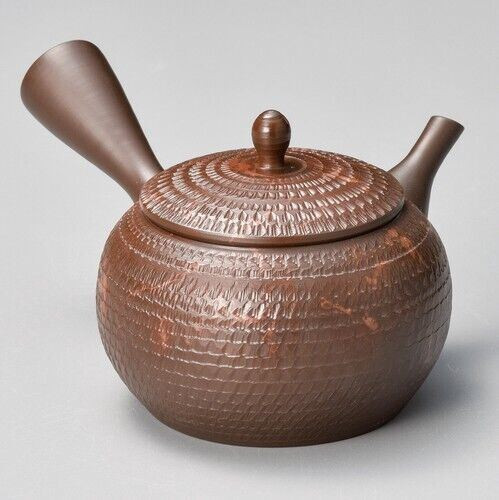
Surface finishing is where individual kilns and craftsmen show their hand. Some pieces are left with a matte, sanded surface, and others are polished to a soft sheen. A separate decorative pattern known as biri is cut into the surface with a carving tool while the piece turns on the wheel, leaving fine, rhythmic markings rather than a smooth polish — a texture worth looking for if that hand-worked look appeals to you. A related technique called mogake, in which seaweed is pressed against the clay before firing, leaves its own faint markings across the surface — another detail worth looking for if you're drawn to texture as much as shape.
5. Choosing a Kyusu
A kyusu is a small teapot built for steeping Japanese green tea, and Tokoname is a reasonable place to start if you're choosing your first one. A few practical details are worth more attention than the decoration.
Handle style. The most common form is yokode (横手), a side handle set at roughly a right angle to the spout — designed to be held and poured with one hand, and the shape most associated with everyday sencha. Ushirode (後手) places the handle directly opposite the spout, closer to a Western teapot, and tends to appear on larger pots. Uwade (上手) uses a handle arching over the top, more common on larger teapots made for serving at the table. Hōhin (宝瓶) has no handle at all — a low, wide shape meant to be lifted by the body, traditionally used for small amounts of higher-grade tea like gyokuro, steeped at a lower temperature than everyday sencha.
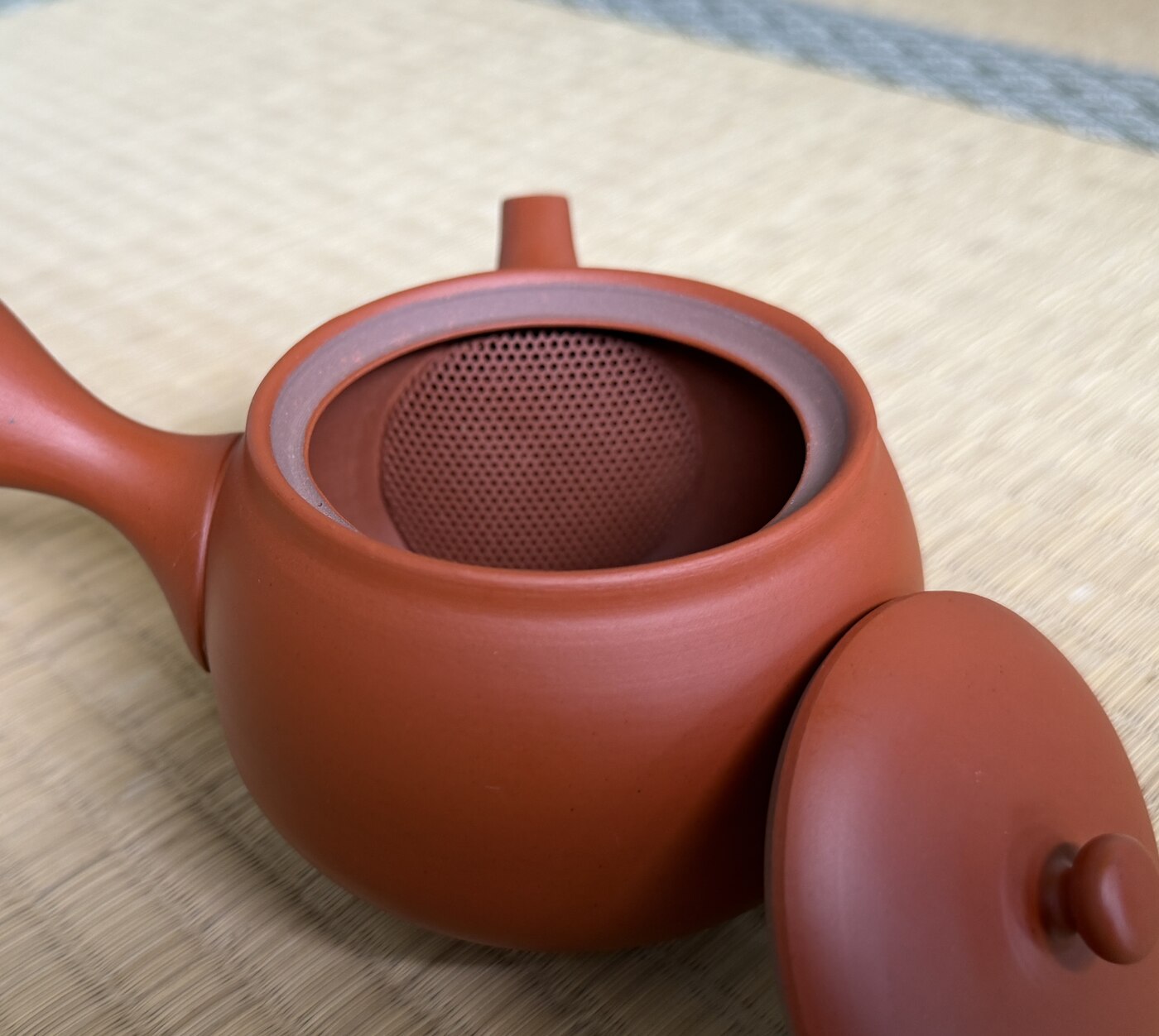
Strainer type. How the tea leaves are kept out of the cup matters as much as the shape. Tokoname is particularly associated with built-in ceramic strainers, a technique the region is often credited with refining — these range from small holes formed directly into the clay wall where the spout meets the body to a separately shaped, fitted piece of clay mesh set inside the pot. Metal mesh strainers, either built into the pot or as a removable basket insert, are the other common approach; a removable basket is generally the easiest to clean but is a separate part to keep track of. None of these is strictly better — some tea drinkers prefer a ceramic strainer because the tea contacts only ceramic on its way to the cup, while a fine metal mesh can handle the finer, smaller leaf particles typical of deep-steamed sencha (fukamushi) more easily.
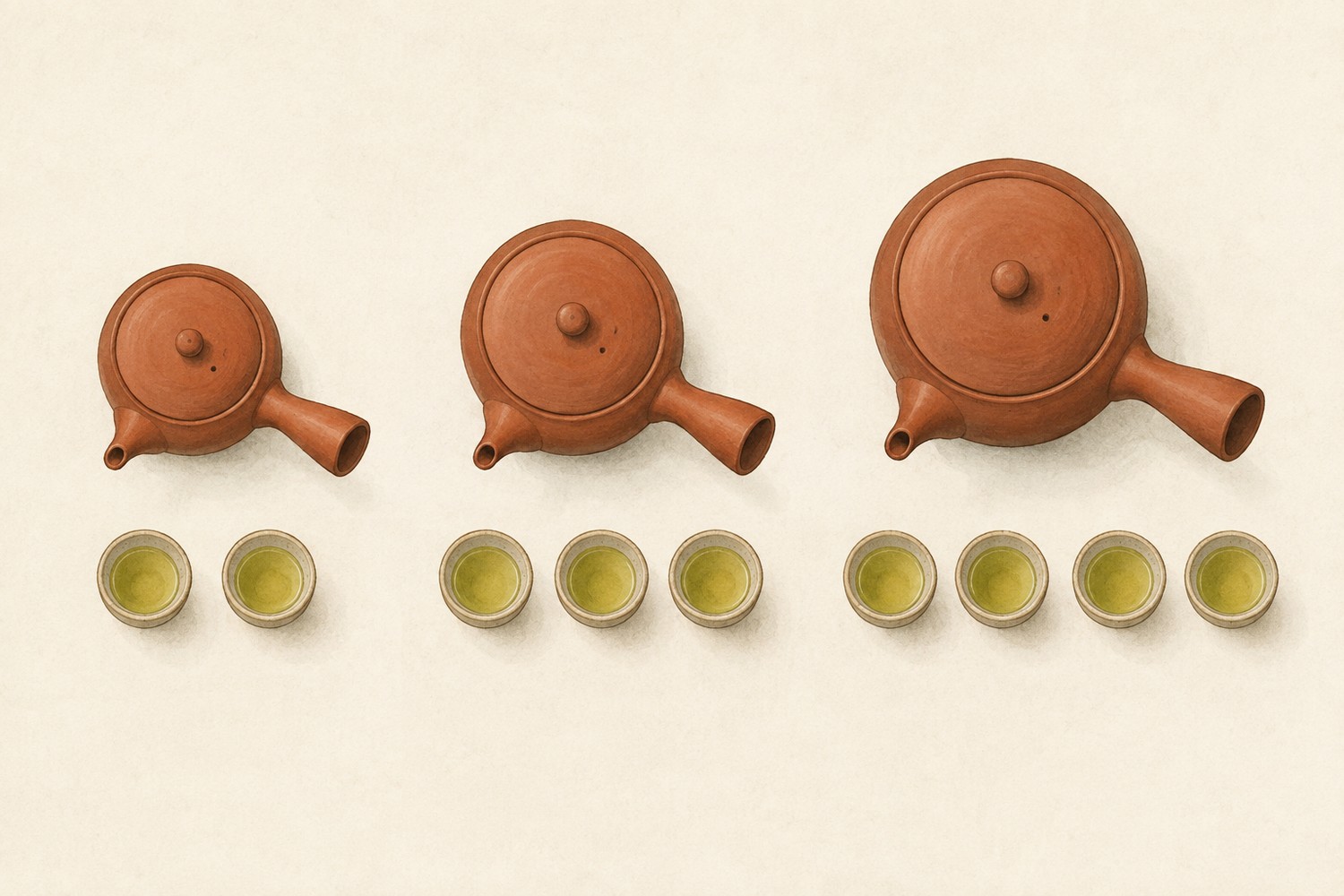
Size. Kyusu are sized for how much tea gets made at once, not for a standard "one size." As a rough guide, 100 to 200 ml suits tea for one or two people at a time, 200 to 340 ml is a common size for two or three, and 340 to 480 ml comfortably serves three or four. A hōhin, meant for smaller, more concentrated servings of premium tea, is often smaller still.
Glazed or unglazed. Unglazed shudei is the traditional, and still the most common, choice for a dedicated sencha teapot — some drinkers feel the clay softens a tea's sharper edges over repeated use, though this is a matter of taste rather than something we'd state as settled fact. Glazed teapots are easier to keep looking new and are a reasonable choice if you'd rather not think about the clay picking up anything over time.
A few everyday habits worth knowing. The capacity listed for a kyusu is usually its volume filled to the brim, not the amount you'd actually brew — most people fill a pot to somewhat less than its stated capacity to leave room for the tea leaves to open. Most kyusu lids simply rest in place rather than locking on, so it's worth holding the lid with a finger or thumb when pouring. And a ceramic kyusu, glazed or unglazed, isn't made for direct heat — it's for steeping tea brewed with water heated separately, not for use on a stovetop.
6. Care
Unglazed Tokoname teapots are generally cared for a little differently than most other ceramics in the kitchen. Because many unglazed Tokoname teapots can gradually pick up traces of tea oils and aromas, the usual approach is to rinse a shudei teapot with hot water only. For most pieces, a thorough rinse is enough on its own — it's worth avoiding strongly scented detergents unless the maker's own care instructions say otherwise, since porosity and finish can vary from piece to piece. Let the pot air dry fully, ideally with the lid off, before putting it away, since trapped moisture in an unglazed vessel can lead to a musty smell.
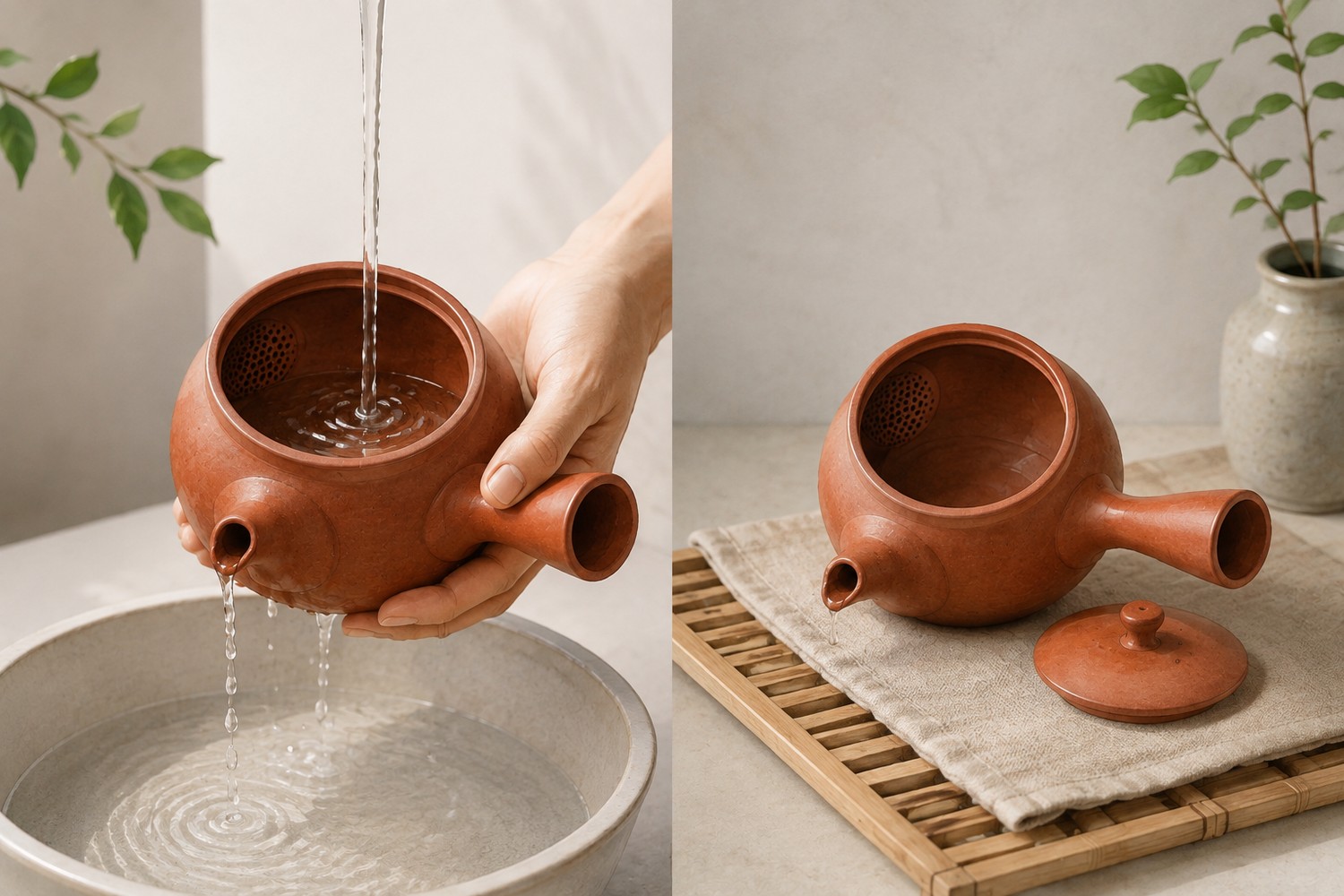
Some drinkers find that an unglazed teapot used regularly for the same type of tea develops a slightly deeper, more settled color over time — a natural result of the porous clay absorbing a small amount of what passes through it. This isn't something that needs any particular technique to encourage or avoid; it's simply what happens with ordinary daily use.
Glazed Tokoname pieces can generally be washed the way most ceramics are, though as always it's worth checking the care notes for the specific piece, since glaze and finish vary by maker.
7. Editor's Picks — Three Ways to Start With Tokoname
Three kyusu from Gyokko kiln, one of Tokoname's established workshops, each suited to a different way of using it.
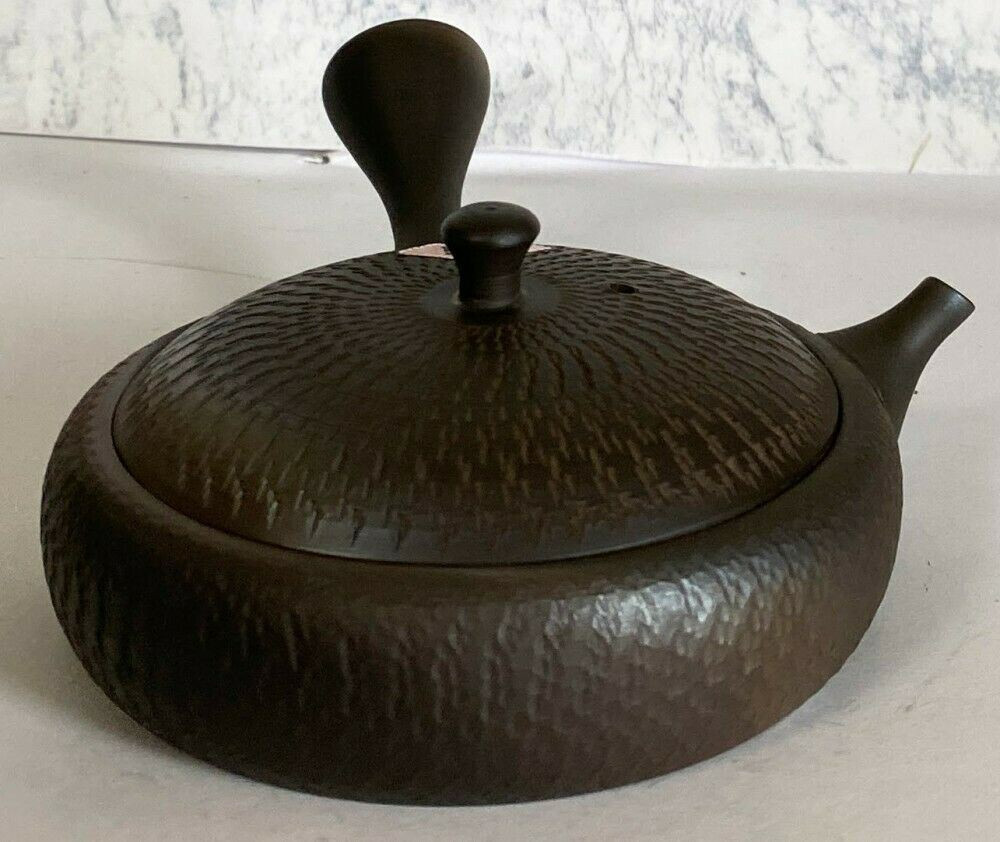
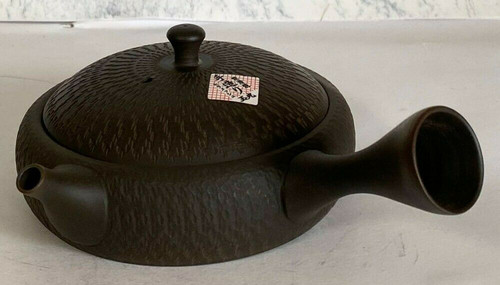
Pick 1 — Everyday and Small. A compact, flat-shaped teapot from Kizuna, a collaborative group of seven Tokoname craftsmen. Its low, wide body gives the tea leaves room to open, and its small capacity suits a single, carefully brewed pot at a time. (See the teapot) — Gyokko Yohen Biri Kyusu, 120ml, built-in ceramic strainer — $90
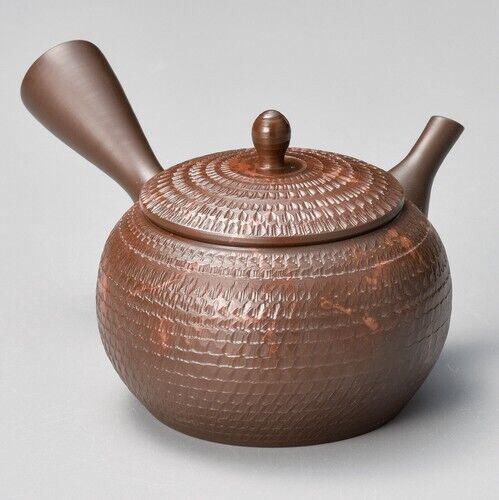
Pick 2 — The Craft on Display. A vermilion-clay teapot finished with the mogake technique — seaweed pressed against the surface before a three-stage firing — with a built-in ceramic strainer, the detail Tokoname is best known for. A good piece for anyone who wants to see the region's signature techniques in one pot. (See the teapot) — Gyokko Mogake Yohen Biri Kyusu, 210ml, built-in ceramic strainer — $150
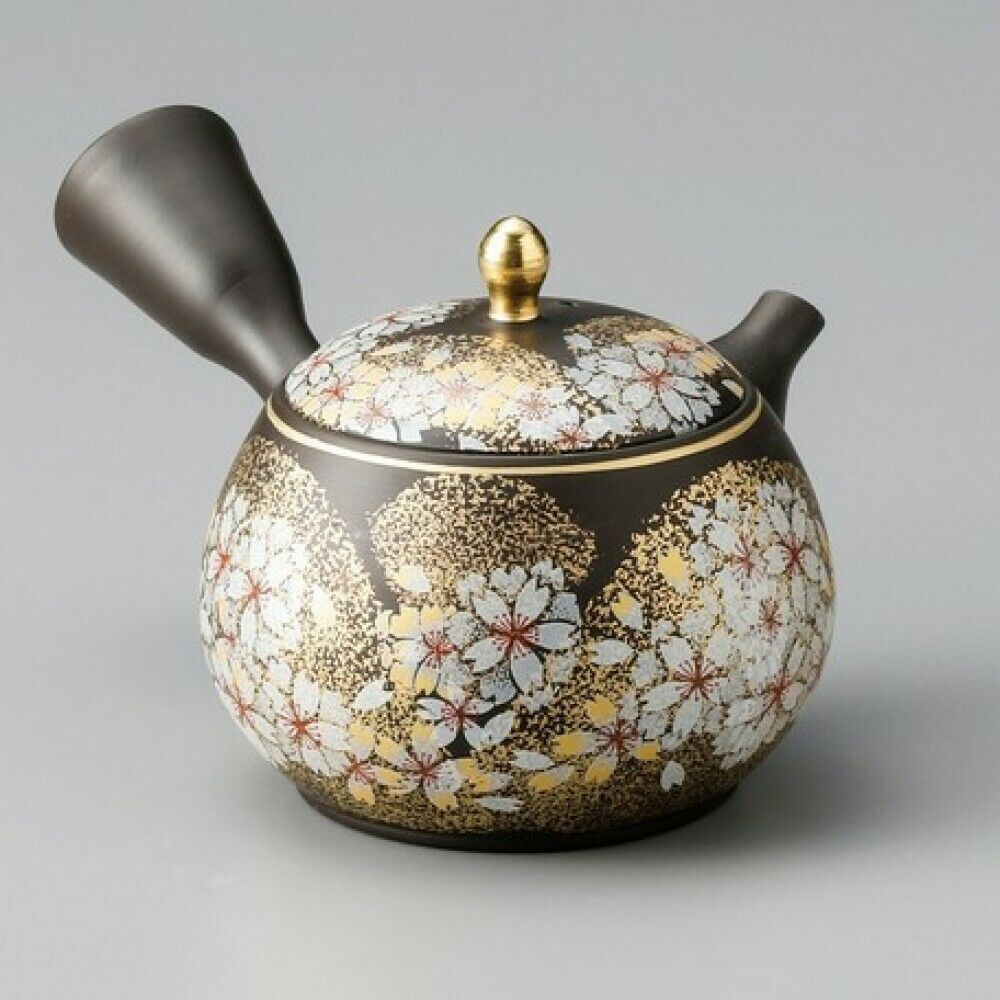
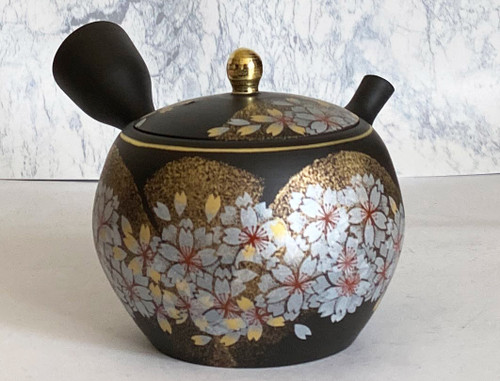
Pick 3 — A Collaboration Piece. A Tokoname teapot made by Gyokko kiln and hand-painted by a Kutani ware artisan — a small-scale example of two pottery regions working on a single piece. A more decorative option, suited to a gift as much as daily use, sized for one or two small cups. (See the teapot) — Gyokko × Kutani Teapot — $195
8. A Note from the Shop
If you're choosing your first kyusu, we'd suggest starting with how much tea you actually make at once, and working backward from there — capacity and strainer type will narrow things down faster than pattern or finish. Beyond that, there's no single right Tokoname teapot to start with — shudei, glazed, or otherwise. We're happy to help you think through the fit for how you drink tea.
9. Frequently Asked Questions
Q: What's the difference between Tokoname ware and Banko ware?
Both are known for teapots made from iron-rich clay, and both are sometimes recommended for similar reasons. Tokoname, on the Chita Peninsula in Aichi, is one of the Six Ancient Kilns and is generally credited as Japan's leading producer of kyusu today. Banko ware comes from nearby Yokkaichi, in Mie Prefecture, and has its own separate history and clay body. The two are related by geography and by a shared reputation for teapots rather than by being the same tradition.
Q: Is an unglazed Tokoname teapot only for green tea?
It's generally used that way. Unglazed Tokoname clay is closely associated with sencha and other Japanese green teas, and many people keep an unglazed pot dedicated to a single type of tea rather than switching between very different teas in the same pot, since the clay can gradually pick up some character from what's steeped in it over time.
Q: How do I clean an unglazed shudei teapot?
For most pieces, rinsing thoroughly with hot water is enough on its own. It's worth avoiding strongly scented detergents unless the maker's own care instructions say otherwise, and letting the pot air dry completely, ideally with the lid off, before putting it away.
Q: What size kyusu should I get?
It depends on how many people you're usually making tea for. As a rough guide, 100 to 200 ml suits one or two people at a time, 200 to 340 ml suits two or three, and 340 to 480 ml suits three or four. A handleless hōhin is typically smaller, made for concentrated servings of premium tea.
Q: Does the ceramic strainer work as well as a metal one?
Both are common, and neither is strictly better. Some tea drinkers prefer a built-in ceramic strainer, a technique closely associated with Tokoname, because the tea contacts only ceramic on its way to the cup. A fine metal mesh, whether built in or as a removable basket, can handle finer tea particles more easily and is often simpler to clean.
10. In Closing
Tokoname's teapots are the product of a very specific stretch of coastline — iron-rich clay, a bay that made large-scale trade possible, and a few centuries of potters gradually shifting from storage jars toward the shudei kyusu the region is known for now. Start with how you actually drink tea, and let that guide the size and shape you choose.
For more on the kilns behind Japan's everyday pottery, see our guides to Shigaraki ware and Bizen ware — two more of the Six Ancient Kilns.
— from Osaka, Team Manekineko-Ai
PIECES IN THIS ARTICLE
Three ways to start with Tokoname ware
CONTINUE READING
MORE IN KOGEI → KOGEI
What Is Nanbu Tekki? A Guide to Tetsubin and Iron Teapots
Nanbu tekki from Iwate: how a cast iron kettle (tetsubin) differs from an iron teapot, and how to choose and care for each.
KOGEI
What Is Nanbu Tekki? A Guide to Tetsubin and Iron Teapots
Nanbu tekki from Iwate: how a cast iron kettle (tetsubin) differs from an iron teapot, and how to choose and care for each.
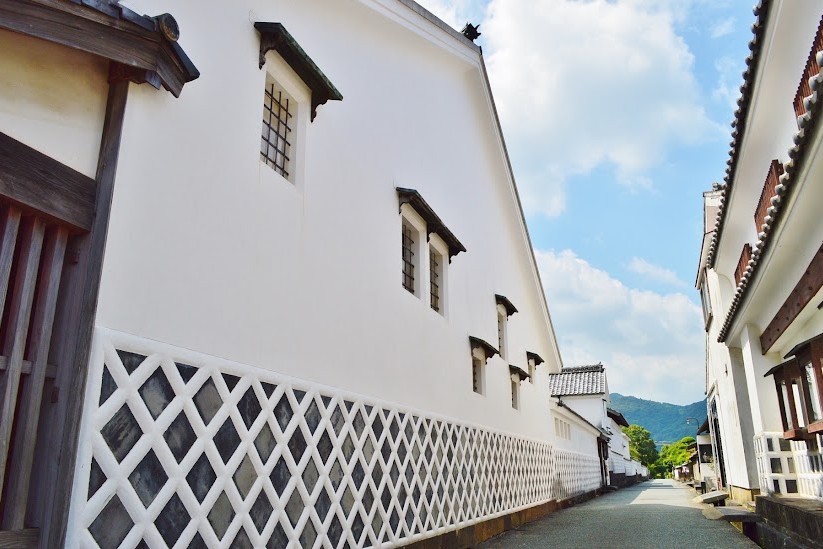 KOGEI
Hagi Ware — A Guide to Japan’s Slowly Changing Pottery
Pale, crackled glaze that slowly changes color with use, and how to choose a piece.
KOGEI
Hagi Ware — A Guide to Japan’s Slowly Changing Pottery
Pale, crackled glaze that slowly changes color with use, and how to choose a piece.
 KOGEI
What Is Mino Ware? The Everyday Japanese Ceramic You Probably Already Own
What is Mino ware? A beginner's guide to Japan's most common ceramic: the Tono region, the Shino, Oribe, Kizeto and Setoguro glazes, and how to choose a piece.
KOGEI
What Is Mino Ware? The Everyday Japanese Ceramic You Probably Already Own
What is Mino ware? A beginner's guide to Japan's most common ceramic: the Tono region, the Shino, Oribe, Kizeto and Setoguro glazes, and how to choose a piece.