
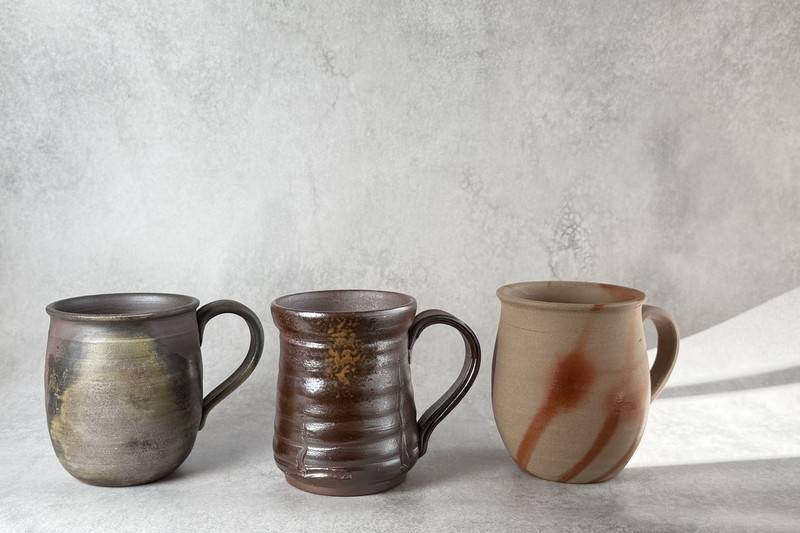
Some pottery is dressed in glaze. Bizen traditionally wears no applied glaze — its surface is the work of clay, fire, ash, and straw, decided somewhere inside the kiln.
Pick up a piece of Bizen ware and the first surprise is often what is missing. There is no painted pattern and no applied glaze. The surface is largely bare clay, hardened by fire into something between earth and stone — though here and there you may find a soft sheen where wood ash settled and melted. And yet it is never merely plain. Run a thumb across it and you find warmth, a little roughness, a quiet scatter of color — russet, ash-gray, a blush of scarlet — that no one drew and no one could repeat.
If you are new to Bizen, two questions usually follow. With no applied glaze, how do you choose one? And is bare clay hard to live with? The short answer is that Bizen is simpler than it looks: you choose the firing pattern that speaks to you, you give the piece a quick rinse before you serve on it, and you let it deepen with the years. Below is what the surface is telling you, and how to pick a piece you'll reach for.
On this page
2. Clay, Fire, Ash, and Straw
3. A Short History — From Everyday Jars to the Tea Room
4. Reading the Fire — Four Bizen Firing Patterns
5. Choosing a Piece
6. Living With Bizen — Use and Care
7. Editor's Picks
8. A Note from the Shop
9. Frequently Asked Questions
10. In Closing
1. What You Notice in the Hand
The first thing to meet is the surface itself. Unlike a glassy glazed cup, Bizen lets you feel the clay directly — an earthen skin, sometimes matte and dry to the touch, sometimes carrying a softer sheen where ash has melted into the surface during firing. It is a material you read as much with your fingertips as with your eyes.
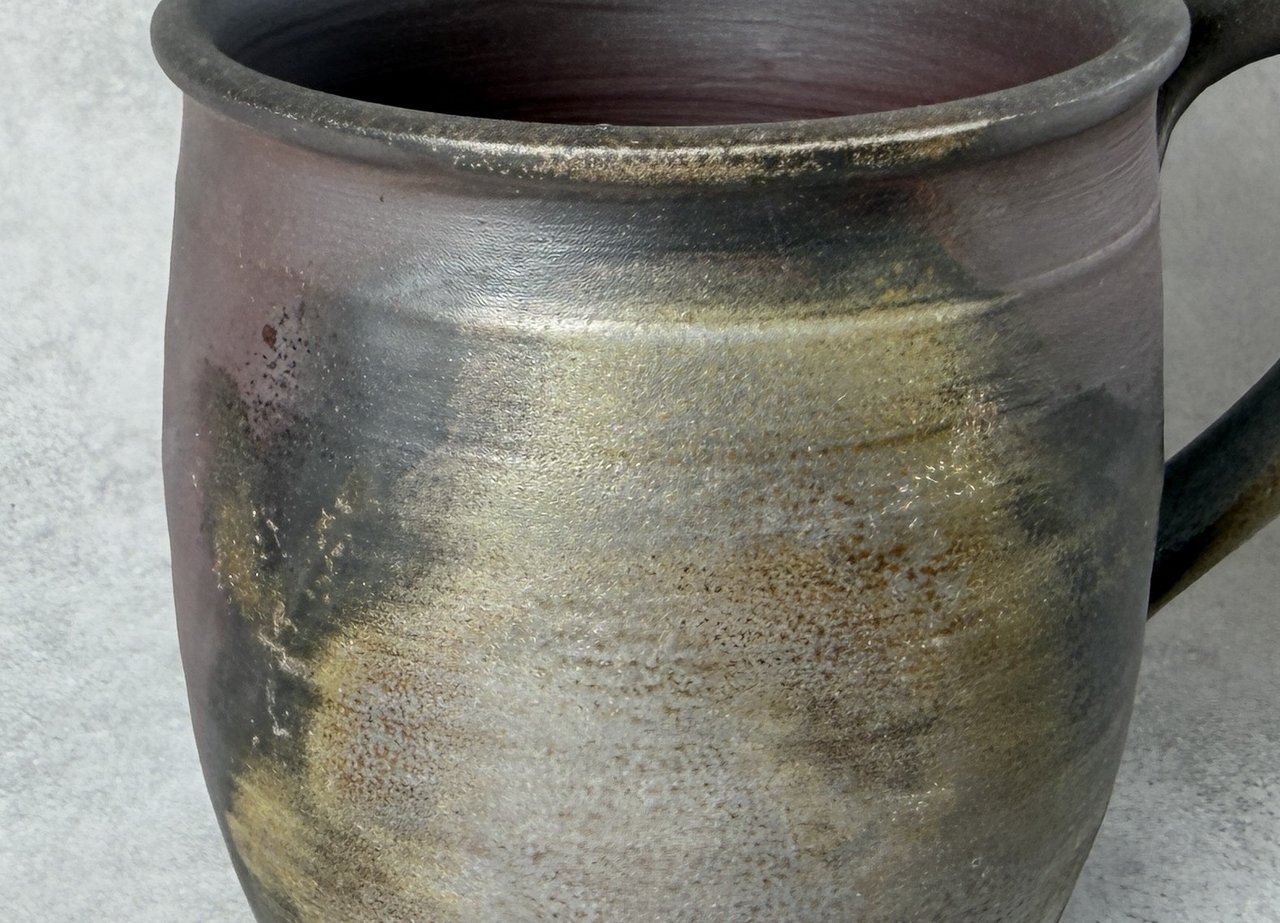
The color is not one color, either. Across a single surface you might read warm brown, a reddish clay tone, patches of ash, and a cooler gray. The colors are not painted; they emerge through the clay and the firing. Bizen is fired at roughly 1,200 to 1,300 degrees Celsius, and its color and markings come from the clay and the conditions inside the kiln — where the piece stood, and how flame, ash, and smoke reached it. That is why Bizen is often described as a pottery in which no two pieces are alike; even two cups from the same hand and the same clay come out of the fire wearing different weather.
Put simply, Bizen ware is a stoneware tradition centered on Imbe, in Bizen City, Okayama Prefecture, traditionally made without applied glaze. It is one of Japan's Six Ancient Kilns — the handful of pottery centers that have fired more or less continuously since medieval times. What sets Bizen apart, even among those, is its steady preference for leaving the clay unglazed. The beauty is meant to come from the material and the fire.
2. Clay, Fire, Ash, and Straw
Traditional Bizen places the clay itself at the center of the work. Local clay from around Imbe is rich in iron, and some was traditionally gathered from clay layers beneath rice fields and is known as hiyose. During firing, the iron in the clay responds to heat, ash, straw, and the atmosphere inside the kiln, producing colors that do not need to be painted or covered with an applied glaze.
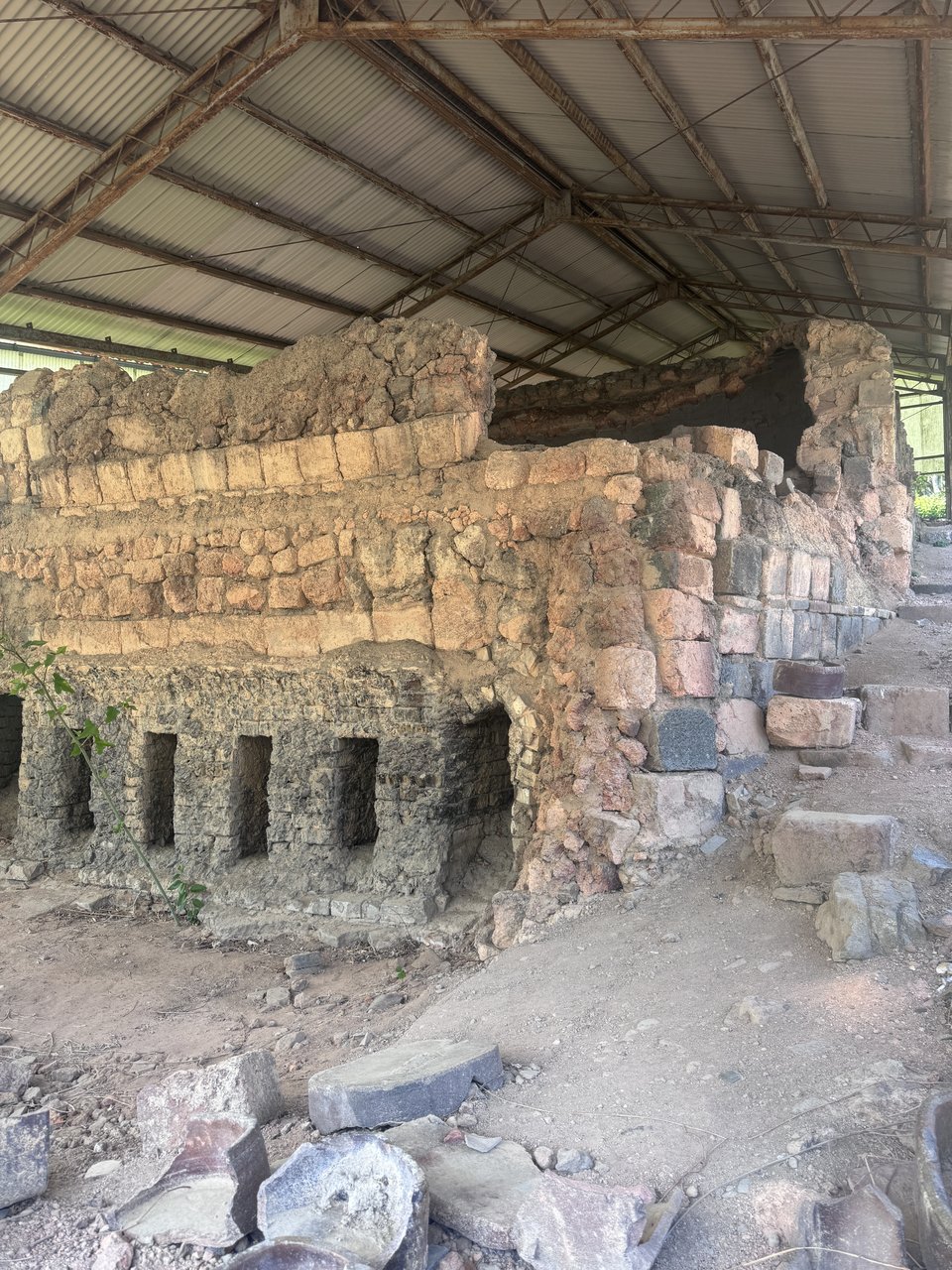
The rest is left to the kiln — and not to fire alone. Pieces are fired with pine in wood-fired kilns, including the climbing kiln (noborigama). The firing runs continuously for about five to ten days, and sometimes longer, and over that stretch flame, falling ash, and drifting smoke move through the chamber and settle unevenly on everything inside. Where pine ash lands, it can melt at high heat into a natural, glaze-like surface; where rice straw is laid against the clay, it leaves colored lines of its own. These firing-born changes are often called yohen, or kiln transformation. Nothing is painted on; the firing itself is the decoration.
3. A Short History — From Everyday Jars to the Tea Room
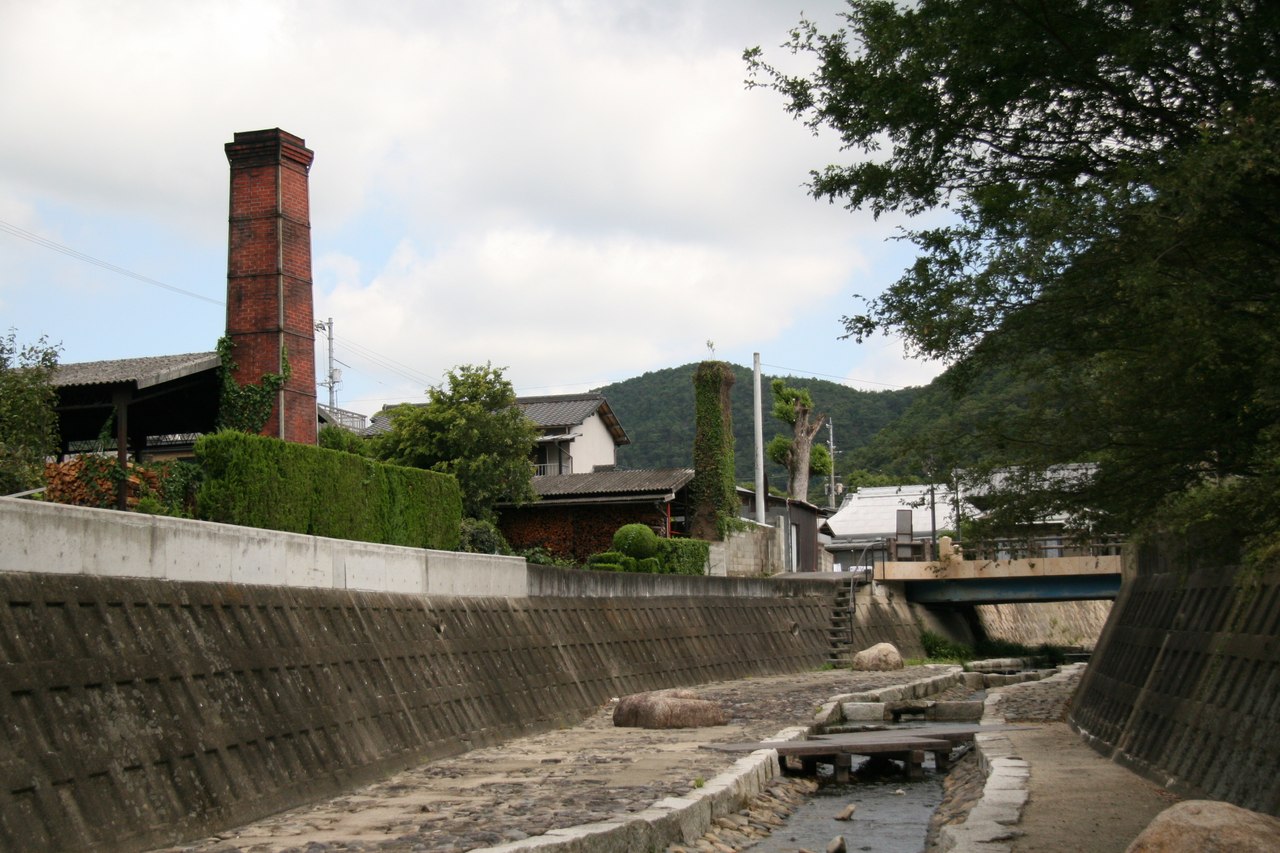
For much of its long history, Bizen ware was not a tea-room luxury but a workhorse. It emerged around the end of the Heian period from the region's older Sue ware tradition. Throughout the medieval period, Bizen kilns produced the vessels people needed in everyday life: large storage jars, household containers, and ridged grinding bowls called suribachi. They were fired so hard that an old saying claimed a Bizen suribachi would not break even if thrown. Bizen ware was valued first and foremost for its strength.
Its transformation into an object of aesthetic appreciation began in the late Muromachi period and reached its height during the Momoyama period. As the taste for wabi — the beauty of the plain, imperfect, and unforced — took hold, tea practitioners found something deeply suited to the tea room in Bizen's unglazed, fire-marked clay. Leading figures in tea culture, including Sen no Rikyū, used and admired Bizen vessels such as water jars (mizusashi) and flower vases (hanaire). Toyotomi Hideyoshi also used Bizen ware at his tea gatherings. The very qualities that glaze would have concealed — the texture of the clay and the unpredictable traces of flame and ash — had become the point.
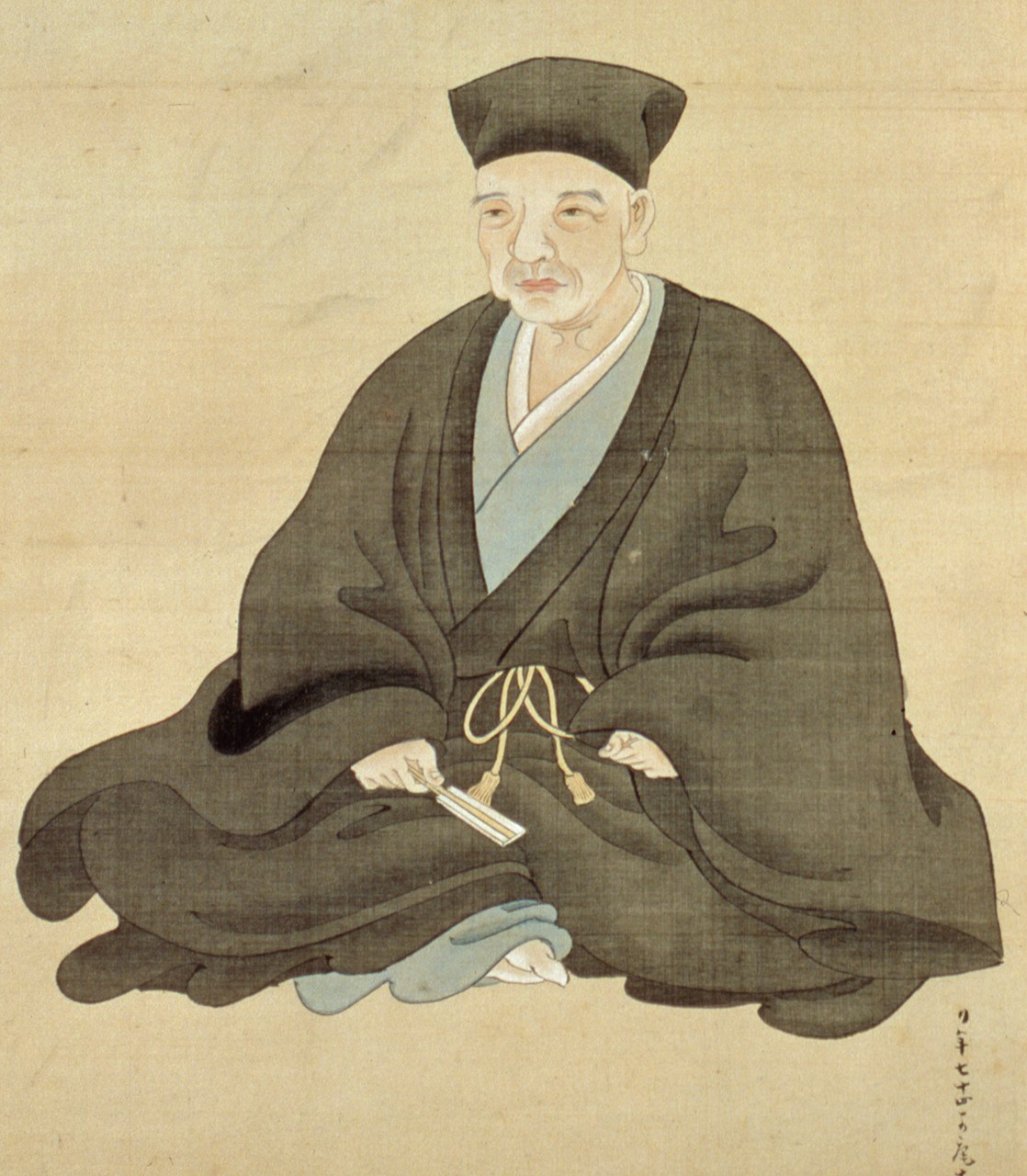
Portrait of Sen no Rikyū, collection of the Sakai City Museum (堺市博物館蔵「千利休」)
The centuries that followed were quieter. As white porcelain and brightly glazed wares from Arita and other production centers became increasingly popular, Bizen gradually lost its former prominence. Its tradition nevertheless survived under the protection of the Ikeda lords of Okayama, who supported its potters, and through the continued production of practical household wares.
Bizen's artistic revival came in the twentieth century. The potter Kaneshige Tōyō studied the great tea wares of the Momoyama period and worked to restore both their techniques and their spirit. In recognition of this achievement, he was designated a Holder of Important Intangible Cultural Property — popularly known as a Living National Treasure — in 1956. Much of the esteem that Bizen ware enjoys today can be traced to this revival: an ancient tradition of useful pottery that found a place in the tea room and never entirely forgot what it learned there.
4. Reading the Fire — Four Bizen Firing Patterns
Because the firing does the decorating, choosing a Bizen piece is really a matter of choosing which of the fire's patterns you love. A few recur often enough to have names, and knowing them turns a shelf of brown pots into a set of very different faces.
| Pattern | How it forms | The look |
|---|---|---|
| Hidasuki 緋襷 |
Rice straw laid against the clay reacts with the iron in the body | Fine red, scarlet, and brown lines on a pale ground |
| Goma 胡麻 |
Pine ash lands and melts at high heat into a natural glaze | “Sesame” speckles, deepening to a glassy sheen |
| Sangiri 桟切 |
Ash or charcoal limits the oxygen reaching the clay (sometimes charcoal added late in the firing) | Cool gray-blue, smoky gray, and black-brown |
| Botamochi 牡丹餅 |
A small disk of clay, or another pot, shields a spot from the falling ash | A soft, pale round mark, like the sweet it is named for |
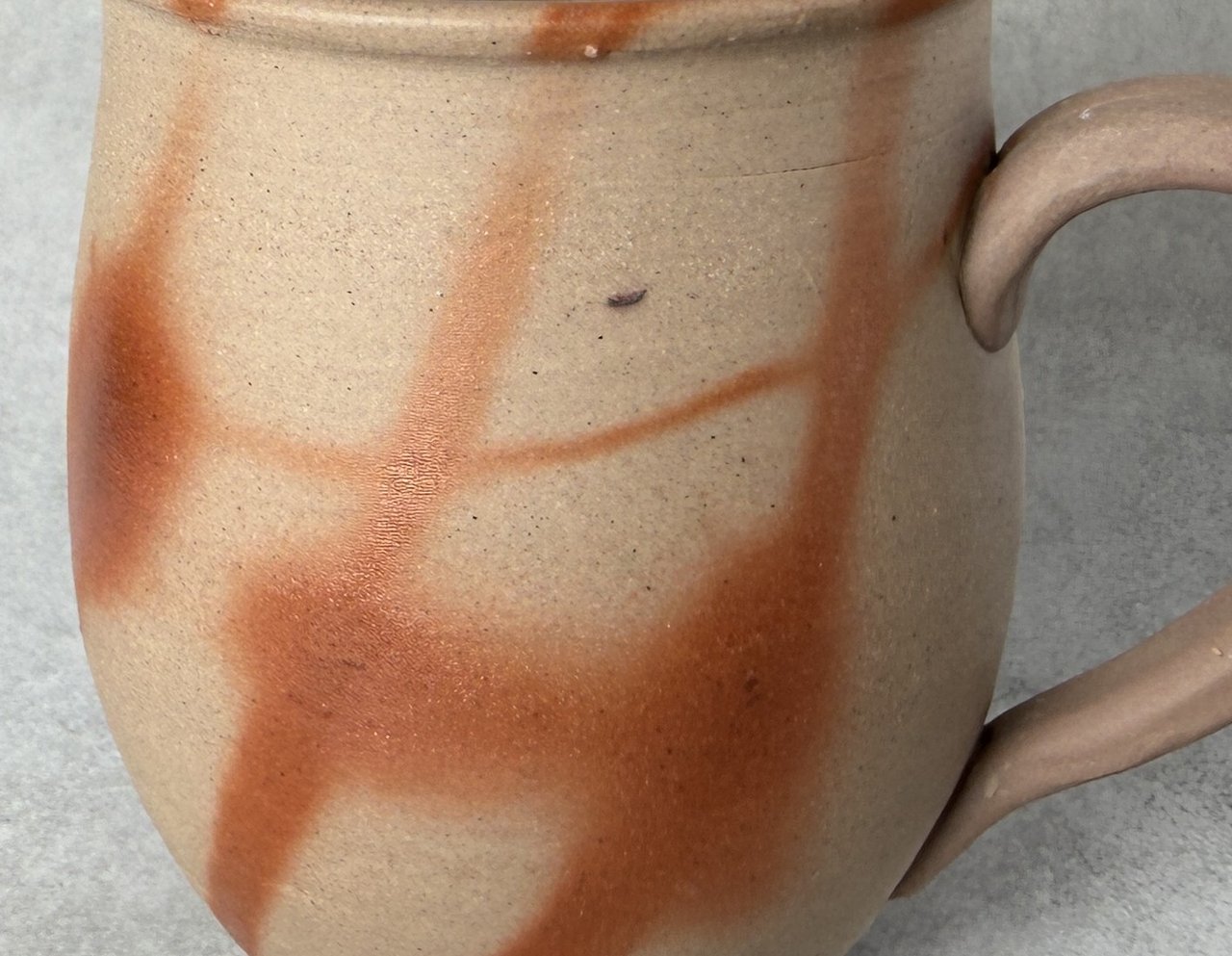
Hidasuki — “scarlet cords.” Before firing, rice straw is laid against or wrapped around the piece. Where the straw meets the clay, it reacts with the iron in the body to leave fine lines of red, scarlet, and brown against a pale ground. The effect is delicate and graphic, and it tends to appeal to people who find plain Bizen a little dark.
Goma — “sesame.” As the pine burns, its ash drifts onto the pots and, in the heat, melts into a natural glaze. Fine deposits look as though sesame seeds had been scattered across the surface; heavier ones can run and pool into a glassier sheen. No glaze was brushed onto the surface; in a traditional wood firing, the ash settled and melted there.
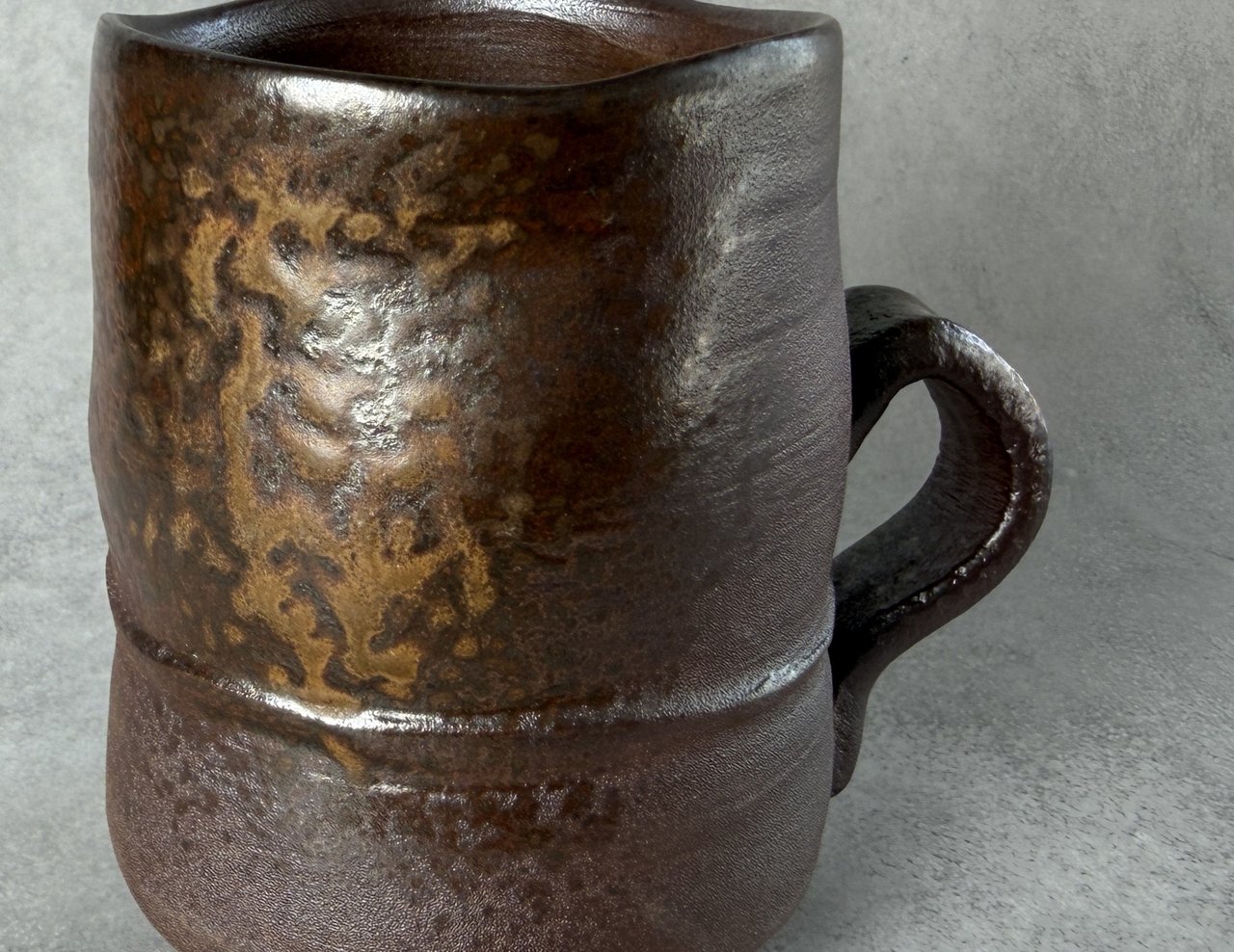
Sangiri — the cooler, quieter face of Bizen. Where ash or charcoal limits the oxygen reaching the clay, the surface may shift toward gray-blue, smoky gray, or black-brown. Some sangiri effects form naturally near accumulated ash, while others are guided by adding charcoal near the end of the firing.
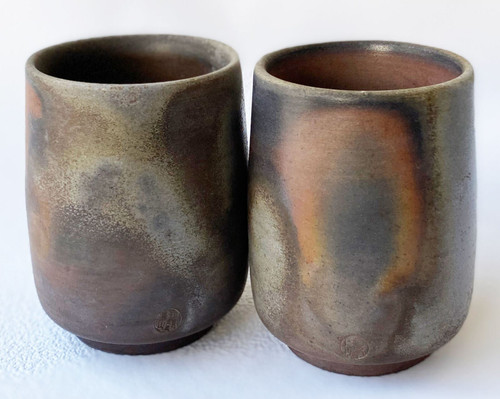
Botamochi — “rice cake.” When a small disk of clay, or another pot, rests on a surface during firing, it shields that spot from the falling ash and flame. The sheltered circle stays paler than the fired ground around it, leaving a soft round mark — named, fondly, after the round sweet it resembles.
There is no ranking here, and no “correct” one to want. A collector of hidasuki and a collector of sangiri are simply drawn to different moods of the same fire.
5. Choosing a Piece
With the patterns in mind, the rest of choosing is ordinary and pleasant. It helps to start from use, then let the surface decide.
By use, Bizen falls into a few familiar groups. There are drinking vessels — the small guinomi and ochoko cups, and the tokkuri flask — long favored for sake, and often the easiest way into Bizen. There are flowers: vases and slender single-stem holders, where the muted clay sets off a single branch beautifully. And there is the table: small plates and mukōzuke dishes that bring an earthy note to a meal. A handled hanaire in goma can be lifted to the table or hung from a post, which is how these were used before they became display pieces.
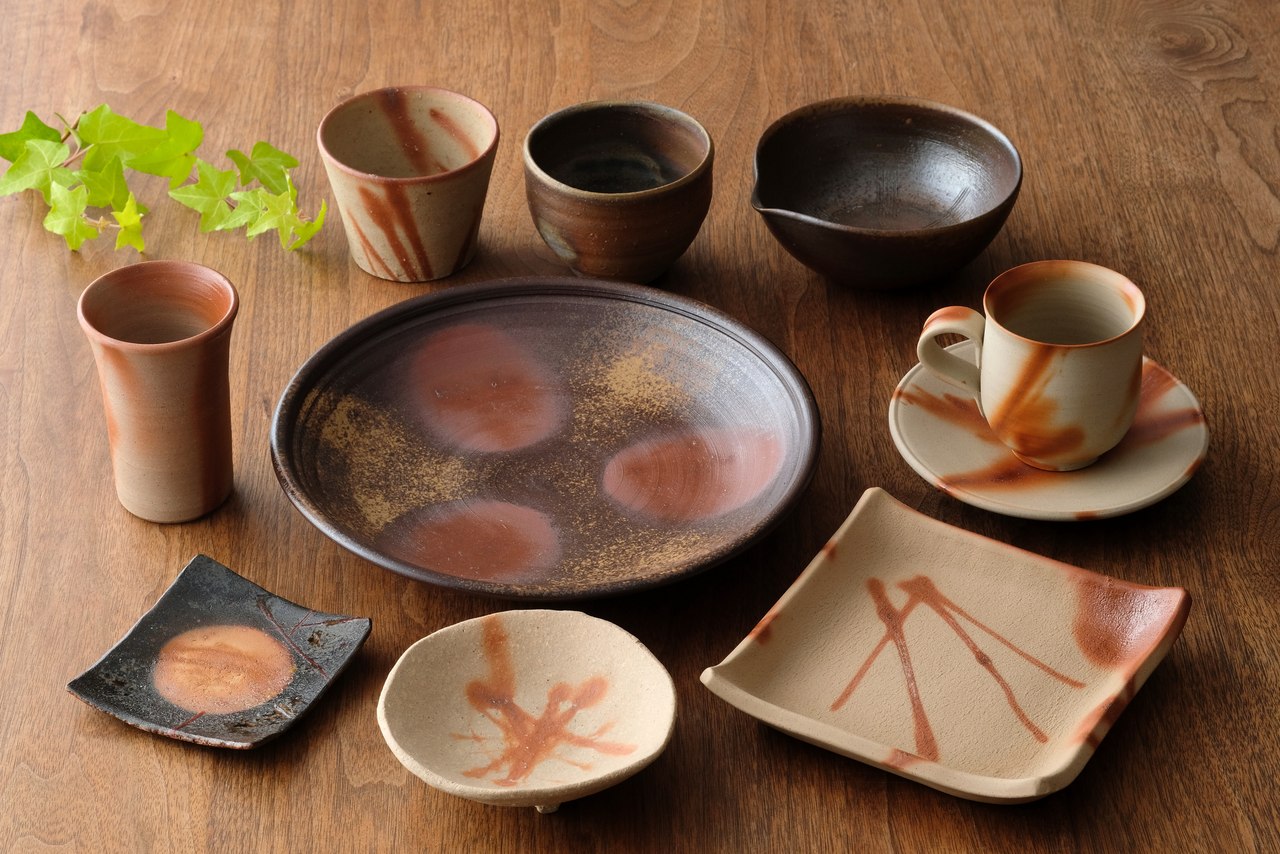
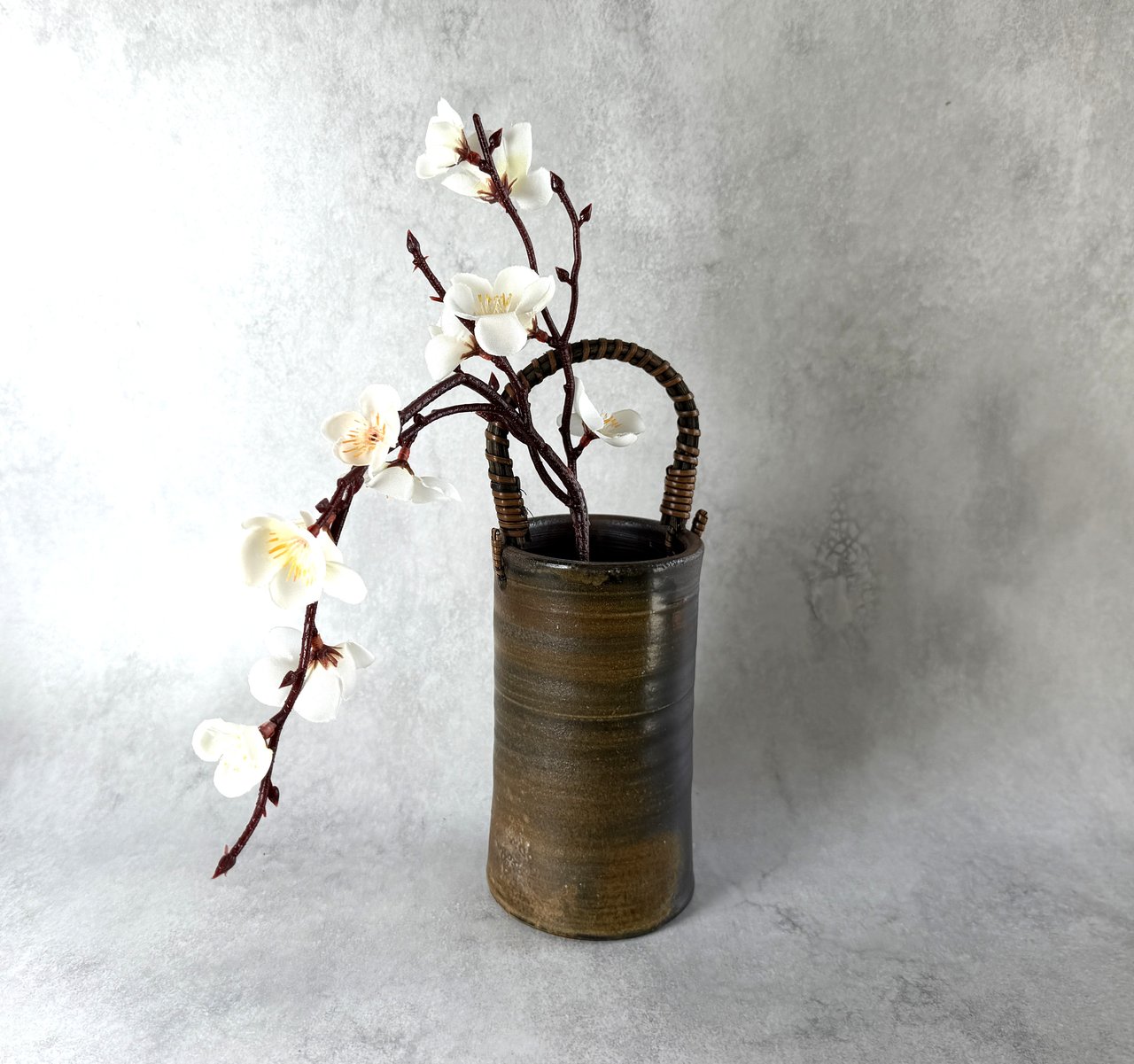
By surface, let the mood guide you. Reach for hidasuki if you want something light and lyrical, for goma if you like a rustic, sesame-flecked warmth, and for sangiri if you are drawn to something still and deep. If this is your first Bizen, there is a lot to be said for beginning small — a cup or a little plate that sits well in the hand, costs little to try, and shows you across a season whether the material suits you. Bizen tends to win people over slowly, through use, rather than at first glance.
6. Living With Bizen — Use and Care
Bare clay sounds demanding. In practice Bizen asks very little, and most of it is ordinary kitchen sense.
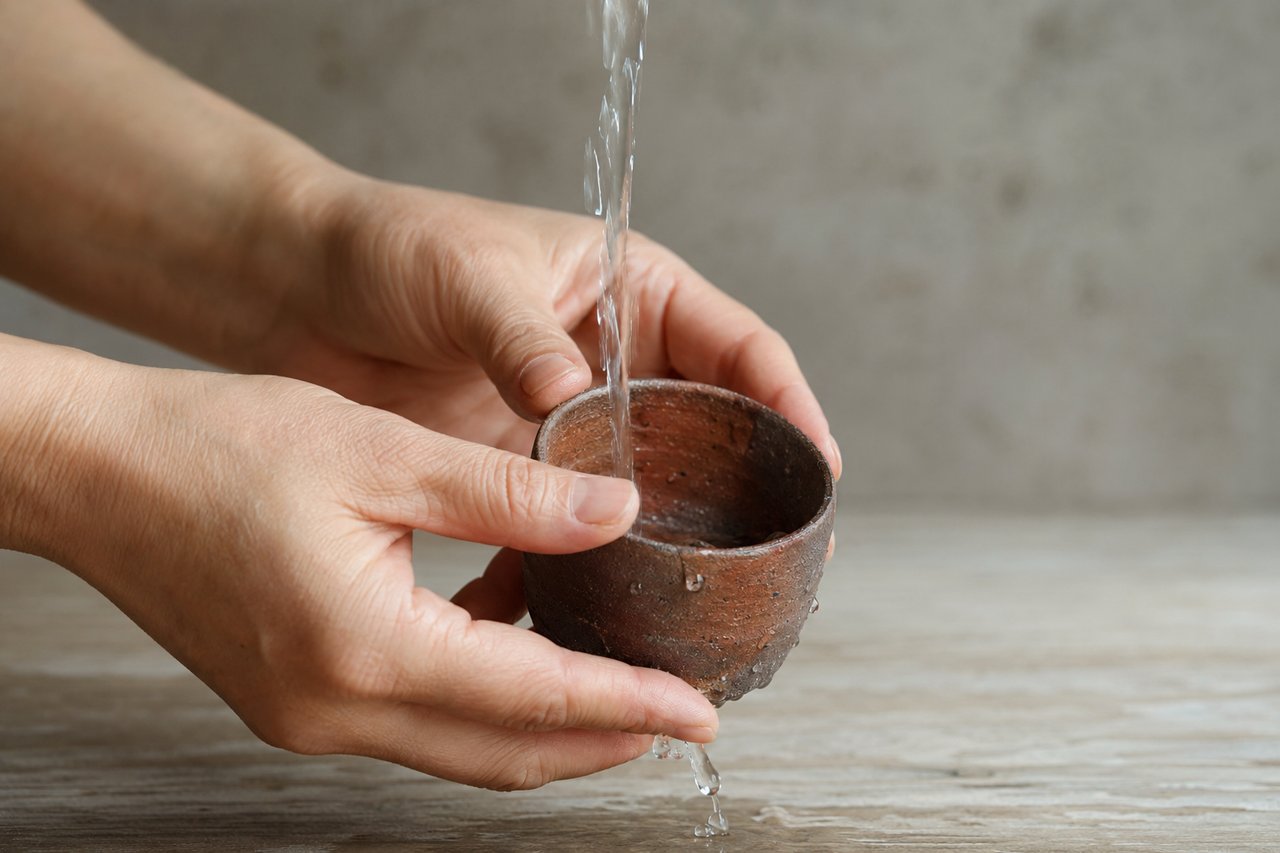
Before its first use, wash a new piece with mild dish soap. After that, before serving oily, strongly colored, or strongly scented foods, you may give the piece a quick rinse with water; a moment of water brightens the clay's color and helps it resist stains and odors. In everyday use, Bizen can be washed with mild dish soap as usual; simply dry it well afterward, rather than shutting it away damp.
A few honest cautions round out the picture. Whether a particular piece is suited to the microwave or dishwasher depends on the maker, so follow any guidance that came with it rather than assuming either way. It is best to avoid the oven, open flame, and sudden changes in temperature. And because the unglazed foot can be a little rough, a piece may mark a bare table or a lacquer tray, so a small mat or cloth underneath is a kind precaution.
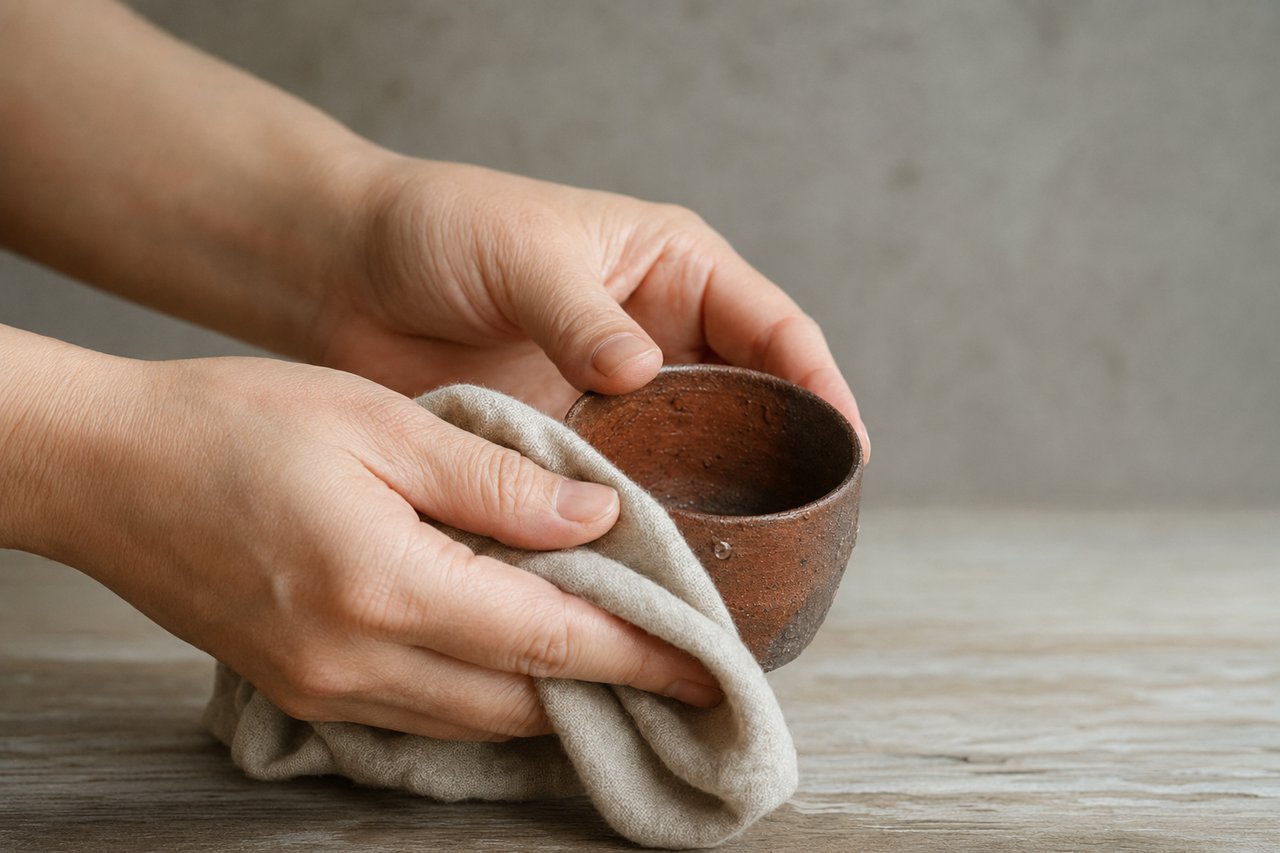
What you get in return is a piece that changes. With use, the surface gathers a soft sheen and the color deepens — Bizen is one of those wares people describe as growing in the hand over years. It is worth being clear about what that does and does not mean. Natural color variation, ash deposits, slight warping, and firing marks may all be part of an individual piece's character. For functional tableware, cracks, leakage, or instability are different from natural firing variation and should not be treated simply as kiln scenery.
7. Editor's Picks
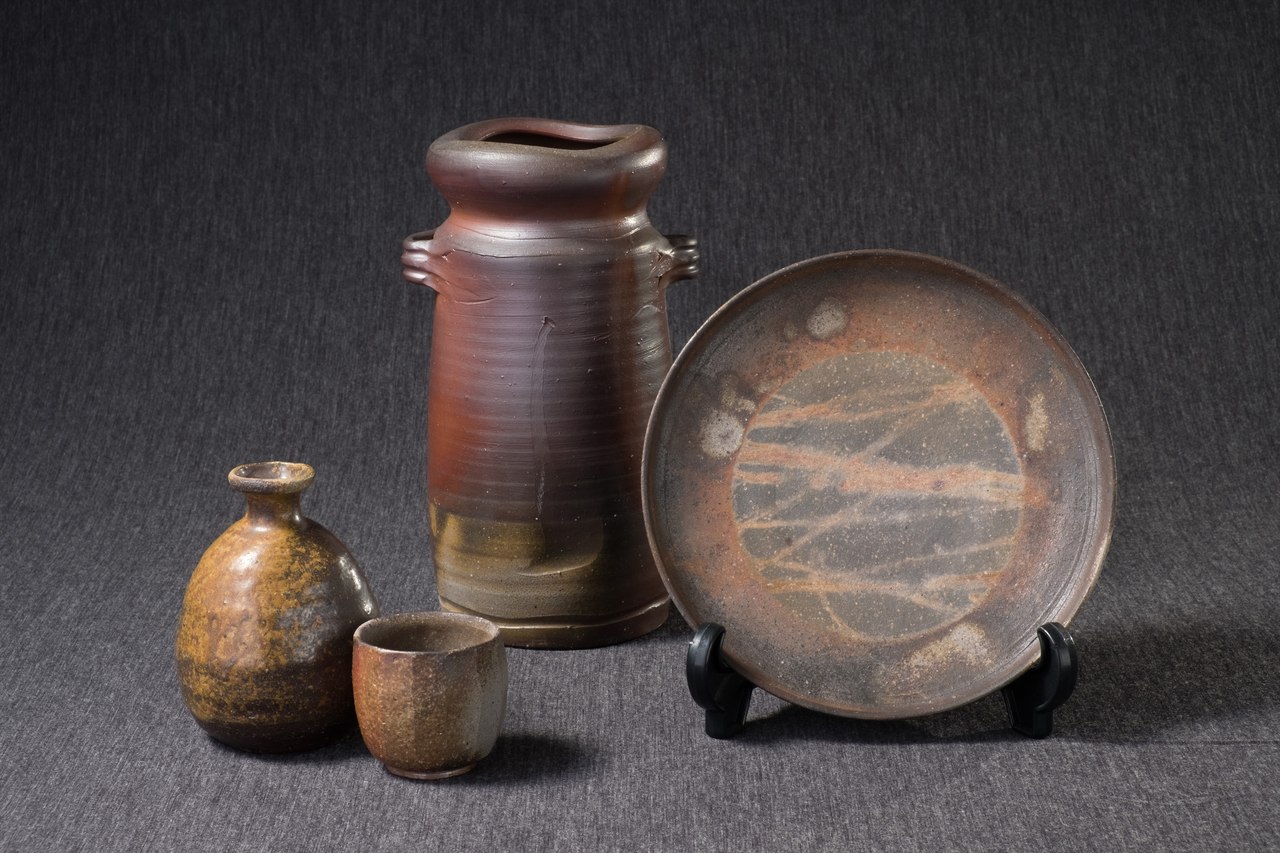
Three pieces of genuine Bizen ware from our collection — all fired at the Tosho kiln in Imbe — stepping up from an easy first cup to a gift.
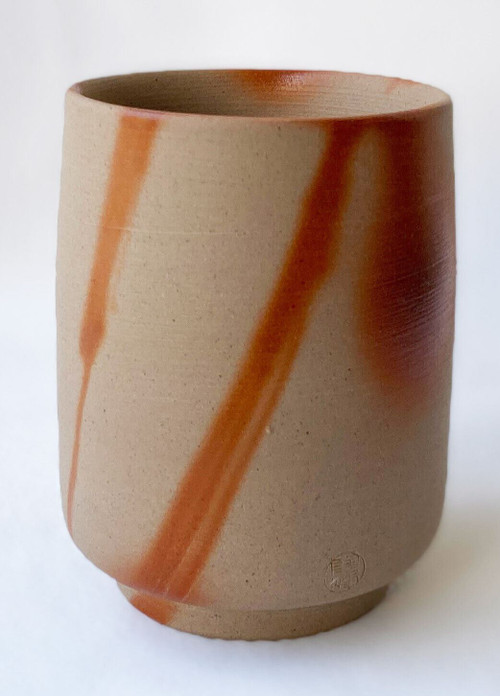
Pick 1 — A First Cup: Bizen Yunomi, Hidasuki. A full-size tea cup in clear hidasuki — pale clay crossed by scarlet straw lines. Easy to bring into daily life for tea or water, and an affordable, honest way to get to know the material. (See the cup)
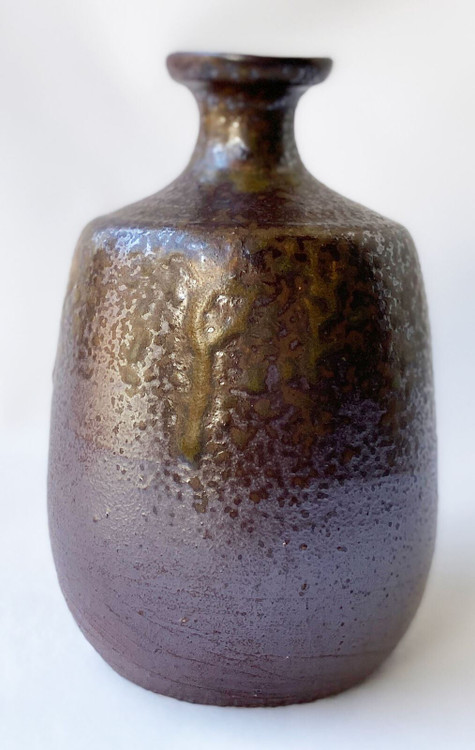
Pick 2 — For Sake: Bizen Tokkuri, Goma. A tokkuri flask with goma ash running down from the shoulder — the classic way Bizen is loved at the table. Pair it with the matching goma guinomi cups for a complete set. (See the flask)
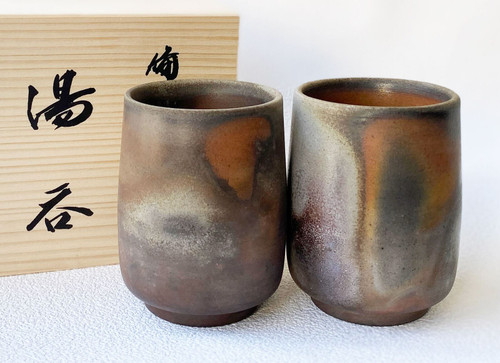
Pick 3 — For Giving: Bizen Yunomi Pair, Sangiri. A boxed pair in still, deep sangiri tones — a considered gift for a new home, a couple, or a milestone, and a quiet way to give two people the same fire. (See the pair)
8. A Note from the Shop
If there is one thing we would gently explain, it is how to read a Bizen surface. The shifts in color, the ash, and the firing pattern are not printing errors or inconsistencies. They are part of what makes each properly finished piece individual — the record of one firing, in one spot in one kiln, that no other piece carries in quite the same way. We are here mainly to translate that, and to help you find the piece that belongs on your table.
9. Frequently Asked Questions
Q: What is a Bizen?
“Bizen” is the name of both a place and a pottery. Strictly, Bizen is a town — and a former province — in what is now Okayama Prefecture, and Bizen ware is the unglazed stoneware fired there. In everyday shorthand, collectors often call a single piece “a Bizen” — a Bizen cup, a Bizen vase — the way one might say “a Kutani” or “a Hagi.”
Q: What is Bizen ware in Japanese?
Bizen ware is 備前焼, read Bizen-yaki. 備前 (Bizen) is the place name, and 焼 (yaki) means “fired” — the ending Japanese attaches to a pottery's home, as in Arita-yaki or Hagi-yaki. You will also see it written and said simply as Bizen.
Q: Is Bizen an English word?
No. Bizen is a Japanese proper noun — the name of a place in Okayama — so in English it is used as a name rather than translated, and there is no English equivalent. The term “Bizen ware” simply pairs that place name with the English word “ware.”
Q: Why is Bizen ware so expensive?
It can be, though a good deal of it is not. Because Bizen carries no applied glaze, the whole surface is on show, and its colors come from a long wood firing — often five to ten days or more — that consumes a great deal of pine and gives unpredictable results, so finely marked pieces are relatively few. A respected maker, an unusual firing result, age, a signed presentation box, or provenance will all raise a price further. But everyday Bizen — a simple cup or small dish — is modestly priced and fully usable; a higher price reflects rarity and making, not whether a piece is “better” for daily life.
Q: I'm new to this — how do I choose one?
Start from how you'll use it — a sake cup, a small plate, a vase — then choose the firing pattern you like: the scarlet lines of hidasuki, the sesame flecks of goma, or the still gray-blue of sangiri. For a first piece, a cup or small dish that sits well in the hand is the kindest place to begin, and comfort in the hand matters more than price alone.
Q: Do I need to season it before use, and is it hard to care for?
No special seasoning is generally required. Wash the piece with mild dish soap before its first use, and follow any instructions supplied by the maker. In daily use, a quick rinse with water before serving brightens the color and helps resist stains, and washing with mild soap and drying well is enough.
Q: Why is every piece a different color?
Because nothing is painted on. Bizen's colors and patterns come from the clay and the firing conditions — where the piece stood in the kiln, and how flame, ash, and smoke reached it. These changes are often called yohen, or kiln transformation, and they are why no two Bizen pieces come out quite alike, even from the same clay and the same hand.
Q: Is Bizen ware still made and used in Japan today?
Yes. Bizen went through quieter centuries, but it was revived in the modern era. The potter Kaneshige Tōyō played a central role in that revival and was designated a Holder of Important Intangible Cultural Property — popularly known as a Living National Treasure — in 1956. The kilns of Imbe are still working, and Bizen remains in everyday use, from sake cups to flower vases.
Q: What can I use Bizen ware for?
More than you might expect. It is loved for sake, but a Bizen cup suits tea or coffee just as well, small dishes and plates are made for the table, and vases hold a single branch beautifully. Many people also enjoy Bizen for beer — its surface is often said to give the foam a finer, softer head.
10. In Closing
Bizen rewards a slower kind of looking. Once you can read the fire a little — the scarlet of hidasuki, the drift of goma, the hush of sangiri, the pale circle of a botamochi — a shelf of “brown pots” opens into something far more varied, and choosing becomes a pleasure rather than a puzzle. Begin with one small piece, use it, and let it deepen. If you'd like a hand finding a first Bizen cup or a vase for a single branch, we're always glad to help.
For more from Japan's kilns and workshops, see our guide to the metalwork of Takaoka — and look for more of the Six Ancient Kilns to come.
— from Osaka, Team Manekineko-Ai