
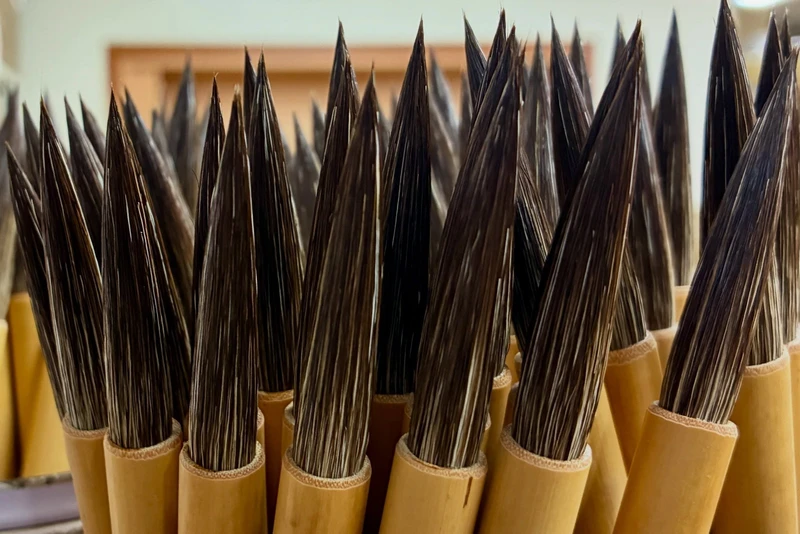
A calligraphy brush looks simple: a bamboo handle and a tuft of hair. Almost everything about how it writes is decided inside that tuft.
Two brushes can look nearly the same on a shop shelf and write in completely different ways. One leaves a soft, wet line that swells and fades; another snaps back after every stroke and holds a sharp point. The difference lies in the hair, in how long the tuft is, and in how it was made.
This guide walks through a Japanese calligraphy brush the way a brush maker might hand one to you: what it is called, how a Nara brush is made, what each kind of hair does, how the length of the tip and the size of the brush change the line, and how to prepare a new brush and look after it. At the end are a few examples from our collection and some common questions.
On this page
2. Nara Fude: Where Japanese Brush Making Began
3. How a Nara Brush Is Made
4. The Hair: What Each Kind Brings to the Line
5. The Tip: Long, Medium, or Short
6. Size: Matching the Brush to the Paper
7. How to Tell a Good Brush
8. Preparing a New Brush
9. Washing, Drying, and Storing
10. Pieces in Our Collection
11. A Note from the Shop
12. Frequently Asked Questions
1. What a Japanese Calligraphy Brush Is Called
In Japanese, a writing brush is a fude (筆). For calligraphy, or shodō (書道), brushes are usually spoken of in two broad groups.
Futofude (太筆), the large brush. Also called ōfude in its biggest sizes. This is the brush for the main characters of a piece: two to six characters across a sheet of hanshi, the standard practice paper, or a single bold character on a larger sheet.
Hosofude (細筆), the small brush. Also called kofude. This is the brush for small characters: your name in the corner of a practice sheet, a letter, or the flowing lines of kana, the Japanese syllabic script.
Between the two sit medium brushes, and at the far end are very large brushes, some held with both hands, made for long vertical scrolls and for calligraphy performed in front of an audience.
2. Nara Fude: Where Japanese Brush Making Began
Nara is traditionally regarded as the birthplace of brush making in Japan. Brushes first reached Japan from China, and it is said that the monk Kūkai (Kōbō Daishi), after studying in Tang-dynasty China in the early ninth century, brought back the methods of brush making and taught them to a man of Yamato Province named Sakaina Kiyokawa. Whether every detail of that story is history or legend, Nara, the old capital, had what a brush trade needed: the great temples, with their constant copying of sutras, and a thriving ink-making industry of its own.

An even older witness survives in the Shōsōin, the imperial treasure house at Tōdai-ji. Among its holdings is a large brush, known as the Tenpyō brush, used in 752 at the ceremony that opened the eyes of the Great Buddha.
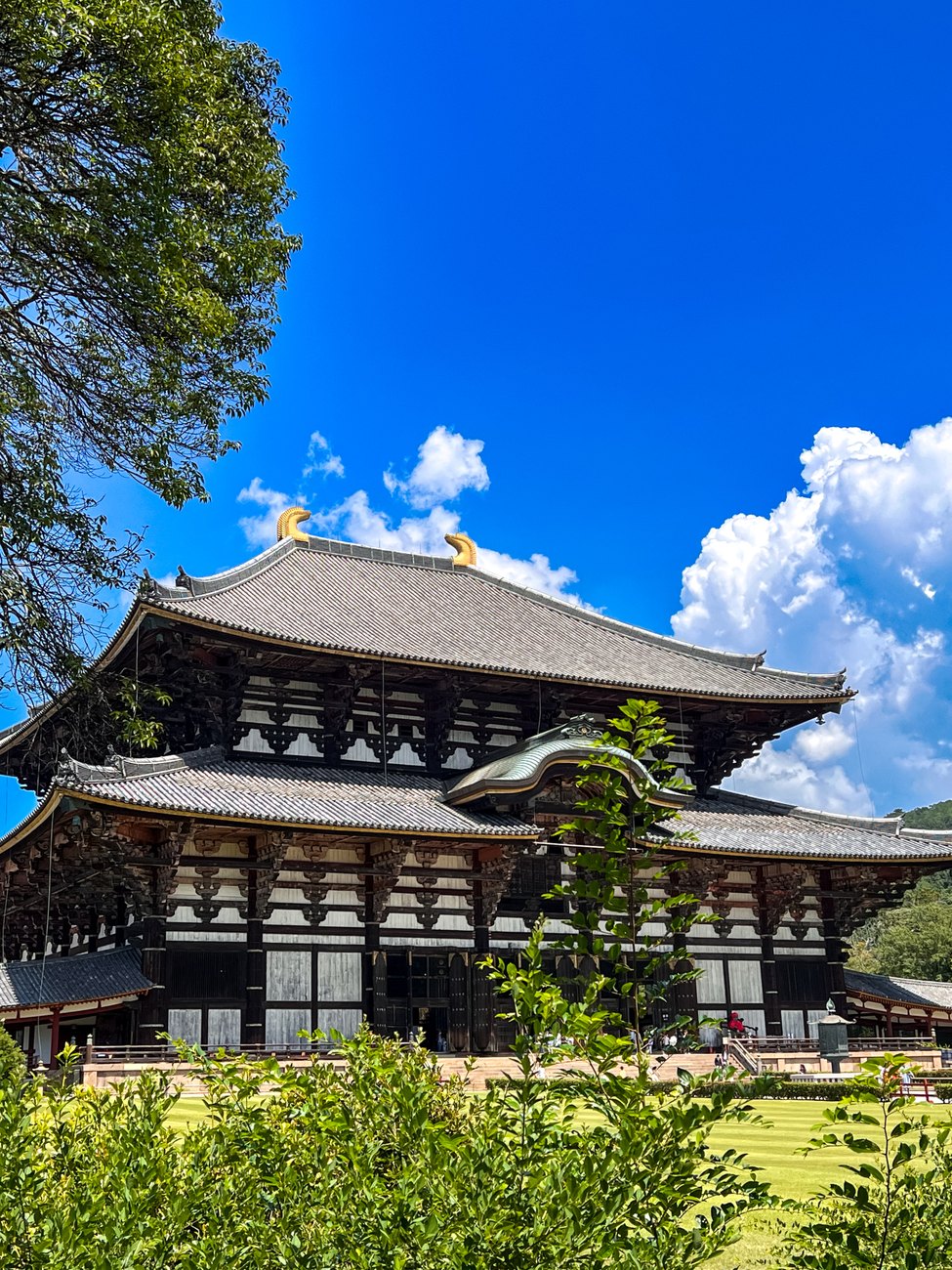
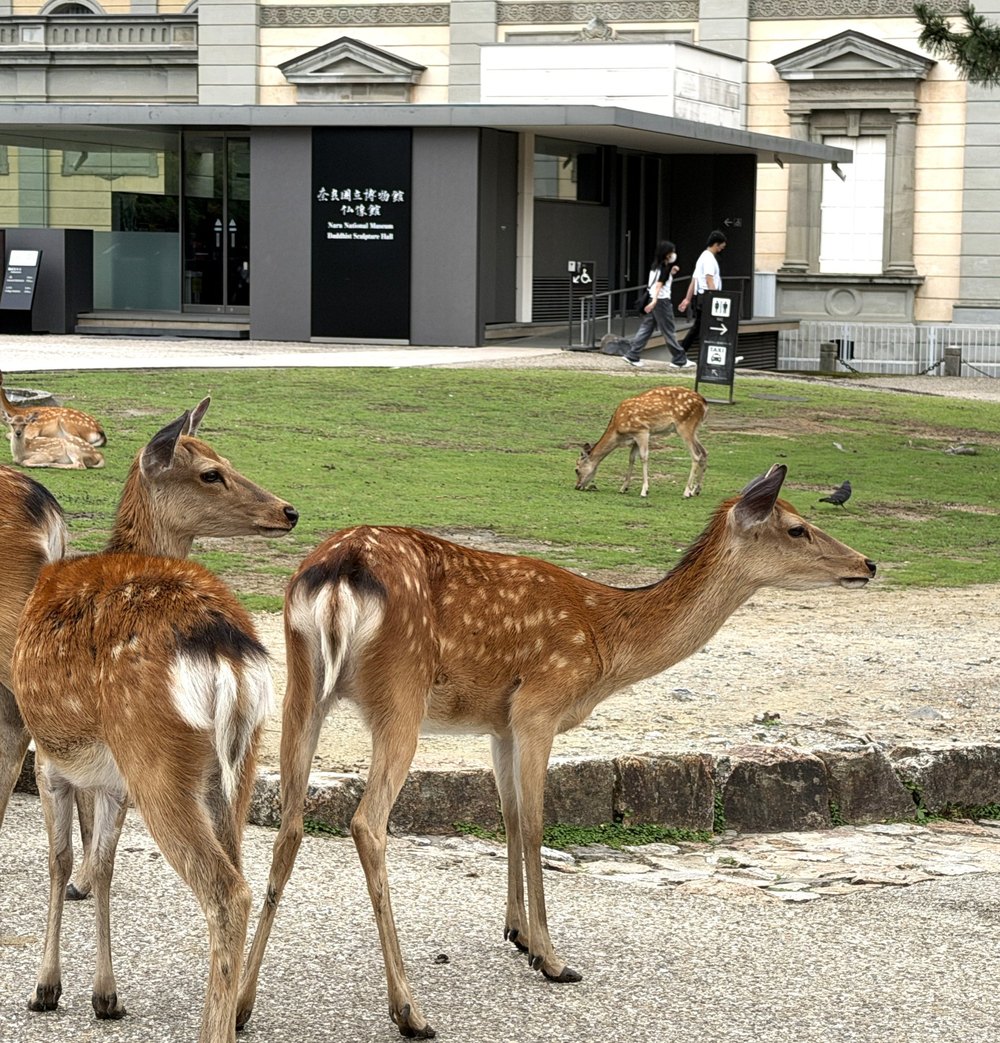
In October 1977, Nara brushes, or Nara fude (奈良筆), were designated a Traditional Craft of Japan. They are made today in Nara City and Yamato-Kōriyama.
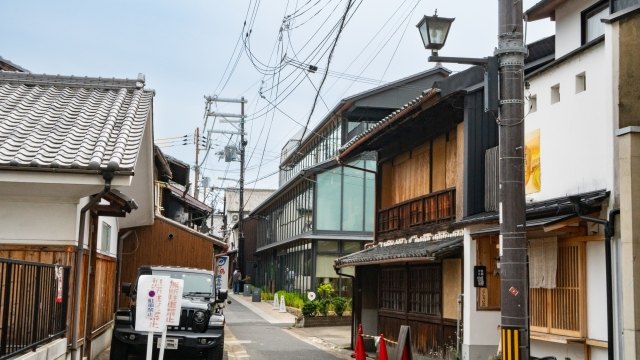
All of the calligraphy brushes in our collection come from Akashiya, a Nara brush maker founded in 1716.
3. How a Nara Brush Is Made
What sets Japanese brushes apart is the blending of hair. Chinese brushes are typically made from two or three kinds of hair; a Japanese brush maker may combine around ten, choosing each for its spring, its strength, and its length. Even within one animal, the hair differs with the part of the body it comes from, the season it was cut, and where the animal lived.
The work is divided into a long series of hand steps. A few of them explain a great deal about the finished brush.
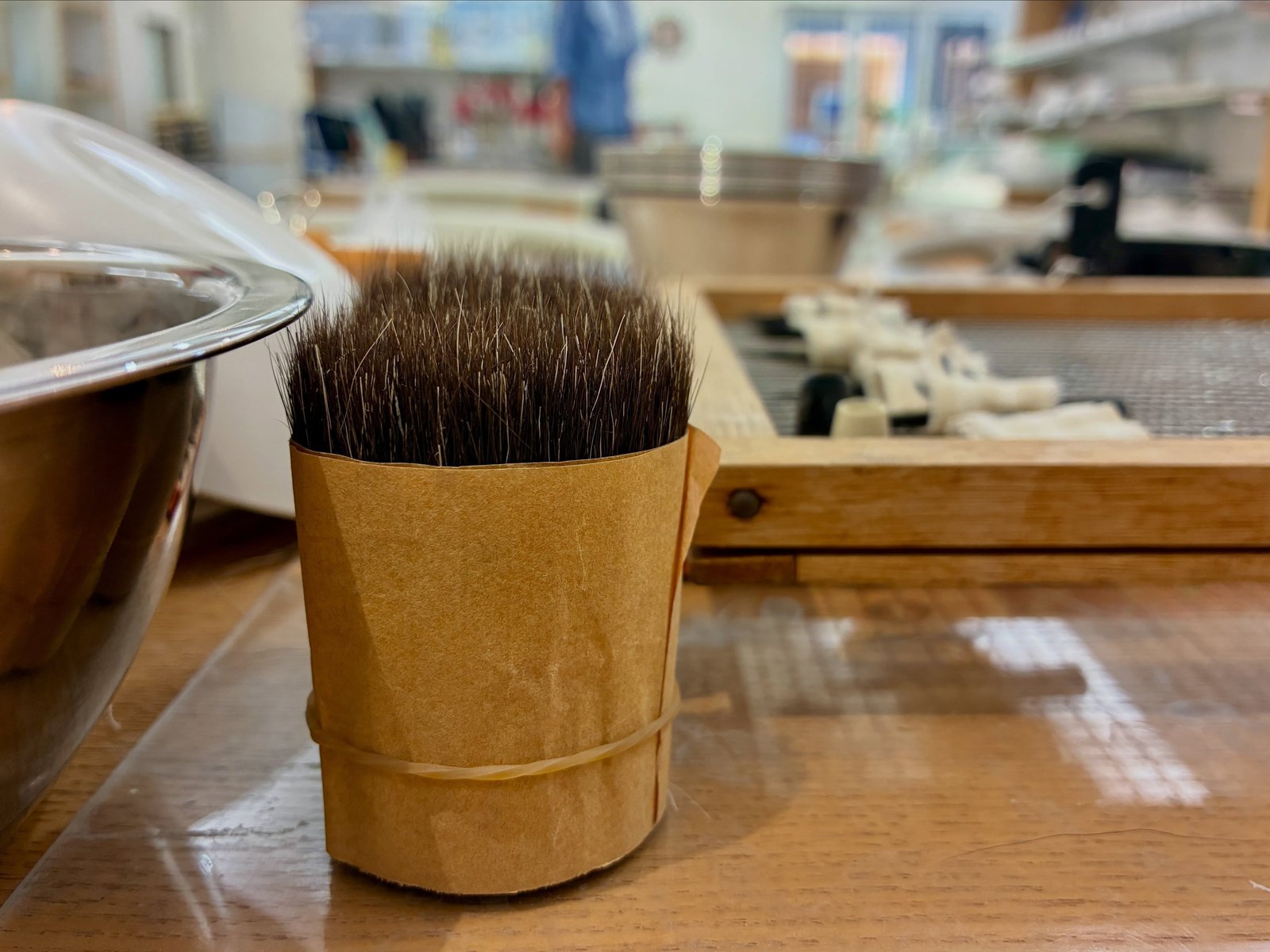
Sorting the hair. Raw hair is sorted by thickness, softness, and length.
Preparing it. The hair is rubbed with rice-husk ash and heated, then combed again and again.
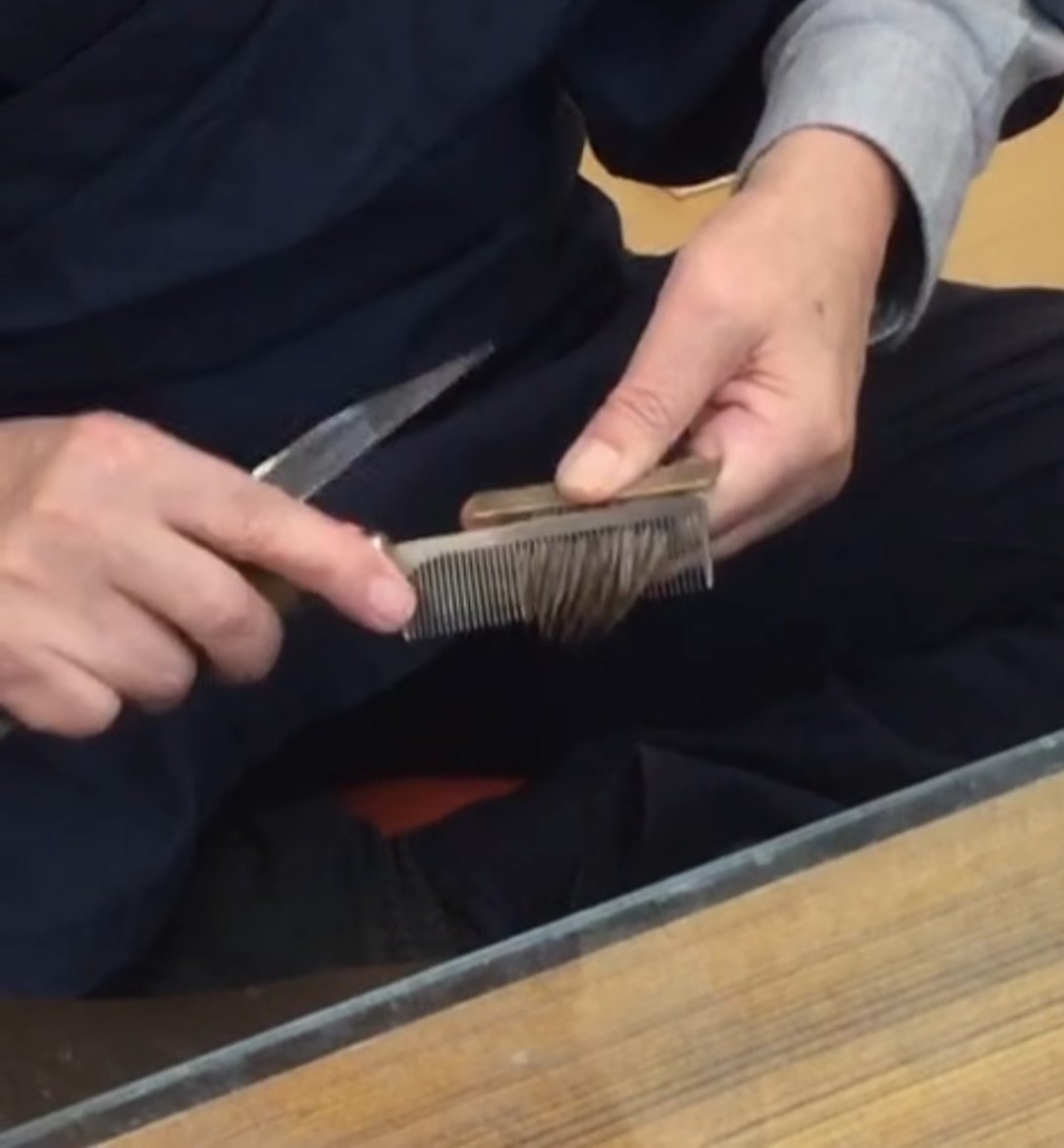
Blending, or neri-maze (練り混ぜ). The different hairs are laid out flat, spread thin, folded together, and spread again, many times over, until no part of the tuft holds more of one hair than another. Akashiya describes the selection of hair and the blending as the steps that take the most care.
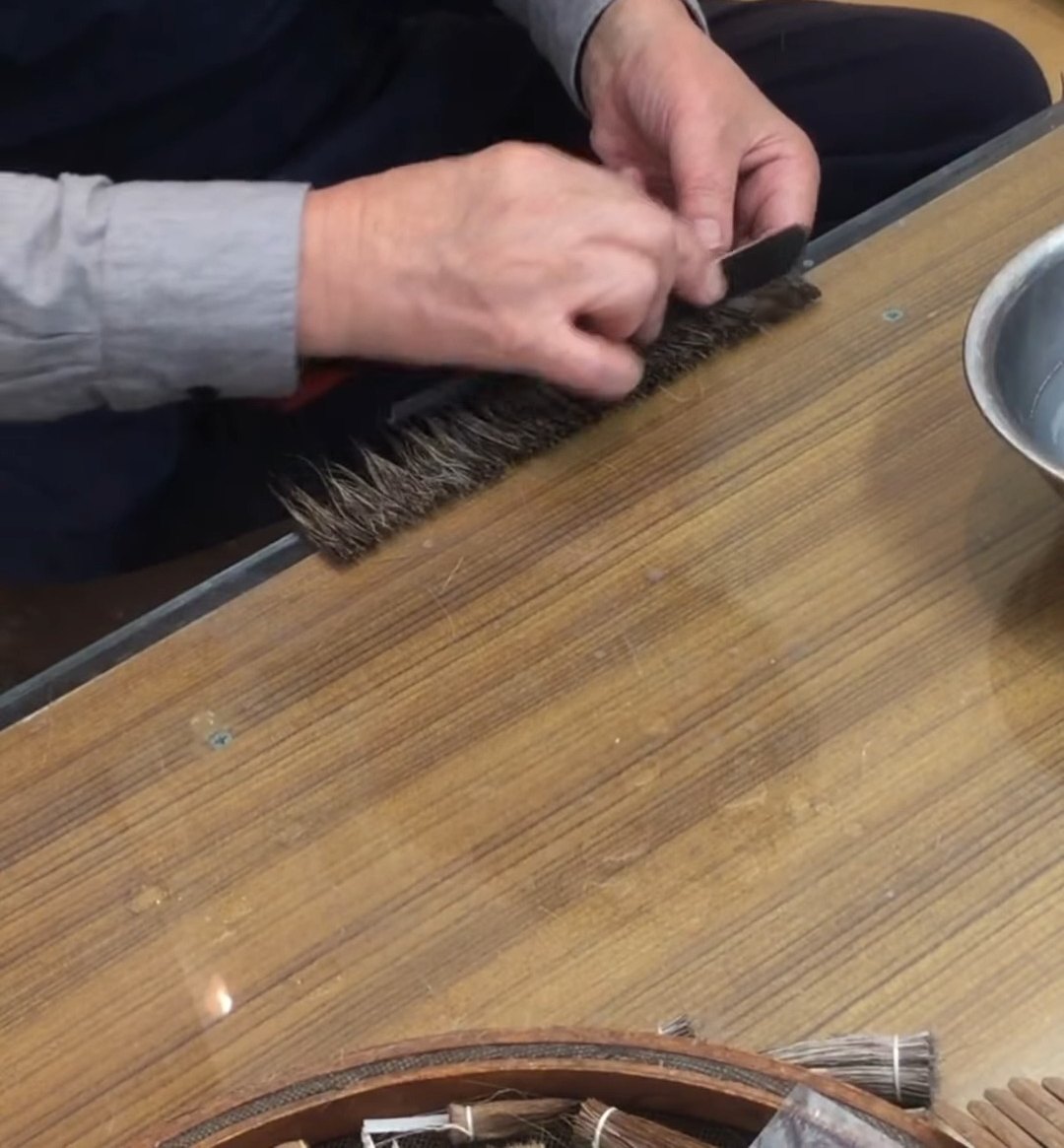
Shaping and wrapping. The blended hair is shaped into a core, and a thin outer layer of hair is wrapped around it. The base is bound with hemp thread and sealed with a hot iron.
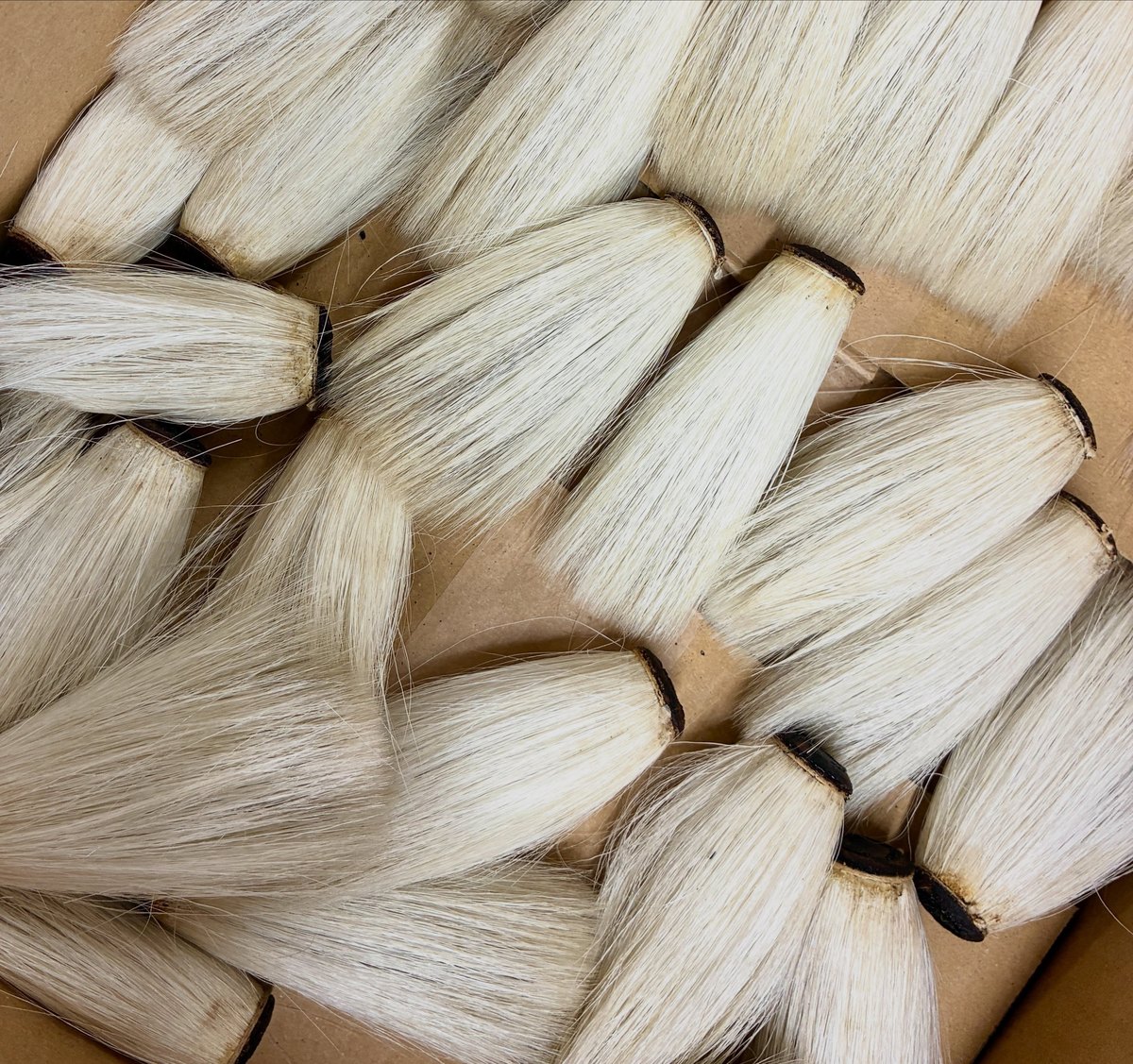
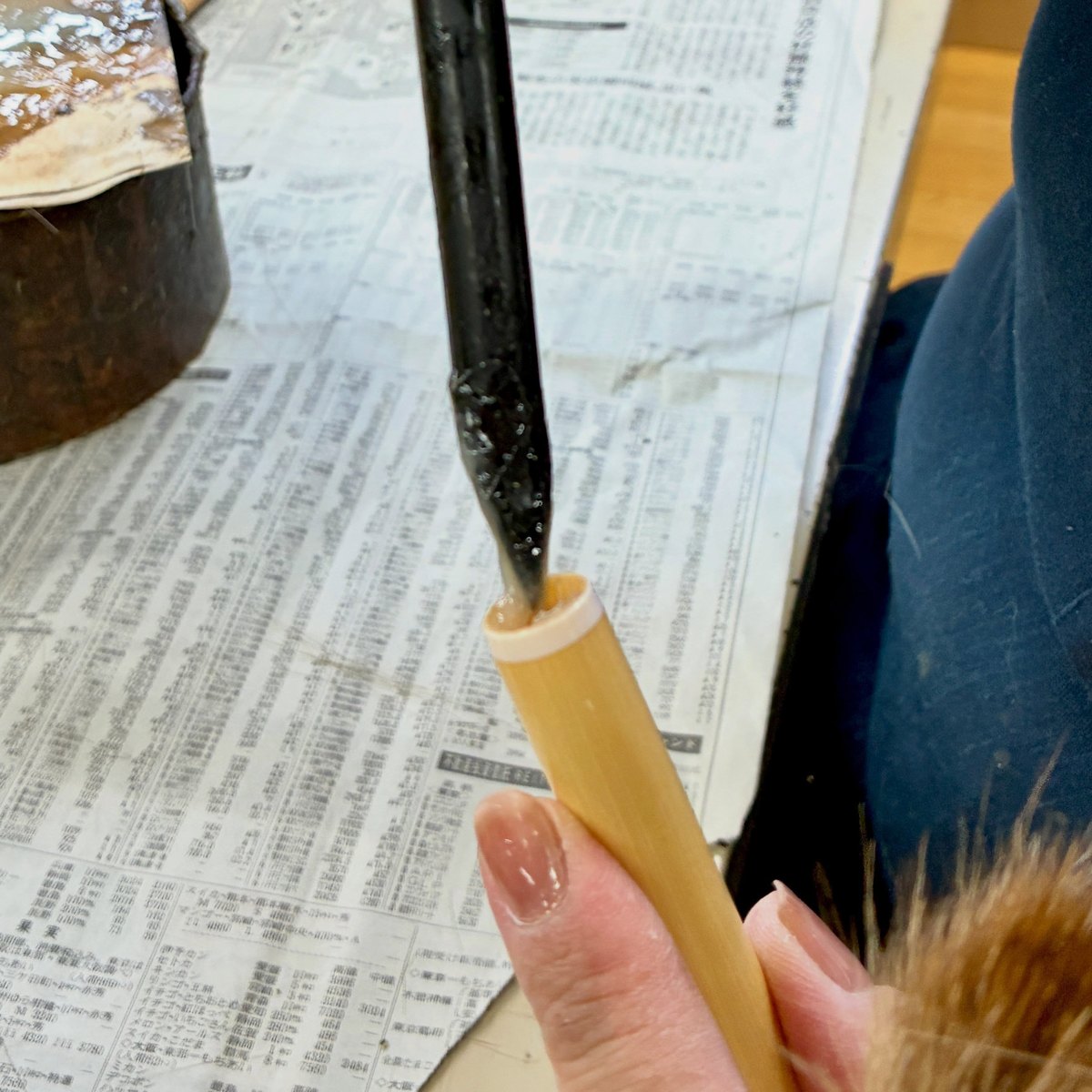
Fitting and finishing. The handle is hollowed out, the tuft is glued into it, and the hair is soaked in funori, a paste made from seaweed, then pressed into its final point and left to dry. That paste is why a new brush arrives stiff, which we return to below.
4. The Hair: What Each Kind Brings to the Line
Most of the character of a brush comes from its hair. Product pages for Japanese brushes, including ours, list the main hair, and it is the most useful single line to read.
Goat hair (羊毛, yōmō). Written with the characters for "sheep hair," but in brush making this means the long, fine hair of goats. It is soft, white, and holds a great deal of ink, so it lays down a rich, wet line and changes easily with pressure. This rewards a confident hand. Many large brushes for bold, expressive work are pure goat hair.
Weasel (鼬, itachi). Brown, springy, and resilient. A weasel tip comes back to a point after each stroke, which makes clear, controlled lines easier. It is used in small kana brushes and also in larger brushes; Akashiya's Kansho brushes for kanji on hanshi are pure weasel hair.
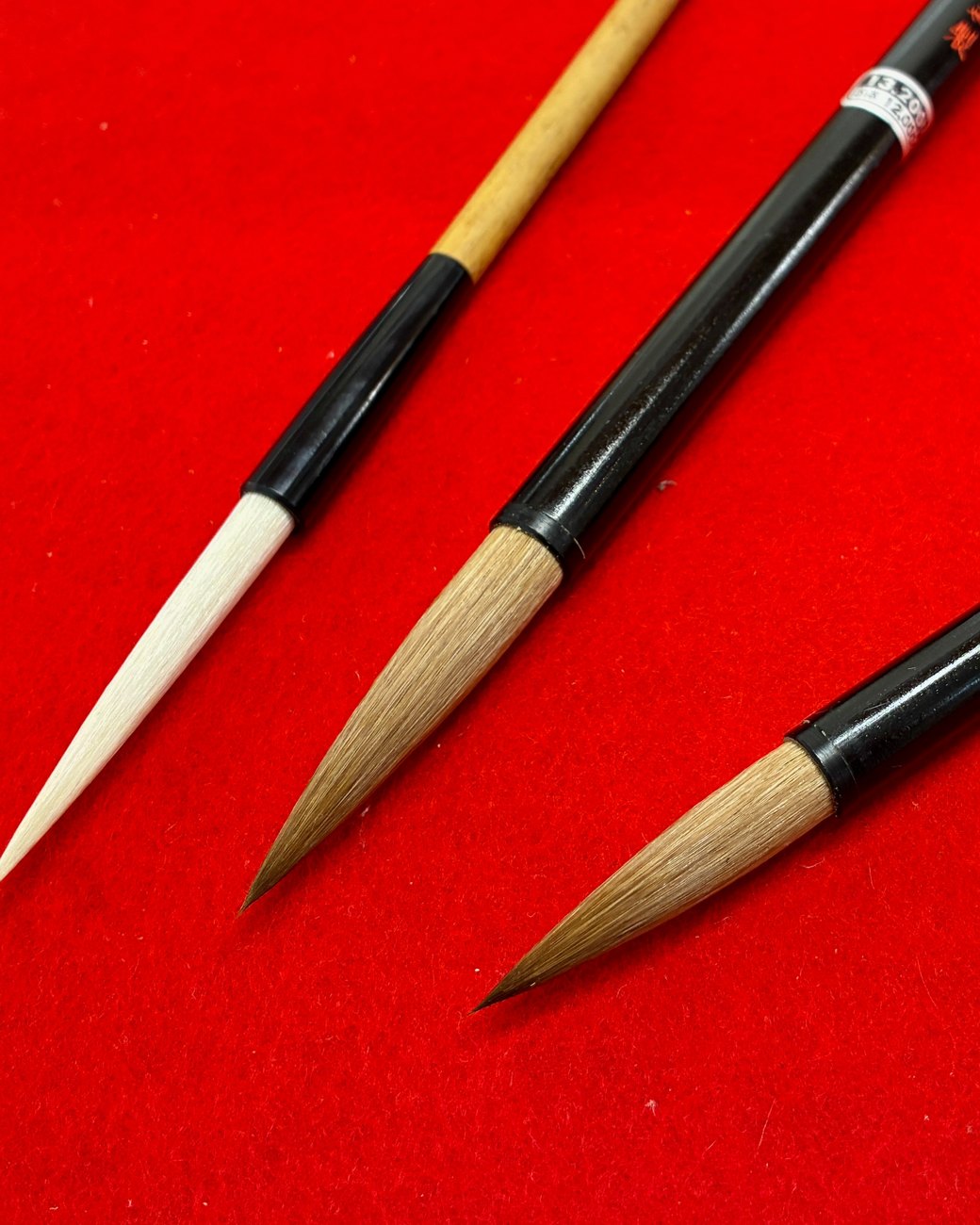
Horse (馬, uma). Strong and stiff, especially hair from the tail. Horse hair gives a brush backbone. Akashiya's Tenka brushes, made only of red horse-tail hair, are rated as firm.
Raccoon dog (狸, tanuki). A stiff, springy hair that adds firmness to blends.
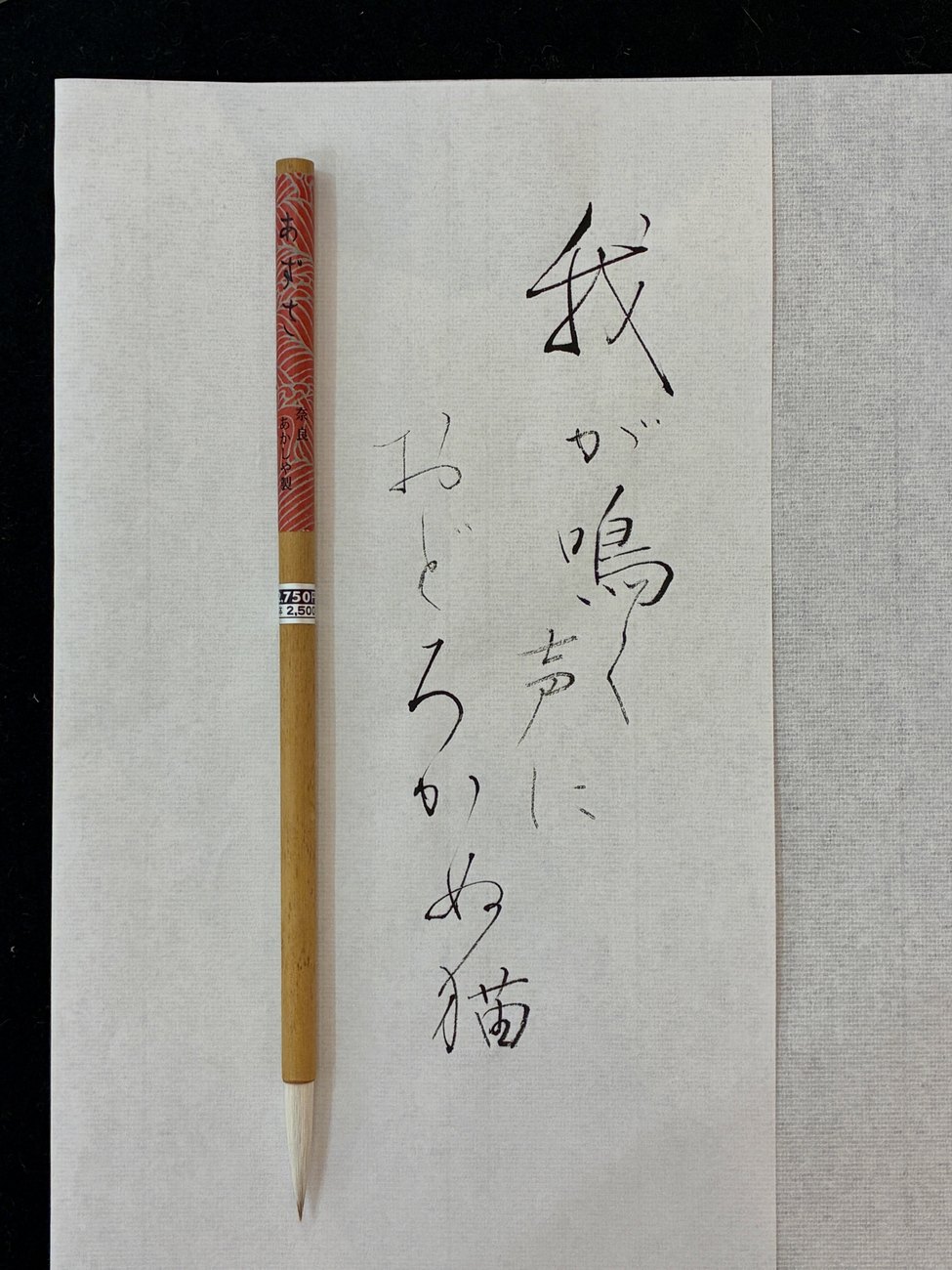
Mixed hair (兼毫, kengō). Many brushes are blends, combining a springy hair with one that holds ink. A blended brush writes with less effort than a pure soft brush and is often the most forgiving place to begin. One of Akashiya's kana brushes, Azusa, pairs springy weasel hair with cat hair, which brush makers value for its tenacity; despite its full tuft, it writes very fine lines.
Stiffer brushes are easier to control. Softer brushes give more variety of line, and ask more of the hand. Neither is better; they simply suit different hands and different kinds of writing.
5. The Tip: Long, Medium, or Short
The second thing to read is the length of the hair outside the handle, set against its thickness.
Long tip (長鋒, chōhō). A long, slender tuft that holds plenty of ink and bends easily. It can produce lively, varied lines, and is often chosen for running and cursive scripts and for kana. It is the hardest of the three to control at first.
Medium tip (中鋒, chūhō). The balance between the two, and the most common. Most brushes in our collection are medium-tipped.
Short tip (短鋒, tanpō). A short, sturdy tuft that stays where you put it. Strokes come out crisp and even, and it is easy for a beginner to manage, though it holds less ink and offers less variation.
6. Size: Matching the Brush to the Paper
Brush makers sort their large brushes by the work they are meant for, and the paper sets the scale. Akashiya, the maker of every brush in our collection, labels each one with its intended use. Read alongside the measurements, those labels give a good picture of what each size is for. The figures below are the diameter of the handle at its base, which is roughly the width of the tuft where it leaves the handle.
Hanshi practice (半紙). Hanshi is the standard practice sheet, about 24 × 33 cm (9.5 × 13 in), usually filled with two to six characters. Akashiya's brushes for kanji on hanshi in our collection measure roughly 9.5 to 14 mm across. This is the size most people begin with.
Names and kana. The small brush for writing your name beside your practice characters, or for kana, the flowing Japanese script, is much slimmer. The kana brushes in our collection made for writing on vertical scrolls measure about 6 to 10 mm.
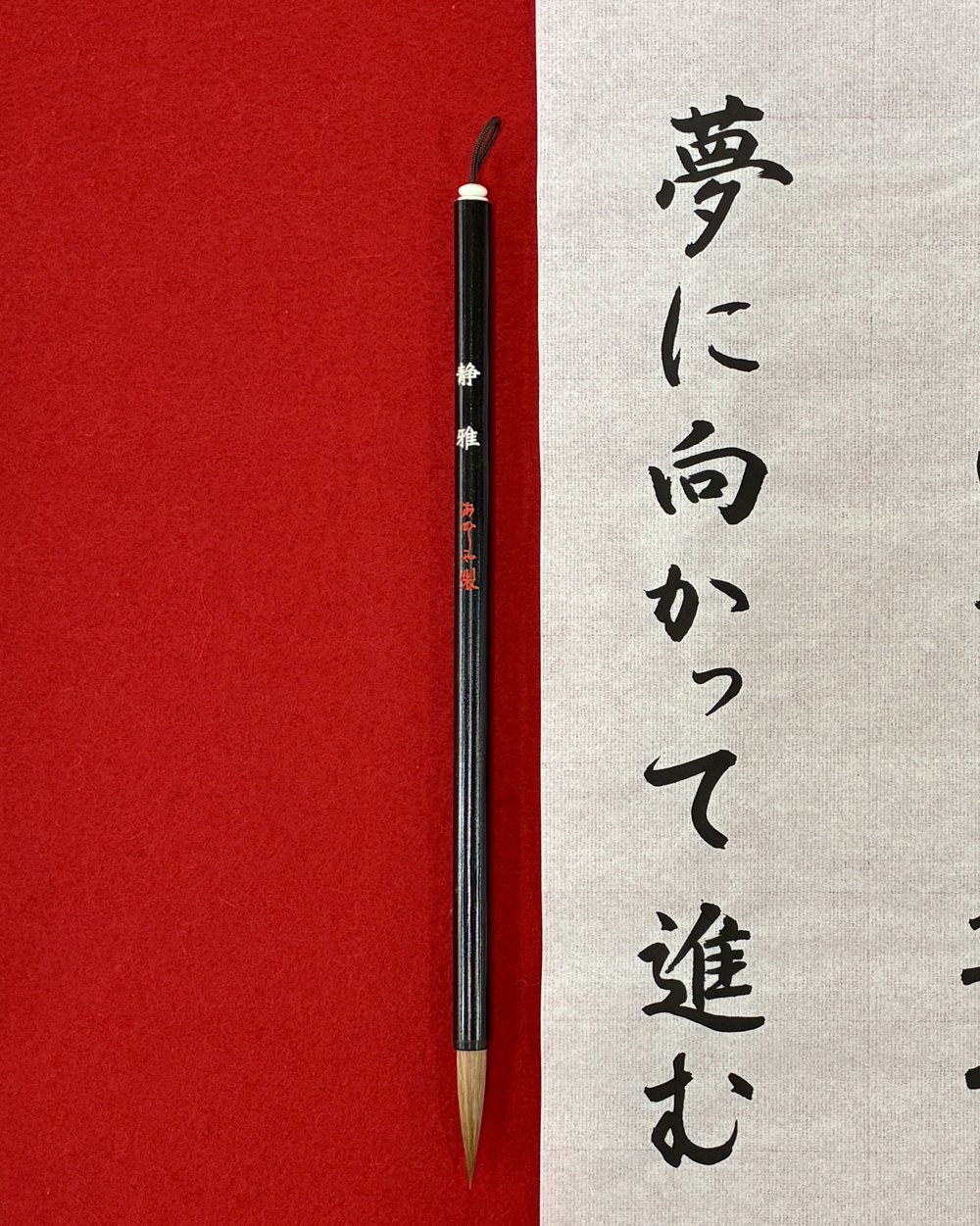
Kakizome (書初め). At the New Year in Japan, people write a short phrase on a long, narrow sheet of paper, a custom called kakizome, "first writing." Akashiya's kakizome brushes in our collection run from about 13.5 to 30 mm, larger than a hanshi brush to fill the taller sheet.
Scrolls and large works. Brushes for kanji on long vertical scrolls, called jōfuku (条幅), range widely, from about 8 mm for smaller characters to 30 mm for bold ones. The large brushes made of stiff horse-tail hair start at about 18 mm and reach 75 mm, and the largest performance brushes are held with both hands.
When in doubt, choose for the paper you will actually write on. A brush that is too large for the sheet crowds the characters; one that is too small makes every stroke a struggle.
7. How to Tell a Good Brush
Japanese brush makers often describe a good brush with four qualities, an old standard handed down from China.
Sharp (尖, sen). When wet and gathered, the tip comes to a fine point.
Even (斉, sei). Pressed flat, the hairs spread evenly, with no stray or broken hairs sticking out.
Round (円, en). Seen from the tip, the tuft is round and full, not flattened on one side.
Strong (健, ken). The tuft springs back after it is pressed and released, and feels solid near the base rather than hollow.
The first three are easiest to see on a new brush after it has been loosened and wetted. The last is something you feel over the first weeks of writing.
8. Preparing a New Brush
Most new brushes arrive hard, their hair set in a point with funori, the seaweed paste. The paste protects the shape of the tip until the brush is used. Before writing, it needs to be loosened, a step called fude-oroshi (筆おろし), "opening the brush."
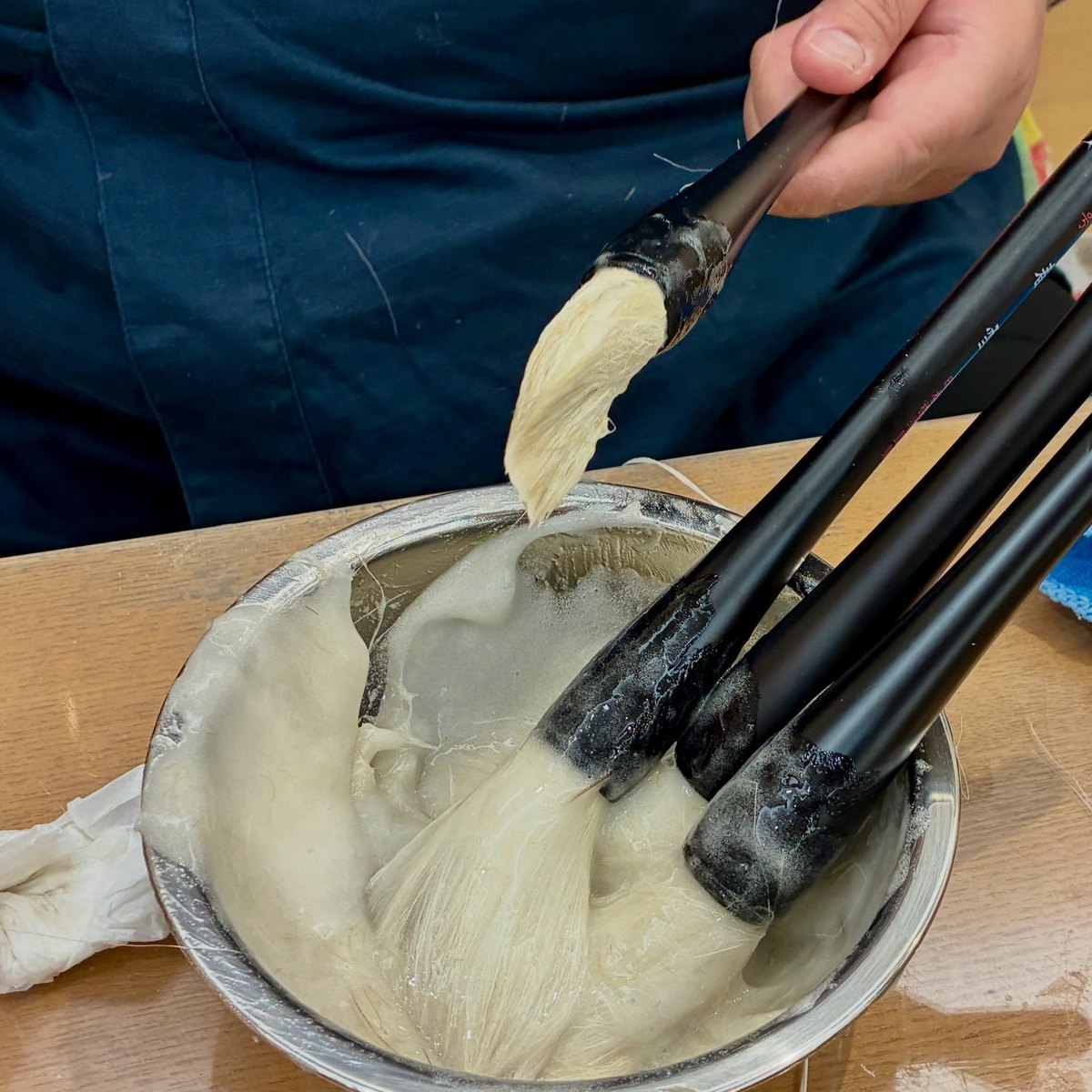
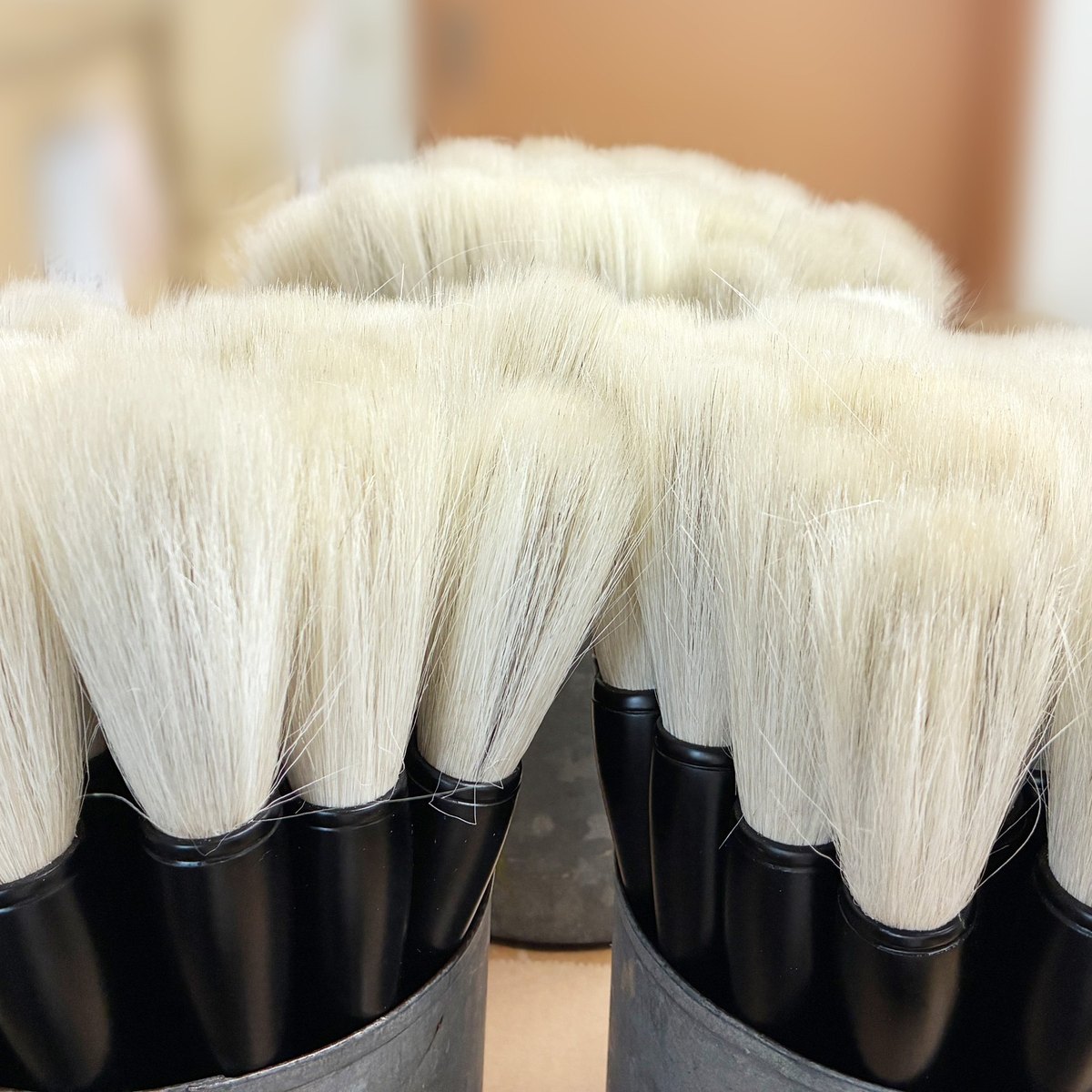
- Large brushes are usually loosened all the way to the base. Soak the tuft in lukewarm water, never hot, and work the paste out gently with your fingers until the whole tuft is soft.
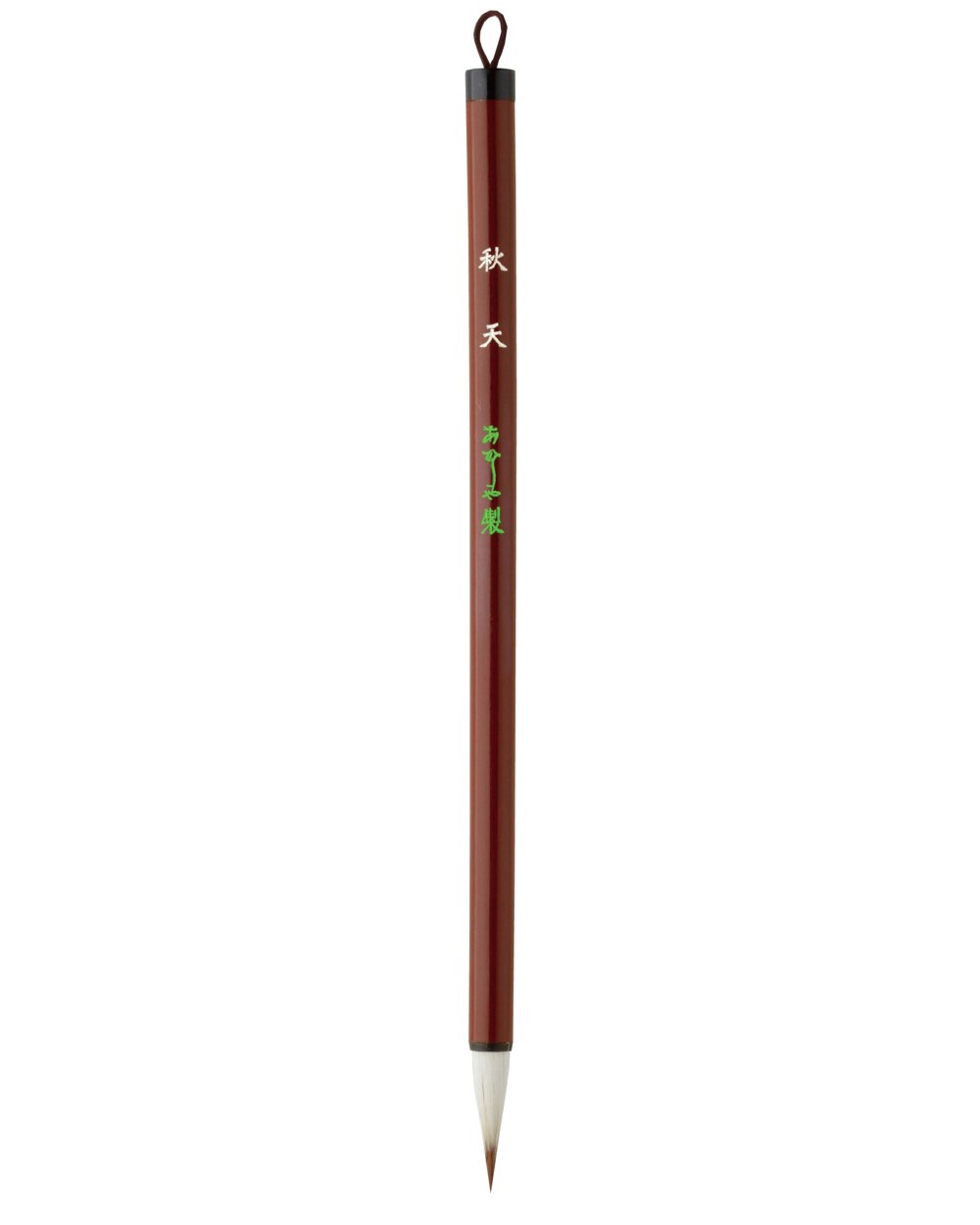
- Small brushes are often loosened only part of the way, so that the base keeps some firmness. Some makers mark how far to open a brush; Akashiya, for instance, suggests opening its Shūten small brush up to where the brown hair at the tip ends.
- If a brush comes with its own instructions, those come first.
9. Washing, Drying, and Storing
- After writing, rinse the brush in lukewarm water until the water runs clear. Pay attention to the base of the tuft, where ink collects; ink that dries there hardens and can spoil the brush.
- Do not leave a brush standing in water for long periods. Water that reaches the handle can loosen the glue that holds the tuft.
- Shape the tip back to a point with your fingers, gently pressing out excess water on a cloth or paper.
- Dry it hanging tip-down, or lying flat, rather than standing upright, so that water does not run back into the base.
- For long storage, keep fine brushes in a box, away from dust and insects.
10. Pieces in Our Collection
A few examples of the brushes described above, all made by Akashiya in Nara. These are examples, not recommendations; the right brush is the one that suits your paper and your hand.
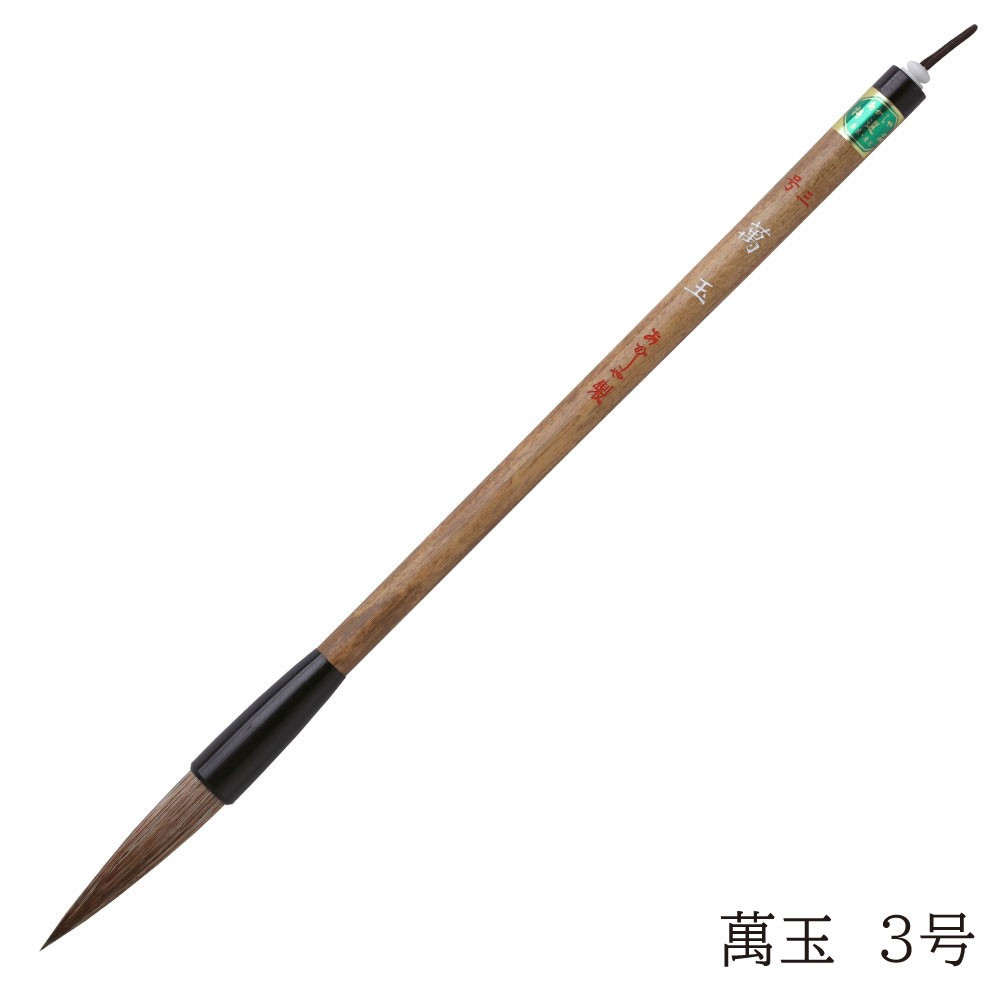
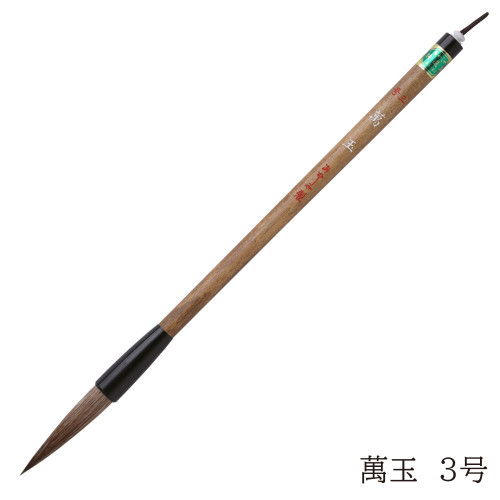
For kanji — Bangyoku No. 3. A blend of horse, raccoon dog, cow ear, and goat hair with a long tip, made by Akashiya as a large brush for kanji. Somewhat firm, so it keeps its point while still giving lively lines. (Bangyoku No. 3 calligraphy brush)
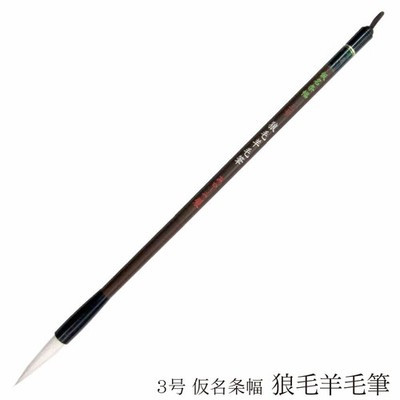
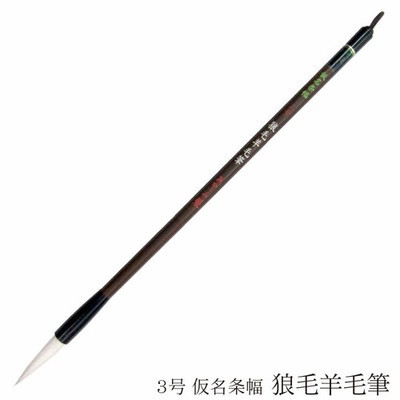
For kana — Kana brush No. 3, weasel and goat. Weasel hair blended with goat hair, with a medium tip, made for kana on vertical scrolls. The weasel hair gives spring; the goat hair carries ink for longer lines. (Kana calligraphy brush No. 3, weasel and goat hair)
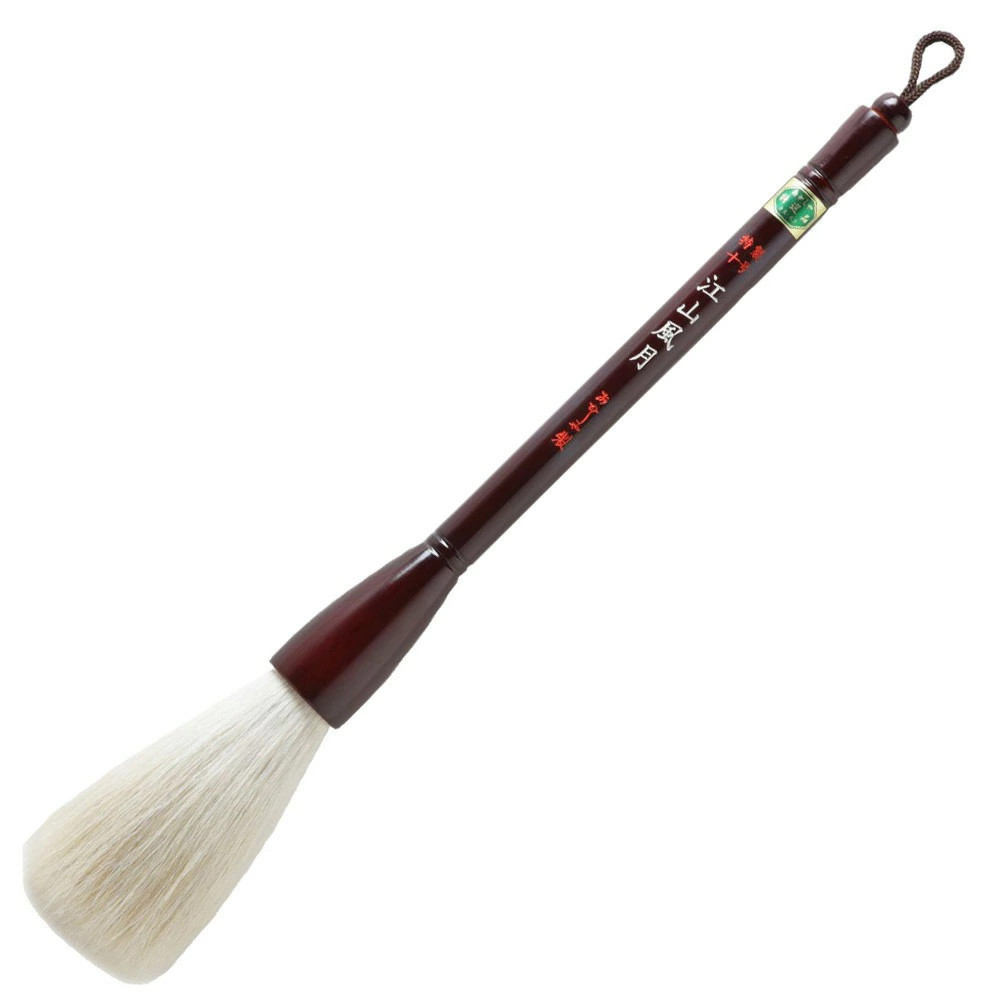
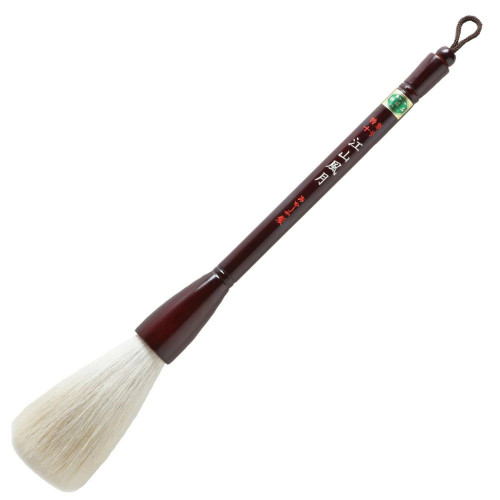
For large characters — Kōzan Fūgetsu No. 10. A large brush of white horse-tail hair, firm enough to keep its shape under its own weight, for big characters on large paper. (Kozan Fugetsu No. 10 large calligraphy brush)
11. A Note from the Shop
All of the calligraphy brushes we carry come from one maker in Nara. On every one of them, the most useful lines are not the name but the hair, the length of the tip, and the use the maker gives for it.
If one detail stays with you, let it be the paper. Decide what you will write on, and the size of the brush follows. The hair you can choose by feel, and you will learn more about it from a month of writing than from any description.
12. Frequently Asked Questions
Q: What is a Japanese calligraphy brush called?
A fude (筆). Calligraphers speak of the futofude, or large brush, for the main characters, and the hosofude, or small brush, for names, letters, and kana. A complete brush is often called by its maker's name for it, such as Tenka or Shūten, much as a fountain pen might have a model name.
Q: What is a famous Japanese brush?
Nara brushes are regarded as the oldest tradition of brush making in Japan. Brushes are also made in other regions, among them Hiroshima and Aichi prefectures, each with its own history.
Q: What brush should a beginner use for Japanese calligraphy?
For practice on standard hanshi paper, a medium-tipped large brush of blended hair is a forgiving start, together with a small brush for writing your name. A stiffer brush is easier to control at first; softer, longer-tipped brushes reward more experience.
Q: Is goat hair good for calligraphy brushes?
Yes. Goat hair is soft and holds a great deal of ink, and it is the hair of many fine large brushes. It is less springy than weasel or horse, so it responds to every change of pressure; some people find this expressive, others find a blended brush easier to begin with.
Q: Can I leave a calligraphy brush soaking in water overnight?
It is better not to. Long soaking lets water reach the handle, where it can loosen the glue that holds the tuft. Rinse the brush, shape it, and hang it to dry instead.
Q: How can I tell if a brush is horse hair?
The product description is the most reliable guide. By feel, horse hair is stiffer and springs back more firmly than goat hair. Many brushes are blends, so the label matters more than the look.
Thank you for reading.
— from Osaka, Team Manekineko-Ai
PIECES IN THIS ARTICLE
Three brushes from this article
CONTINUE READING
MORE IN KOGEI → KOGEI
Yamanaka Lacquerware: The Craft of the Wooden Body
Lacquerware that begins with the turned wooden body beneath the finish, and what the lathe decides about its shape.
 KOGEI
Takaoka Metalwork — Where Temple Bells and Tea Vessels Are Born
Four centuries of casting in Takaoka, where temple bells, incense burners and tea vessels come from one tradition.
 KOGEI
Kyo-yaki and Kiyomizu-yaki: A Guide to Kyoto’s Many-Styled Pottery
Kyoto’s pottery and porcelain in many styles: how to read a piece, tell pottery from porcelain, and choose one.