
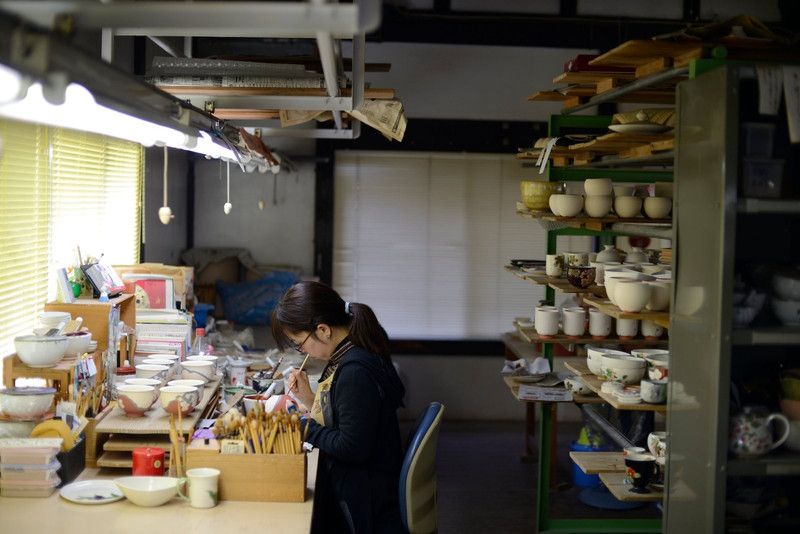
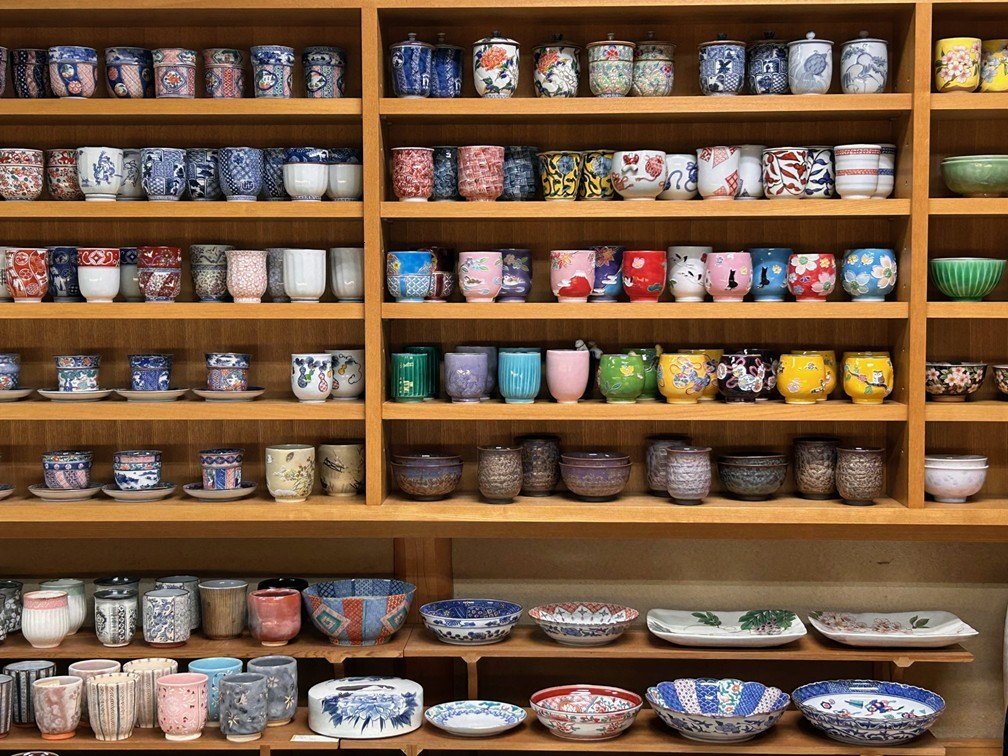
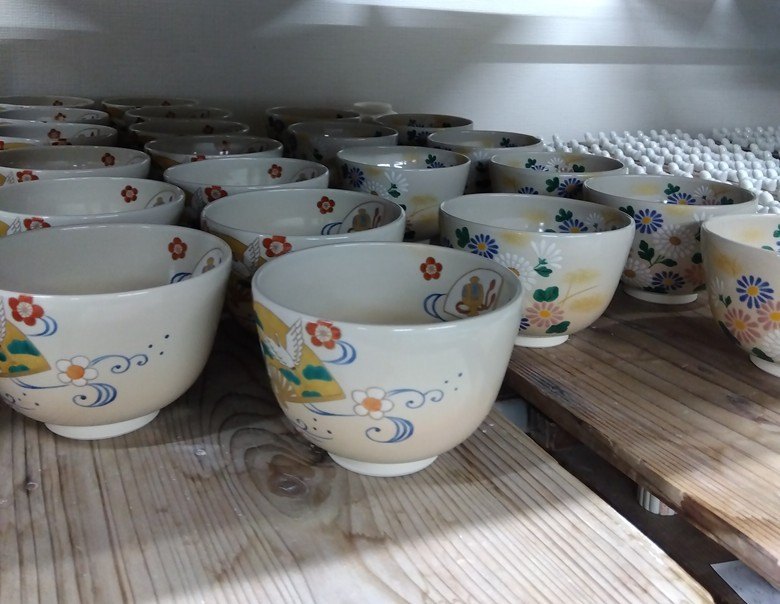
Set ten pieces of Kiyomizu-yaki side by side and they may look as if they came from ten different places. That variety is the craft itself.
Many Japanese pottery regions are known for a signature look. Bizen is unglazed and fire-marked. Hagi is soft and crackled. Arita is often associated with white porcelain painted in blue. Kyoto pottery, known as Kyo-yaki (京焼) or Kiyomizu-yaki (清水焼), does not work that way. A Kyoto teacup may be painted in fine gold, covered in a glaze full of frost-like crystals, outlined in bright yellow and green, or glazed to look like a bowl from another region entirely.
This guide is about reading that variety. It begins with what you notice when you hold a piece, explains briefly why Kyoto pottery turned out this way, and then walks through the styles you are most likely to meet. After that come pottery and porcelain, choosing and giving a piece, and everyday care, with a few examples from our collection and common questions at the end.
On this page
2. Why Kyoto Pottery Looks So Varied
3. A Short History: From Tea Rooms to Porcelain
4. Reading the Styles You Will Meet
5. Pottery or Porcelain: Telling Them Apart
6. How to Choose a Piece
7. For Whom, and as a Gift
8. Using and Caring for Kyo-yaki
9. Pieces in Our Collection
10. A Note from the Shop
11. Frequently Asked Questions
1. What You Notice When You Hold a Piece of Kyo-yaki
The first thing is that there is no single “Kyoto look.” In our own collection, more than a thousand pieces are listed as Kiyomizu-yaki, and they range from cobalt-blue teacups to black raku tea bowls to rice bowls in a milky white slip. What they share is not a color or a clay, but a level of finish.
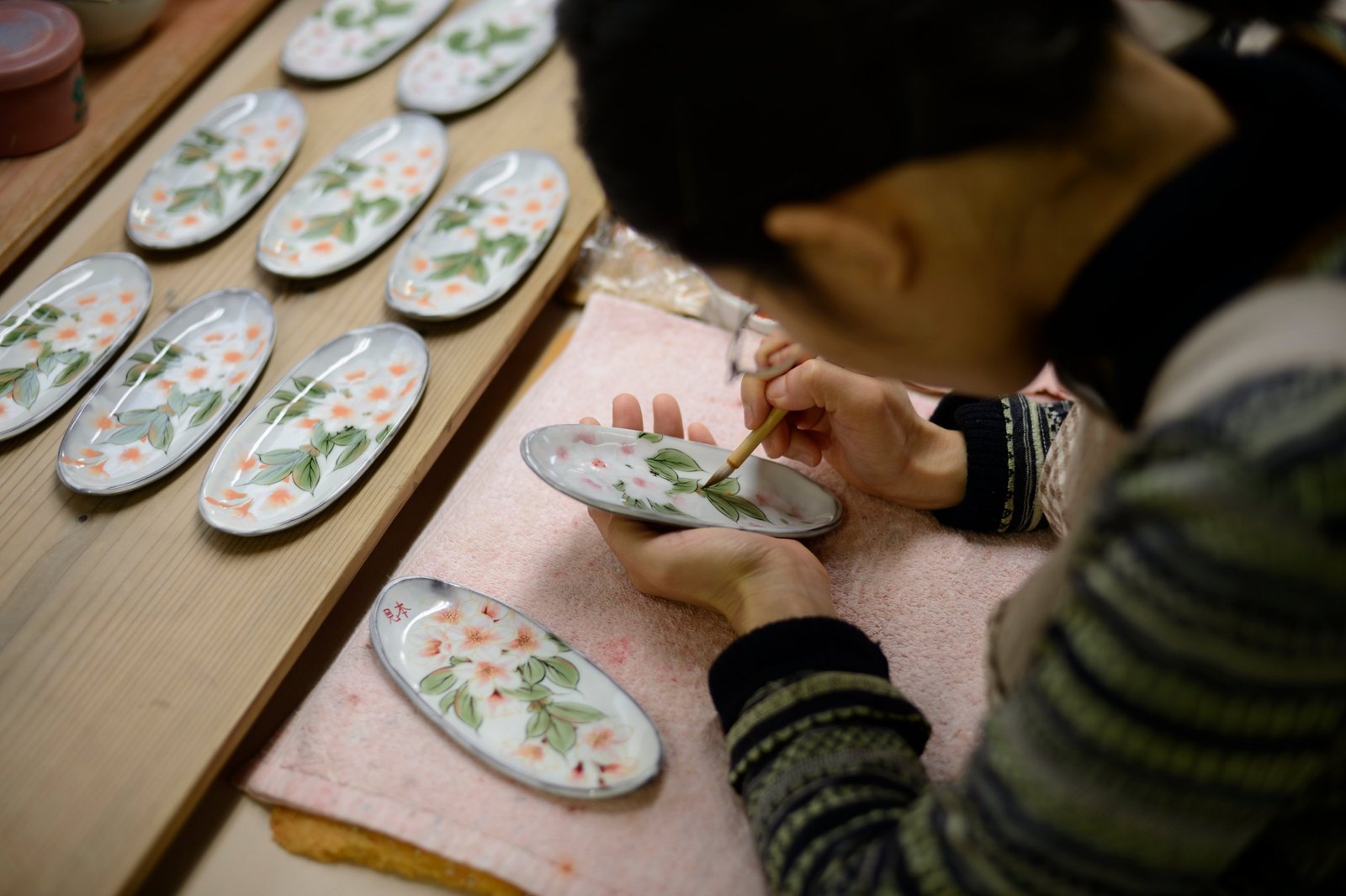
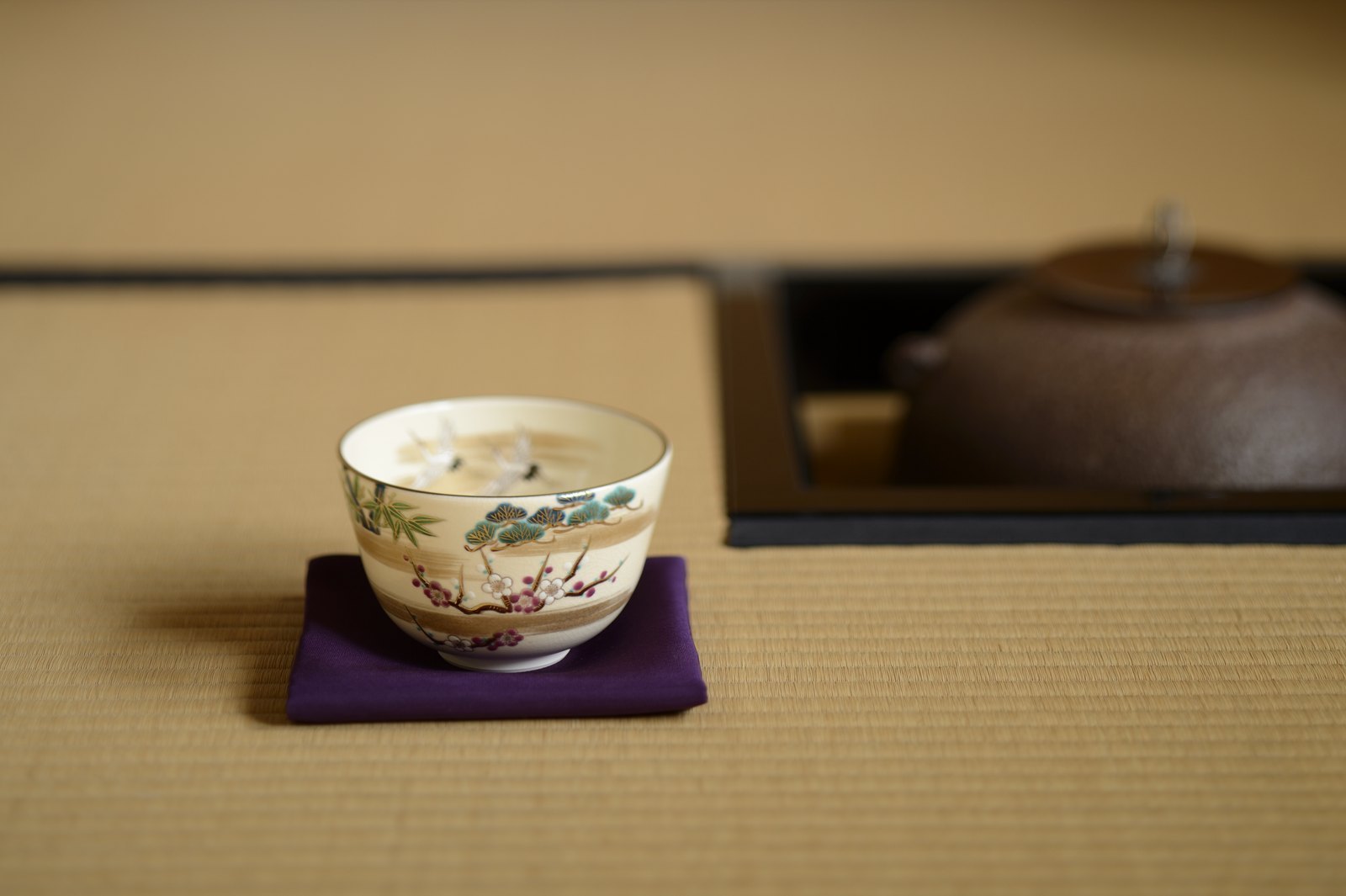
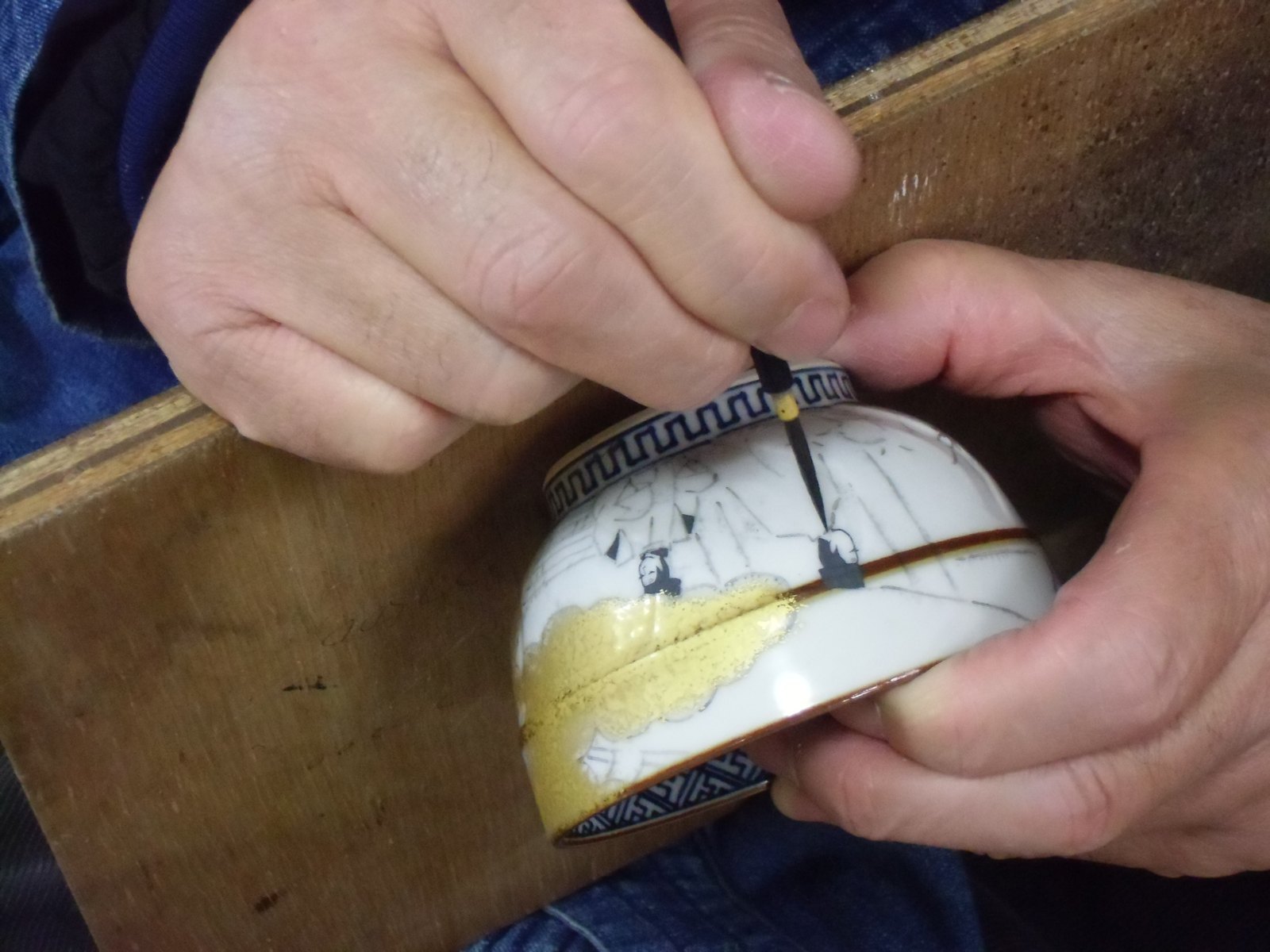
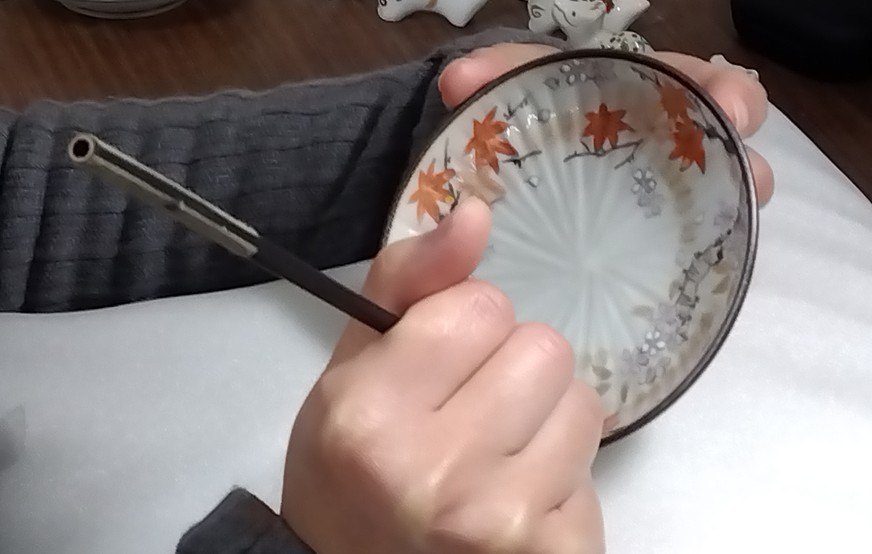
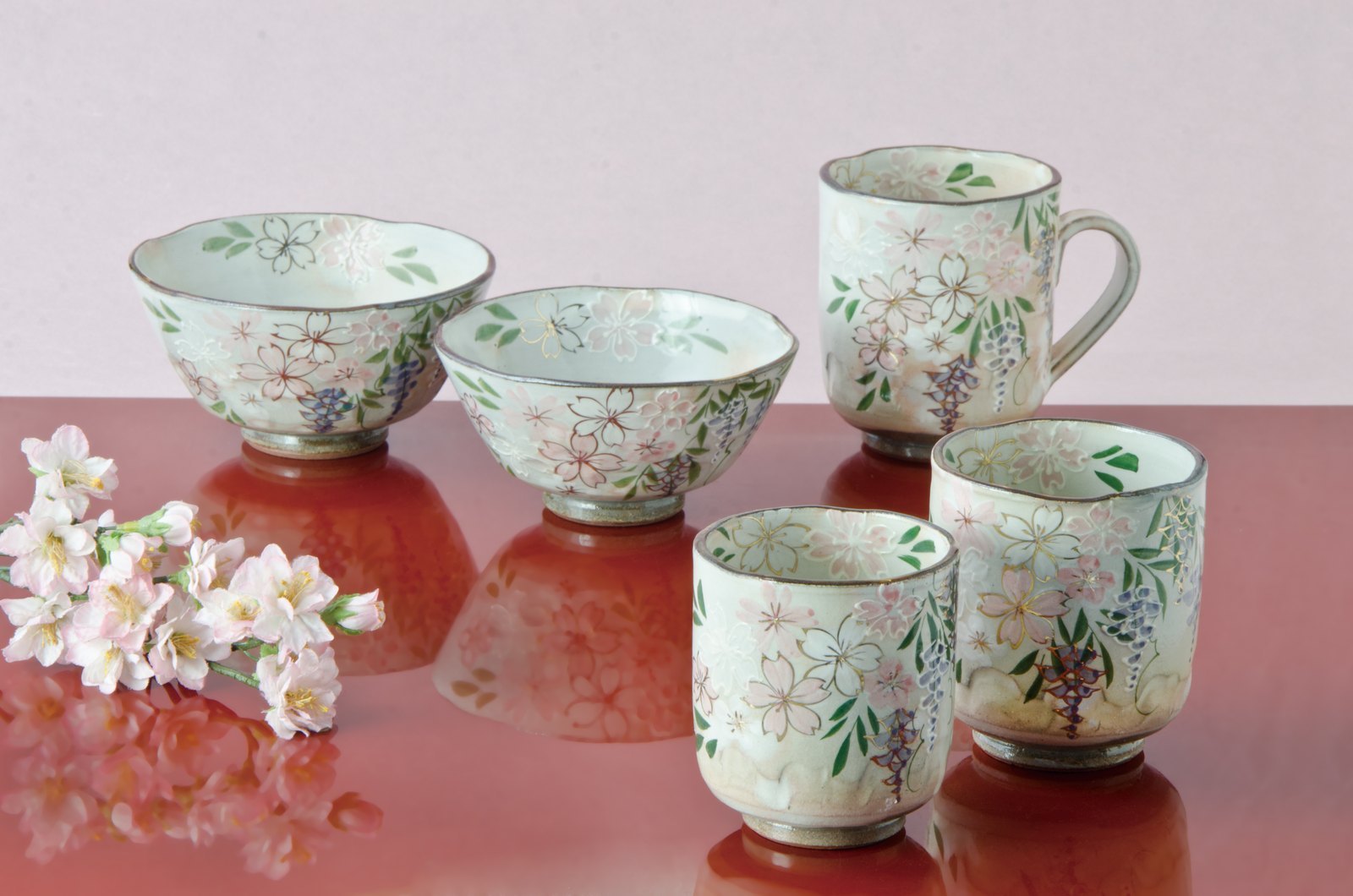
Look closely at the painting. On a hand-painted piece, the lines are fine and confident, and the color sits exactly where it was meant to. Petals are shaded, leaves have veins, and a narrow band of gold may run along the rim. Kyoto pottery has long been described as delicate and elegant, and it is in this small, careful work that the description becomes clear.
Then feel the weight. Because Kyoto potters make both pottery and porcelain, two cups of the same size can feel quite different. A pottery cup is usually thicker and warmer in the hand. A porcelain cup is often thinner, harder, and cool to the touch. Both are Kiyomizu-yaki.
2. Why Kyoto Pottery Looks So Varied
The short answer is clay, or rather the lack of it. Kyoto does not produce its own pottery stone or clay in any quantity, so its potters have long brought in materials from other regions, such as Amakusa in Kumamoto and Shigaraki in Shiga, and blended them for each kind of piece.
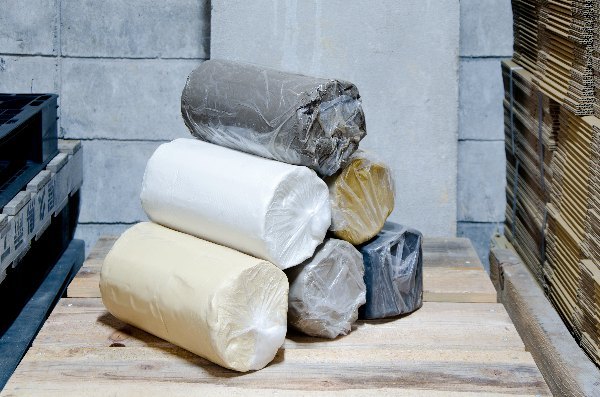
A region without its own clay cannot become known for the color of its earth. Kyoto became known instead for design and skill. For centuries the city was home to the imperial court, great temples, and demanding tea masters, and its potters worked for them. They learned to paint, to glaze, and to borrow and refine techniques from other kilns. That habit of drawing in skills from elsewhere is the reason a Kyoto piece today can look like almost anything.
3. A Short History: From Tea Rooms to Porcelain
Kyoto pottery grew up alongside the tea ceremony. Around 1600, tea bowls and tea utensils were being made in kilns around the eastern hills of the city. In the mid-1600s the potter Nonomura Ninsei, working at Omuro in the northwest of Kyoto, perfected a style of richly painted pottery in overglaze enamels and gold.
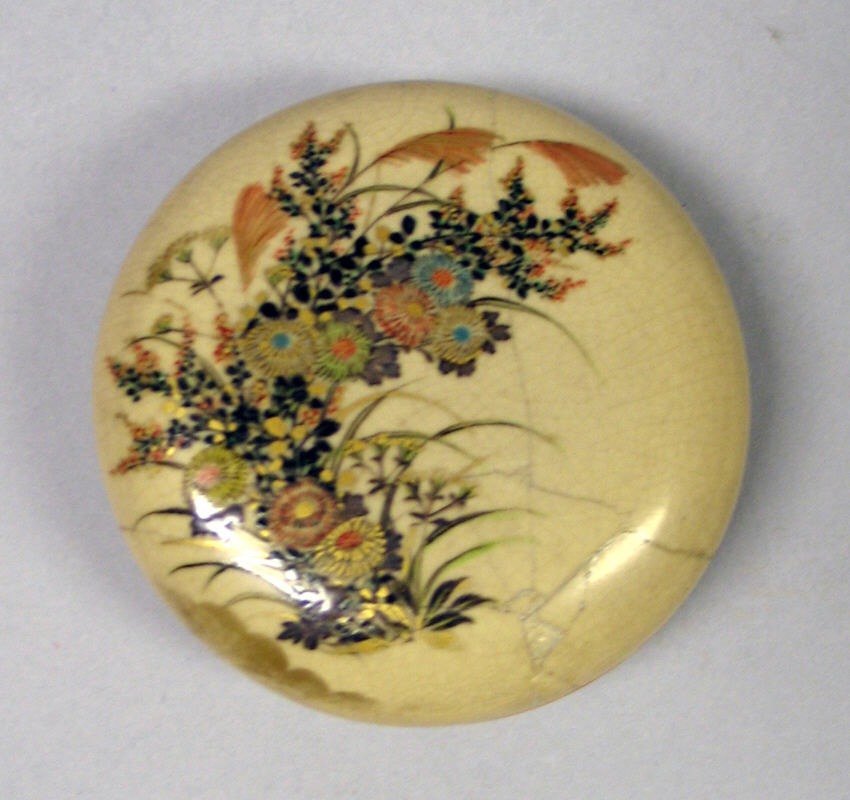
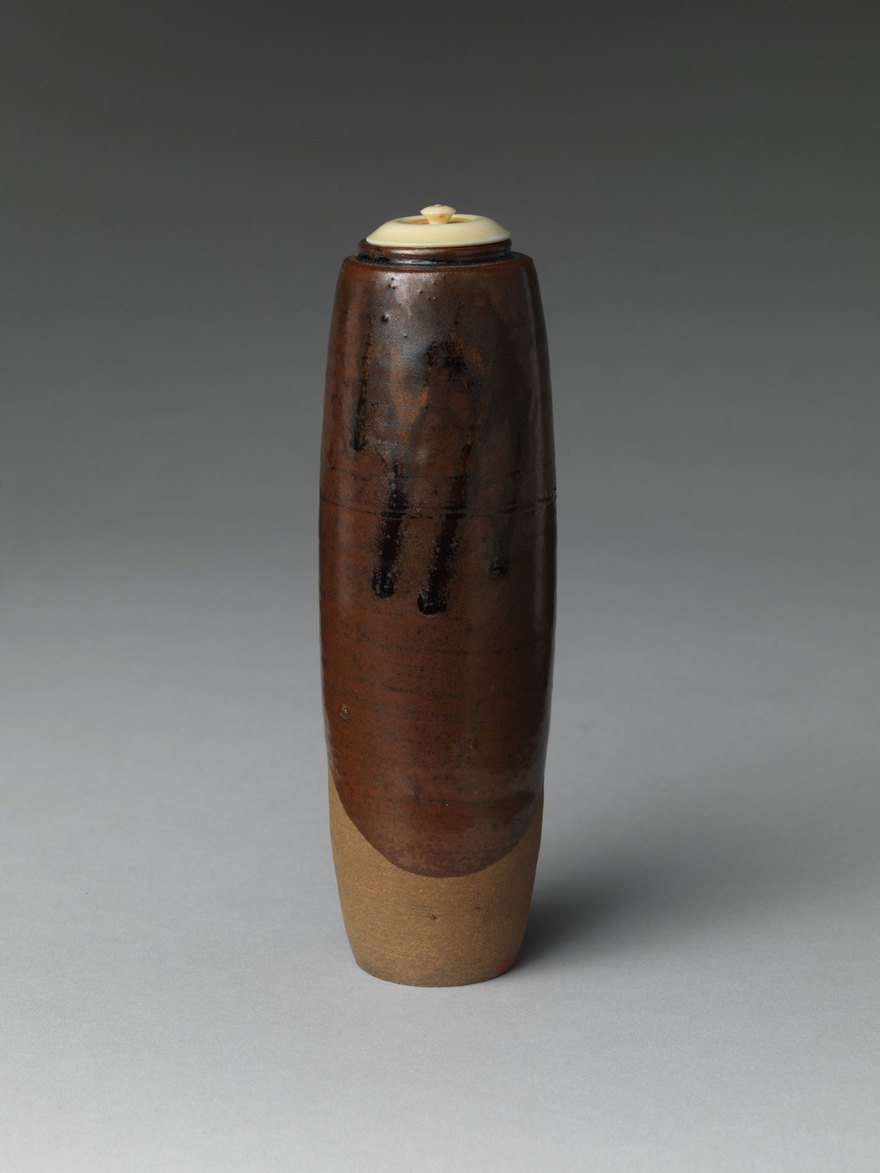
In 1699 Ogata Kenzan, who had learned from Ninsei, opened his own kiln and brought a painter’s freedom to the surface of the pot, often working with his brother, the painter Ogata Kōrin.
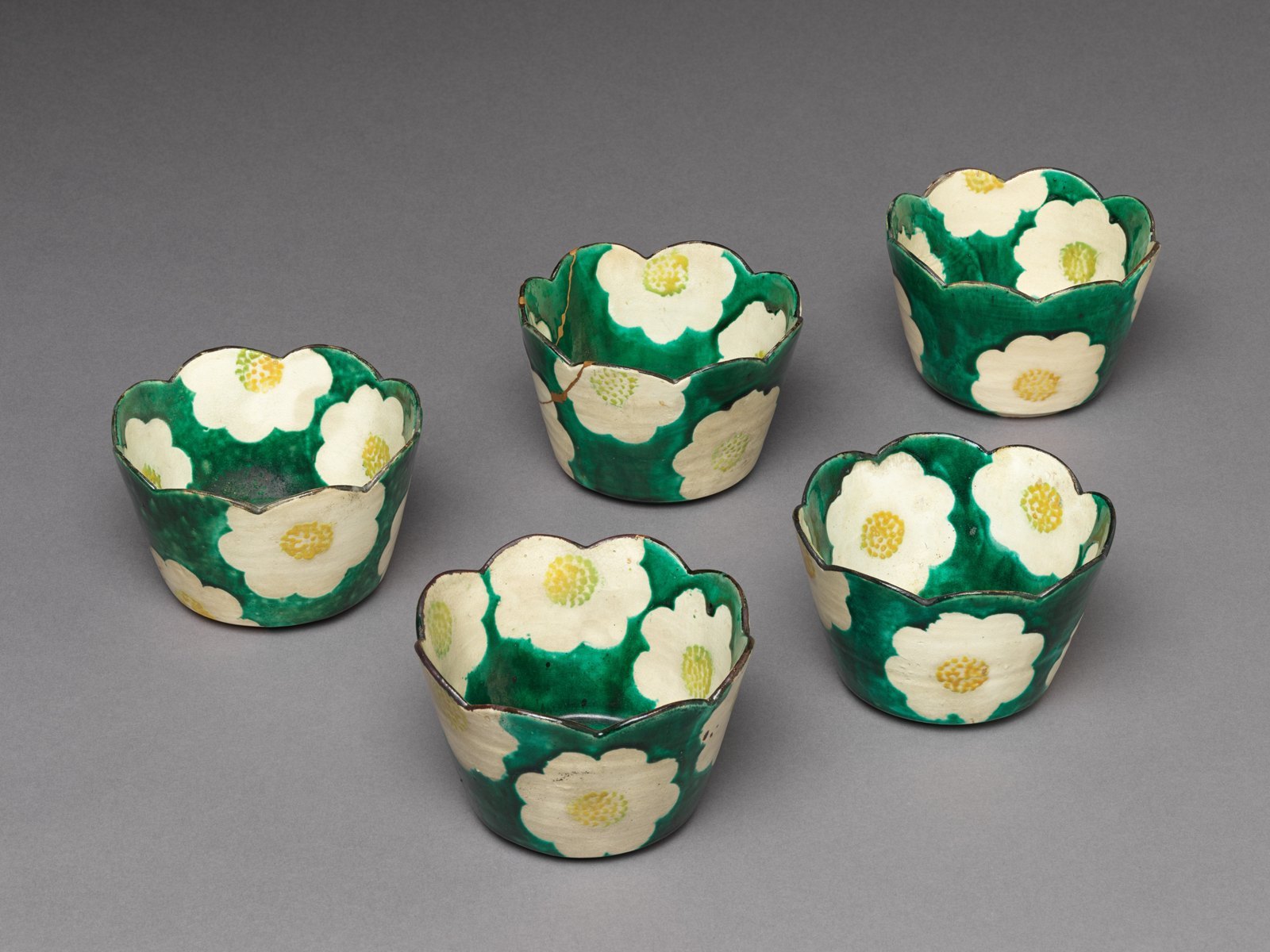
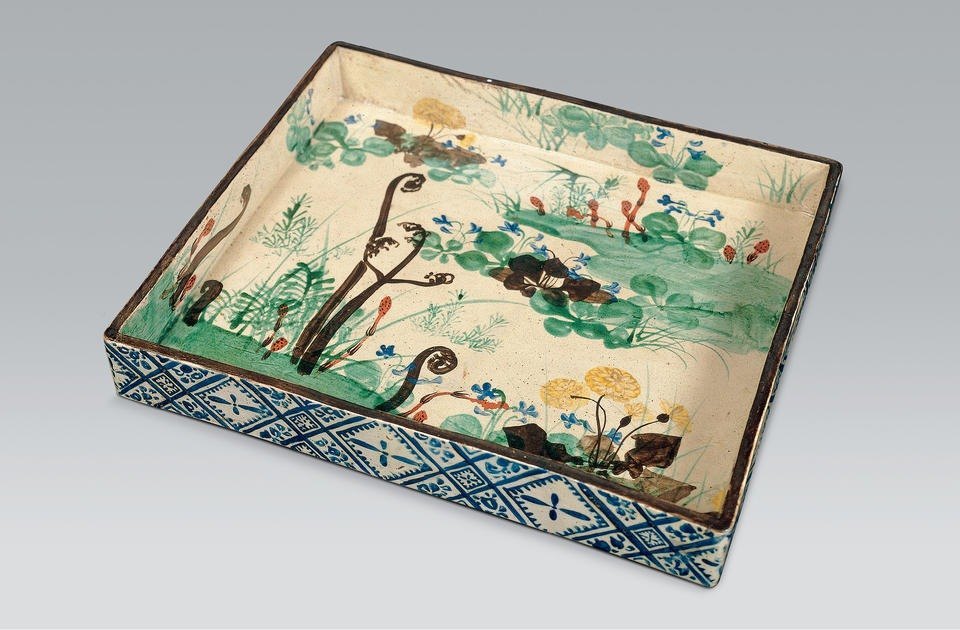
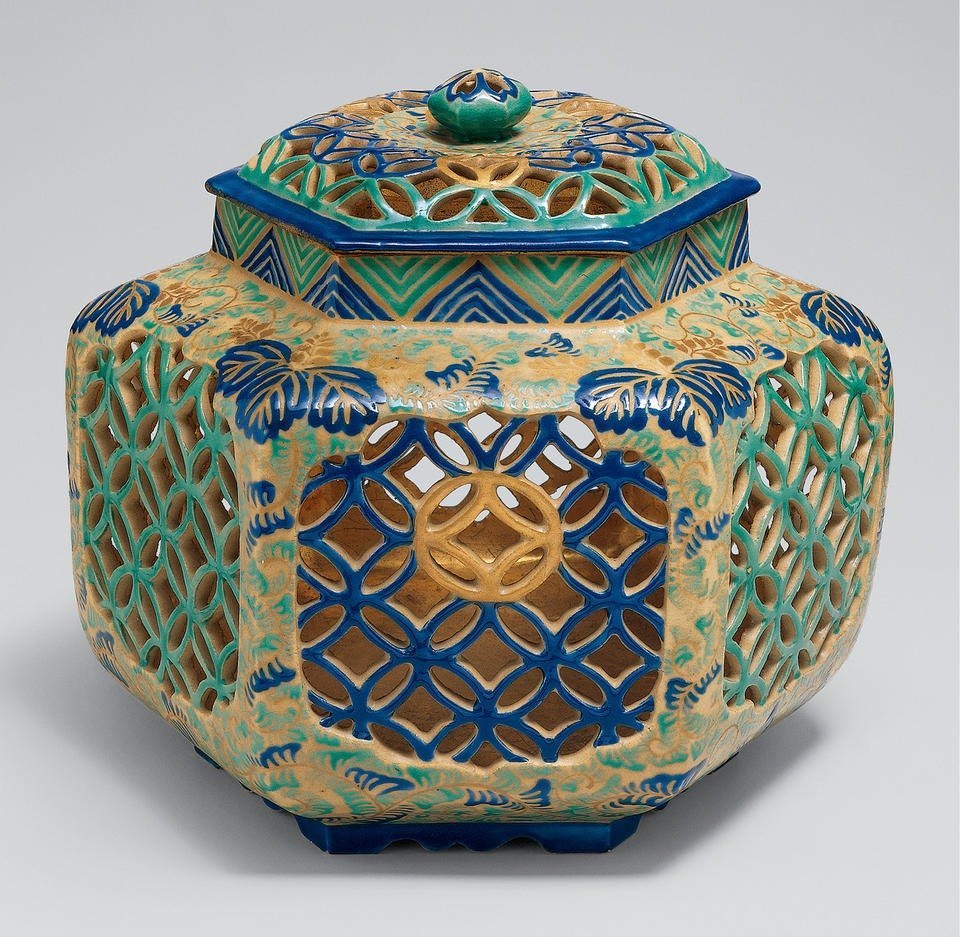
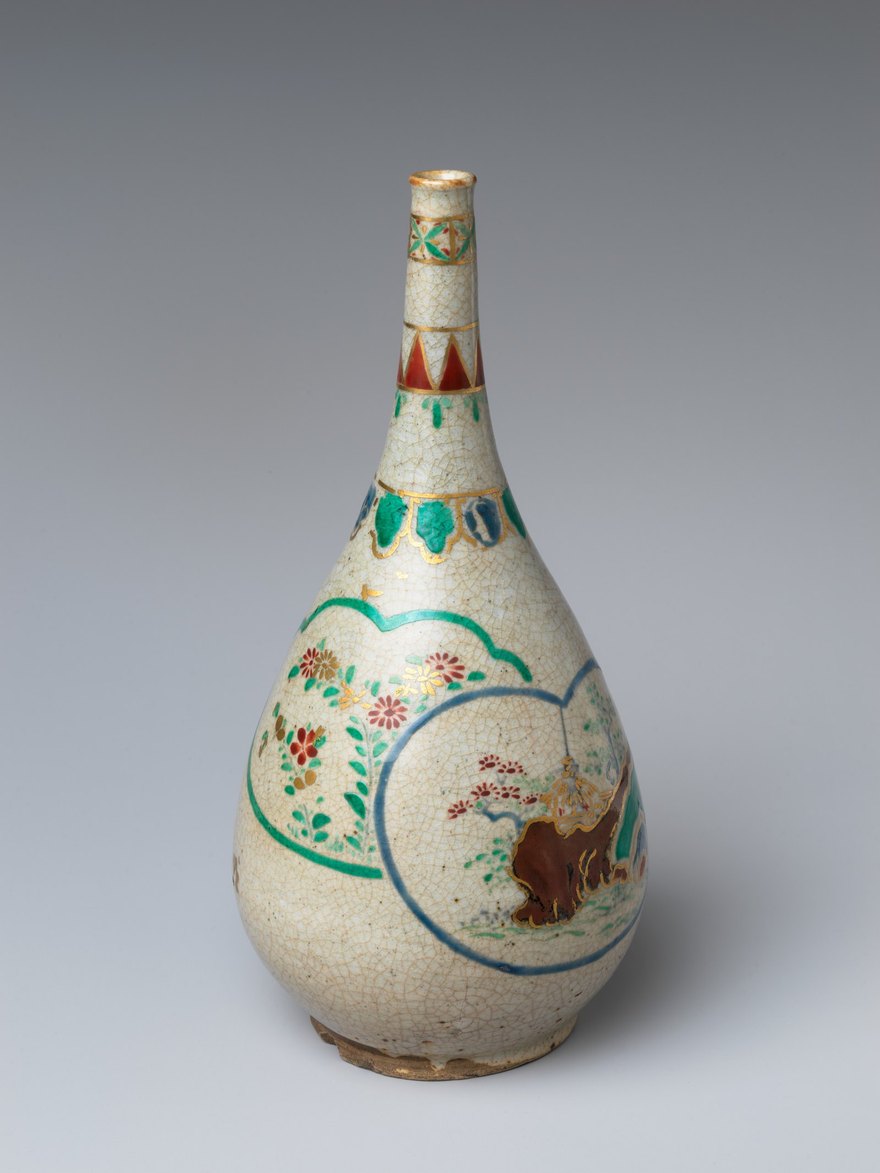
In the late eighteenth century, Okuda Eisen began firing porcelain in Kyoto, and the potters who followed him, including Aoki Mokubei and Ninnami Dōhachi, made porcelain part of the Kyoto tradition. In the Meiji era, Kyoto invited the German scientist Gottfried Wagener and took in new techniques from abroad.
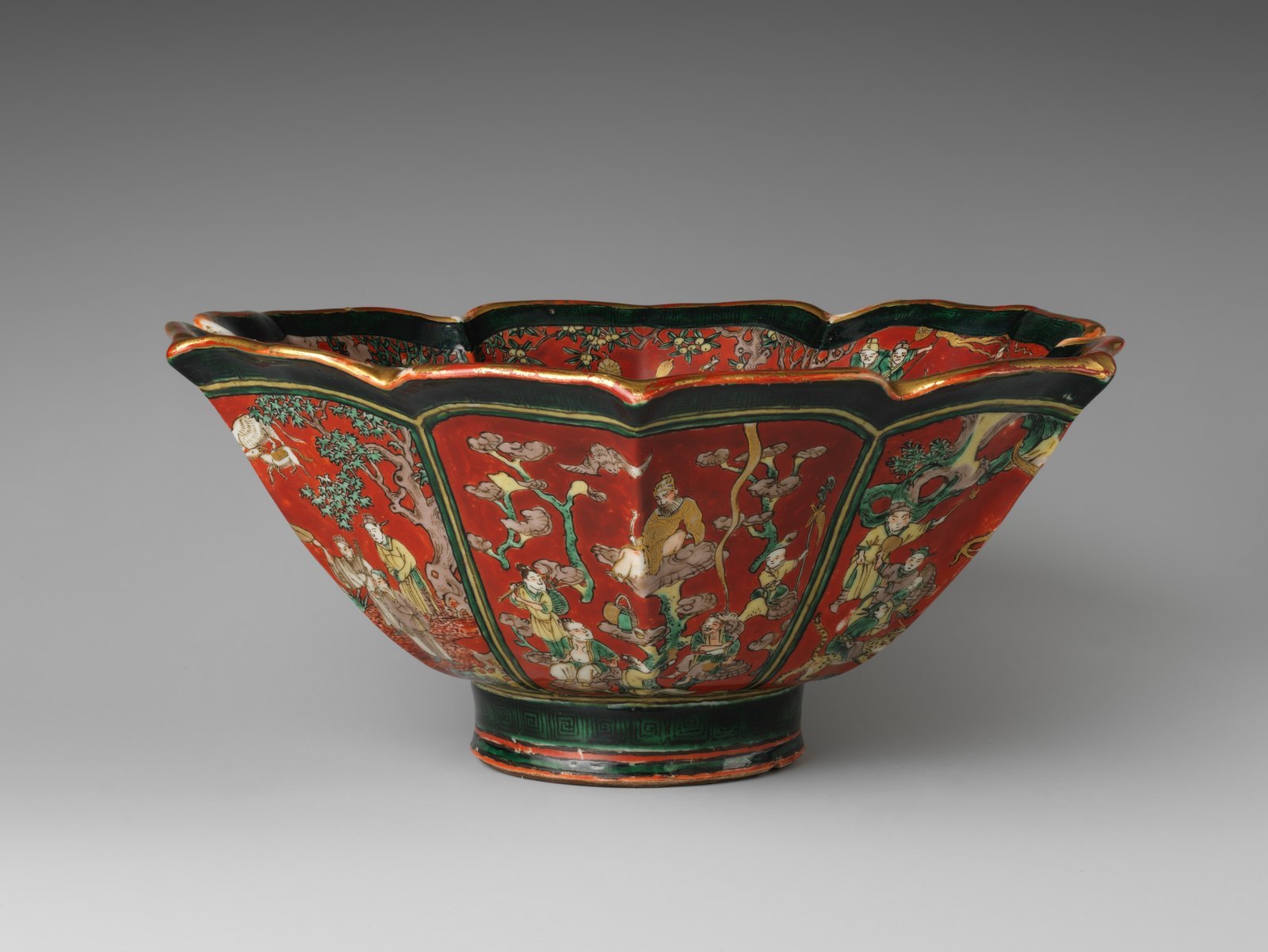
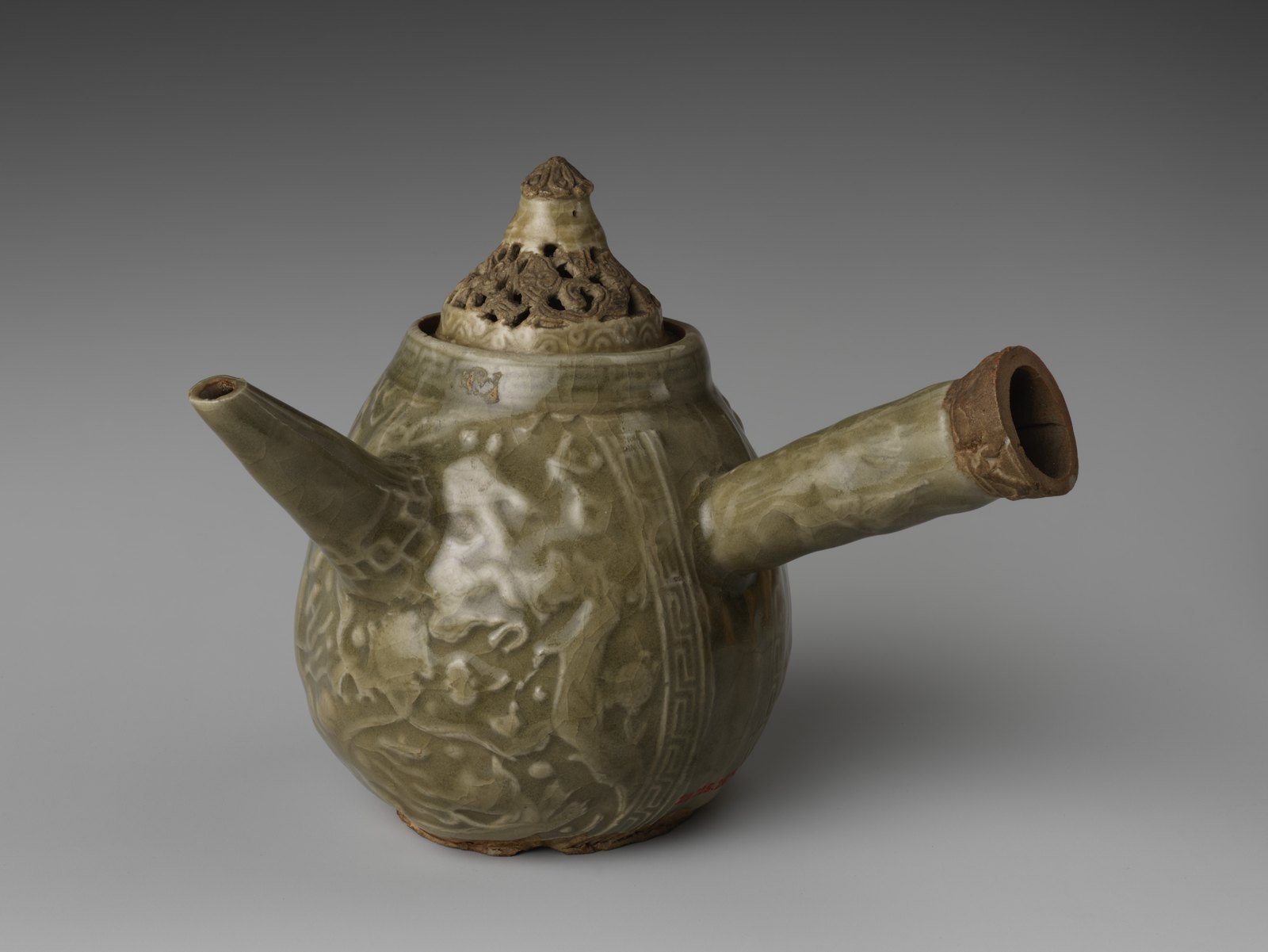
The name Kiyomizu-yaki is said to come from the slopes leading up to Kiyomizu-dera temple, around Gojōzaka, where many potters gathered. Broadly, “Kyo-yaki” refers to Kyoto pottery as a whole, especially before the modern era, and “Kiyomizu-yaki” is the name more often used from the Meiji era onward. Today the two are joined: in 1977, “Kyo-yaki and Kiyomizu-yaki” was designated a traditional craft of Japan.
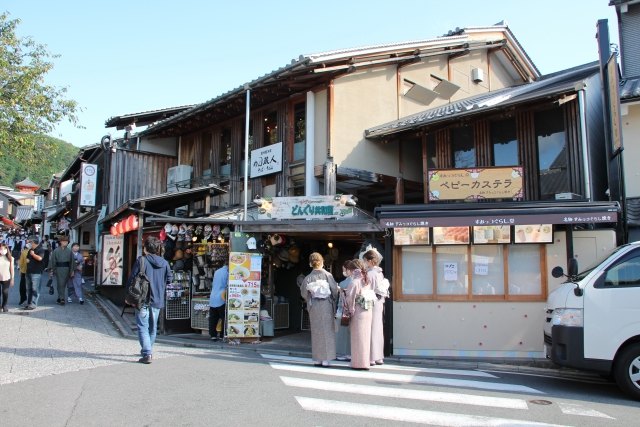
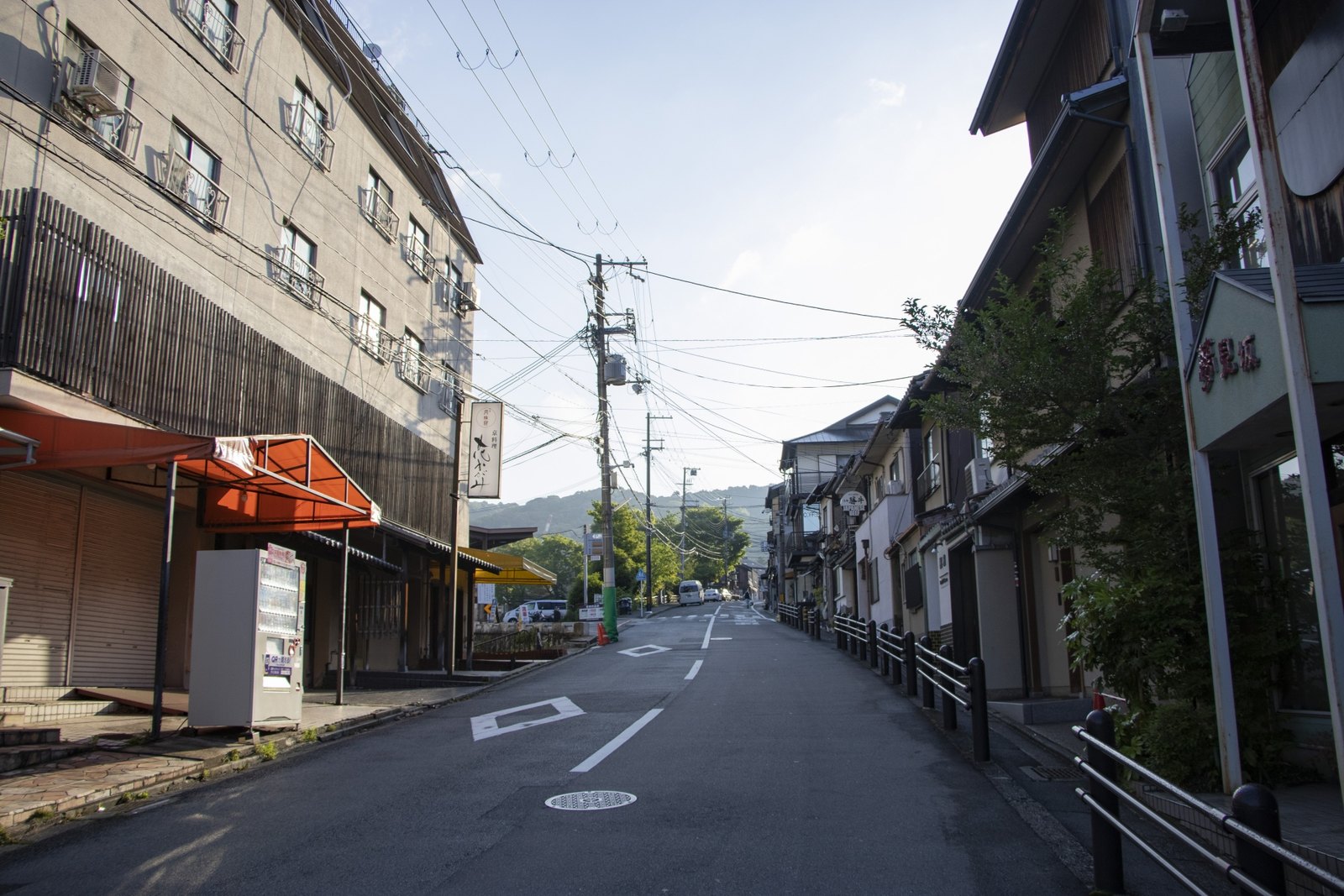
Production has spread from the eastern hills to Yamashina, to the Sumiyama area of Uji, and to other towns in Kyoto Prefecture, and much of the work is still done by hand in small workshops.
4. Reading the Styles You Will Meet
Here are the styles that appear most often among Kiyomizu-yaki pieces, with a few clues for recognizing each. Many pieces combine two or more.
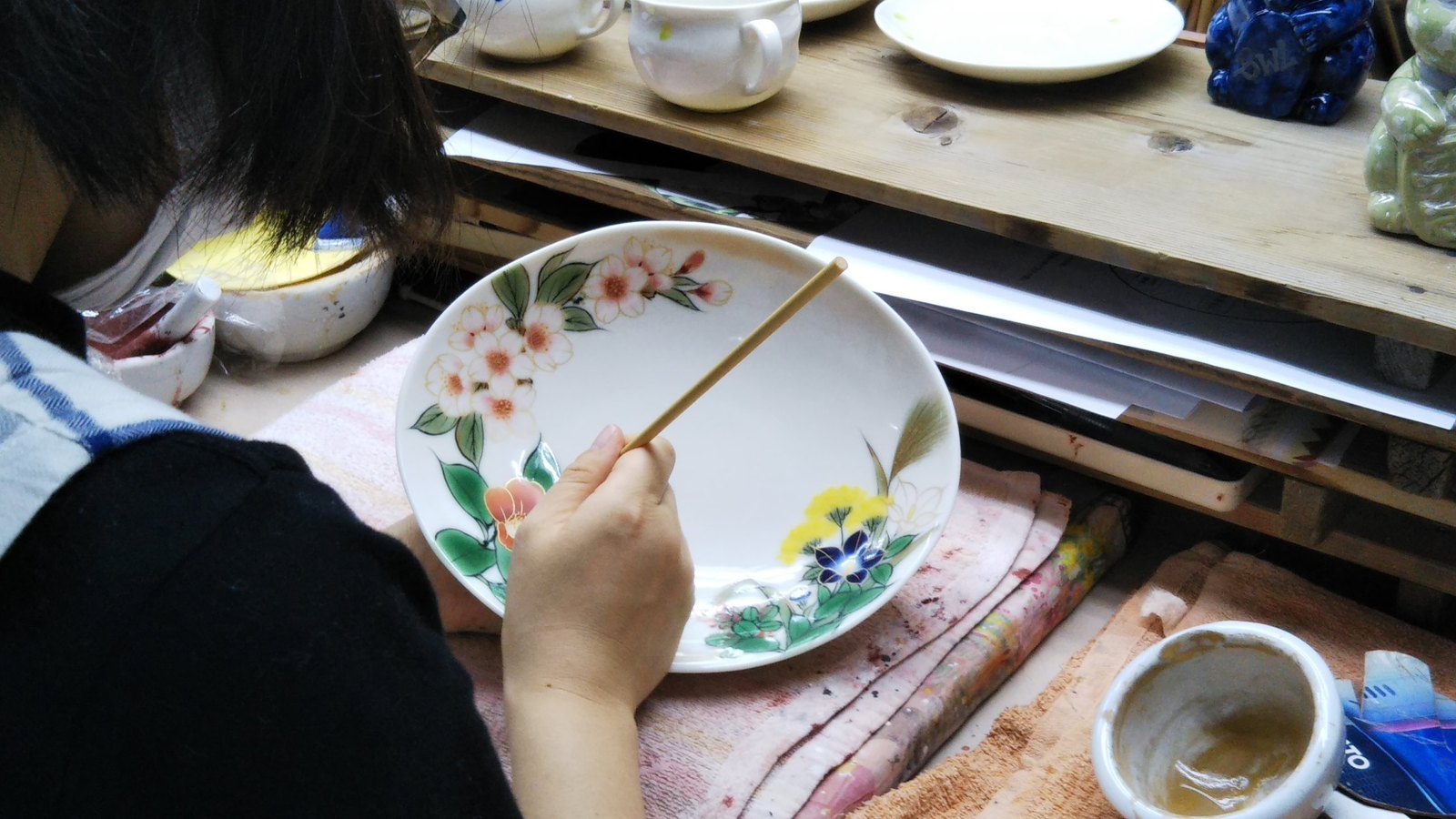
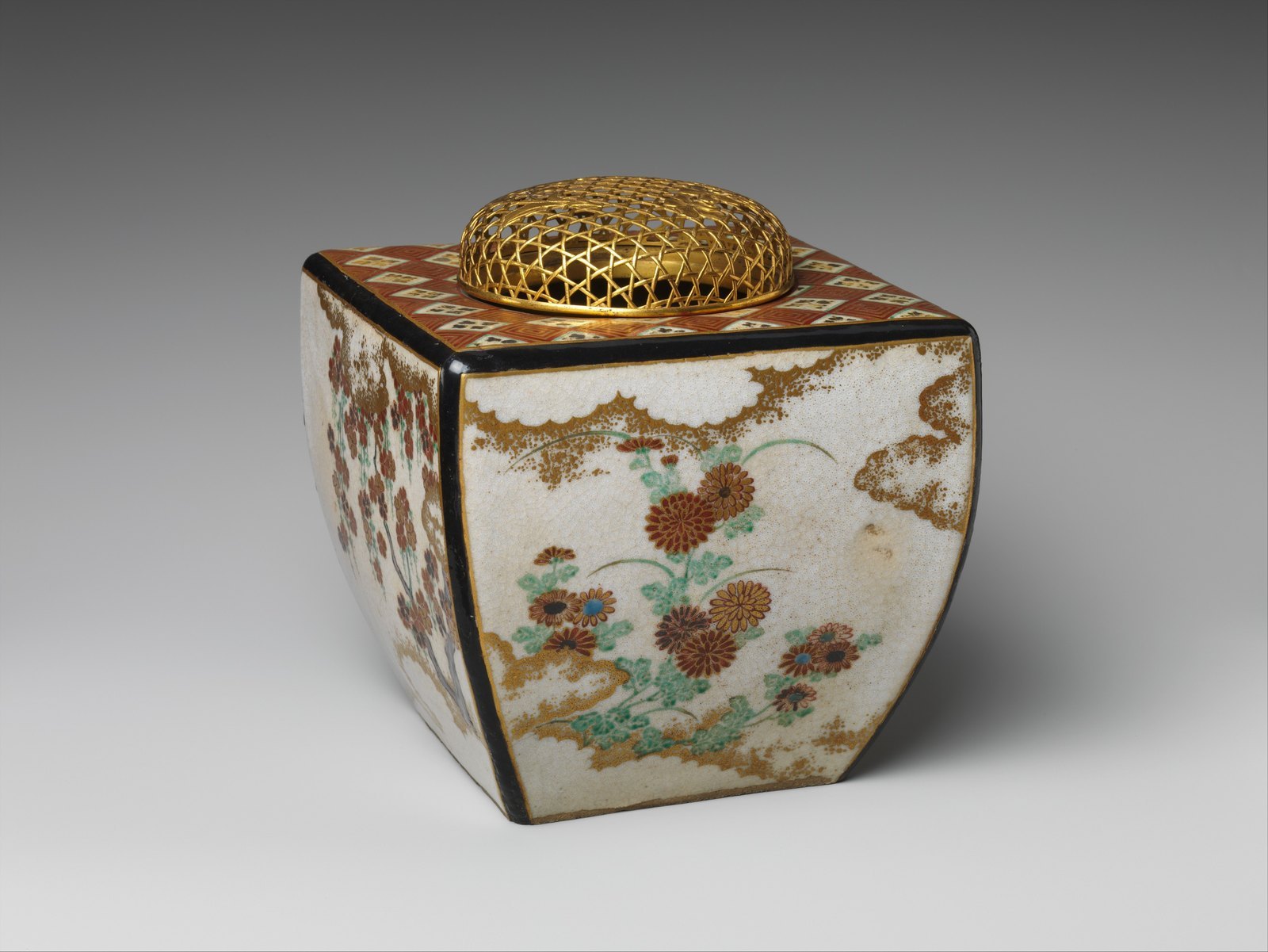
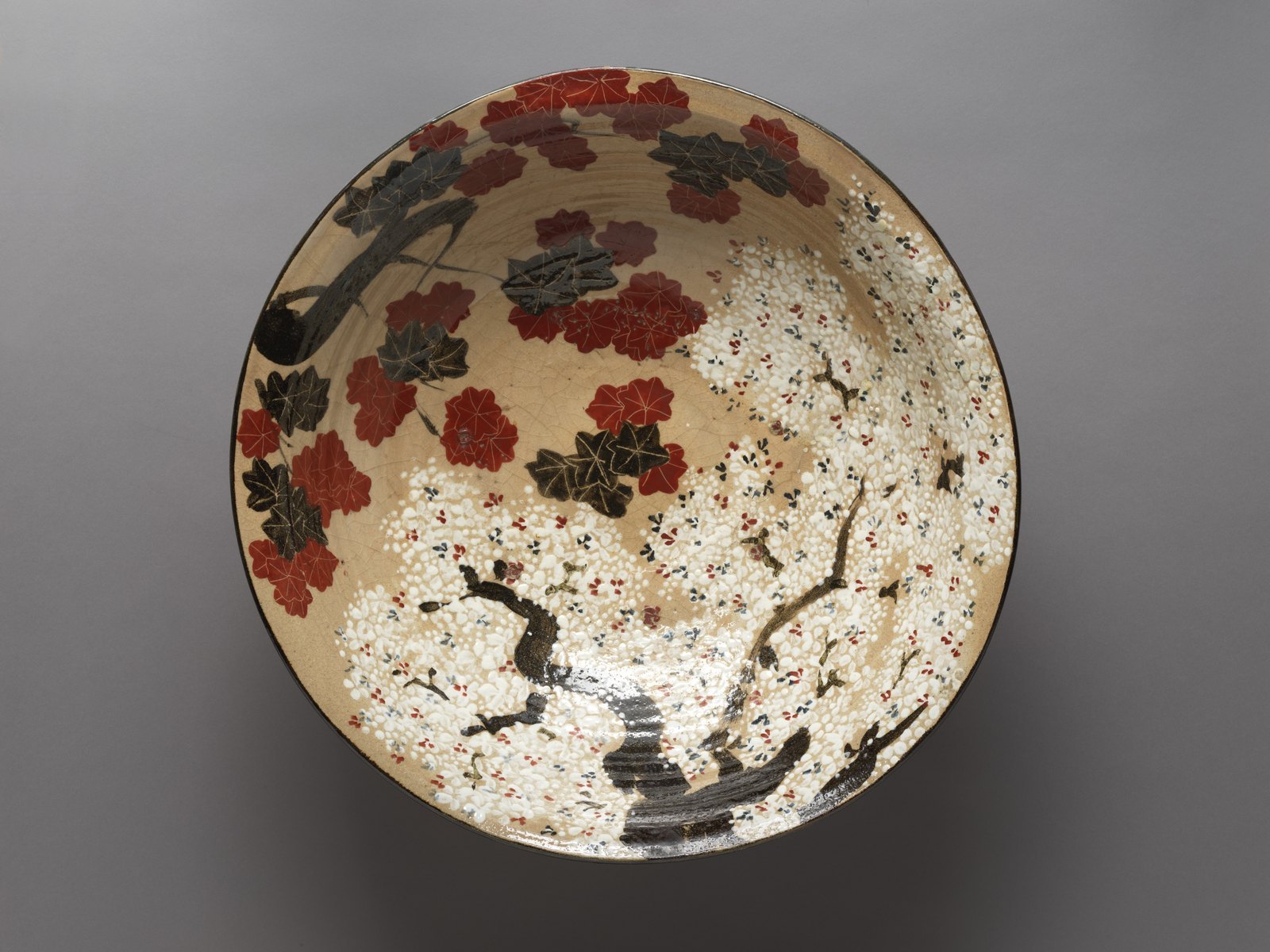
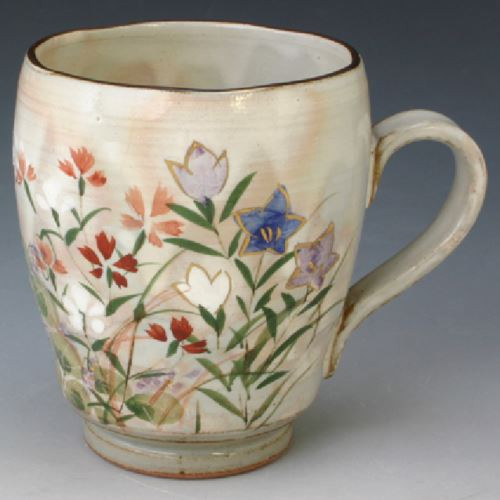
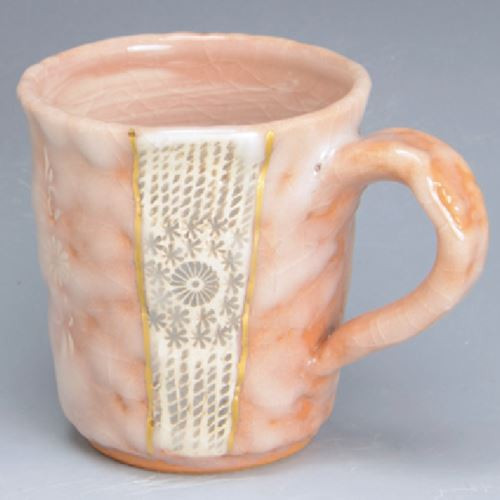
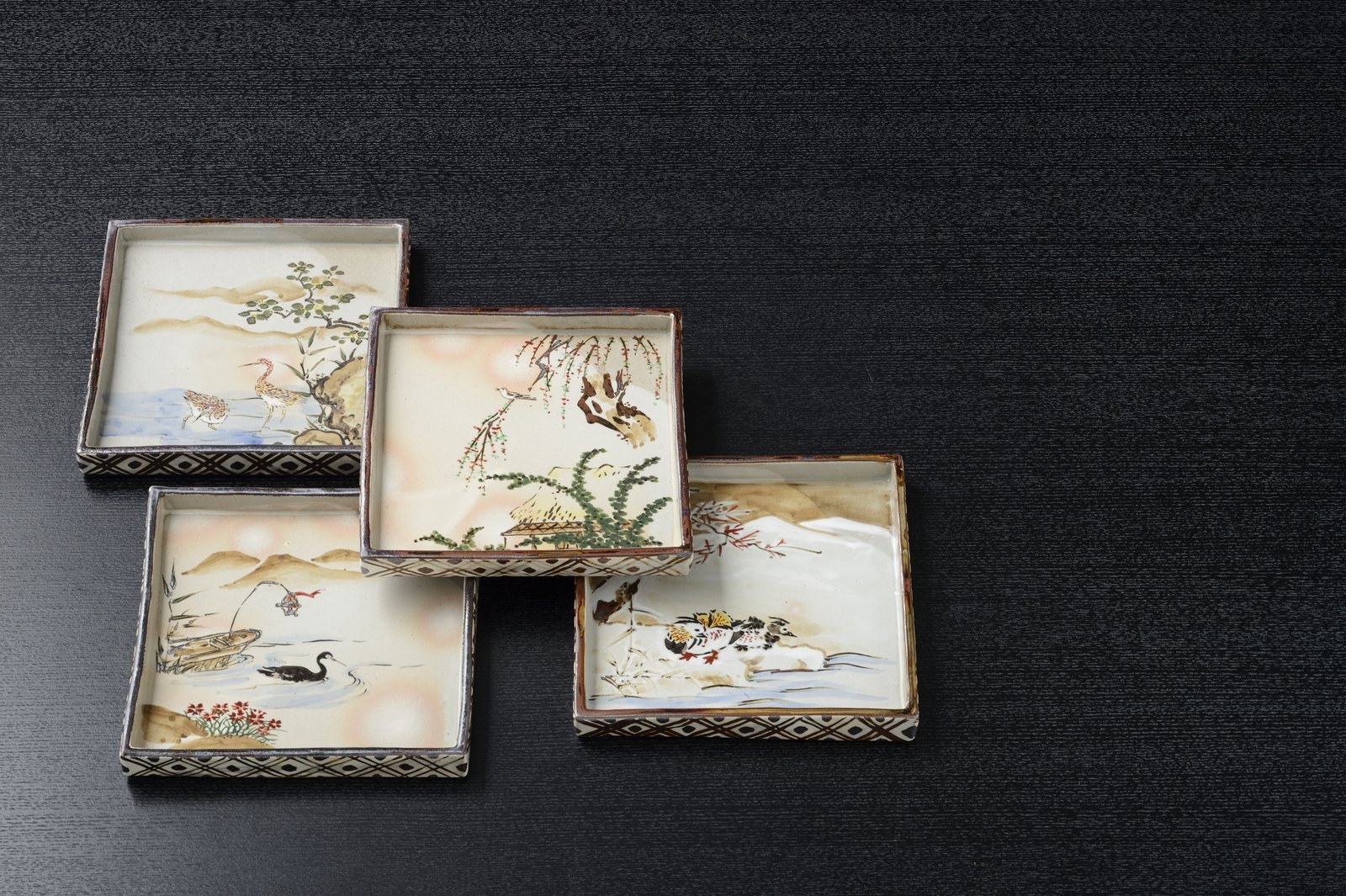
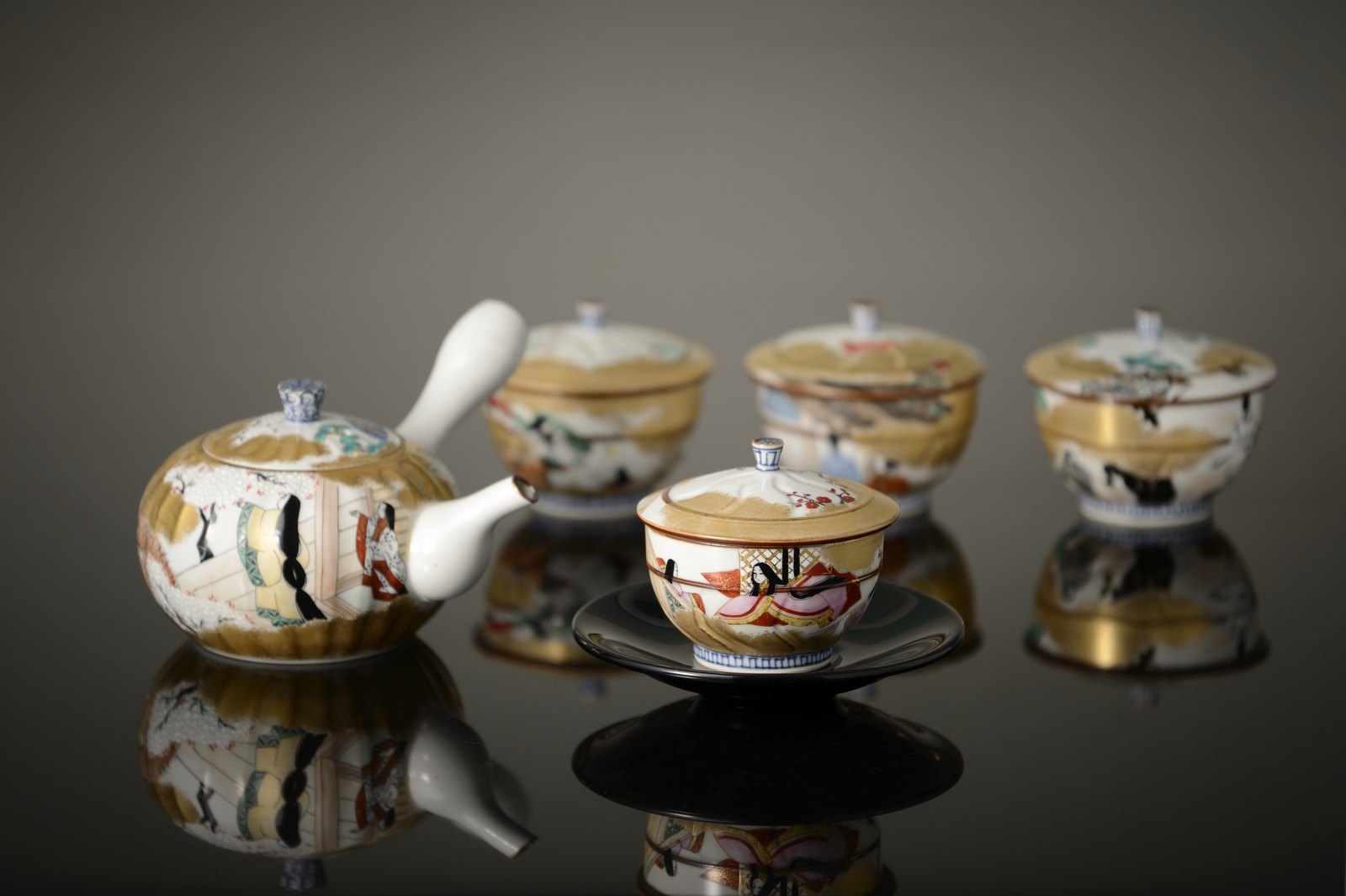
Iro-e and gold (色絵・金彩). Painting in colored overglaze enamels, applied after the main firing and fixed in a second, lower firing. This is the style most closely tied to Kyoto’s name, the line that runs back to Ninsei. Look for soft reds, greens, and blues sitting slightly raised on the glaze, often with gold or silver added. Seasonal flowers, autumn grasses, and auspicious motifs are common subjects.
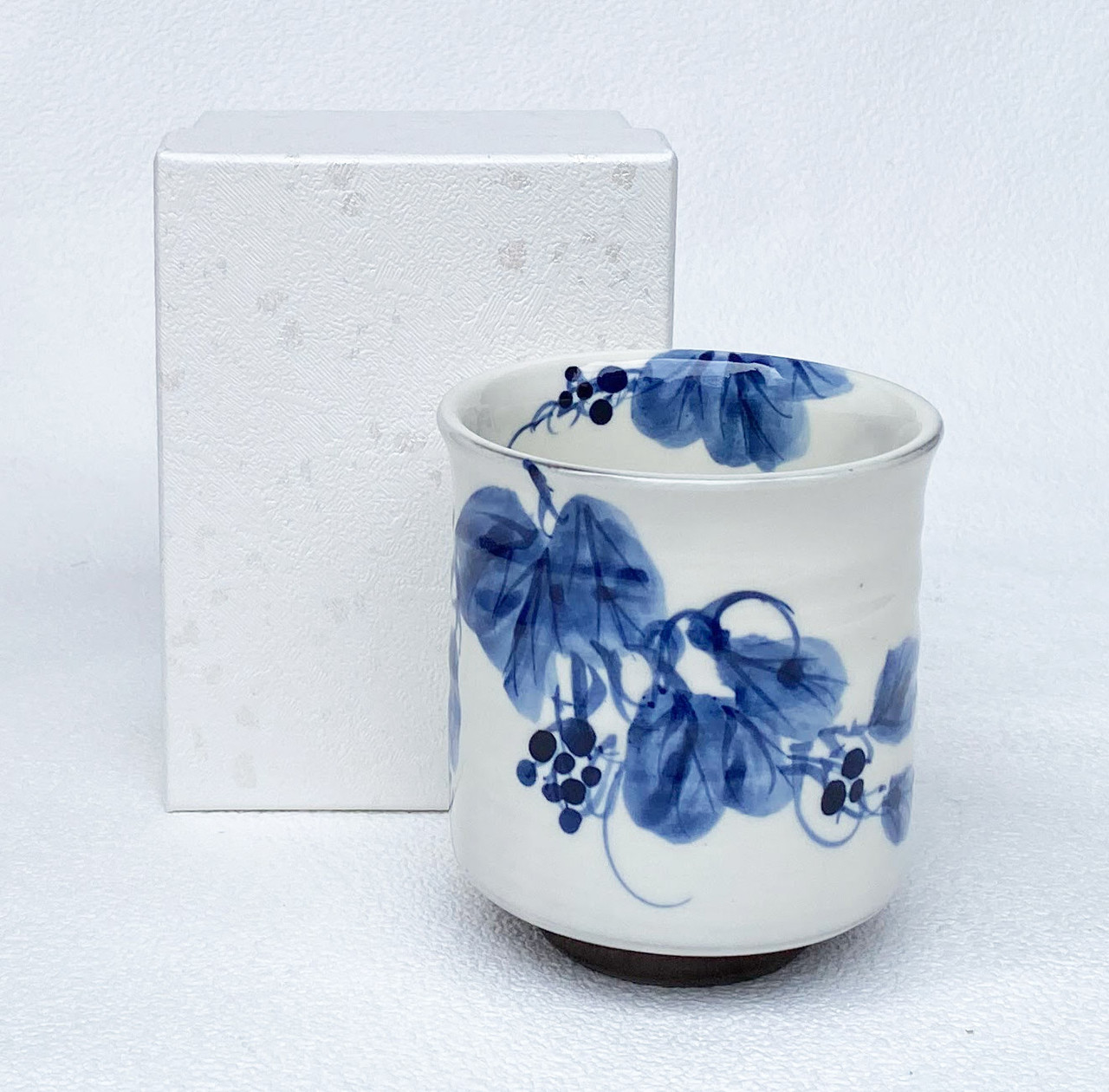
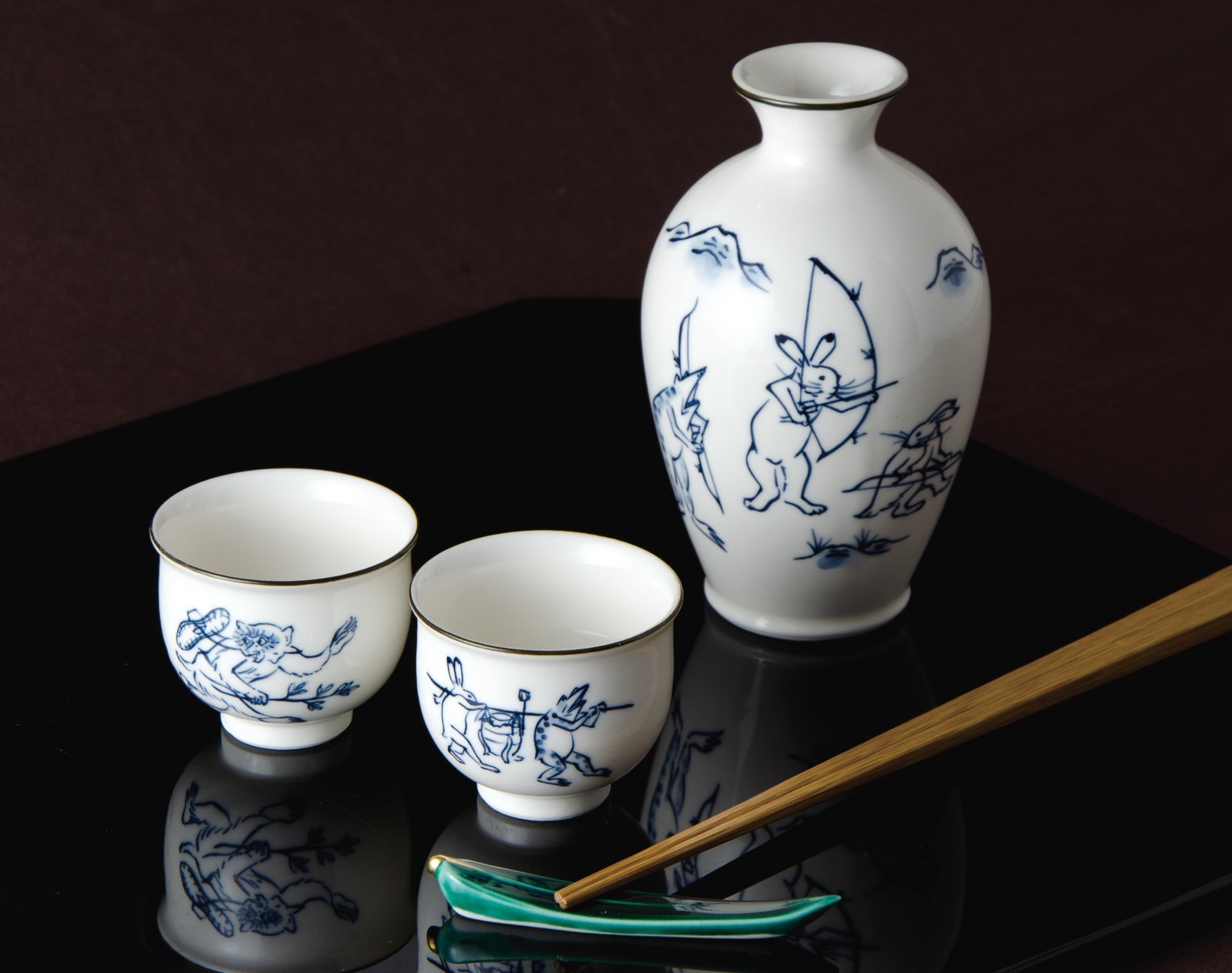
Sometsuke (染付). Painting in cobalt blue under the glaze, so that the blue lies beneath a clear, glossy surface. On a Kyoto piece, sometsuke is often loose and painterly rather than strictly patterned: a grapevine curling around a cup, or a combed blue line around the foot.
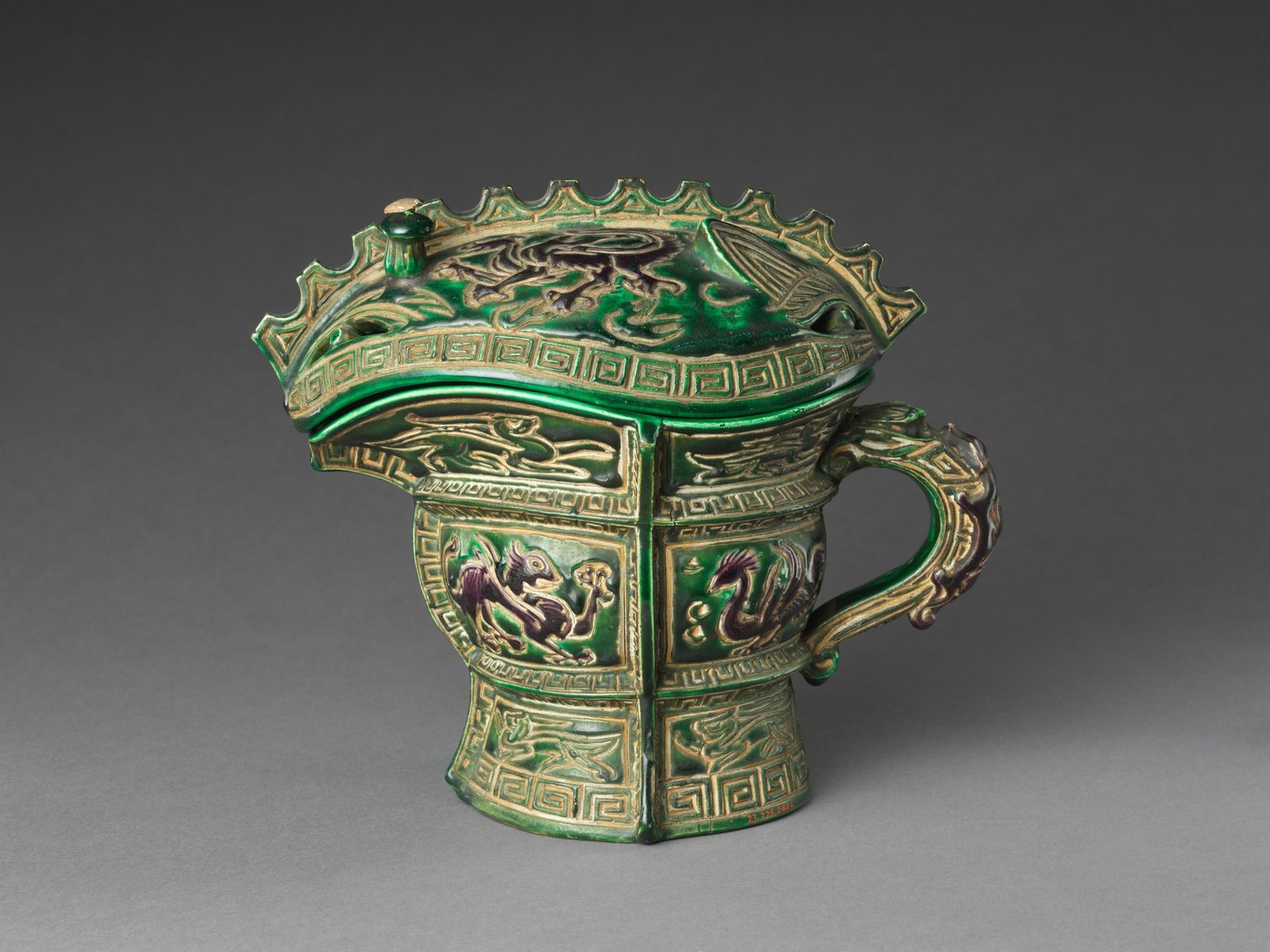
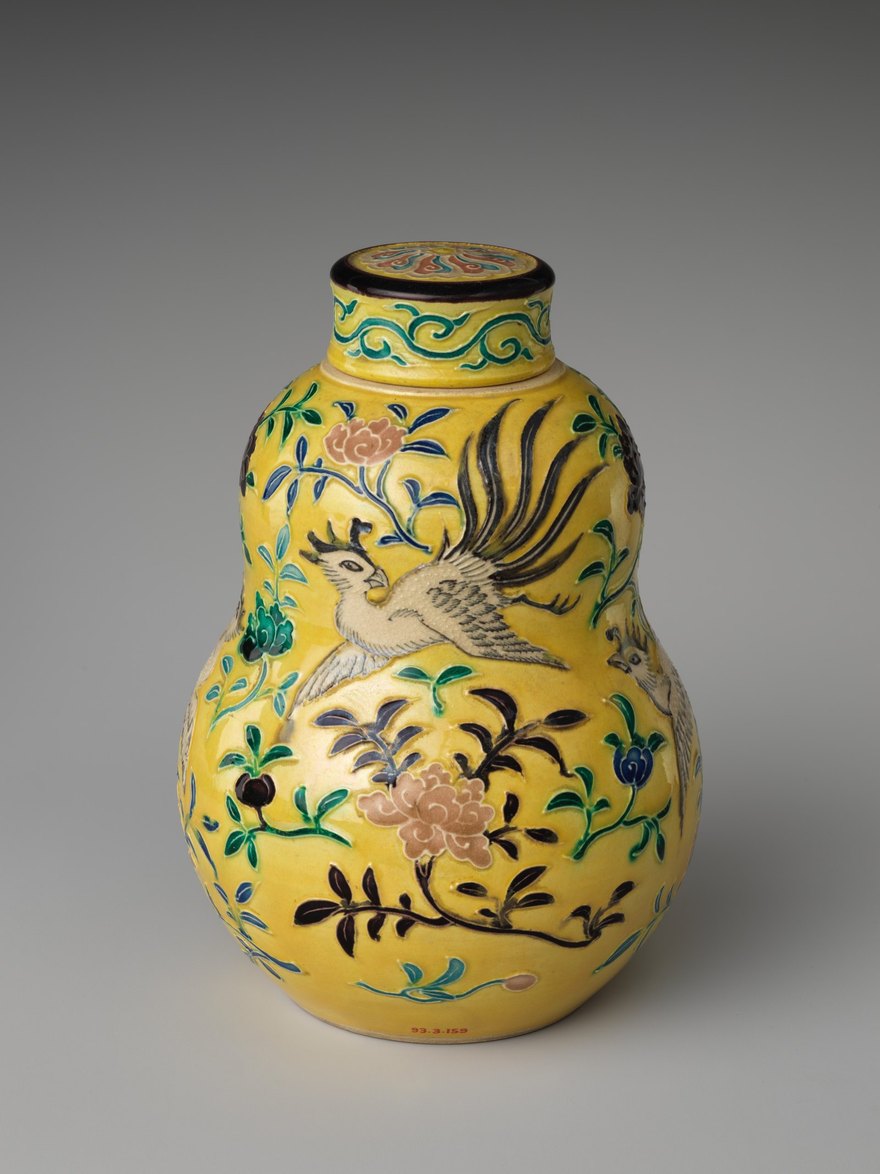
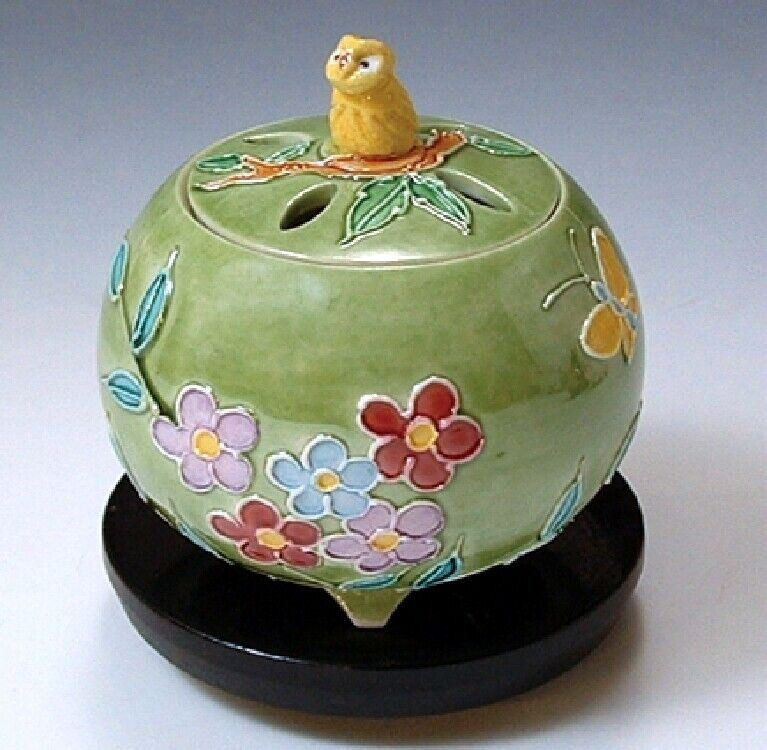
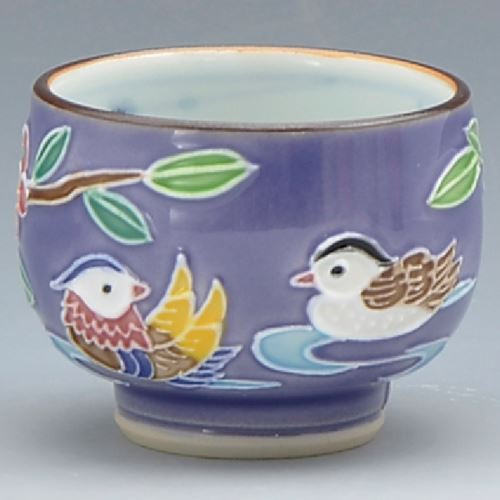
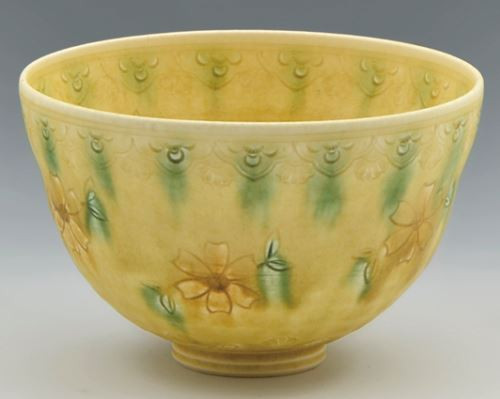
Kōchi (交趾). Bright, low-fired glazes in yellow, green, purple, and blue, kept apart by thin raised lines of clay, so that each color sits in its own small compartment. The original wares, sometimes called Cochin ware in English, were made in southern China; the name comes from Kōchi (交趾, Cochin), an old name for a region of present-day Vietnam through which they are said to have reached Japan. Kyoto potters were making pieces in this style by the late eighteenth century, including Okuda Eisen, and the Eiraku family of potters later took it up as well. Kōchi pieces are vivid, and they are often small: sake cups, chopstick rests, incense burners.
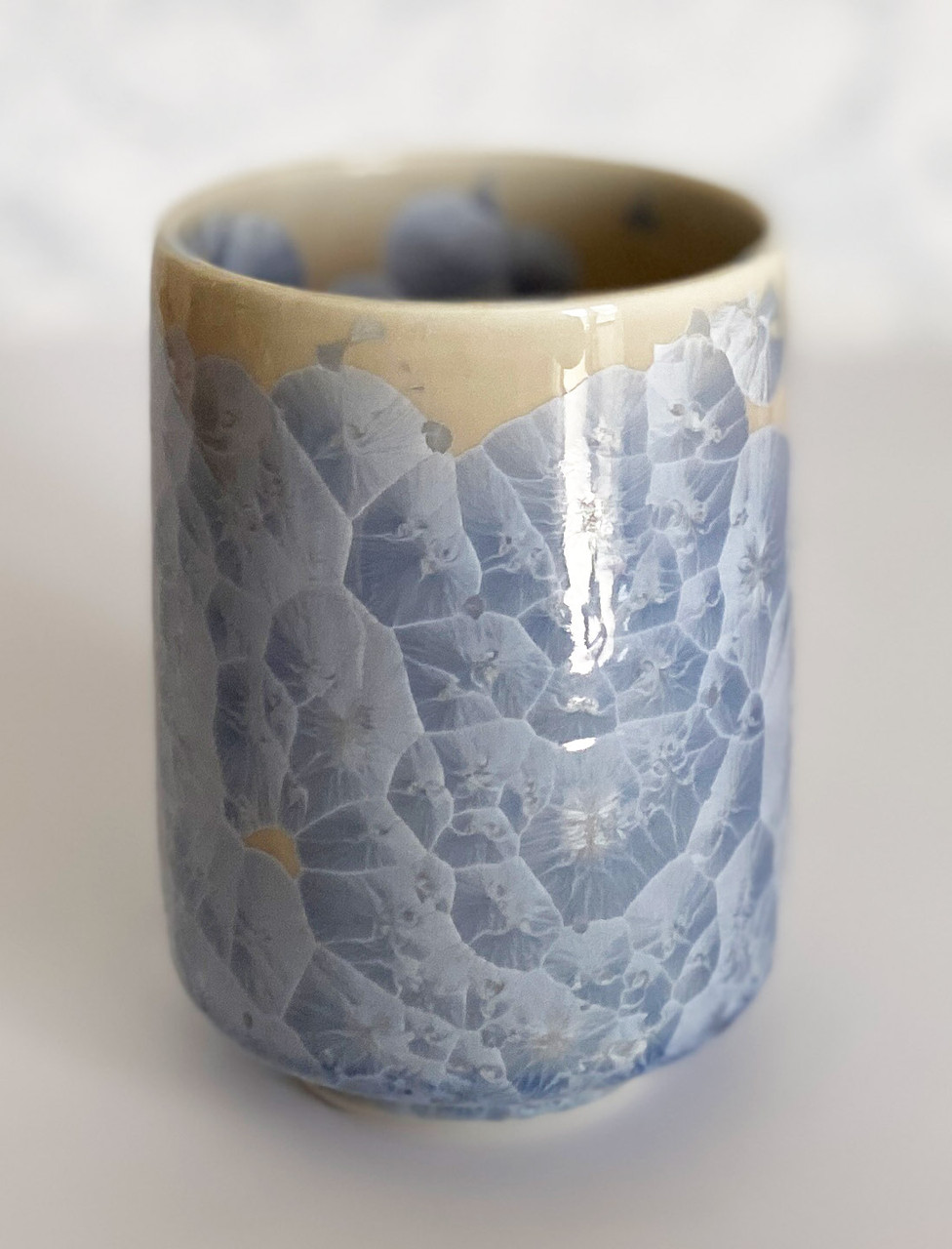
Crystalline glaze (結晶釉). A glaze in which crystals grow as the kiln cools, leaving patterns like frost, flowers, or snowflakes spread across the surface. No two pieces form their crystals in the same way. Crystalline glazes are among the most common finishes in our Kiyomizu collection, especially on teacups and sake cups.
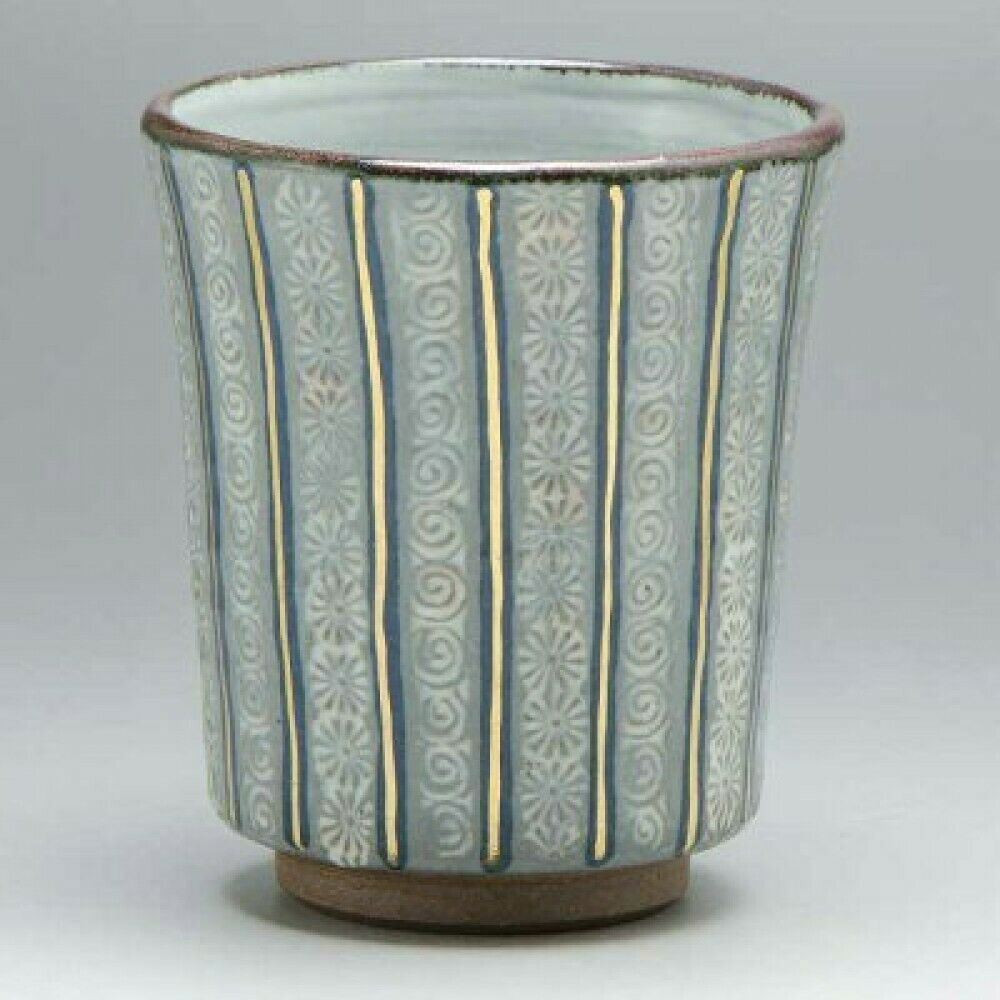
Kohiki and Mishima (粉引・三島). Both use white slip over a darker clay. In kohiki, the whole piece is covered in slip, giving a soft, powdery white with the darker clay showing faintly at the edges. In Mishima, small patterns are stamped or carved into the clay and filled with white slip, so the design sits flush in the surface. Both feel gentle and earthy, and both are pottery rather than porcelain.
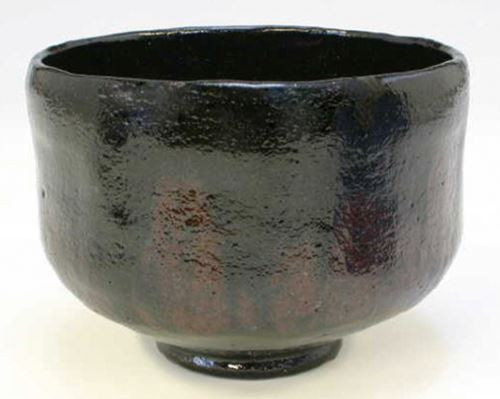
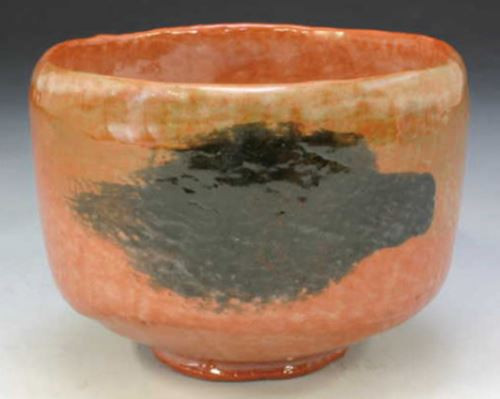
Raku style (楽). Raku ware began in Kyoto in the late sixteenth century, shaped by hand without a wheel and fired at a relatively low temperature. It is light for its size and warm to hold. Many Kyoto potters also make pieces in the raku style, in the classic red and black, from tea bowls to small chopstick rests.
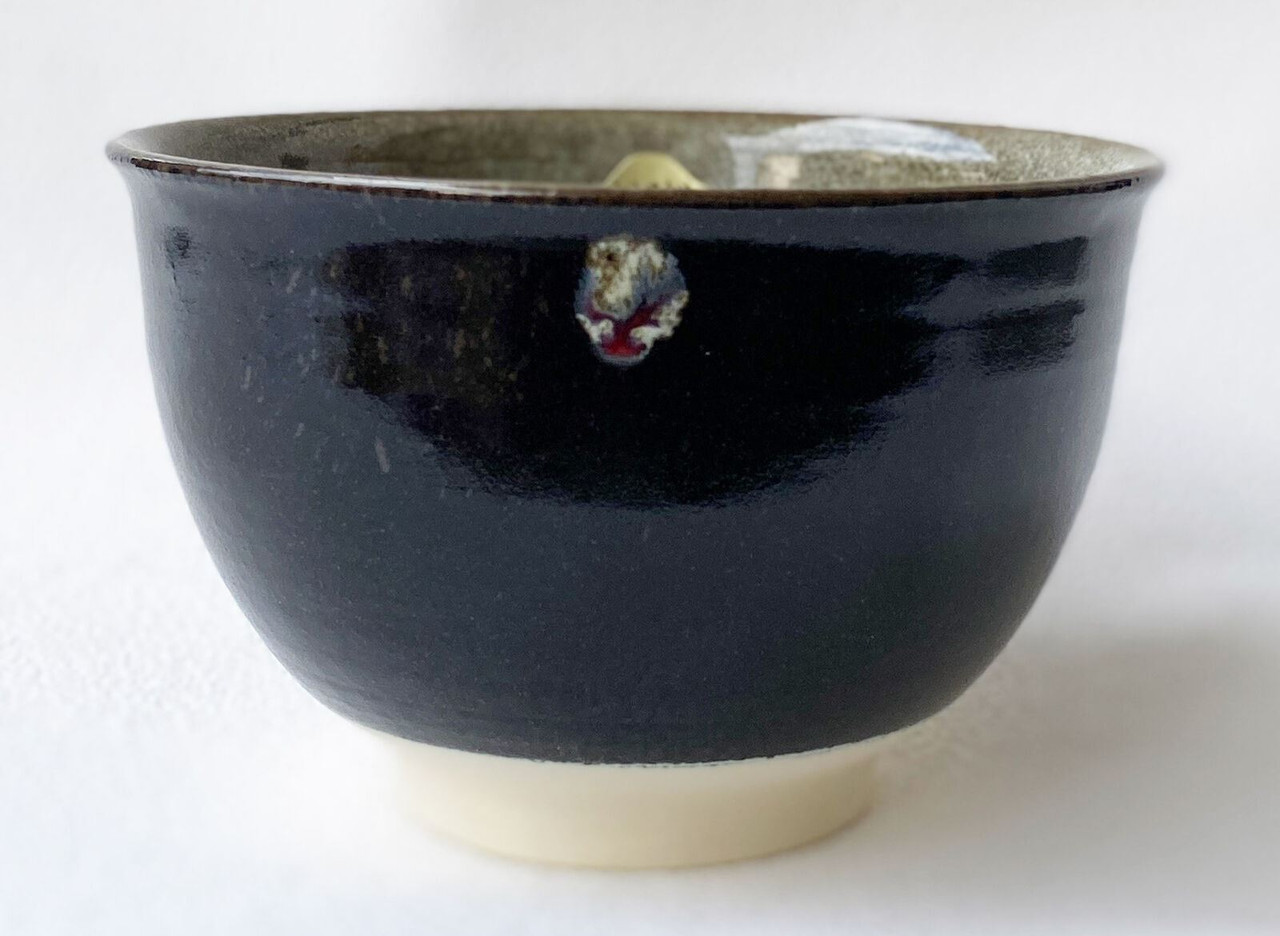
Tenmoku (天目). A dark, iron-rich glaze, from deep brown to black, that turns amber or rust where it runs thin over the rim. Some tenmoku glazes break into streaks or spots of color as they fire. It is a quiet style, often chosen for sake cups and tea bowls.
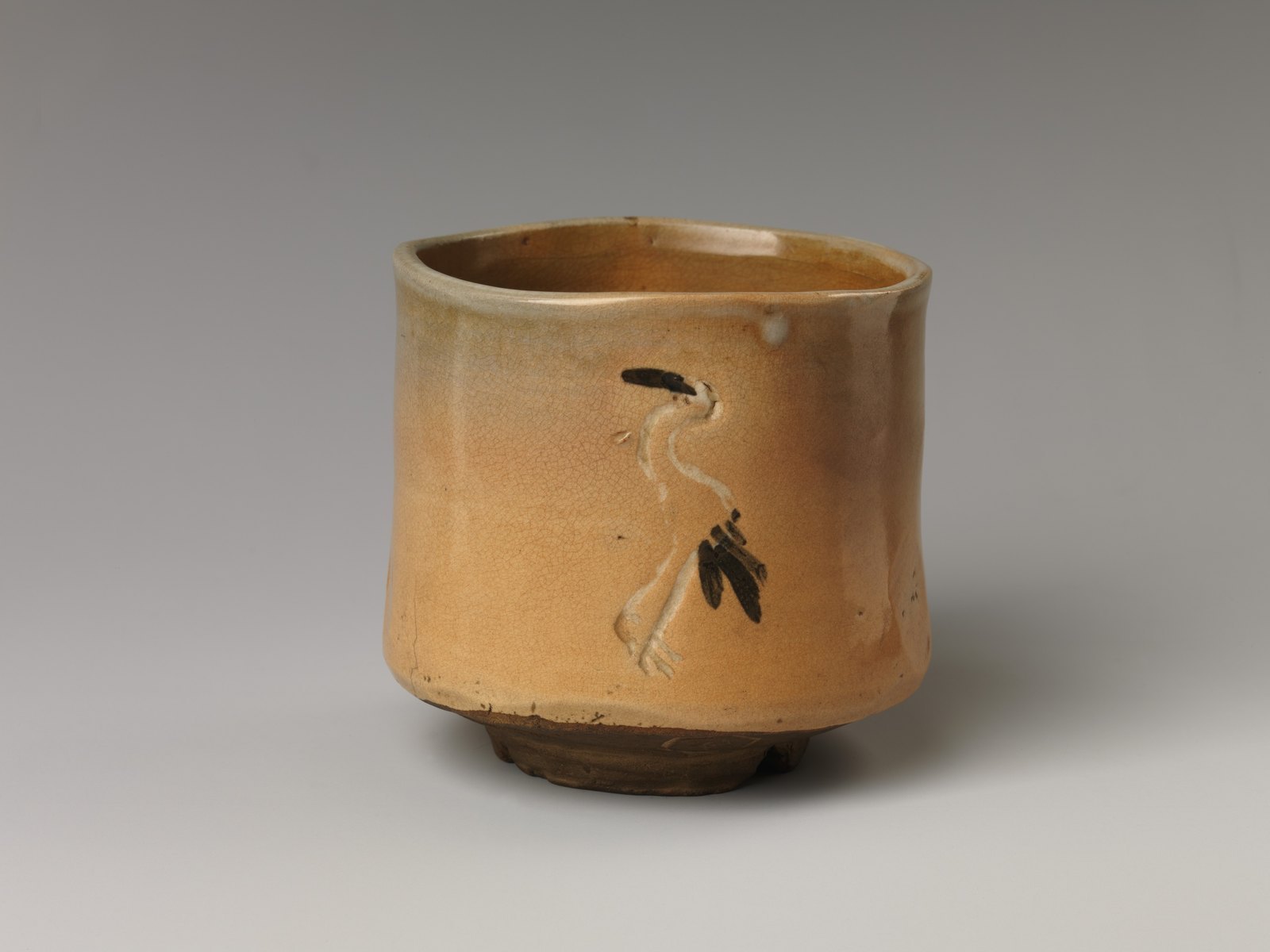
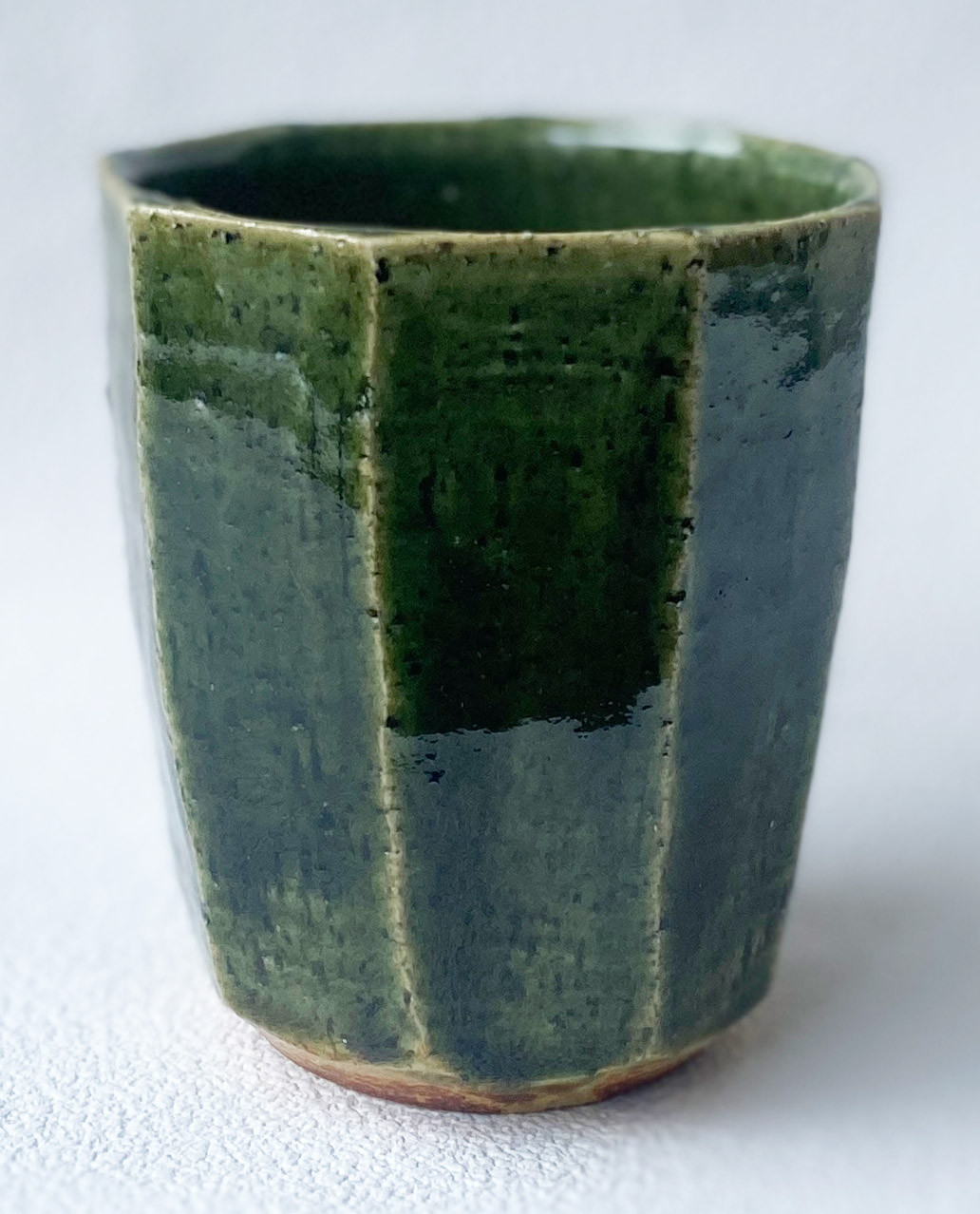
Glazes borrowed from other kilns. You may find a Kiyomizu tea bowl in the soft yellow of Ki-Seto, the milky white of Shino, or the deep green of Oribe, all glazes first made famous in the Seto and Mino region. This is not a labeling error. Kyoto potters have long worked in the manner of other kilns, a practice called utsushi (写し), and many Kiyomizu pieces carry it on. The piece is still made in Kyoto; it simply speaks in another region’s voice.
5. Pottery or Porcelain: Telling Them Apart
Because Kyoto makes both, it helps to know which one you are holding. The difference affects how the piece feels, how it sounds, and how it should be cared for.
Look at the foot. On the underside, many pieces leave a ring of clay unglazed. On pottery this ring is usually tan, gray, or reddish, and slightly rough. On porcelain it is white and fine-grained.
Feel the weight and the wall. Pottery tends to have a thicker wall and feels soft and warm. Porcelain is usually thinner for its size, hard, and smooth.
Listen. Tapped lightly with a fingernail, porcelain usually gives a clear, high ring. Pottery gives a lower, softer sound.
Hold it to the light. Thin porcelain may let a little light through. Pottery does not.
When you cannot hold a piece, the product page is the place to look. Most of our Kiyomizu listings state whether the piece is pottery or porcelain, and that note decides much of the care described below.
6. How to Choose a Piece
Start with how you will use it. A yunomi teacup, a rice bowl, a sake cup, or a set of chopstick rests will each be held and used in a different way. Kyoto pottery is made in all of these, so the use narrows the choice more quickly than the style.
Choose pottery or porcelain by feel. If you like a cup that is warm and soft in the hand and changes slowly with use, pottery is the natural choice. If you want something thin, hard-wearing, and easy to keep bright, porcelain suits better.
Read the painting. On a hand-painted piece, each line varies slightly, and a set of cups will differ a little from one cup to the next. Some everyday pieces are decorated with printed or stamped patterns instead, which are more uniform. Both have their place; the listing usually says which it is.
Check the measurements. Kyoto pieces are often smaller and finer than tableware made for Western tables. A Japanese teacup holds less than a mug, and a rice bowl is sized to be lifted to the mouth. The listed size is more reliable than a photograph.
Let the season guide you, if you like. Cherry blossoms for spring, morning glories for summer, maple leaves for autumn, plum or camellia for late winter. A seasonal piece used in its season is a small pleasure; a piece with a year-round motif, such as autumn grasses or arabesques, can stay out all year.
7. For Whom, and as a Gift
Kyoto pottery suits people who enjoy detail: those who notice the shading in a petal or the line of gold on a rim, and who like their everyday things to be a little more considered than they need to be. It also suits tea drinkers, since so much of Kyoto’s tradition grew up around tea.
As a gift, Kiyomizu-yaki carries the quiet refinement of the old capital. Pairs of teacups or rice bowls in two sizes, known as meoto (夫婦), are traditionally given for weddings and anniversaries. Auspicious motifs such as cranes, mandarin ducks, and pine, bamboo, and plum carry wishes for long life and lasting partnership. And small pieces such as chopstick rests, often sold in sets with seasonal or lucky shapes, make a light gift that is easy to send.
8. Using and Caring for Kyo-yaki
Every piece comes with its own needs, and the notes on its product page are the best guide. A few things hold for most:
- Wash gently by hand with warm water and a soft sponge. Avoid abrasive pads, which can wear away gold, silver, and overglaze painting over time.
- Gold and silver do not go in the microwave. Pieces with metallic decoration should also be kept out of the dishwasher. For other pieces, check the listing; some are labeled as suitable and many are not.
- Pottery absorbs a little water. Let it dry fully before putting it away, especially an unglazed foot. Some people rinse a pottery cup in water before use so that it takes up less color from tea.
- Expect small differences. Hand-painted lines, the size of crystals in a glaze, and the spread of a raku glaze vary from piece to piece. These are part of handwork, not defects.
- A crack or a chip is a sign to stop using a cup or bowl for food and drink. It can still be kept and enjoyed as an object.
9. Pieces in Our Collection
A few examples of the styles described above. These are examples, not recommendations; the right piece is the one that suits your table.
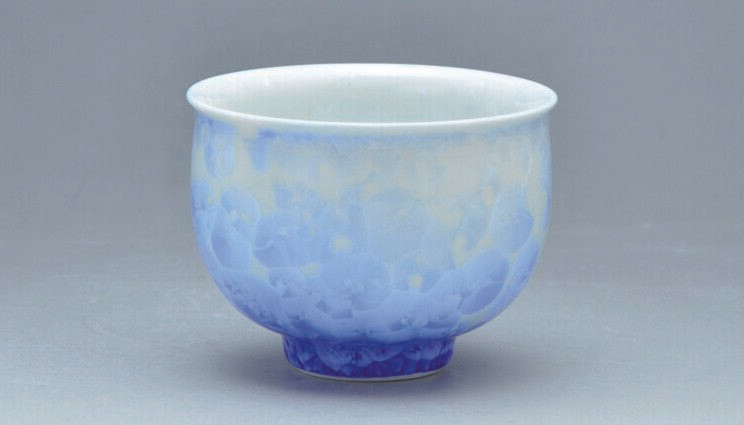
A crystalline glaze teacup. A sencha cup in white and blue, with crystals spread across the glaze like flowers. Each cup forms its own pattern in the kiln. (See the teacup) — Kiyomizu-yaki yunomi, crystal flower, white and blue — $65
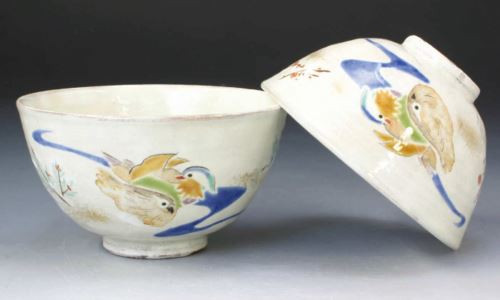
A pair of rice bowls with mandarin ducks. Two kohiki rice bowls in a larger and a smaller size, painted with mandarin ducks, a traditional image of a devoted couple. (See the pair) — Kiyomizu-yaki kohiki pair rice bowls, mandarin ducks — $152
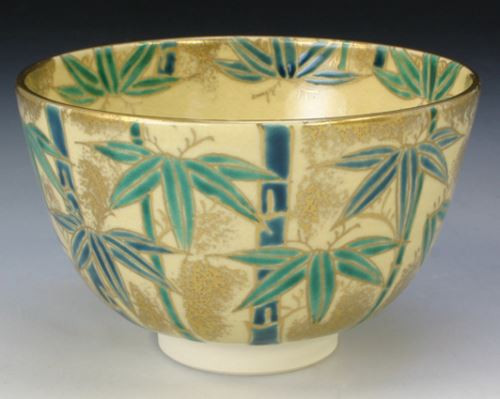
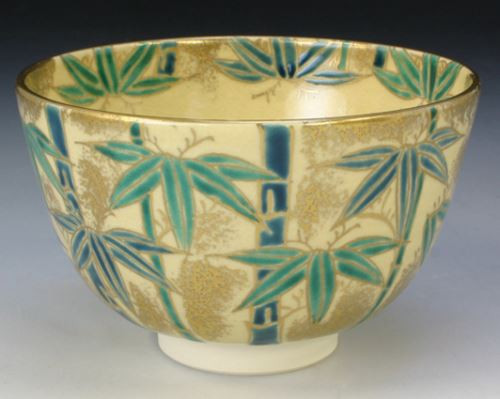
A tea bowl in the manner of Ninsei. A pottery matcha bowl decorated with bamboo and gold leaf, in the painted style that runs back to Ninsei. (See the tea bowl) — Kiyomizu-yaki matcha bowl, bamboo, Ninsei style — $298
10. A Note from the Shop
Kiyomizu-yaki is one of the largest parts of our collection, and also one of the hardest to describe in a single sentence. When we look across it, what stays with us is not one style but a habit of care: a potter who could have stopped at a plain glaze, and chose to add one more line of gold.
Even a small teacup shows the painting, the glaze, and the hand of the maker as clearly as any larger piece.
11. Frequently Asked Questions
Q: What is Kiyomizu ware?
Kiyomizu ware (Kiyomizu-yaki) is pottery and porcelain made in Kyoto, named after the area around Kiyomizu-dera temple where many potters gathered. It has no single look: it is known instead for fine painting, gold, and a wide range of glazes and styles. Today it is designated a traditional craft of Japan together with Kyo-yaki.
Q: What does “Kiyomizu” mean?
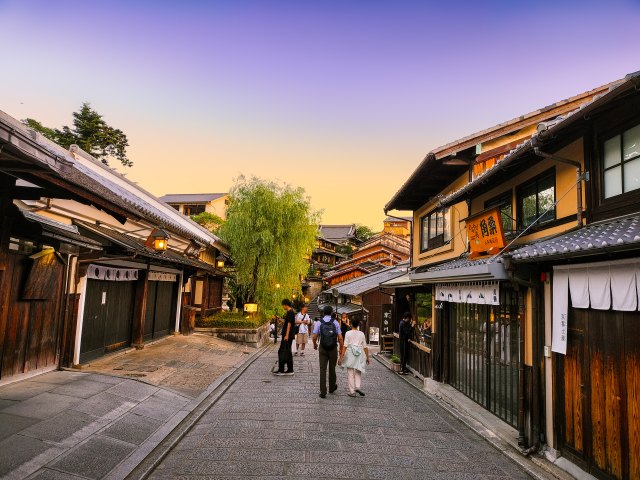
Kiyomizu (清水) means “pure water.” Kiyomizu-dera temple takes its name from the clear water of the Otowa Waterfall on its grounds, and Kiyomizu-yaki in turn is said to take its name from the temple and the slopes leading up to it.

Q: What is the difference between Kyo ware and Kiyomizu ware?
Kyo ware (Kyo-yaki) is the broad name for pottery and porcelain made in Kyoto, especially before the modern era. Kiyomizu ware is the name more often used from the Meiji era onward. Today they are treated as one craft, designated together as “Kyo-yaki and Kiyomizu-yaki.”
Q: Is Kiyomizu ware still made in Kyoto today?
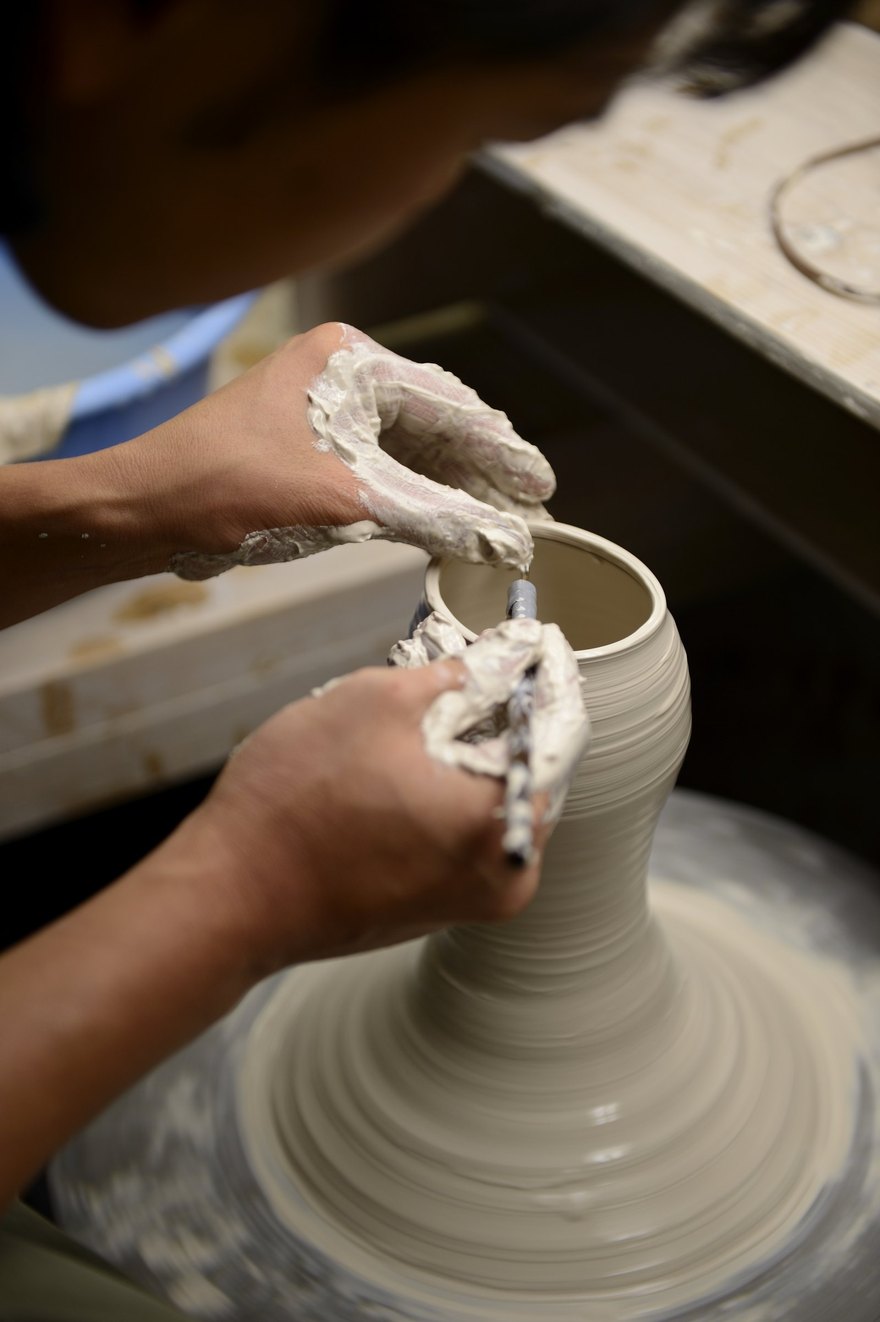
Yes. Potters work in the Higashiyama area near Kiyomizu-dera, in Yamashina, in the Sumiyama area of Uji, and in other parts of Kyoto Prefecture. Much of the work is still done by hand in small family workshops, with tasks such as throwing, painting, and firing often divided among specialists.
Q: Is Kiyomizu ware valuable? Is an inexpensive piece lower in quality?
For a new piece, price usually reflects how much of it is done by hand, how much gold or detailed painting it carries, the kiln, and whether it comes in a wooden box. Some everyday pieces use molds or printed patterns, which keeps them affordable and uniform; they are still made in Kyoto and well suited to daily use. The value of an older piece depends on its maker, age, and condition, and is a question for a specialist in antiques rather than a general guide.
Q: How can you tell if a Japanese piece is raku?
Raku is shaped by hand without a wheel and fired at a relatively low temperature, so it tends to feel light and warm for its size, often with a soft, slightly uneven form and a thick, gentle glaze in black or red. (In English, “raku” can also mean a Western smoke-fired technique; this answer is about Japanese raku.) Many Kyoto pieces are made in the raku style, and the product name usually says so.
Q: I’m new to Kyo-yaki. Where should I start?
With a piece you will use every day, such as a yunomi teacup or a rice bowl. Choose pottery or porcelain by the feel you prefer, then choose the style you most enjoy looking at. A daily piece teaches you more about Kyoto pottery than a special one kept in its box.
Q: Is Kiyomizu ware dishwasher and microwave safe?
It depends on the piece, so the notes on each product page are the ones to follow. The care section above covers the general points.
Thank you for reading.
— from Osaka, Team Manekineko-Ai
PIECES IN THIS ARTICLE
Three pieces from this article

CONTINUE READING
MORE IN KOGEI → KOGEI
What Is Arita Ware? A Guide to Japan’s Oldest Porcelain
How Arita porcelain feels in the hand, its main styles, and why it is also called Imari.
 KOGEI
What Is Kutani Ware?
Kutani’s rich overglaze colors, its history, and how a piece is made.
 KOGEI
Hagi Ware — A Guide to Japan’s Slowly Changing Pottery
Pale, crackled glaze that slowly changes color with use, and how to choose a piece.