
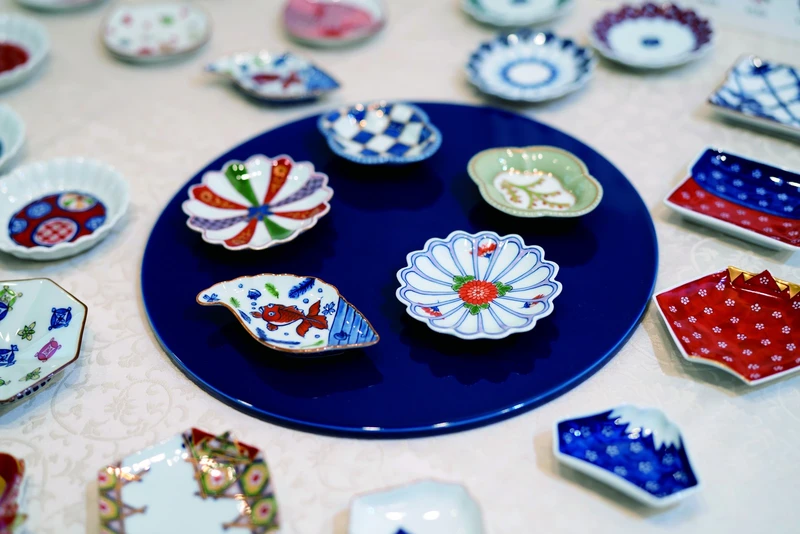
Hold a piece of Arita ware up to a window and the light comes through it.
Most people meet Arita ware before they know its name. The thin white plate under a slice of cake in a café, the blue-and-white cup at a hotel breakfast, the small dish holding soy sauce at a sushi counter — a great deal of it comes from one town in Saga Prefecture, in the north of Kyushu, where porcelain has been fired for roughly four hundred years.
If you are looking at Arita ware properly for the first time, the questions tend to be the same three. What makes it different from Japan’s other wares? Why are some pieces plain white and others crowded with blue, red and gold? And is it something you can use on an ordinary Tuesday, or does it live in a cupboard?
This guide answers those in order — what the piece feels like in the hand, the kinds of Arita ware and how to tell them apart, why it is sometimes called Imari, how to choose a first piece, and how to live with it.
On this page
1. What Arita Ware Actually Is
Arita ware (有田焼, Arita-yaki) is the porcelain of Arita, a town in Saga Prefecture on the island of Kyushu. It is generally described as Japan’s first porcelain, and it has been made there since the early seventeenth century.
Pick up an Arita plate and the first surprise is the weight. It is lighter than it looks. The wall is thin, the edge is crisp rather than rounded, and tapped with a fingernail the rim gives a short, clear ring rather than a dull knock.

Held toward a light, a thin porcelain body lets some light through, and the white goes faintly warm where the piece is thinnest. That translucency is the plainest way to tell porcelain from the stonewares of the Japanese mainland. A Bizen or Shigaraki piece is opaque, heavier in the hand and warm-surfaced; an Arita piece is cool, smooth and close to glassy.
The difference is the raw material and the heat. Porcelain is made from crushed porcelain stone and fired high enough that the body vitrifies — the clay turns glass-like through its whole thickness rather than staying porous. That is why Arita ware behaves the way it does in a kitchen. It does not drink up water, it does not hold the smell of yesterday’s garlic, and a washed plate dries without leaving a dark patch in the clay.
For anyone who has been slightly put off by Japanese ceramics — the soaking, the seasoning, the pieces that change colour if you use them for tea — Arita is the easy end of the shelf. It asks almost nothing of you.
2. Why Porcelain Began Here
Arita had the one thing porcelain needs and most of Japan lacked: stone. In the early seventeenth century, porcelain stone is said to have been found at Izumiyama, on the edge of the town, by potters who had come to Kyushu from the Korean peninsula a few years earlier. Until then Japan fired stoneware and imported its porcelain. From that point the country made its own, and Arita is where it started.

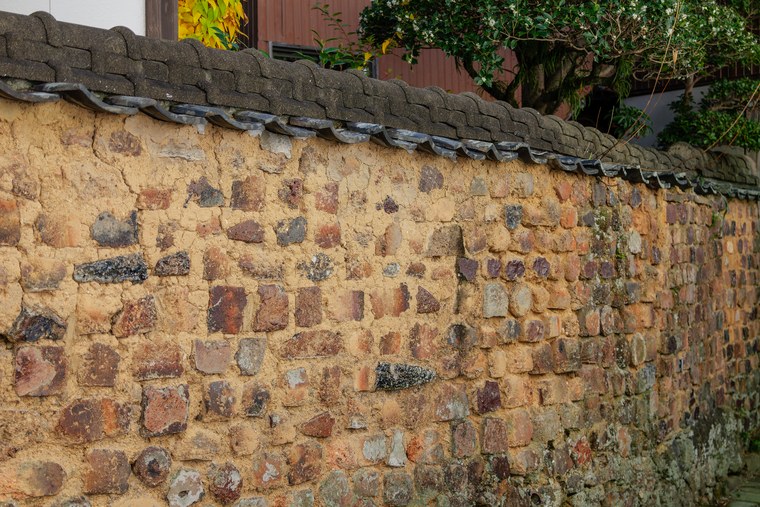
The town still reads as a kiln town. Workshops sit along the main road, chimneys stand behind the houses, and many of the garden walls are built from tonbai — fired brick salvaged from old kilns, stacked into walls the colour of ash and scorch.

3. Reading the Surface
“Arita ware” covers both a plain white cup and a plate so dense with gold that you would hesitate to put food on it. Both are Arita. What differs is the surface — and, behind the surface, which of the town’s historical styles the piece follows.
Hakuji (白磁) — plain white. A clear glaze over the white body and nothing else. The point is the body itself: its whiteness, and the shape it was thrown or moulded into.
Yokoku (陽刻) — relief. The pattern is raised or cut into the body before glazing, so it appears through the glaze as shadow rather than colour. Shinogi, the combed ridges on some plates, belongs to this family.
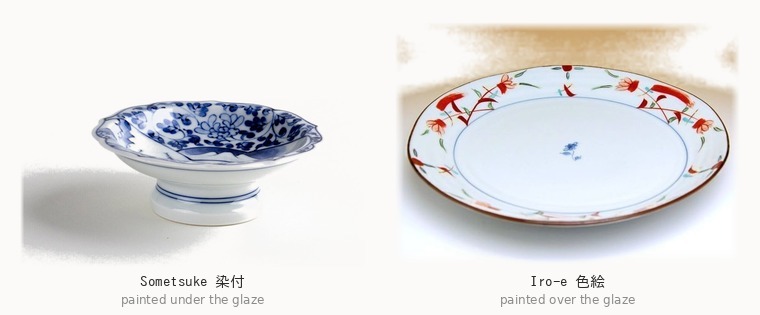
Sometsuke (染付) — blue underglaze. Cobalt pigment, called gosu, is painted onto the unglazed body, then sealed under the clear glaze and fired. Because the painting sits under the glaze, the surface stays perfectly smooth and the blue reads as if it were part of the body. This is the blue and white that made Arita famous.
Iro-e (色絵) — overglaze enamel. Enamels are painted on top of an already fired glaze and fired again at a lower temperature, which allows reds, greens, yellows, purples — and gold and silver. Overglaze decoration sits very slightly above the surface, and a fingertip drawn across a well-painted piece can usually feel it.
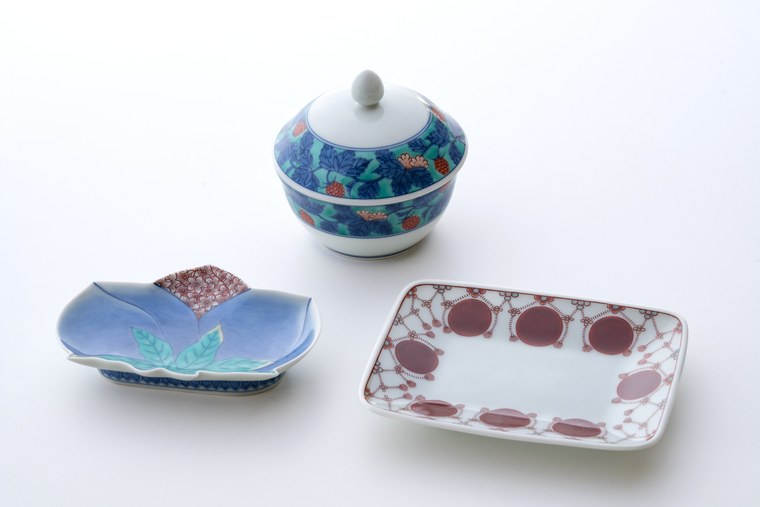
Seiji (青磁) — celadon. A glaze with a small amount of iron in it, fired to a pale blue-green. On a porcelain body the effect is clearer and cooler than celadon on stoneware.
Ruri (瑠璃釉) — lapis blue. The same cobalt used for sometsuke, mixed into the glaze itself rather than painted on, so the whole piece turns deep blue.
Sabi (銹釉) — iron brown. Iron in the glaze, fired to a soft brown. Often used on the outside of a piece whose inside is left white.
Shinsha (辰砂) — copper red. Copper in the glaze, fired in a reduction atmosphere to a red that varies from piece to piece. The least predictable of the Arita glazes, and the one where two pieces from the same kiln can differ noticeably.
The quickest way to place an unfamiliar piece is to decide first whether the colour is under the glaze or on top of it. Under the glaze, the piece will be blue, or blue and white, and glass-smooth. On top, you will find the other colours, and a surface with some texture to it.
4. Five Styles, from the 1600s On
These names come up constantly in shops and auction listings, and they are still used for new work, not only for antiques.
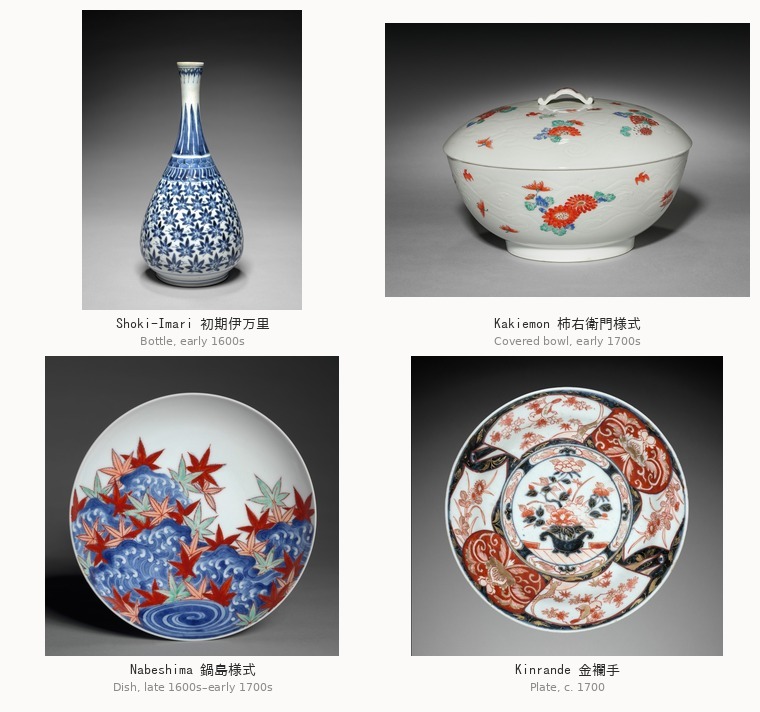
Shoki-Imari (初期伊万里), roughly the 1610s to 1650s. The earliest blue and white. Thicker-walled, a little grey in the white, simply painted, and strongly influenced by the Chinese porcelain of the period.
Early enamel styles (初期色絵), roughly the 1640s to 1660s. The first overglaze colour at Arita, including gosaide (五彩手), painted in five colours, and aode (青手), where green, yellow, purple and blue are filled in across the surface.
Kakiemon (柿右衛門様式), at its height roughly the 1670s to 1690s. The style most often described as the elegant one: a warm milky-white body called nigoshide (濁手), spare painting in red, green and blue, and — unusually for the period — a great deal of space left unpainted. It was exported to Europe and copied at Meissen and Chantilly.
Nabeshima (鍋島様式). Made under the Nabeshima domain for presentation and gifts rather than for sale, which shows in the discipline of it: very regular shapes, carefully balanced patterns, generous use of the whole surface. The domain kilns moved to Okawachiyama, in present-day Imari, in the late seventeenth century.
Kinrande (金襴手様式), from the Genroku era (1688–1704). Dense blue underglaze with red and gold worked over the top — the “gold brocade” look that filled European palaces and still appears on celebration ware today.
If you want to know what the pine, the crane or the scrolling vine on your piece is actually saying, that belongs to another article: Arita ware patterns explained goes motif by motif.
5. Arita or Imari?
Both names point to the same porcelain. Arita is where it is made; Imari is the neighbouring port it was shipped from. When Arita ware reached Europe in quantity from the 1650s, carried by the Dutch East India Company, it arrived under the name of the harbour, and “IMARI” is what Europe wrote down.
In Japan the ware was also called Hizen-yaki during the Edo period, after the old province. “Arita-yaki” became the common name later, from the Meiji period onward.

Today the two words have drifted apart a little. Imari tends to be used for antique export pieces and for the dense blue-red-gold look that came with them, while Arita is used for the town and for the ware in general — including the plain white cup that looks nothing like a seventeenth-century export jar.
6. Choosing Your First Piece
The useful question is not which style you like best in photographs. It is which job you want the piece to do, because Arita is made across a very wide range of sizes, and the small ones are where most people start.

Size. A rough guide to what each size actually holds:

- Mamezara / teshio-zara, about 8–10 cm — soy sauce, grated ginger, a pinch of salt, two pickles. The least committing way to own Arita ware
- Small plate, about 12–15 cm — a piece of cake, a few pieces of fruit, a side dish for one
- Mug or yunomi — coffee, tea — the piece you will actually touch every morning
- Serving plate, about 17–22 cm — a main dish for one person, or a shared plate of something small
- Large round plate, 25 cm and up — a whole grilled fish, a shared dish, or the plate the rest of the table is arranged around
Surface. Plain white and celadon are the easiest to live with: food looks like itself on them, and they sit well beside whatever else is on the table. Sometsuke is the quiet all-rounder — blue and white goes with Western tableware, wood and glass without any effort. Iro-e and kinrande are for guests, for celebrations and for giving; they are beautiful and they ask to be noticed, which is right once or twice a week and tiring every day.

One more thing worth knowing before you buy: hand-painted and transfer-printed pieces sit side by side in every Arita shop, at very different prices, and both are legitimate. If you would like to be able to tell which is which, we wrote about how to spot hand-painted work separately.
Our own Arita ware runs from small seasoning dishes to large round plates, and paired cups and mugs are a common form for a gift in Japan.
7. Living With It
Arita ware is the least demanding Japanese ceramic we sell, and most of what follows is reassurance rather than instruction.
Because the body is vitrified, there is no soaking before first use, no seasoning, and no gradual staining. Rinse it, wash it with ordinary dish soap, dry it. Tea and coffee do not darken the glaze, and garlic and fish do not linger.

For the dishwasher and the microwave, follow the note that came with the piece rather than a general rule, because it depends on the maker and on the decoration. There is one clear exception worth remembering: pieces decorated with gold or silver should be washed by hand and kept out of the microwave entirely, as metallic decoration can spark. The same applies to lustre finishes that look like mother-of-pearl.
Porcelain is hard but not forgiving. It resists scratches better than almost any tableware you own, and it chips if you knock the rim against a tap. Stacking is where most damage happens, so put a sheet of kitchen paper or a cloth between plates if you stack them tightly, and lift rather than drag.
Finally, avoid sudden temperature changes. Straight from the refrigerator into a hot oven is the one thing a thin porcelain body genuinely dislikes.
8. Editor’s Picks — Three Ways to Start With Arita
Three pieces at three different scales, chosen because each one does a job rather than because they match.
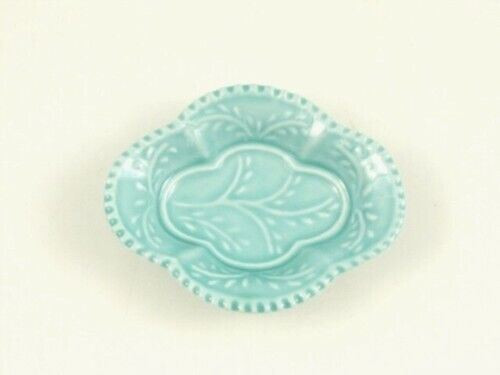
Pick 1 — The one to start with. A teshio-zara in pale blue-green celadon, 9.1 by 7.3 cm, in the lobed mokko shape. Small dishes like this were used at the table for seasoning long before they became collectable, and one of them will earn its place within a week. (See the small plate) — Arita ware teshio-zara, celadon mokko — $33
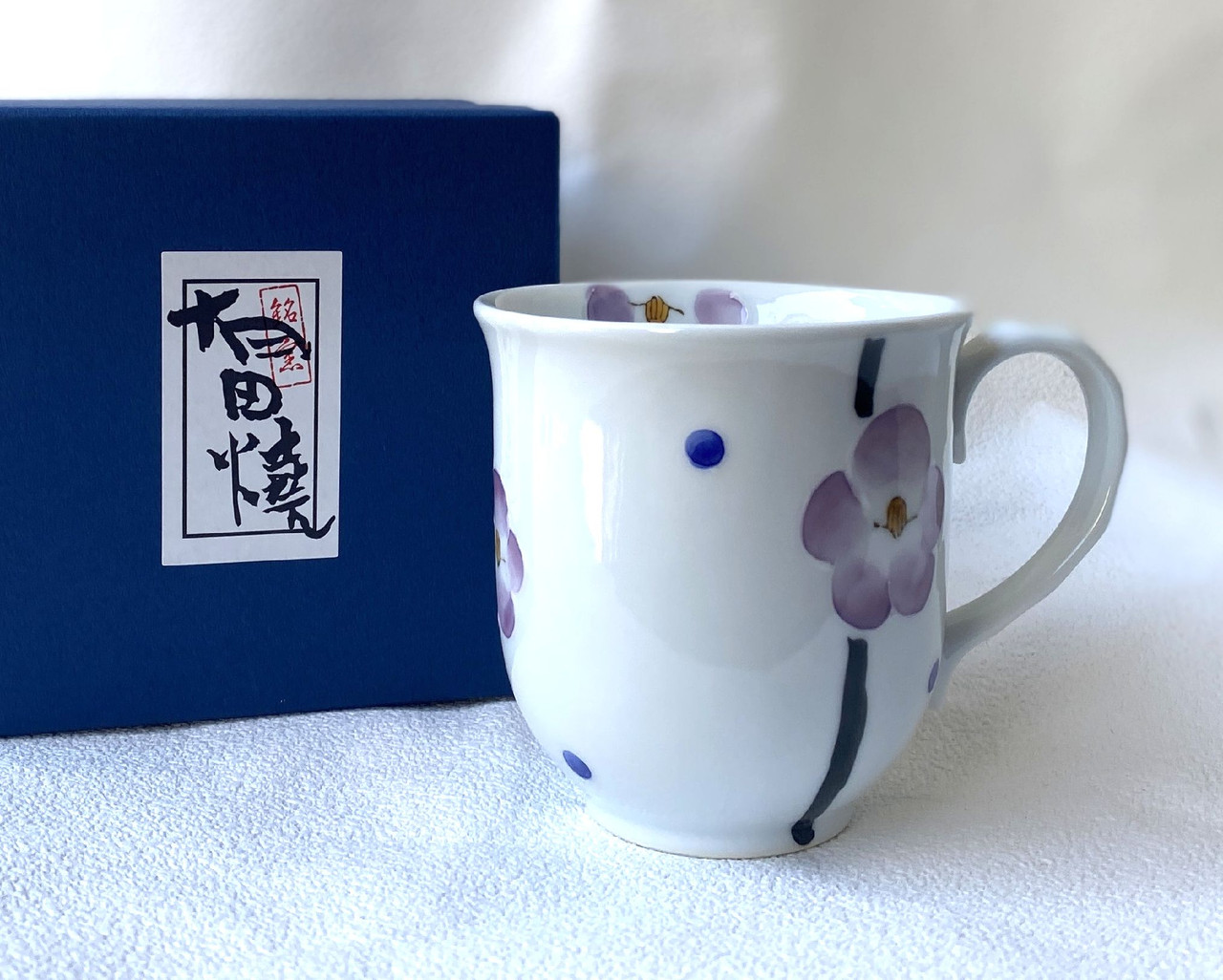
Pick 2 — The one you will use every morning. A mug 8.6 cm across and 9 cm tall, holding 250 ml, with flowers and dots raised from the surface in the itchin technique and finished in colour. This is the piece that turns Arita ware from something you own into something you use. (See the mug) — Arita ware mug, Hana Goyomi — $55
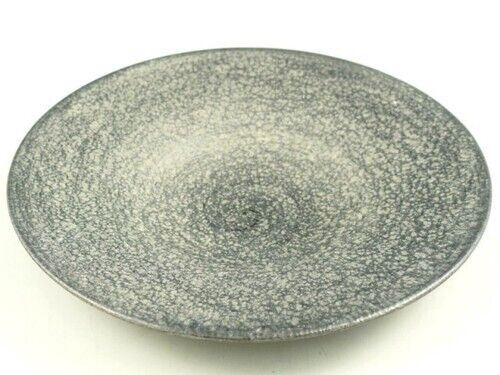
Pick 3 — The one that changes the table. A round plate 25.8 cm across, finished in the kiln’s crystal glaze and then painted over it in silver. At this size a plate stops being tableware and starts organising the meal around it — a whole fish, a shared dish, or simply the plate everything else is arranged beside. As with any silver decoration over the glaze, wash it by hand and keep it out of the microwave. (See the round plate) — Arita ware round plate, 25.8 cm, crystal glaze — $160
9. A Note from the Shop
Something we would gently say about plain white Arita: it is not the cheap option because it has no painting on it. A plain white piece has nowhere to hide. The whiteness of the body, the evenness of the glaze, the line of the rim and the foot are all on open display, and a plain hakuji cup from a good kiln can cost more than a painted one. If you are drawn to the plain pieces, you are not choosing the beginner’s option.
And if you are drawn to the gold instead, that is not a lesser instinct. Kinrande has been Arita’s loudest voice for three hundred years, and it was made to be enjoyed.
— from Osaka, Team Manekineko-Ai
10. Frequently Asked Questions
Q: I’m new to Japanese porcelain. How do I choose my first Arita piece?
Choose by the job rather than the style. A small dish for seasoning or pickles, or a mug, will be used immediately and will teach you more about the ware than a display piece. Plain white, celadon, or blue and white are the easiest to fit into a table you already own.
Q: Is an inexpensive Arita piece lower quality, or harder to use?
No. Arita has made everyday tableware in quantity for centuries alongside its fine work, and an affordable transfer-printed plate is as durable and as easy to care for as a hand-painted one. What you pay more for is the painting, the body, and the hand behind them — not the usability.
Q: Is Arita ware still made and used in Japan today?
Yes, in both senses. Arita is still a working kiln town, and Arita porcelain is ordinary tableware in Japanese homes, restaurants and hotels. It is not a historical craft kept alive for visitors.
Q: What is the difference between Arita ware and Imari ware?
They are the same porcelain under two names. Arita is the town where it is made; Imari is the port it was shipped from, and the name Europe used. Today “Imari” is more often used for antique export pieces and for the dense blue-red-gold style, and “Arita” for the ware in general.
Q: Can I use Arita ware every day, in the dishwasher?
Daily use is exactly what most of it is for. For the dishwasher, follow the note that came with your piece, as it depends on the maker and the decoration — and keep anything with gold or silver decoration out of both the dishwasher and the microwave, washing it by hand instead.
11. In Closing
Four hundred years is long enough for a craft to become either a museum piece or a habit. Arita went the second way. The same town that sent gold-covered jars to European palaces also makes the plate under your toast, and the thin white cup that was lighter than you expected when you picked it up.
If you would like to go further: Arita ware patterns explained for what the motifs mean, Japanese pottery styles for how Arita sits among the other regions, and how to plate a Japanese meal for what to do with the pieces once they are on the shelf.
— from Osaka, Team Manekineko-Ai