
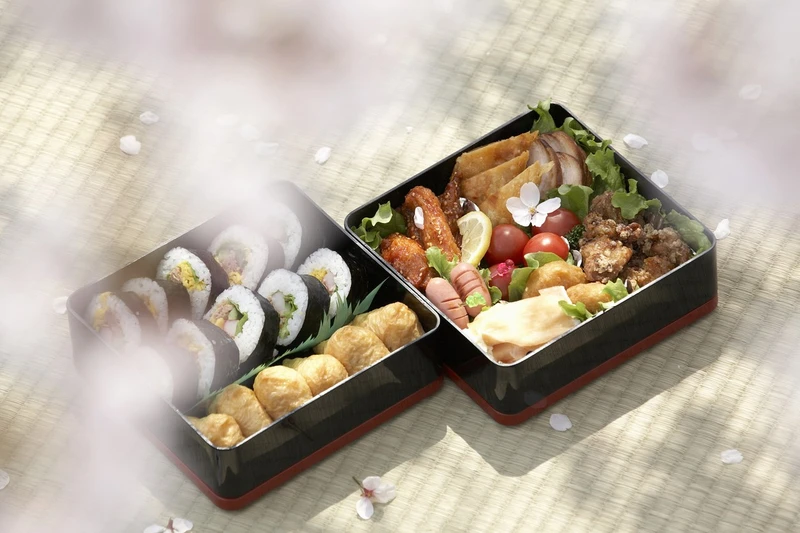
In Japan, the jubako is the box that comes along when everyone sits down on the same picnic blanket.
Picture a spring afternoon under the cherry trees. A blue picnic sheet is spread on the grass, someone lifts the lid of a lacquered box, and the box comes apart into three trays: rice balls in one, fried chicken and rolled omelet in another, fruit in the last. Everyone reaches in.
That box is a jūbako (重箱). In Japan it goes to cherry blossom viewing in spring, to school sports days, to picnics and potluck gatherings, and, yes, to the New Year table as well. This guide is about the box on its days out: where it came from, how to pack and carry one, and how to choose a size and material that suits the way you will use it.
On this page
1. A Box Made of Boxes
The word jūbako means "stacked boxes." Each tier is a shallow box with straight sides, made so that the one above sits snugly on its rim, and a single lid closes the top. Most sets have two to five tiers.
The clever part is what happens when you arrive. Lift off the lid, set the tiers side by side, and a three-tier box becomes three serving dishes. Nobody has to unpack anything onto plates first.
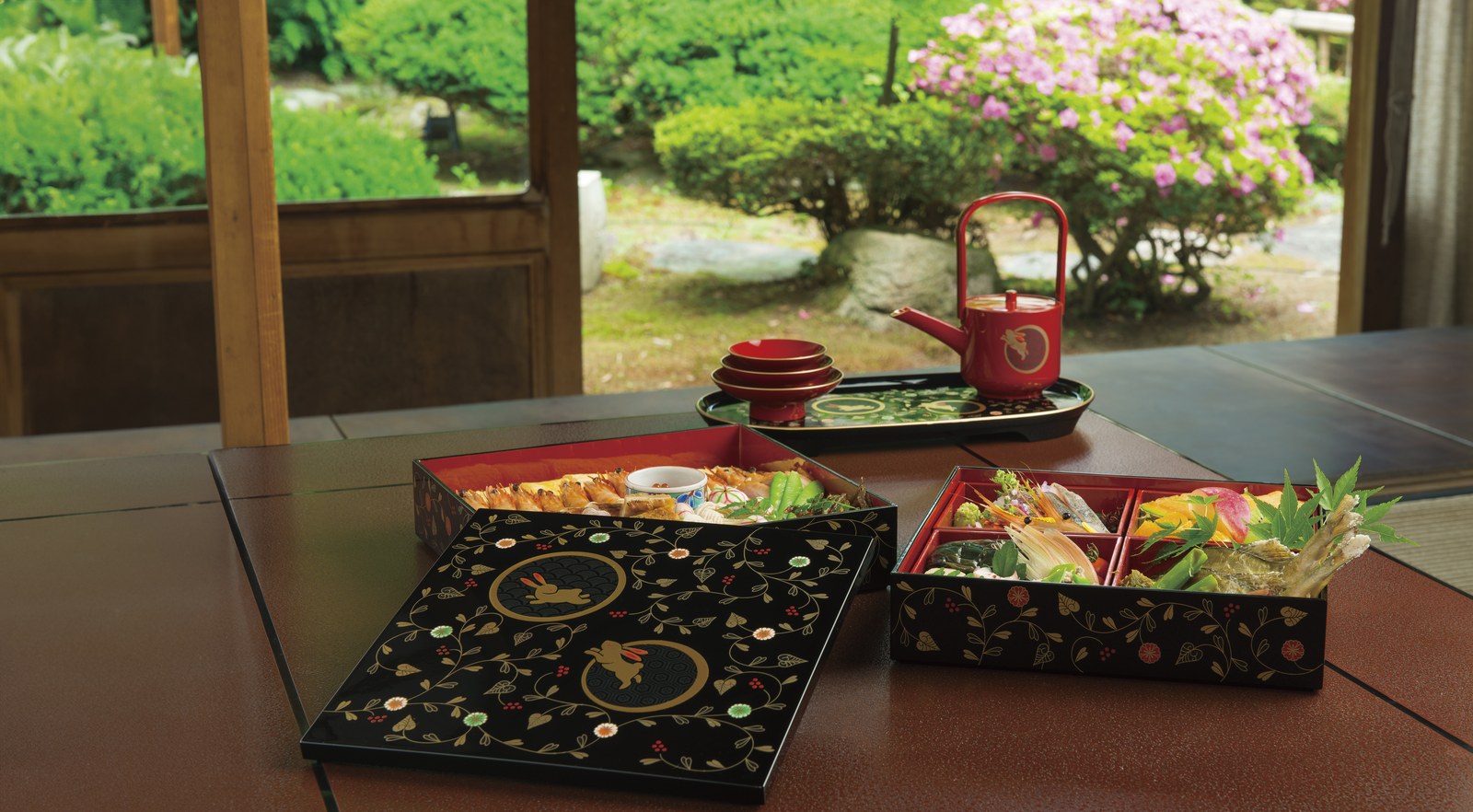
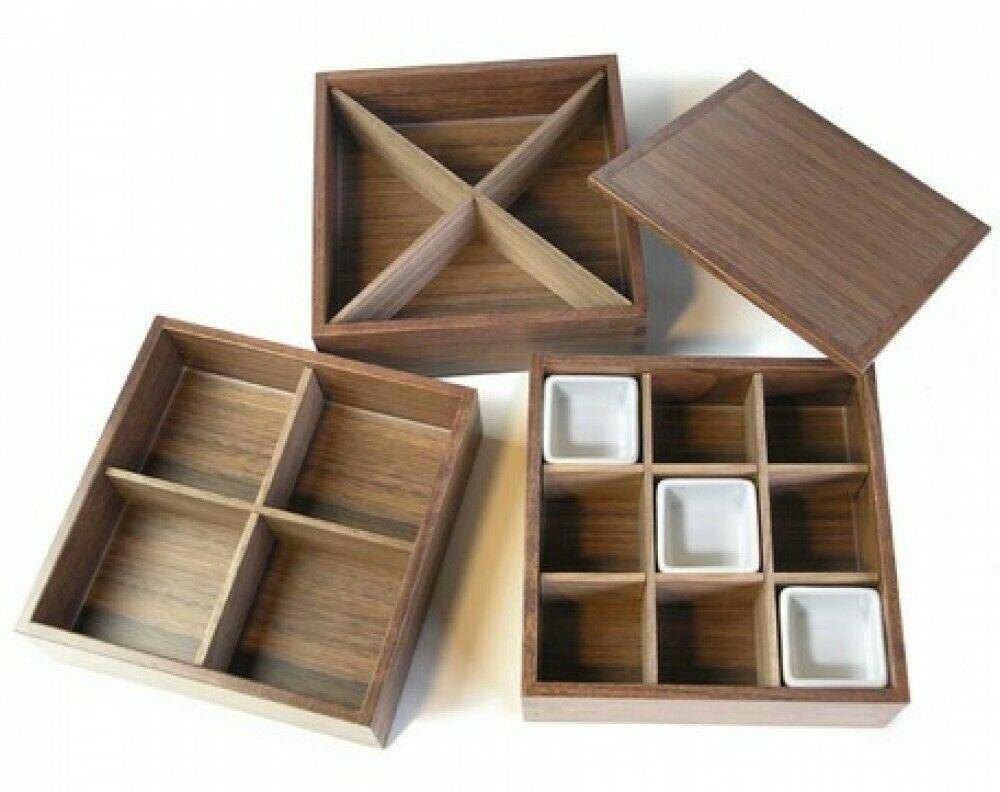
Many modern sets come with a few extras. A cross-shaped divider splits a tier into four. A nakago (中子) is a set of small inner trays that sit inside a tier. And some boxes have an inner lid that closes the top tier beneath the outer one, which helps when the box has to travel.
2. Picnic Boxes Since the Edo Period
Japanese tiered boxes seem to have been in use from the Muromachi period, and they spread widely in the Edo period (1603–1868), when ordinary townspeople began taking food along on outings: to see the cherry blossoms, to look at the autumn leaves, or to spend a day at the theater.
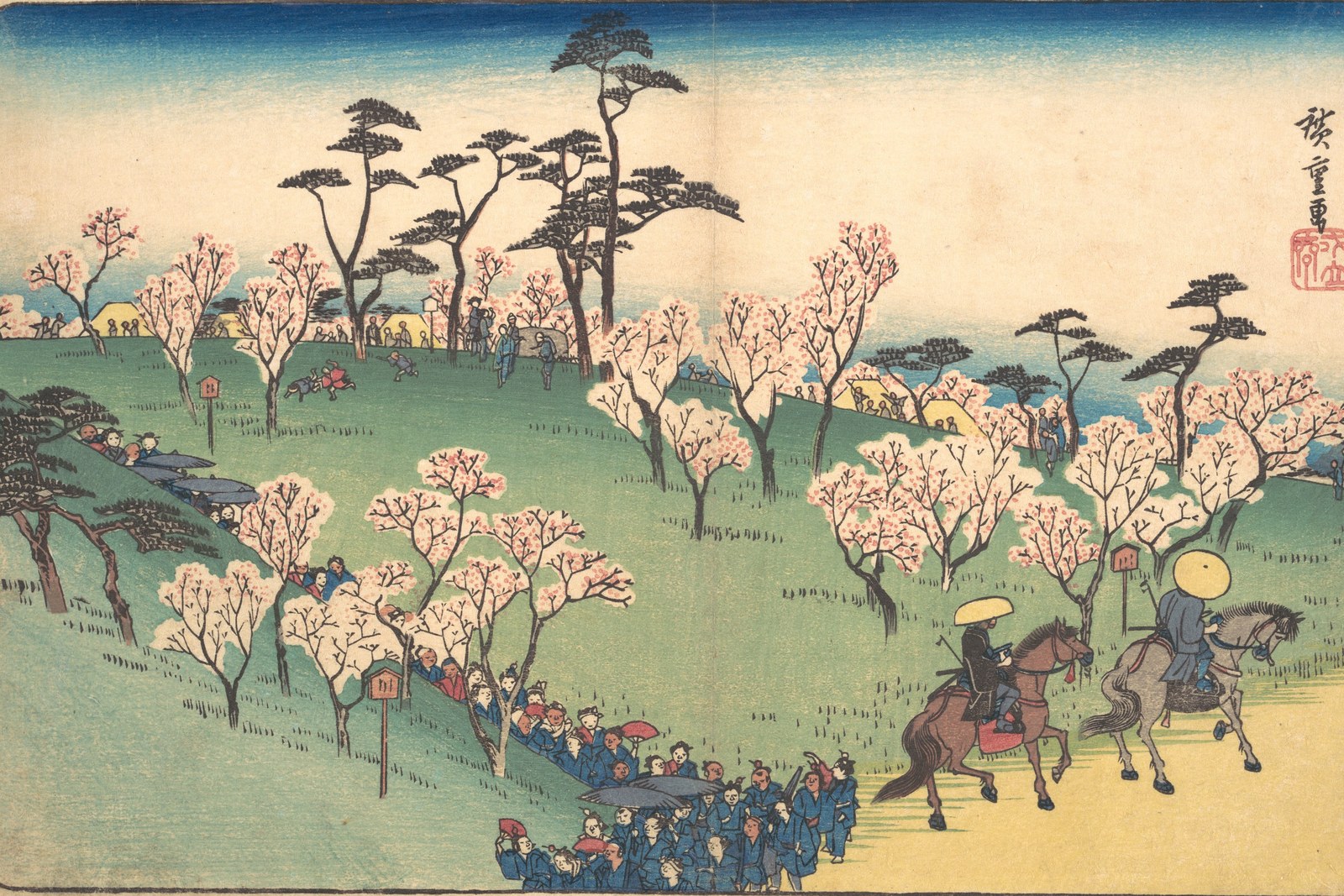
The cherry blossom picnic has a famous ancestor. In the spring of 1598, Toyotomi Hideyoshi held a lavish blossom-viewing party at Daigo in Kyoto, and it is often described as the start of the hanami lunch: food packed into boxes and carried out to eat under the trees. More than a century later, in the 1720s, the shogun Tokugawa Yoshimune had cherry trees planted on Asukayama, a hill outside Edo, and opened it to the townspeople. It became one of the city's favorite places for blossom viewing, and Utagawa Hiroshige pictured it in full bloom in a woodblock print.
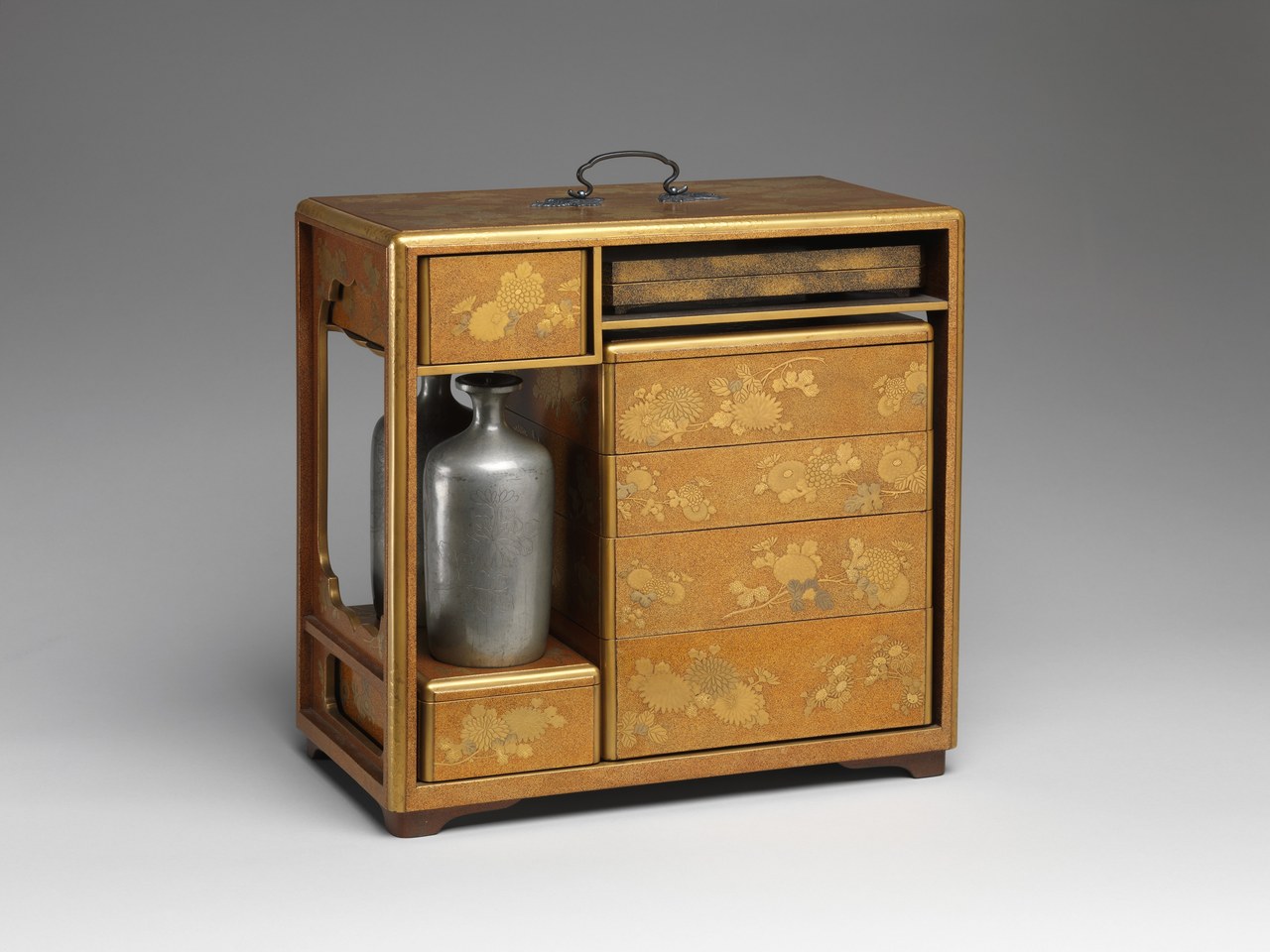
For wealthy households, the outing called for a whole carrying set, the sagejū. A frame with a handle held a stack of food boxes, sake bottles and cups, and small serving dishes, all made to match. The tiered boxes held seasonal food such as omelets, fish cakes, sashimi, and sweets.
Picnic boxes were planned with care in town, too. Ryōri hayashinan, a cookbook published in 1801, sets out boxes for cherry blossom viewing at three levels, from grand to simple. Every level includes something sweet, such as rice cakes or a small steamed bun, packed in a tier of its own.
3. Where a Jubako Goes Today
Cherry blossom viewing. A hanami bentō is still a fixture of spring. There is no set menu: it is simply a colorful lunch of seasonal food, and the jubako is the classic box to put it in. Our guide to cherry blossom season in Kansai has more on the custom itself.
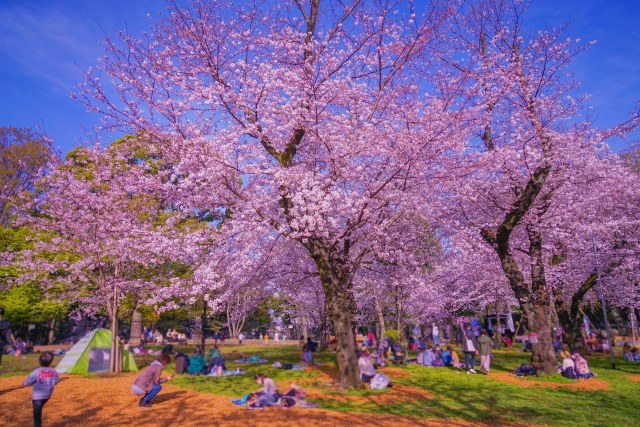
School sports day. The undōkai, held in spring or autumn, is a big day in a Japanese family's year. Families come to cheer, and at many schools they sit together on a picnic sheet on the school ground at lunchtime and share one large lunch. Fried chicken and rolled omelet are the usual favorites, along with rice balls, packed into a family-sized box. If you would like ideas for the rice balls, our onigiri guide has six classic fillings.
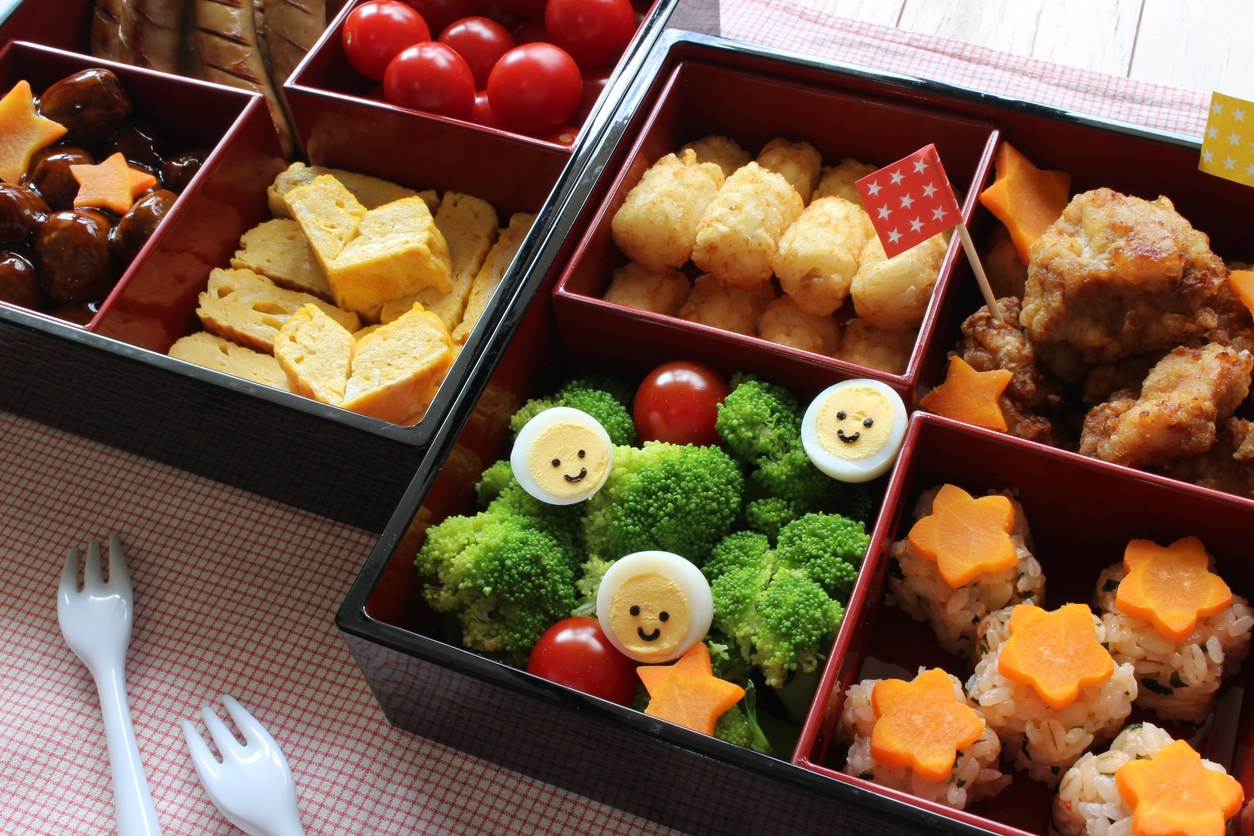
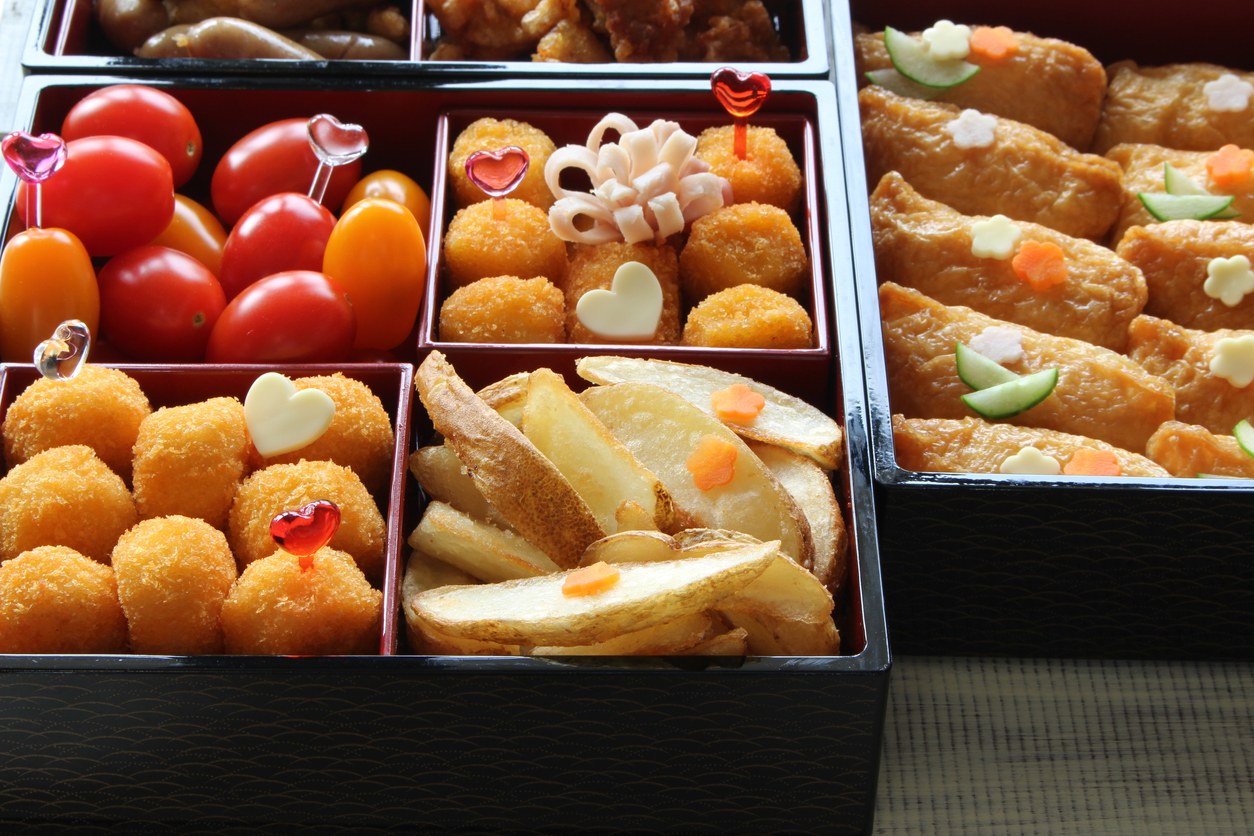
Picnics and potlucks. The same box works for a day at the park, a lunch by the river, or a dish to bring to a friend's party. Bring it with the lid on and hand it over as it is.
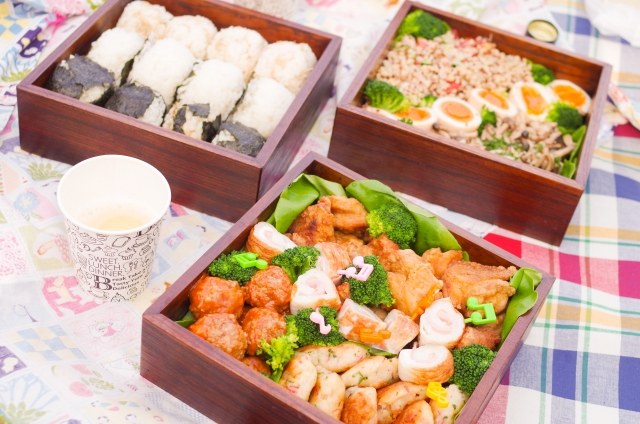
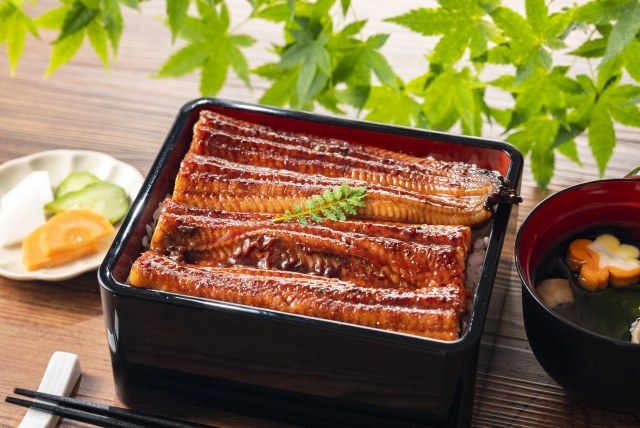
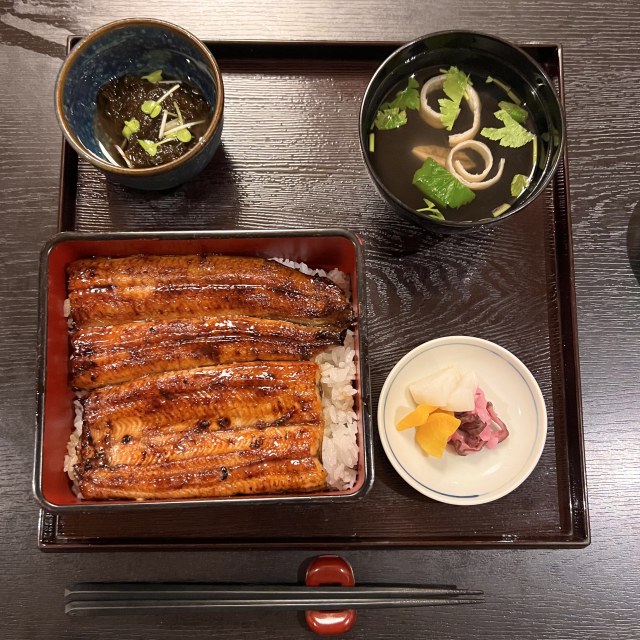
At home. A single tier makes a serving tray for small dishes, and a two-tier box can hold sandwiches or sweets for an afternoon visit. The box even gives its name to a dish: unajū, grilled eel over rice, joins una from unagi, eel, and jū from jūbako.
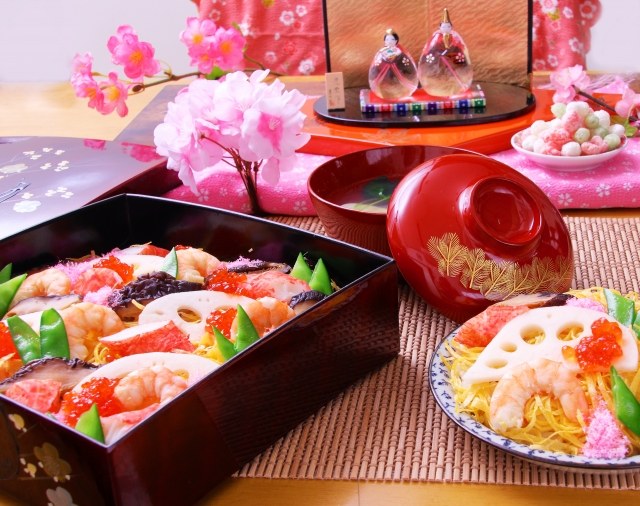
Spring festivals at home. On March 3, the Doll's Festival, or Hinamatsuri, chirashi-zushi, sushi rice scattered with colorful toppings, is one of the traditional dishes of the day, and a box like this sets it off well. The listing for one of our small boxes names the Doll's Festival, Children's Day, and cherry blossom viewing as occasions for it.
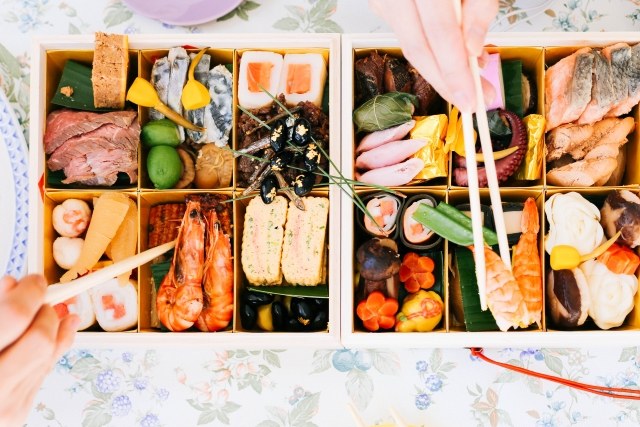
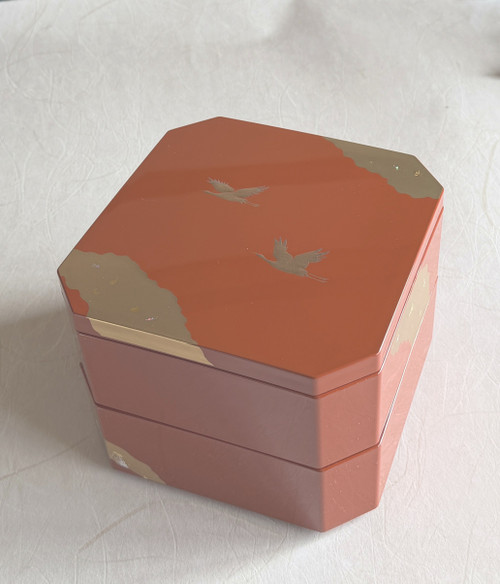
And on New Year's Day. The jubako is also the box for osechi, the New Year meal. The food is packed in tiers to carry the wish that good fortune will pile up, one layer on another. A crane box and a matching otoso set for the spiced New Year sake, like these from Yamanaka, are one way to dress the first table of the year.
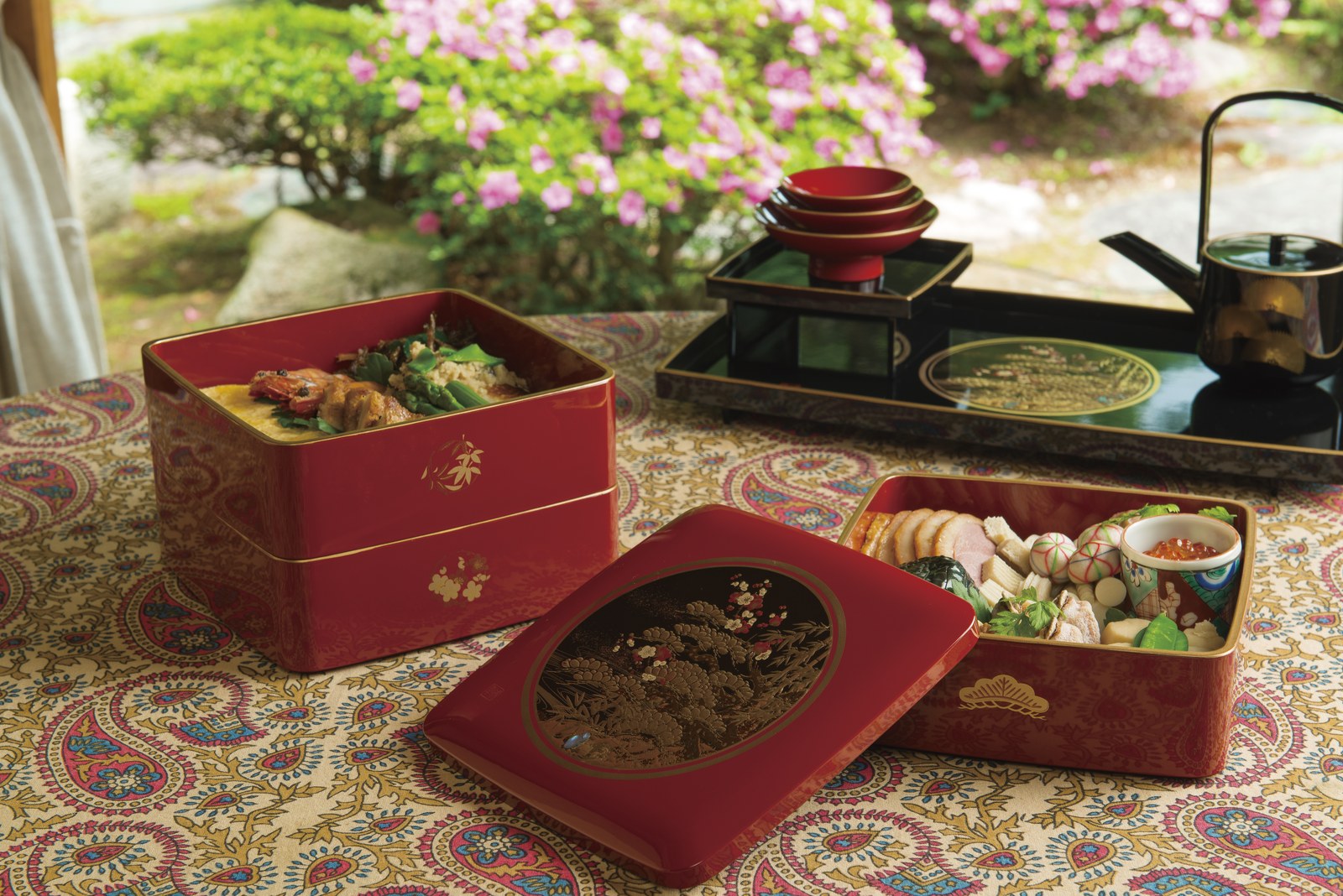
4. Packing a Jubako for an Outing
A few habits help the food arrive looking as good as when it went in. Most of them follow the basic food-safety advice that Japan's Ministry of Agriculture gives for packed lunches.
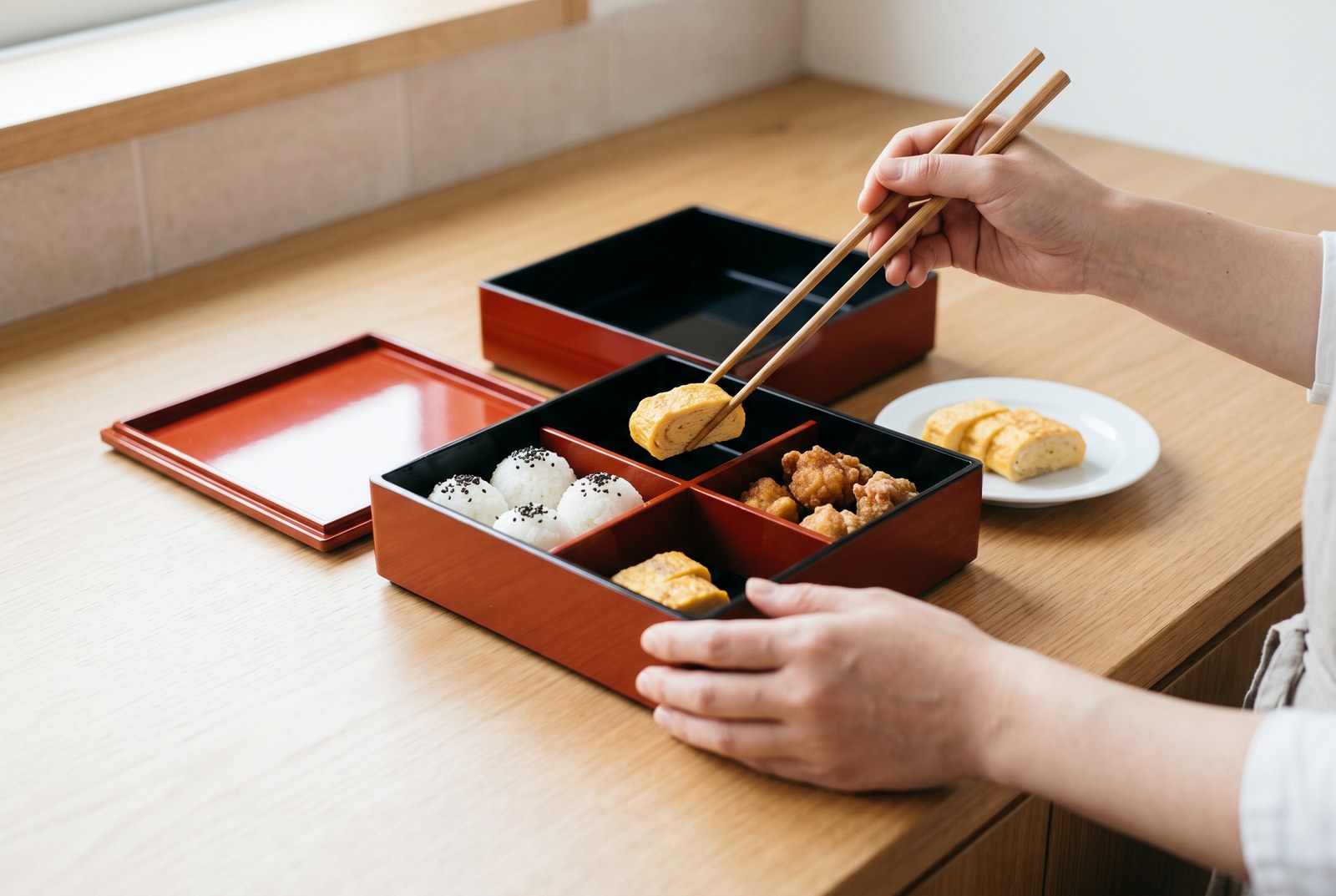
- Let everything cool first. Warm rice or food under a closed lid makes steam, and the moisture spoils food sooner.
- Keep things dry. Drain anything wet well, and use dividers or small cups so that juices stay where they are. Fried and grilled dishes, which hold little moisture, travel well.
- Pack snugly. Food packed closely, without gaps, does not slide around on the way, and still looks neat when the lid comes off.
- Keep it cool. On a warm day, carry the box in a cool bag with ice packs, keep it in the shade, and eat it sooner rather than later.
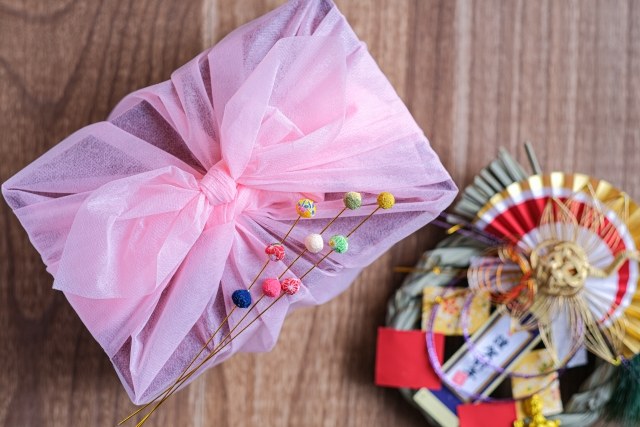
To carry the box, a furoshiki wrapping cloth does the job well. The four-knot wrap, yotsu-musubi, is the one usually suggested for square boxes such as a jubako: tie one pair of opposite corners together over the top, then the other pair. Tuck a few small plates and chopsticks in alongside, and the picnic is ready to unfold.
5. Choosing a Jubako to Take Outside
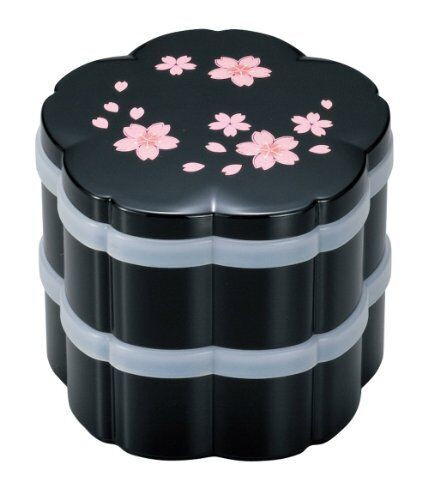
Size. Japanese boxes are measured in sun (寸), an old unit of about 3 cm. Japanese buying guides, mostly written with New Year food in mind, give rough figures: a two-tier box of about 4.5 sun (13.5 cm) holds enough for two or three people, and a box of 6 to 6.5 sun (about 18 to 19.5 cm) suits three to five. Larger boxes of 7 or 8 sun (about 21 to 24 cm) are for bigger gatherings. For a picnic for two, a small two-tier box in the shape of a cherry blossom, about 12 cm across, holds a light lunch, and its listing notes that it comes with an inner lid for carrying. For a family day out, a three-tier box about 19.5 cm square, covered in cherry blossoms, suits a family of three to five.
Material. The look of lacquer can sit on three quite different bodies, and each listing in our collection gives the body and coating.
- Resin with a urethane coating. Most of the Yamanaka boxes we carry have bodies of ABS or acrylic resin with a urethane coating, decorated with cherry blossoms, cranes, or a rabbit and a crescent moon. Several of the listings note that the decoration is applied by screen printing. They are light and easy to take along.
- Natural wood with a urethane coating. The grain of the wood shows through, as on this box from Echizen, and the coating is simple to look after.
- Natural wood with lacquer. The traditional form. Our boxes in this group come from Echizen, a lacquer region centered on the Kawada area of Sabae, in Fukui Prefecture, such as a long box with canted corners in deep red. The listings note that the color of natural lacquer may change over the first few months. A box like this is something to keep for many years, and to bring out for the gatherings that matter most.
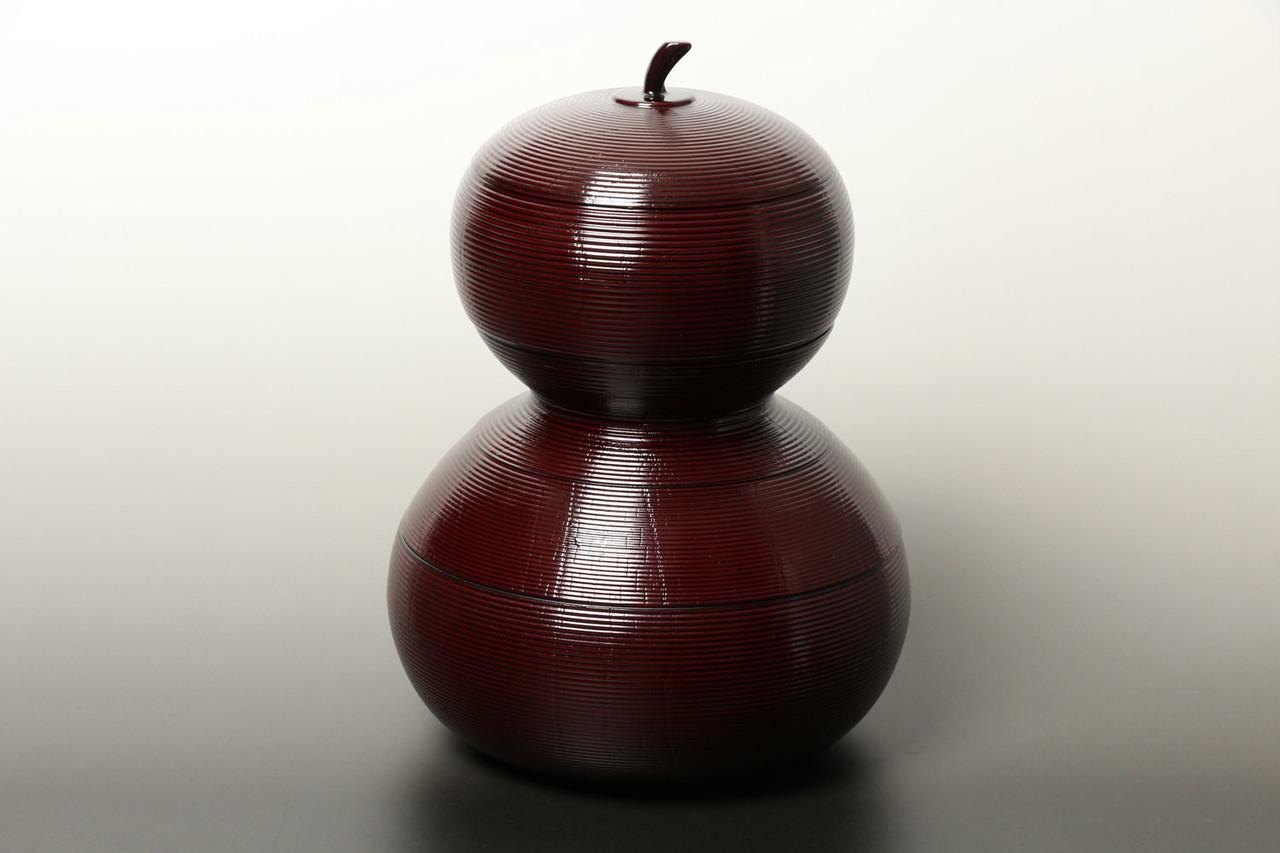
Shape. Square boxes are the most common. Round, flower-shaped, and gourd-shaped boxes are made as well. One Echizen set stacks four bowls into the shape of a double gourd, hisago, a long-standing motif of good fortune.
6. Caring for a Jubako
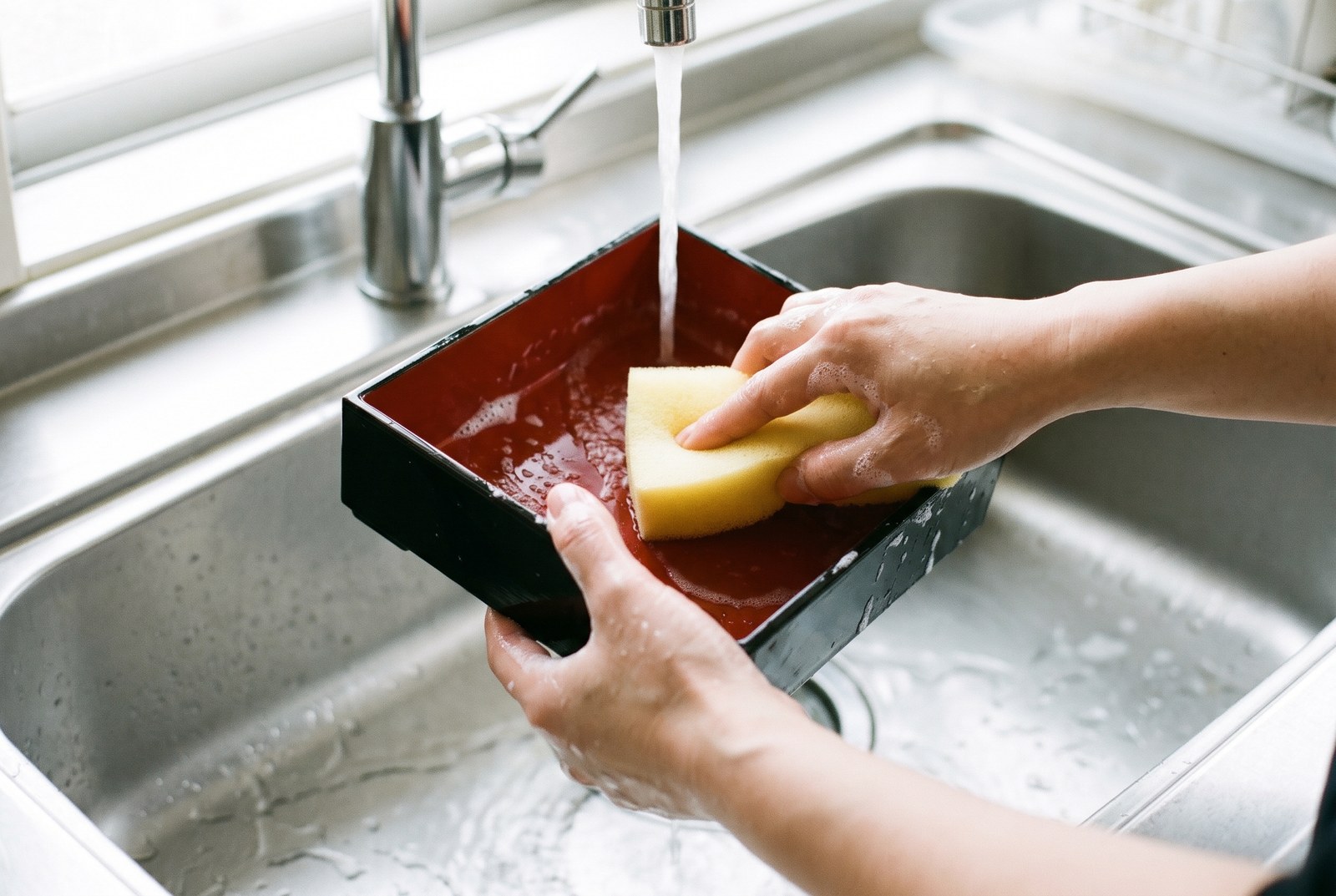
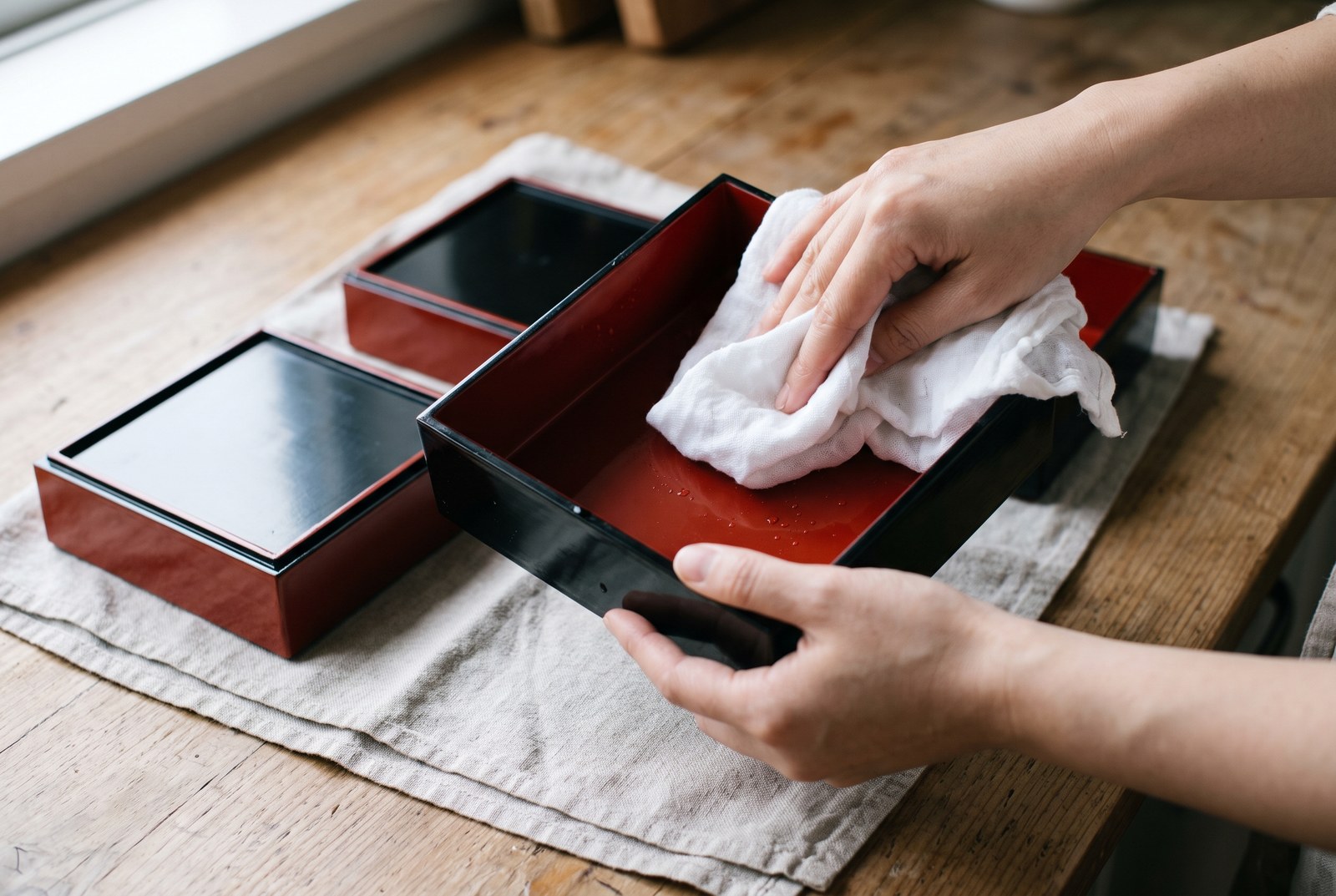
Wash each tier by hand with a soft sponge and mild dish soap, rinse, and dry it completely before stacking. A wooden box, whether lacquered or urethane-coated, should stay out of the dishwasher and the microwave. Resin boxes vary by maker, so when a listing says nothing about it, wash by hand. Avoid long soaking, scouring pads, and strong direct sunlight.
After a picnic, empty and wash the box as soon as you are home rather than leaving it until the next day. Store the tiers dry, with the lid on, or wrapped in a cloth. Our guide to caring for Japanese lacquerware covers washing and storage in more detail.
7. A Note from the Shop
The jubako we carry come from two lacquer regions: Yamanaka in Ishikawa, and Echizen in Fukui. Each listing gives the size and what the box is made of, and those are the lines worth reading before you choose.
If one thing stays with you, let it be the moment the lid comes off. A jubako is made to be opened in front of the people you are eating with, on a picnic sheet, at the edge of a sports field, or on a table at home. That is where it does its best work.
8. Frequently Asked Questions
What is a jubako used for?
A jubako is a set of stacking food boxes with one lid. In Japan it is used for cherry blossom picnics, school sports days, potluck gatherings, and serving food when guests come, and it is also the traditional box for osechi, the New Year meal.
What is the difference between a jubako and a bento box?
A bento box is usually for one person's meal. A jubako is larger, has several tiers under a single lid, and is meant for sharing. Its tiers are set out side by side, so everyone can help themselves.
What size jubako do I need for a picnic?
Japanese guides suggest about 13.5 cm for a two-tier box for two or three people, and about 18 to 19.5 cm for three to five. Larger boxes, around 21 to 24 cm, are for bigger gatherings. Each listing in our collection gives the size in centimeters and inches.
How do I keep food from moving or leaking on the way?
Drain wet food well, use dividers or small cups, and pack the food snugly without gaps. Some boxes come with an inner lid, which the listing will mention. Carrying the box level, wrapped in a furoshiki, also helps.
Can I pack a jubako the night before?
Food-safety advice in Japan is to let food cool before packing, keep the packed box cold, and eat it early. If you cook ahead, keep the food chilled, reheat it thoroughly on the day, let it cool, and then pack it. On a warm day, carry the box with ice packs.
Can a jubako go in the dishwasher or microwave?
A wooden jubako, whether lacquered or urethane-coated, should not. It is washed by hand and dried well. Resin boxes vary by maker, so when a listing says nothing about it, wash by hand.
Is a jubako only for the New Year?
Not at all. It was a picnic box long before it became the New Year box, and in Japan it is still used for outings and gatherings all through the year.
Thank you for reading.
— from Osaka, Team Manekineko-Ai
PIECES IN THIS ARTICLE
Three jubako from this article

CONTINUE READING
MORE IN KOGEI →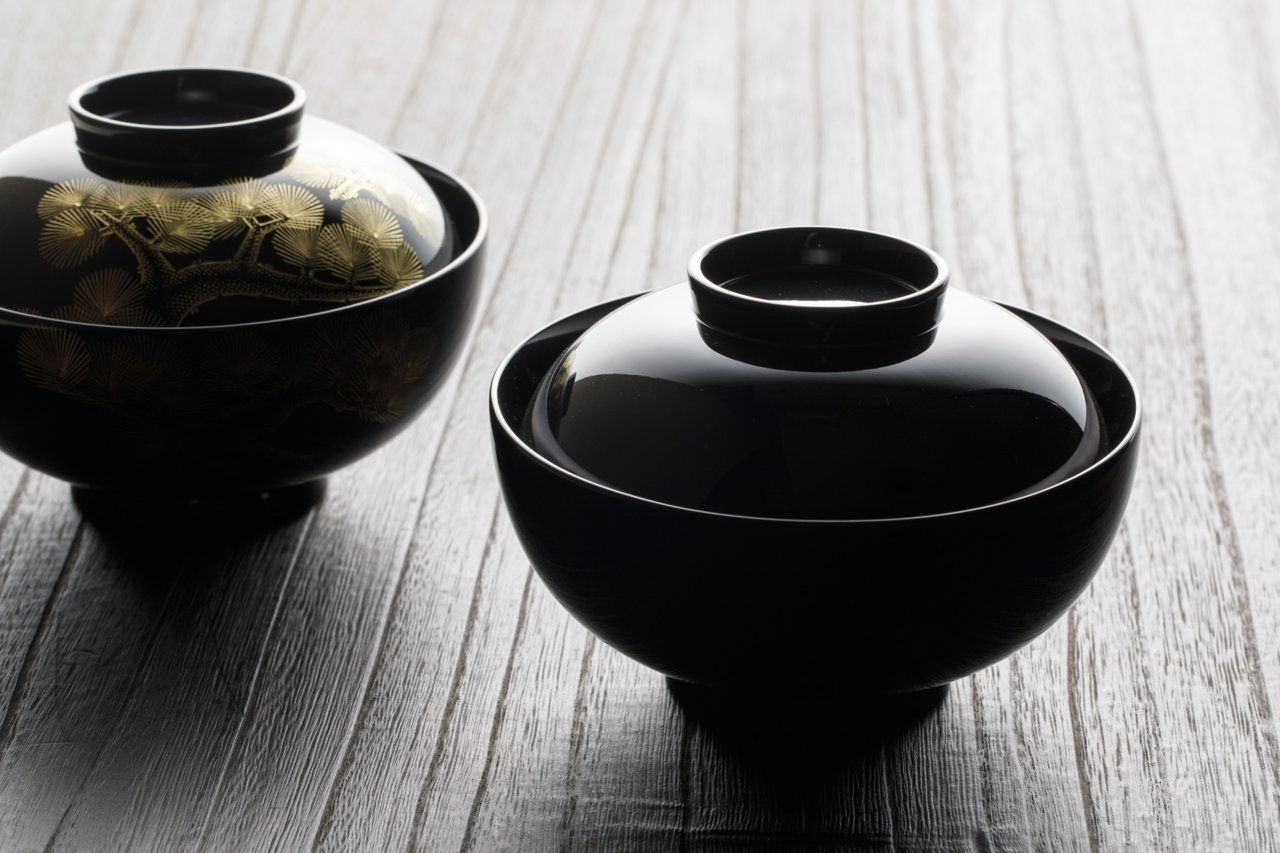 KOGEI
Japanese Lacquerware: A Beginner’s Guide to Urushi, Modern Lacquer, and Everyday Use
Traditional urushi, modern cashew and urethane finishes, and how to tell what you are holding.
 KOGEI
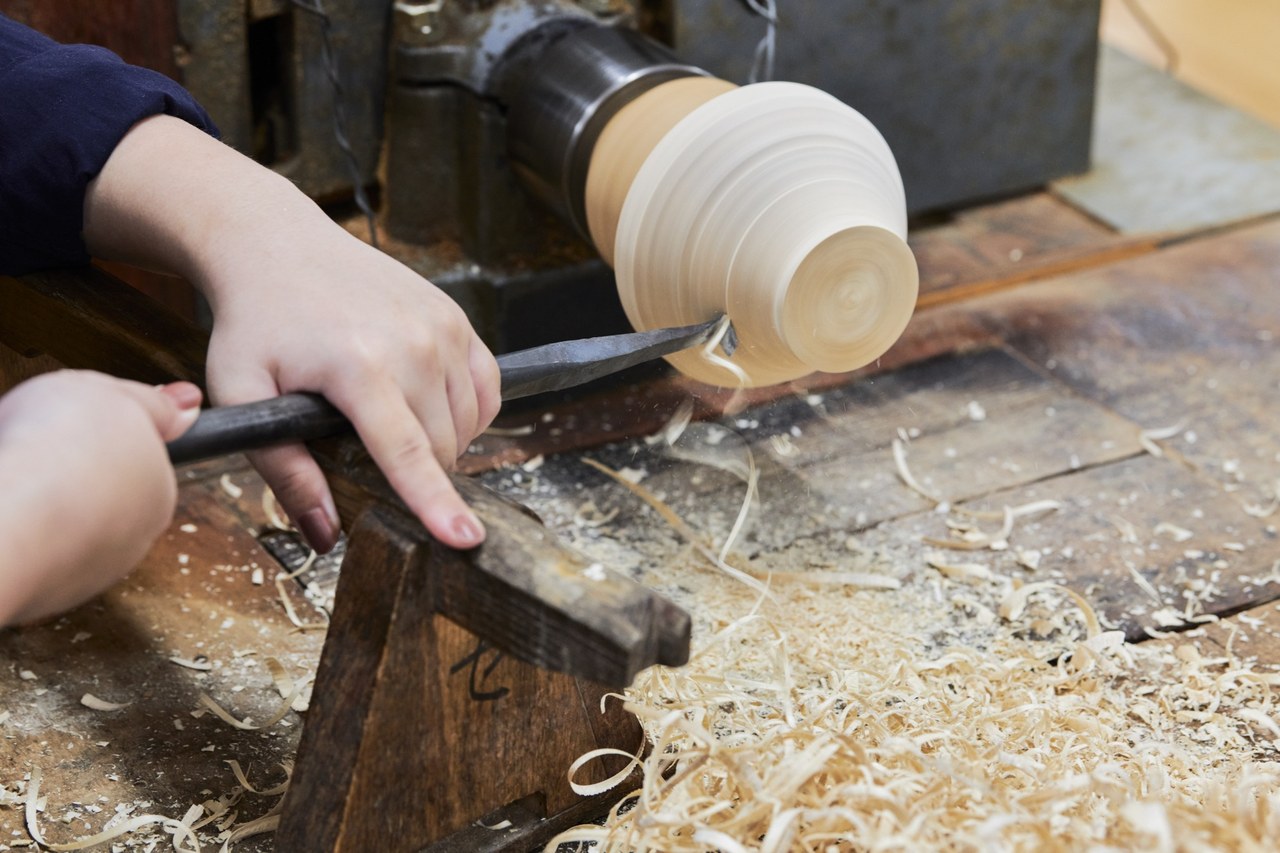
Yamanaka Lacquerware: The Craft of the Wooden Body
Lacquerware that begins with the turned wooden body beneath the finish, and what the lathe decides about its shape.
 KOGEI
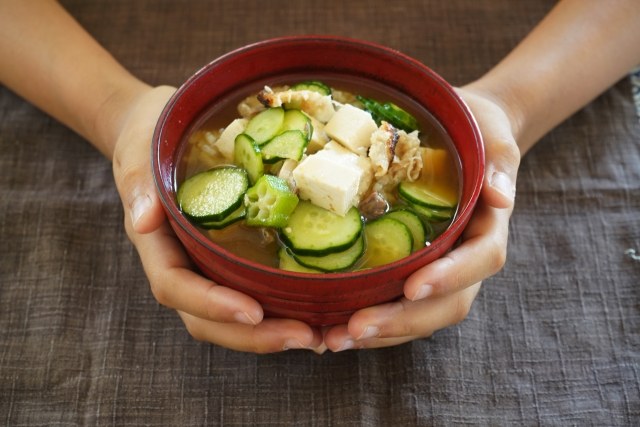
How to Care for Japanese Lacquerware: Washing, Storage, and Everyday Use
How to wash lacquerware, what heat it tolerates, how to store it, and what to do about white marks and dulled gloss.