
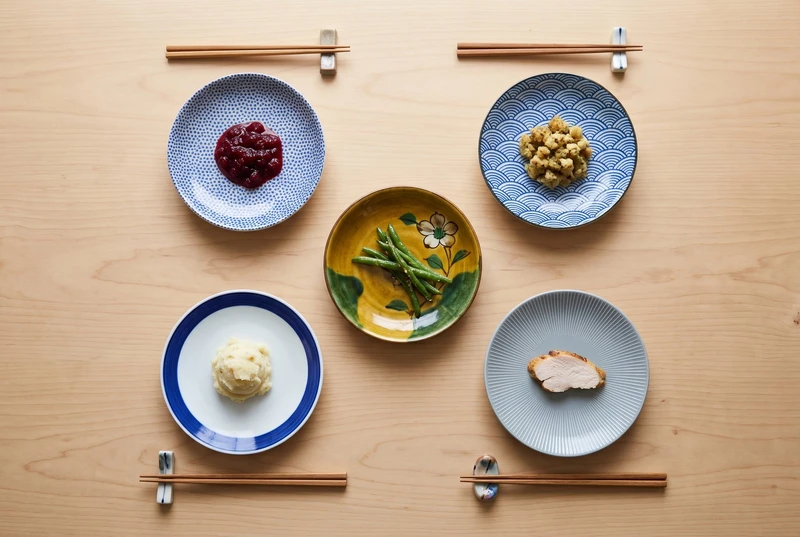
A Japanese table is set for sharing, which makes it a natural fit for Thanksgiving, Friendsgiving, and the gatherings that follow.
Cover image: AI-generated illustration.
A holiday meal with friends and family is rarely served one plate at a time. The turkey is carved, the sides go around the table, and everyone takes a little of everything. A Japanese table has worked this way for a long time. Food is set out on large serving plates, each guest has a small plate of their own, and the meal moves around the table as people talk.
This guide looks at the Japanese pieces that make a shared table work: the large plate in the middle, the small plates in front of each guest, serving chopsticks and chopstick rests, a sake set for the toast, and a pot of tea after the meal. None of it asks you to cook Japanese food. Sliced turkey, stuffing, and pumpkin pie sit just as comfortably on these plates.
On this page
2. The Large Plate: Something for the Middle of the Table
3. A Small Plate for Everyone, and It Does Not Have to Match
4. Serving Chopsticks and Chopstick Rests
5. The Toast: Pouring for Each Other
6. After the Meal: Tea for the Whole Table
7. Bringing a Dish, and Sending Some Home
8. A Note on Care
9. Frequently Asked Questions
10. After the Holidays Begin
1. The Shape of a Shared Japanese Table
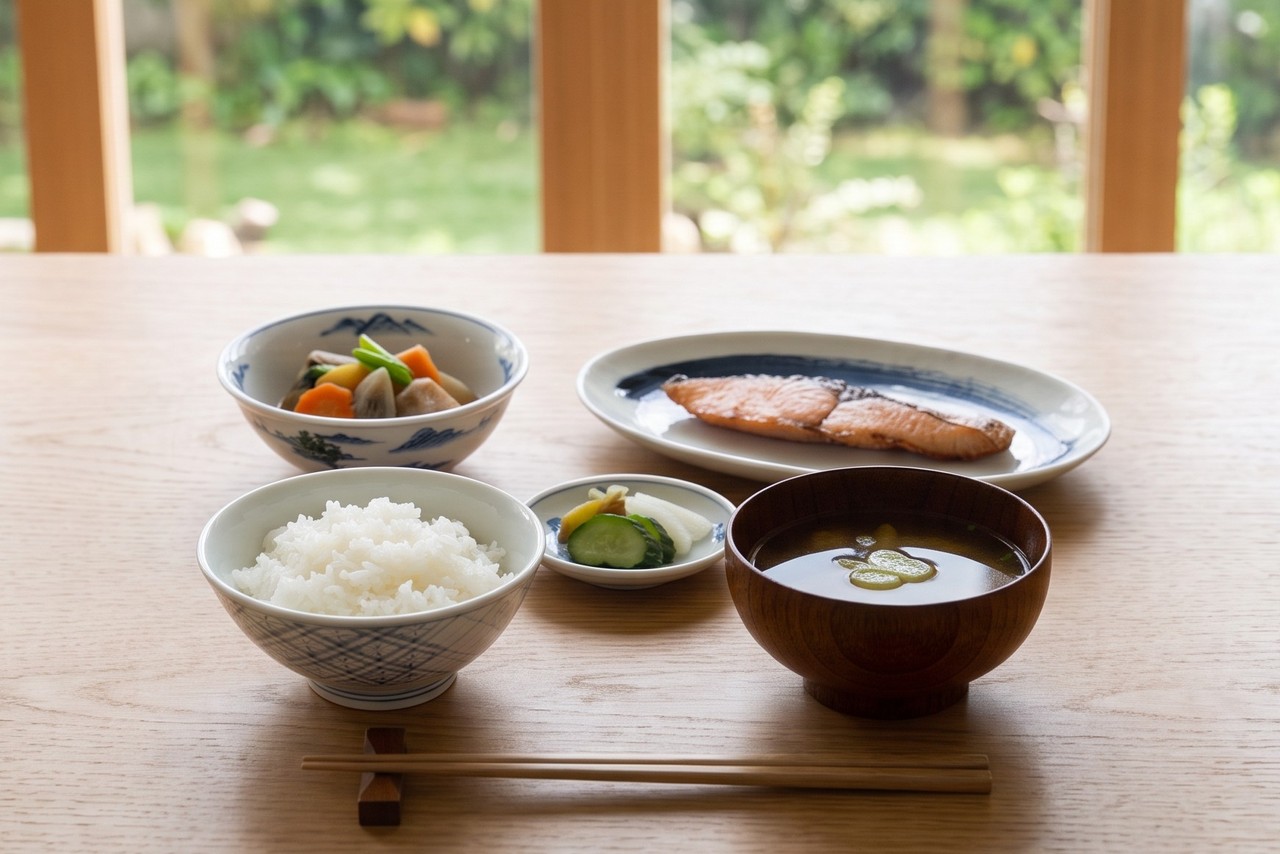
At a Japanese home meal with guests, the dishes are often arranged in two sizes. A large plate, ōzara, holds a dish for the whole table. Sources draw the line in slightly different places, but a plate of roughly 21 to 24 cm or more is usually counted as a large plate. When a large plate is used to arrange and present food, it is also called a morizara, a serving plate, and the plate is chosen as much for how it frames the food as for how much it holds.
In front of each person is a small plate, torizara, literally a "taking plate." Guests move food from the large plate to their own small plate, a little at a time, and come back for more. A Western holiday table often does the same thing with platters and dinner plates. The difference is mostly in proportion. Japanese small plates are smaller, which suits taking a little at a time and coming back for more, and the large plates stay at the center of the table.
This is why the two fit so well together. A potluck Friendsgiving, a family Thanksgiving, or a December dinner with friends already has the shape of a Japanese shared table. The tableware only makes it a little more deliberate.
2. The Large Plate: Something for the Middle of the Table
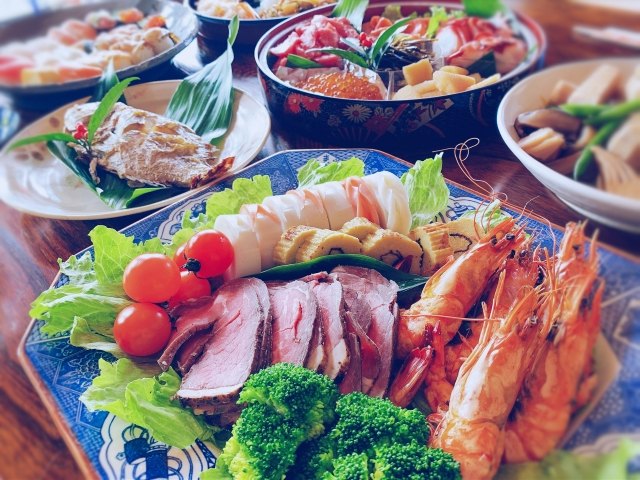
A large plate does most of the visual work at a gathering, so it is worth choosing one that suits what you serve most often. A round plate of 25 to 30 cm or more holds slices of a carved roast, roasted vegetables, or a mound of salad, and it looks generous even when the food is gathered toward the center. Japanese cooks often leave part of the plate empty on purpose, so the rim and the glaze frame the food.
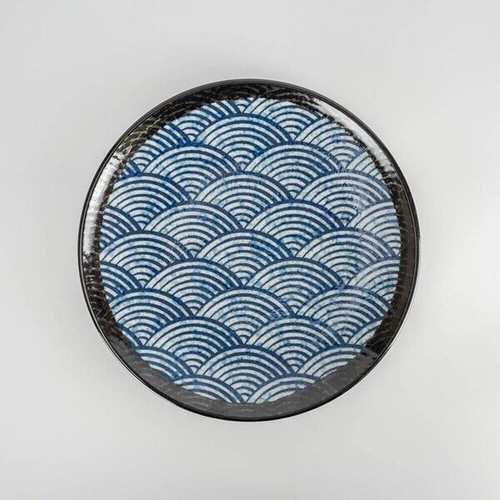
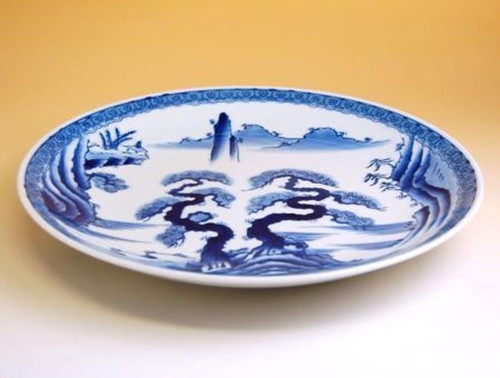
Blue and white is a classic on a Japanese table. The Mino ware large plate with a seigaiha wave pattern is about 25.7 cm across and covered in overlapping waves, a sea pattern its product page ties to the blessings of the ocean and wishes for happiness; the page also lists it as microwave and dishwasher safe. The Arita ware round plate with a landscape is 30 cm across, with a landscape in blue on white porcelain.
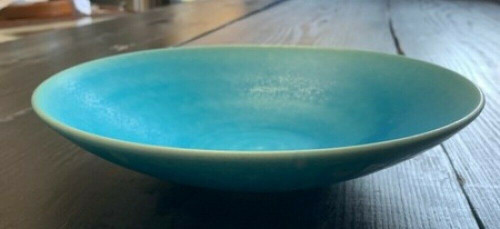
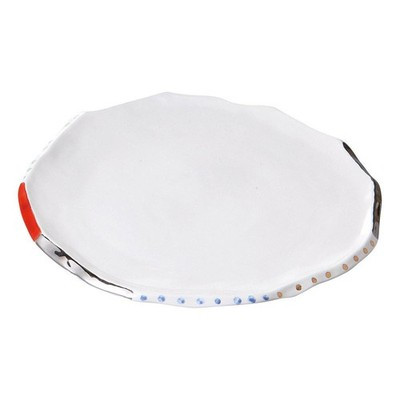
For color, the Shigaraki ware plate in turquoise blue is 25 cm across and about 5.5 cm high, a shallow bowl-like shape suited to roasted vegetables or a warm side. For a larger centerpiece, the Mino ware round serving plate with colored and silver accents measures about 33 cm and is mostly white, so whatever you place on it becomes the color of the table.
3. A Small Plate for Everyone, and It Does Not Have to Match
Small plates are where a Japanese table becomes playful. In Japan, small plates are often sold in sets of five, and some sets give each plate a different pattern, so each guest has a plate of their own. At a gathering, this does a quiet job: people recognize their plate when they come back to the table, and it gives everyone something to talk about.
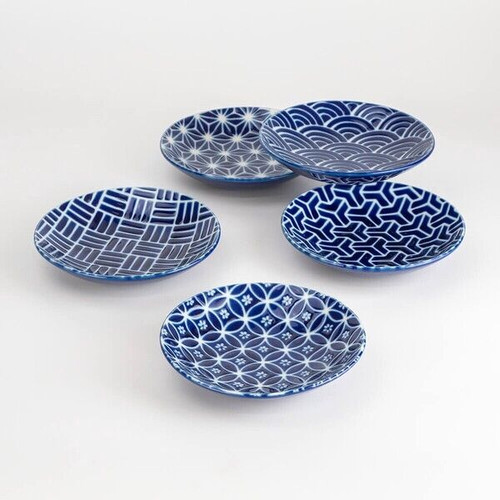
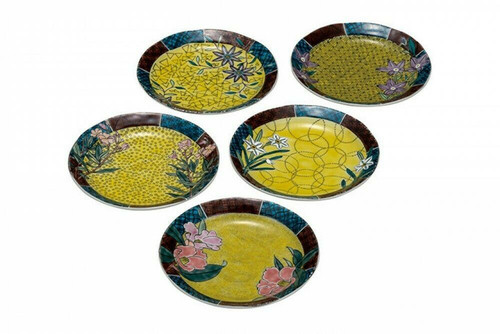
The Mino ware set of five round plates in Edo komon patterns has five small repeating patterns in blue on 13 cm plates, a size that suits a few bites of each side dish. The Kutani ware set of five plates with wildflowers is larger, about 16.3 cm, with five different flower designs in the deep yellows and greens of the Yoshida-ya style, bright enough for a festive table. For a meal with many small dishes, the Mino ware set of small bowls and plates in indigo pairs five small bowls with five small plates, so cranberry sauce and gravy each have a place.
4. Serving Chopsticks and Chopstick Rests
If chopsticks are on the table, one Japanese habit is worth borrowing: serving food from a shared plate with a separate pair, toribashi, rather than with your own. Taking food from a shared dish with the chopsticks you eat with has its own name, jikabashi, and it is one of the habits Japanese table manners ask people to avoid. At a casual gathering, a pair of serving chopsticks or a serving spoon beside each large plate is enough, and guests understand at once what it is for.
The chopstick rest, hashioki, keeps the tips of the chopsticks off the table and stops them from rolling. At a gathering it can do one more job. Give each guest a different rest, and it becomes a small place marker that also starts a conversation.
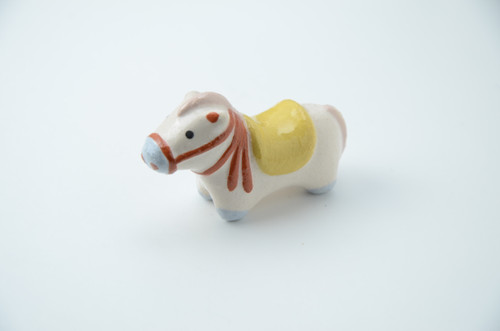
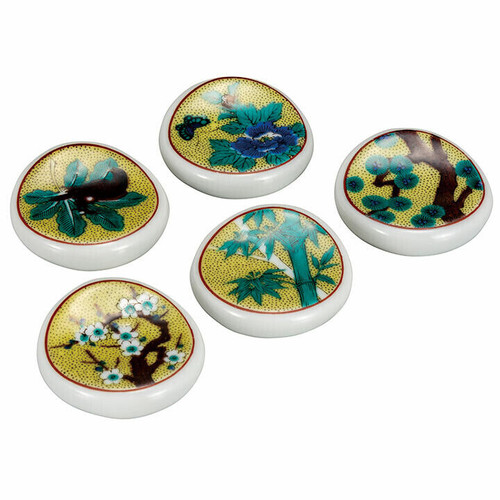
The raku ware chopstick rests from Kyoto shaped as zodiac animals are sold one animal at a time, so guests can look for the animal of the year they were born. Asking "which one are you?" at the start of a meal tends to get people talking. The Kutani ware chopstick rest set in the Yoshida-ya style has small round rests, each with a different design in the same bold colors, which pairs naturally with the Kutani plates above.
5. The Toast: Pouring for Each Other
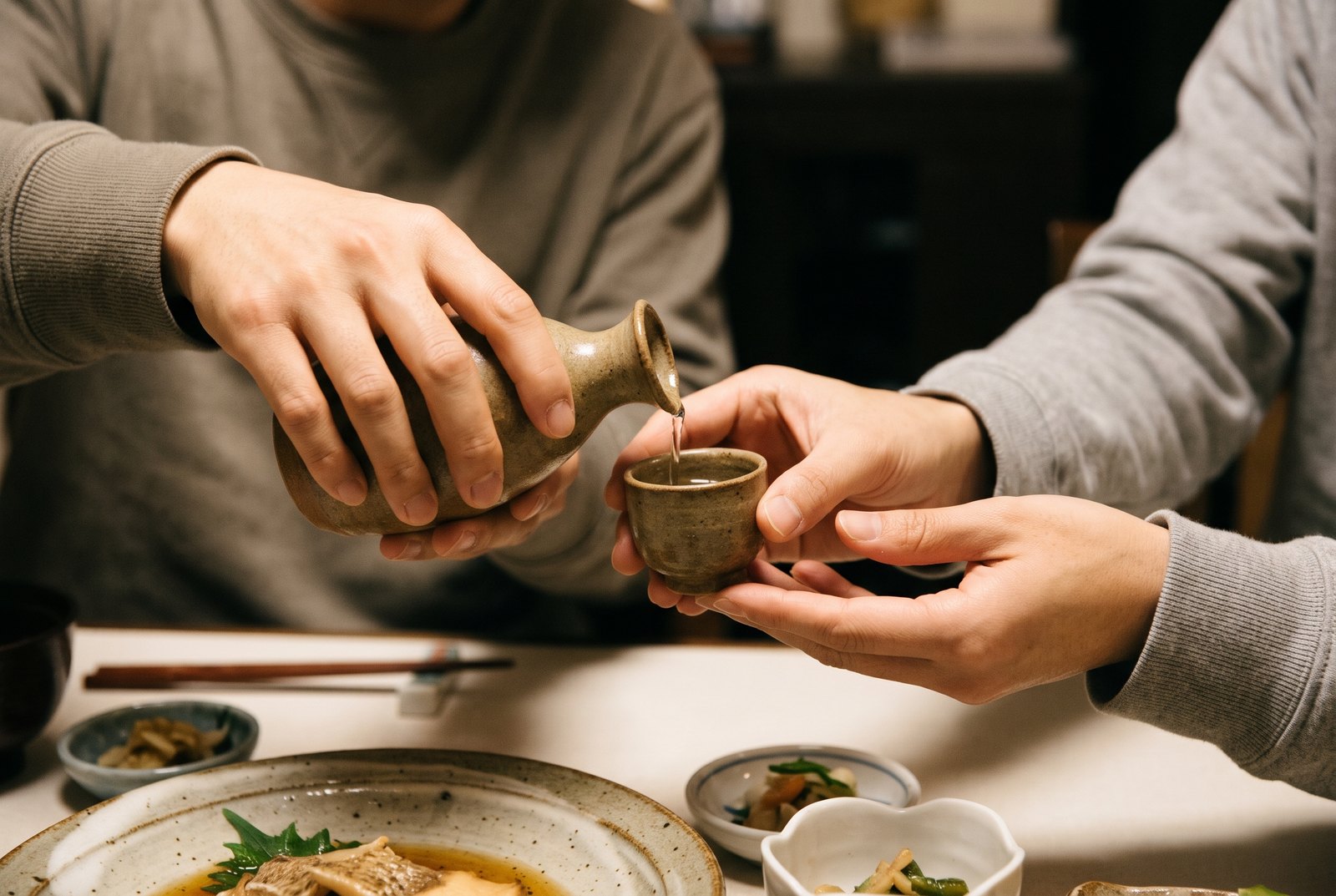
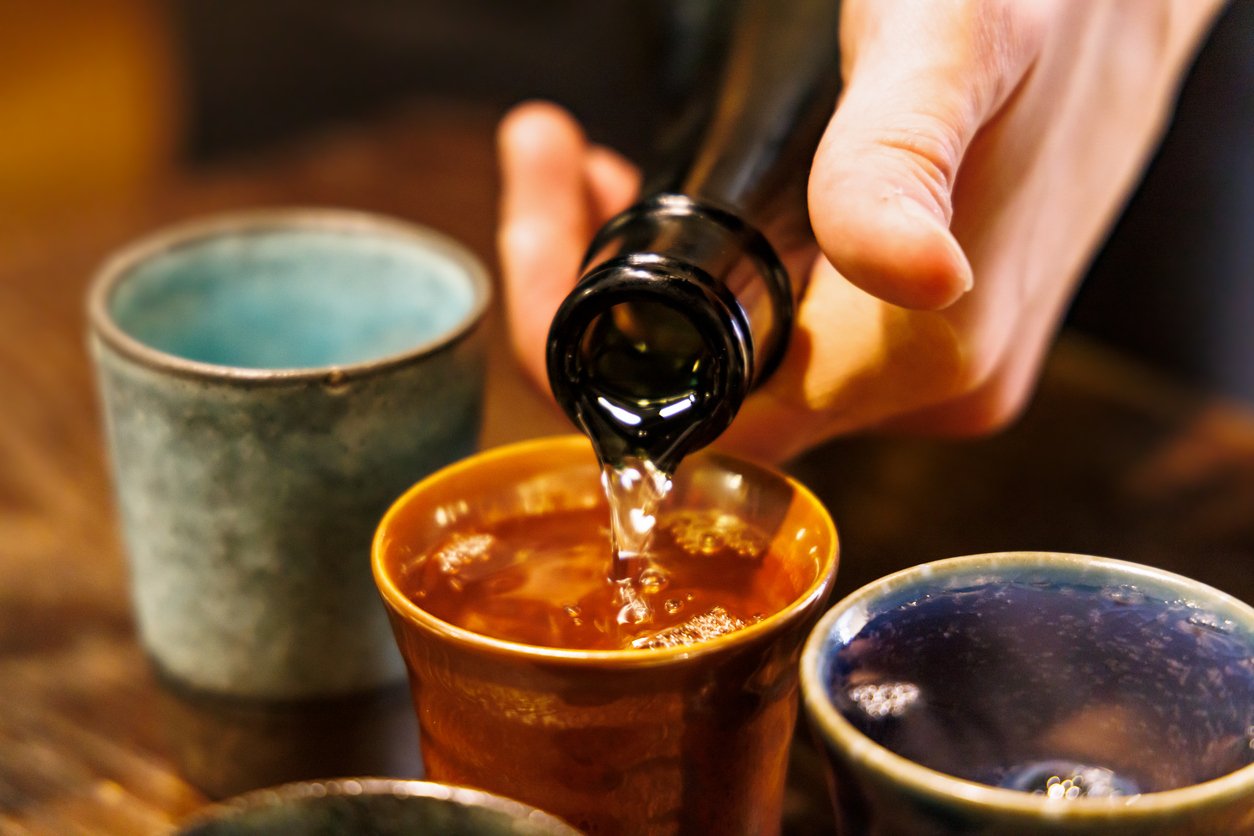
Many Japanese gatherings begin with a toast, kanpai, and it is polite to wait for it before drinking. Sake adds one more custom that suits a holiday table. It is polite to fill your drinking partner's cup and let them fill yours in return. Pouring for someone else is called oshaku, and it turns the first few minutes of a meal into a small exchange between guests. After the first round, the custom often relaxes, especially among friends.
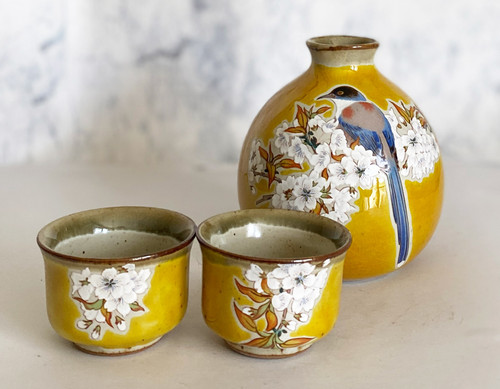
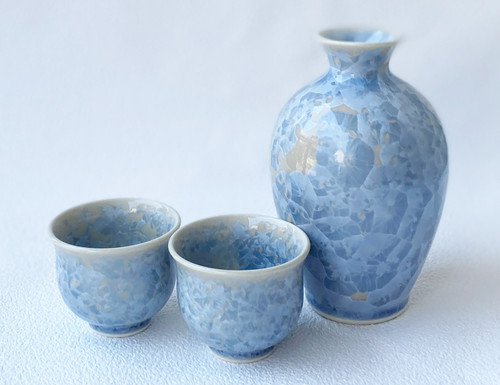
A sake set with a bottle, tokkuri, and small cups, guinomi or ochoko, is all this needs. The Kutani ware sake set with cherry blossoms and a bird has a 350 ml bottle in a warm yellow with white blossoms. The Kiyomizu ware sake set in pale blue comes with one bottle and two cups, their pale blue surface covered in crystal-like patterns. A set of two cups can be joined by cups from other sets; at a Japanese table, mismatched sake cups are as natural as mismatched small plates.
6. After the Meal: Tea for the Whole Table
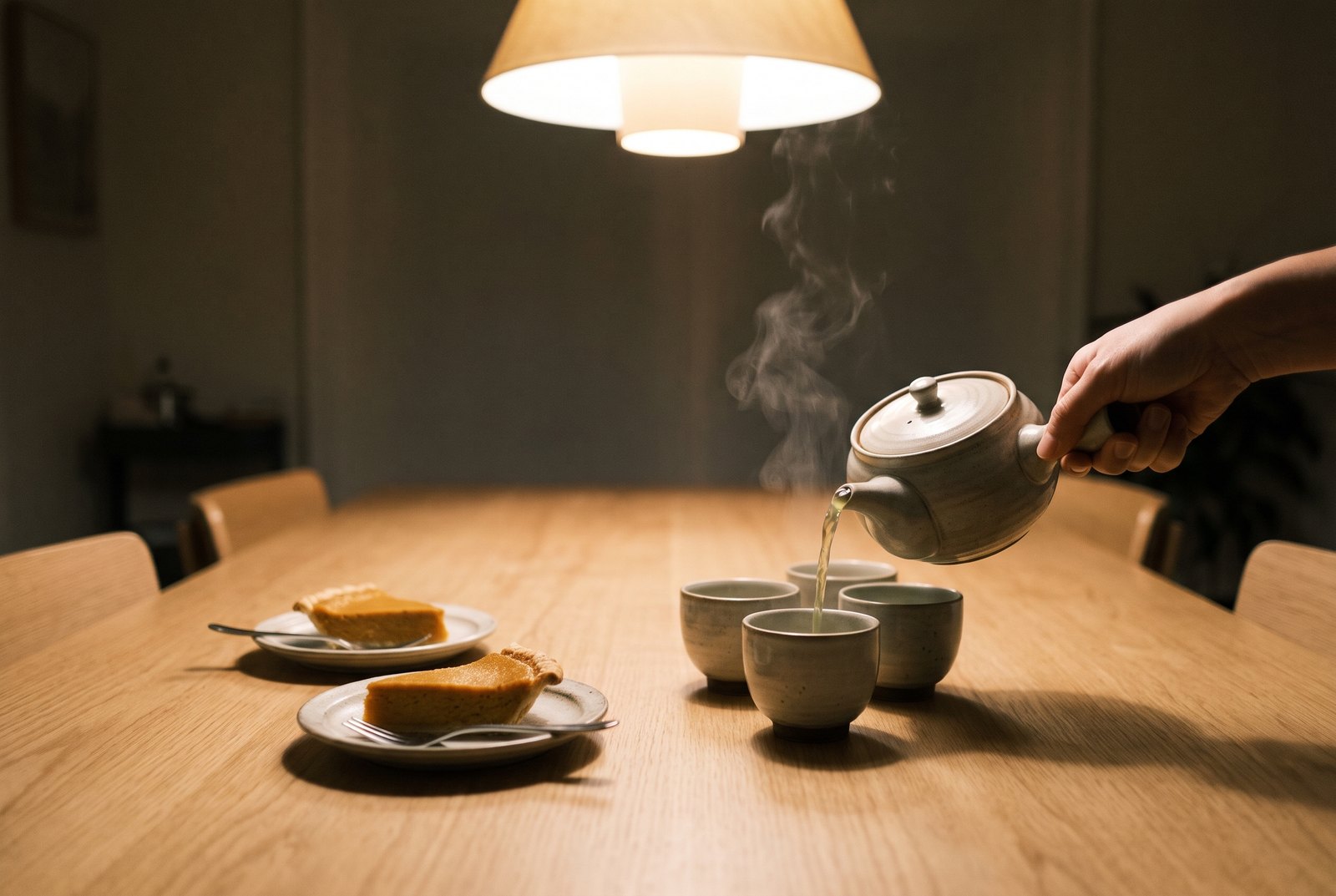
A pot of Japanese green tea after a large meal gives the table a quieter moment before everyone heads home. A teapot, kyusu or dobin, with a set of small cups is enough, and tea goes with pie as well as with Japanese sweets.
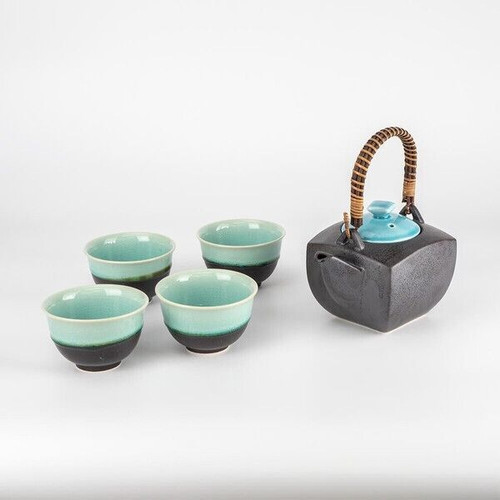
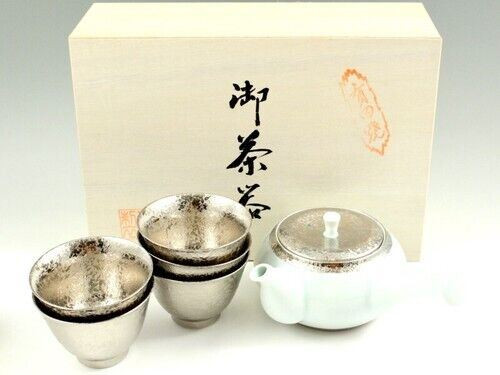
The Mino ware tea set in blue sea glaze pairs a 700 ml dobin teapot, with a tea strainer, and small cups in a blue sea glaze. For a more formal table, the Arita ware tea set with platinum cups has a white porcelain teapot with a platinum lid and five cups finished in platinum, and comes in a wooden box. Its product page notes that it is not for the microwave or the dishwasher.
7. Bringing a Dish, and Sending Some Home
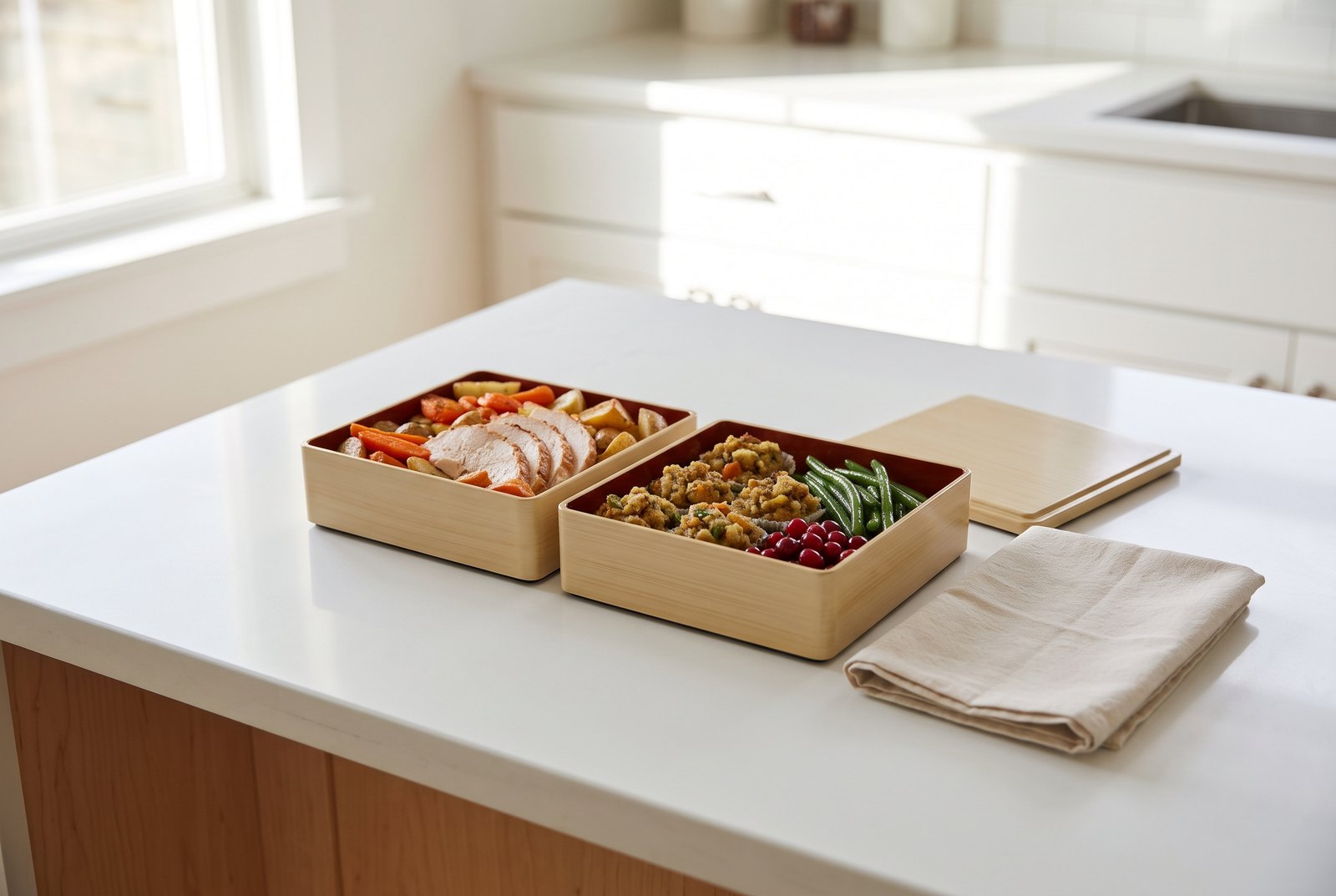
A potluck needs something to carry food in, and a Japanese answer is the jubako, a set of stacking boxes. Fill the tiers at home, stack them, and the dish arrives ready to set on the table; at the end of the night, the same boxes can go home with leftovers. The sakura-shaped jubako from Yamanaka is shaped like a cherry blossom in soft pink, about 23 cm across. Our guide to Japanese jubako covers how to fill and stack them.
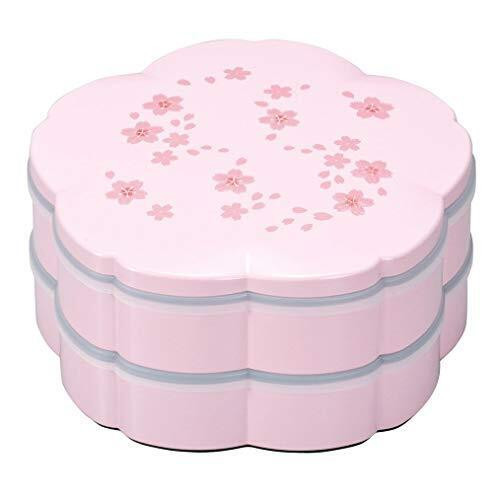
A tray, obon, helps too, for carrying cups or for keeping a group of small dishes together on a crowded table. The Yamanaka tray with cranes is about 29.5 cm across, black with cranes and touches of gold.
8. A Note on Care
Most of the pieces in this guide are ceramic, and care differs from piece to piece. Some are listed as dishwasher safe and some are not, so it is worth checking the product page for each one before the evening. When a page gives no guidance, washing by hand is the gentler choice. Large plates are heavy when full; carrying them with two hands, or on a tray, is the easiest way to get them to the table and back.
9. Frequently Asked Questions
Can I use Japanese plates for a Thanksgiving dinner?
Yes. Japanese large plates and small plates are made for shared meals, so they suit turkey, sides, and desserts as well as Japanese food.
What is a Japanese serving plate called?
A large plate is called an ōzara, and a plate used to arrange and present food is often called a morizara. The small plate each person eats from is a torizara.
Is it rude to pour your own sake?
In Japan, it is polite to pour for your drinking partner and let them pour for you, especially at the start of a meal. After the first round, the custom often relaxes, especially among friends.
What is a chopstick rest for?
A chopstick rest, or hashioki, keeps the tips of your chopsticks off the table and stops them from rolling. Many are small decorative pieces, and they can double as place markers at a gathering.
Do Japanese plates need to match?
No. Sets of small plates are often made with a different pattern on each plate, and mixing pieces from different sets is common at a Japanese table.
10. After the Holidays Begin
The same plates carry on through the season. The large plate that held the sliced turkey can hold a Christmas roast or a platter of New Year dishes, and the small plates, chopstick rests, and sake set come out again whenever people gather. A table set for sharing is ready for all of it.
Thank you for reading.
— from Osaka, Team Manekineko-Ai
PIECES IN THIS ARTICLE
Three pieces from this article
CONTINUE READING
MORE IN RECIPES & TABLE SETTING →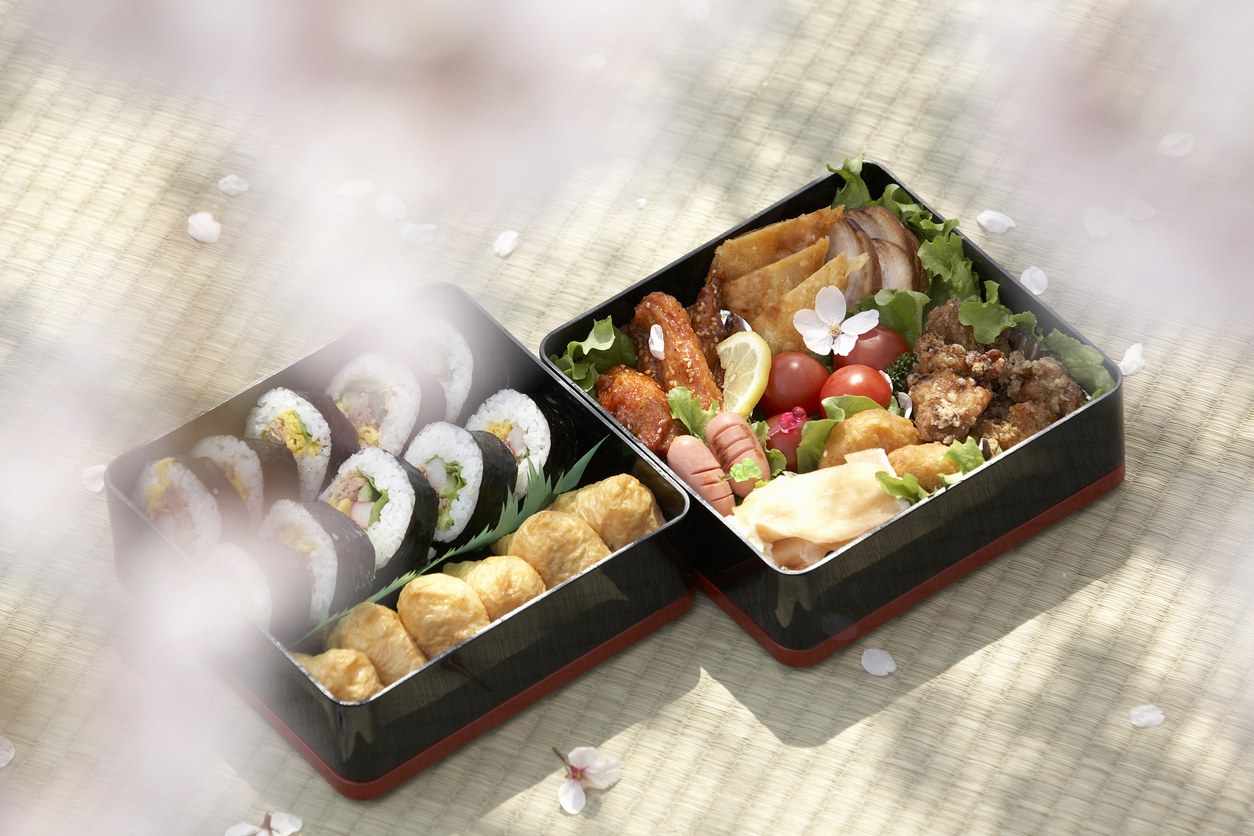 KOGEI
Japanese Jubako: A Guide to Tiered Lacquer Picnic Boxes, from Cherry Blossoms to Sports Day
How stacking boxes are filled, carried and shared, from picnics to the New Year.
 RECIPES & TABLE SETTING
How to Plate a Japanese Meal at Home — Vessels, Placement, and Space
Which vessel goes where on a Japanese table, and why space matters.
 RECIPES & TABLE SETTING
How to Choose a Japanese Sake Cup: A Guide to Shapes, Materials, and Giving One Well
Shapes and materials of sake cups, and how each changes the drink.