
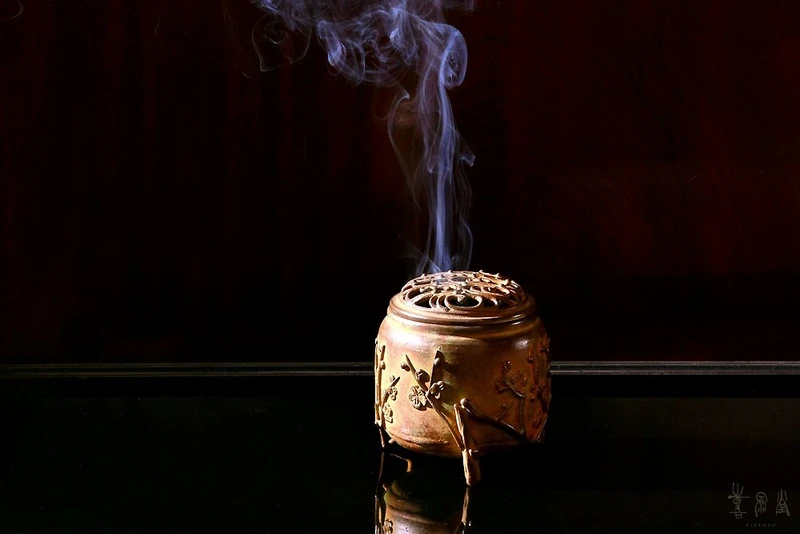
An incense burner spends most of its life unlit. For those hours it is simply an object on a shelf, so it is worth choosing one you are glad to look at.
A Japanese incense burner can be a heavy bronze vessel with a pierced lid, a painted porcelain jar, or a small leaf of metal that holds a single stick. All of them do the same job, and none of them does it in quite the same way. Which one suits you depends less on the burner itself than on what you plan to burn in it and where it will sit.
This guide follows the order in which you might choose one: what it is called and how it is put together, what you will burn, the bronze of Takaoka and the porcelain of Kutani, Arita, and Kyoto, the motifs and what they mean, the size and the place, and finally how to use the ash and look after the burner. At the end are a few pieces from our collection and some common questions.
On this page
2. First, Decide What You Will Burn
3. Bronze from Takaoka
4. Porcelain from Kutani, Arita, and Kyoto
5. Iron, Tin, and Small Stands
6. Motifs and What They Mean
7. Size and Where It Goes
8. How to Use a Koro
9. Caring for the Ash and the Burner
10. Pieces in Our Collection
11. A Note from the Shop
12. Frequently Asked Questions
1. What a Japanese Incense Burner Is Called
In Japanese, an incense burner is a kōro (香炉), often written koro in English. It began as an implement of Buddhist ritual: incense came to Japan with Buddhism, and a koro still stands on temple and home altars today. Over the centuries it also became an object for the incense ceremony, kōdō, and an ornament for the tokonoma, the alcove of a Japanese room.
A traditional koro has three parts.
The body. A bowl or jar that holds a bed of ash. The ash is what the incense actually rests in.
The feet. Very often three. A three-legged body is the classic form.
The lid. Called a hoya (火屋). It is pierced with holes or openwork so that smoke can rise and air can reach the ash. The name comes from its shape, like a small roofed house over the fire.
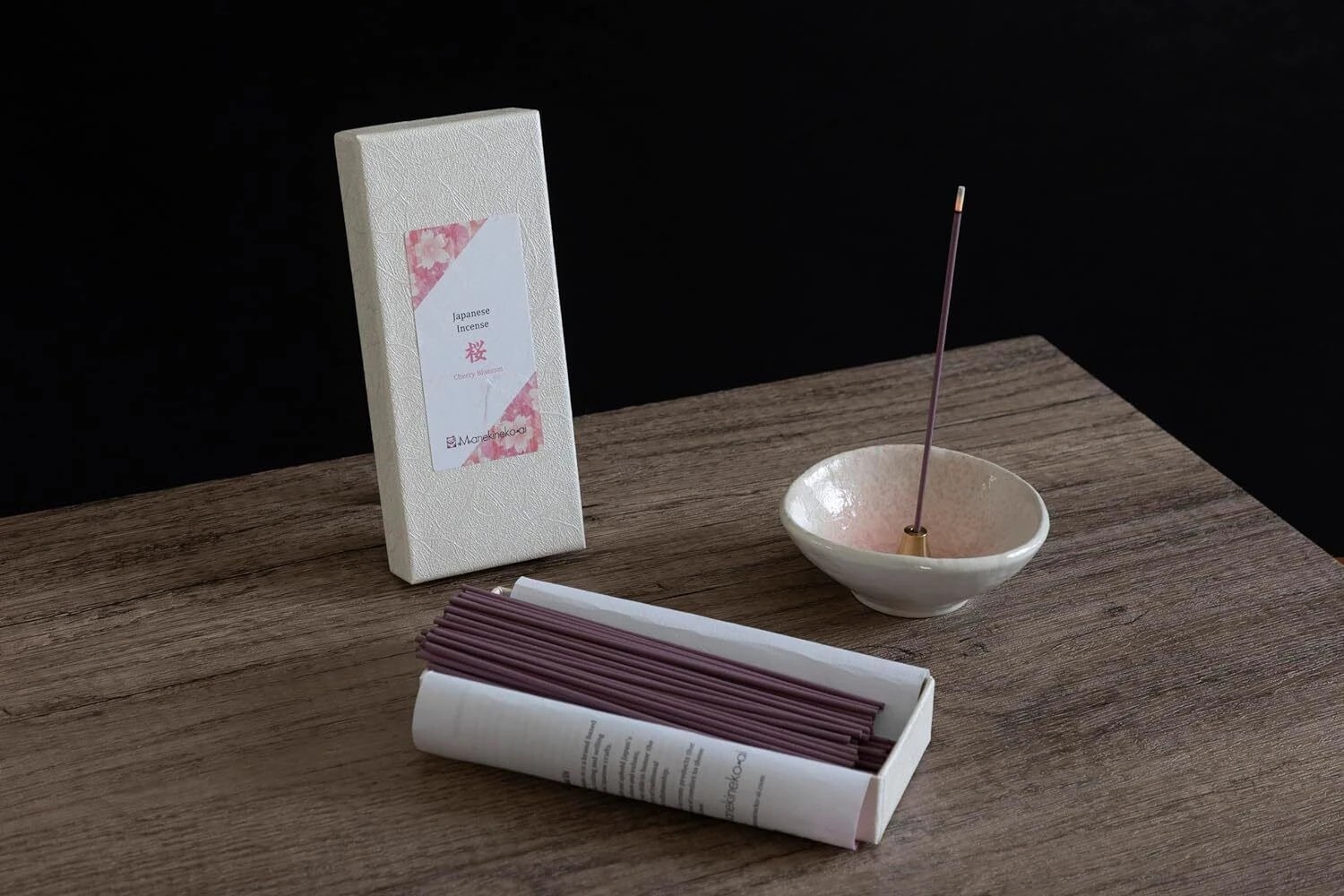
Beside the lidded koro there is a simpler object: the incense stand, or kōtate (香立て). It is a small dish or plate with a hole or a holder for one stick of incense, and it catches the ash as the stick burns. Many people outside Japan first meet Japanese incense this way.
2. First, Decide What You Will Burn
The form of the burner follows the incense. It helps to decide this before anything else.
Stick incense, standing. Senkō (線香), the incense stick, is the most common kind in Japan. It can stand in an open koro filled with ash, or in a stand with a hole. A tall stick will not fit under a lid, so if you mainly burn sticks upright, choose an open koro or a stand, or plan to lift the lid while the stick burns.
Stick incense, lying flat. In the Jōdo Shinshū school of Buddhism, sticks are not stood up. They are broken to fit the width of the koro, lit, and laid flat on the ash. A wide, shallow koro, or a long oblong one, suits this way of burning.
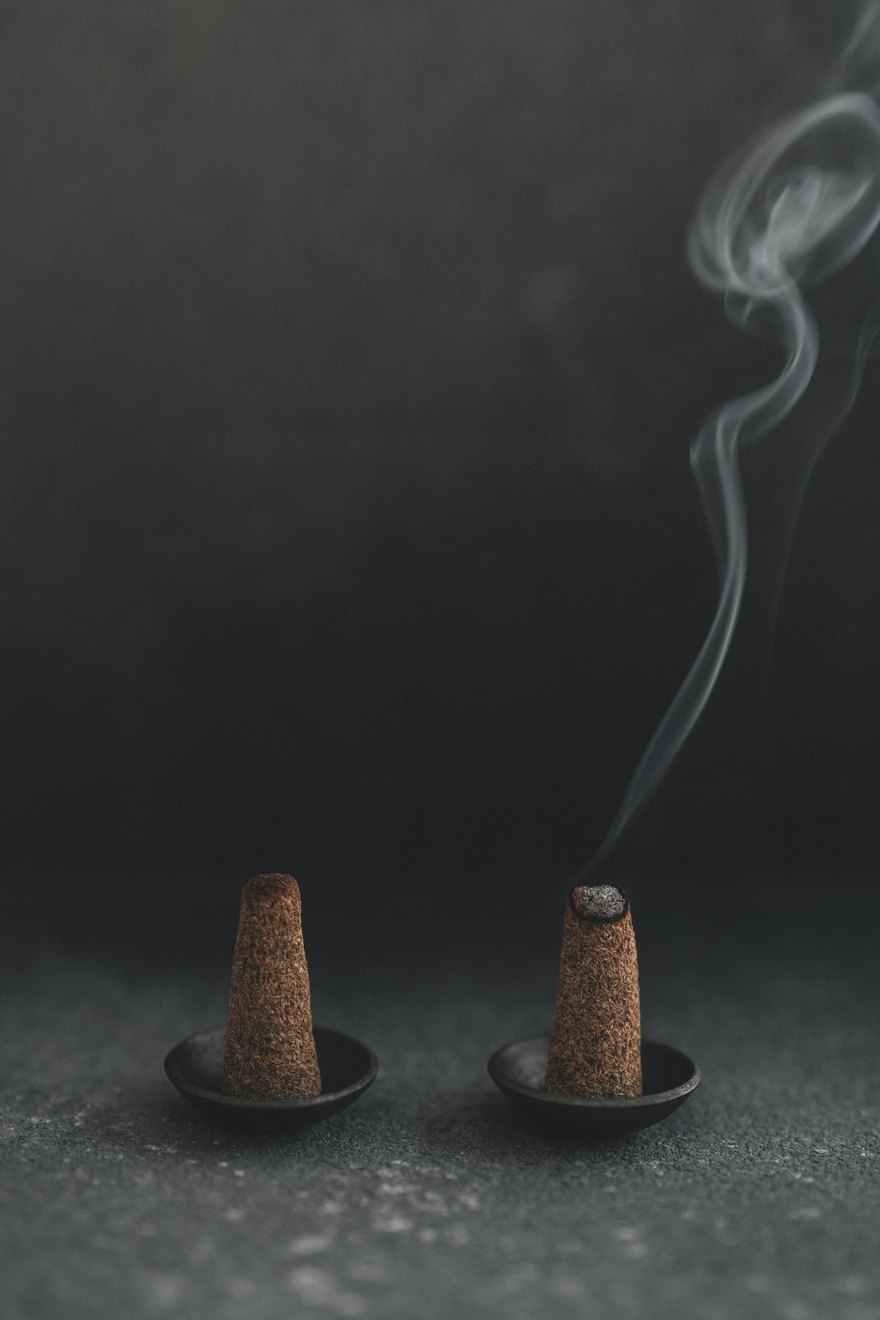
Cones. A cone is lit at its tip and sits on the ash or a small plate. Its scent grows stronger as it burns down, which makes it good for scenting a room quickly. A cone is short enough to sit under many lids; if it goes out there, lift the lid.
Fragrant wood and kneaded incense. Small chips of fragrant wood such as agarwood (jinkō, 沈香) or sandalwood (byakudan, 白檀), and nerikō (練香), small balls of powdered aromatics kneaded with honey, are not lit directly. They are warmed by a piece of charcoal buried in the ash. This can be done in an open koro or under a lid; if the charcoal keeps going out under the lid, lift it.
If you are not sure, an open koro or a stand is the easiest place to begin.
3. Bronze from Takaoka
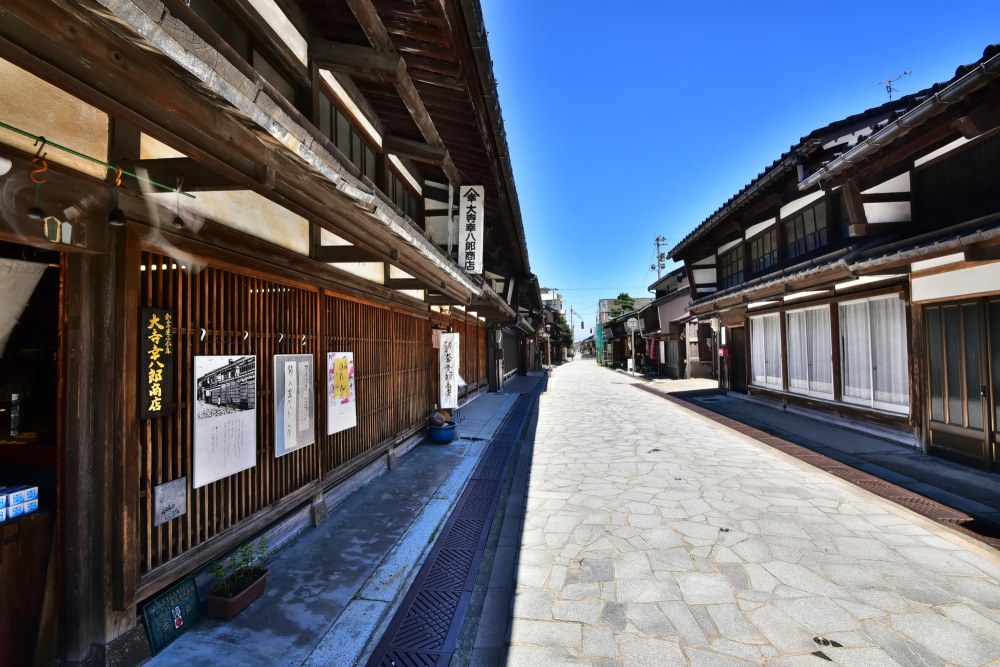
Most of the metal incense burners in our collection come from one city. In 1611, Maeda Toshinaga, lord of the Kaga domain, invited seven casters to settle in the Kanaya-machi quarter of his new castle town, Takaoka, in what is now Toyama Prefecture. Their foundries first made iron pots and farm tools. Over the following centuries the town turned to copper and bronze, to Buddhist altar fittings and art castings, and its work was shown abroad at the Paris Exposition of 1867. Takaoka copperware was named a national Traditional Craft of Japan in 1975, and the city is often said to produce around nine in ten of Japan's bronze and copper castings.
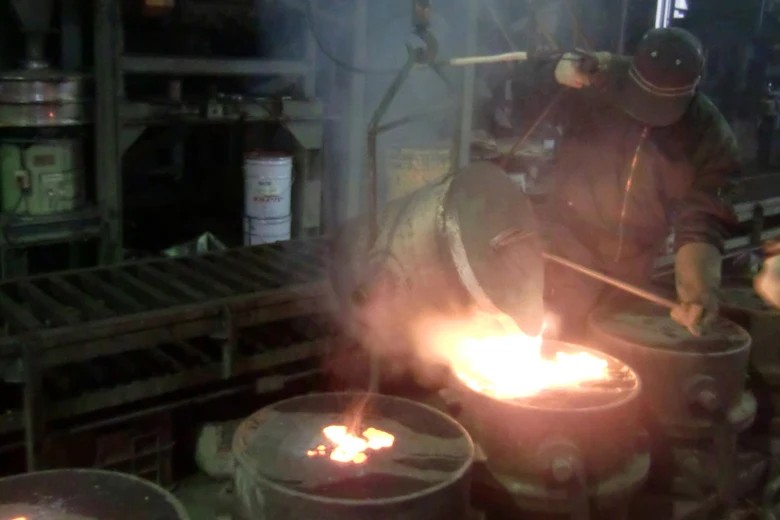
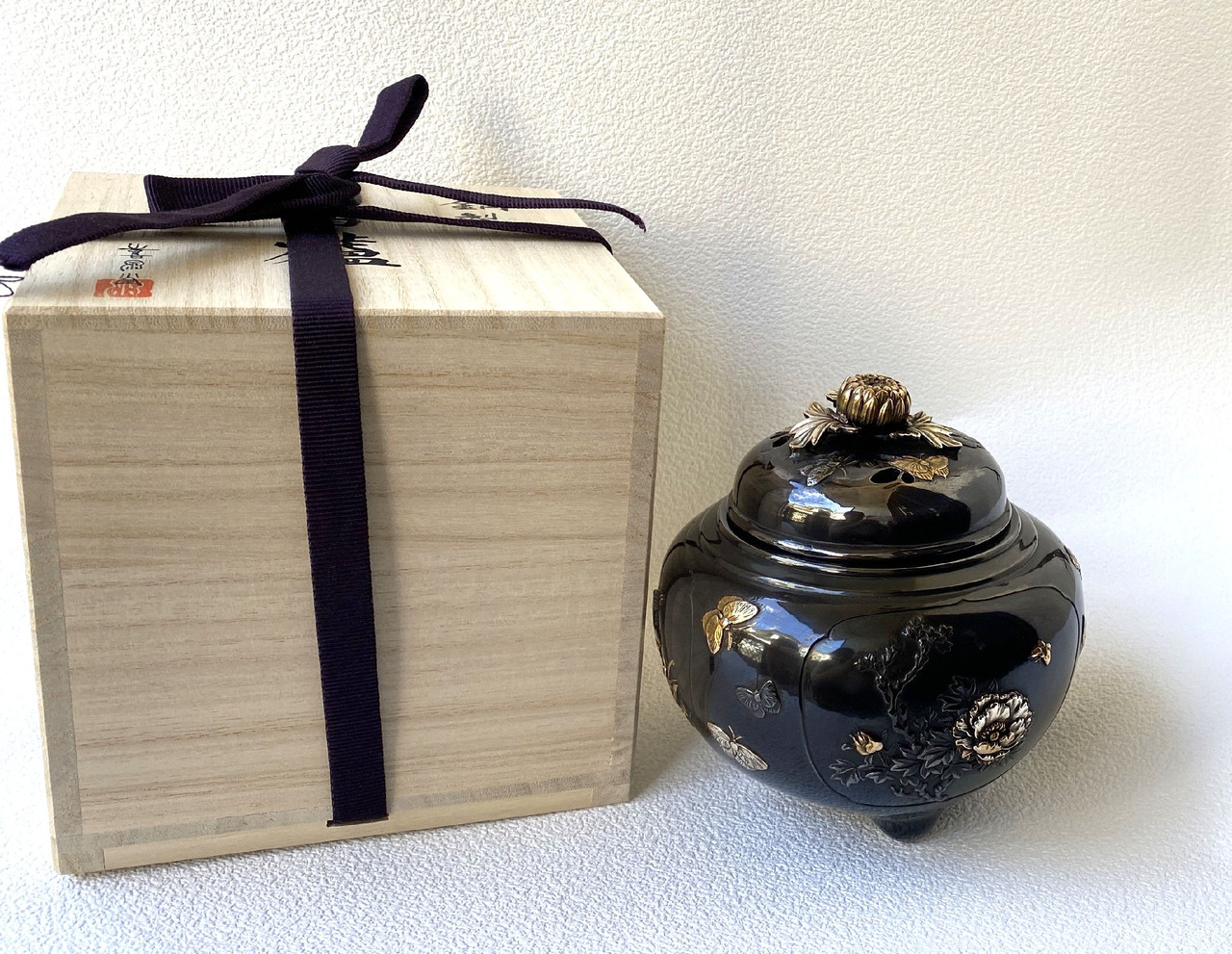
How the shape is made. Takaoka's main method is namagata (生型), green-sand casting. Damp sand is packed around a pattern in a frame, the pattern is lifted out, and molten metal is poured into the space it leaves. A single pattern can make many pieces, and many Takaoka incense burners are made this way. For very fine, small figures, such as a frog the size of a fingertip, makers use lost-wax casting (rōgata, 蝋型): the figure is modeled in wax, packed in clay, and the wax is melted out before the metal goes in. It is the most precise of the methods, and the most costly.
How the color is made. The color of a Takaoka bronze is not paint. After casting and finishing, a specialist colorer treats the surface with solutions or heat so that a thin layer of color forms on the metal itself, and that layer also protects it. The Takaoka cooperative names many such finishes. A few you will meet on incense burners:
- Niiro (煮色), "boiled color": the piece is simmered in a copper solution, and the result is a clear, translucent finish whose hue depends on the alloy.
- Ohaguro (おはぐろ): a liquid aged with iron is brushed on while the metal is heated, giving reddish-brown to near-black tones.
- Tokuiro (徳色): the reddish shades of "antique bronze." The cooperative lists incense burners and flower vessels as its typical use.
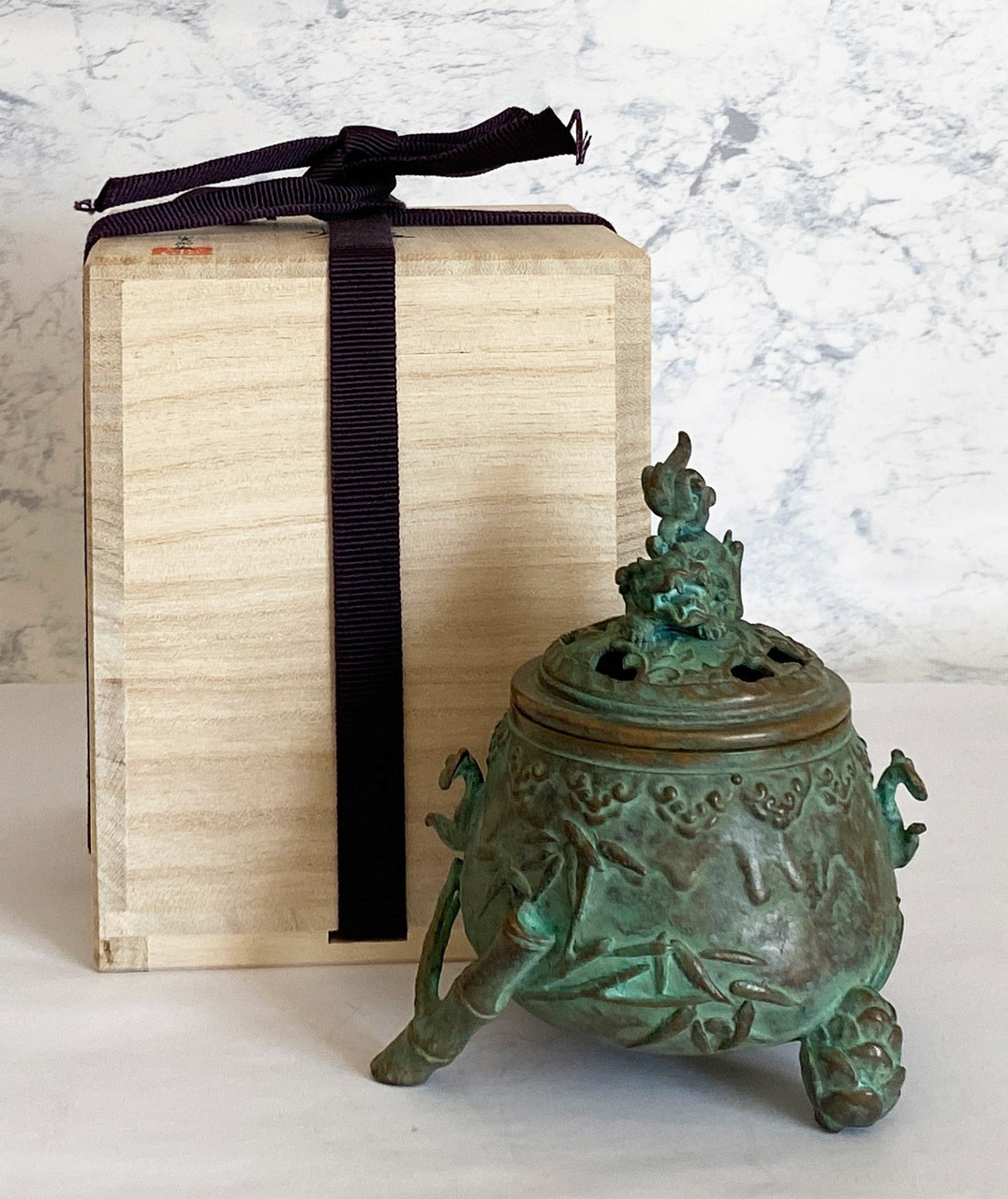
- Seidō-shoku (青銅色): a green patina like that of old bronze statues, brought out on purpose.
What it feels like. A cast bronze koro is heavier than it looks, and it sits steadily on its feet. Its surface is not meant to stay exactly as it left the workshop: Takaoka's makers say that wiping it with a dry cloth over the years deepens its color and luster.
4. Porcelain from Kutani, Arita, and Kyoto
Porcelain and stoneware are as traditional for a koro as bronze. The small burner used in the incense ceremony is itself a ceramic piece, and porcelain incense burners from the Edo period are kept in museum collections today.
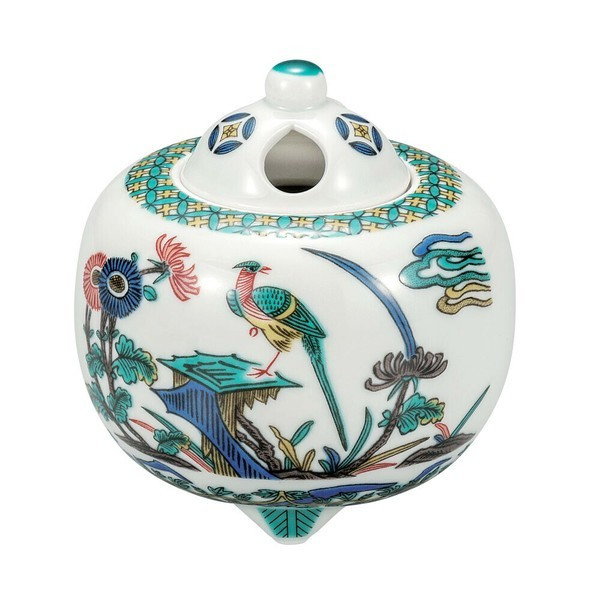
Kutani. From Ishikawa Prefecture, Kutani porcelain is known for painting in its "five colors": red, yellow, green, purple, and deep blue, sometimes with gold. On a koro, the painting wraps all the way around a round body, so it reads from every side of a shelf. Kutani was named a national Traditional Craft in 1975, the same year as Takaoka copperware, and a lidded Kutani incense burner from the nineteenth century is in the collection of the Los Angeles County Museum of Art.
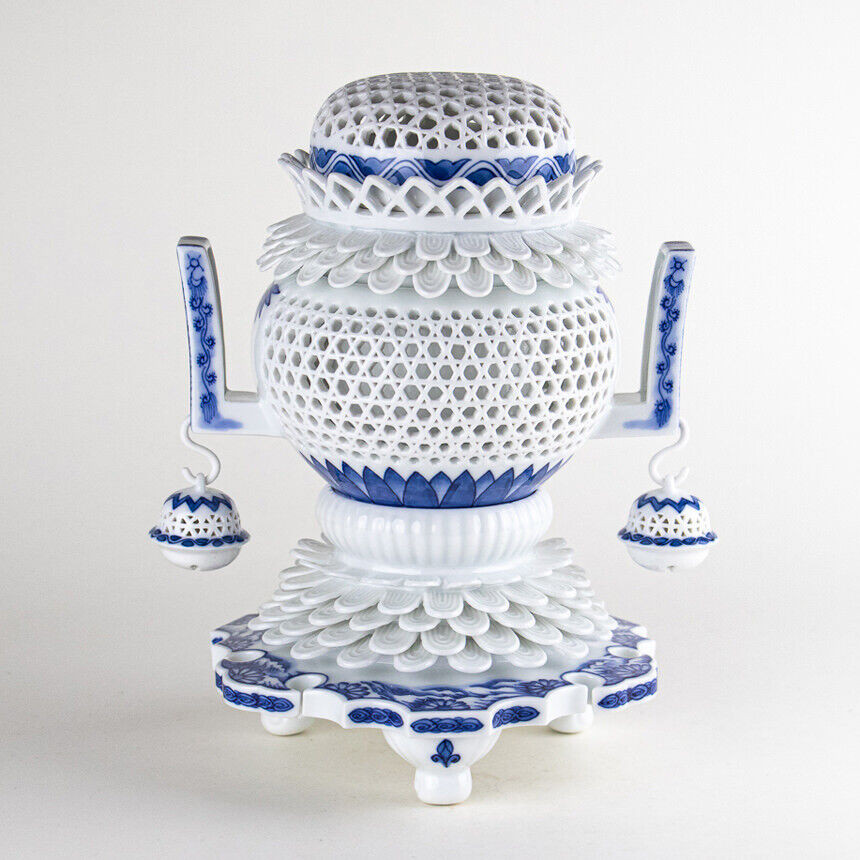
Arita. From Saga Prefecture, one of Japan's oldest porcelain towns. Some Arita incense burners are made with sukashi-bori (透かし彫り), openwork carved through the walls of the vessel, so that the body itself becomes a lattice.
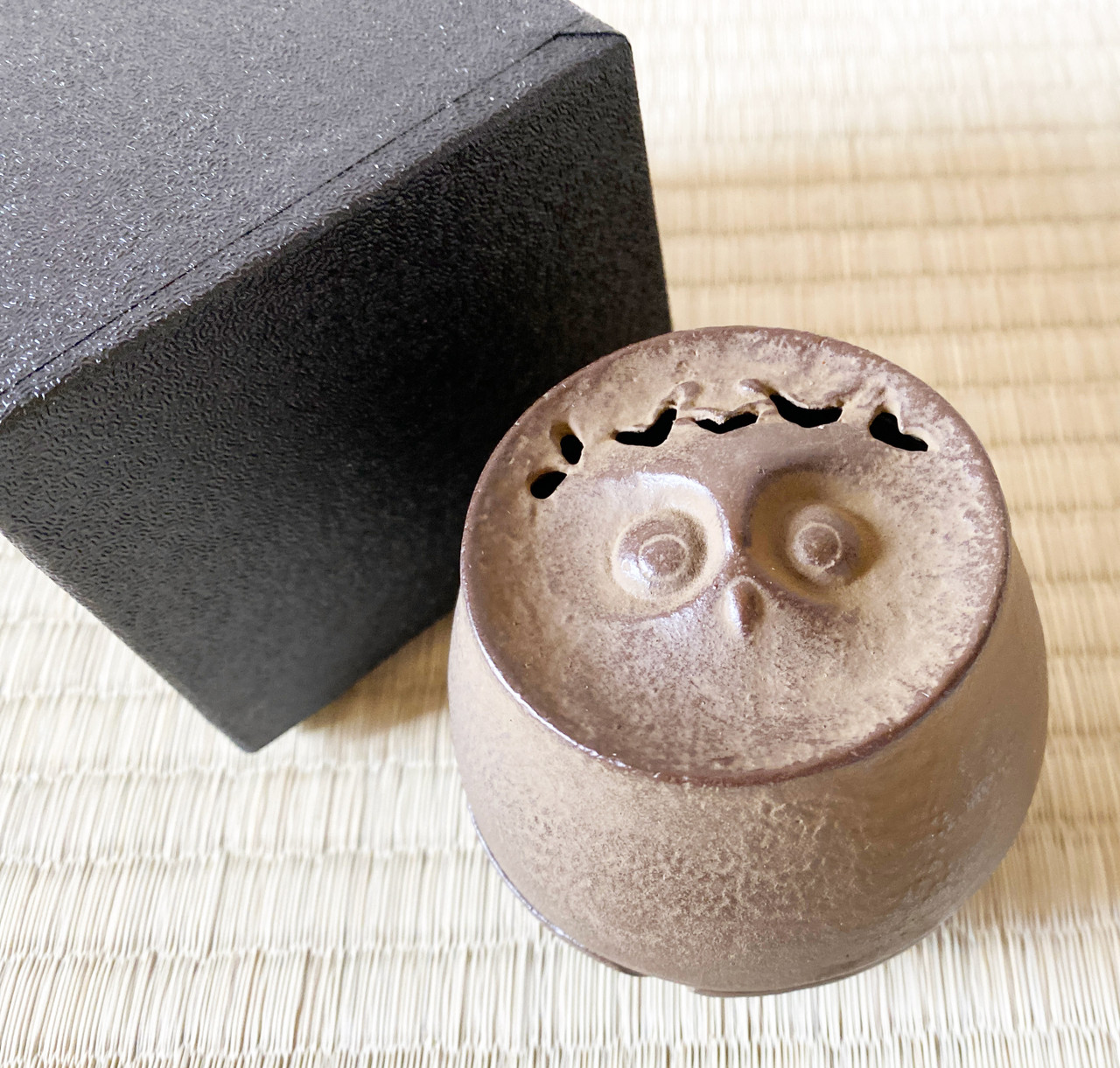
Kyoto. Kyo-yaki and Kiyomizu-yaki burners from Kyoto run from crystalline glazes to small figures of owls and cats that hold a stick of incense.
A porcelain koro is lighter than bronze and can be washed. If you want color, or a burner that matches tableware or a vase you already have, it is often the place to start.
5. Iron, Tin, and Small Stands
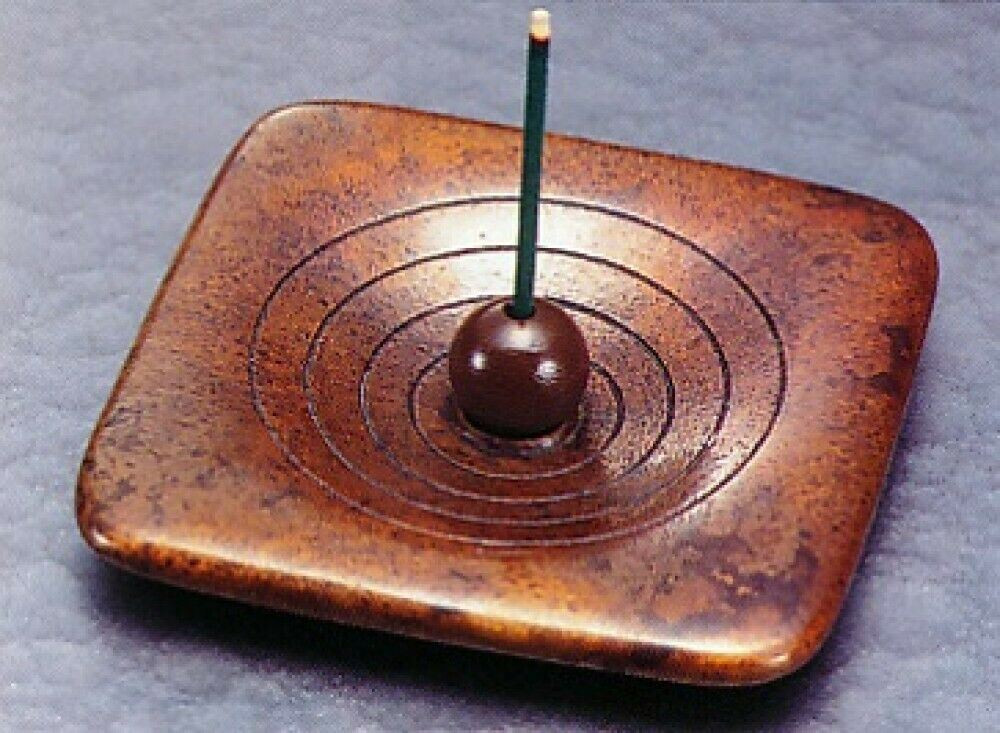
Not every burner is a lidded vessel. Takaoka also casts in iron, and small iron koro shaped as owls are among the most approachable pieces in the craft: weighty and plain. Incense stands, meanwhile, are often where Takaoka's makers are most playful. A bronze frog sits on a lotus leaf and holds the stick in its arms; another sits on a long bamboo leaf; a ripple spreads across a small square plate around the hole.
The Takaoka maker Nousaku also makes stands in pure tin, a soft, bright metal. Nousaku advises keeping tin away from flames and sources of heat, since it melts at a low temperature, so set the stick so that its glowing tip and falling ash stay clear of the metal.
A stand is the simplest way to burn a stick of incense, and it takes up almost no room. For a desk or a narrow shelf, it is often the right choice.
6. Motifs and What They Mean
Japanese incense burners are rarely plain. The motif on the lid, the body, or the stand usually carries a wish.
- Chrysanthemum (kiku, 菊) — long life. Chrysanthemum sake was once drunk on the ninth day of the ninth month to extend life and keep misfortune away.
- Carp (koi, 鯉) — perseverance and success. A carp that swims up the waterfall called the Dragon Gate is said to become a dragon.
- Crane (tsuru, 鶴) — long life, and a happy marriage, because cranes are said to keep the same partner.
- Pine (matsu, 松) — steadfastness and long life, because it stays green through snow and cold.
- Dragon (ryū, 竜) — a bringer of clouds and rain, and in Buddhism a guardian of the teaching.
- Lion-dog (shishi, 獅子) — protection. Pairs of these lions guard the gates of shrines and temples, and a shishi on a koro lid keeps watch in the same way.
- Rooster (niwatori, 鶏) — the coming of light. In the Japanese founding myth, roosters crowed to draw the sun goddess Amaterasu out of her cave.
- Owl (fukurō, 梟) — good fortune, through wordplay: fu-kurō can be read as 不苦労, "no hardship."
- Frog (kaeru, 蛙) — safe return, because kaeru also means "to come back."
- Swallow (tsubame, 燕) — a thriving business. A house where swallows nest is said to be a lucky one.
If a burner is a gift, the motif is often the easiest way to choose: an owl for a life without hardship, a frog for a safe return, a crane or a chrysanthemum for a long and well-lived life.
7. Size and Where It Goes
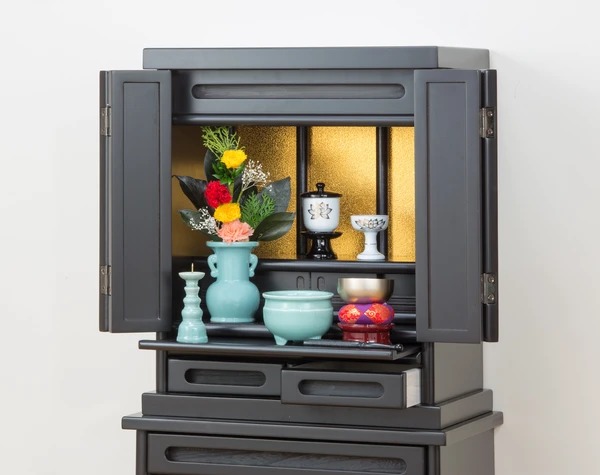
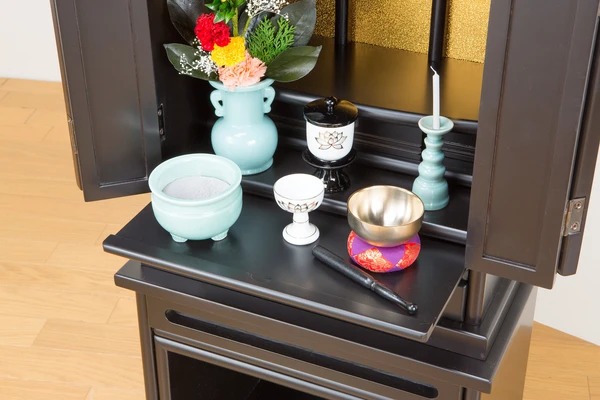
On a home altar. On a Buddhist altar the incense burner stands in the center, with a flower vase to one side and a candlestick to the other. This set of three, called mitsugusoku (三具足), is the basic arrangement. Altar koro are usually open burners for sticks, and the school a family follows decides whether sticks are stood or laid flat.
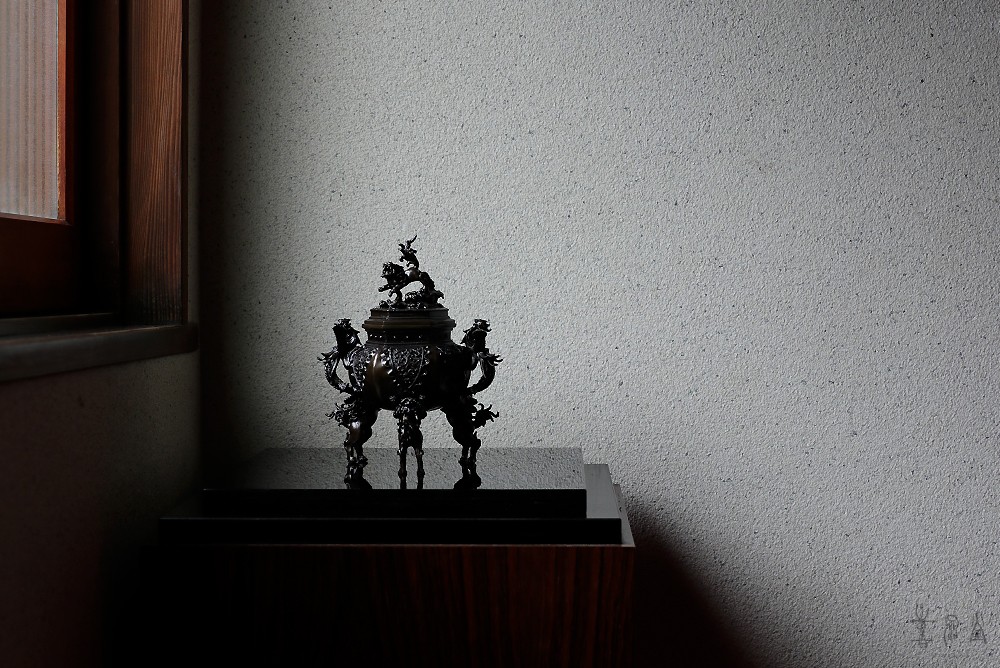
On a shelf or in an alcove. Here the koro is as much an ornament as a burner, and a lidded bronze or porcelain koro is at home. The lidded burners in our collection run from palm-sized pieces about 5 cm tall to alcove pieces of about 30 cm. One of around 10 cm sits comfortably on a shelf beside books or a small vase; a larger one can stand on its own in an alcove.
On a desk or a windowsill. A small stand or a palm-sized koro is enough, and leaves room for everything else.
8. How to Use a Koro
Fill it with ash. Ash is what holds a stick upright and lets air reach the burning tip, and it shields the body of the burner from a hot charcoal. Incense ash is sold for the purpose; washable beads of glass or stone are a modern alternative for stick incense. Japanese guides suggest filling the koro roughly two-thirds to four-fifths full and smoothing the surface flat.
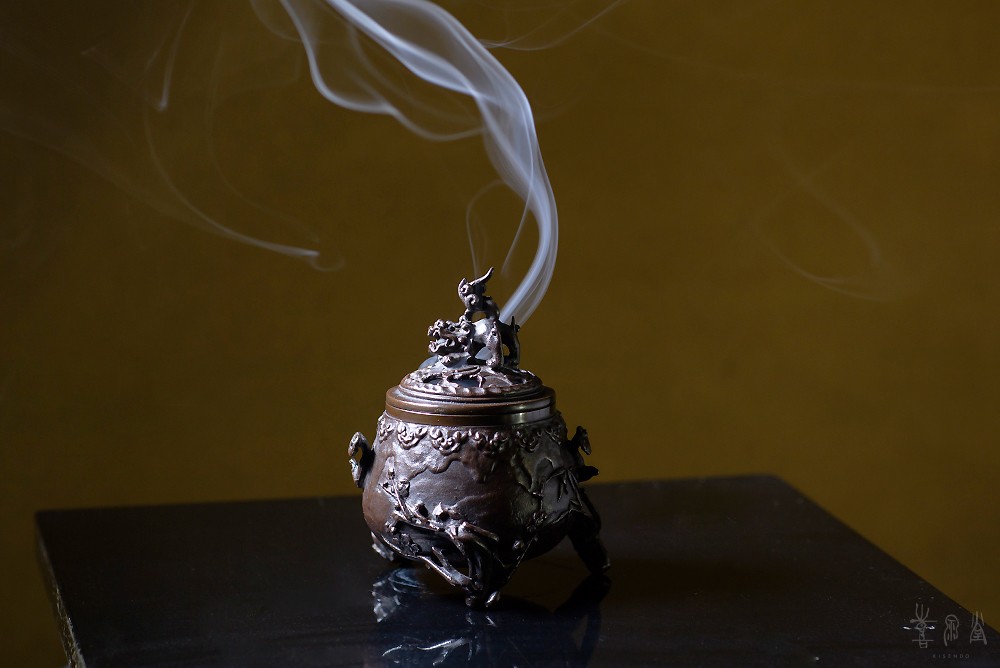
For sticks. Light the tip of the stick in a flame until it catches, then put out the flame and leave a glowing ember. At a Buddhist altar, the custom is not to blow on it, but to fan the flame out with your other hand or draw the stick quickly away. Set the stick in the ash, standing or laid flat.
For wood chips and kneaded incense. The Kyoto incense house Shoyeido describes the method this way: light a piece of incense charcoal and wait about five minutes for it to catch, then bury it shallowly in the ash or rest it on top. Place two or three chips of wood, about 2 mm thick and 1 cm long, or a ball of kneaded incense, on the warmed ash near the charcoal rather than directly on it. If the charcoal keeps going out under the lid, take the lid off; the lid limits the air.
Keep it safe. Japanese fire departments ask that incense be set on a heat-resistant surface and kept away from anything that can burn, and that you stay nearby while it burns, because a fallen ember can smolder without a flame. A heat-resistant tray or stand under the burner is a sensible habit.
9. Caring for the Ash and the Burner
The ash. Pick out the stubs of burnt sticks regularly. From time to time, sift the ash through a fine mesh and stir it to let in air, which keeps it from caking. When it clumps, will no longer hold a stick upright, or begins to smell stale, replace it. Do this outdoors or over newspaper.
Bronze. Wipe it with a soft, dry cloth. This is the care Takaoka's makers recommend, and over time it deepens the color and luster. Do not use metal polish, abrasive cleaners, or scrubbers: on a colored bronze, they remove the very layer that gives the piece its color. Bright, uncoated brass altar fittings are a different matter and are sometimes polished; a Takaoka koro is not one of them.
Porcelain. The incense house Shoyeido suggests wiping away incense residue often with an alcohol wipe, and soaking the piece in mild dish soap for anything more stubborn. Avoid bleach. Residue that has soaked into unglazed clay, or into the fine crackle of some glazes, will not come out, so on those pieces it is better to keep the ash and the stick away from the walls.
Tin. Wash with mild soap and dry well, and keep it away from heat.
10. Pieces in Our Collection
A few examples of the burners described above. These are examples, not recommendations; the right burner is the one that suits what you burn and where it will sit.
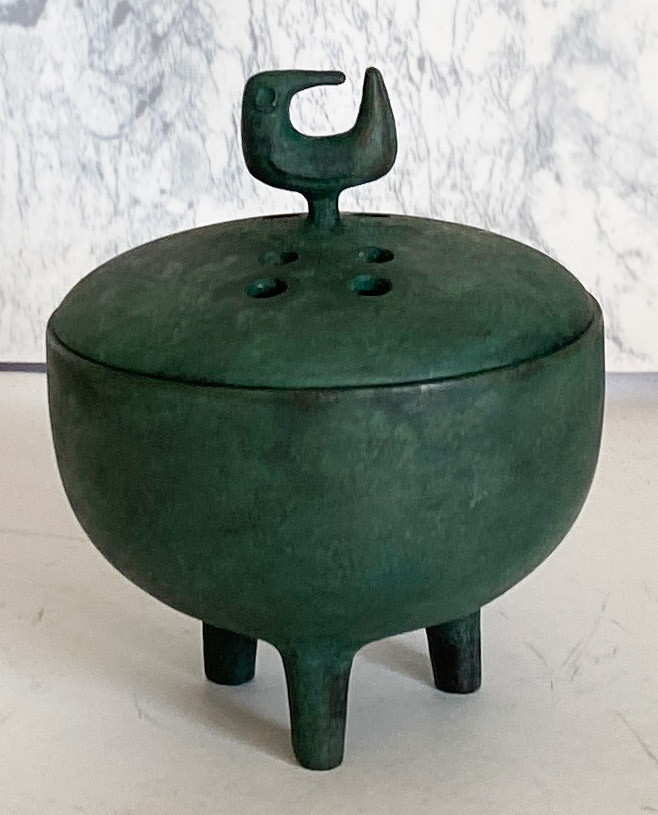
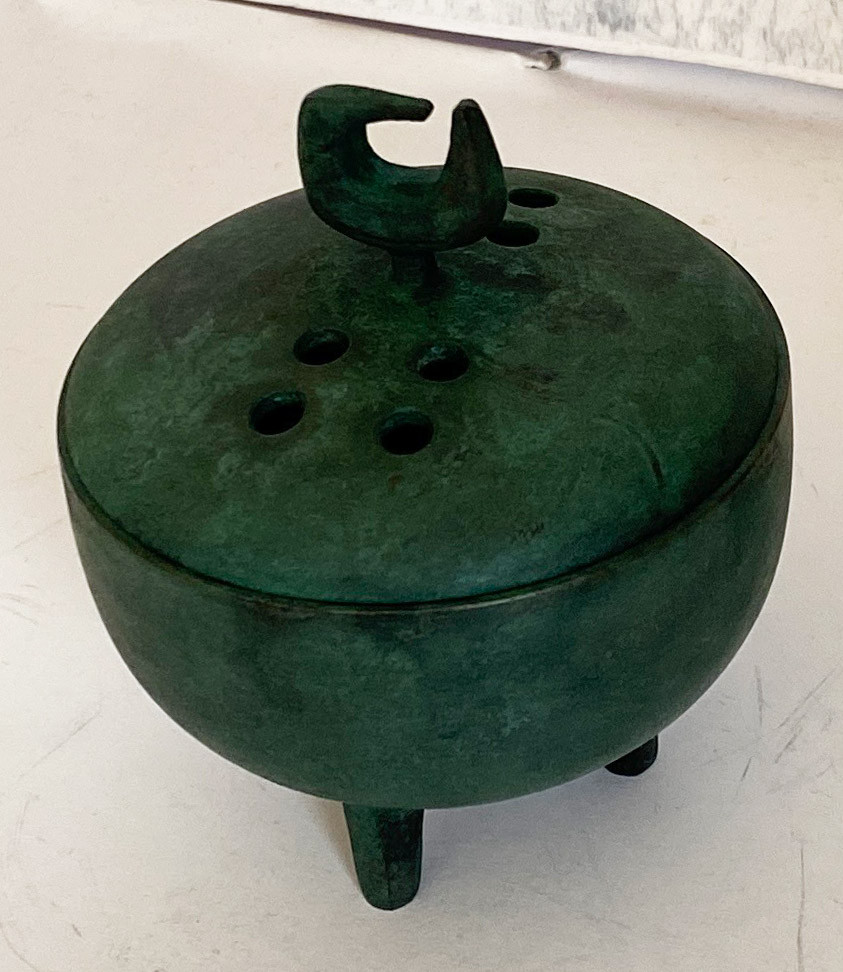
A lidded bronze koro — Zuisho. A round Takaoka bronze koro on three short feet, in a deep green patina, with a pierced lid and a small curling knob. Its name, zuisho (瑞祥), means a good omen. About 7.9 cm across and 9.7 cm tall, it comes in a paulownia wood box. (Takaoka bronze incense burner, Zuisho)
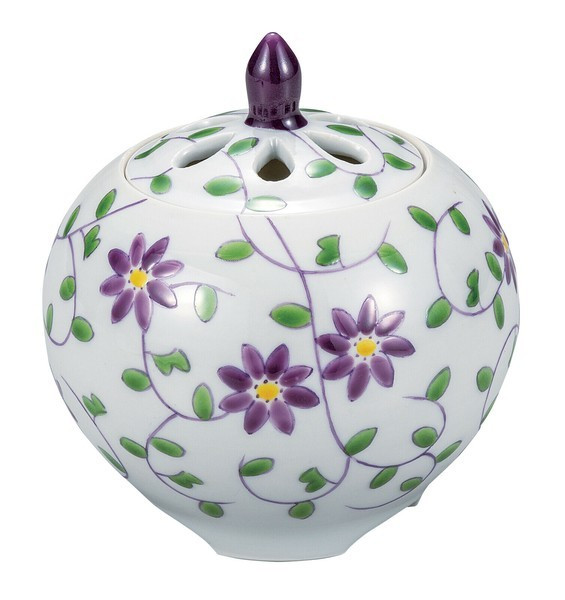
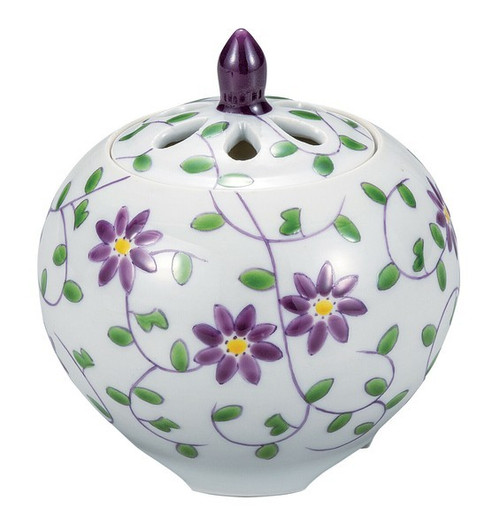
A painted porcelain koro — Kutani, flower arabesque. A round Kutani porcelain koro painted with purple flowers on winding green stems over white, with a pierced lid. About 9.6 cm across and 10.2 cm tall. (Kutani incense burner with flower arabesque)
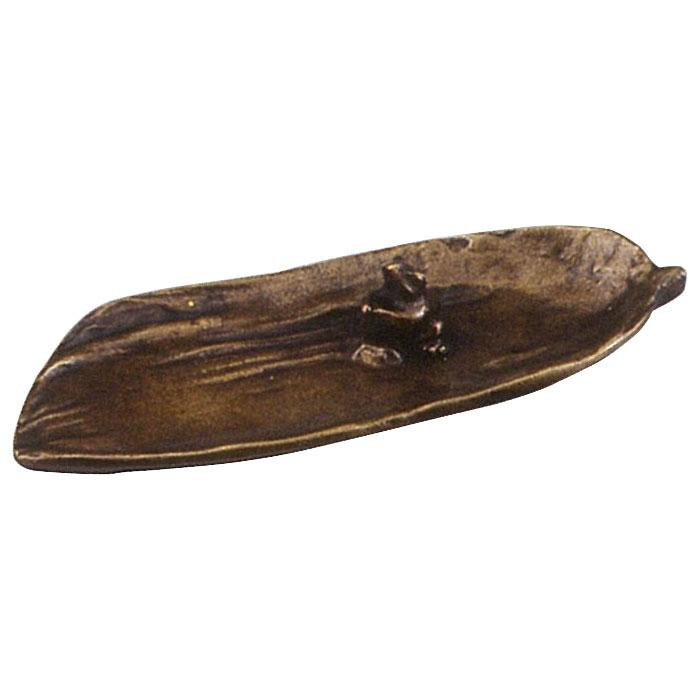
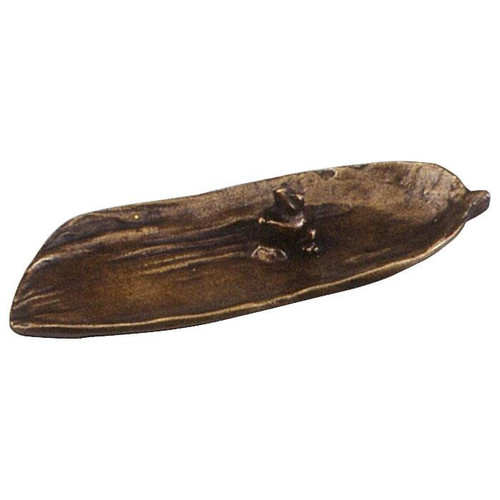
A stand for one stick — frog on a bamboo leaf. A Takaoka bronze incense stand in the shape of a long bamboo leaf, with a small frog, cast by the lost-wax method, holding the stick. About 15 cm long. (Takaoka bronze incense stand, frog on a bamboo leaf)
11. A Note from the Shop
More of the incense burners we carry come from Takaoka than from anywhere else, and many of the rest from the porcelain towns of Kutani, Arita, and Kyoto. Each listing gives the material, the size, and how the piece was made, and those three lines tell you more than the photograph does.
If one thing stays with you, let it be the incense. Decide what you will burn, and the shape of the burner follows. The material and the motif you can choose by eye, for the hours when it sits quietly on the shelf.
12. Frequently Asked Questions
Q: What is a Japanese incense burner called?
A kōro (香炉), usually written koro. A small stand that holds a single stick is a kōtate (香立て). The lid of a koro has its own name, hoya (火屋).
Q: How do I use my incense burner?
Fill it about two-thirds to four-fifths full with incense ash and smooth the surface. Light a stick, put out the flame so the tip glows, and set it in the ash. For wood chips or kneaded incense, warm them on the ash beside a lit piece of incense charcoal instead of lighting them. Always set the burner on a heat-resistant surface and stay nearby while it burns.
Q: What is incense ash for?
It holds a stick upright, lets air reach the burning tip so the stick keeps burning, and protects the burner from the heat of charcoal. Sift it from time to time and replace it when it cakes.
Q: What is the best material for an incense burner?
There is no single best. Cast bronze is heavy, steady, and long-lasting, and its color deepens with care. Porcelain is lighter, easy to wash, and can carry painted color. Iron is weighty and plain. For a single stick, a small metal or ceramic stand is all you need.
Q: Which end of an incense stick do you light?
Either end will light. Hold one end in a flame until it catches, then put out the flame, without blowing on it, and let the tip glow.
Q: What is traditional Japanese incense?
The most common form is the stick, senkō. Others are cones; fragrant woods such as agarwood (jinkō), with kyara as a top grade, and sandalwood (byakudan), which are warmed rather than lit; and nerikō, kneaded balls of powdered aromatics. Awaji Island, in Hyōgo Prefecture, is Japan's largest incense-producing area.
Thank you for reading.
— from Osaka, Team Manekineko-Ai
PIECES IN THIS ARTICLE
Three burners from this article
CONTINUE READING
MORE IN KOGEI →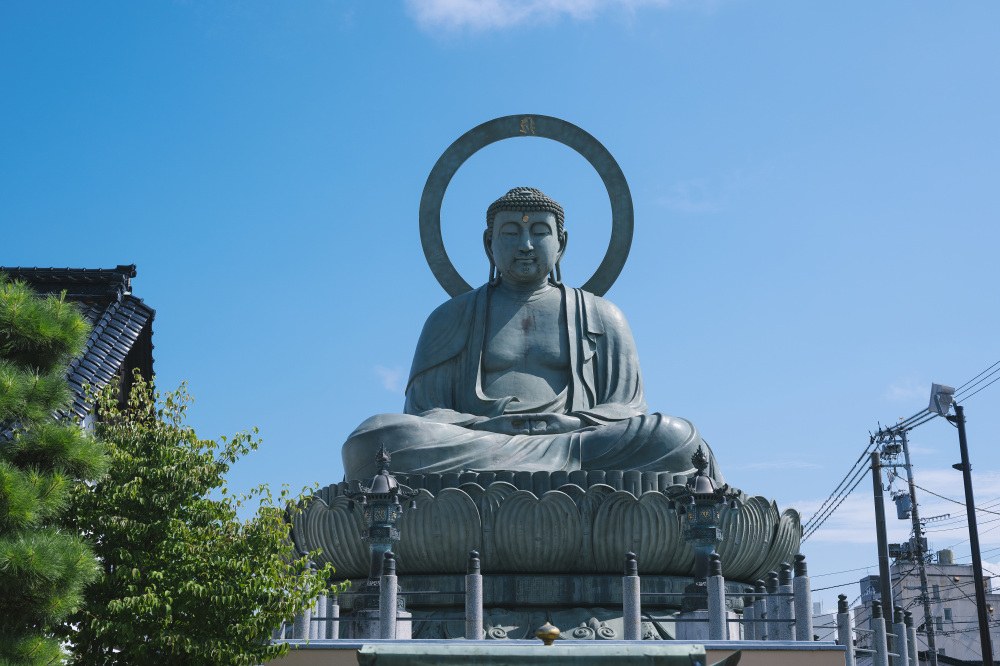 KOGEI
Takaoka Metalwork — Where Temple Bells and Tea Vessels Are Born
Four centuries of casting in Takaoka, where temple bells, incense burners and tea vessels come from one tradition.
 KOGEI
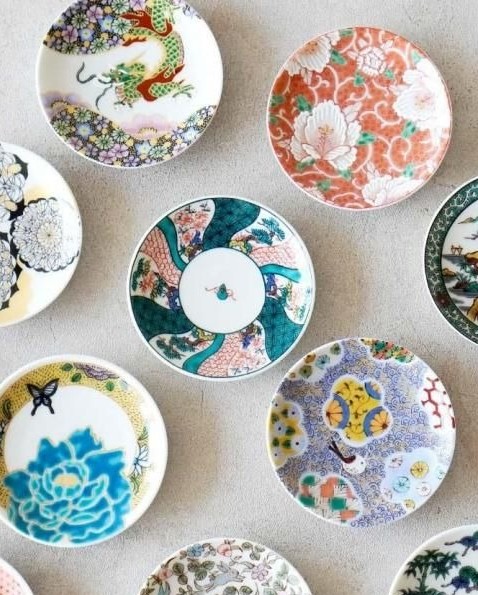
What Is Kutani Ware? A Textbook-Style Guide to Its Features, History, and Making
The five colors of Kutani porcelain, how it is made, and how its styles changed over three and a half centuries.
 KOGEI
How to Use a Rin Bell: The Calming Power of Buddhist Sound
The small bowl-shaped bell of the Buddhist altar, and how to strike it.