
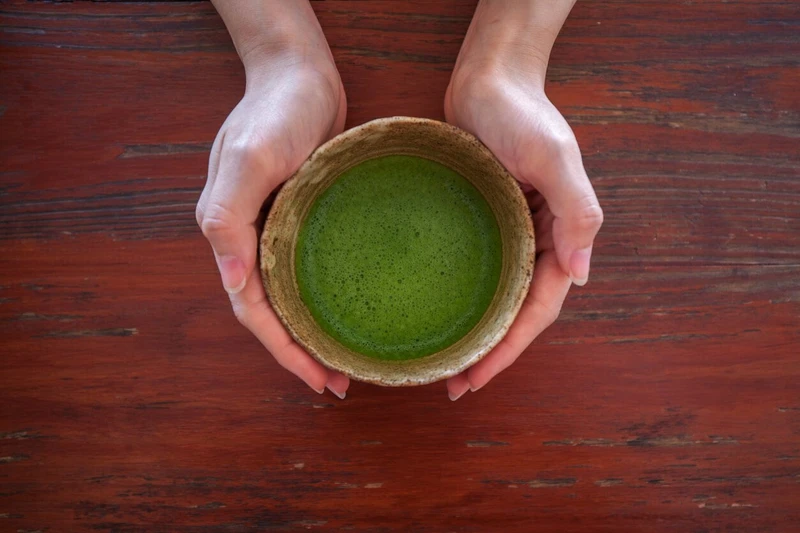
A matcha bowl is the one piece of teaware you hold in both hands and look straight into. It is worth knowing what you are looking at.
Choosing a first matcha bowl, or chawan, can feel like choosing from hundreds of quiet variations: tall and short, wide and narrow, glossy and rough, porcelain and pottery and glass. The differences are not merely decorative. Each one changes how the bowl sits in the hand, how the whisk moves, how warm the tea stays, and what color the tea appears to be.
This guide walks through a chawan the way you might turn one over in a shop: its parts, its size, its shape and season, the clay behind it, and the inside you will be looking into every morning. At the end are a few examples from our collection, and a few common questions.
On this page
2. The Parts of a Chawan, and What Each Tells You
3. Size: What the Numbers Show
4. Shape and Season
5. The Clay Behind the Bowl
6. Looking Inside: Color, Texture, and the Green of the Tea
7. Weight and the Hand
8. Living with a Chawan
9. Pieces in Our Collection
10. A Note from the Shop
11. Frequently Asked Questions
1. What a Chawan Does That an Ordinary Bowl Does Not
A serving of thin matcha (usucha) uses only a small amount of water. Yet the bowl it is made in looks generous, almost too large for what it holds. The extra room is for the whisk. A bamboo chasen is moved quickly back and forth through the tea, and it needs a wide, open floor and walls high enough to keep the tea from splashing over the rim.
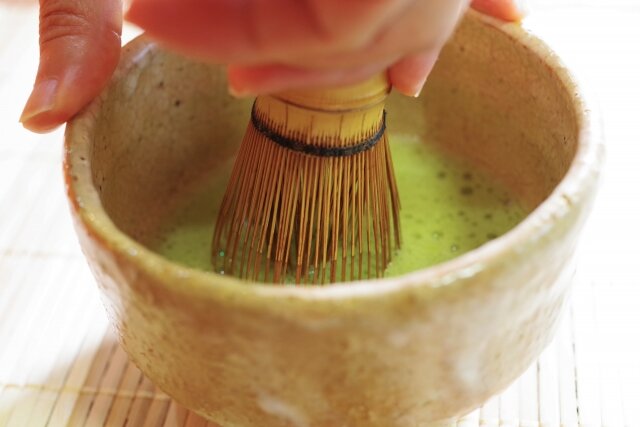
The bowl is also made to be held. In the tea room, a chawan is lifted with both hands, one palm beneath it and the other at its side, and its walls carry the warmth of the tea to the fingers. Many bowls are thicker than a rice bowl of the same size for exactly this reason.
And the bowl is made to be looked into. After the tea is finished, there is a moment of looking at the inside: the glaze, the color left behind, the small hollow at the bottom. This is why the interior of a chawan matters as much as the outside.
2. The Parts of a Chawan, and What Each Tells You
Japanese tea culture has a name for almost every part of the bowl. Knowing a few of them makes it easier to see the differences between one chawan and the next.
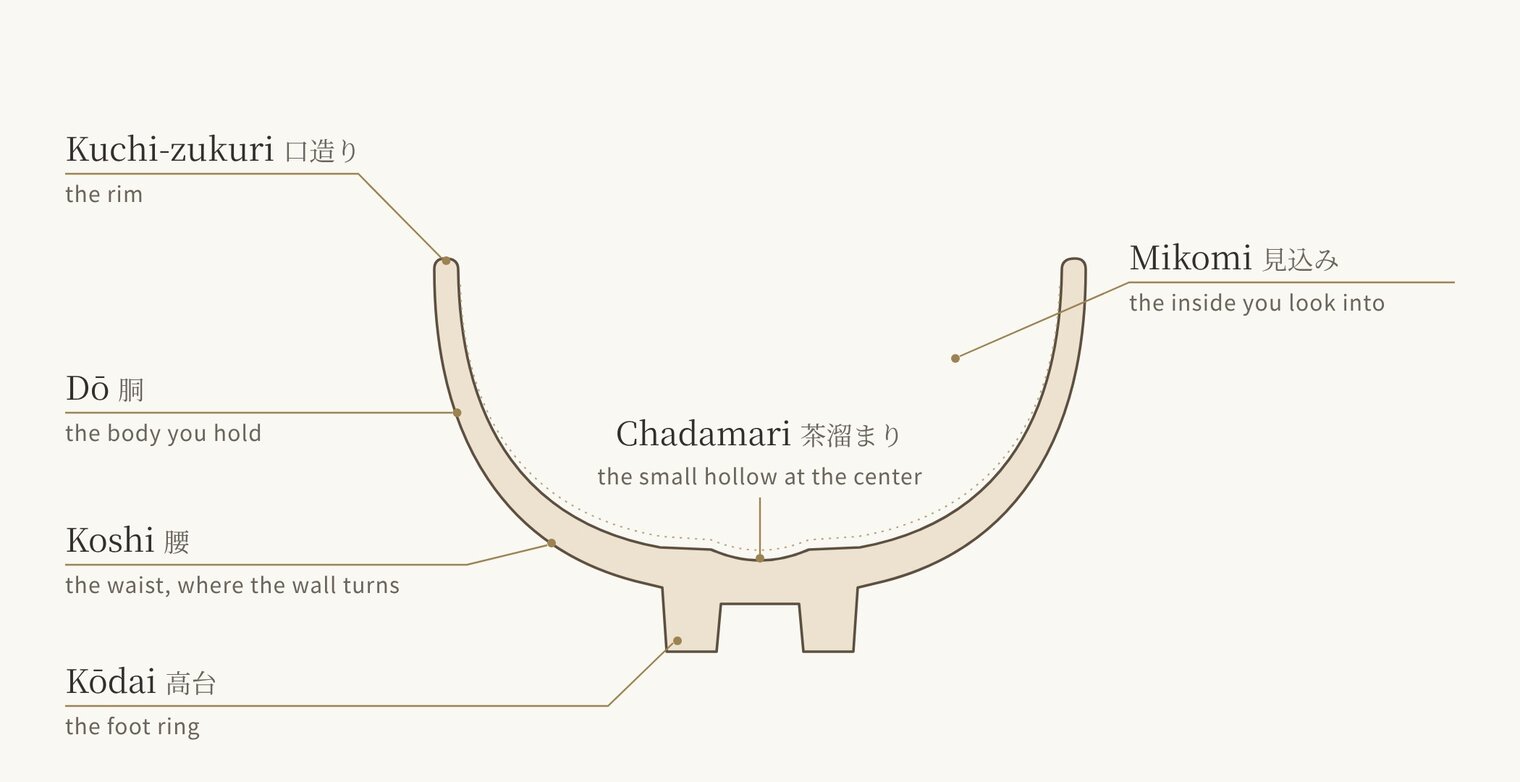
Kuchi-zukuri (口造り), the rim. This is where the lips meet the bowl. Some rims are thin and even; others are thick, softly rounded, or gently uneven so that the line rises and falls around the bowl. A thicker rim tends to feel warmer and softer to drink from. A thin rim feels precise and light.
Dō (胴) and koshi (腰), the body and the lower wall. The body is the wall you hold. The koshi, literally the “waist,” is where the wall turns toward the base. A bowl with a full, rounded koshi sits deep in the palm. One with a sharp turn feels more upright.
Mikomi (見込み), the inside. The whole interior surface, the part you look into. Its color and texture decide how the green of the tea will appear, and how the whisk feels as it moves.
Chadamari (茶溜まり), the tea pool. A small, slight hollow at the center of the interior floor, where the last of the tea gathers. Some bowls have a clear, deliberate chadamari; in others it is barely there.
Kōdai (高台), the foot. The ring the bowl stands on. It is where the fingers rest when the bowl is lifted, and it is often where the maker’s hand shows most freely: carved, notched, left rough, or marked with the potter’s seal. On many pottery bowls the foot is left unglazed, and the bare clay shows its true color here.
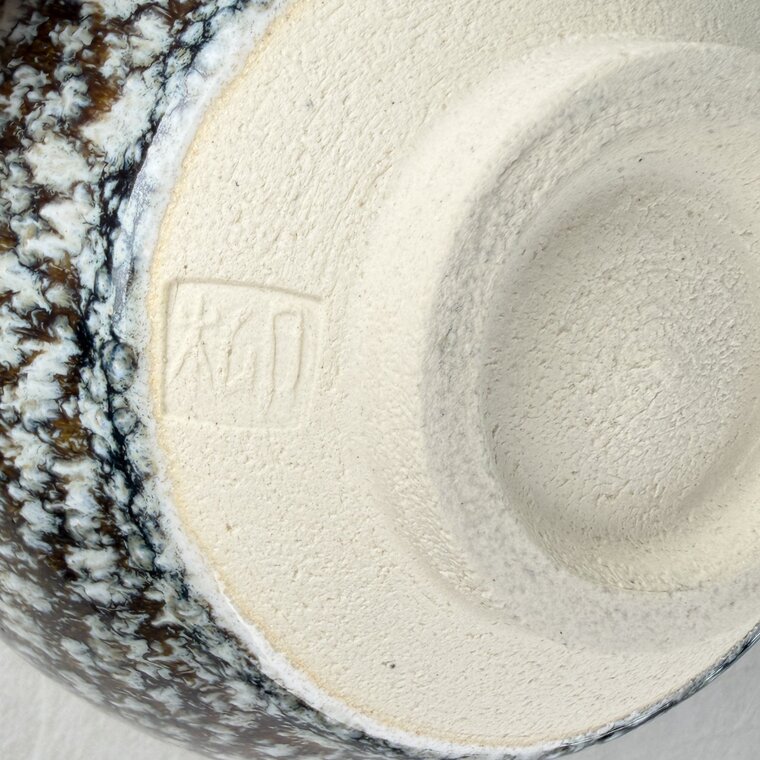
Shōmen (正面), the front. Most decorated chawan have a front, usually the side with the main design. In the tea room, the host sets the bowl down with the front facing the guest. The guest, out of modesty, turns the bowl slightly before drinking so as not to drink from the front, then turns it back before setting it down. At home, no one needs to follow this, but knowing where the front is helps you see the bowl the way its maker intended.
3. Size: What the Numbers Show
Rather than quote a single “standard size,” we gathered the measurements listed on our own product pages. Of the 298 matcha bowls in our collection with dimensions listed, the middle half measure between 11 and 12.5 cm (about 4.3 to 4.9 inches) across the rim, and between 7 and 8 cm (2.8 to 3.1 inches) tall. That range is a good picture of an everyday chawan: wide enough for a whisk to move freely, small enough to cradle in two hands.
Two other sizes are worth knowing. At the small end are bowls of around 11 cm or smaller, some of them sold under the name hime (“princess”) chawan. They suit smaller hands and lighter, quicker servings. At the other end are the wide, shallow summer bowls, which in our collection run 14 to 15 cm across but only 5 to 6 cm tall.
If you are unsure, a bowl around 12 cm across and 7 to 8 cm tall is a forgiving place to begin. Hold your hands as if around a bowl of that size before you choose; it is usually clear at once whether it will feel right.
4. Shape and Season
The shape of a chawan affects how quickly the tea cools, how easily it is whisked, and how it feels in the hand. Over time, certain shapes became linked with certain seasons.
Wan-nari (椀形), the rounded bowl. The familiar shape, close to a deep rice bowl, with a curved wall and an open mouth. It is used all year, whisks easily, and is the shape most first bowls take.
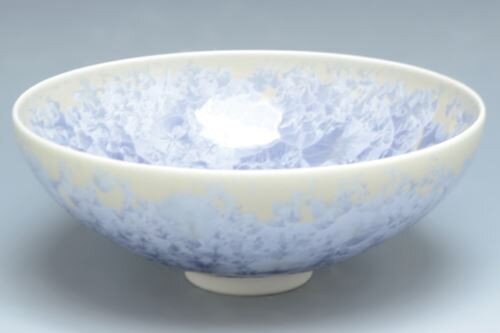
Hira-jawan (平茶碗), the flat bowl. Wide and shallow, with a large surface of tea open to the air. The tea cools more quickly and looks cool, which is why flat bowls are brought out in summer. They need a little more care when whisking, since the walls are low.
Tsutsu-jawan (筒茶碗), the cylindrical bowl. Tall, with straight sides and a narrower mouth. Less surface means the tea holds its warmth, and the tall wall warms the hands, so this shape belongs to the coldest months. Bowls between the rounded and cylindrical shapes are called han-tsutsu, “half-cylinder.”
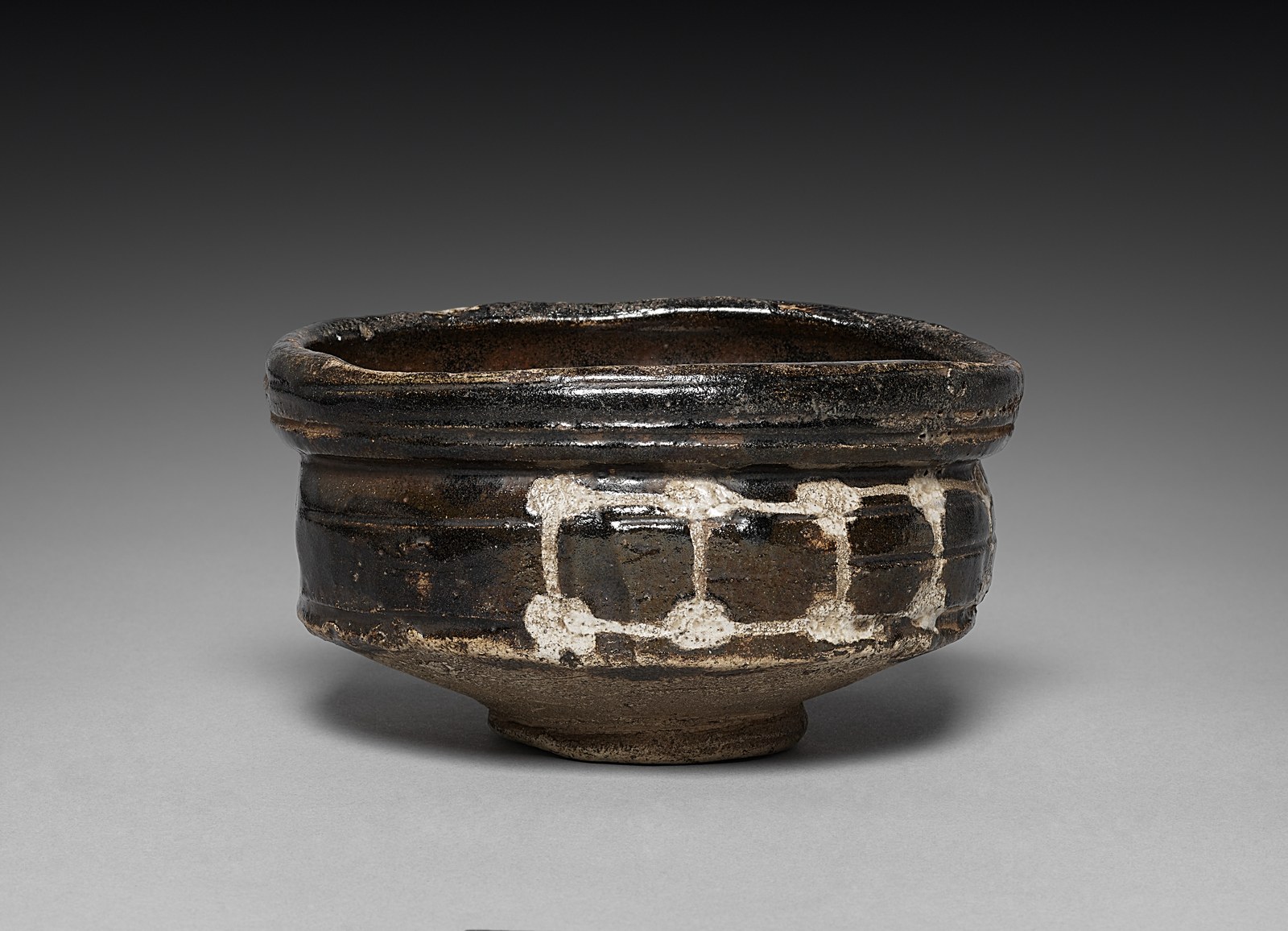
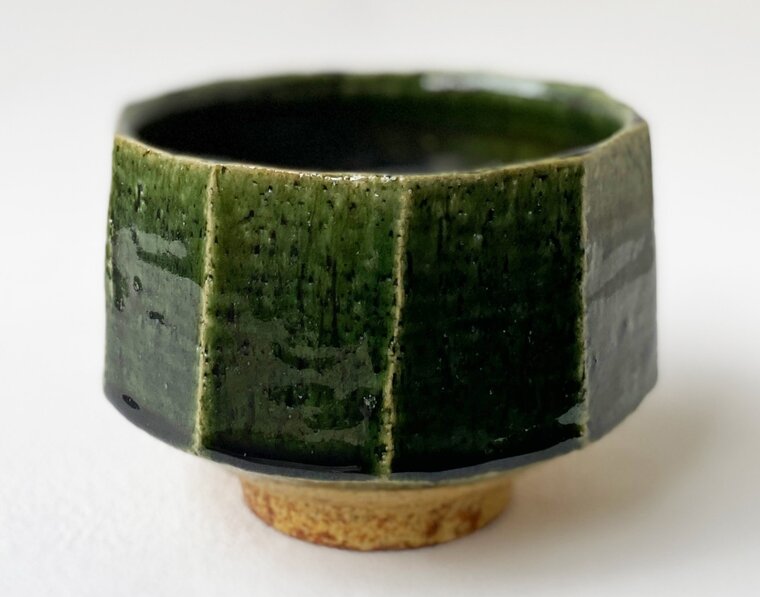
Kutsu-gata (沓形) and faceted bowls. In the late sixteenth and early seventeenth centuries, bowls made in the Mino region in the taste of the tea master Furuta Oribe were pushed out of round on purpose, into an uneven shape likened to the lacquered wooden shoes (kutsu) once worn by court nobles. Today you will also see bowls with flat facets cut into the wall, called mentori (面取). These are less about season and more about how the light falls across the surface.
Painted bowls follow the calendar in their own way. Cherry blossoms appear in spring, morning glories and goldfish in summer, maple leaves in autumn, and plum blossoms in late winter. A seasonal design used in its season is part of the pleasure. Used out of season, it is still a beautiful bowl; it simply speaks a little more quietly.
5. The Clay Behind the Bowl
The material and the place a chawan comes from shape its weight, its warmth, and how it changes over the years. A saying long repeated among tea people ranks the most prized tea-bowl wares as “first Raku, second Hagi, third Karatsu” (ichi Raku, ni Hagi, san Karatsu). It is a matter of taste rather than a rule, but it is a good place to start.
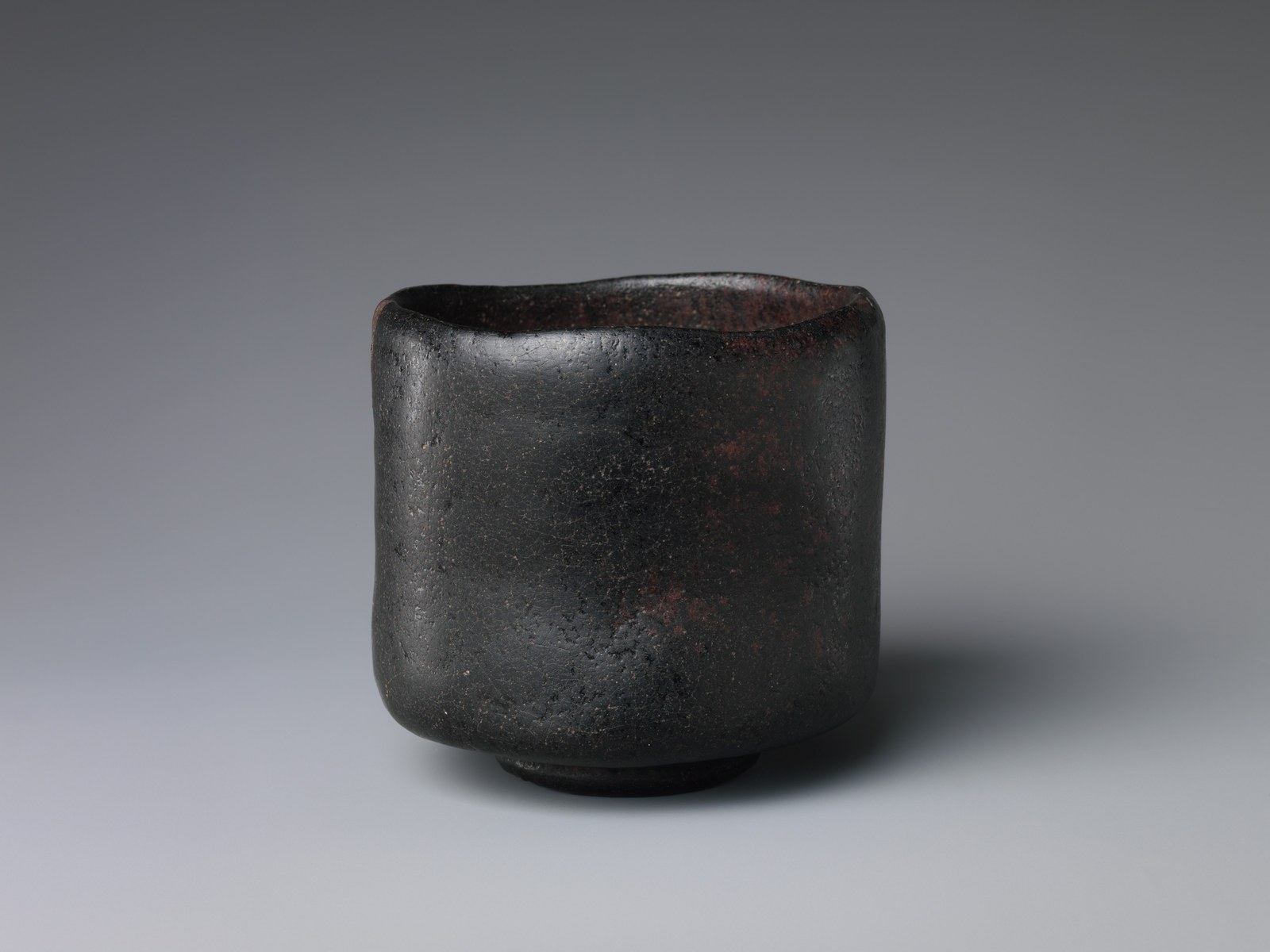
Raku (楽焼), Kyoto. Raku bowls are shaped by hand rather than thrown on the wheel, and fired at a comparatively low temperature. The technique began in Kyoto in the late sixteenth century with the potter Chōjirō, working under the guidance of the tea master Sen no Rikyū. The result is a soft, light body that is often described as holding heat well, so the bowl feels warm rather than hot. Red raku and black raku are the two classic types; black raku is pulled from the kiln while still glowing and cooled in the open air. Many Kyoto potters today also make bowls in the raku style, in the same red and black.
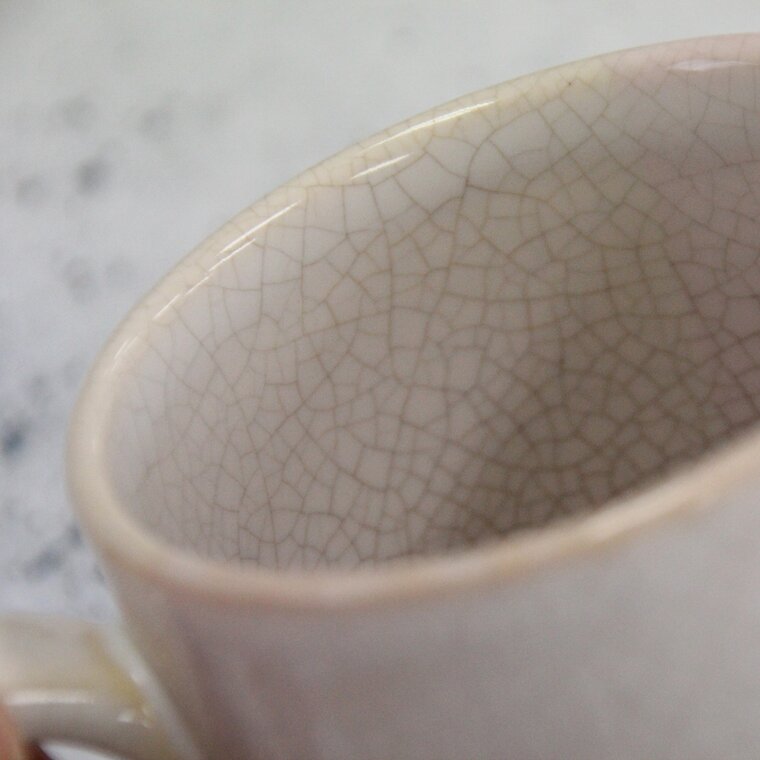
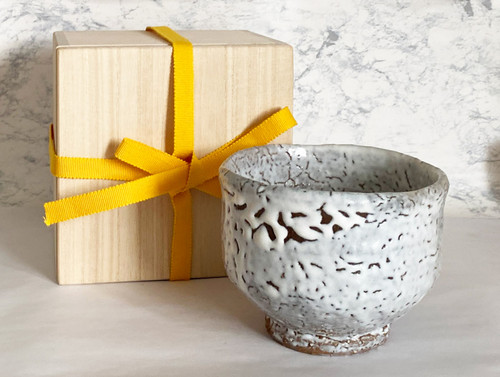
Hagi (萩焼), Yamaguchi. Hagi clay is soft and coarse, and its glaze is covered in fine crackle. Over years of use, tea slowly enters those fine lines and the color of the bowl deepens and shifts, a change tea people have long called “the seven transformations of Hagi.” The foot is often left unglazed and slightly rough. More about this is in our guide to Hagi ware.
Karatsu (唐津焼), Saga. Plain, earthy bowls with simple brushwork or none at all, valued for their directness. In our collection there are Karatsu bowls as well as bowls made in the Karatsu style by Arita kilns.
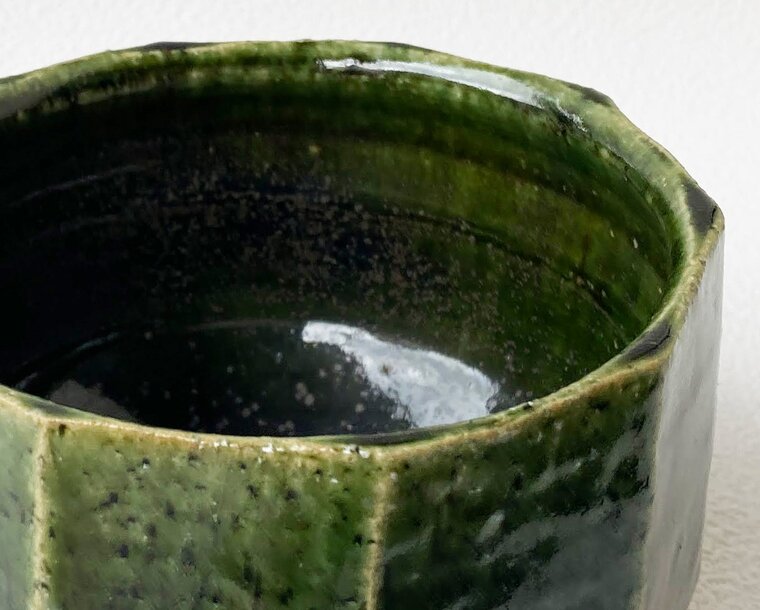
Mino (美濃焼), Gifu: Shino and Oribe. In the late sixteenth century, the Mino kilns produced bowls shaped by the tea taste of the time. Shino (志野) is covered in a thick, milky white glaze, often with soft pinholes and a warm blush where the glaze thins. Oribe (織部) is known for its deep green copper glaze and bold, uneven forms. Both are still made in Mino today, alongside many modern glazes. More on the region is in our guide to Mino ware.
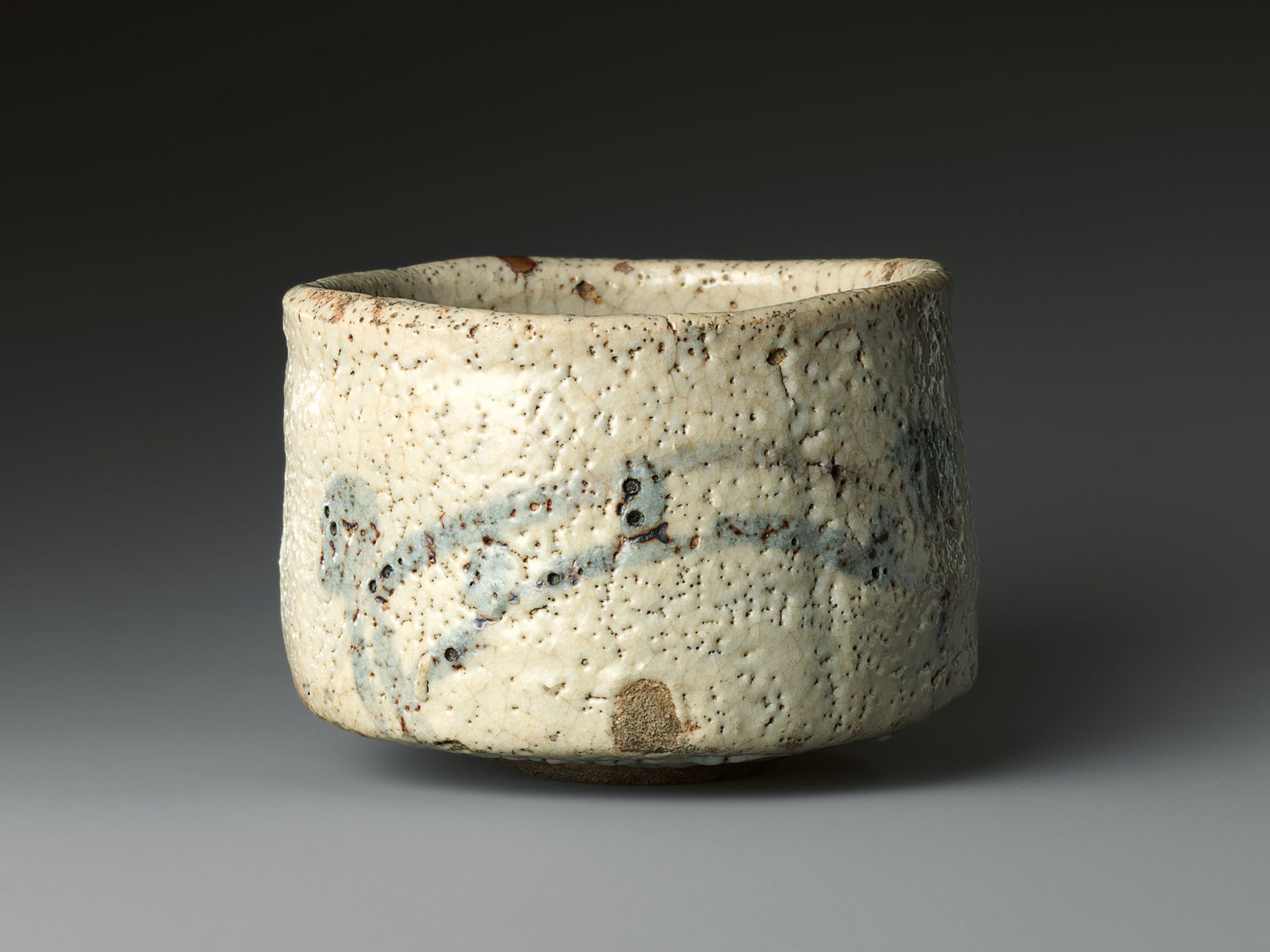
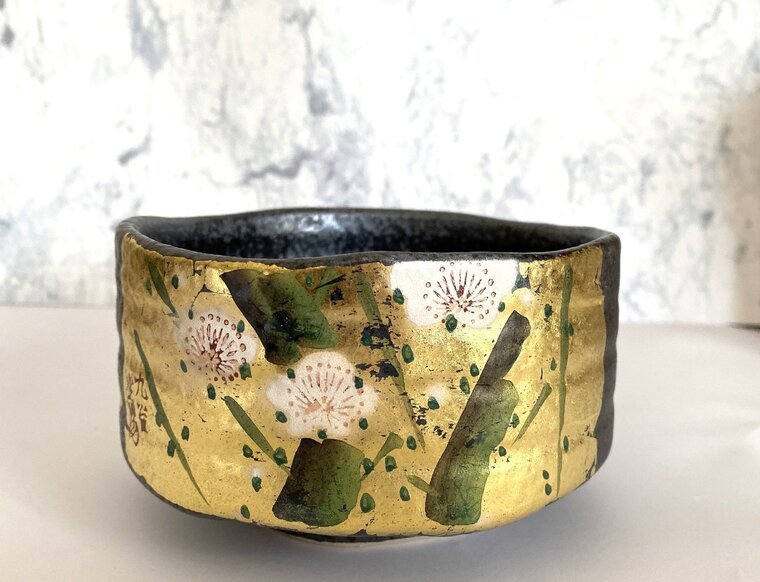
Kyoto and Kiyomizu ware (京焼・清水焼). Kyoto potters work in almost every style, but they are especially known for painted bowls: seasonal flowers, auspicious figures, fine overglaze color. If you are looking for a bowl with a clear picture on it, Kyoto is where much of that tradition lives.
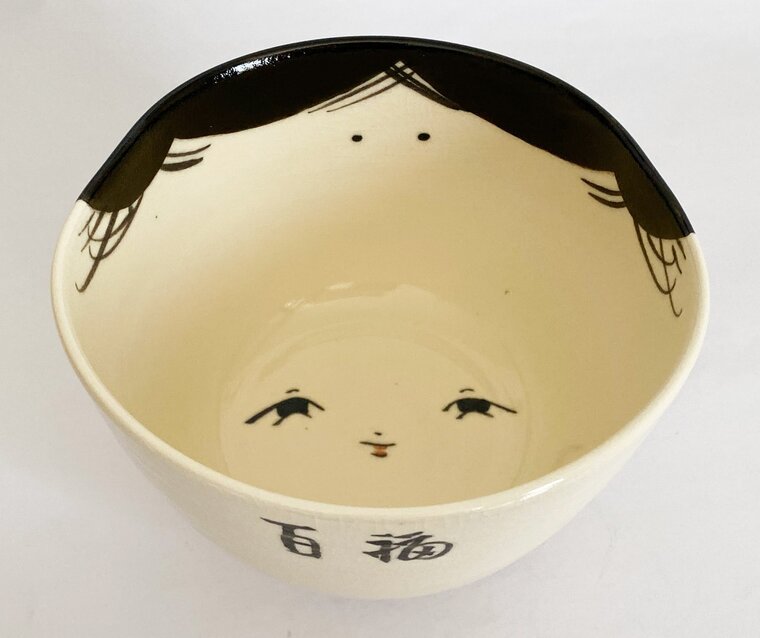
Porcelain: Kutani, Arita, Hasami. Porcelain bowls are thinner, smoother, and lighter in color than pottery. They are less common in formal tea, where pottery bowls are traditional, but they are well loved for everyday matcha. The white interior shows the green of the tea brightly, and the hard surface does not absorb color. Kutani bowls in particular are known for rich overglaze painting and gold.
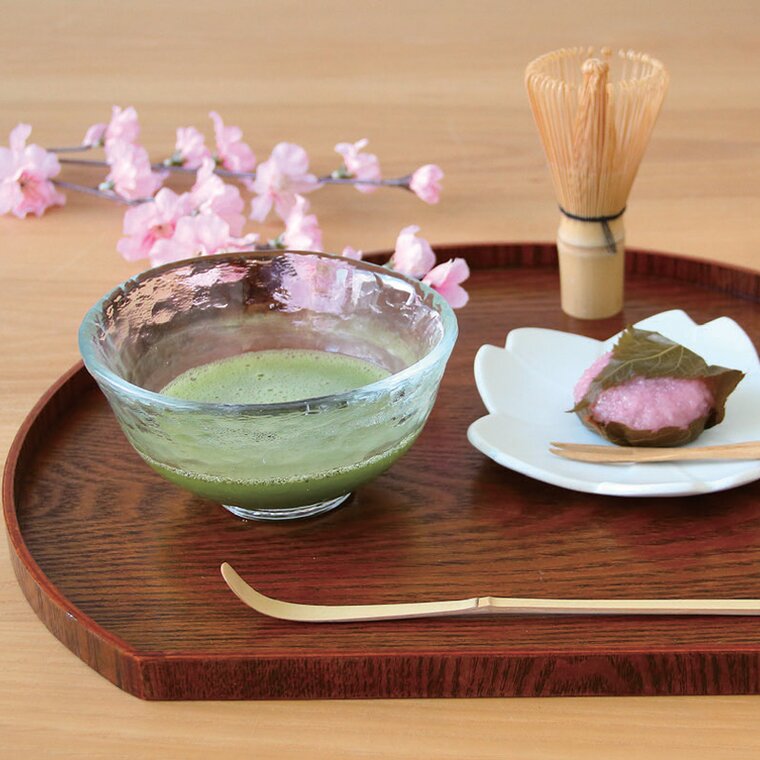
Glass: Edo glass and Tsugaru vidro. Glass chawan are a summer tradition. Tea in a glass bowl looks especially fresh, and the bowl itself feels cool. Edo glass comes from Tokyo, and Tsugaru vidro from Aomori, where the glass is often colored to suggest the seasons. Some glass bowls are made from heat-resistant glass and others from ordinary soda glass, so the product notes for each piece are worth reading before pouring in hot water.
6. Looking Inside: Color, Texture, and the Green of the Tea
Because you spend the most time looking into a chawan, the interior deserves its own moment.
Color. A dark interior, such as black raku or a deep brown glaze, makes the green of the tea look rich and almost glowing. A white or pale interior, such as Shino or porcelain, makes it look bright and fresh. Neither is better. They simply show the same tea in two different lights.
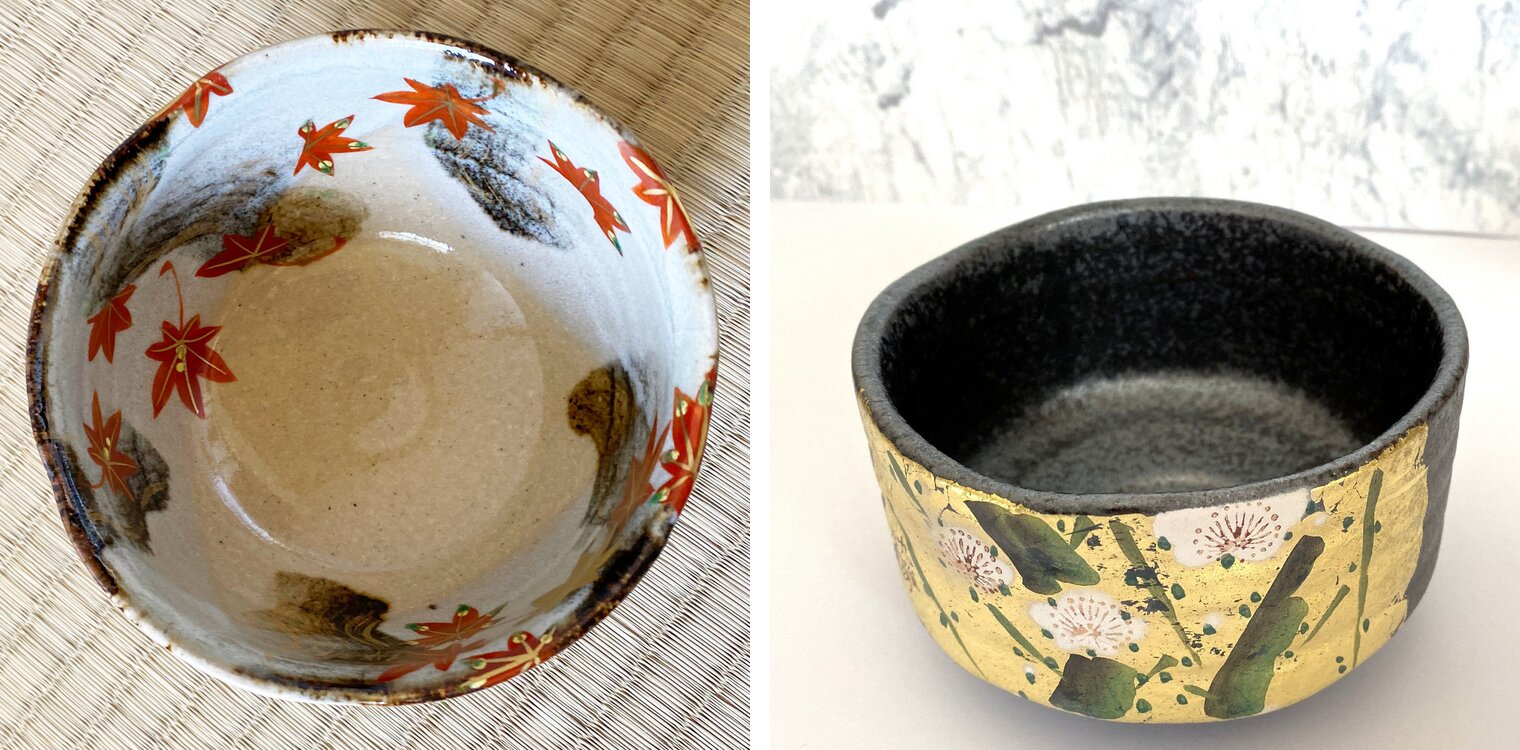
Texture. A smooth interior lets the whisk glide. A very rough or gritty interior can catch on the fine tips of the bamboo, which is one reason most chawan are glazed inside even when the outside is left more natural.
Crackle. Crackled glazes, common on Hagi and some Shino, slowly take on the color of the tea. Some people love watching a bowl change over years; others prefer a bowl that stays as it was the day it arrived. If you are in the second group, a porcelain or glass bowl, or a pottery bowl without crackle, will keep its color.
7. Weight and the Hand
Pick a bowl up whenever you can, or read its measurements closely when you cannot. Raku is usually the lightest for its size. Thick pottery bowls from Mino or Shigaraki feel more grounded. Porcelain is often thinner but dense.
There is no correct weight. A heavier bowl feels steady and calm; a lighter one feels intimate and easy to lift. Look also at the foot: a taller foot gives the fingers something to rest on, while a low foot makes the bowl sit closer to the palm.
8. Living with a Chawan
Every bowl comes with its own needs, and the maker’s notes are the best guide. A few things hold for most:
- Before first use, rinse the bowl in warm water. For absorbent pottery such as Hagi, some makers suggest soaking it in water before its first use; follow the note that comes with the piece.
- Before each use, many people warm the bowl with hot water and then empty it. A warm bowl keeps the tea from cooling too quickly, and with absorbent pottery, a damp surface takes up less color from the tea.
- After use, rinse with warm water. Mild dish soap is fine for most glazed and porcelain bowls; for absorbent pottery, follow the maker’s guidance.
- Dry fully before putting away, especially pottery with crackle or an unglazed foot, which hold moisture longer than they appear to.
- Microwave and dishwasher use depends on the piece. Some glass and porcelain bowls are labeled as suitable; bowls with gold or silver decoration are generally kept out of the microwave. Check each product’s notes rather than assuming.
- A crack or a leak is a sign to stop using the bowl for drinking. A bowl can still be kept and enjoyed as an object.
9. Pieces in Our Collection
A few examples of the shapes and wares described above. These are examples, not recommendations; the right bowl is the one that feels right to you.
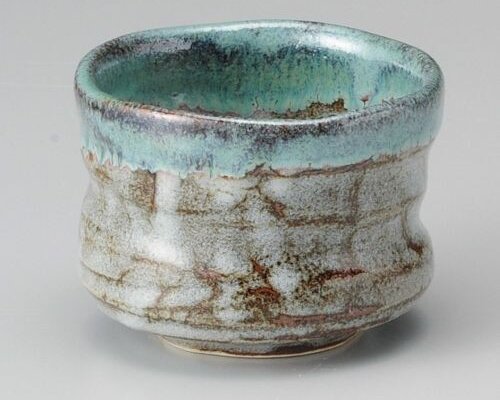
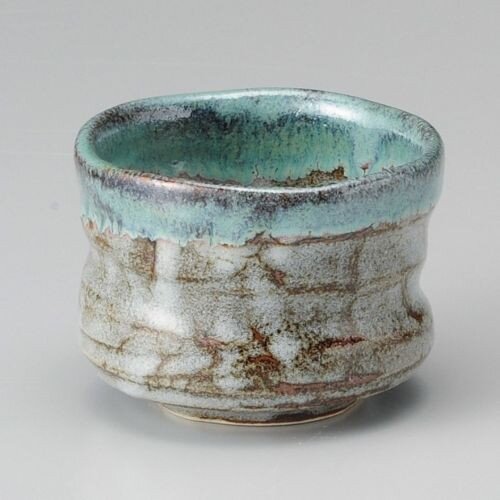
A smaller bowl — Mino ware. An 11 cm bowl sold as a Hime Chawan, in a turquoise-blue glaze sold as Ao Shino (“blue Shino”), sized for smaller hands and lighter servings. (Mino ware Ao Shino Hime Chawan)
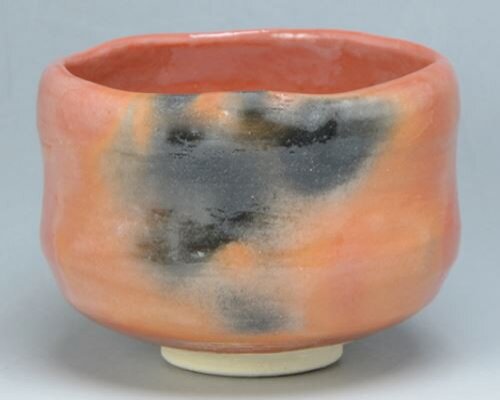
Red raku in the Kyoto style — Kiyomizu ware. A red raku bowl by a Kyoto potter, 11 cm across, with the marks the fire leaves on its surface. (Kyo Kiyomizu ware Aka Raku matcha bowl)
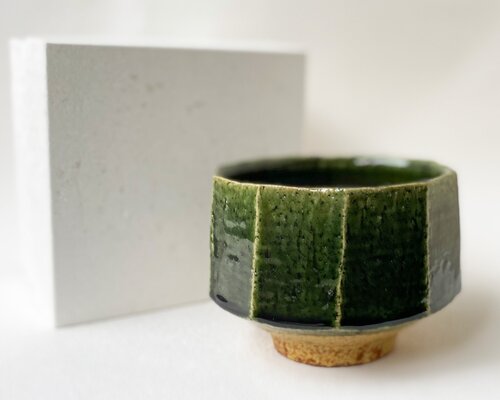
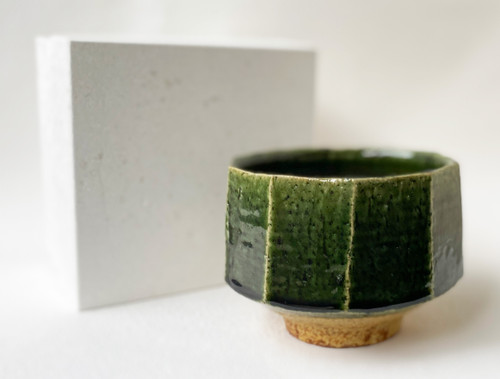
A faceted Oribe bowl — Kiyomizu ware. Coarse clay cut into strong facets and finished in Oribe green, 12 cm across and 9 cm tall. (Kyo Kiyomizu ware Oribe Mentori chawan)
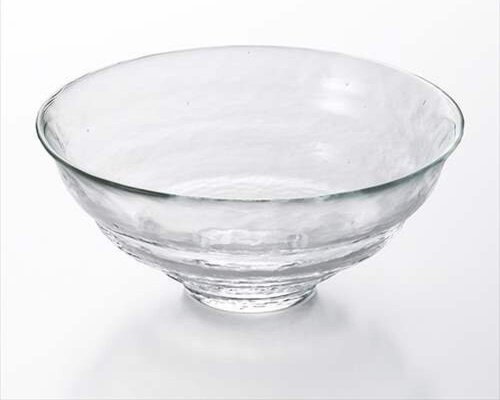
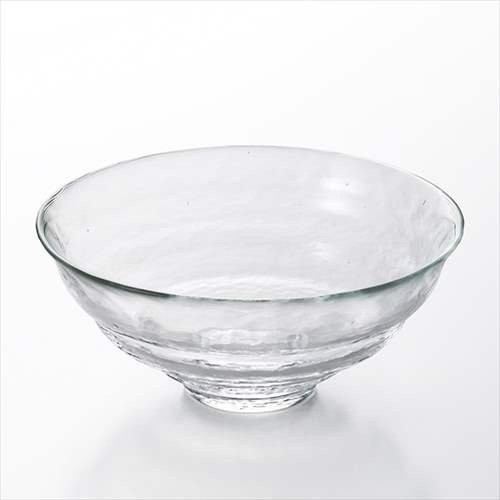
A wide glass bowl — Tsugaru vidro. A wide glass chawan from Aomori, made from heat-resistant glass according to its product notes. (Tsugaru vidro glass matcha bowl)
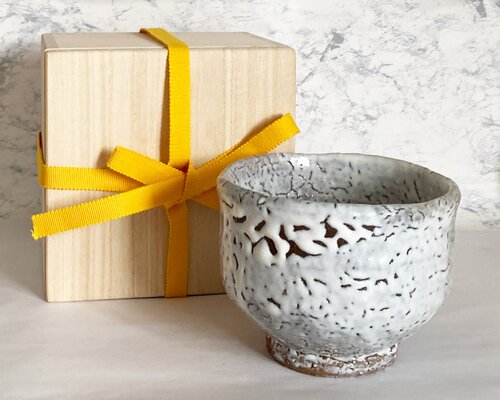
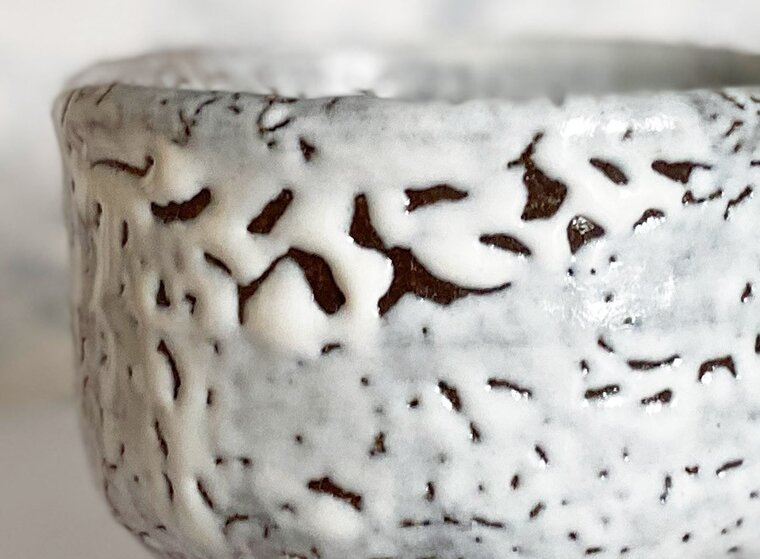
A Hagi bowl that changes with use — Hagi ware. A crackled Hagi chawan by Kunisuke Nakamura, its white glaze drawn into a pebbled, shrunken texture known as kairagi, with the clay showing through in places. (Hagi ware Kairagi chawan by Kunisuke)
10. A Note from the Shop
We carry more than three hundred matcha bowls, and looking across them, one thing is clear: there is no single correct bowl. A bowl from a famous kiln and a simple bowl made for daily use whisk the same tea. What changes is how the bowl feels in your hands, and what you see when you look into it.
If one detail in this guide stays with you, let it be the size. A bowl of about 12 cm that you reach for every morning will teach you more about matcha than a perfect bowl kept in its box.
11. Frequently Asked Questions
Q: I’m new to matcha. How do I choose my first bowl?
Start with size and shape rather than ware. A rounded bowl of about 12 cm across and 7 to 8 cm tall gives the whisk room and sits comfortably in two hands. A pale interior makes it easier to see how well the tea has been whisked. After that, choose the clay and design you enjoy looking at.
Q: Is an inexpensive chawan worse for making matcha?
Not in itself. A well-made everyday bowl of the right size whisks just as well as a costly one. Price usually reflects the maker, the kiln, hand work such as painting or shaping, and sometimes a wooden box. What matters for daily use is size, a smooth interior, and how the bowl feels to hold.
Q: Are chawan still made and used in Japan today?
Yes. Tea bowls are made in almost every major ceramic region in Japan, from Kyoto and Mino to Hagi, Karatsu, Kutani, and Arita. They are used in tea ceremony practice and, more and more, simply at home for a daily bowl of matcha.
Q: Can I pour hot water into a glass matcha bowl?
It depends on the glass. Some glass chawan are made from heat-resistant glass and are labeled for hot water and even the microwave; others are made from ordinary soda glass and are better suited to cooler or iced matcha. Each product page lists the material, and that note is the one to follow.
Q: Can I make a matcha latte in a chawan?
Yes. Many people whisk the matcha in the chawan with a little water, then pour it over milk in a glass or cup. A bowl with a slightly wider mouth makes pouring easier.
Q: My Hagi bowl is changing color. Is something wrong?
No. Tea gradually enters the fine crackle of the glaze and darkens it. This slow change is one of the reasons Hagi bowls have been treasured by tea people for centuries. If you would rather slow it, warming and wetting the bowl before each use is often said to help.
Thank you for reading.
— from Osaka, Team Manekineko-Ai
PIECES IN THIS ARTICLE
Three bowls from this article
CONTINUE READING
MORE IN KOGEI →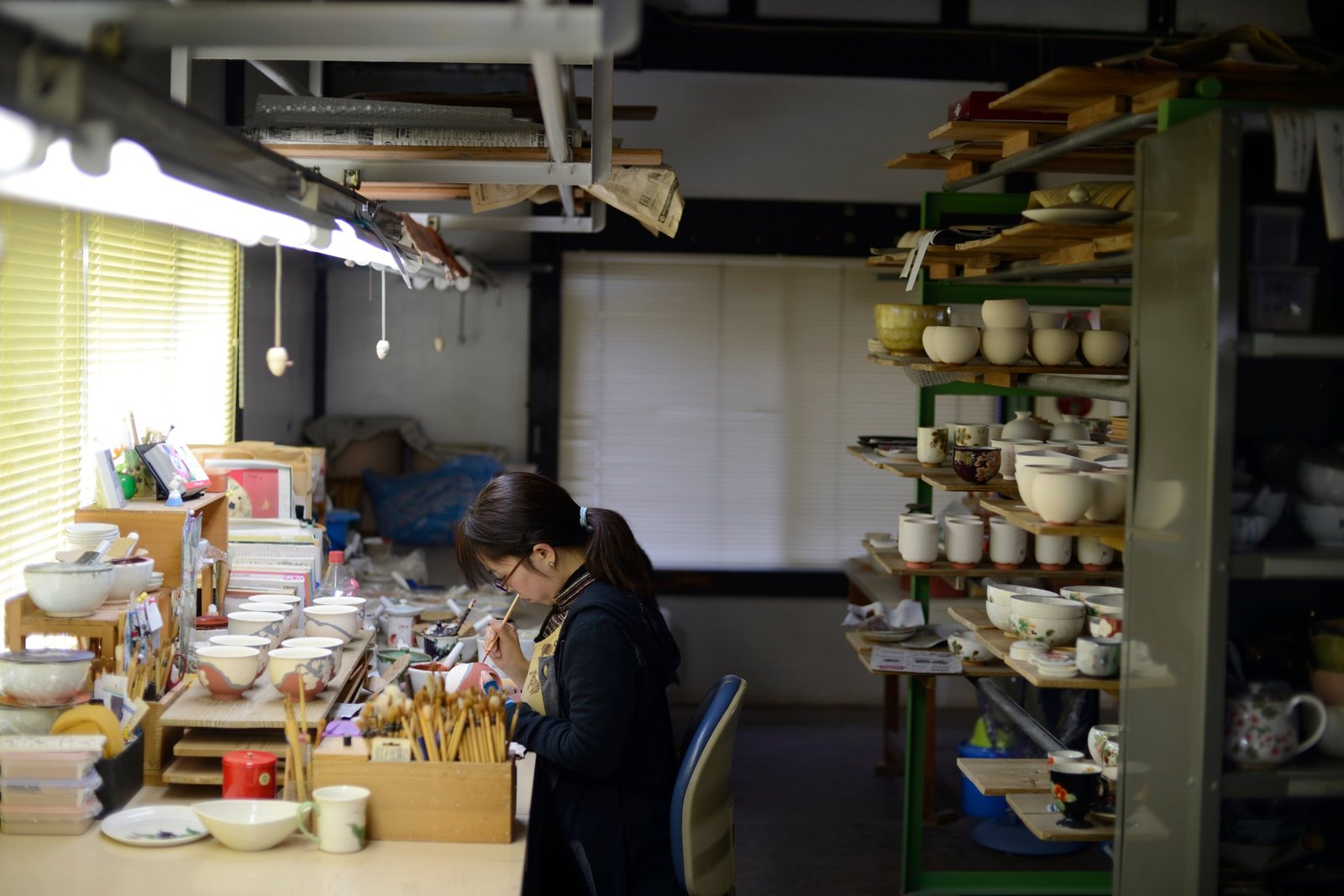 KOGEI
Kyo-yaki and Kiyomizu-yaki: A Guide to Kyoto’s Many-Styled Pottery
How to read Kyoto’s many styles, from overglaze color and gold to kōchi, crystalline glaze and raku.
 KOGEI
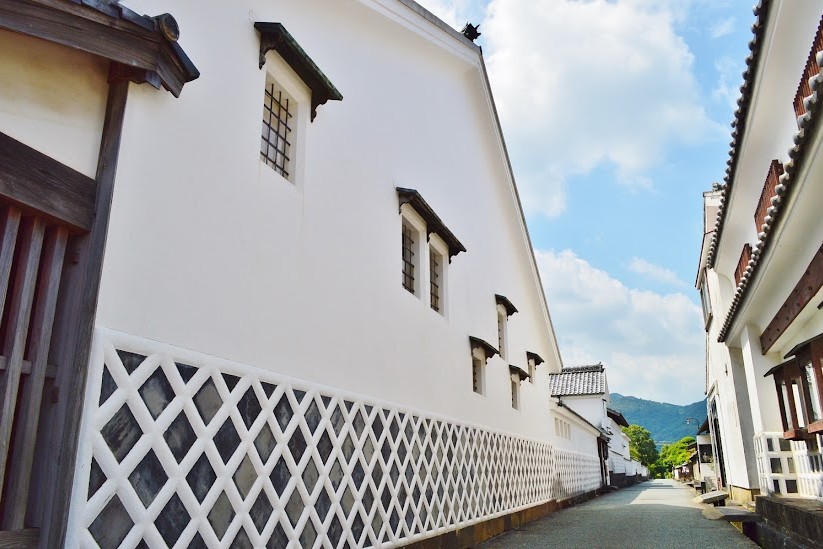
Hagi Ware — A Guide to Japan’s Slowly Changing Pottery
Pale, crackled glaze that slowly changes color with use, and how to choose a piece.
 KOGEI
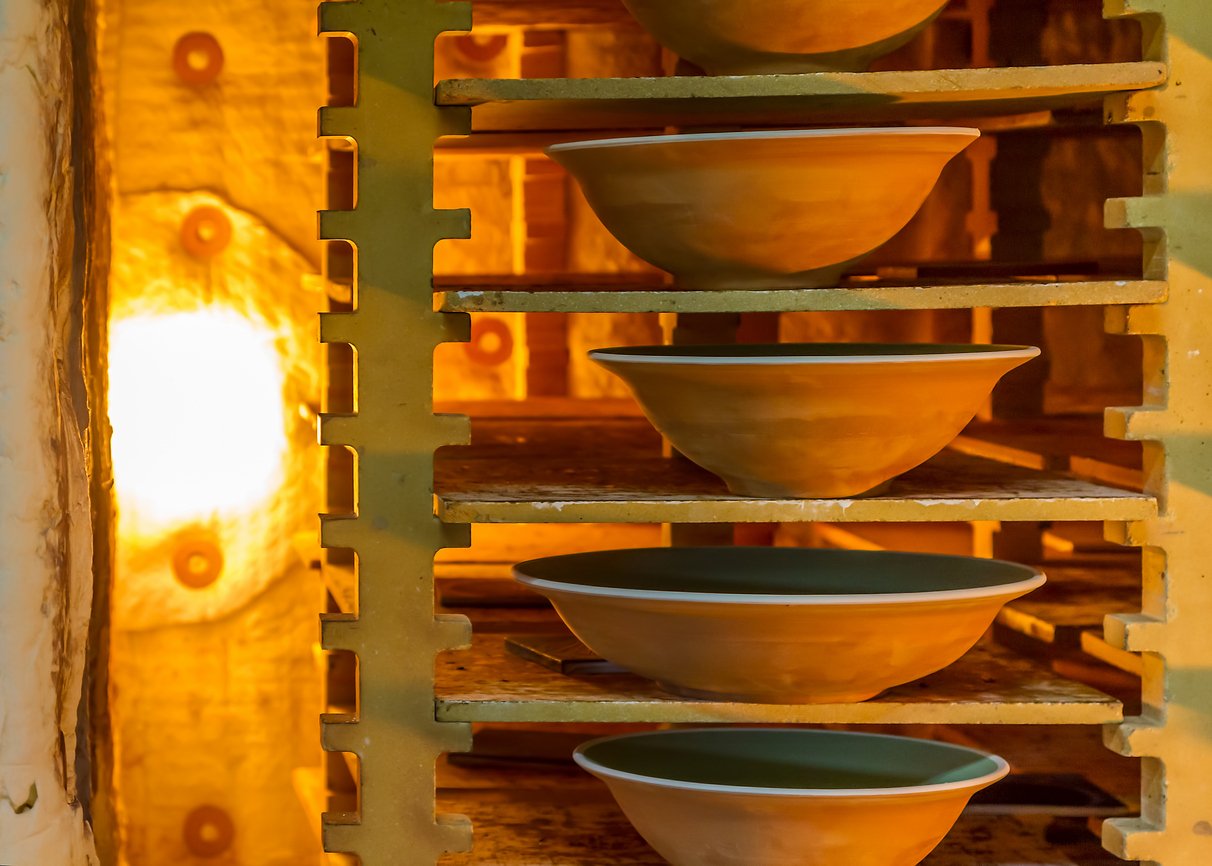
What Is Mino Ware? The Everyday Japanese Ceramic You Probably Already Own
The region behind Shino and Oribe, and much of the everyday tableware made in Japan.