
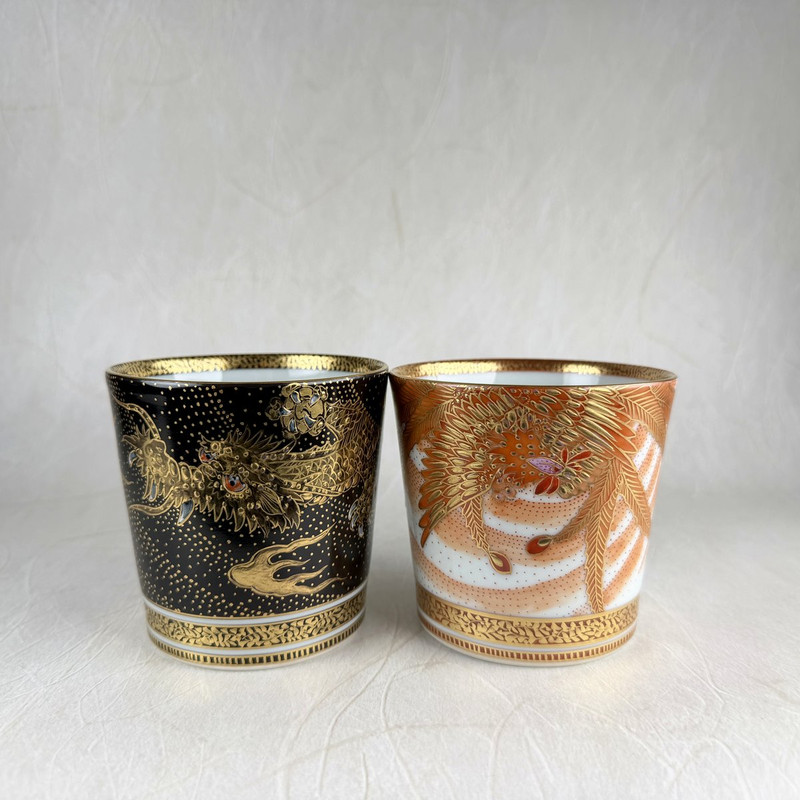
Kutani-yaki isn’t something you simply store away.
It’s something you reach for — in the morning, at the table, in small quiet moments.
And caring for it is much simpler than it seems: warm water, a soft touch, and a little attention. This guide walks you through how to use, wash, and store your Kutani pieces — so the colors stay luminous in your home for many years.
What Makes Kutani-yaki Special (and a Little More Delicate)
The beauty of Kutani comes from overglaze painting — and that’s also why it needs a bit more care.
Most Japanese porcelain — think of plain white Arita or Hasami pieces — is decorated either with cobalt blue painted under the glaze, or not at all. Underglaze decoration is sealed beneath a thick, hard layer of glass and is essentially permanent. You could scrub it with steel wool and it would not fade.
Traditional Kutani-yaki is different. The famous five colors — red, yellow, green, navy, and aubergine purple, together called Kutani-gosai — are painted on top of the already-finished glaze, and then the piece is fired a second time at a lower temperature (around 800°C) to fuse the enamel to the surface. The Japanese name for this technique is iro-e (色絵) or uwae-tsuke (上絵付け), which simply means “overglaze painting.”
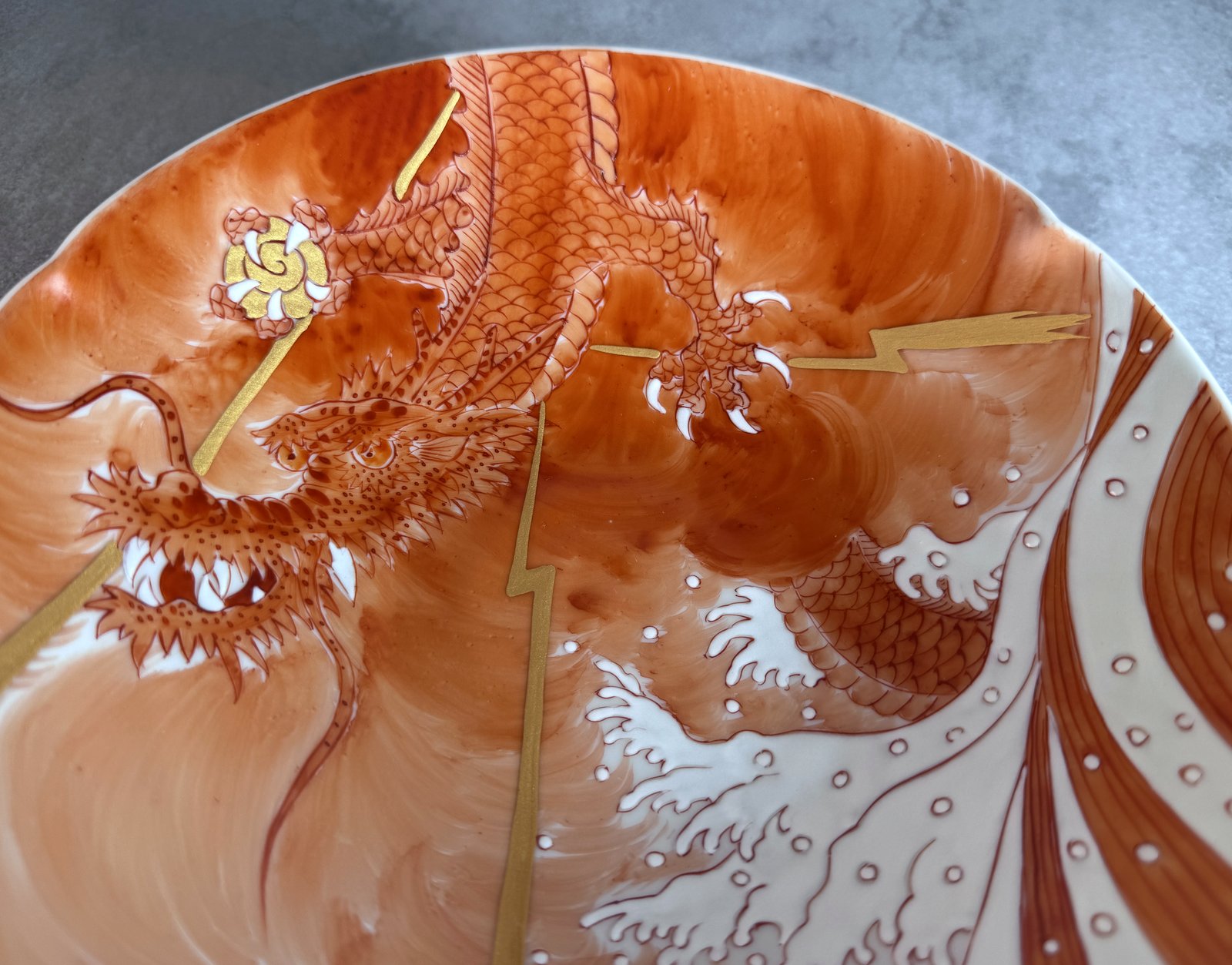
This second, softer layer is what gives Kutani its jewel-like glow. It is also why Kutani asks for a little more thought at the kitchen sink. The enamel sits slightly raised on the surface, and it can be worn down over many years by three things in particular:
- Abrasion — metal cutlery, scouring pads, or another piece rubbing against it in the sink.
- Strong detergents — especially the high-alkali tablets used in dishwashers.
- Sudden temperature changes — which can craze the enamel even when the porcelain body itself is fine.
None of these damage a piece instantly. The harm is cumulative — small losses, repeated for years — which is why most Kutani pieces that look tired in antique shops were never broken. They were simply washed the wrong way.
With just a little care, Kutani pieces are perfectly suited for everyday use.
The Three Kinds of Kutani You Will Meet
Not every Kutani piece needs exactly the same care. When you are choosing a piece, or deciding how careful to be, it helps to know which kind you have.
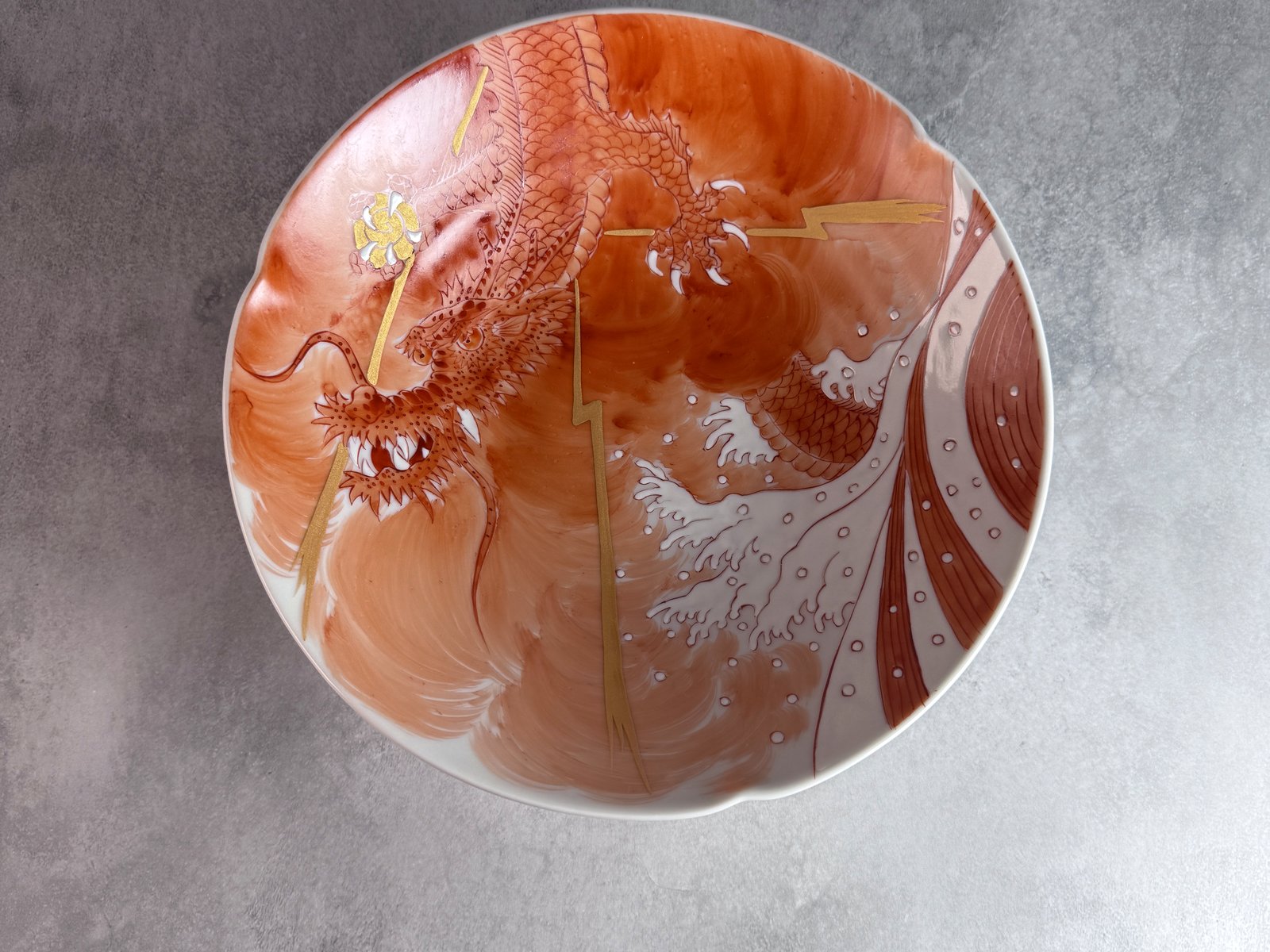
Traditional Kutani-gosai (the five colors)
The classic style — red, yellow, green, navy, aubergine — painted in raised enamel on a white or pale body. This is what most of this guide is about, and the advice here applies fully.
Plain white or underglaze-only Kutani
Pieces with only a cobalt-blue pattern or no decoration at all behave like ordinary porcelain. They are more forgiving: dishwashers are technically fine, though hand-washing still keeps them looking newer longer.
Gold- and silver-leaf Kutani (kindei / gindei)
In the revival style known as Saiko-Kutani, and in many modern luxury pieces, real gold or silver leaf is applied as part of the decoration. Kindei (金泥) means “gold leaf” and gindei (銀泥) means “silver leaf.” These are the most delicate pieces of all. They should never be scrubbed, never go in the dishwasher, and silver pieces should be stored away from eggs, mustard, and seafood (sulphur in those foods darkens silver).
If you are unsure which kind you have, treat it as traditional Kutani-gosai. That level of care is safe for every piece.
How to Wash and Use Kutani Day-to-Day
Here are the small habits that protect your Kutani — nothing complicated, and most of them take less than a minute.
Before first use
Rinse with warm water and a soft sponge. No soap needed. Check the foot ring (the unglazed bottom that lets the piece sit flat) — if it feels rough, rest the piece on a cloth or felt pad to protect your table.
Washing
- Warm water, not hot. Very hot water hitting a cool piece is the most common cause of enamel crazing.
- A soft sponge or cotton cloth. Microfibre is fine. No scouring pads, no “heavy-duty” scrubbers.
- A small amount of mild dish soap is acceptable. Avoid powdered cleansers and anything containing bleach.
- Wash one piece at a time when you can. Two Kutani pieces knocking together in a soapy bowl are quietly damaging each other.
- Rinse, pat dry with a soft cloth, then let it air-dry fully before putting it away.
Everyday use
- Warm the piece with a little warm water before pouring in hot tea or soup. This is especially important for thin-walled sake cups and yunomi (casual tea cups).
- Use wooden or bamboo utensils on Kutani plates when you can. Knives and forks will, over years, leave fine grey scratches.
- Slip a soft cloth or paper napkin between stacked pieces in the cupboard.
What to avoid
- The dishwasher. Modern dishwasher detergents slowly etch enamel over hundreds of cycles. The reds dull first.
- The microwave. Gold and silver leaf can arc and scorch. Uneven heating can hairline-craze the enamel layer on plain pieces too.
- Long soaking, especially for any piece with gold or silver leaf — it can loosen the adhesive that holds the leaf in place.
Bringing Kutani into Daily Life
Kutani-yaki was made to be used. Tea bowls, sake cups, small dishes, decorative plates — all of them last longer and age more beautifully when they are part of daily life, not locked behind glass.
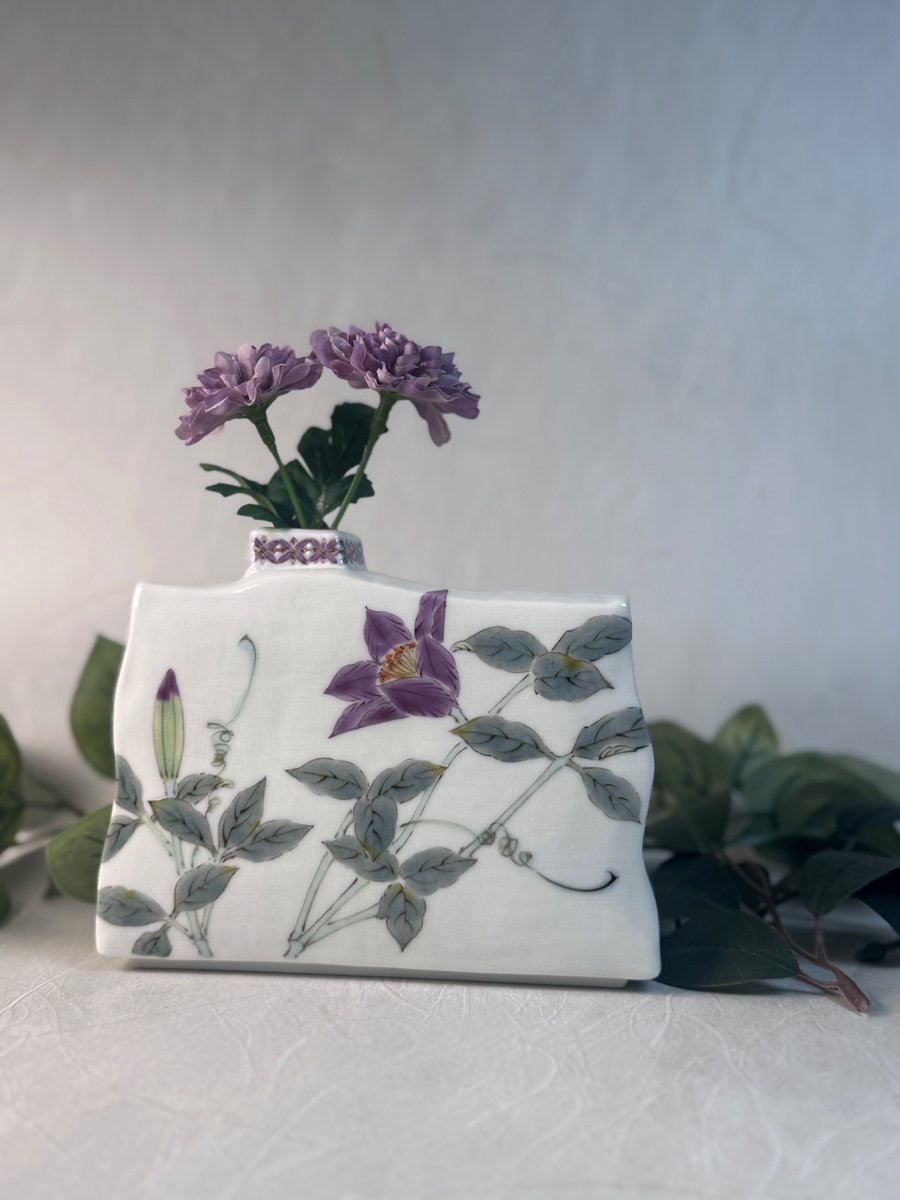
A good way to start is with pieces that match a small ritual you already have. If you drink green tea in the morning, a pair of Kutani yunomi (like our Pair Yunomi Ginsai two-color set) makes the morning cup feel a little more intentional. If you host tea or matcha for friends, a single hand-painted chawan (matcha bowl) becomes the centerpiece of the evening. And if you want something small to begin with, a pair of hashioki (chopstick rests) is the gentlest way to let Kutani into your table — they cost less than a bowl, they lift the whole table setting, and they are almost impossible to damage in normal use.
The rhythm is simple: use the piece, rinse it carefully, let it breathe between uses. Over months and years, the piece stops feeling like an “expensive object” and becomes a quiet part of your home.
Editor’s Picks

Chawan — Matcha Bowl with Gold Cloud, Sakura, and Fuji. Our favorite single-piece Kutani for anyone drawn to matcha. The painted composition — gold cloud, cherry blossoms, and Mt. Fuji — sits beautifully against the pale body, and the wide form holds heat gently for a proper matcha whisk. Hand-wash only, and warm the bowl before you pour. A piece that rewards the small daily ritual of a whisked bowl. (See the piece)

Pair Yunomi — Ginsai Two-Color. Ginsai means “silver glaze,” and this pair uses a restrained two-tone palette rather than the full five colors — quieter, more everyday. They are our recommendation for anyone who wants Kutani on the table every morning without feeling precious about it. As a pair, they make a thoughtful gift for a couple or a new home. A piece you’ll find yourself reaching for every morning. (See the pair)
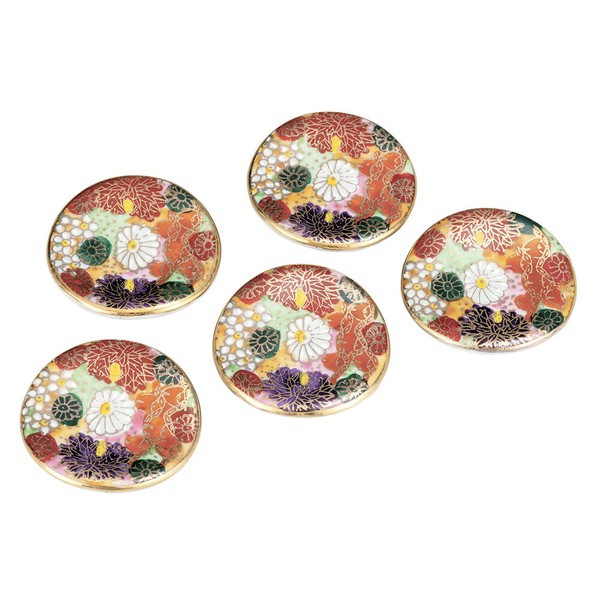
Pair Hashioki — Hanatsume Flower. Kutani chopstick rests shaped and painted as small flowers. Almost nothing this small brings more life to a dinner table. They are also the most forgiving Kutani pieces to own — rarely used with metal, rarely washed roughly, almost never stacked. A good first Kutani piece for anyone unsure about starting with a bowl. (See the pair)
Quick Terms
- Kutani-yaki (九谷焼) — porcelain from the Kaga region of Ishikawa, made since the mid-1600s, famous for bold overglaze painting.
- Kutani-gosai (九谷五彩) — the five classical colors: red, yellow, green, navy, and aubergine purple.
- Iro-e / uwae-tsuke (色絵・上絵付け) — overglaze painting; decoration applied on top of the finished glaze and fired a second time.
- Kindei / gindei (金泥・銀泥) — gold and silver leaf decoration.
- Kodai (高台) — the foot ring at the bottom of the piece, usually unglazed so the piece sits flat.
- Kintsugi (金継ぎ) — traditional repair that mends cracks and chips with gold-coloured lacquer, turning a break into a new kind of beauty.
- Yunomi (湯吳) — a casual, everyday Japanese tea cup, taller than it is wide.
- Chawan (茶碗) — a tea bowl, used here for matcha.
FAQ
Q: Is Kutani-yaki dishwasher safe?
Technically, most traditional Kutani pieces will not crack the first time you put them in a dishwasher — but we strongly recommend against using one. Modern dishwasher detergents are formulated to cut grease at high alkalinity, and over hundreds of cycles that chemistry slowly etches the overglaze enamel. The reds dull first, the gold edging thins, and the contrast that made the piece beautiful softens away. The change is gradual, which is the trap: by the time you notice it, the damage is already significant. A one-minute hand-wash in warm water is always the better choice.
Q: Why is Kutani porcelain more delicate than other Japanese ceramics?
Because its decoration sits on top of the glaze, not beneath it. Plain Arita or Hasami porcelain is painted underneath a thick glass-like glaze and then fired at very high temperature, which makes the decoration essentially permanent. Traditional Kutani is painted in raised enamel on an already-glazed piece and fired a second time at a lower temperature (around 800°C). That second firing fuses the enamel to the surface beautifully, but the enamel layer itself is softer than the porcelain body. It is the painted surface — not the piece as a whole — that needs care.
Q: Can I put Kutani-yaki in the microwave?
We recommend not to. For pieces with gold or silver leaf, it is a firm no: the metallic decoration can arc and leave a permanent scorch mark (and damage the microwave at the same time). For pieces with only enamel decoration, microwaves heat unevenly and the rapid temperature change can cause fine crazing in the painted layer that is invisible at first but spreads with every use. A small pan of warm water, or a kettle, is a gentler way to warm food or tea you plan to serve in a Kutani piece.
Q: How should I care for gold or silver leaf on a Kutani piece?
The rule is simple: wipe, don’t scrub. A soft, damp cloth is enough to clean a gold- or silver-leaf piece after use — even a sponge used vigorously can lift the leaf over time. Keep silver pieces away from eggs, mustard, and seafood, because the sulphur in those foods darkens silver naturally. Do not soak any leafed piece for long; water can loosen the adhesive beneath the leaf. Avoid bleach and ammonia completely. With this level of care, gold leaf from the Edo period is still bright today — the damage that ages it is almost always preventable.
Q: What are the five colors of Kutani-yaki (kutani-gosai)?
The five classical colors are aka (red), ki (yellow), midori (green), kon (navy / deep blue), and murasaki (aubergine purple). They were chosen more than three centuries ago because their mineral-based pigments could survive the second, lower-temperature firing without losing brilliance. Not every Kutani piece uses all five — some styles use only two or three, and the silver-glaze ginsai tradition uses a very different palette — but when a piece is described as “Kutani-gosai,” these are the five you are looking at.
Q: How do I store Kutani-yaki for long periods?
Store Kutani in a dry, stable place, out of direct sunlight. UV light can slightly shift the red enamels over years, and heat cycling above a stove or radiator gently stresses the enamel layer. For seasonal or gift pieces, wrap each one in acid-free tissue paper and, if possible, use the original paulownia wood box. Those boxes are not just packaging — the wood regulates humidity and protects against dust and light. If you stack pieces in a cupboard, slip felt or soft cloth between them so they never touch each other directly.
Q: What can I do if my Kutani piece chips or cracks?
Please do not throw it away. Traditional Japanese repair techniques — kintsugi (golden-seam mending) and, for more complex breaks, yobi-tsugi (a patchwork inlay that uses a fragment from another piece) — can restore a broken Kutani piece in a way that often makes it more beautiful than before. The gold seam of a kintsugi repair sits especially well on a piece that already carries gold-leaf decoration. If you are unsure what to do, please contact us before the pieces are lost; even a clean break can usually be put right.
Explore our Kutani collection — and find the piece that fits your daily rhythm.