
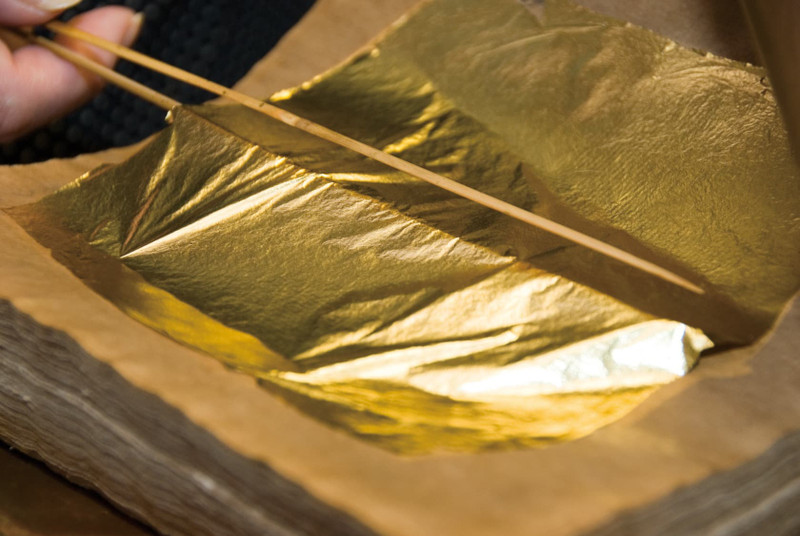
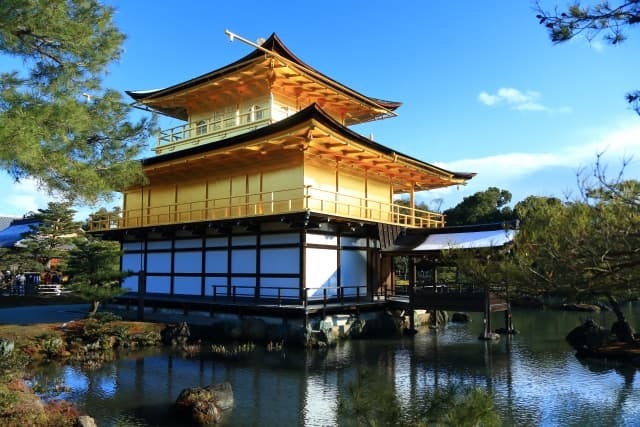
There is a particular kind of light you notice in old Japanese temples — not the blinding brightness of chandeliers or the cold shimmer of polished chrome, but something quieter. A warmth that seems to breathe. It comes from gold leaf pressed so thin it barely exists, catching the light the way a memory catches your attention: softly, and only when you are still enough to notice.
In the West, gold often announces itself. In Japan, it whispers.
This article is an invitation to reconsider what gold means in a home — not as a symbol of wealth or spectacle, but as a small, considered presence. A layer of warmth on a tea bowl. A glimmer on a lacquer tray. The kind of beauty that does not ask to be noticed, but rewards those who pause long enough to look.
What Is Artisanal Gold Leaf — And Why Does It Feel Different?
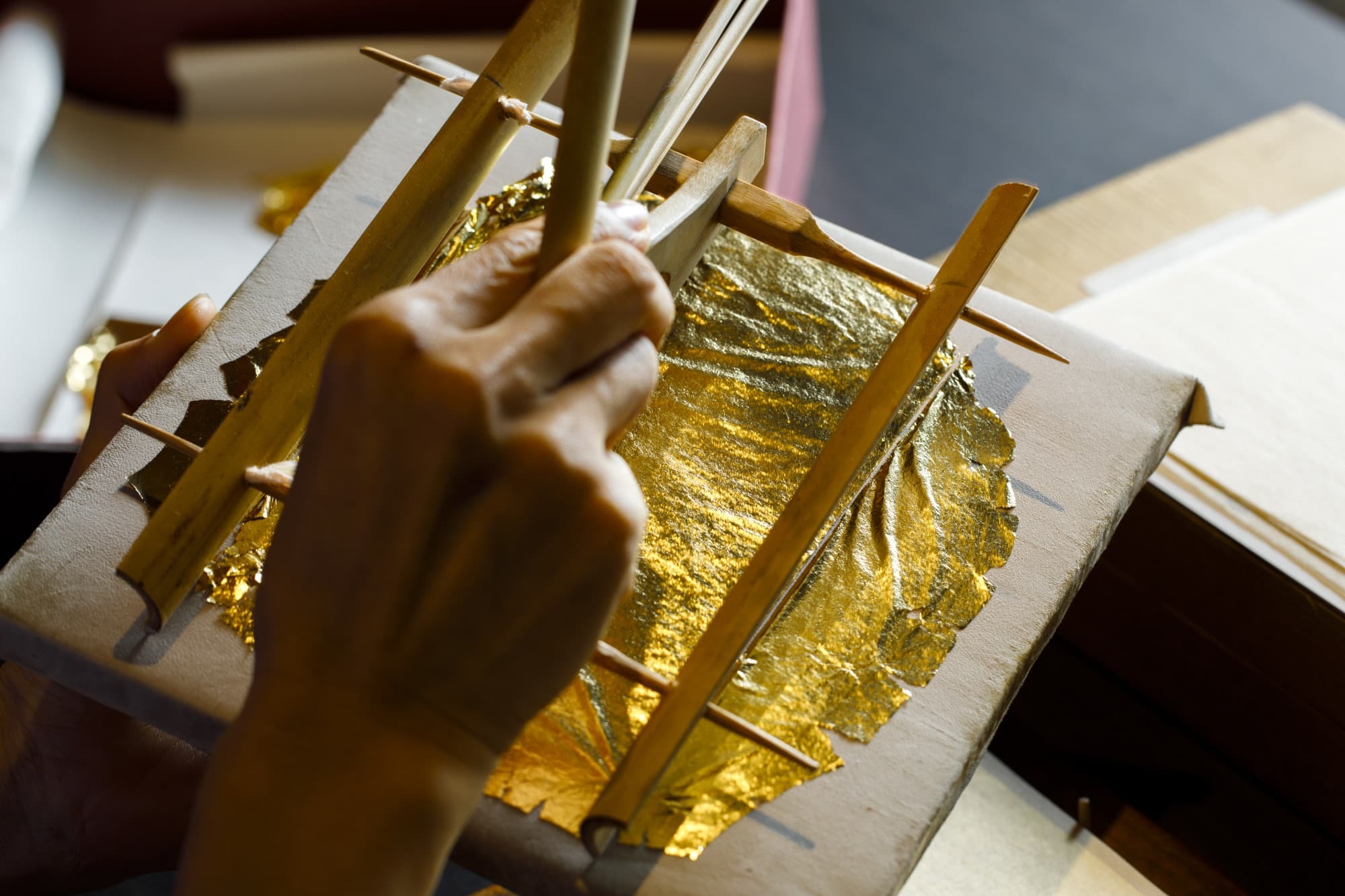
When people encounter genuine Artisanal Gold Leaf for the first time — whether on a piece of Japanese tableware or pressed onto the interior of a temple — they often describe the same sensation: it feels alive.
That quality is not accidental. It is the result of an extraordinary process. A single gram of gold is beaten, folded, and beaten again until it forms a micro-thin layer — so delicate that a breath can tear it, so fine that light does not simply reflect off its surface but seems to pass through it. At this thickness, gold loses its hard, metallic quality and becomes almost translucent, with a warmth closer to amber than ore.
This is not decorative gold in the industrial sense. It requires the kind of attention and physical sensitivity that can only come from years of practice — what Japanese artisans call shokunin kishitsu (職人気質), a spirit of craftsmanship that treats even the humblest object as worthy of one’s complete focus. Master Craftsmanship of this kind is considered not merely a technical skill but a form of discipline — closer in spirit to meditation than to manufacturing.
The result is an object that carries something of that discipline inside it. You feel it when you hold a gold-leafed cup. There is a stillness to it.
Kanazawa Gold: A City Built on Patience
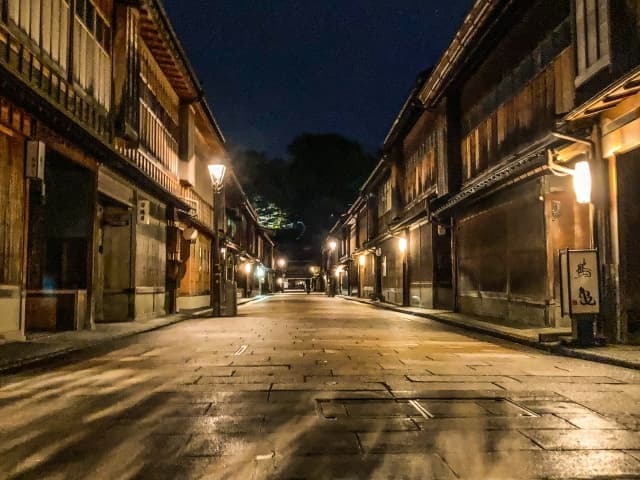
To understand Japanese gold leaf, you need to understand one city: Kanazawa.
Located on the Sea of Japan coast, Kanazawa was the seat of the Maeda clan — feudal lords who, for reasons of political strategy, were forbidden by the Tokugawa shogunate from investing in weapons or military fortifications. So they invested in beauty instead. Over two centuries, Kanazawa became one of the most concentrated centers of traditional arts in all of Japan: Noh theater, Kenroku-en garden, Kutani porcelain, Kaga silk — and above all, gold leaf.
Today, Kanazawa Gold accounts for over 99% of all gold leaf produced in Japan. The city’s climate — humid winters, stable temperatures — turns out to be ideal for the beating process, keeping the gold supple and workable. But the real reason Kanazawa dominates is simpler: the knowledge has been passed down, generation to generation, for nearly four hundred years. There are families in Kanazawa for whom gold-beating is not an occupation but an inheritance.
The word kanazawa (金沢) itself is sometimes poetically read as “marsh of gold” — kin (金, gold) and sawa (沢, marsh or wetland). Whether or not the etymology is historically precise, there is something fitting about it: gold not as a mountain to be conquered, but as something that seeps quietly into the landscape, into daily life.
Gold in Contemporary Japanese Life
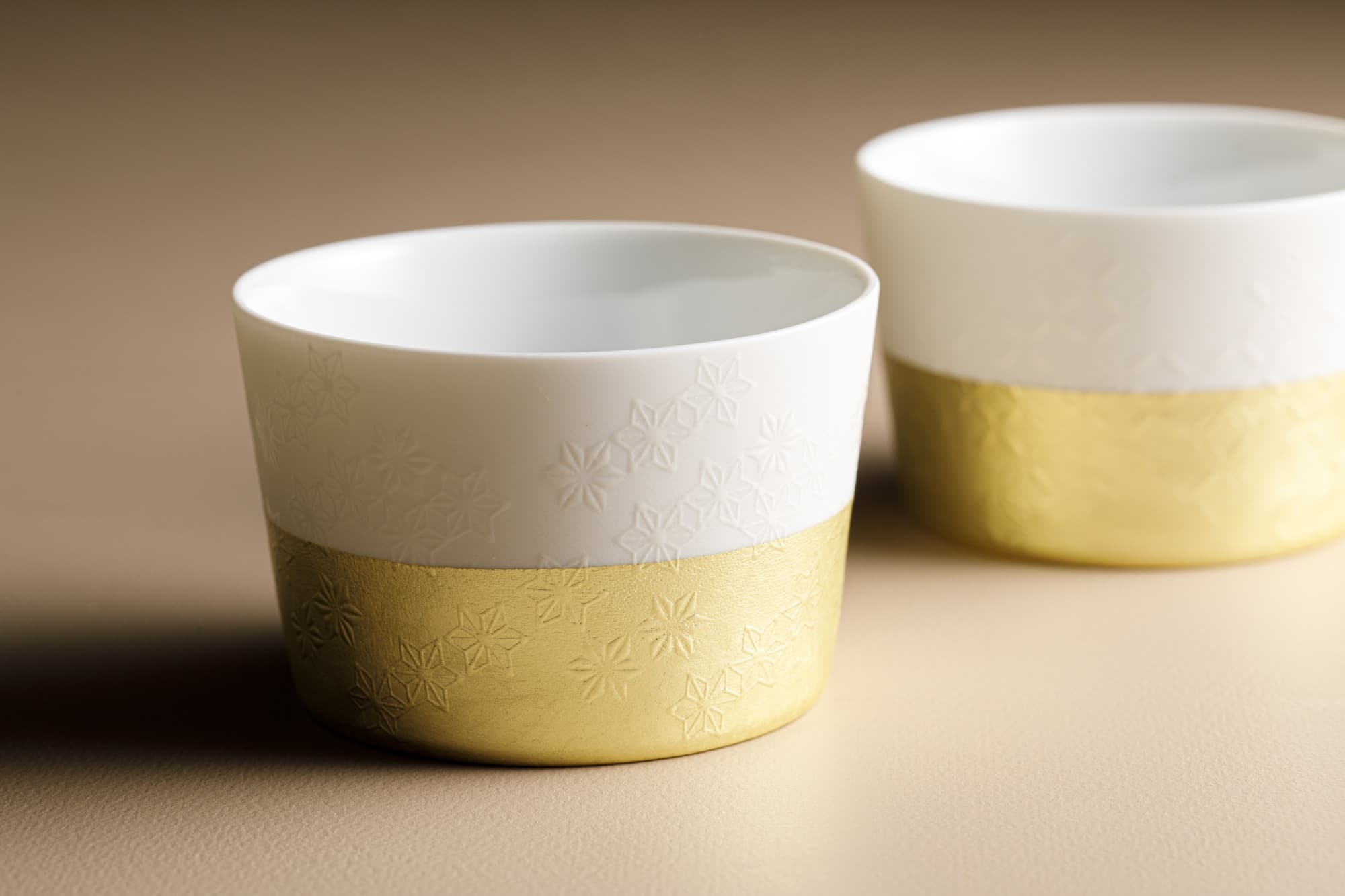
It would be easy to assume that gold leaf belongs only in temples and museums. But walk through the old merchant districts of Kanazawa, or browse the artisan shops of Kyoto’s Gion quarter, and you will find gold quietly present in the most ordinary contexts.
A ceramic coffee mug with a single band of gold at the rim. A lacquer obon tray used to carry afternoon tea. A matcha bowl glazed with foil in the pattern of bamboo leaves. These are not showpieces locked behind glass — they are objects designed to be used, to accumulate the small marks of a life lived with them.
This reflects a distinctly Japanese relationship with beauty: nichijo no bi (日常の美), the aesthetics of the everyday. In this worldview, beauty is not reserved for special occasions. It is built into the Tuesday morning cup of tea. It is present in the tray you carry from kitchen to living room. The gold does not elevate these moments into ceremony — it simply reminds you, gently, that they are worth noticing.
Contemporary Japanese designers and ceramicists have embraced this sensibility enthusiastically. Workshops in Kanazawa now offer visitors the chance to apply gold leaf themselves — to lacquerware, to glass, even to food. In high-end kaiseki restaurants, you might find flakes of edible gold leaf dissolving into a bowl of clear soup, visible for only a moment before they disappear. The gesture is deliberately impermanent. Beauty, in this tradition, does not need to last forever to be real.
A Story in the Gold: Kintsugi and the Art of Broken Things
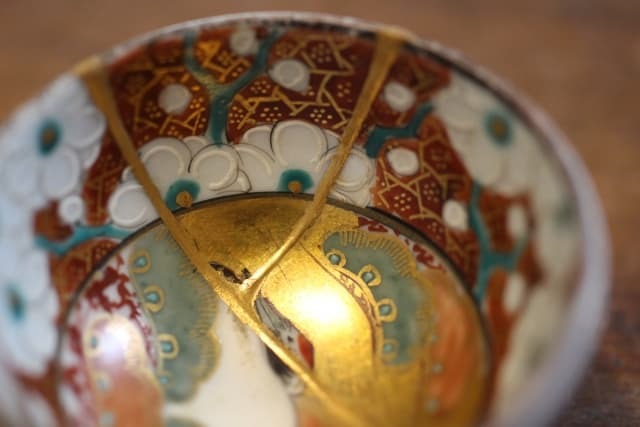
There is a practice in Japan called kintsugi (金継ぎ) — “golden joinery” — in which broken ceramics are repaired not by hiding the damage, but by filling the cracks with lacquer mixed with gold. The result is a bowl or cup that carries its history openly: you can see exactly where it broke, and exactly where it was healed.
The philosophy behind kintsugi is sometimes attributed to the influence of Zen Buddhism, which has long resisted the idea that perfection requires flawlessness. In Zen aesthetics, a crack is not a flaw — it is a record. Gold makes that record beautiful.
This story is worth holding in mind when you bring a gold-leafed object into your home. You are not buying a status symbol. You are welcoming something with a philosophy inside it: the idea that beauty is not about perfection, but about presence. About paying attention. About the quality of light on a Tuesday morning when you have nowhere to be, and your tea is exactly the right temperature, and for a moment everything is as it should be.
That is the zen of gold.
How to Bring Gold Leaf Crafts into Your Everyday Space
The good news is that this kind of beauty does not require a complete interior overhaul. In fact, it works best in small, intentional doses — which is, of course, very much the point.
At the table. A single gold-leafed tea bowl or ceramic mug becomes a quiet anchor for a morning ritual. You do not need a complete matching set. One considered piece, used daily, is more meaningful than a cabinet full of things that are never touched.
In the living room. A lacquer tray — an obon — placed on a side table or coffee table serves a practical purpose (carrying drinks, holding a candle, gathering small objects) while adding a note of warmth that no mass-produced piece can quite replicate. The depth of lacquer combined with gold leaf changes with the light throughout the day. Morning light is different from evening light. This is, in its small way, a form of mindfulness built into the furniture.
As a point of stillness. In Zen-influenced interior design, the concept of ma (間) — negative space, the importance of what is not there — suggests that one beautiful object surrounded by simplicity has more presence than ten objects competing for attention. Gold leaf pieces work best this way: given room to breathe, they become focal points without trying to be.
You do not need to know the history of Kanazawa to feel the difference that a well-made, gold-leafed object brings to a room. But knowing a little of that history may change the way you look at it — and, perhaps, the way you look at ordinary Tuesday mornings.
Editor’s Picks

Obon Tray — Yamanaka Urushi Lacquerware, Gold Miyabi (Round)
Among the most quietly compelling pieces in this style, this round lacquer tray combines the deep, layered finish of Yamanaka urushi with gold detailing that rewards close attention. Yamanaka, a lacquerware-producing town in Ishikawa Prefecture (the same region as Kanazawa), has its own centuries-old tradition of woodturning and lacquer work. This tray is equally at home carrying a pot of tea or resting, empty, as an object in its own right.
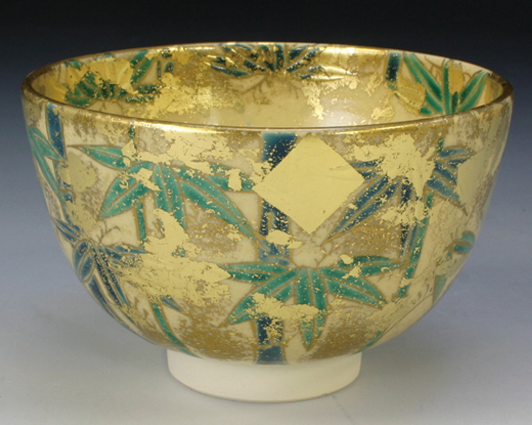
Kyoto Tea Bowl — Matcha Chawan, Kiyomizuyaki Gold Foil Bamboo
Kiyomizuyaki is among the oldest and most refined of Kyoto’s ceramic traditions, named for the area around Kiyomizu-dera temple where potters have worked for over four centuries. This matcha bowl brings that lineage into a contemporary form: the bamboo motif rendered in gold foil against a glaze that speaks of forest light. For those who practice matcha preparation at home — or who simply want their morning ritual to feel more deliberate — this is a piece that earns its place on the shelf.

Kutani Yaki Porcelain Mug — Kinpaku Sai Gold Foil
Kutani ware, produced in the Kaga region of Ishikawa Prefecture, is celebrated for its bold, jewel-like colors and intricate overglaze painting — a tradition that dates to the mid-seventeenth century. This mug brings the kinpaku sai (gold foil coloring) technique to an everyday form: a generously proportioned cup that works equally well for coffee, tea, or anything else you care to pour into it. The gold is not an afterthought here — it is integral to the design, as it has always been in Kutani’s most ambitious work.
Quick Terms
Kinpaku (金箔) — Gold leaf; literally “gold foil.” The term used for the ultra-thin sheets of beaten gold applied to ceramics, lacquerware, architecture, and other crafts.
Urushi (漆) — Traditional Japanese lacquer, derived from the sap of the urushi tree. Used for centuries as both a protective coating and a decorative surface.
Obon (お盆) — A lacquer tray used in Japanese daily life for carrying food and drinks, particularly in tea service. Not to be confused with the summer festival of the same name.
Kintsugi (金継ぎ) — The art of repairing broken ceramics with gold-infused lacquer, treating breakage as part of an object’s history rather than a flaw to be hidden.
Ma (間) — A concept in Japanese aesthetics referring to negative space, interval, or pause — the meaningful absence between things. Relevant to how gold-leafed objects are best displayed: with room to breathe.
Shokunin (職人) — Artisan or craftsperson; someone who has devoted their working life to the mastery of a single craft. The term carries a connotation of philosophical commitment as much as technical skill.
Chawan (茶碗) — A tea bowl, used in both everyday tea drinking and the formal practice of the tea ceremony (sado).
Kiyomizuyaki (清水焼) — Kyoto’s celebrated ceramic tradition, named for the Kiyomizu area of the city. Known for refined glazes and sophisticated decoration.
Kutani (九谷) — A ceramic tradition from Ishikawa Prefecture, recognizable for its rich overglaze colors and elaborate painted designs, including gold foil work.
Frequently Asked Questions
Q: Why is Kanazawa famous for gold?
Kanazawa produces more than 99% of Japan’s gold leaf, a dominance rooted in four centuries of accumulated craft knowledge and the city’s unusually favorable climate for the gold-beating process. The Maeda lords who governed the region from the early seventeenth century channeled their considerable resources into the arts rather than military expansion — a political constraint that became a cultural gift. Today, the city’s gold leaf workshops remain active, and some families have been practicing the craft continuously for generations. Visitors can watch the process firsthand and, in some workshops, try applying gold leaf themselves.
Q: Is Kanazawa gold leaf real gold?
Yes. Genuine Kanazawa gold leaf is made from real gold, beaten to an extraordinary thinness — a micro-thin layer measuring roughly 0.0001 millimeters. Some formulations are alloyed with small amounts of silver or copper to adjust color and workability, producing variations from the classic warm yellow to paler, cooler tones. However, the base material is always genuine gold. Objects described as kinpaku (gold foil) in the traditional Japanese sense use real gold, not gold-colored paint or metallic coating. The difference is visible — and palpable — in the finished object.
Q: What does gold symbolize in Japan?
Gold in Japan carries layered meaning that shifts depending on context. In Buddhist tradition, gold represents the light of enlightenment and the enduring nature of the sacred — which is why temple interiors, altar fittings, and religious statuary so often incorporate it. In the context of lacquerware and ceramics, gold suggests refinement and care: the investment of exceptional skill in an object intended for daily use. It can also carry connotations of auspiciousness and good fortune in celebratory contexts. What gold does not primarily signify in traditional Japanese aesthetics is personal wealth or ostentation — its beauty is considered most complete when it is quiet, integrated, and discovered rather than announced.
Q: What does Kanazawa mean in Japanese?
The characters that make up Kanazawa (金沢) can be read as “gold” (kin or kane, 金) and “marsh” or “wetland” (sawa, 沢). The poetic reading — “marsh of gold,” or sometimes “place where gold flows” — fits the city’s identity beautifully, though historians note that the etymology may derive from a local legend about a farmer who discovered gold flakes while washing potatoes in a spring. True or not, the story captures something genuine: gold in Kanazawa was never the gold of conquest or treasure hoards. It seeped in quietly, became part of the soil and the craft and the daily life of the place, and has never really left.
Explore our collection → manekineko-ai.com