

The Subtle Spirit of Autumn in Japan
When people around the world imagine Japan in autumn, one image appears before all others — momiji, the fiery red maple leaves that set mountains and gardens aflame each November. For over a thousand years, momiji has been more than just a natural spectacle. It is poetry painted in color — a symbol of impermanence (mujō) and harmony (wa), of beauty that exists precisely because it fades.
In Japanese culture, to admire the fleeting brilliance of the leaves is to contemplate life itself: graceful in change, humble in its transience, and quietly profound.
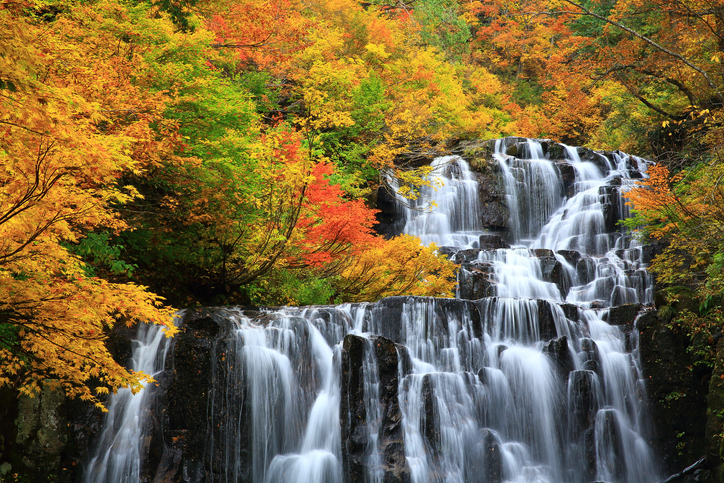
The Arrival of Autumn — A Symphony in Color
By the end of September, a cool wind drifts down from the north, and the long green of summer begins to soften. From Hokkaido to Kyoto, the “autumn front” slowly descends through the islands, transforming mountains into vast canvases of gold, amber, and crimson.
Each leaf turns at its own pace — some remain green, others blaze in red — yet together they form a perfect balance. In that harmony of difference, Japanese people have long seen a reflection of their own ideal of “wa,” the quiet blending of individuality into unity.
Arashiyama — Kyoto’s Eternal Autumn
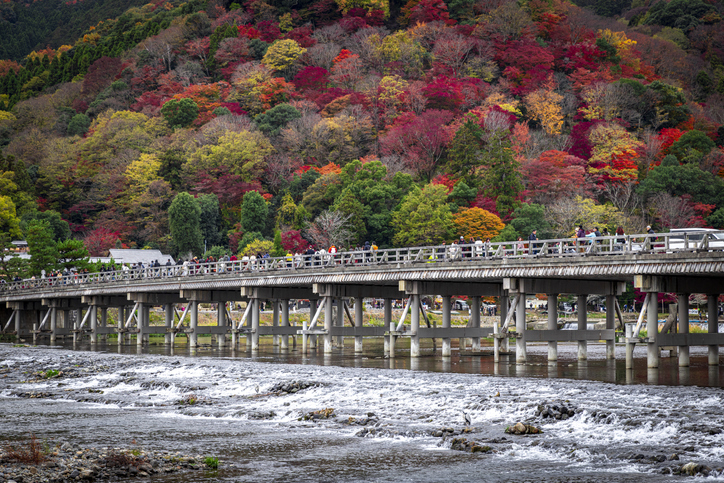
Among all the places to witness Japan’s autumn, few capture its spirit as deeply as Arashiyama in Kyoto. Standing on the Togetsukyo Bridge, you see mountains layered in red, orange, and yellow, mirrored on the still surface of the Katsura River. At dawn, mist drifts through the valleys, and in the evening, the slopes glow with golden light — a living painting that changes every hour.
In the Heian era, nobles visited Arashiyama to enjoy boat rides among the leaves and composed waka poetry about the seasons. One ancient verse from the Kokin Wakashū reads:
“Even beneath the flowers of Arashiyama, my heart grieves for spring departing — I leave it to the wind.”
Just as they once mourned the passing of spring, we too cherish the fading of autumn — a gentle sadness known in Japan as mono no aware. Even now, to stand among the trees of Arashiyama is to feel time slow down, to hear the whisper of centuries in the rustle of the leaves.
Tofuku-ji and Nara — Serenity in Color
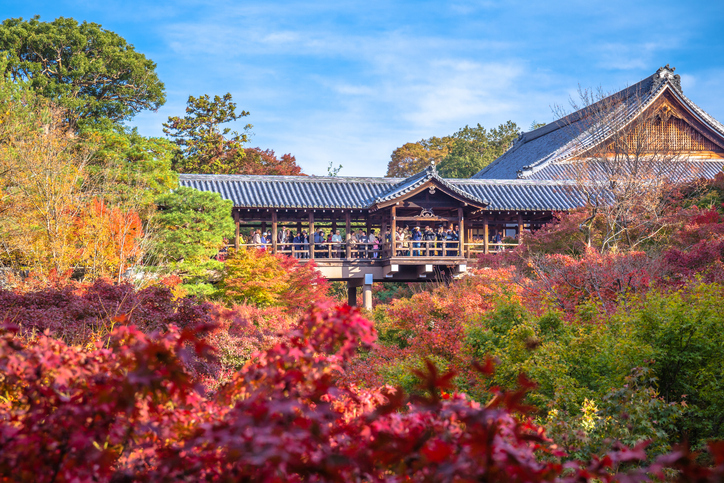
Not far from Arashiyama lies Tofuku-ji, one of Kyoto’s most revered Zen temples and a world-famous site for autumn foliage. From the Tsutenkyo Bridge, a sea of scarlet stretches beneath your feet. When morning light touches the valley, the leaves ignite like flame, and yet the air remains still, filled with calm.
In Nara, a different kind of beauty unfolds. Around the great temples of Todai-ji and Kofuku-ji, deer wander freely through the maples, just as they have for over a thousand years. There, the sacred and the natural coexist — silent, timeless, serene.
The Meaning of Momiji — Living with the Seasons
In Japanese tradition, every flower and every leaf carries meaning. Momiji represents longevity, prosperity, and renewal. Because its leaves resemble an open hand, they are said to symbolize “grasping happiness.”
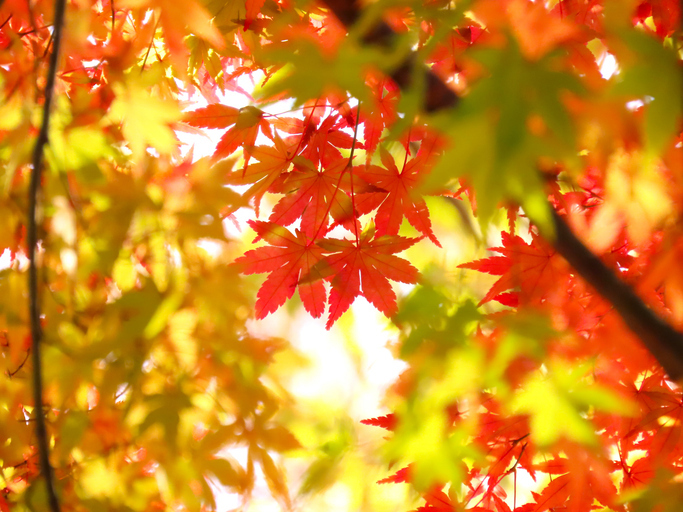
In the world of tea, momiji is a seasonal motif as important as cherry blossoms in spring. A single maple leaf placed upon a plate can evoke the passage of time and the gratitude that accompanies it. In wagashi — Japanese confections — maple-shaped sweets express the same quiet celebration of life’s changing seasons.
Momiji is not merely decoration; it is the spirit of mindfulness itself — the awareness of beauty in impermanence.
Bringing Autumn Home — Kyoto Crafts Inspired by Momiji
Even in the modern world, we can still surround ourselves with the quiet grace of autumn.
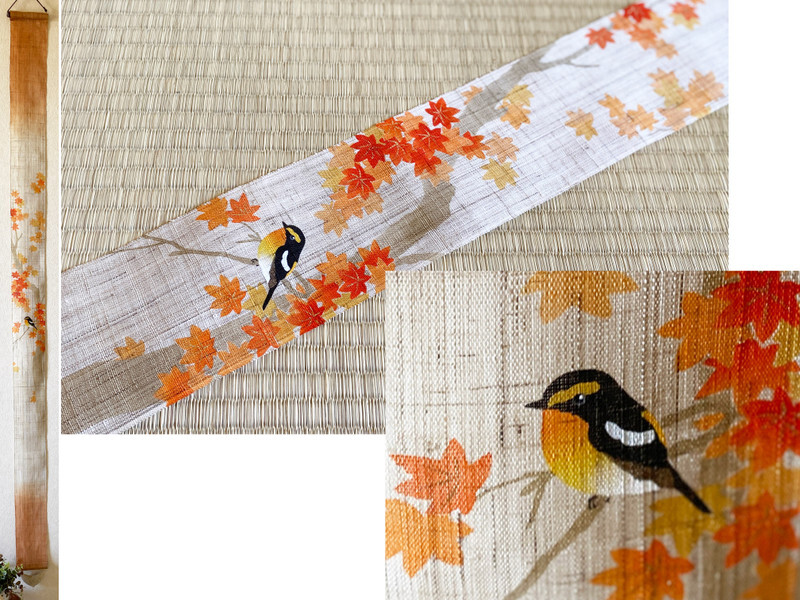
Kyoto Linen Tapestry — Momiji & Little Bird
Made from linen and dyed by in Kyoto, this tapestry captures the tranquility of autumn. Its delicate translucence allows light to filter through, letting the red leaves softly glow — as if the autumn breeze itself were flowing into your home.
Hang it in your entryway or living room, and a touch of Kyoto’s autumn will fill the space. Many who have seen the autumn leaves in Arashiyama choose this tapestry to keep that memory alive year-round.
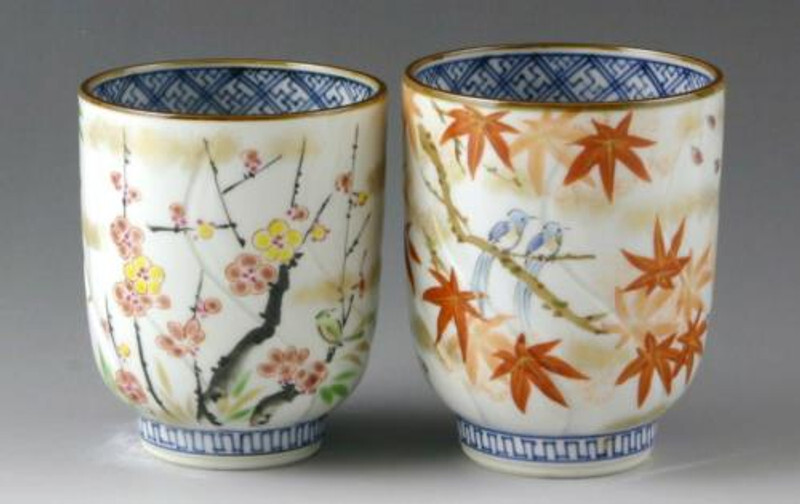
Kiyomizu-yaki Teacups — Ume and Momiji, Spring and Autumn in Harmony
From Kyoto’s Higashiyama kilns, these porcelain cups embody the elegance of Kiyomizu-yaki. On one, plum blossoms announce the arrival of spring; on the other, maple leaves glow with the warmth of autumn. Together they express the eternal flow of the seasons.
Each brushstroke is drawn by hand, with subtle gold detailing that shimmers under the light. When you hold the cup and sip warm tea, the seasons seem to meet within your hands.
The Philosophy of the Seasons — Harmony Through Change
To place ume (plum) and momiji (maple) side by side is a poetic gesture long cherished in Japanese art. It speaks of beginnings and endings, hope and gratitude, youth and maturity — two seasons in perfect balance.
In the tea ceremony, hanging scrolls and utensils often feature these motifs to express the host’s awareness of time and the guest’s presence. To live beautifully is to live in rhythm with the seasons, embracing both growth and decline with grace.
✨ In Closing — The Beauty Within a Single Leaf
The turning of momiji lasts only a few short weeks, yet within that brief blaze of color lies the entire cycle of life — the rise, the fading, and the quiet return to earth. To see a single leaf drift down a stream is to glimpse eternity in a fleeting moment.
That is the essence of Japanese aesthetics — finding peace in impermanence. Kyoto’s artisans, through fabric and porcelain, carry that spirit into everyday life. Let the gentle red of momiji light your home, and may the warmth of Japan’s autumn fill your heart wherever you may be.