
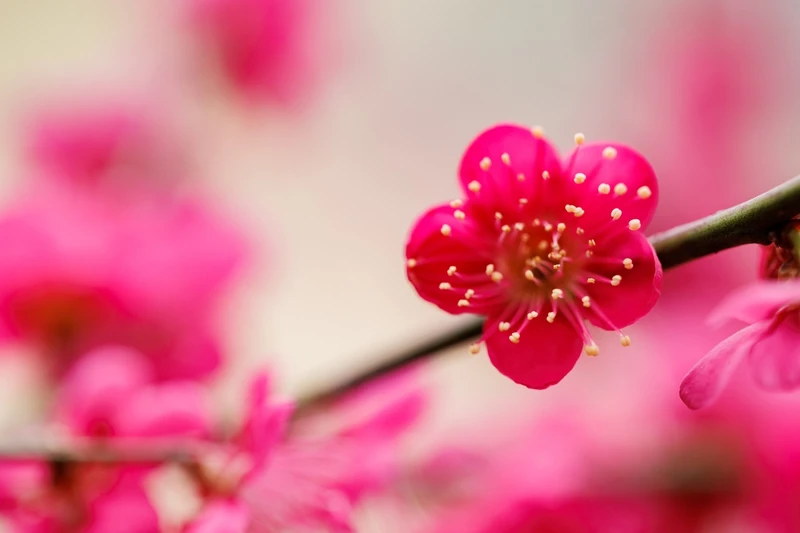
The plum opens while the air is still cold, and the cherry follows a month or more later. On a cup or a plate, the two can look almost the same.
Both are pink or white, both have five petals, and both appear on Japanese tableware more often than almost any other flower. Many people outside Japan call every painted blossom "cherry." Once you know where to look, though, the two are easy to tell apart, and each carries its own season and its own wish.
This guide starts with the living flowers, then moves to the painted ones: how to read them on a cup or a plate, what the plum and the cherry each mean in Japan, and how that can help you choose. At the end are a few pieces from our collection and some common questions.
On this page
1. Two Blossoms, a Month or More Apart
In Japanese, the plum is ume (梅) and the cherry is sakura (桜). The word sakura means both the tree and its blossom. Ume is often called the "Japanese apricot" in English, and botanically it is closer to the apricot than to a European plum, but "plum" is the name most people use.
The two flowers open at different times. In central and western Japan, the plum usually blooms from February into March, before the leaves come out. The common Somei-yoshino cherry follows from late March into early April, and later in the north; in Sapporo it opens in early May. In Osaka, the average gap between the first plum and the first cherry is about six weeks.
That difference in timing is the root of everything else. The plum is the flower of late winter, and the cherry is the flower of full spring.
2. How to Tell Them Apart
On a branch, three details are enough.
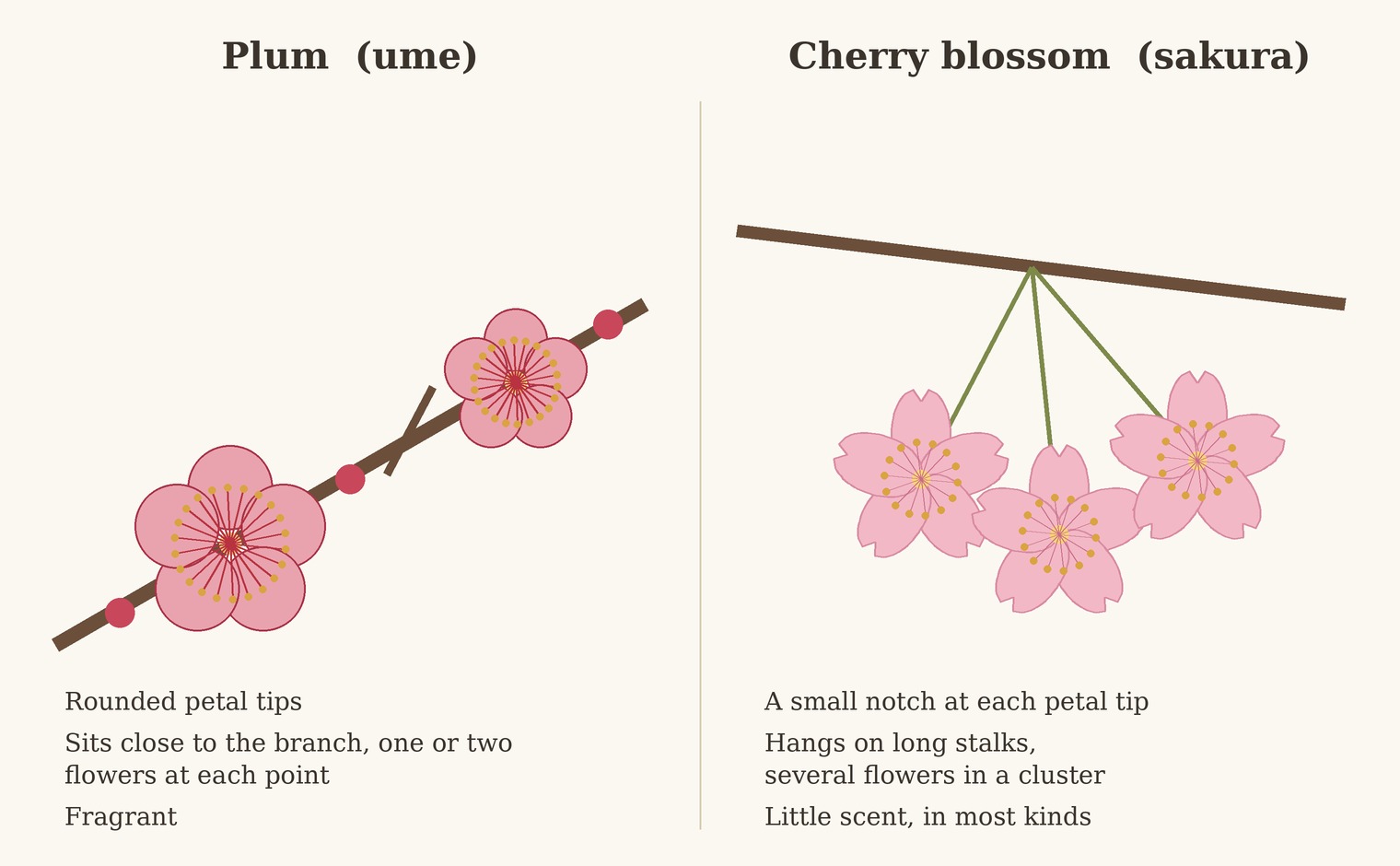
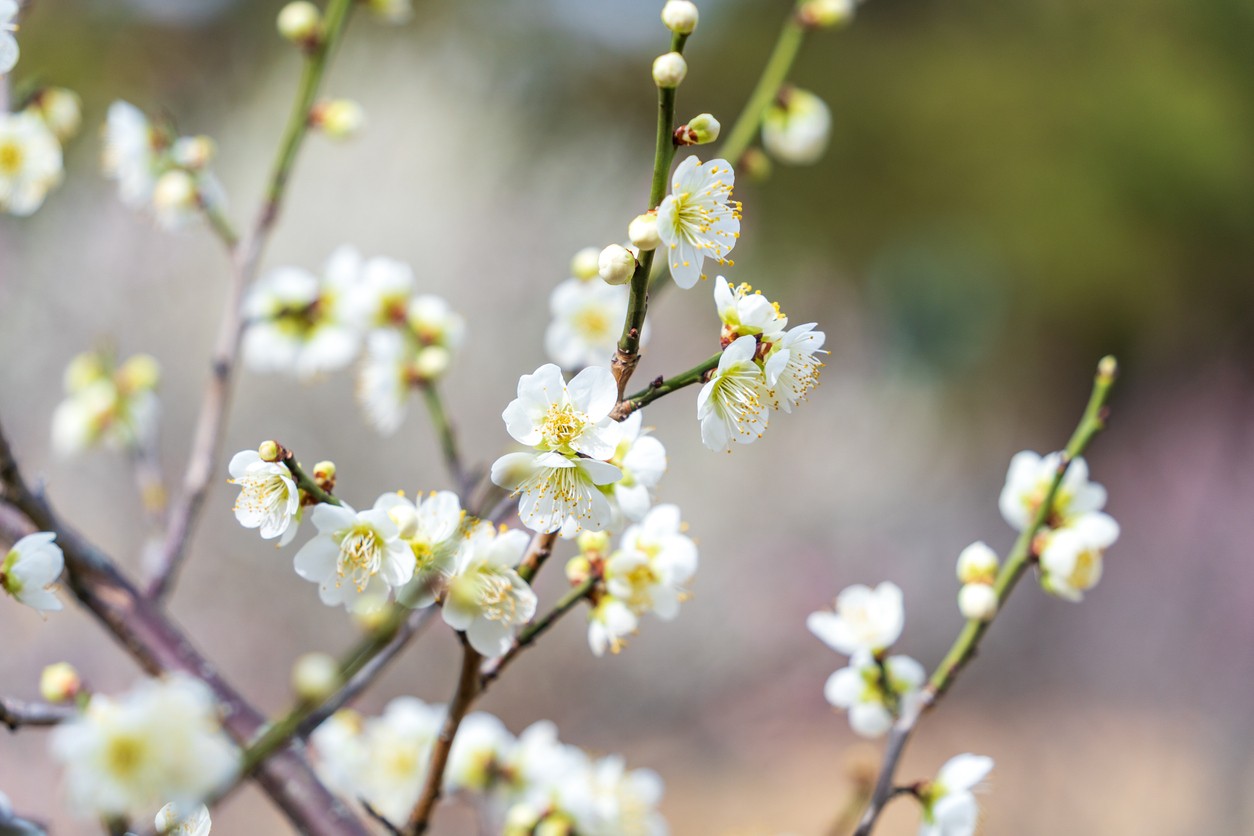
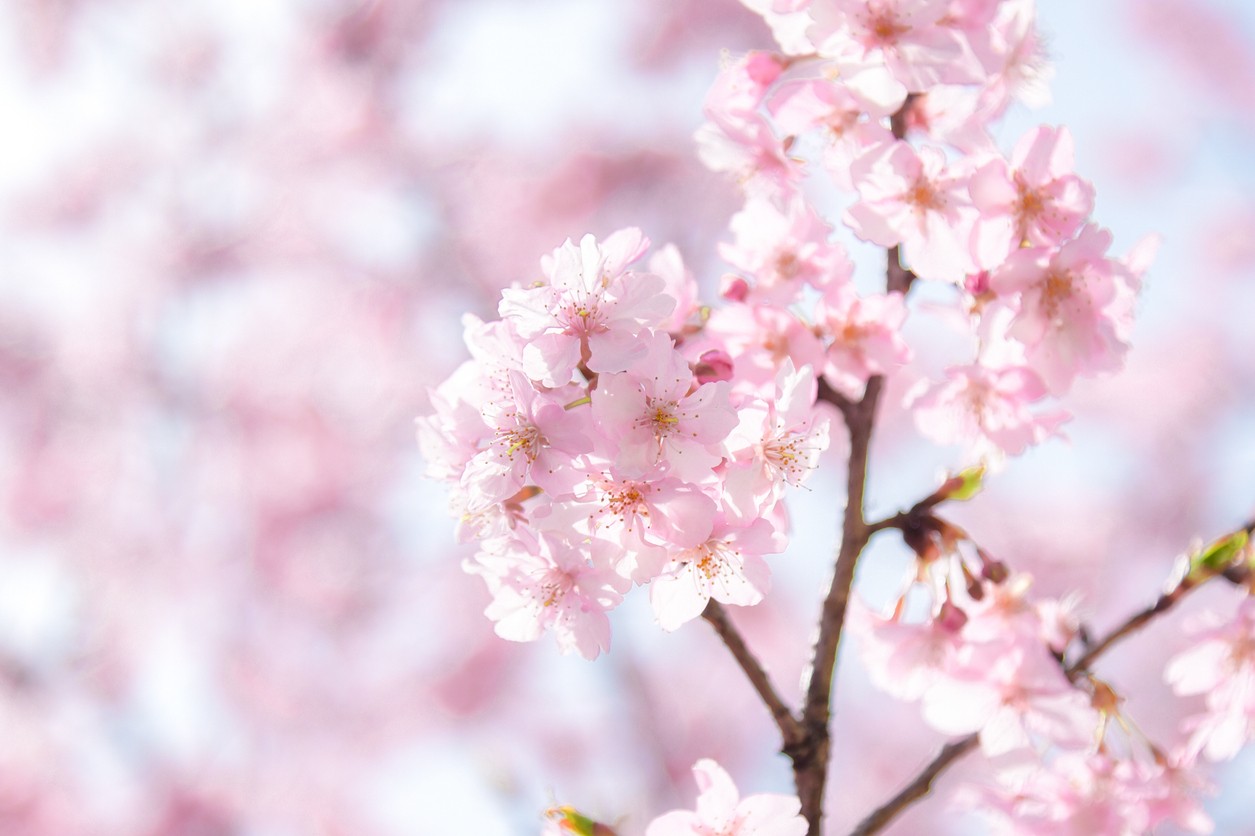
The petal tips. A plum petal is rounded all the way to its edge. A cherry petal has a small notch, a little split, at the tip. Look for that notch first: it is the clearest single sign.
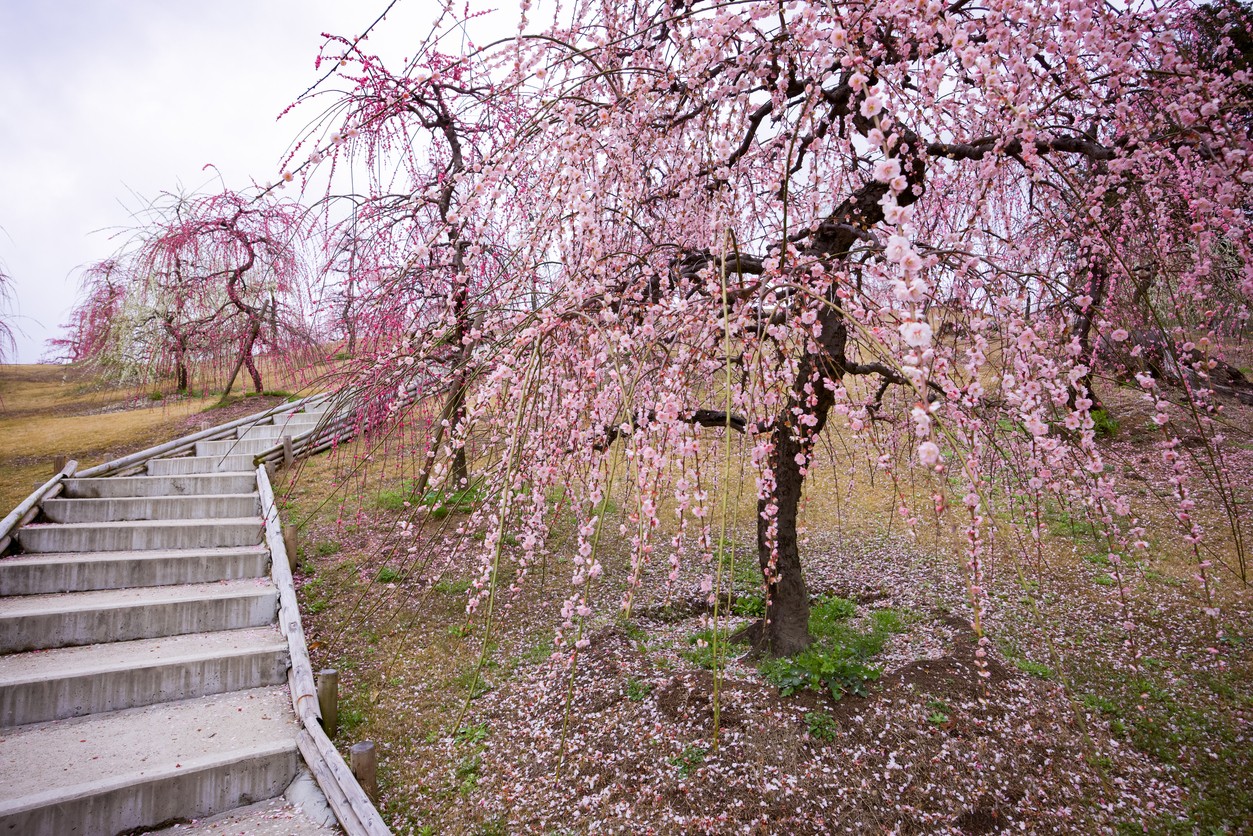
How the flower meets the branch. A plum flower has almost no stalk. It sits right on the twig, one or two flowers at each point, so a flowering branch looks dotted, like a string of beads. Cherry blossoms hang on longer stalks, usually several from one point, so they gather in soft clusters that sway.
The scent. Plum blossoms are known for their fragrance, which you can notice from a few steps away. Most cherries, including Somei-yoshino, have very little scent, though a few kinds are fragrant.
3. Reading Them on a Cup or a Plate
A painter works from the same flowers, so the same signs carry over to clay and porcelain. Not every artist follows them strictly, but most do enough that a few seconds of looking will tell you which flower you are holding.
Look at the petal outline. Five rounded petals, like five soft coins around a center, usually mean plum. A small notch or V at the tip of each petal usually means cherry. Sakura motifs often show that notch clearly, because it is what makes the flower recognizable.
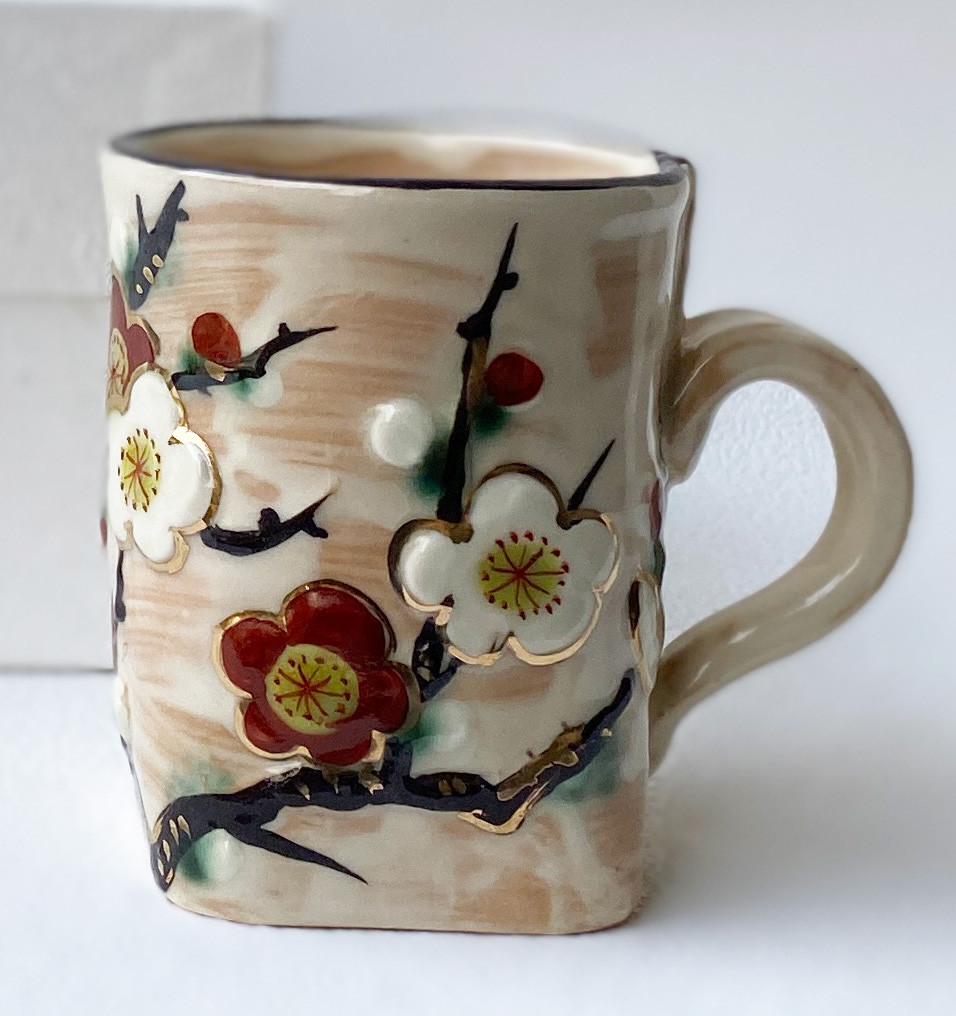
Look at the branch. Painted plum branches tend to be dark, angular, and sparse, with flowers set directly on them and a few round buds. Painted cherry blossoms more often appear in clusters on thin stalks, or as single flowers and loose petals with no branch at all.
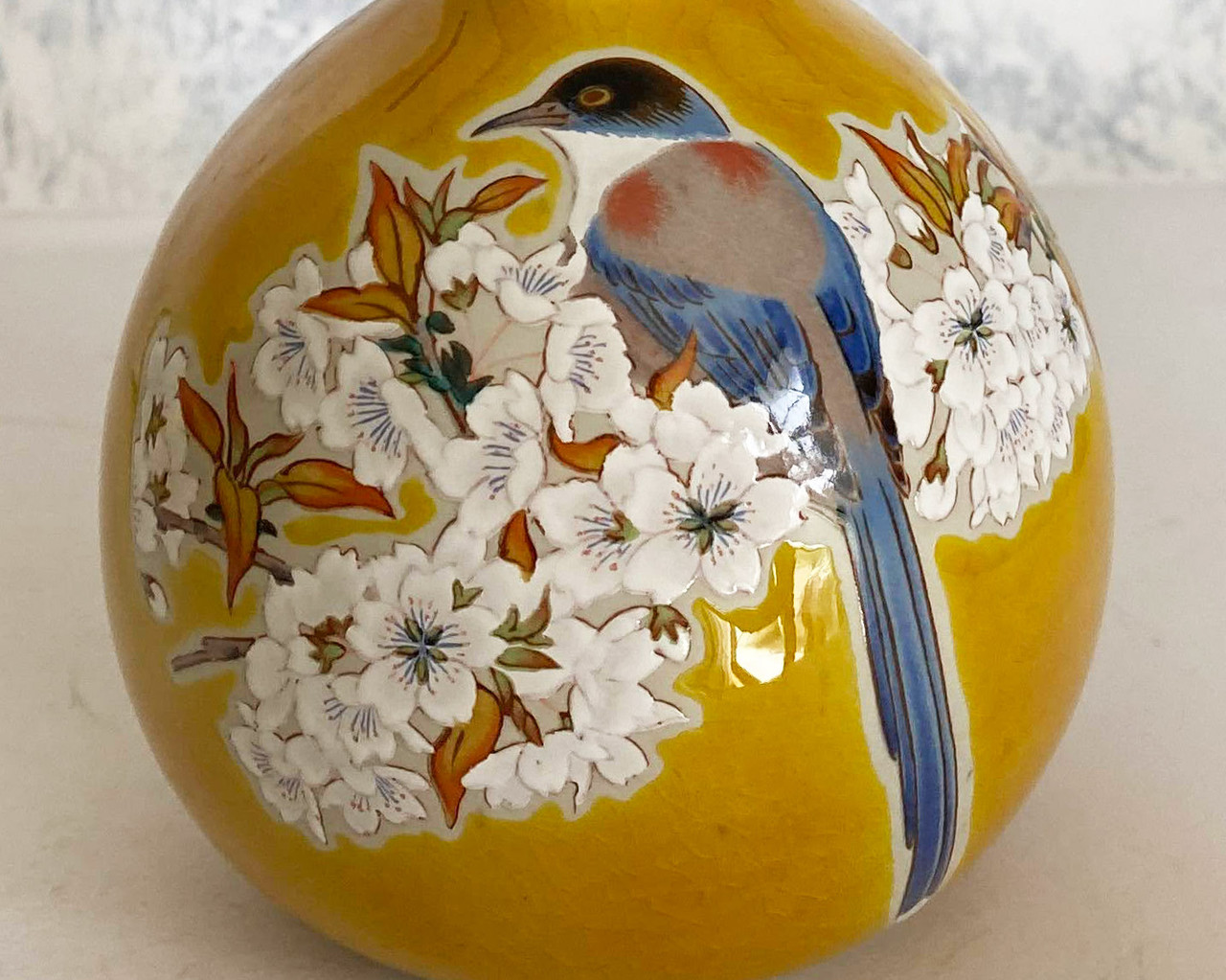
Look at the color. Plum appears in deep red (kōbai, red plum) as well as pink and white. Cherry is usually pale pink or white. A strong red five-petaled flower is very likely a plum.
Some motifs are simplified so far that only the outline remains. Kōrin-ume (光琳梅) is a plum blossom reduced to a soft outline of five rounded petals, with no inner detail. It is named after the painter Ogata Kōrin (1658–1716) of the Rinpa school, whose bold, simplified style it recalls. His folding screens of red and white plum trees with a stream between them, now a National Treasure in the MOA Museum of Art, are among the best-known plum paintings in Japan.
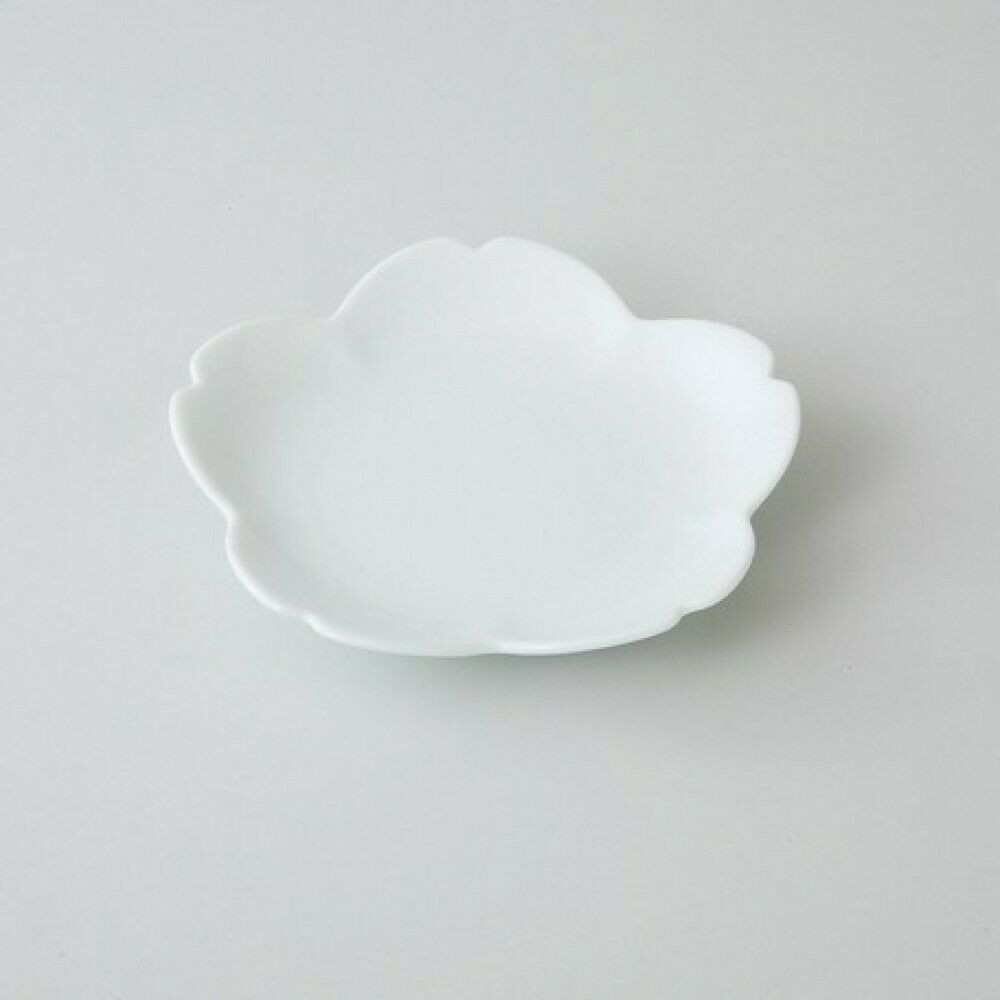
Cherry is often used as a shape as well as a picture. A small plate or a dish cut into the outline of a cherry blossom, with five notched petals, is a common form in Japanese tableware, and the notches make it easy to read.
4. The Plum: What It Carries
The plum came to Japan from China and was already being grown by the Nara period (710–794), perhaps earlier. With it came its meaning in Chinese culture: a flower that blooms in the cold, before anything else, stood for integrity and quiet strength. In Japan it became the flower that announces spring; one of its old names is harutsugegusa, "the plant that tells of spring."
For the poets of the eighth century, the plum was the favored blossom. In the Man'yōshū, Japan's oldest anthology of poetry, the plum appears in about 118 poems, roughly three times as many as the cherry.
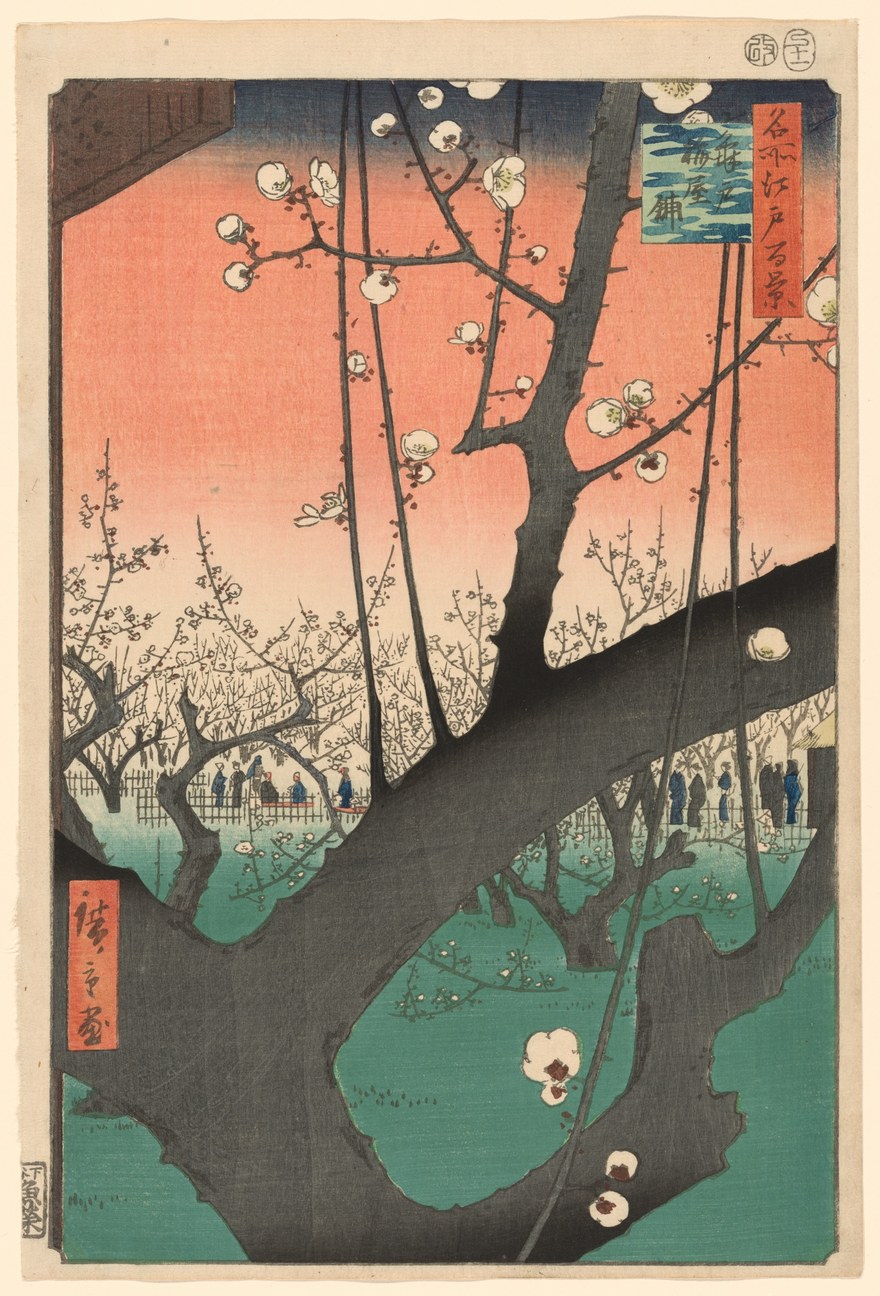
The plum is also tied to Sugawara no Michizane, a ninth-century scholar and poet who loved the tree. When he was sent into exile in 901, he wrote a farewell poem to the plum in his garden, and a legend grew that the tree flew after him to Dazaifu. He is honored today at Tenmangū shrines, which use a plum-blossom crest, and many students visit them before exams.
The plum also belongs to shōchikubai (松竹梅), pine, bamboo, and plum. The set came from China as the "Three Friends of Winter," three plants that stay green or bloom through the cold, and in Japan it became an auspicious group used at New Year and on happy occasions.
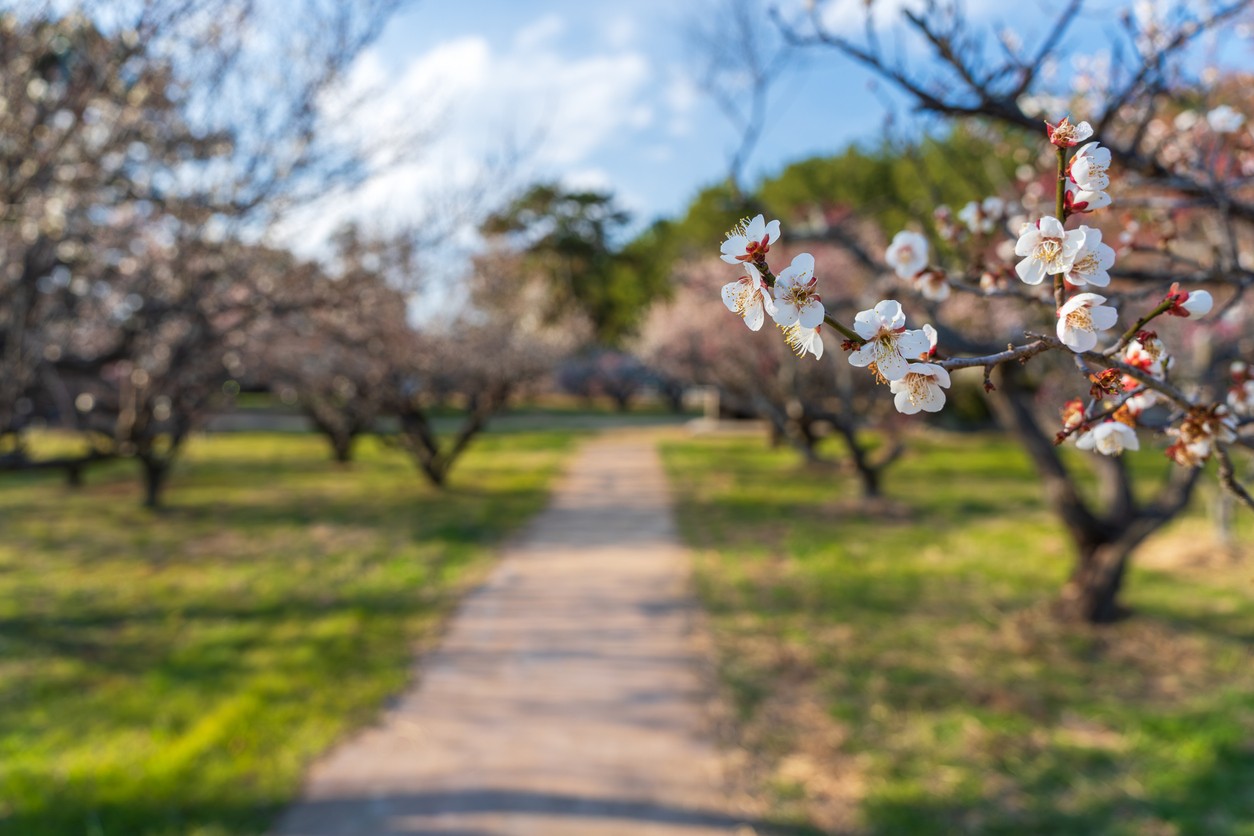
5. The Cherry: What It Carries
Over the Heian period (794–1185), the cherry gradually took the plum's place at court. The Kokinshū, an anthology compiled around 905, already has nearly twice as many cherry poems as plum poems, and over time the word hana, "flower," on its own came to mean the cherry. Flower viewing, hanami, became cherry viewing, and in time it spread from the court to everyone.
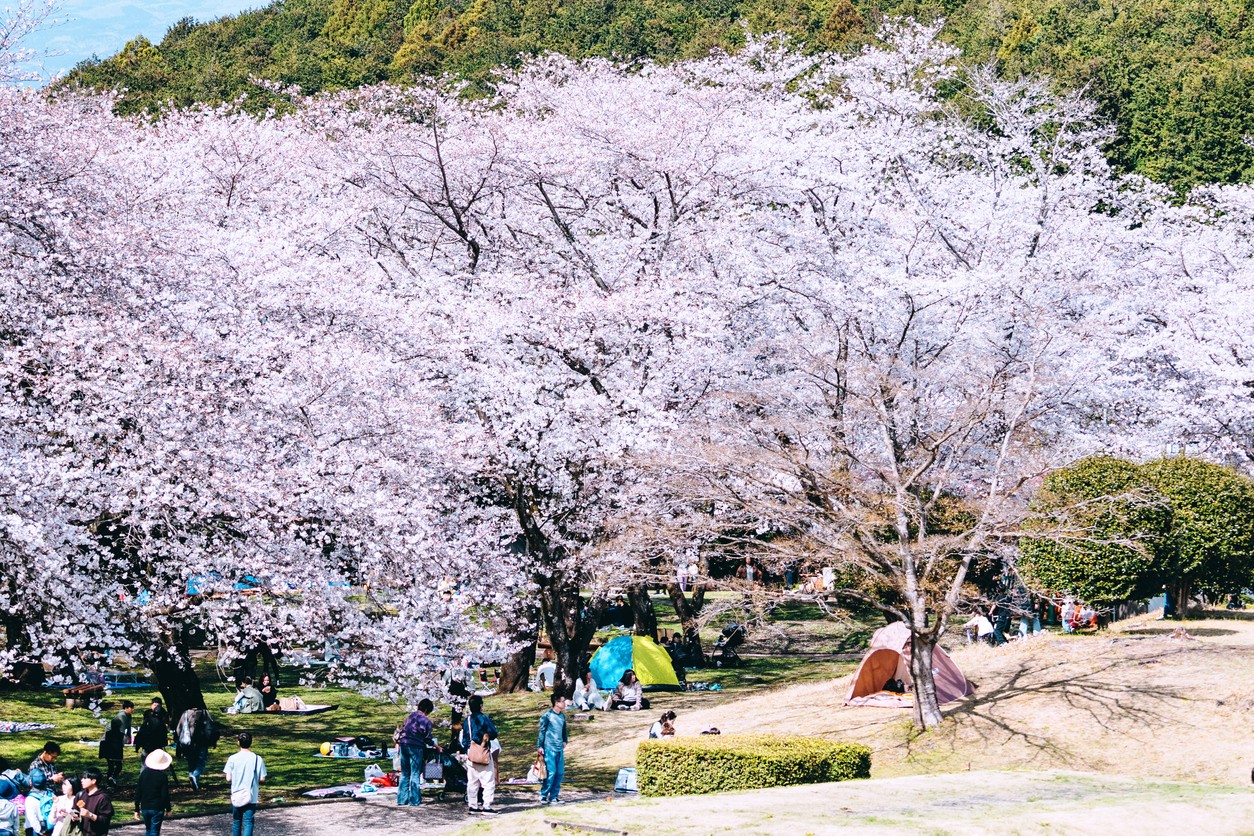
Today the cherry is the flower of beginnings. In Japan, the school year and the government's fiscal year both start on April 1, so the cherry blossoms that open around then mark entrance ceremonies, first days at work, and new starts of every kind.
The cherry is also the flower of brevity. It opens all at once and falls within days, and since the Heian poets it has stood for the beauty of things that do not last. That does not make it a sad flower. It is a reminder to look while it is here.
6. Choosing Between Them
There is no wrong choice, and in modern Japan both are used all year round. If you would like the season to mean something, though, a few simple guides help.
For winter and the New Year. The plum is the natural choice from December into early spring, and it fits New Year gifts and celebrations, especially alongside pine and bamboo.
For spring. The cherry belongs to March and April, and to the beginnings that come with them: a new school, a new job, a new home.
For a gift with a wish. A plum says endurance and good fortune through hard times, and suits someone starting out on a long effort, such as study. A cherry says "this moment is worth celebrating," and suits a milestone.
For everyday use. Choose the one you are glad to see in the morning. A plum cup in the cold months and a cherry cup in spring is a small way to keep the season on the table, but a single favorite is just as good.
7. Pieces in Our Collection
A few examples of the motifs described above. These are examples, not recommendations; the right piece is the one that suits the season and the person you have in mind.
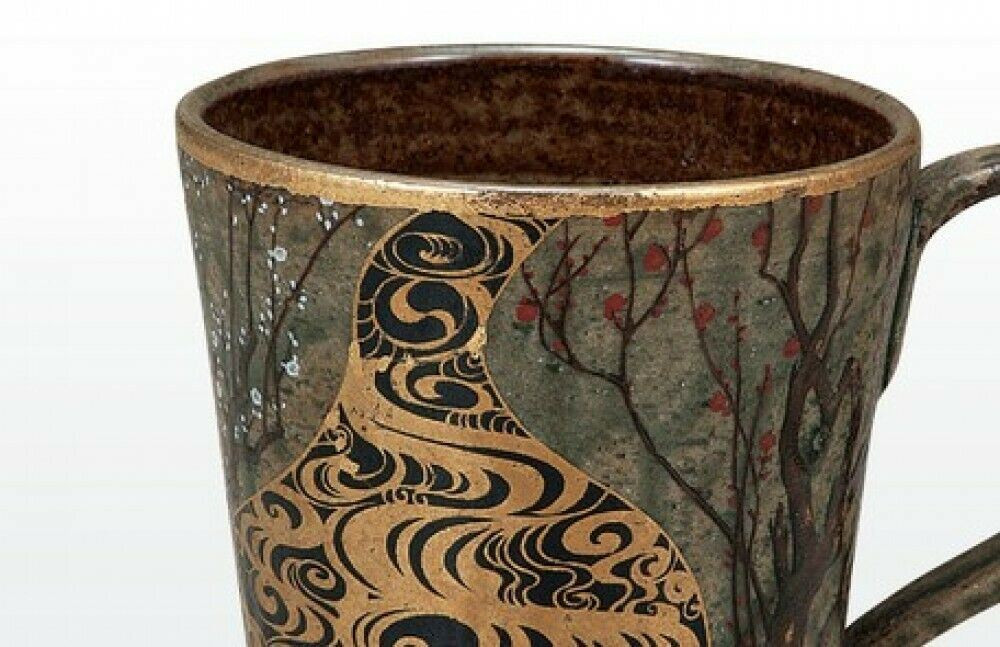
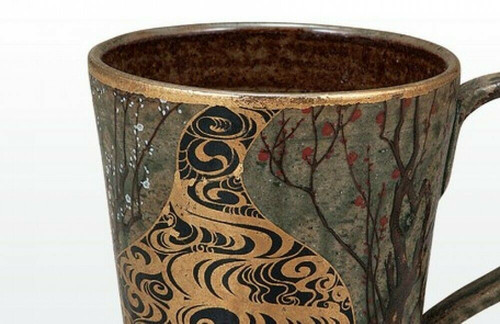
A Kutani porcelain mug named for Kōrin's plum. Plum trees in red and white blossom stand on either side of a golden, swirling stream, a design that recalls the Rinpa style. About 8.1 cm across and 8.7 cm tall. (Kutani mug, Kōrin plum)
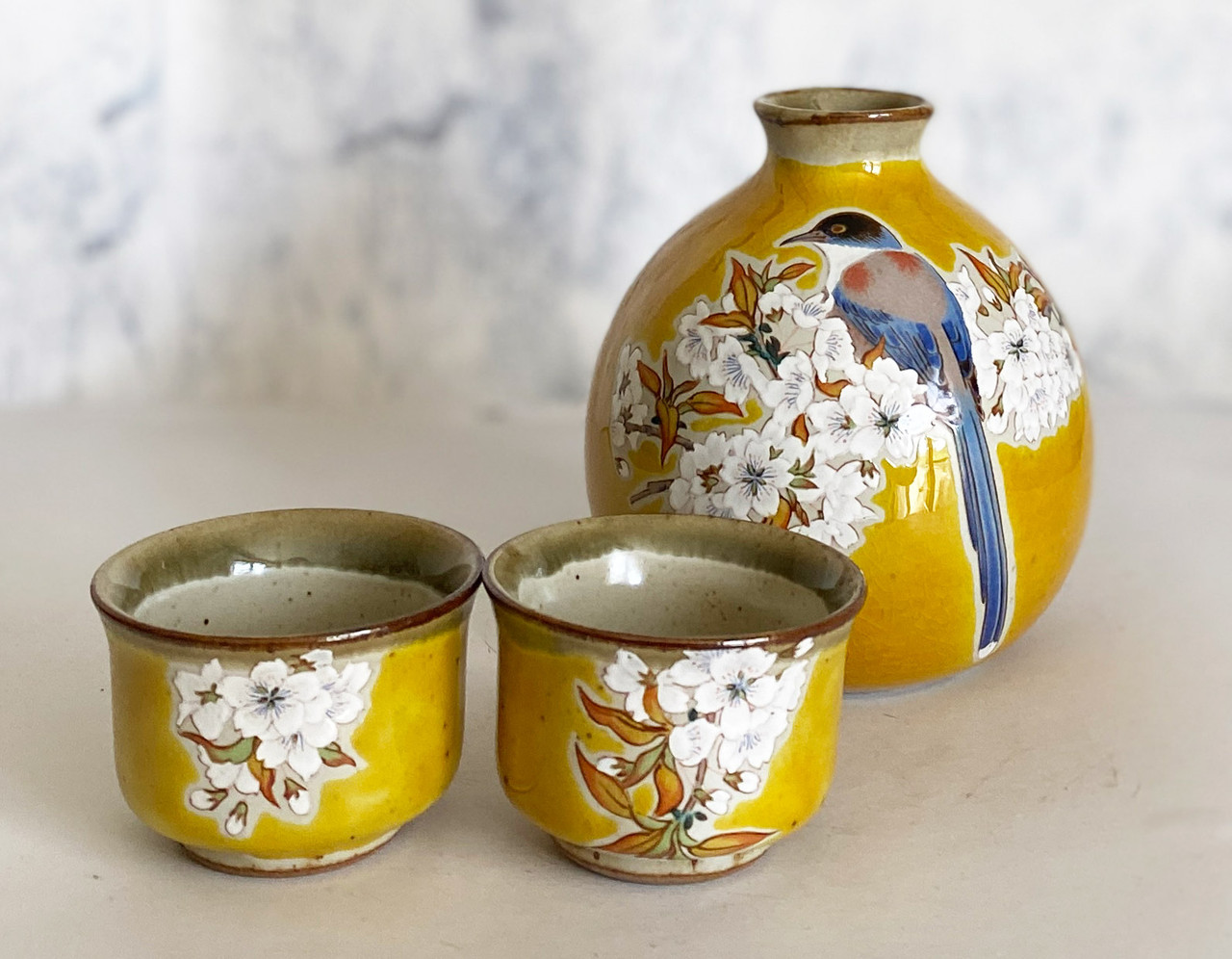
A Kutani porcelain sake set on a yellow ground, with white cherry blossoms and a bird on the bottle and blossoms on both cups. The cups are about 5.5 cm across. (Kutani sake set, cherry blossoms and bird)
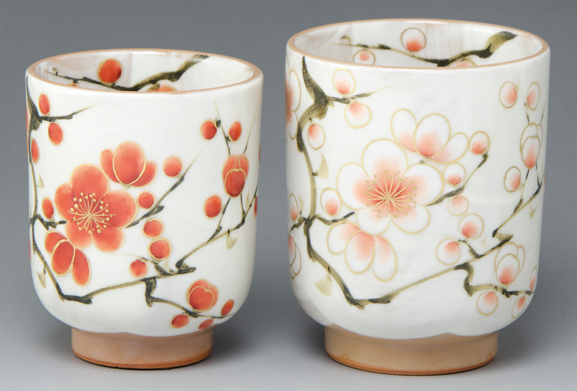
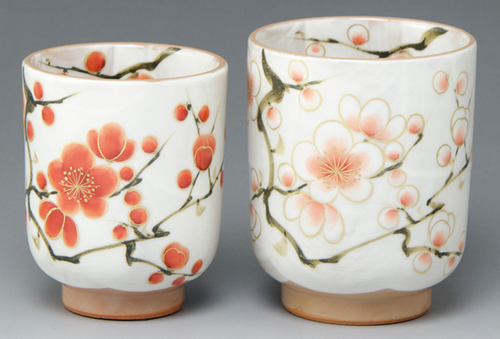
A pair of Kyoto Kiyomizu-yaki teacups painted with plum branches, one in red blossoms and one in pale pink. The larger cup is about 7.5 cm across and 9.5 cm tall. (Kiyomizu-yaki pair teacups, plum)
8. A Note from the Shop
The plum and cherry pieces we carry come from several regions, and the painters in each place have their own hand. Some draw every stamen; others reduce the flower to five round petals and nothing more. Both are reading the same flower.
If one thing stays with you, let it be the petal tip. Rounded for the plum, notched for the cherry. After that, the season and the wish are yours to choose.
9. Frequently Asked Questions
Q: What do plum blossoms symbolize in Japan?
Endurance and quiet strength, because the plum blooms in the cold before other flowers, and the coming of spring. Through the scholar Sugawara no Michizane it is also linked with learning, and as part of pine, bamboo, and plum it is a sign of good fortune at New Year.
Q: Are plum blossoms Chinese or Japanese?
The plum tree is native to China and was brought to Japan by the Nara period (710–794), perhaps earlier, together with its meaning in Chinese culture. Over more than a thousand years it has become a deeply Japanese flower as well.
Q: Are cherry and plum blossoms the same?
No. Both belong to the same genus, Prunus, but they are different trees. The plum blooms earlier, has rounded petals and a strong scent, and its flowers sit right on the branch. The cherry blooms later, has a notch at each petal tip, and its flowers hang in clusters on longer stalks.
Q: How can you tell a plum blossom from a cherry blossom?
Look at the petal tips. Rounded petals mean plum; a small notch at each tip means cherry. Then look at how the flower meets the branch: plum flowers sit directly on the twig, while cherry blossoms hang on stalks in clusters. The same signs work on most painted ceramics.
Q: What does "sakura" mean?
Sakura is the Japanese word for the cherry tree and its blossom. The plum is ume.
Q: What does it mean when someone gives you cherry blossoms?
In Japan, cherry blossoms are tied to spring and new beginnings, since the school and working year start in April. A gift with a cherry motif often says congratulations on a new start, and a gentle reminder to enjoy the present moment.
Q: What is shōchikubai?
Shōchikubai (松竹梅) is pine, bamboo, and plum. The trio came from China as the "Three Friends of Winter," plants that stay green or bloom through the cold, and in Japan it is an auspicious set used at New Year and celebrations. The three names are also used as a ranking, with pine usually at the top.
Thank you for reading.
— from Osaka, Team Manekineko-Ai
PIECES IN THIS ARTICLE
Plum and cherry on the table
CONTINUE READING
MORE IN MOTIFS →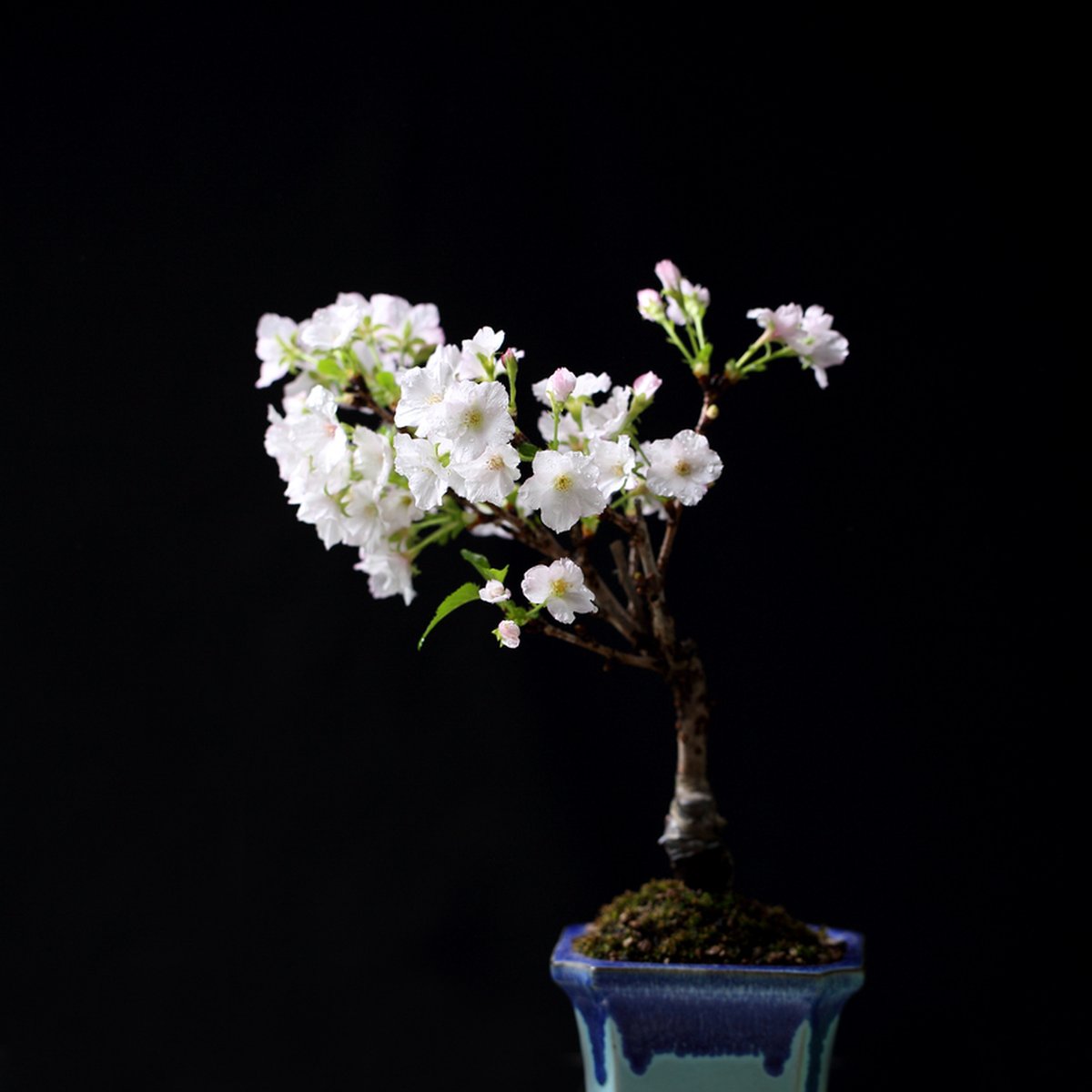 MOTIFS, SYMBOLS & AESTHETICS
Seasonal Patterns in Japanese Craft: Sakura, Momiji, Yukiwa & The Year Read in Motifs
Plum, cherry, maple leaves and snow crystals: how Japanese craft marks each turn of the year.
 MOTIFS, SYMBOLS & AESTHETICS
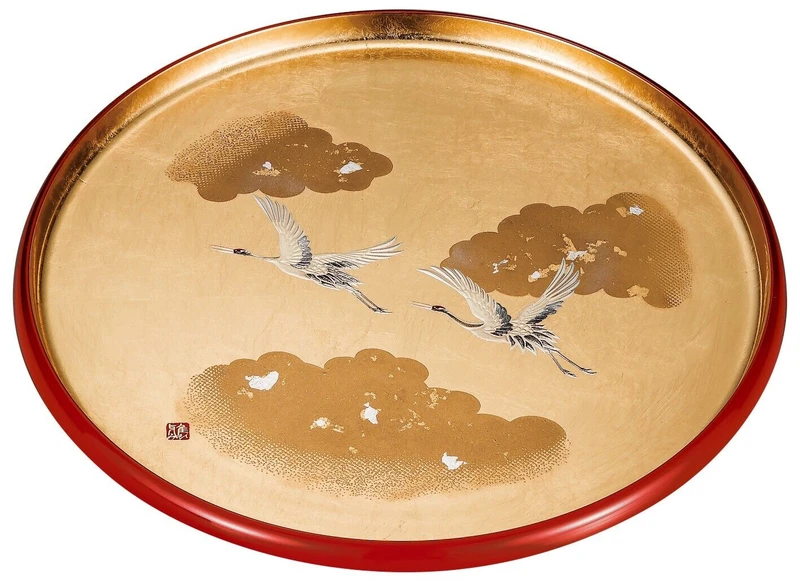
Seven Lucky Japanese Motifs Explained: Meaning, Symbolism & Gift Traditions
Cranes, turtles, waves, gourds, and pine, bamboo and plum: seven motifs of good fortune and when to give them.
 MOTIFS, SYMBOLS & AESTHETICS
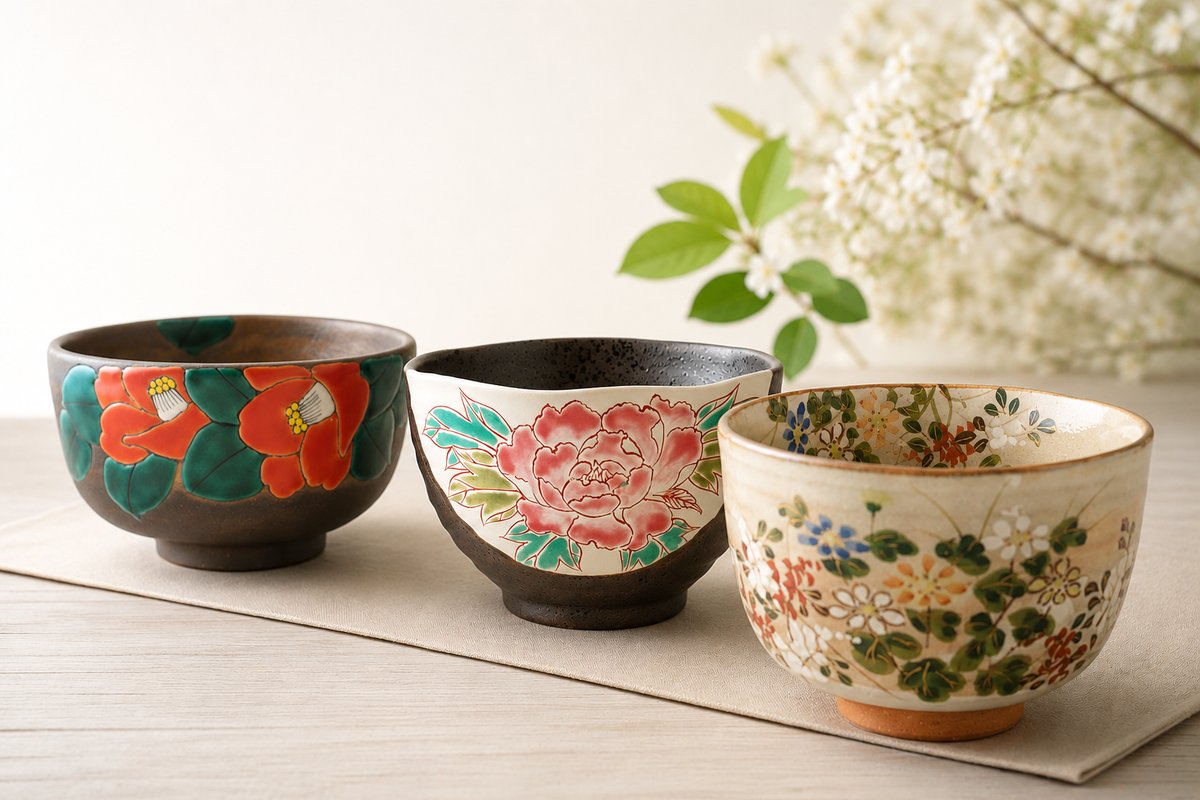
Camellia, Peony, and Chrysanthemum: Three Flowers That Carry Japan’s Best Wishes
Three more flowers of Japanese craft, what each one means, and how to choose one as a gift.