
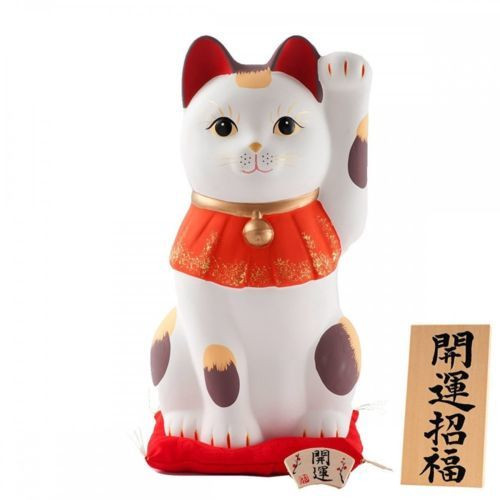
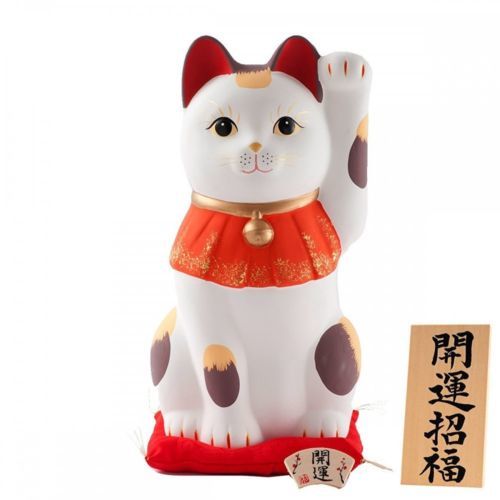
If there is one maneki neko that feels more like a work of art than a souvenir, it is the Kyoto-style lucky cat. Quieter in color than the bright porcelains of Seto, softer in spirit than the bold gold of Edo-era shopkeepers’ cats, Kyoto’s maneki neko carry within them the city’s long love affair with craftsmanship — washi paper, chirimen silk crepe, hand-applied gold leaf, and the patient hands of artisans whose families have been making beautiful things for generations.
This is a guide to what makes Kyoto-style maneki neko different, where the tradition comes from, and how to choose one that will feel at home in your own space.
A Cat with a Thousand Years of Craft Behind It
Kyoto was Japan’s capital for more than a thousand years, and in that time it became the country’s quiet capital of craft. Tea ceremony wares, silk weaving in Nishijin, lacquer, bamboo, the pottery of Kiyomizu-zaka — all of it grew up under the patronage of temples, the imperial court, and generations of refined tea masters. When Kyoto makes a maneki neko, it inherits all of that.
Many Kyoto-style cats trace their lineage back to Fushimi ningyo, the clay dolls made near Fushimi Inari shrine since the Edo period. Over the centuries this papier-mâché and clay doll-making tradition absorbed other Kyoto techniques — washi paper finishing, chirimen silk wrapping, kinsai gold-leaf detailing — and out of that quiet evolution, the distinctively Kyoto maneki neko was born.
What Makes Kyoto Maneki Neko Different?
Most people who pick up a Kyoto-style lucky cat for the first time notice three things:
- The surface is soft, not slick. Instead of glossy glaze, the body is often finished with torn pieces of washi paper (chigiri-washi) or chirimen silk crepe, giving it a textured, almost handmade-paper feeling.
- The colors are calmer. Kyoto taste leans toward muted, seasonal palettes — soft pink, cream, pale gold, deep indigo — rather than the primary reds and whites of more common maneki neko.
- The details are patient. A tiny bell, a hand-painted eye, a piece of gold leaf no bigger than a fingernail, a kimono pattern done in katazome stencil-dyeing. Nothing is shouted. Everything rewards a second look.
This is a cat that fits naturally into a living room where there is also a tea bowl on the shelf and a silk tapestry on the wall. It is as much a piece of Kyoto as it is a lucky charm.
The Materials and Techniques, Briefly
Hariko (張子) — papier-mâché. Layers of washi paper are pressed into a mold, dried, painted, and lifted out. Light, hollow, surprisingly durable. Kyoto and Fushimi have been making hariko dolls for centuries, and the same technique gives many Kyoto maneki neko their quiet, slightly matte feel.
Washi (和紙) finishing. Small torn pieces of washi paper are applied by hand over the body, sometimes dyed, sometimes printed with seasonal motifs like cherry blossoms, maple leaves, or karakusa vine patterns. Every cat ends up slightly different.
Chirimen (ちりめん) — silk crepe. The same textured silk used for kimono linings and formal pouches wraps some of the most elegant Kyoto maneki neko, often with tiny printed patterns and a little bell sewn at the neck.
Katazome (型染め) stencil-dyeing. A traditional Kyoto textile technique where fine paper stencils are used to dye repeating patterns onto cloth or paper. Used on the “kimono” of some cats.
Kinsai (金彩) — gold-leaf accents. Thin leaves of gold applied by hand to collars, bells, or the inside of an open mouth. A Kyoto touch borrowed from screen-painting and lacquerware.
A Few From Our Kyoto Collection
Every Kyoto maneki neko at Manekineko Ai is handmade in Japan, usually in a small workshop in or near Kyoto. A few we especially love:
Hariko Kyoto Maneki Neko with bells (23.5cm)
A classic papier-mâché piece, finished in layered washi with small bells at the neck. Traditional silhouette, quiet elegance.
Kyoto Maneki Neko carrying a lucky charm, chirimen crepe
Wrapped in chirimen silk crepe with a tiny omamori-style lucky charm. A lovely gift for a friend starting something new.
Kyoto Kinsai Gold Fuku Neko
A Kyo-yaki porcelain cat with gold-leaf kinsai details. This one is closer to the porcelain tradition but carries distinctly Kyoto brushwork.
Chigiri-washi Kyoto Maneki Neko
Covered in small torn pieces of washi paper, each applied by hand. No two are identical.
To see everything currently in the Kyoto collection, visit the full Kyoto Maneki Neko category.
Choosing a Kyoto Maneki Neko
Because Kyoto-style cats tend to be quieter and more decorative, they often end up in specific places:
- A tea room, study, or bedroom — where a brightly painted porcelain cat might feel too loud, a Kyoto washi or chirimen cat blends in beautifully.
- A gift for someone with taste for the handmade — a friend who loves ceramics, textiles, or traditional Japanese aesthetics will recognize what they’re looking at.
- A quiet corner in a shop or gallery — left-paw-raised Kyoto cats are especially nice for small boutiques, cafes, and galleries that want to invite visitors without being commercial about it.
For colors and their meanings (pink for love, gold for prosperity, calico for overall luck, and more), see our guide to maneki neko color meanings.
Caring for a Washi or Chirimen Cat
Because Kyoto-style maneki neko use paper and fabric rather than porcelain, they ask for a little more care than a glazed cat:
- Keep them away from direct sunlight — washi and chirimen can fade over the years.
- Avoid humid bathrooms or unsealed windowsills — dampness is the one thing hariko cats don’t love.
- Dust them gently with a soft brush or a dry cotton cloth. No water, no wipes.
Treated well, they will quietly watch over your home for decades — exactly as generations of Kyoto families have let them.
One Last Note
There is an old saying in the workshops: “The cat chooses its home.” Especially in Kyoto, where each one is finished by hand and carries slight differences in the way the paper is torn or the bell is tied, it often happens that one particular cat simply looks at you. That’s usually the one.
Browse the full Kyoto Maneki Neko collection, or explore the wider maneki neko collection if you’re open to other regional styles as well. Whichever one comes home with you — we hope it brings exactly the kind of quiet, Kyoto-shaped luck it was made for.