
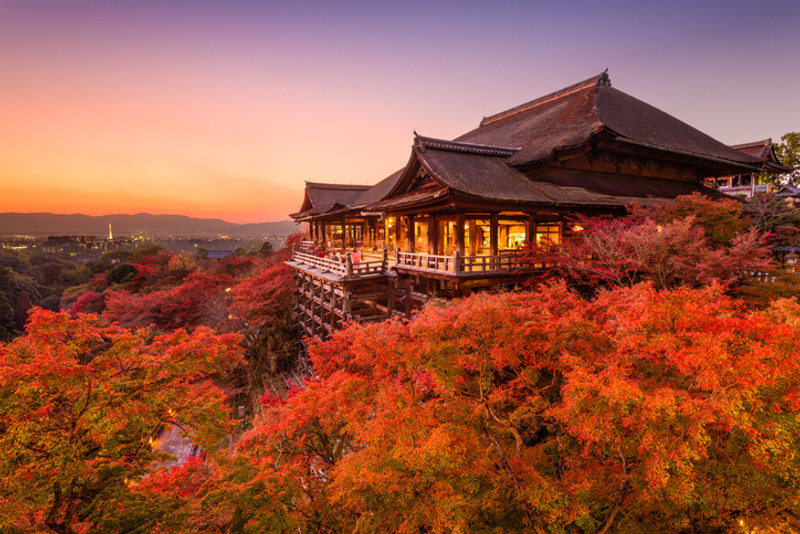
As autumn approaches, Kyoto transforms into a city of vibrant colors. Among its many scenic spots, Kiyomizu-dera Temple stands out as one of the most breathtaking places to experience the beauty of Japanese autumn. Famous for its panoramic view from the wooden stage, the temple becomes especially enchanting during the season of crimson maple leaves. A visit here in autumn is an experience not to be missed.
Standing gracefully on the hillside of eastern Kyoto, Kiyomizu-dera Temple is one of Japan’s most celebrated landmarks. With a history of over 1,200 years and recognized as a UNESCO World Cultural Heritage site, it welcomes countless visitors from around the world throughout the year. The sweeping view from its famous wooden stage offers a moment that truly feels like “This is Kyoto.”
History of Kiyomizu-dera
The temple was founded in 778, when the monk Enchin discovered a pure waterfall on Mount Otowa and enshrined Kannon, the Goddess of Mercy. Later, the military leader Sakanoue no Tamuramaro built the temple halls, and since then, Kiyomizu-dera has been a place of deep devotion. Its name, which means “Pure Water,” comes from the Otowa Waterfall that flows within the grounds.
The Famous Wooden Stage and Seasonal Beauty
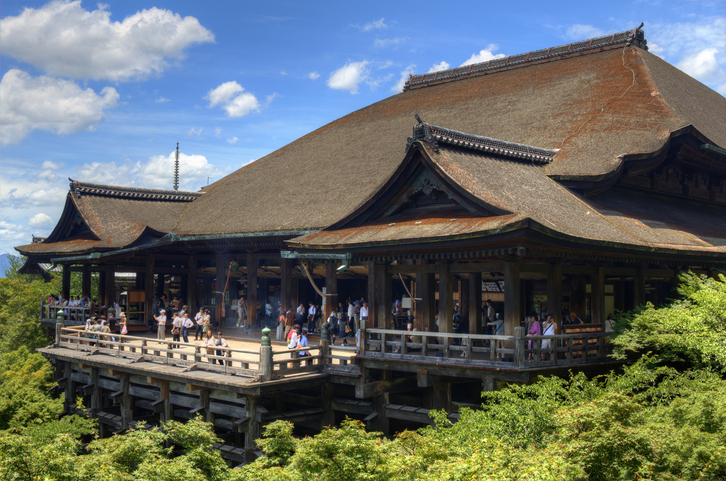
The highlight of Kiyomizu-dera is the grand wooden stage of the main hall, constructed without a single nail, supported by 139 massive pillars. From here, visitors can enjoy a panoramic view of Kyoto: cherry blossoms in spring, lush greenery in summer, crimson leaves in autumn, and snowy landscapes in winter. Each season offers a breathtakingly different expression of beauty, with autumn being one of the most spectacular.
Otowa Waterfall and Belief
Beneath the main hall lies the Otowa Waterfall, divided into three streams. Each is believed to bring blessings for academic success, love, and longevity. Visitors use ladles to catch the flowing water and sip it with a prayer in their hearts, making it one of the most memorable experiences of the temple visit.
Highlights of the Temple Grounds
- Three-storied Pagoda ― Its vivid vermillion color standing tall against the sky makes it one of Kyoto’s most iconic sights.
- Jishu Shrine ― Dedicated to the deity of matchmaking, especially popular among young visitors.
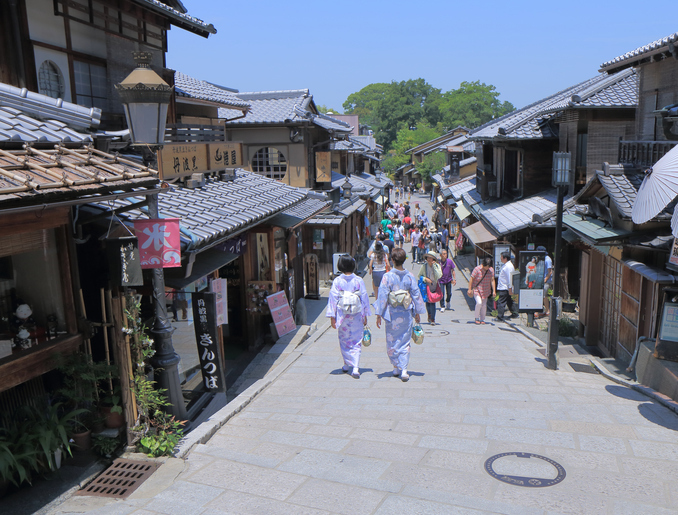
- Kiyomizu-zaka Street ― The approach to the temple lined with shops selling Kyoto sweets, crafts, and souvenirs, perfect for strolling.

Kiyomizu-yaki ― Pottery Carrying the Temple’s Name
From the town surrounding Kiyomizu-dera grew the celebrated pottery known as Kiyomizu-yaki. Originally sold as souvenirs for temple visitors, it has developed into one of Kyoto’s most renowned ceramic traditions. With delicate painting and elegant designs, Kiyomizu ware brings the refined spirit of Kyoto to the dining table.
White Crystal Glaze Kyusu ― Cool Elegance
One beautiful example is the White Crystal Glaze Kyusu (Japanese teapot). Its shimmering crystal patterns reflect light like frozen ice, creating a sense of refreshing coolness. Perfect for late summer, it pairs well with both hot and cold tea.

Bellflower Yunomi ― A Flower of Autumn
Another seasonal piece is the Yunomi teacup featuring bellflowers (Kikyo). Bellflowers are one of Japan’s seven flowers of autumn, symbolizing sincerity and elegance. Their deep violet-blue blossoms bring a graceful seasonal touch to tea time.

Conclusion
The White Crystal Glaze Kyusu and the Bellflower Yunomi are just glimpses into the beauty of Kiyomizu-yaki. Our collection offers many more works that capture the essence of Kyoto’s seasons and craftsmanship. Whether visiting Kyoto in the brilliant colors of autumn or bringing a piece of it home, each item is an invitation to enjoy the timeless spirit of Japanese artistry.