
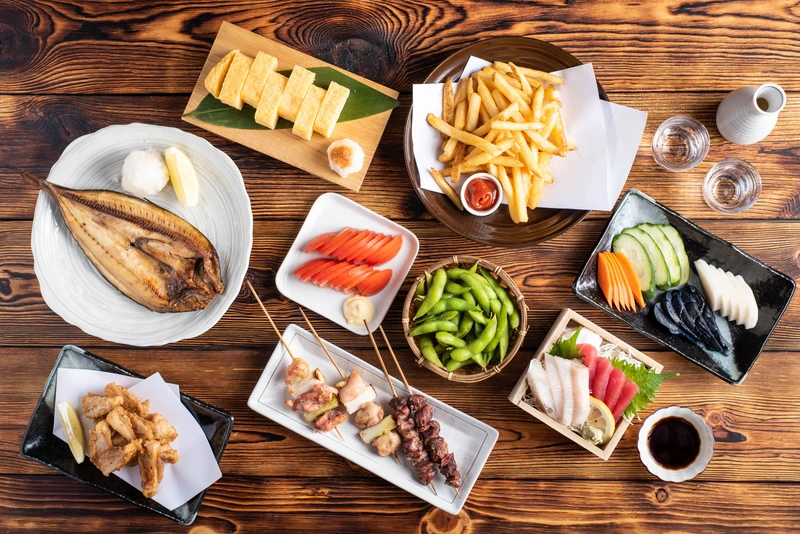
What would you reach for first: a warm skewer, a cool piece of tofu, or the last slice of rolled omelet? A few small dishes sit between the glasses, each offering a different bite. There is room for another plate, and no particular reason to hurry.
An izakaya is a casual Japanese drinking and dining place where food and conversation share the evening. At home, try several dishes to share, something refreshing to drink, and small plates for making your own combinations.
Start with food you enjoy and know how to prepare. The pleasure comes from moving between flavors and textures—and noticing a familiar ingredient when it arrives in its own little bowl.
1. What belongs on an izakaya-at-home menu?
For a first evening, try one vegetable dish, one soft or delicate dish, and one warm centerpiece. Add rice if you want a fuller dinner. Think of this as a starting point to adapt to your appetite.
Edamame, chilled tofu, and grilled chicken make one possible trio. Cucumber, rolled omelet, and sautéed mushrooms make another. Think about the contrast between bites rather than collecting as many recipes as possible. If two dishes are rich and strongly seasoned, a simpler vegetable dish gives you somewhere else to go next.
Let the warm dish be the only thing that needs your attention near serving time. Simple accompaniments leave you more time at the table, where you can enjoy the food too.
For two people, picture a shared plate in the middle and a few small dishes around it. For more guests, repeat the dishes along the table so everyone can reach, adjusting quantities to their appetites.
2. Five dishes that bring different bites to the table
Edamame: a green beginning
Edamame are young soybeans, often served in their pods. They make an inviting first dish: bright green, lightly salted, and easy to return to between other bites. The beans are eaten; the pods are left behind.
Choose a bowl with room to lift a pod, and set an empty bowl nearby for the shells. That small detail keeps the shared plate pleasant as the meal continues. Frozen edamame can be an approachable starting point; use the preparation directions on the package.

Hiyayakko: cool tofu and a little sharpness
Hiyayakko is chilled tofu served with toppings. A simple version with scallions, grated ginger, and soy sauce offers a soft bite with a sharper finish. It is also a lovely place to notice the bowl: pale tofu, green scallions, and a little dark sauce against the glaze.
A small bowl gives the tofu and sauce somewhere to settle. Keep extra seasoning separate so each person can decide how much to add. For a plant-based table, choose plant-based toppings too; bonito flakes, a familiar tofu topping, are made from fish.

Tamagoyaki: a few golden slices
Tamagoyaki is a Japanese rolled omelet. Its cut edges reveal layers, making a few slices feel generous in detail even on a compact plate. Depending on the recipe, the flavor may lean sweeter or more savory.
For an easy evening, a prepared omelet can sit alongside something cooked at home. A narrow plate gives the slices a clear place on the table; a plain round plate works too. Leave space to lift a piece without disturbing the whole row.

A warm plate: chicken or mushrooms
Yakitori means grilled chicken, commonly served on skewers. If skewers are the dish you want to make, choose a recipe suited to your cooking equipment. You can also build this home menu around a familiar chicken dish without calling it yakitori.

Cooked mushrooms offer another warm centerpiece, with browned edges and savory juices beside the cooler tofu and vegetables. Give them a serving dish with a little depth if you want to keep those juices with each portion. The contrast is part of the pleasure: a warm, savory bite followed by the clean taste of tofu or the crunch of cucumber.

A fresh, crisp contrast
A small cucumber dish brings crunch between softer bites. Japanese pickles are another possibility; they are called tsukemono, a broad name covering different pickled vegetables and methods.
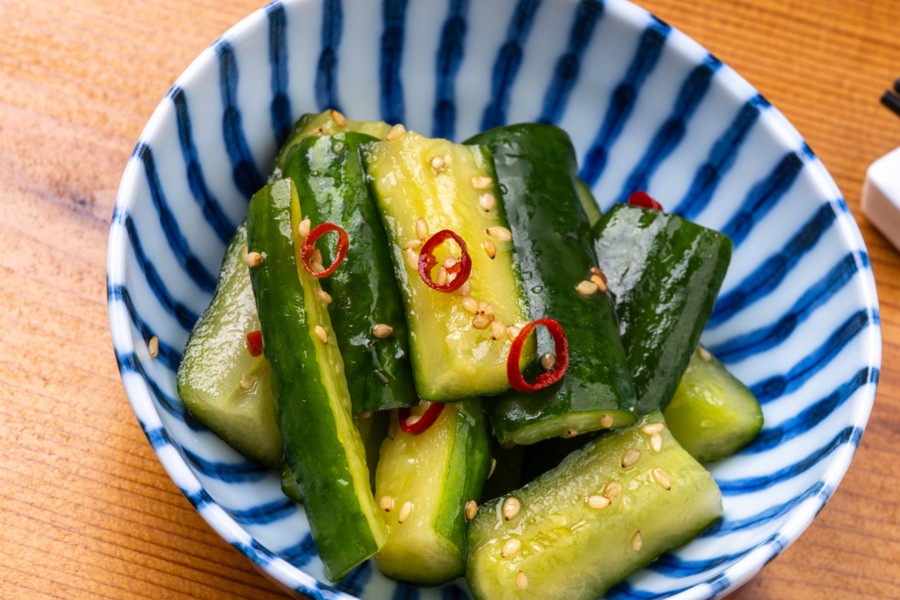
For a first spread, purchased pickles are perfectly reasonable. Serve a little, taste them with the rest of the food, and add more if wanted. A tiny dish keeps their seasoning separate from the omelet or tofu. A few pieces can also bring a new color to a table that otherwise leans golden and brown.
3. Let the evening arrive a plate at a time
An izakaya-inspired dinner does not have to appear as one perfectly synchronized spread. At home, you might begin with the vegetable dish, then bring the warm food when it is ready. The next plate gives the conversation a small interruption: something new to taste, pass, or compare.

Keep the sequence simple enough that you can sit down too. Begin with one freshly cooked dish, and bring another warm plate later if you enjoy making more.
Rice can make the evening feel more like dinner when the smaller dishes are not enough. Plain rice leaves the side dishes in the foreground. For another evening, the shop's onigiri article offers ideas for filled Japanese rice balls.
Tea or sparkling water works for a home version; alcohol is optional. Choose glasses or cups that suit your drink, with room to put them down comfortably between the dishes.
4. Small plates, small bowls, and a place for each person
The serving dishes hold the shared food. Each diner also needs somewhere to put a portion. In izakaya dining, an individual side plate is often called a torizara: a plate for taking food from a shared dish.
A little plate filled with pickles is already doing a job; someone taking chicken needs a separate place for it. Set out a personal plate for each diner and add serving utensils where they make sharing easier.
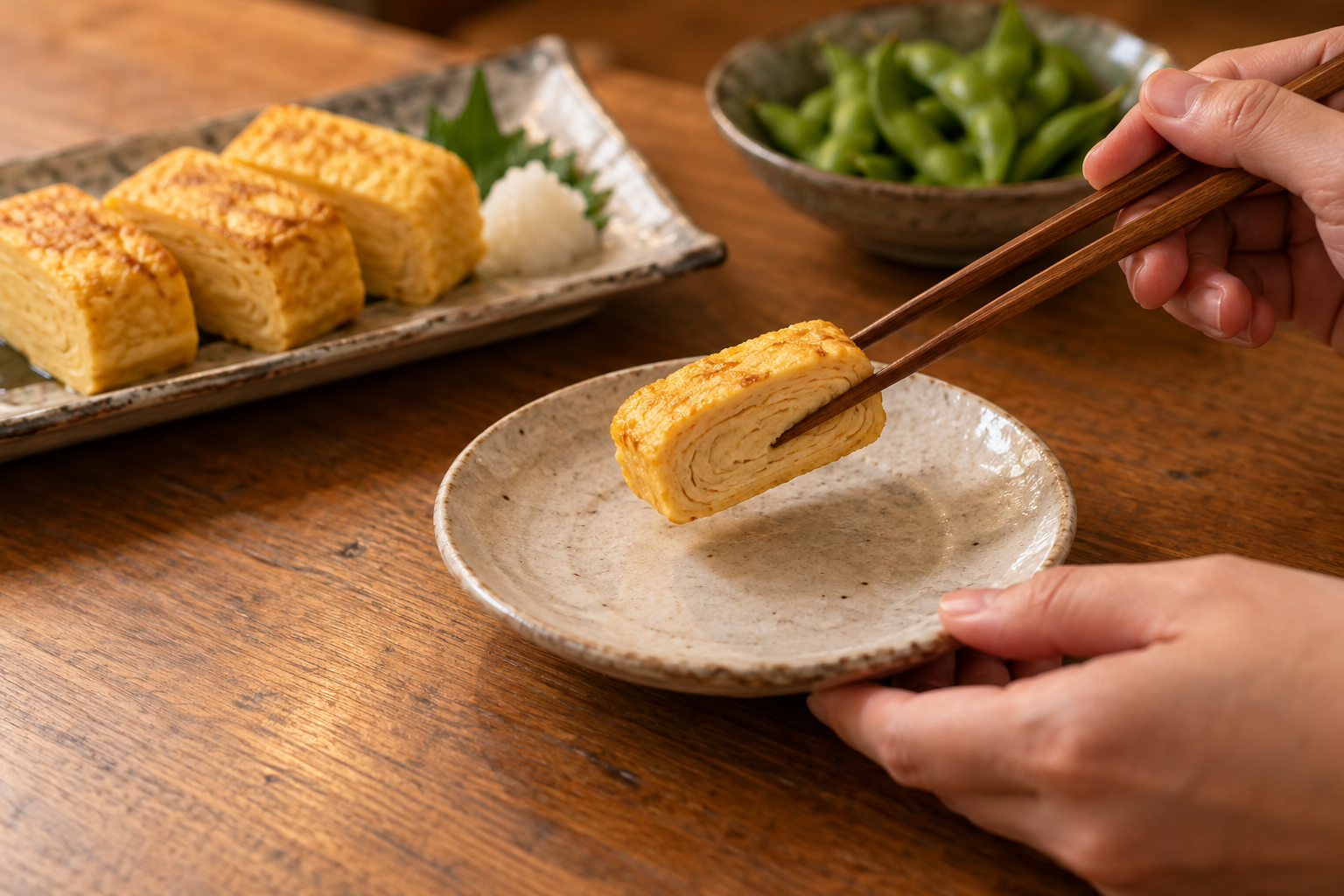
A small bowl—kobachi in Japanese—is a helpful companion for tofu, a dressed vegetable dish, or anything with a little liquid. A flatter plate gives omelet slices or other relatively dry bites an open surface. Start with what the food needs, then enjoy choosing the pattern.
For a first addition to your cupboard, consider the dish you make most often. If you regularly serve tofu or dressed vegetables, browse the Small Bowls / Kobachi collection. If you want a place for a few pickles, a small accompaniment, or a separate portion, explore Small Plate. Check individual dimensions: a category can include several sizes and shapes, and a tiny sauce dish will not do the same job as a personal side plate.
One repeated color can connect different patterns: a blue line on one plate, a blue flower on another, and a plain bowl between them. Try it if you like a mixed table; matching everything is optional.
5. A smaller spread can be the better evening
It is tempting to recreate a photograph with ten dishes and barely a patch of table showing. For an ordinary evening, three foods you enjoy may be more inviting—and leave you time to taste them.
Leave space for the warm plate before it arrives. As dishes empty, bring the remaining bites closer together so they are easy to share.
You can make the table colorful without adding more cooking. A patterned rim around plain tofu, a green vegetable beside golden egg, or a small dish of pickles gives the eye somewhere to pause. Let some of the ceramic remain visible rather than covering every surface with food.
Use your everyday plates and add a small bowl where you need one. After a few evenings, you will know which shapes earn their place.
6. FAQ: izakaya food and your table at home
Q: What is izakaya food?
Izakaya food is the varied food served in casual Japanese pubs, often ordered as dishes to share alongside drinks. It is not one particular dish. A home version can bring that variety to dinner with a few contrasting bites, such as edamame, chilled tofu, and a warm grilled dish.
Q: What are some popular dishes at izakayas?
Common choices include edamame, yakitori (grilled chicken skewers), karaage (fried chicken), sashimi, and pickled vegetables. Menus differ by restaurant. For the home spread in this article, start with the dishes you feel comfortable preparing and add a ready-made accompaniment if it makes the evening easier.
Q: What is the difference between izakaya and yakitori?
An izakaya is a type of drinking and dining establishment; yakitori is grilled chicken, commonly served on skewers. Yakitori may be one dish on an izakaya menu, and there are also restaurants that specialize in it. Your home menu can include chicken skewers without making every dish grilled.
Q: Do I need special plates for an izakaya-style dinner at home?
Everyday side plates and small bowls are enough to begin. Give each diner a personal plate for taking portions from shared dishes. Choose a small bowl for tofu or dressed vegetables with liquid, and a flatter plate for omelet slices. Check dimensions when choosing new pieces so they suit the portions you actually serve.
Q: Can I make a vegetarian izakaya-style menu?
Yes. For a home version, combine edamame, chilled tofu, mushrooms, vegetables, and rice. Check stocks, sauces, toppings, and prepared foods: a vegetable dish may still contain fish-based dashi or bonito flakes. Choose ingredients that match the dietary needs of everyone at the table.

A little room remains between the plates. Someone takes another piece of omelet; the mushroom dish passes back across the table. Perhaps that is the part of the evening worth bringing home—the pleasure of a few different bites, with time to enjoy them.
Explore our Small Plate and Small Bowls / Kobachi collections →