
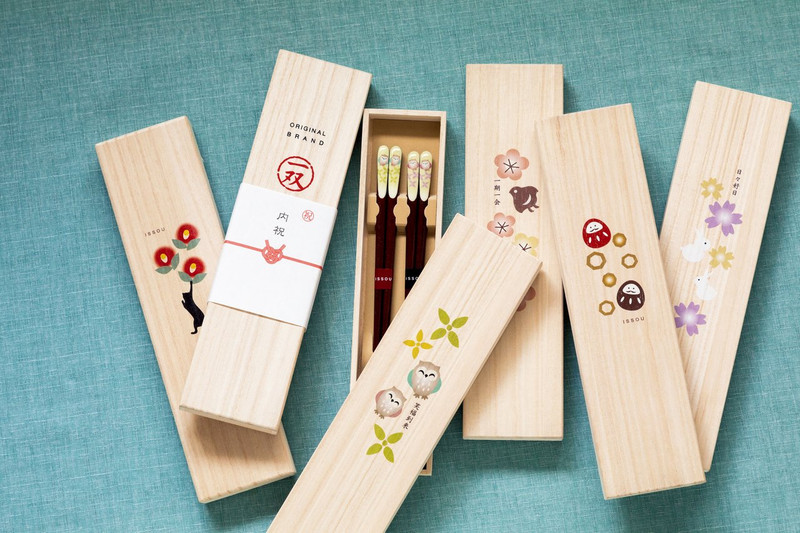
In Japanese, chopsticks and bridge share one word — hashi. To give chopsticks is to give a bridge: to happiness, to good fortune, to the people at the table.
In Japan, chopsticks are not a utensil you happen to give. They are one of the country's classic gifts — given at weddings, at housewarmings, at New Year, at retirements — and the reason is hidden inside the word itself. Hashi (箸), chopsticks, sounds exactly like hashi (橋), bridge. To give someone chopsticks is, in the older grammar of Japanese gift-giving, to give them a bridge: to happiness, to good fortune, to the people they share their table with. Few gifts this small carry this much meaning on purpose.
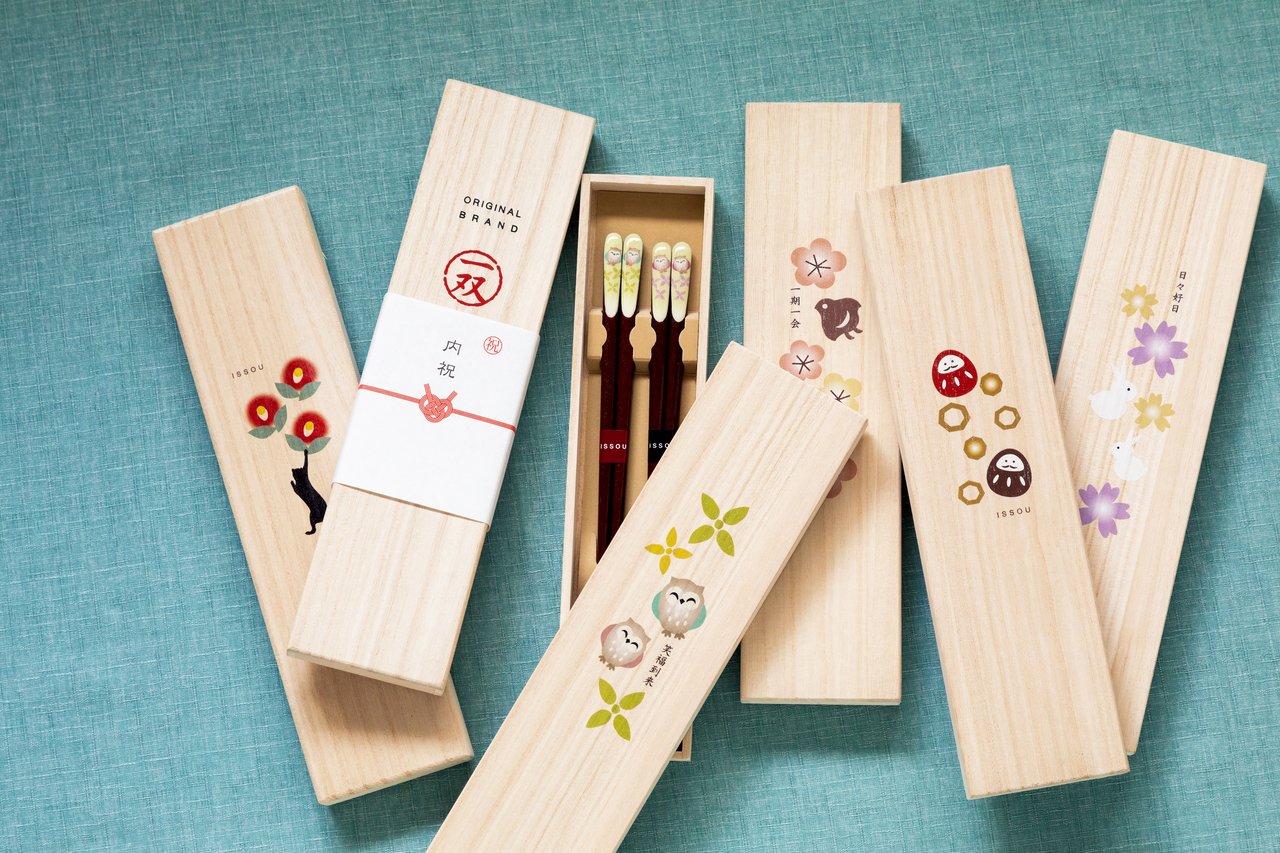
That meaning is also what makes the choosing feel weighty. Which pair? What length? Lacquered or plain? One pair or two? This guide walks through it the way a shop assistant would if you had all afternoon: first what the gift means, then the practical matters of size and material, then how to match the pair to the person and the occasion — with the small etiquette notes that make the gift land as gracefully as you intend.
On this page
1. What Giving Chopsticks Means
Three wishes travel inside a gift of chopsticks, and it is worth knowing them, because they are what you are actually giving.
A bridge to happiness. The hashi/hashi homophone — chopsticks and bridge — makes the pair a symbol of passage and connection: happiness carried across to the receiver, people connected to people. This is the meaning invoked when chopsticks are given at life's crossings — a wedding, a new home, a new year, a new chapter.
Partnership. A chopstick is useless alone; the pair works only together, inseparable and equal. This is why two pairs boxed together — meoto-bashi (夫婦箸), "married-couple chopsticks" — are among the most traditional wedding gifts in Japan: a wish, made in lacquered wood, that two people work as one for a lifetime.
Health and long life. Chopsticks carry every meal a person eats. To give them is to wish the receiver a lifetime of good meals — nourishment, health, and never an empty table. This is the quiet reason chopsticks suit birthdays and respect-for-elders occasions so well.
And one reassurance, since gift-buyers sometimes worry: in Japan, giving chopsticks carries no ill meaning. (The hesitations you may have read about belong to other traditions and other objects.) A well-chosen pair is among the safest and most welcome gifts in Japanese culture — personal, practical, and auspicious at once.
2. Getting the Size Right
Chopsticks are one of the few gifts with a size, and getting it roughly right matters more than getting it perfect.
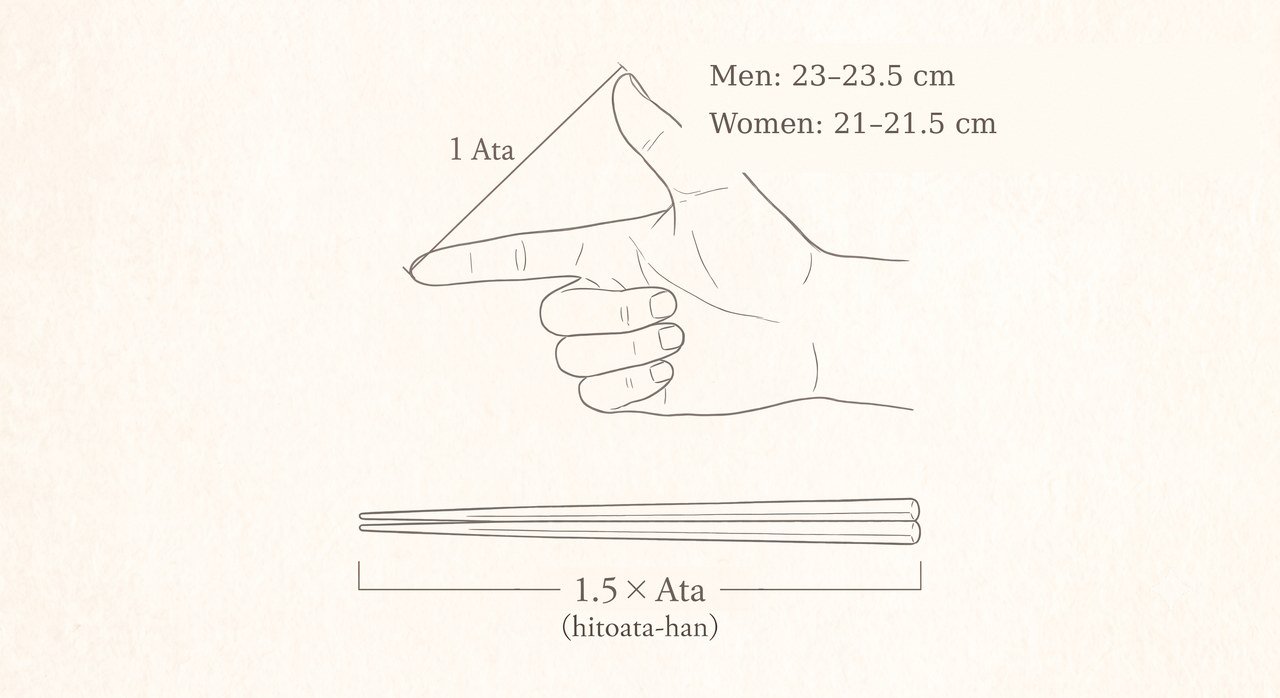
The traditional measure is called hitoata-han — one and a half ata, where an ata is the distance from the tip of the thumb to the tip of the index finger when opened at a right angle. In practice you will not be measuring anyone's hand in secret, so use the honest shorthand: most men are comfortable with 23–23.5 cm; most women with 21–21.5 cm; children shorter by age. This is exactly why Japanese chopsticks are sold in L and S sizes, and why couple sets pair one of each — the difference is not decoration but fit.
If you truly do not know, err one of two ways: choose a standard L or S by the person's general build, or choose a meoto set and let the household sort out whose is whose — which, in Japan, is half the charm of the gift.
3. Reading the Materials
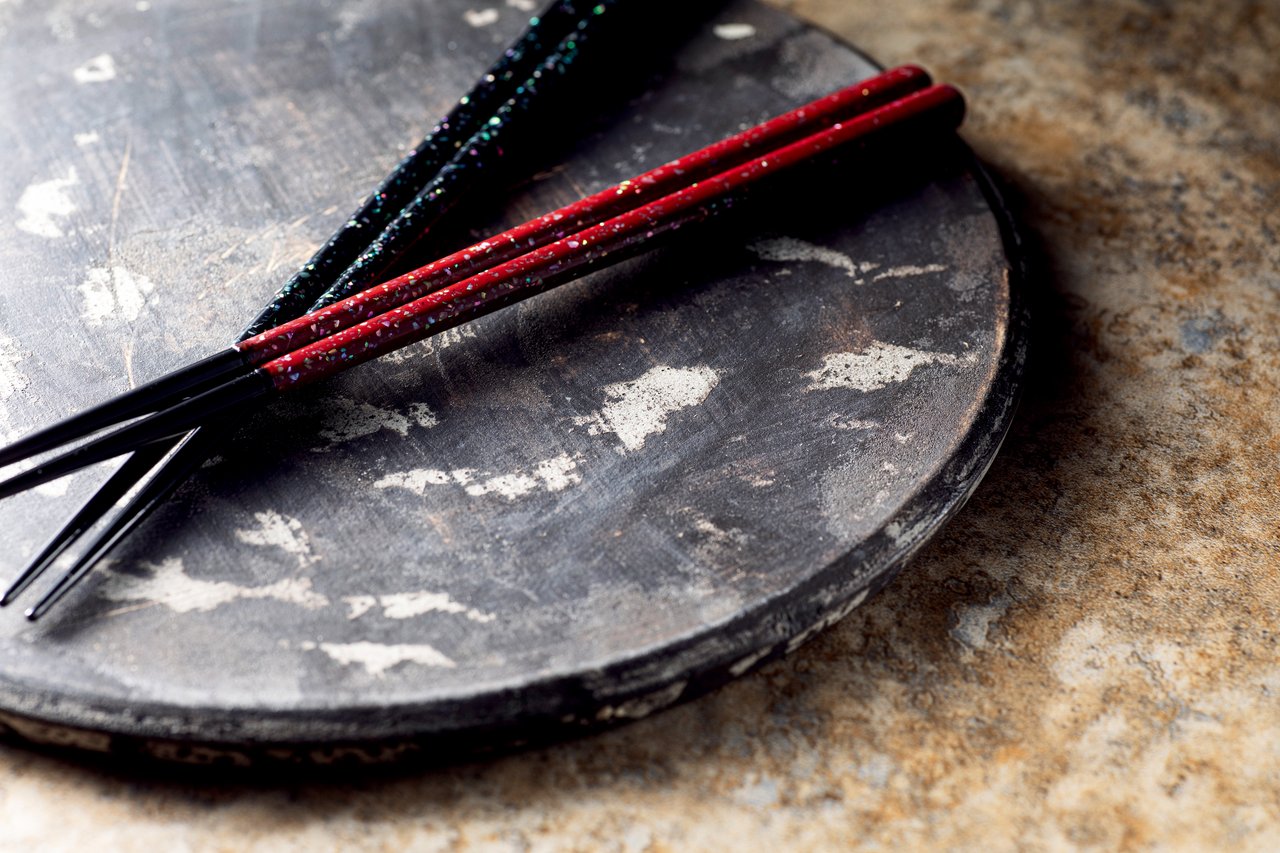
Almost every fine Japanese chopstick is wood, and the differences that matter to a gift-buyer are in the finish.
Lacquered chopsticks (nuribashi) are the gift standard — sealed, durable, and beautiful, with the color and pattern carried in the lacquer itself. The great chopstick lacquer towns each have a signature: Wakasa-nuri (Obama, Fukui) sets eggshell and seashell into layered lacquer and polishes down until the pattern glows — the most celebrated gift chopstick in Japan; Wajima-nuri (Ishikawa) carries maki-e — designs painted in gold; Yamanaka (Ishikawa) is known for refined wood and warm, clean lacquer work. A pair from any of these towns arrives with a story to tell, which is precisely what a good gift wants.
Untreated wood and bamboo (shiraki) have their own quiet beauty and a lovely bare-wood grip, but they ask for more care — regular oiling, strict drying — so they suit the person who enjoys tending their things. For most gift occasions, lacquer is the kinder choice.
A note on price honesty: a fine lacquered pair runs from about $50 to several hundred dollars for master work, and the register is visible in the depth of the lacquer. But even a modest Wakasa pair is a real object from a real workshop — in chopsticks, unlike many gifts, the entry price of authenticity is low.
4. Matching the Pair to the Person and the Occasion
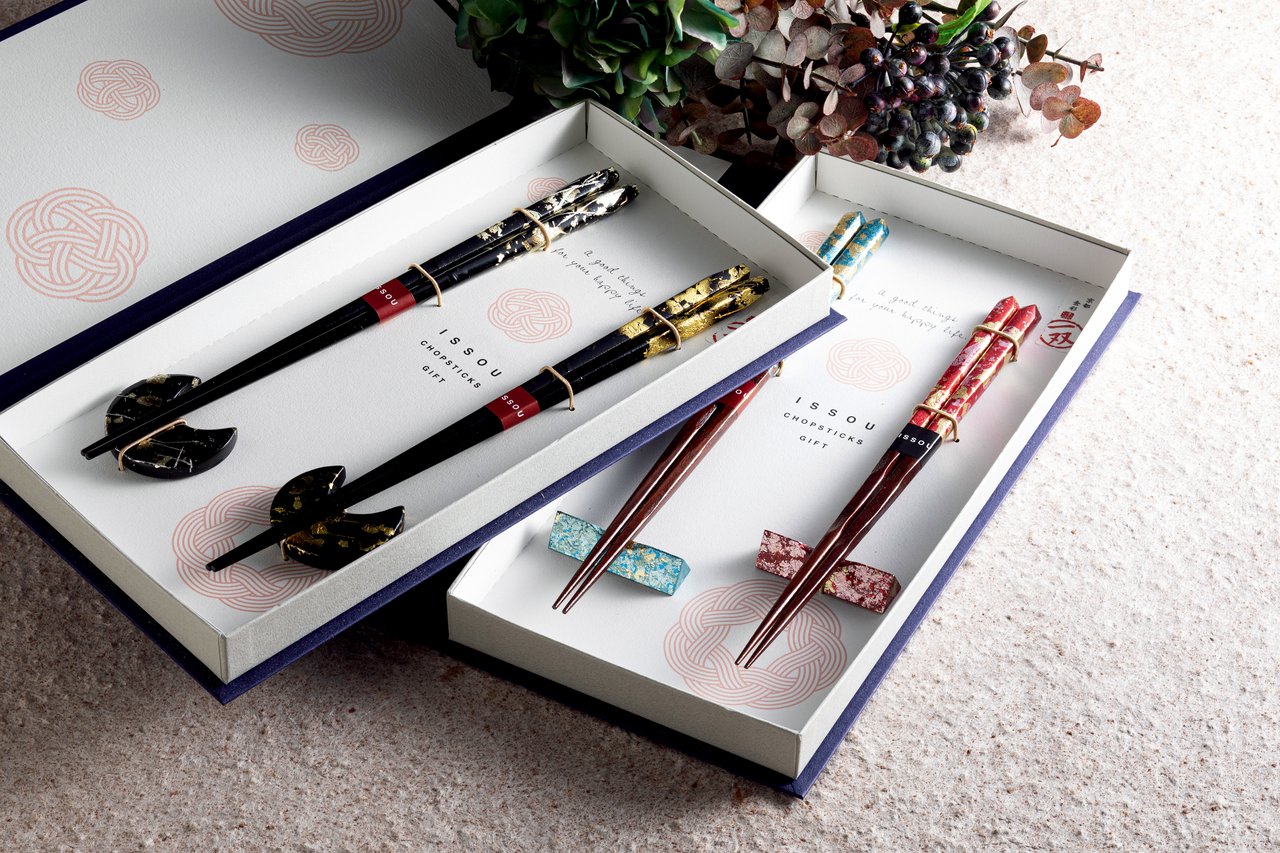
For a wedding or a couple — the classic: a boxed meoto-bashi set, two pairs in complementary colors (traditionally the longer in the darker color), often with chopstick rests included. The box matters here; this is a gift meant to be opened.
For a birthday or a milestone — one fine pair, chosen for the person: a Wakasa pair with depth for the person who loves craft, a maki-e motif with meaning (crane for long life, cherry blossom for new beginnings, Mt. Fuji for aspiration). Adding a chopstick rest turns a pair into a small complete gift set.
For a new home or New Year — chopsticks shine here because of the bridge meaning and because Japan has an old custom of renewing chopsticks at the year's start. A fresh, beautiful pair for a fresh chapter reads exactly as intended.
For someone abroad who loves Japan — a lacquered pair plus a rest is the ideal cultural gift: light to ship, useful daily, unmistakably Japanese, and carrying its story on its surface. Include a line about the hashi/bridge meaning in your card; it is the part people remember.
For a colleague or a thank-you — keep it warm but modest: a single well-made pair in a sleeve or slim box, in a color suited to the person. In Japanese gift culture, the thought and the fit matter far more than the price.
Two etiquette notes, both easy. Give chopsticks boxed or wrapped — in Japan the presentation is part of the object, and good pairs come in gift boxes for exactly this reason. And if the gift marks a celebration, red-and-black or red-and-gold pairings read festive; plain dark pairs read more everyday.
5. Frequently Asked Questions
Q: Is it good luck to give chopsticks in Japan?
Yes. Because hashi (chopsticks) sounds like hashi (bridge), chopsticks are a traditional gift of connection and good fortune — a "bridge to happiness." They also carry wishes for partnership (a pair that works only together) and for health and long life (the tool of every meal). They are a standard, welcome gift at weddings, housewarmings, birthdays, and the New Year.
Q: What are meoto-bashi?
"Married-couple chopsticks" — a boxed set of two pairs, usually in complementary colors and two lengths (traditionally the longer, darker pair and the shorter, warmer-colored pair). They are the classic Japanese wedding and anniversary gift, symbolizing two people working as one.
Q: What length of chopsticks should I choose?
The traditional fit is hitoata-han — 1.5 times the distance between outstretched thumb and index finger. As a practical shorthand: about 23–23.5 cm for most men, 21–21.5 cm for most women. When in doubt, standard L and S sizes cover nearly everyone, and a couple set includes one of each.
Q: Are lacquered chopsticks durable enough for daily use?
Yes — lacquer exists precisely to seal and protect the wood, and a well-made pair used daily and washed gently lasts for years. The care is simple: hand-wash soon after the meal, no soaking, no dishwasher, dry with a cloth. A one-line care note tucked into the gift box is a kind touch.
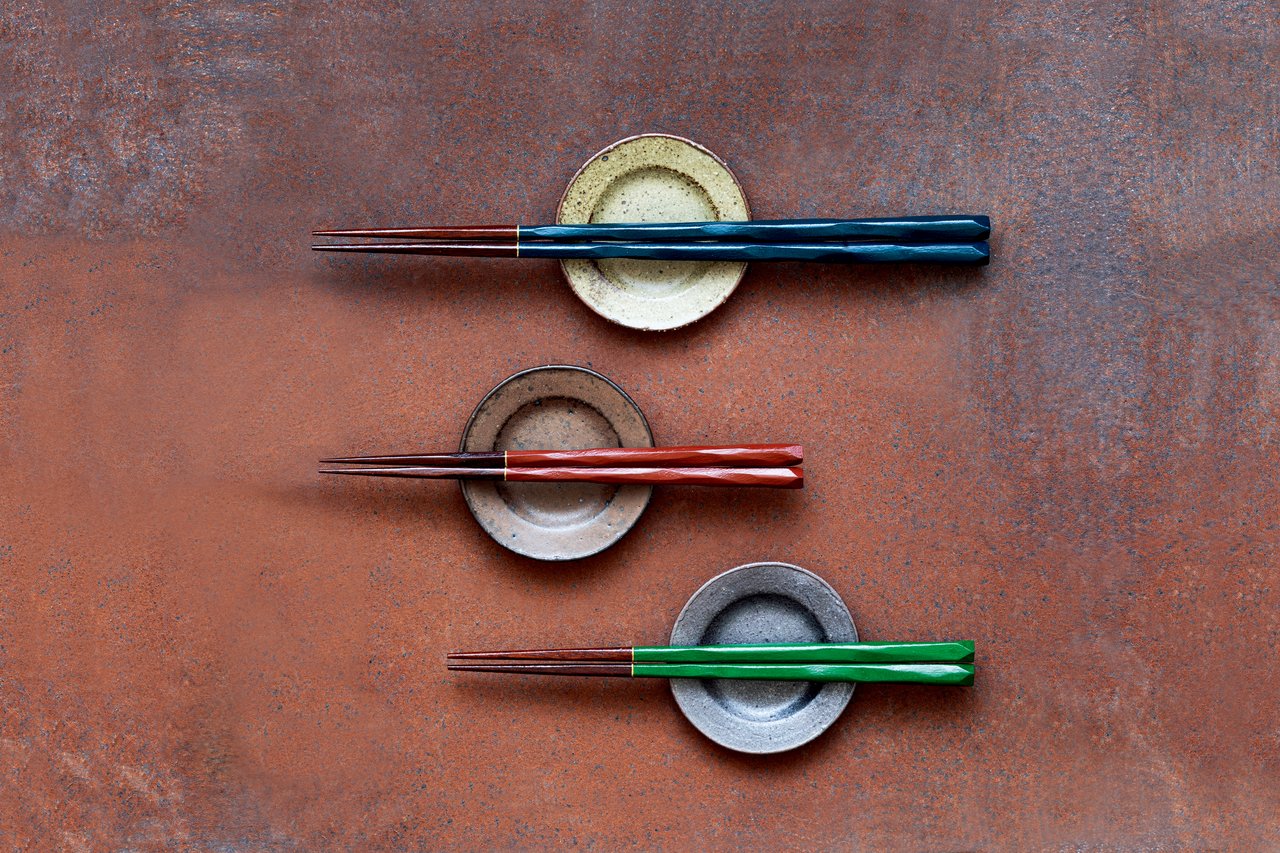
Q: Should I include chopstick rests with the gift?
It is a lovely upgrade rather than a requirement. A rest (hashioki) protects the tips at the table, and a pair-plus-rest reads as a complete, thoughtful set — many boxed gift sets include them for exactly this reason.
Q: How do you pick chopsticks in Japan?
The way a Japanese shopper does it, in order: length first (hitoata-han, or simply L for larger hands, S for smaller), then finish (lacquered for durability and beauty, bare wood for grip and the pleasure of tending it), then the feel in the hand — the weight, the balance, the shape of the shaft (round, hexagonal, octagonal; the faceted shapes resist rolling and sit more securely in the fingers). Only after all that comes the color and pattern. Fit first, beauty second — because a pair that fits gets used every day.
Q: What should I look for in Japanese chopsticks?
Four things. Fine, precisely finished tips that meet evenly when closed — this is where eating comfort lives, and where cheap pairs fail first. Straightness — good pairs lie flat and true. A finish with depth: on a lacquered pair, the coating should look even and softly deep, with no thin patches or bubbles. And honest materials, stated plainly — the wood named, the lacquer identified (natural urushi or synthetic), the region declared. A maker proud of those details is a maker who did the rest well too.
Q: What is the best Japanese brand of chopsticks?
Japan mostly thinks in regions and workshops rather than brands. The names to know are the lacquer towns: Wakasa (Obama, Fukui) — the most celebrated chopstick lacquer tradition, said to produce the majority of Japan's fine lacquered chopsticks; Wajima and Yamanaka (Ishikawa) for maki-e and refined woodwork; and Edo kibashi (Tokyo) for precision-planed bare wood. A pair honestly labeled from one of these traditions is the Japanese answer to "a good brand" — the town's name is the trademark, and it has been for centuries.
Q: How can I tell if chopsticks are high quality?
Roll them on a flat table — a fine pair rolls smoothly and evenly, with no wobble that betrays a bend. Close them and look at the tips — they should meet cleanly along their whole length. Feel the balance — a good pair sits slightly back-weighted in the grip, so the tips feel light and precise. And read the lacquer in the light — depth and evenness signal patient work; a glassy, shallow shine signals a quick coat. None of these checks needs expertise; they are exactly what a careful shopper in a Japanese chopstick shop does at the counter.
6. Editor's Picks — Three Gifts, Three Occasions
Three pieces from our collection, one for each register this guide describes — the milestone gift, the wedding classic, and the complete small gift.
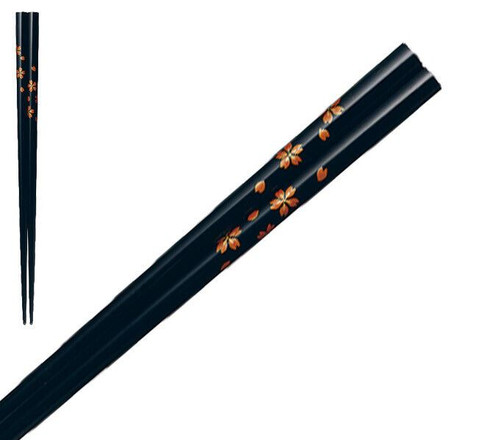
Pick 1 — Wajima Maki-e Chopsticks “Kobore Sakura” Black (L). The milestone gift. From Wajima, the most storied lacquer town in Japan, a black pair carrying kobore sakura — "spilling cherry blossoms" — painted in gold maki-e. Cherry blossom is the motif of new beginnings, which makes this the pair for a graduation, a new job, a fresh chapter; the maki-e gold makes it read as the honor it is meant to be. A red S version exists for pairing. (See the chopsticks)
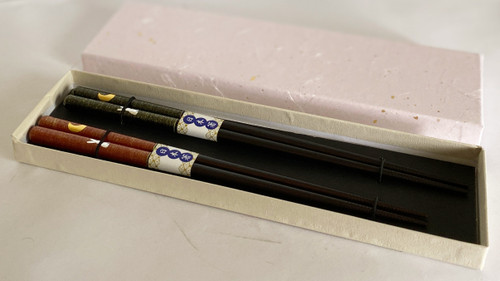
Pick 2 — Yamanaka Couple Chopsticks, Mt. Fuji, Boxed. The wedding classic. A meoto set from the Yamanaka lacquer tradition — two pairs, two lengths, crowned with Mt. Fuji, itself a symbol of aspiration and good fortune. Boxed and ready to give, it is the gift this whole guide keeps circling back to: two pairs that work as one, for two people who intend to. Equally right for an anniversary or a couple's new home. (See the set)
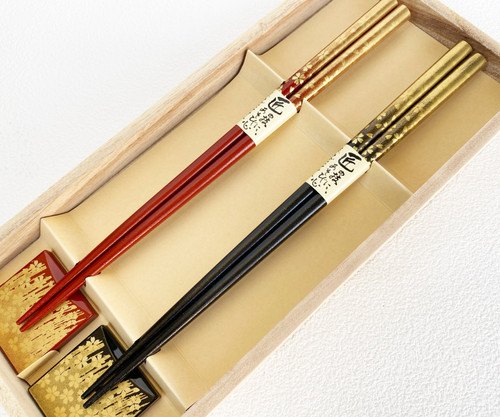
Pick 3 — Yamanaka Chopsticks & Sakura Rest Set. The complete small gift. One pair of Yamanaka chopsticks with gold-dusted cherry-blossom rests — the pair-plus-rest combination this guide recommends, already composed. Friendly in price, complete on arrival, and suited to nearly anyone: a thank-you, a birthday, a first gift to someone discovering Japanese craft. The rest protects the tips at every meal, so the gift quietly takes care of itself. (See the set)
7. Closing
A gift of chopsticks is a small object carrying three large wishes — a bridge to happiness, a partnership that works only together, and a lifetime of good meals. Choose the length honestly, choose a lacquer town with a story, match the register to the occasion, and let the box do its quiet work. The rest, the receiver will understand every time they sit down to eat. If you would like help choosing a pair for a particular person or occasion, we are always glad to help.
— from Osaka, Team Manekineko-Ai