
A meaningful gift is rarely the most expensive one. In the Japanese tradition, the meaning is woven into the colour, the motif, the material, and the occasion — a small piece can carry a larger wish than a far costlier object.
If you are choosing a Japanese gift for the first time, here is the idea that makes the rest easy: a vermilion bowl and a black bowl are not two colours of the same thing — they are two different wishes. A crane and a pine are not two decorations; they are two different things you are hoping for the person who receives them. This guide is a short way of reading — a literacy that lets you choose the way someone inside the tradition would: by matching the occasion, the symbol, and the object to the person in front of you.
On this page
1. What Makes a Gift "Meaningful"
A meaningful gift is rarely the most expensive one. In the Japanese gift tradition, meaning comes from somewhere quieter: from the colour of a piece, the motif worked into its surface, the material it is made from, and the occasion it is given for. A small lacquered cup or a single painted bowl can carry more meaning than a far costlier object, because the meaning is not in the price tag — it is in the language the piece is speaking.
This is the part of Japanese gift-giving that is easy to miss from the outside. To a first-time buyer, a vermilion bowl and a black bowl may look like two colours of the same thing. To someone who knows the tradition, they are two different wishes. A crane and a pine are not two decorations; they are two different things you are hoping for the person who receives them.
This guide is not a list of products to buy. It is a way of reading — a short literacy that lets you choose a Japanese gift the way someone inside the tradition would: by matching the occasion, the symbol, and the object to the person in front of you. Once you can read those three layers, the choosing becomes easy, and the gift becomes something the receiver keeps.
2. The Three Layers of Meaning
Almost every meaningful Japanese gift can be read on three layers at once. Holding all three in mind is the whole skill.
The occasion. A wedding, a new home, a retirement, a birth, a graduation — each traditionally calls for a different tone of gift. The occasion sets the emotional key the gift should be in. A gift that is beautiful but pitched to the wrong occasion can feel slightly off, the way a cheerful card at a solemn moment does.
The symbol. Japanese craft carries a deep vocabulary of colour and motif, and each element is a small wish. Red for celebration and protection; gold for prosperity; the crane for long life; the pine, bamboo, and plum for endurance through hardship. When you choose a motif, you are choosing the wish you are sending.
The object. What the gift actually is — and what role it will play in the receiver's daily life — is the third layer. A pair of chopsticks used every evening carries a different kind of meaning than a single keepsake cup brought out once a year. Neither is better; they are meant for different relationships and different kinds of remembering.
The rest of this guide takes each layer in turn. None of them is complicated. Together they let you walk into the choosing with a clear question in mind: what occasion, what wish, and what daily life am I choosing for?
3. Reading the Occasion
The occasion is the first thing to settle, because it narrows everything that follows. A few of the occasions you are most likely to be choosing for, and what each traditionally calls for:
Weddings and couples (結婚). The register here is pairs and lasting bonds. Paired objects — two cups, two bowls, two sets of chopsticks — carry the wish for a partnership that lasts. The most traditional form is meoto (夫婦, "husband and wife"), where the two pieces are made as a matched pair, often in two complementary sizes. Colours lean toward celebration: vermilion and gold, or the classic black-and-red pairing.
A new home (新築・新居祝い). A housewarming gift is for daily life beginning again. The strongest choices are pieces that will be used in the first ordinary mornings and evenings in the new space — a pair of rice bowls, a set of everyday cups, a small vase for the entryway. The wish is not grandeur, but a sense of calm and belonging — that the home fills quickly with ordinary good days.
Retirement and milestone birthdays (退職・還暦). These occasions reward a piece with gravity — something that marks a long stretch of life rather than a daily routine. A lacquered sake cup, a finely painted bowl, a writing instrument for a new chapter of free time. The sixtieth birthday, kanreki (還暦), is traditionally associated with red, which is why red appears so often in gifts for this milestone.
Births and children (出産). Here the register is growth and protection. Motifs that wish for a long, healthy life — the crane, the tortoise, the hardy pine — are traditional. The gift is often something the child will grow into rather than use immediately, chosen to last into their adulthood.
Graduations and new careers (卒業・就職). The wish is forward motion. A practical, daily-use piece that marks the threshold into adult life works well — a first proper set of chopsticks, a personal cup, a fountain pen for someone stepping into working life. The meaning is quiet encouragement rather than ceremony.
The two gift seasons (お中元・お歳暮). Beyond personal milestones, Japan has two traditional seasons of gift-giving: ochūgen (お中元) in midsummer and oseibo (お歳暮) at the year's end. These are gifts of gratitude rather than celebration — sent to the people who have supported you through the year: a mentor, a teacher, a family that has helped yours. The register is warm and unshowy, and the gift is often something consumable or useful for the household rather than a keepsake. If you are choosing for one of these seasons, the wish you are sending is thank you for this year, not congratulations.
Settling the occasion first does most of the work. It tells you the emotional key, and it usually points you toward either a pair, a daily piece, or a keepsake — which is the third layer, below.
4. Reading the Symbol — Colour and Motif

If the occasion sets the key, the symbol carries the actual wish. This is the layer most outsiders never learn, and it is the one that turns an attractive object into a meaningful one. A short reading of the vocabulary you will meet most often.
Colour. In Japanese craft, colour is rarely only decorative.
- Red and vermilion (朱・赤) are the colours of celebration and protection. Vermilion has, for centuries, been believed to ward off misfortune; it is the colour of shrine gates and festival lacquer. Red is the traditional colour of the sixtieth-birthday celebration. A red piece is a celebratory, protective wish.
- Gold (金) signals prosperity and high regard. Gold accents — a band of gold on a cup, gold detailing painted onto porcelain, gold powder sprinkled into lacquer — lift a gift into a more formal, more celebratory tone.
- Black (黒) reads as depth, formality, and quiet dignity. A black lacquer piece is not sombre; it is the most composed and serious register of the craft, often paired with red or gold to balance gravity with warmth.
- Indigo and blue (藍) read as calm, everyday steadiness — the colour of the ordinary good day rather than the celebration. Blue-and-white porcelain is the tone of the comfortable, lived-in home.
Motif. The patterns worked into Japanese craft are an old language of wishes.
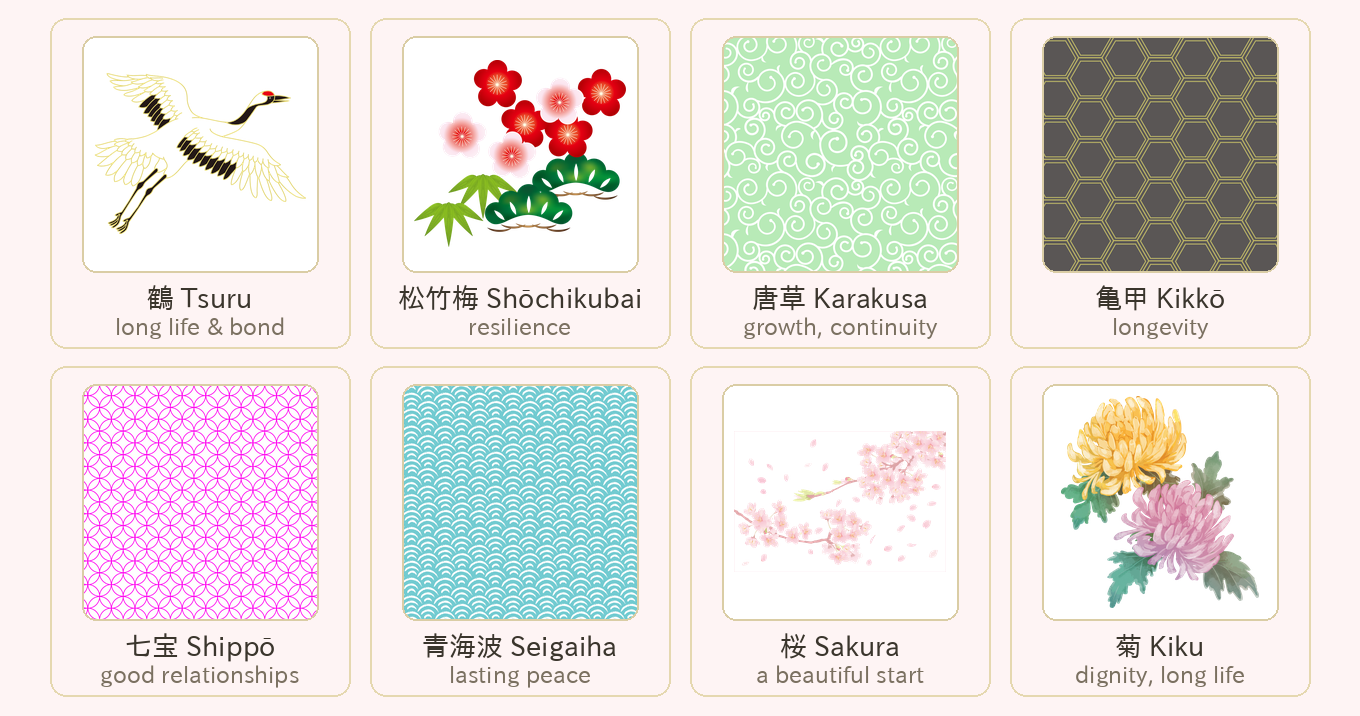
- The crane (鶴) is the wish for long life and a lasting bond. Cranes are believed to mate for life, which is why a pair of cranes is among the most traditional wedding motifs.
- Pine, bamboo, and plum (松竹梅, shōchikubai) together form the classic auspicious trio — endurance through hardship. The pine stays green through winter; the bamboo bends without breaking; the plum blossoms while snow is still on the branch. As a group they are a wish for resilience.
- The karakusa arabesque (唐草) — winding vines that spread without end — is a wish for growth, prosperity, and a family line that continues. It is a particularly warm motif for a new home or a new family.
- The tortoise (亀) is, with the crane, half of the most famous longevity pairing in Japan — tsuru wa sennen, kame wa mannen ("the crane lives a thousand years, the tortoise ten thousand"). A crane-and-tortoise gift is a doubled wish for a long life.
- The seven treasures (七宝, shippō) — a pattern of overlapping circles — is a wish for good relationships and harmony, each circle linked to the next. It is a gentle, much-loved motif for weddings and anniversaries.
- Waves (青海波, seigaiha) — calm, repeating arcs like the surface of a quiet sea — carry the wish for peace that continues without end, a settled and durable good fortune.
- Seasonal flowers carry their own meanings: the cherry blossom for a beautiful beginning, the chrysanthemum for dignity and long life, the camellia and peony for their own registers of beauty and standing. A seasonal-flower gift quietly ties the piece to the time of year it is given.
You do not need to memorise the whole vocabulary. It is enough to know that the colour and the motif are saying something, to ask what they say, and to choose the saying that fits the person.
5. Reading the Object — Pairs, Daily Pieces, and Keepsakes
The third layer is the object itself, and the most useful way to read it is by the role it will play in the receiver's life. Most meaningful gifts fall into one of three kinds.
Pairs. A paired object carries the wish for a bond — which is why pairs are the heart of wedding and anniversary giving. Meoto-bashi (夫婦箸, paired "husband-and-wife" chopsticks), two matched cups, or a pair of rice bowls all say the same thing: may the two of you last. A pair is also a quietly generous gift, because it is given to a relationship rather than to a single person.
Daily pieces. A gift used every day becomes part of the receiver's life in a way a displayed object never does. A favourite cup for the morning, a pair of chopsticks that returns to the table each evening, a small dish that finds a hundred uses — these are the gifts that are remembered not for a single moment but for the years of ordinary use that follow. For a new home or a graduation, a well-made daily piece is often the most quietly meaningful choice.
Keepsakes. Some gifts are meant to be brought out rarely and kept for a long time — a lacquered sake cup taken down for the new year, a finely painted bowl used only for guests, a writing instrument that marks a career milestone. A keepsake carries the weight of the occasion rather than the rhythm of daily life. It is the right register for retirements, milestone birthdays, and the moments a person will want to remember specifically.
Matching the kind of object to the occasion is the last step of the choosing. A wedding wants a pair; a new home or a graduation wants a daily piece; a retirement or a milestone wants a keepsake. Once the occasion and the symbol are settled, the object usually chooses itself.
6. A Quiet Note on Presentation

In the Japanese tradition, how a gift is given matters nearly as much as what is given. The gesture is meant to be modest. A gift is often offered with a few words that gently understate it — not because the giver thinks little of it, but because humility is part of the courtesy. The meaning is allowed to speak for itself rather than being announced.
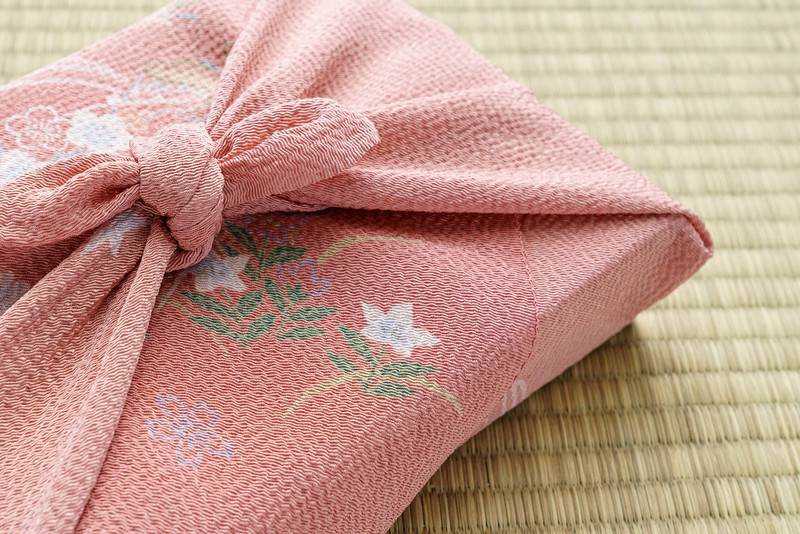
Wrapping is part of this. The furoshiki (風呂敷) — a square cloth folded and tied around the gift — is the traditional wrapping, and it carries its own quiet meaning: the cloth can be kept and reused, so the wrapping itself becomes a small second gift. A piece wrapped in a simple, well-chosen cloth needs very little else.
None of this requires ceremony. It is enough to choose the piece with care, wrap it simply, and offer it without overselling it. The restraint is the point — and it is, in its own way, the most Japanese part of the gift.
7. A Few Things to Avoid
A meaningful gift also means steering clear of a few quiet pitfalls. None of these are absolute rules, but they are widely felt, and knowing them keeps a well-meant gift from carrying an accidental wrong note.
Certain numbers. When giving a set, the numbers four and nine are traditionally avoided. Four (四, shi) sounds like the word for death (死), and nine (九, ku) like the word for suffering (苦). Sets are usually given in pairs, threes, or fives instead. This is why so many Japanese tableware sets come in fives rather than the Western six.
Cutting implements. Knives, scissors, and other sharp blades can suggest "cutting the relationship," and are traditionally avoided as gifts between people who wish to stay close — particularly for weddings. If a cutting tool is genuinely wanted, the old workaround is for the receiver to "buy" it with a small coin, so it is a purchase rather than a gift.
A few specific objects. White handkerchiefs are sometimes avoided because they can suggest parting or mourning; combs (櫛, kushi) sound like the words for suffering and death (苦・死) when read syllable by syllable. Clocks and shoes are sometimes avoided for elders, as they can imply "your time is limited" or "I am sending you on your way." These are gentle superstitions rather than firm prohibitions, but a small awareness of them is part of choosing well.
The point is not to tiptoe nervously around a long list of taboos. It is simply that a meaningful gift is a careful one — and a few moments of care at the choosing stage are exactly what makes the gift feel considered.
8. Editor's Picks — A Few Starting Points
A few pieces from our collection that show how the three layers come together across the everyday forms most gifts are chosen from. These are offered as starting points; the right choice is always the one that fits your occasion, your wish, and the person you have in mind.
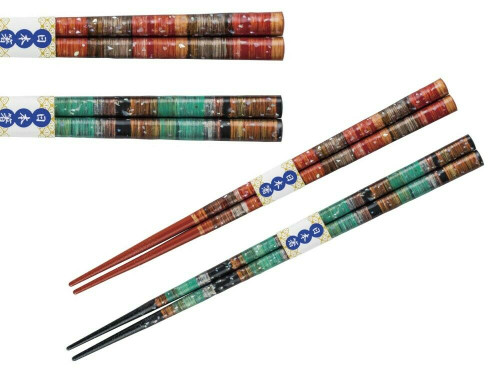
Pick 1 — Yamanaka Paired Chopsticks, Kujaku-zome, Black. A gift in the pair register: two matched lacquered chopsticks in the meoto-bashi (夫婦箸) tradition, made for a partnership meant to last. A quietly thoughtful wedding or housewarming gift — given to a relationship rather than to a single person. (See the pair)
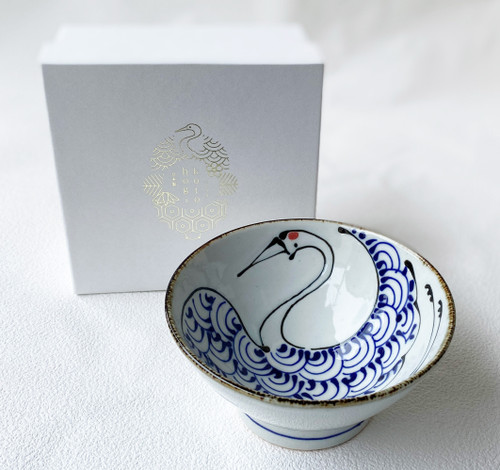
Pick 2 — Arita Crane Rice Bowl, Kotohogi. A daily piece for a new home. Hand-painted Arita porcelain in the sturdy kurawanka rice-bowl form, carrying the crane — the wish for long life and a lasting bond. Used at the table every day, it carries its meaning quietly into ordinary mornings rather than being saved for display. (See the bowl)

Pick 3 — Yamanaka Maki-e Fountain Pen, Crane Sunrise. A keepsake for a graduation or retirement. The barrel is finished in lacquer with maki-e (蒔絵) gold decoration — a crane in flight against a sunrise — marking a threshold or a milestone in a register few writing instruments reach. (See the pen)
9. Closing
A meaningful Japanese gift is not a matter of spending more. It is a matter of reading — of knowing that the colour, the motif, the material, and the occasion are all speaking, and of choosing the piece whose meaning fits the person in front of you. A vermilion cup for a celebration, a pair of chopsticks for a marriage, a quiet blue bowl for a new and ordinary morning: each of these is a sentence in a language the receiver will understand, even if they could not name the grammar.
That is the small literacy this guide has tried to offer. Once you can read the three layers — occasion, symbol, object — the choosing stops being a guess and becomes a kind of care. And a gift chosen that way tends to be the one that is still in use, and still remembered, years after it was given.
Thank you for reading.
— from Osaka, Team Manekineko-Ai