
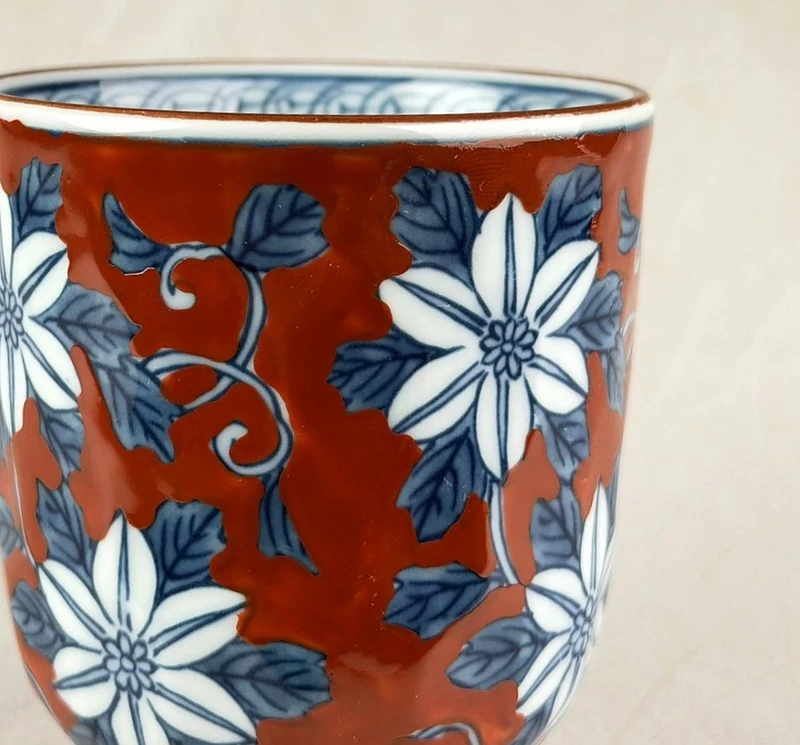
The first time you shop for Japanese ceramics, the differences can feel hard to read. Many pieces look almost identical from a photo. The descriptions use words you don’t know yet. And one piece often costs several times as much as another that looks just the same.
The difference, in the end, comes down to one simple thing.
You can feel it with your fingertip.
Once you know what to look for, choosing becomes much more enjoyable — and you are far less likely to regret a purchase.
The Easiest Test: One Run of Your Fingertip
Gently run your fingertip across the painted surface of the piece.
- If you feel any raised texture — small ridges, a slight catch — it is hand-painted.
- If the surface stays perfectly smooth, with no rise and no resistance, it is transfer-printed.
That is the whole test.
You may not be able to see the difference in a product photo, but you can feel it the moment the piece is in your hand. With practice you can also spot it visually: hand-painted lines have small variations in thickness and pressure, while printed lines stay uniform end to end.
Why People Choose Hand-Painted Pieces
Hand-painted ceramics have qualities that printed work cannot quite match.
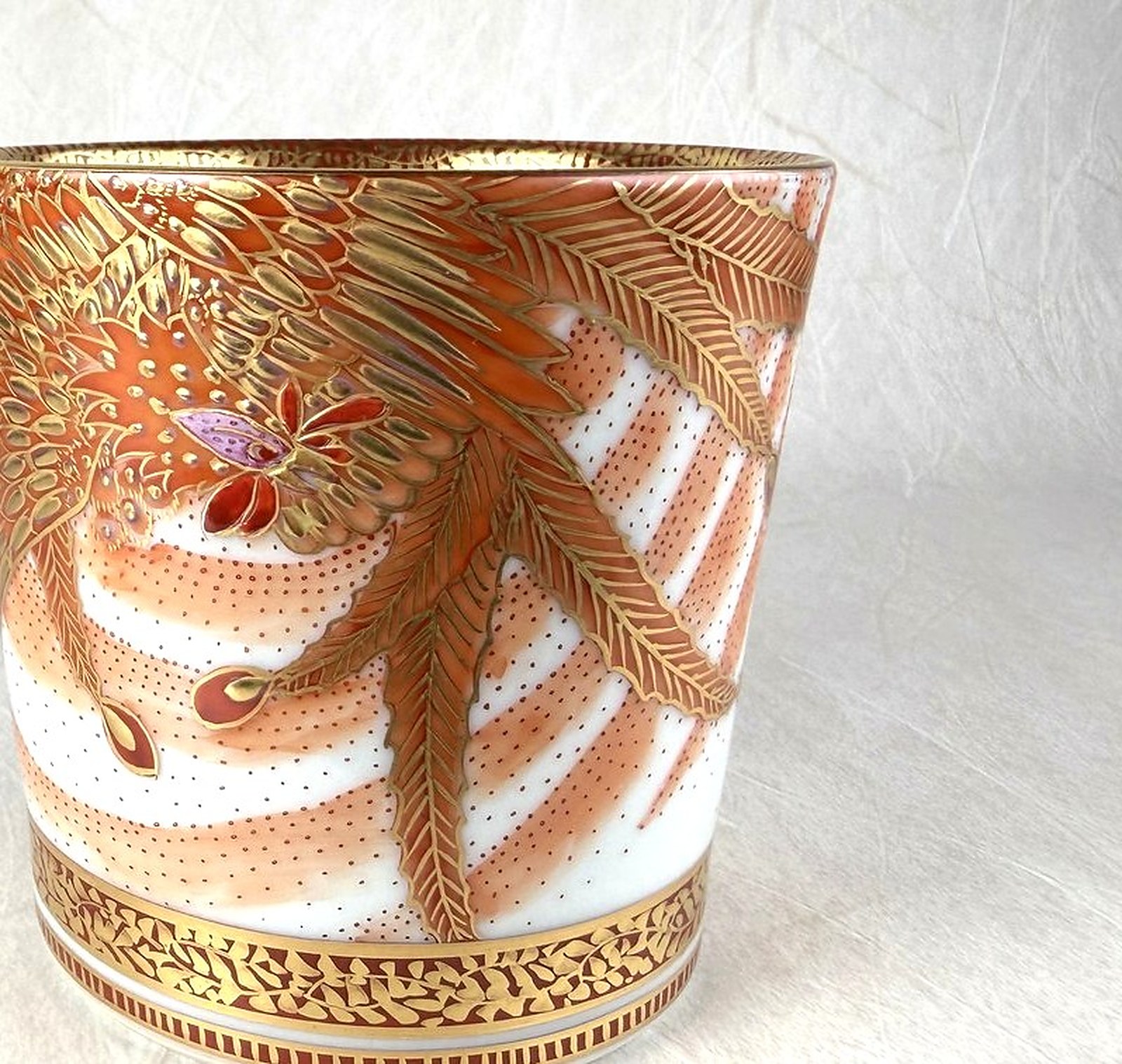
Depth in the way they catch light. Because the enamel sits raised above the glaze, light reflects off the surface with more dimension. The colour appears to live, rather than just sit there.
Each piece has its own character. Two hand-painted pieces of the same design have small variations in line and colour. Each is, in a quiet way, one of a kind.
They become more loved with time. Hand-painted pieces feel less like products and more like small works of craft — and that quality deepens with use.
This is also why hand-painted pieces cost more. A senior overglaze painter spends hours on a single bowl, and years training before being allowed to sign a piece. The pigments are mineral-based; the piece is fired twice. The price reflects time, training, and material — and the fact that, well cared for, the piece will outlast its first owner.
When Printed Pieces Are the Right Choice
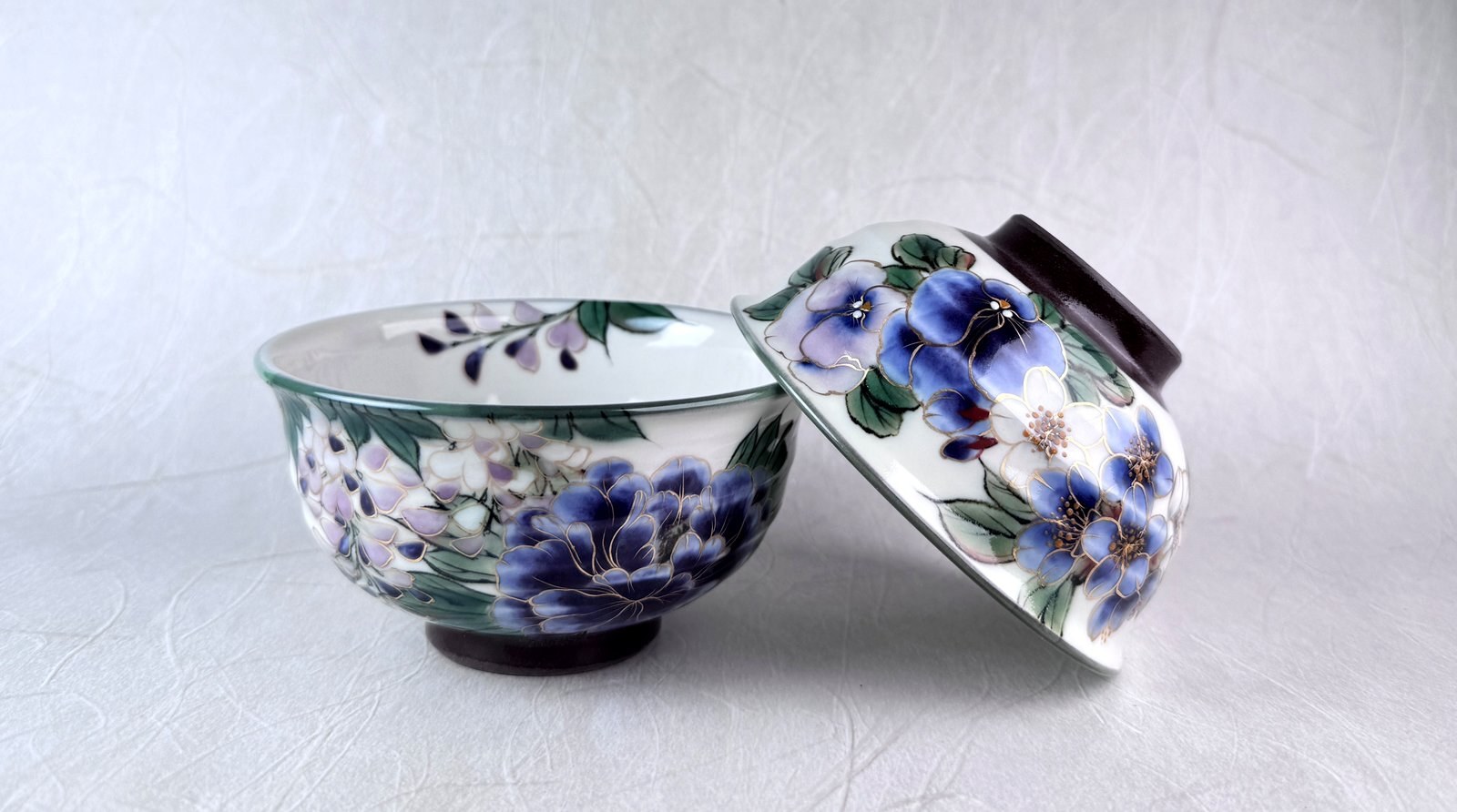
Printed pieces have their own honest place. They are a strong choice when you want:
- A matched set, where every piece looks identical.
- Something easy to use every day without worry.
- A more accessible price point.
Even with the design laid down by sheet rather than brush, transfer-printed pieces are still made by hand at every other step — the design, the placement of each sheet, the firing, the quality check. It is its own skilled craft.
A Brief Note on the Three Traditions
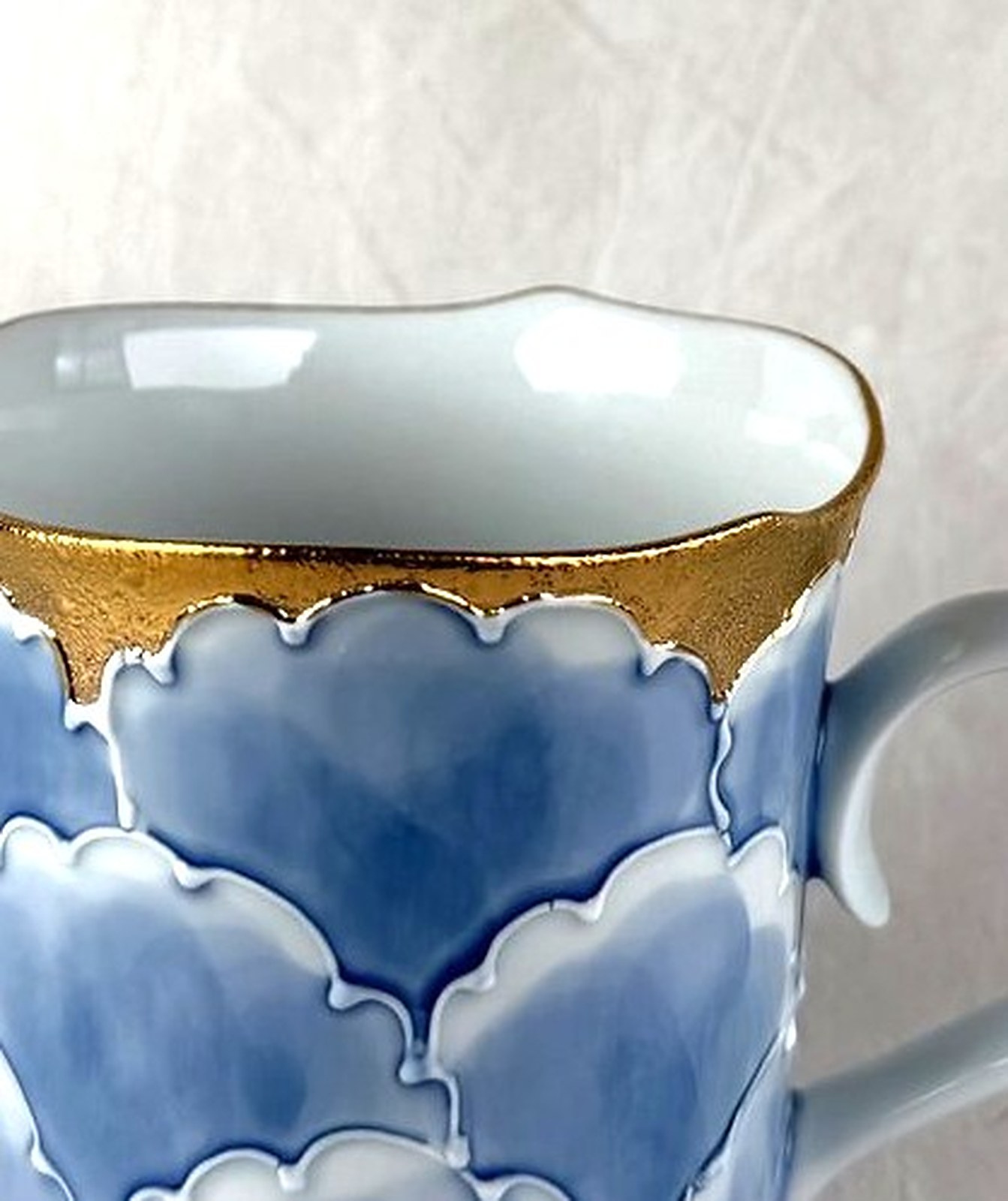
When you are shopping for hand-painted Japanese ceramics, three regional names come up most often. Here is what to look for in each.
- Arita-yaki (有田焼) — Japan’s oldest porcelain, born in the early 1600s. Famous for blue-and-white sometsuke and red akae. Look for soft brush gradients and, on hand-painted pieces, the maker’s signature on the underside.
- Kutani-yaki (九谷焼) — bold five-color painting from the Kaga region, often with kindei (gold leaf). Look for raised gold work that catches the light from the side.
- Kiyomizu-yaki (清水焼) — refined Kyoto pieces with finely-detailed brushwork, often outlined in gold. Look for cloisonné-style outlines around floral motifs.
How to Choose Your First Hand-Painted Piece
If this is your first one, you do not need to start with something expensive.
Begin small. A hashioki (chopstick rest) or a small dish is the most accessible price point, and the easiest way to bring hand-painted craft into daily use.
Choose something you already use. A yunomi (everyday teacup), a sake cup, or a rice bowl is where you will feel the difference most — every morning.
Add one hand-painted piece, not many. A single piece in the right place is enough to change the feel of a meal.
What We Look For at Manekineko Ai
We do not carry every “Made in Japan” piece on the market. We curate around two things:
- Hand-painted texture you can actually feel. Each piece we list as tegaki (手描き) is confirmed by hand before it goes on the shelf.
- Designs that wear well over years — pieces that do not tire after a few months on the table.
Every piece is packed by hand in Osaka before it leaves us, and we always state clearly whether each piece is hand-painted or transfer-printed.
Browse our hand-painted Japanese ceramics →
Pieces We Recommend to Begin With
- A hand-painted small dish or hashioki — the most accessible starting point. Browse our Kutani-yaki collection for hand-painted accents.
- A Kutani yunomi or chawan — daily use that feels a little more intentional.
- A Kiyomizu bowl or plate — the quiet centerpiece of a meal.
Quick Terms
- Tegaki (手描き) — hand-painted, as opposed to printed.
- Tensha (転写) — transfer print.
- Iro-e (色絵) — overglaze painting, applied on top of the finished glaze and fired a second time.
- Akae (赤絵) — the red overglaze tradition, often using fine line work in iron-based pigment.
- Sometsuke (染付) — underglaze blue-and-white painting; the cobalt is sealed beneath the glaze.
- Kindei / gindei (金泥・銀泥) — gold and silver leaf decoration.
- Kakihan (花押) — the painter’s seal or signature, often on the underside near the foot ring.
Frequently Asked
Q: How can I tell if a piece of pottery is hand-painted?
The fingertip test is the easiest way. Hand-painted overglaze enamel sits slightly raised — you can feel small ridges and changes in elevation when you run a thumb across the painted area. Printed designs lay flat. The eye can be fooled at a short distance, but the hand almost never is. A second clue is the line itself: hand-painted lines have small variations, while printed lines stay uniform end to end.
Q: Are all Arita-yaki, Kutani-yaki, and Kiyomizu-yaki pieces hand-painted?
No. Each label today covers both hand-painted masterworks and transfer-printed pieces produced in the same regional style. Both are made in Japan and used in Japanese homes. If a piece is described as “Arita-style” or “Kutani-style” without mention of hand-painting (tegaki), it is most likely transfer-printed.
Q: Does printed pottery still count as authentic Japanese ceramics?
Yes. Both hand-painted and transfer-printed pieces are produced in the Arita, Kutani, and Kiyomizu regions today, often by the same kilns, and both are sold under those regional names in Japan. If you want to know which kind you are looking at, the simplest signal is the word tegaki (手描き) in the description, or the painter’s signature on the underside. A reputable seller will state this clearly.
Q: How can I tell if a piece of pottery is handmade?
“Hand-painted” and “handmade” are different things. To check whether the form itself was shaped by hand rather than poured into a mould, turn the piece over and look at the foot ring (kodai). A hand-thrown piece often shows faint spiral throwing rings inside the bowl, slight asymmetry in the rim, and small tool marks on the unglazed foot. A slip-cast or moulded piece is mathematically symmetrical and feels uniform between copies.
Q: What is a Fuku mark?
The Fuku mark (福, “good fortune”) is an auspicious character often painted on the bottom of older Japanese porcelain — especially Imari and certain Arita pieces from the seventeenth to nineteenth centuries. It is not a maker’s name; it is a wishing mark. Hand-painted Fuku marks vary slightly from piece to piece, since each was drawn freehand in cobalt blue.
Q: How can I tell if a piece of pottery is valuable?
Several signals point to value. Hand-painted overglaze decoration (felt with the fingertip), the painter’s signature or kiln seal on the underside, the presence of a paulownia (kiri) wood box — especially a tomobako (共箱) signed by the maker — the age and provenance of the piece, and good condition with no chips or hairline cracks all add to its value.
In Closing
You do not need many. A single hand-painted piece in the right place is enough to make a meal feel different — and the longer you use it, the more it grows into your home.
The difference, in the end, is something you really only feel by using it.
If Arita is where you are looking, our guide to what Arita ware is covers its surfaces, its five historical styles, and how to choose a first piece.