
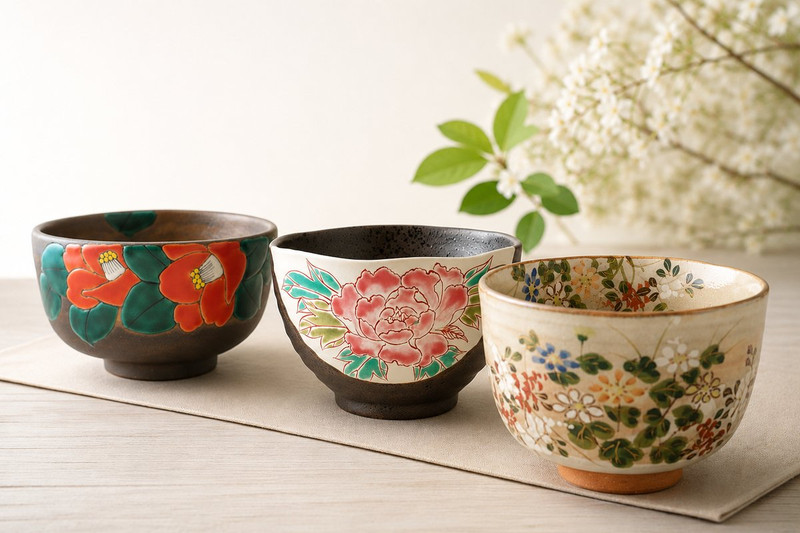
Three flowers bloom across Japanese porcelain more often than almost any others — one in the snow, one in late spring's fullness, one in the clear light of autumn.
Pick up a piece of Kutani or Arita porcelain with a flower on it, and the odds are good you are holding one of three: the camellia, the peony, or the chrysanthemum. They appear on tea bowls and sake cups, on kimono and lacquer, on the small plates that pass through a Japanese household every day — and they are not there for prettiness alone. Each carries a specific wish, refined over centuries, that the giver of such a piece is quietly making on the receiver's behalf.
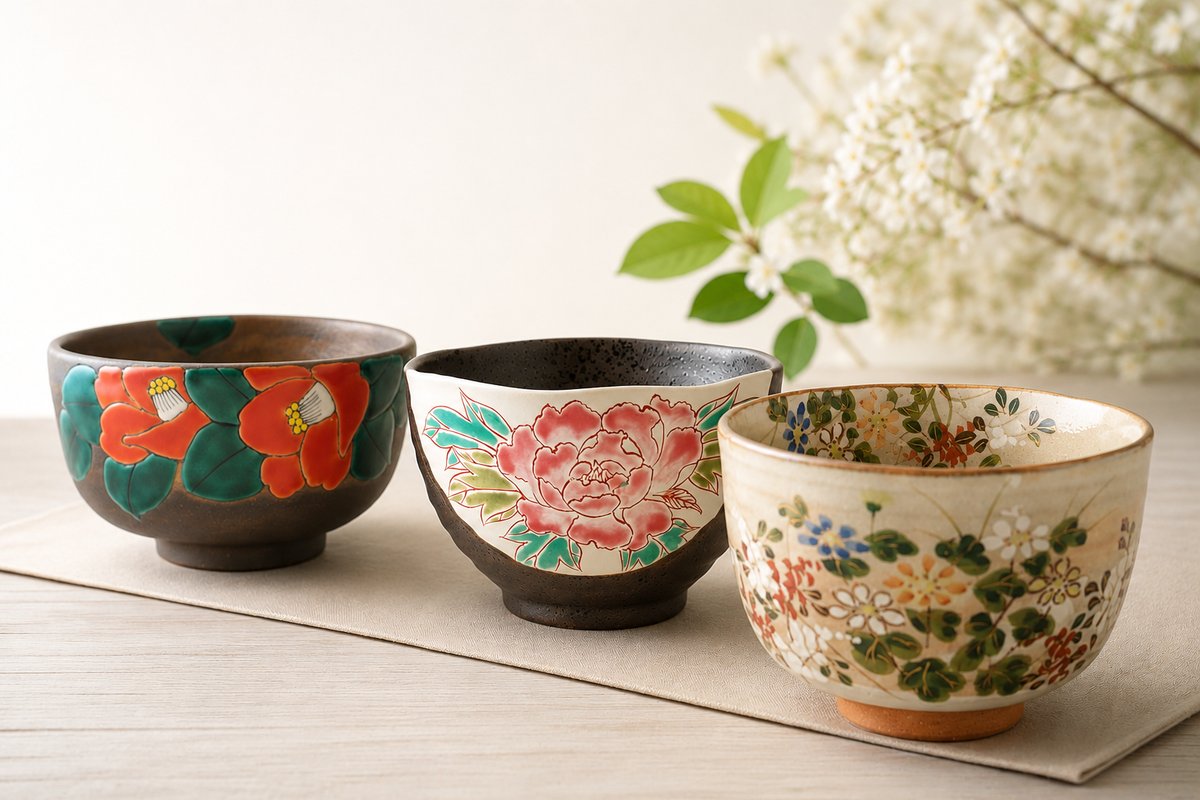
This guide reads the three flowers one at a time: what each means, when it blooms and what that timing says, how its colors change the message, and — since these motifs live their fullest life as gifts — which occasions each one suits best. By the end, the flowers on a Japanese shelf will read less like decoration and more like a language you can speak.
On this page
2. Camellia (Tsubaki) — Winter's Quiet Endurance
3. Peony (Botan) — The King of Flowers, and of Good Fortune
4. Chrysanthemum (Kiku) — The Imperial Flower of Long Life
5. Three Flowers, Three Registers
6. A Note from the Shop
7. Editor's Picks — Three Flowers, Three Pieces
8. Frequently Asked Questions
9. Closing
1. How Japan Reads Flowers
Japan reads flowers the way some cultures read stars. The habit runs deep: courtly poetry assigned sentiments to blossoms more than a thousand years ago, the tea ceremony chose a single bloom to set a room's season, and the language of flowers — hanakotoba — gave everyday people a vocabulary for saying things too delicate to say aloud. Craft absorbed all of it. When a Kutani painter sets a peony on a plate, they are not copying a garden; they are placing a wish inside an object.
Two habits of this language are worth knowing before we begin. First, season matters as much as species: a flower that blooms in hardship means something different from one that blooms in plenty. Second, the flower on a craft object is a motif, not a bouquet — its meanings are the old, auspicious ones, and they stay auspicious regardless of the customs that surround cut flowers. That distinction will matter when we reach the chrysanthemum.

2. Camellia (Tsubaki) — Winter's Quiet Endurance
The camellia does not wait for spring's permission.
The tsubaki (椿) blooms in the cold months — deep green leaves glossy through frost, flowers opening red and white while the rest of the garden sleeps. That timing is its meaning. In Japanese craft the camellia stands for endurance, quiet strength, and beauty that does not depend on easy conditions. It is an evergreen besides: the tree keeps its leaves year-round, which folds in an older meaning of steadfastness and long life. Tea masters loved it for exactly this restraint — the camellia is the classic flower of the winter tea room, one bloom in a bamboo vase, saying everything without raising its voice.

A note on color. A red camellia on white porcelain carries the festive red-and-white (kōhaku) pairing of celebration — a natural choice for New Year gifts and winter birthdays. A white camellia reads purer and more contemplative, suited to someone who loves quiet things; on dark lacquer or deep blue glaze, the flower turns inward and elegant, a gift for a person of understated taste.
Why it works as a gift. The camellia honors someone who has come through something — a hard year, a long effort, a season of care — and kept their grace doing it. Pieces that pair the camellia with warm winter vessels, a teacup or a soup bowl, carry that sentiment beautifully.
Find a motif that matches your intention — endurance, abundance, or long life. Browse our tableware collection →
3. Peony (Botan) — The King of Flowers, and of Good Fortune
When the peony opens, it holds nothing back.
The botan (牡丹) came to Japan from China wearing a crown: there it was called the King of Flowers, the bloom of palaces, and Japan kept the title. A peony in full flower is abundance made visible — layer upon layer of petals, more silk than the stem should be able to hold. In craft it stands for prosperity, honor, and generous good fortune, and it appears wherever those wishes belong: bridal kimono, celebration tableware, the gorgeous dense patterns of Kutani's hanazume style, where peonies crowd the surface petal to petal with gold between.

The peony also travels with company. Paired with the lion — the karajishi-botan of legend and tattoo alike — it stands for courage at ease, strength that can afford to rest among flowers. Paired with butterflies, it leans toward joy and married happiness.
A note on color. Red and pink peonies carry the full festive register — weddings, milestone birthdays, business openings — while a white peony on gold reads as honor and high regard, the flower for congratulating an achievement. On deep blue sometsuke porcelain, the peony grows calmer, a dignified abundance suited to a household gift.
Why it works as a gift. The peony does not whisper; it congratulates. It is the flower for the moments when you want the gift to say may your life be full — a wedding, a promotion, a new venture. Pieces painted in the dense Kutani manner, where the peony leads the garden, carry that sentiment beautifully.
Looking for a meaningful gift? Explore pieces chosen for weddings, new homes, and celebrations. Browse the collection →
4. Chrysanthemum (Kiku) — The Imperial Flower of Long Life
The chrysanthemum blooms when the air turns clear, and it takes its time.
The kiku (菊) is the most exalted flower in Japan — the sixteen-petaled chrysanthemum is the crest of the Imperial family, and the flower gives its name to the throne itself. Its meanings gather around longevity, nobility, and renewal. The roots are old: in the ninth month of the old calendar, Japan kept the Chrysanthemum Festival (chōyō no sekku), when chrysanthemum petals were floated in sake and drunk for long life. Blooming late in the year, unhurried and precise, the kiku became the autumn counterpart to spring's cherry blossom — where the sakura celebrates beautiful transience, the chrysanthemum celebrates beautiful persistence.
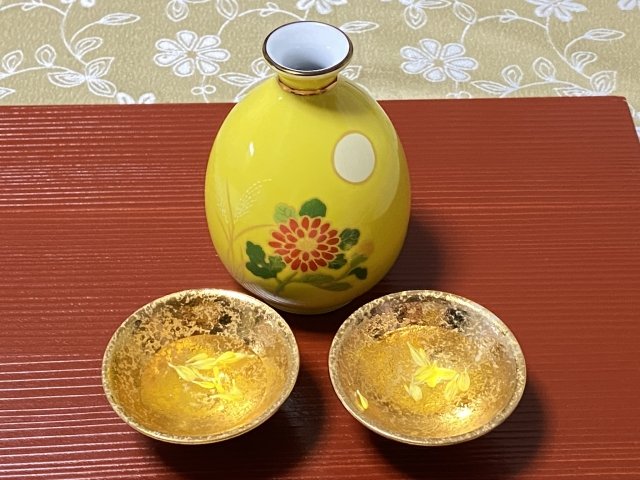

In craft the kiku is everywhere once you look: stamped in gold on lacquer, carved into chopstick rests, radiating across Kutani bowls, its petals so regular they shade into pure pattern. A common and lovely variant is the kiku-zukushi — chrysanthemums of many sizes packed edge to edge, a whole field of long-life wishes on one small surface.
A note on color. Gold and yellow chrysanthemums carry the imperial, celebratory register — the natural choice for a respected elder, a retirement, a significant birthday. White kiku on craft reads serene and dignified rather than somber; paired with red or on a colored ground it is unambiguously festive, well suited to milestone celebrations like a 60th birthday (kanreki), where long life is precisely the point.
Why it works as a gift. The chrysanthemum is Japan's most direct way to wish someone a long, honored life. It is the motif for parents, grandparents, teachers, mentors — anyone to whom respect and "many more years" are the message. Pieces where the kiku is painted densely with gold accents carry that sentiment beautifully.
5. Three Flowers, Three Registers

Read side by side, the three flowers form a small vocabulary of good wishes, arranged by temperature. The camellia is the quiet one: endurance, winter grace, strength that does not perform. The peony is the generous one: abundance, celebration, fortune in full bloom. The chrysanthemum is the honored one: long life, dignity, respect that looks upward. A useful shorthand when choosing: camellia for the person you admire, peony for the occasion you celebrate, chrysanthemum for the elder you honor.
And they are not exclusive. Japanese craft happily gathers them — Kutani's flower-packed hanazume sets all three blooming together with plum and cherry besides, an entire year's worth of wishes on a single cup. If you cannot choose one message, there is a long tradition of choosing them all.
6. A Note from the Shop
We often see customers choose motifs not just for beauty, but for the message they want to send — a camellia bowl for a friend who weathered a difficult year, a peony plate for a wedding, a chrysanthemum cup for a father's 70th birthday. That is, we think, exactly how these patterns were always meant to be used: not as museum vocabulary but as a working language of goodwill. If you tell us the person and the occasion, we are always glad to help you find the flower that says it.
— the staff at Manekineko-Ai
7. Editor's Picks — Three Flowers, Three Pieces
Three pieces from our collection, one for each flower in this guide — the quiet one, the generous one, and the honored one.
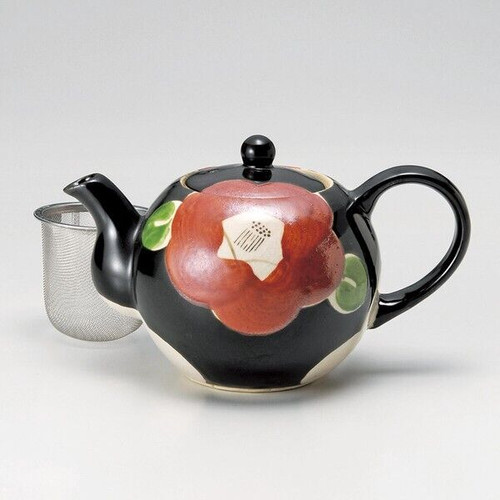
Pick 1 — Mino Ware Kyusu, Iro-e Tenmoku Camellia. The camellia's whole register in one teapot: a red bloom opening against a deep tenmoku ground, like the winter tea room this flower has kept company for centuries. For the person who has carried something through with grace — or simply for the quiet daily ritual of green tea, where endurance is brewed a cup at a time. (See the teapot)
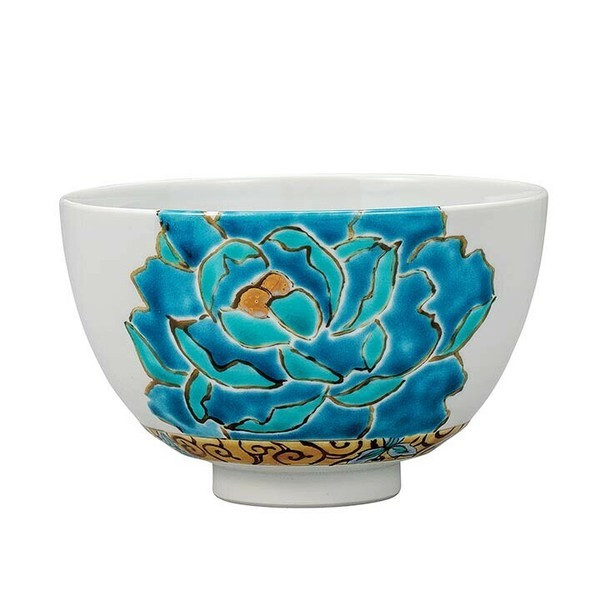
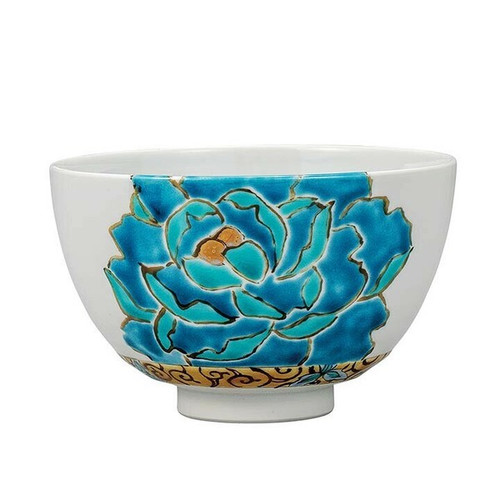
Pick 2 — Kutani Chawan “Hekibotan,” Jade Peony. The King of Flowers, grown calm: a peony in rare jade blue-green, outlined in gold on white porcelain, with the dense Kutani brocade band at its foot. This is the “dignified abundance” of the peony's quieter colorway — a matcha bowl generous enough for a wedding or a promotion, composed enough for every day after. (See the bowl)
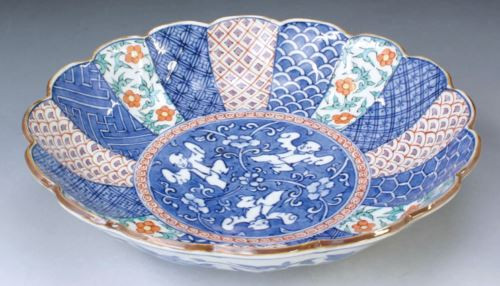
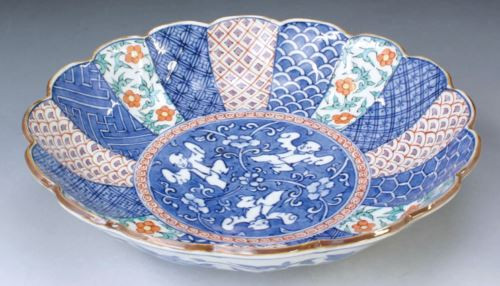
Pick 3 — Kyo-Kiyomizu Serving Bowl, Iro-e Shonzui Karako. Here the chrysanthemum is not painted on the vessel — it is the vessel. The bowl itself blooms in kiku form, each petal a panel of blue shonzui patterning, with karako children at play in the well. A celebratory anchor from Kyoto's refined kiln tradition, made for the table of an honored elder — a kanreki, a retirement, a golden anniversary. (See the bowl)
8. Frequently Asked Questions
Q: Which flower should I choose if I don't know the recipient well?
The peony is the safest of the three — its meanings (good fortune, abundance) suit nearly everyone and every occasion, and it reads as generous rather than personal. If the recipient is older or the occasion is a milestone birthday, the chrysanthemum's long-life wish is equally safe and slightly more thoughtful.
Q: Is it inappropriate to give certain flower motifs?
For these three, no — on craft objects, all three are auspicious. Two worries we can retire for you: the camellia's "falling flower" superstition was an Edo-period rumor, not a rule, and the flower has always been honored in tea culture; and the chrysanthemum's association with funerals belongs to cut white flowers, not to the painted motif, which has meant longevity and nobility for over a thousand years. A kiku teacup is a blessing, not a condolence.
Q: Do these meanings still matter in modern Japan?
Yes — softly. Most Japanese people would not lecture you on hanakotoba, but the associations are absorbed early: chrysanthemums appear on the fifty-yen coin and the passport, peonies on wedding kimono, camellias in every winter tea room. Choosing a motif to fit the occasion is still quietly noticed and quietly appreciated, the way a well-chosen word is.
Q: What is the difference between the chrysanthemum motif and the Imperial crest?
The Imperial crest is one specific, regulated form — a sixteen-petal chrysanthemum viewed head-on. The kiku motifs on craft are free variations: more petals or fewer, seen from the side, scattered, packed. Using chrysanthemum patterns on tableware is completely ordinary and carries no presumption; only the exact crest itself is reserved.
Q: Which flower belongs to which season?
Camellia to winter and earliest spring, peony to late spring and early summer, chrysanthemum to autumn. Gifting "in season" is a small elegance Japan enjoys — a camellia piece for a January birthday lands especially well — but it is a pleasure, not a rule; all three are used year-round.
Q: Are these motifs only found on expensive pieces?
Not at all. The same three flowers appear on everyday Mino ware plates, mid-range Kutani cups, and museum-grade painted porcelain alike. The meaning rides with the motif, not the price — a modest camellia bowl makes its wish as sincerely as a gilded one.
Q: Can I combine flower motifs on one table?
Freely — Japan does. A table that mixes a camellia bowl, a peony plate, and chrysanthemum rests is not cluttered but seasonal in the widest sense, and hanazume pieces combine them on a single surface. There is no etiquette against mixing; there is only the pleasure of noticing.
Q: How do I care for pieces with painted flower motifs?
Treat overglaze enamel and gold gently: hand-wash with a soft sponge, skip the dishwasher and microwave for gilded pieces, and avoid abrasives on the painted surface. Cared for this way, the flowers outlast their owners — which, for motifs about endurance and long life, feels right.
9. Closing
Three flowers, three wishes: the camellia's quiet endurance, the peony's open-handed fortune, the chrysanthemum's long and honored life. Learn these three and the flowered surface of Japanese craft stops being ornament and starts being legible — a shelf of good wishes waiting to be matched to the right person. If you would like help finding the piece whose flower says what you mean, we are always glad to help.
— from Osaka, Team Manekineko-Ai
PIECES IN THIS ARTICLE
Three pieces from this article
CONTINUE READING
MORE IN MOTIFS →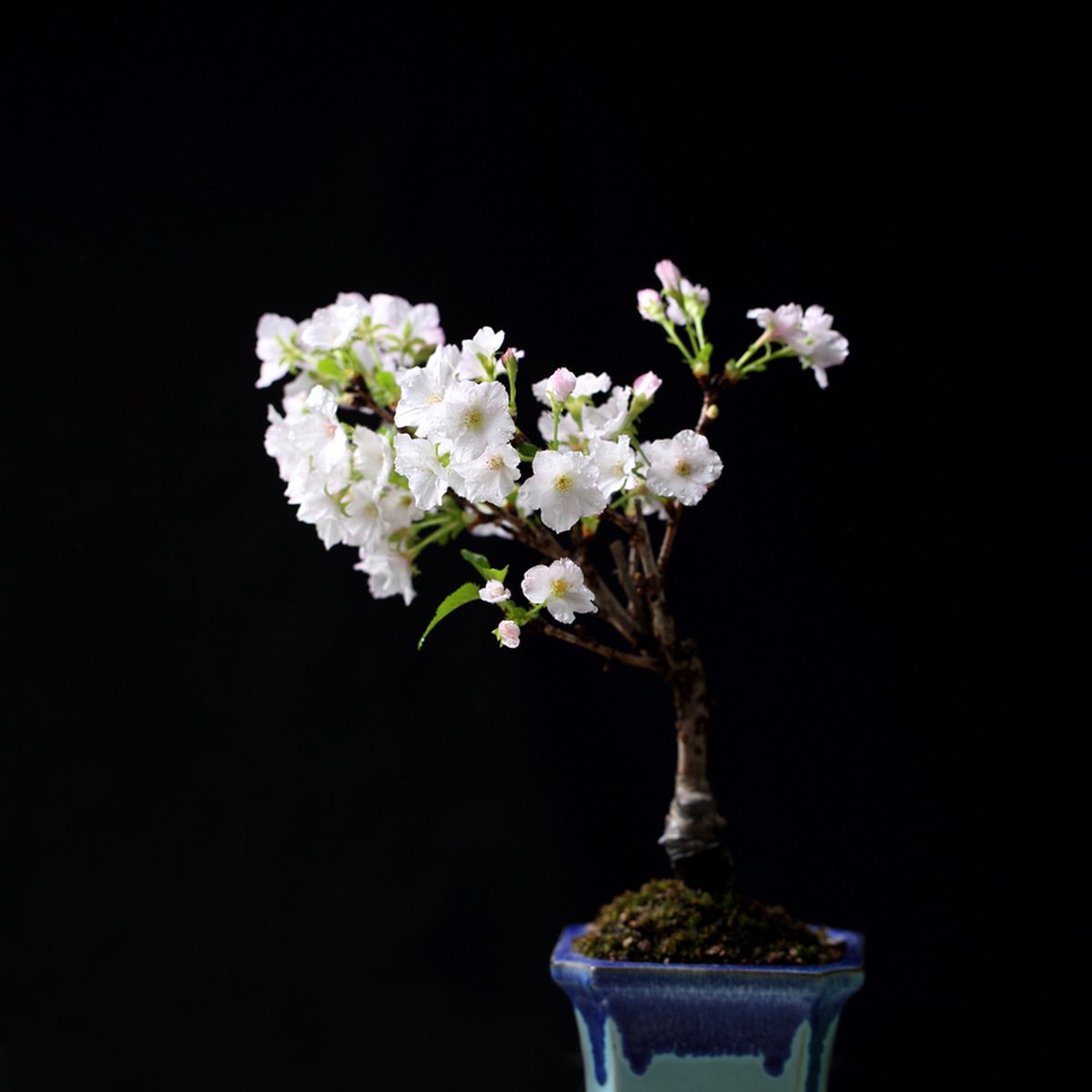 MOTIFS, SYMBOLS & AESTHETICS
Seasonal Patterns in Japanese Craft: Sakura, Momiji, Yukiwa & The Year Read in Motifs
Ume, sakura, asanoha, ryusui, momiji, moon-and-rabbit and yukiwa, read as a calendar in motifs.
MOTIFS, SYMBOLS & AESTHETICS
Seasonal Patterns in Japanese Craft: Sakura, Momiji, Yukiwa & The Year Read in Motifs
Ume, sakura, asanoha, ryusui, momiji, moon-and-rabbit and yukiwa, read as a calendar in motifs.
 MOTIFS, SYMBOLS & AESTHETICS
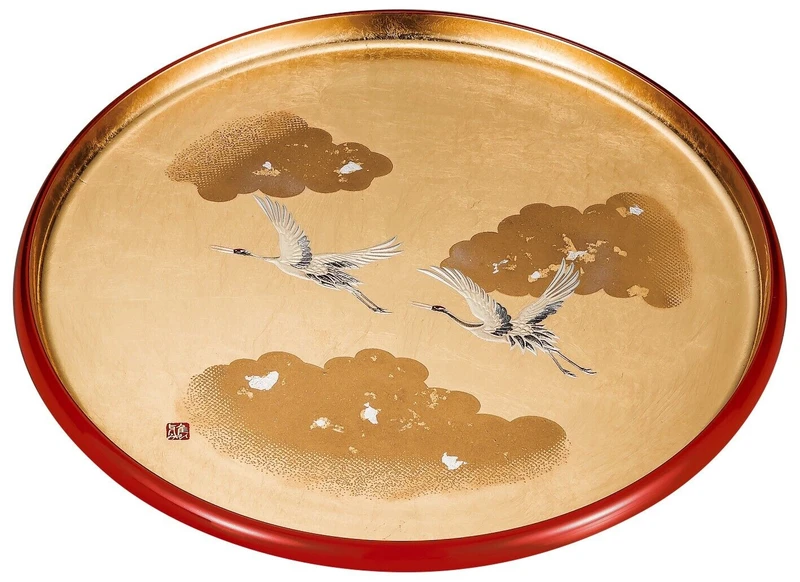
Seven Lucky Japanese Motifs Explained: Meaning, Symbolism & Gift Traditions
Cranes, turtles, scrolling vines, calm waves, gourds, gathered treasures and pine-bamboo-plum, and the wish each one carries.
MOTIFS, SYMBOLS & AESTHETICS
Seven Lucky Japanese Motifs Explained: Meaning, Symbolism & Gift Traditions
Cranes, turtles, scrolling vines, calm waves, gourds, gathered treasures and pine-bamboo-plum, and the wish each one carries.
 MOTIFS, SYMBOLS & AESTHETICS
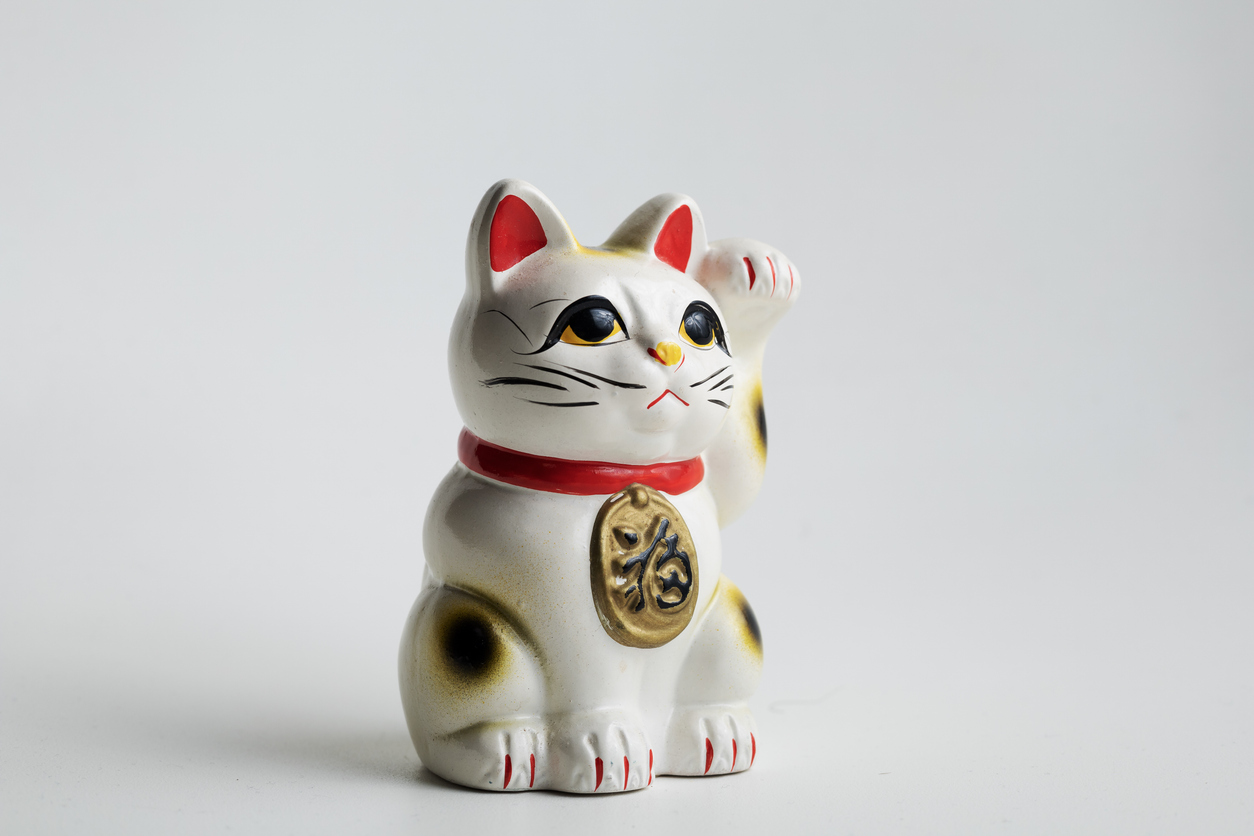
The Story of Maneki Neko: Japan's Beckoning Cat — Origin Legends, Paw Symbolism & Color Meanings
The full story of the maneki neko — Japan's beckoning cat.
MOTIFS, SYMBOLS & AESTHETICS
The Story of Maneki Neko: Japan's Beckoning Cat — Origin Legends, Paw Symbolism & Color Meanings
The full story of the maneki neko — Japan's beckoning cat.