

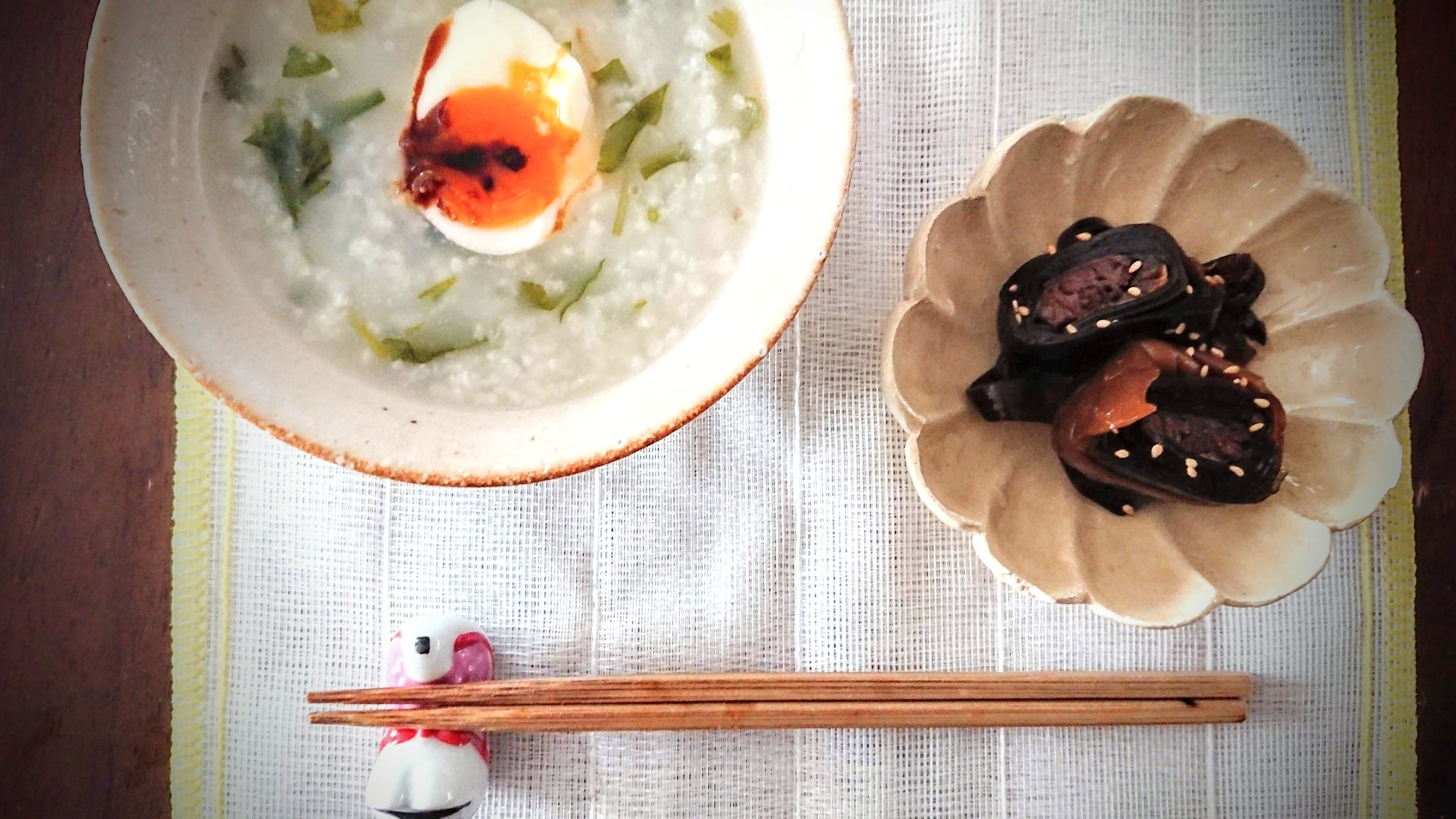
On the morning of January 7th, kitchens across Japan fill with the gentle, herbal steam of nanakusa-gayu (七草粥) — a thin rice porridge made with seven wild spring herbs. It is one of the quietest and most beautiful of the Japanese seasonal rituals. After five or six days of New Year feasting — osechi, mochi, sake, sweet black soybeans, roasted fish — the body is ready for something simple. Nanakusa-gayu is exactly that. A small, warm bowl of rice and greens that says: the new year has truly begun, now let your body rest.
This is a guide to what goes into nanakusa-gayu, where the tradition comes from, the meaning of each of the seven herbs, and how to make (or buy) it yourself.
A Thousand-Year-Old Seasonal Ritual
Nanakusa-gayu is eaten on Jinjitsu no Sekku (人日の節句), the first of the five traditional Japanese seasonal festivals, observed on the 7th of the first month. The custom was first recorded in the Engi-shiki (927 CE), an imperial court compendium of rituals, though its roots go back further to earlier Chinese New Year customs brought to Japan during the Heian period.
The original purpose was simple and timeless: to pray for a year of good health and to gently reset the body after the rich foods of the New Year. Spring herbs, just emerging through the late-winter earth, were considered particularly powerful — a way of welcoming the first signs of new life into the body.
A thousand years later, the practice is still alive in family kitchens, convenience store bento shelves, and traditional inns across Japan.
The Seven Herbs of Spring
There is a simple tanka-rhythm mnemonic that every Japanese child learns for remembering the seven herbs:
Seri, Nazuna, Gogyo, Hakobera, Hotokenoza, Suzuna, Suzushiro — haru no nanakusa.
Each herb has a name, an English equivalent, a wishful meaning, and a small medicinal virtue:
- Seri (芹) — water dropwort. Meaning: “to compete and win.” Virtue: rich in vitamins, said to support the liver.
- Nazuna (薺) — shepherd’s purse. Sometimes called pen-pen-gusa in everyday language. Meaning: “to wipe away dirt” (both literally and spiritually). Virtue: traditionally used to support digestion and eye health.
- Gogyo (御形) — cudweed. Meaning: “the body of the Buddha.” Virtue: gentle on the throat, used in old herbal remedies for coughs.
- Hakobera (繁縷) — chickweed. Meaning: “to spread prosperity.” Virtue: high in protein and minerals, considered good for mothers after childbirth.
- Hotokenoza (仏の座) — henbit (Japanese nipplewort). Meaning: “the Buddha’s seat.” Virtue: said to aid appetite and strengthen the stomach.
- Suzuna (菘) — turnip. Meaning: “the bell that calls the gods.” Virtue: gentle on the stomach and warming.
- Suzushiro (蘿蔔) — daikon radish. Meaning: “pure white.” Virtue: aids digestion, especially after rich foods.
Of the seven, only suzuna (turnip) and suzushiro (daikon radish) are still part of everyday cooking in Japan. The other five are wild herbs, foraged in older times from the edges of rice fields and mountain paths. Today, most families buy a pre-packed “seven herb set” from a supermarket in the first week of January — a small, practical nod to a very old ritual.
How to Make Nanakusa-gayu
The beauty of this dish is its quietness. Nothing is seasoned heavily. Nothing is cooked hard. It is the food of rest.
Ingredients (serves 2):
- 1 cup (about 180 g) cooked short-grain white rice, or 1/2 cup uncooked
- 4 cups (about 900 ml) water or light dashi
- 1 pack of nanakusa set (or substitutes: daikon leaves, turnip tops, watercress, baby spinach, small radishes)
- A small pinch of salt
Method:
- Rinse the rice gently. In a heavy pot, combine rice and water, bring to a boil, then reduce to the lowest simmer.
- Cook, uncovered or very slightly covered, for about 40–50 minutes, stirring occasionally. The porridge should be soft, slightly thick, and glossy — somewhere between soup and pudding.
- While it simmers, wash the seven herbs gently and chop finely. If using the supermarket set, all the wild herbs are already prepared; just a quick rinse is enough.
- In the last 2–3 minutes of cooking, stir in the herbs. Add salt to taste — less than you think.
- Serve warm in a small bowl. Some families add an umeboshi pickled plum, a splash of yuzu juice, or a sprinkle of toasted sesame.
That’s it. No soup stock necessary (though a light kombu dashi is lovely). No soy sauce. No dressing. The dish is meant to feel almost empty.
Why It Still Matters
On the surface, nanakusa-gayu is a New Year leftovers remedy — a gentle way to say goodbye to the heavy foods of osechi and ozoni, and to let the stomach recover before the normal rhythm of the year returns. But sit with the ritual for a few minutes and something quieter becomes visible:
- It is one of the only seasonal foods in Japan built explicitly around rest rather than celebration.
- It pays attention to plants most people walk past — the small weeds at the edges of paths, the first things to return in winter’s end.
- It is a reminder that the body, too, has seasons, and that the way you treat it in early January shapes the rest of the year.
In that sense, nanakusa-gayu is less a recipe and more a small annual practice of kindness toward yourself.
Serving It in the Right Bowl
Because the porridge itself is pale and understated, the bowl becomes part of the meal in a particular way. Traditional families often serve kayu (rice porridge) in a piece of pottery that has some softness to it — something that echoes the gentleness of the food.
- A Hagi-yaki bowl with its soft cream glaze is one of the most classic choices. The warm tone of the bowl flatters the pale porridge and the bright green of the herbs. See our guide to Hagi-yaki for more on this pottery.
- A Karatsu-yaki bowl, rough-textured and earthy, is another traditional match.
- A simple white porcelain kayu-wan (porridge bowl), often slightly wider and shallower than a rice bowl, is the everyday option — Arita or Mino porcelain both work beautifully.
You can browse our full Japanese ceramics collection to find a bowl that feels right — something you’ll reach for each January 7th, quietly, for years to come.
One Last Thought
There is an old Japanese proverb: “Harmony in the home begins with the morning rice.” Nanakusa-gayu is that idea distilled into a single meal, eaten in the first week of a new year.
Whether you prepare it yourself with a supermarket herb pack, order a bowl at a ryokan in the Japanese countryside, or simply substitute whatever seven green things are in your own kitchen on January 7th — what matters is the pause. A small, warm bowl. A moment of resetting. A year of health quietly wished in.
For a broader view of why Japanese food traditions feel the way they do, see our primer on Japanese crafts and the lives they fit into.