
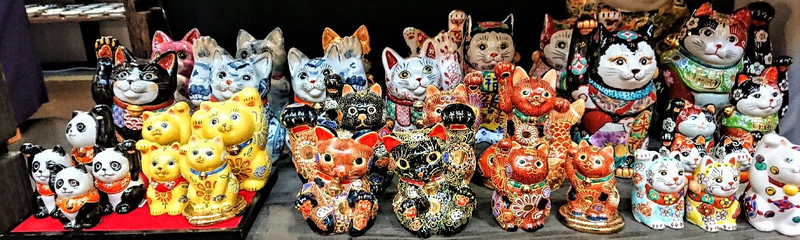
In Japan, the maneki neko — the beckoning cat — has welcomed guests, invited prosperity, and watched over households for more than a century. Walk into a family-run restaurant in Kyoto, a small paper shop in Osaka, or a temple gift stand in Tokyo, and you’ll almost certainly meet one: a small porcelain cat with one paw raised, wishing you well. What many visitors don’t realize is that every color carries its own quiet wish. Choose a white one, and you’re inviting purity and happiness into your home. Choose a gold one, and you’re asking for wealth. Each shade is a prayer in ceramic form.
This is a guide to what each color of maneki neko traditionally means, along with the meaning of the raised paw, the little objects they often hold, and a few thoughts on how to choose the right one for yourself or as a gift.
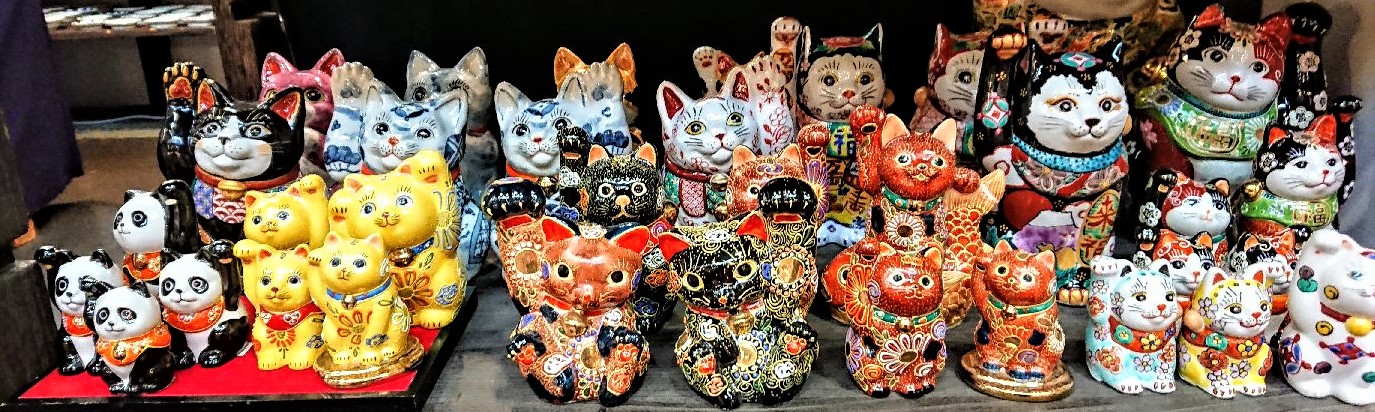
Maneki Neko Colors and Their Meanings
White — Purity and Happiness
The most classic color. White represents a clean slate, sincerity, and general good fortune. It’s the safest choice when you’re buying your first maneki neko or giving one as a housewarming gift.
Browse white maneki neko →
Black — Protection from Evil
Once feared in the West as unlucky, black cats have long been considered powerful protectors in Japan. A black maneki neko wards off illness, bad spirits, and negative energy. Many people place one near the entrance of a home or shop as a silent guardian.
Browse black maneki neko →
Red — Health and Warding Off Illness
Red is the color of protection against disease, dating back to beliefs that red could repel smallpox and other illnesses in Edo-period Japan. A red maneki neko is a wish for the good health of your family.
Browse red maneki neko →
Gold — Wealth and Prosperity
Probably the most famous color abroad. Gold maneki neko are the ones most often seen in shop windows, at cash registers, and in business offices, quietly calling in customers and good financial fortune.
Browse gold maneki neko →
Pink — Love and Relationships
A modern interpretation that has become genuinely popular in Japan in recent decades. Pink is associated with romance, marriage, and deepening existing relationships. A lovely gift for a wedding or a new couple moving in together.
Browse pink maneki neko →
Blue — Wisdom, Study, and Career Success
Blue represents clear thinking and academic achievement. Students preparing for exams, or anyone starting a new career path, often receive a blue maneki neko as encouragement.
Browse blue maneki neko →
Green — Safety of Family and Home
Green is the color of everyday safety and the quiet wish that your household stays well. It’s also sometimes tied to traffic safety, which is why you’ll see them placed in cars or near front doors.
Browse green maneki neko →
Yellow — Good Relationships and Gentle Fortune
Yellow is a softer cousin of gold. It signals friendship, harmony with the people around you, and a steady kind of good luck that isn’t flashy but dependable.
Browse yellow maneki neko →
Calico (Mi-ke) — The Luckiest of All
The three-colored cat — white with patches of black and orange — is considered the original maneki neko and the luckiest color combination in Japanese folklore. If you can only choose one, calico is a wonderful and traditional choice.
Browse calico maneki neko →
Other Colors — Special Wishes
Some maneki neko are made in less common colors like purple (spiritual insight), orange (cheerfulness), or multi-color Kutani patterns that carry several wishes at once. These are often handmade in small numbers by individual artisans.
Browse other colors →
Which Paw Is Raised?
The paw that a maneki neko holds up is just as meaningful as its color.
- Right paw raised — Invites money, wealth, and good fortune. Most commonly seen in homes.
- Left paw raised — Invites people and customers. Traditionally placed in shops, restaurants, and businesses.
- Both paws raised — A double blessing, inviting both prosperity and customers. Some consider it a bit greedy, which is why it’s rarer than the single-paw version.
There is also a quiet rule passed down through generations: the higher the paw is raised, the farther the good fortune travels. A paw lifted high is reaching for luck from a great distance.
What Is the Cat Holding?
Look closely and you’ll notice many maneki neko are clutching a small object. These little details each have their own meaning.
- Koban (gold coin) — A classic Edo-period gold coin. Symbolizes wealth. The inscription often reads “senman-ryo” (ten million ryo, an enormous sum).
- Fish (tai / sea bream) — A symbol of abundance and celebration, tied to the saying “medetai” (auspicious).
- Gourd — Traditionally used to store sake. Represents the warding off of misfortune.
- Marble or ball — Associated with wisdom and the granting of wishes.
- Daruma doll or drum — A wish for perseverance and steady success.
Choosing the Right Maneki Neko
If you’re giving one as a gift, think about what the person in your life might wish for:
- A new business or shop opening → gold or calico, left paw raised
- A housewarming → white or green
- A wedding or engagement → pink
- Someone facing an exam, interview, or new chapter → blue
- A loved one recovering from illness → red
- Someone who just wants something beautiful → a Kutani-yaki or Kyoto-style maneki neko, where the craftsmanship speaks as loudly as the color
There’s no wrong answer. In Japan, we often say that the maneki neko chooses its own home — so trust the one that catches your eye.
Find Your Maneki Neko
At Manekineko Ai, every cat in our collection is made in Japan, most by small family workshops in Kyoto, Seto, and the Kutani region. If you’d like to see the full range of colors and styles, the easiest place to start is our main maneki neko collection, or you can browse by color through Select the Color.
Whichever one comes home with you — may it bring exactly the kind of luck you were looking for.