

The Enigmatic Ko-Kutani — Origins of Kutani Ware
The short-lived yet legendary “Old Kutani” set the fearless tone for centuries of Kutani ware.
When speaking of Kutani ware, one cannot begin without mentioning Ko-Kutani, the “Old Kutani” style. Born in southern Ishikawa Prefecture around the mid-17th century, its production lasted only a few decades—yet its impact endures as a legend in Japanese ceramics.
Short-lived though it was, Ko-Kutani’s bold coloration and spirited form became the foundation upon which all later generations of Kutani ware were built.
Birth and Background
Ko-Kutani is said to have originated under the cultural policy of the Maeda clan of the Kaga Domain. Inspired by Chinese porcelain from Jingdezhen, yet infused with a uniquely Japanese sense of design, artisans created a revolutionary type of pottery—white porcelain richly decorated with color enamels.
Though its period of production was brief, the surviving works still radiate an overwhelming vitality and artistic force.
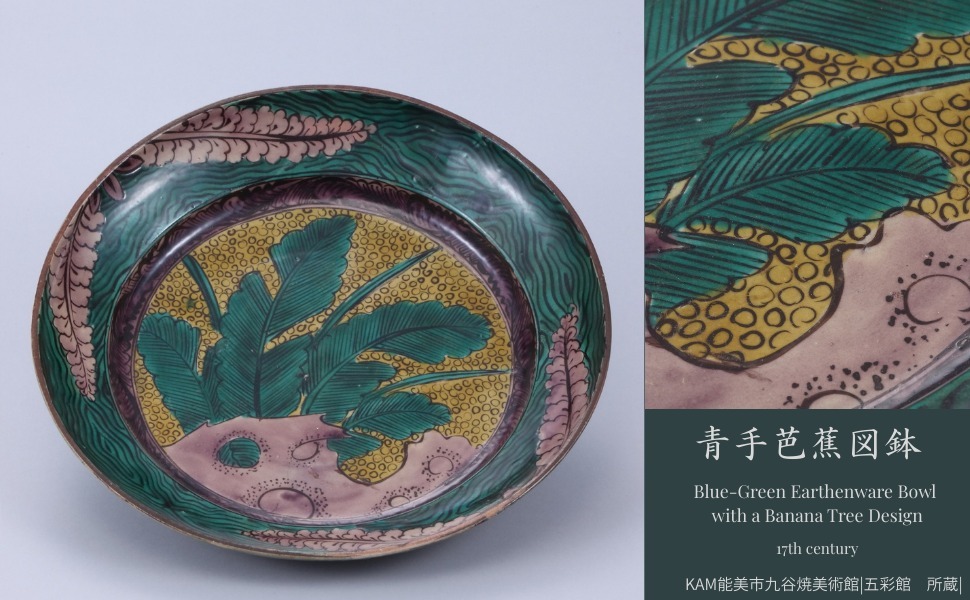
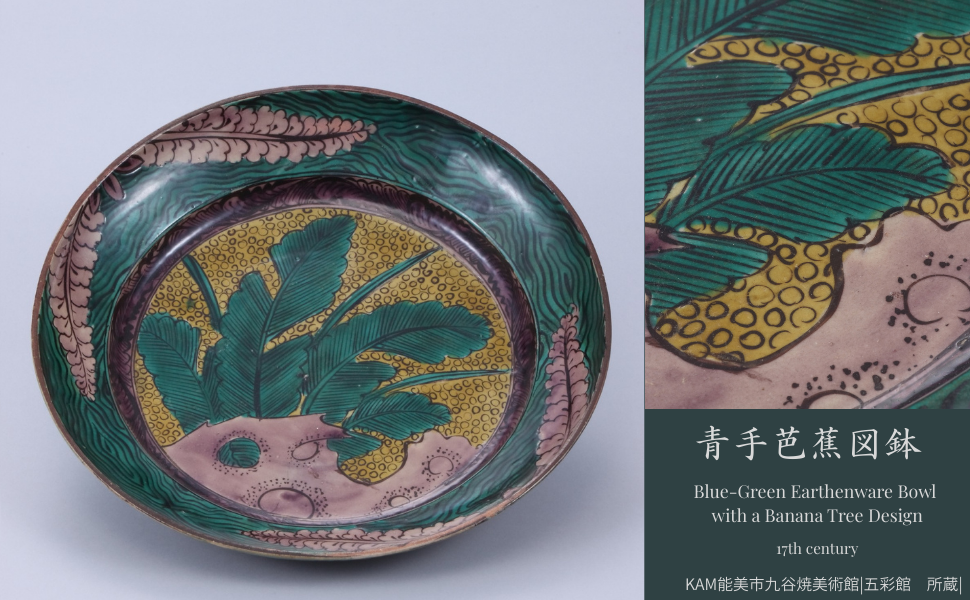
“Ao-de Bashō Bowl”
The “Ao-de Bashō Bowl” represents the pinnacle of the Ao-de (green-tone) style. The entire surface is filled with dynamic banana leaves, painted in deep greens, yellows, purples, and cobalt blues. Each broad field of color—called dami in Japanese—is applied with unbroken concentration to achieve a velvety, living surface.
The vigor of the brushwork and the resonance of layered color make this piece a symbol of Ko-Kutani’s fearless beauty—where boldness and precision coexist.
Distinctive Styles of Ko-Kutani
Ao-de (Green Style): Heavy use of green combined with yellow, purple, and cobalt blue to create rich depth. The No.24 Bashō Bowl is its archetype.
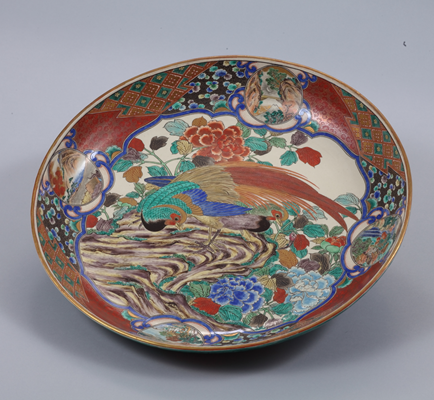
Gosai-de (Five-Color Style): Uses red, yellow, green, purple, and ultramarine to form vigorous compositions full of movement and contrast.
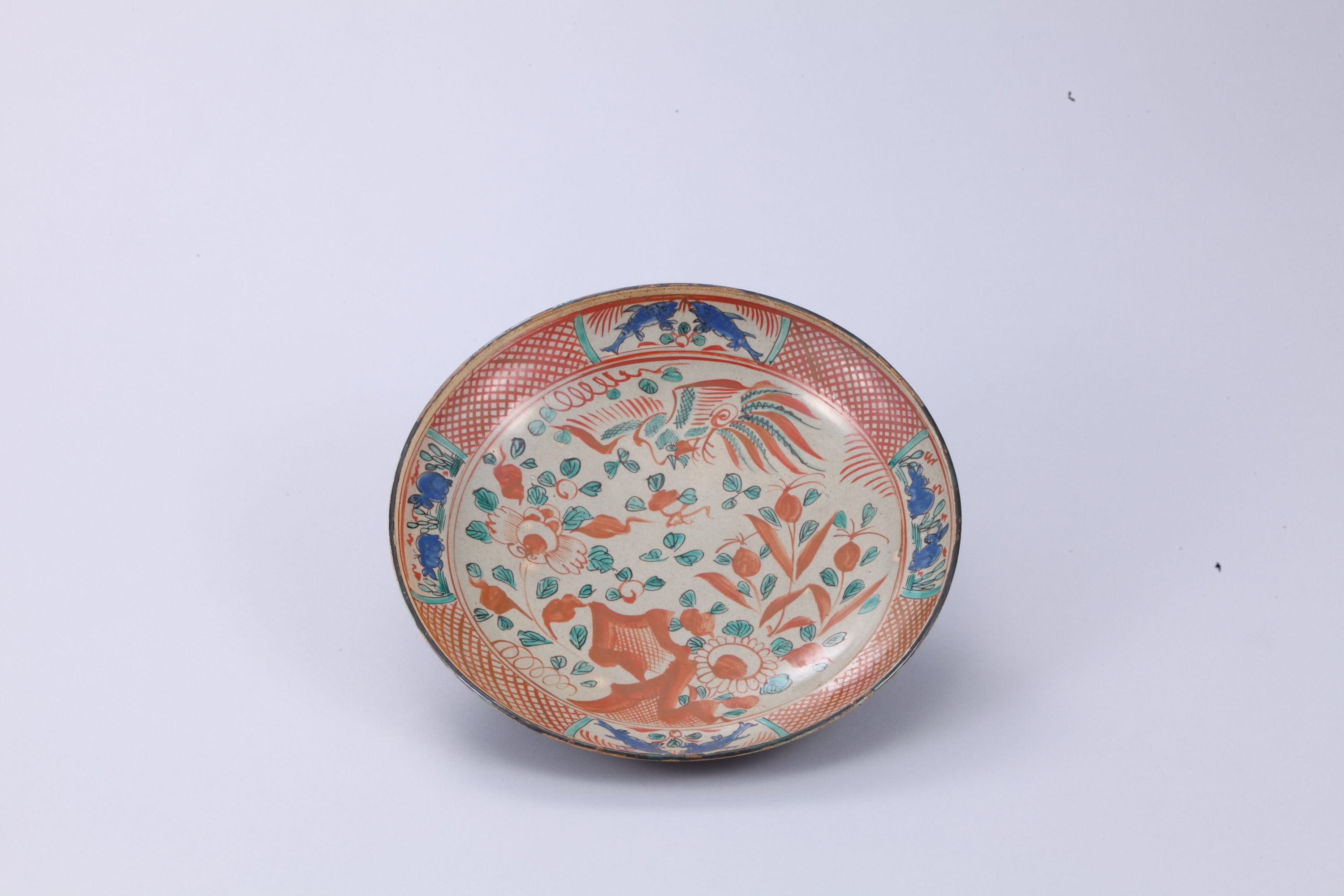
Mokubei Style: Influenced by the Kyoto ceramicist Aoki Mokubei, this style reflects a painterly, literati flavor with lively depictions of figures and landscapes.
Iidaya Style: Later developments leading to the revival of Kutani ware drew from this lineage, linking Ko-Kutani’s spirit to masters like Yoshidaya and Shozō in the Edo period.
Techniques and Aesthetic Spirit
Kotsugaki (Outline Drawing): Designs are first drawn in cobalt underglaze, establishing the entire composition. The strong, confident lines give a sense of rooted stability.
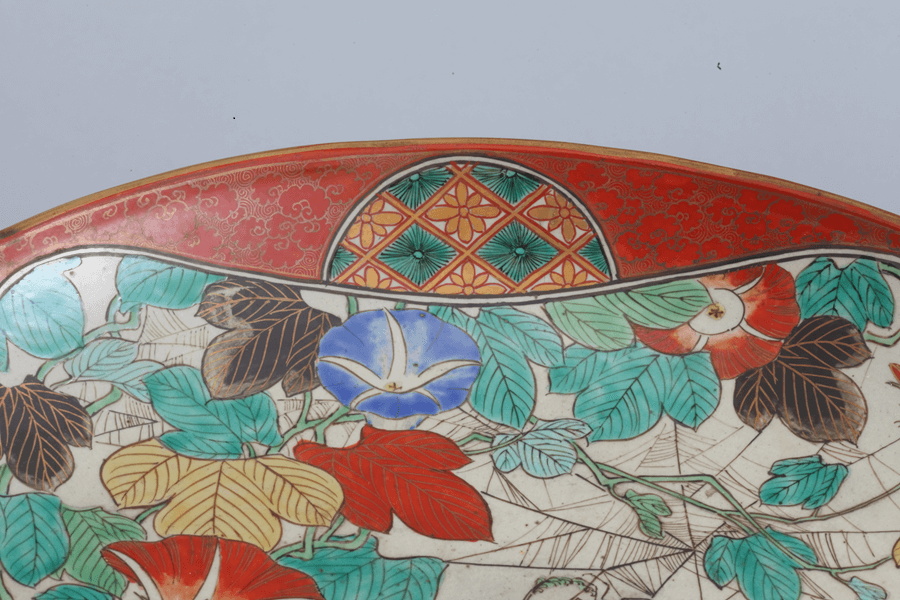
Dami (Color Filling): Broad color areas are painted with thick pigments, often green or yellow. As seen in No.24, applying these layers evenly requires immense control of pressure, water, and brush speed.
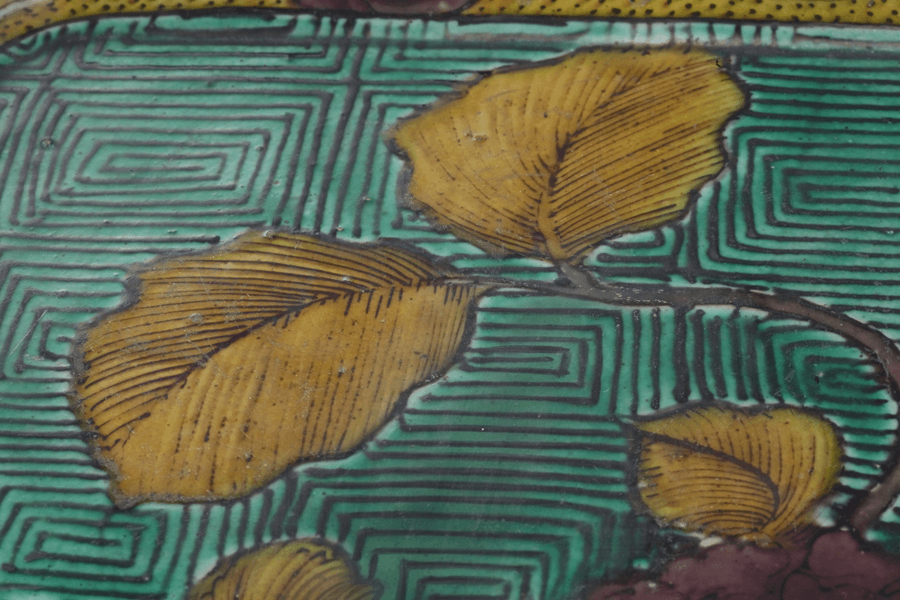
Glaze Depth: The viscous glaze adds transparency and depth, allowing light to flow through the color layers—an effect that gives Ko-Kutani its distinctive, almost sculptural texture.
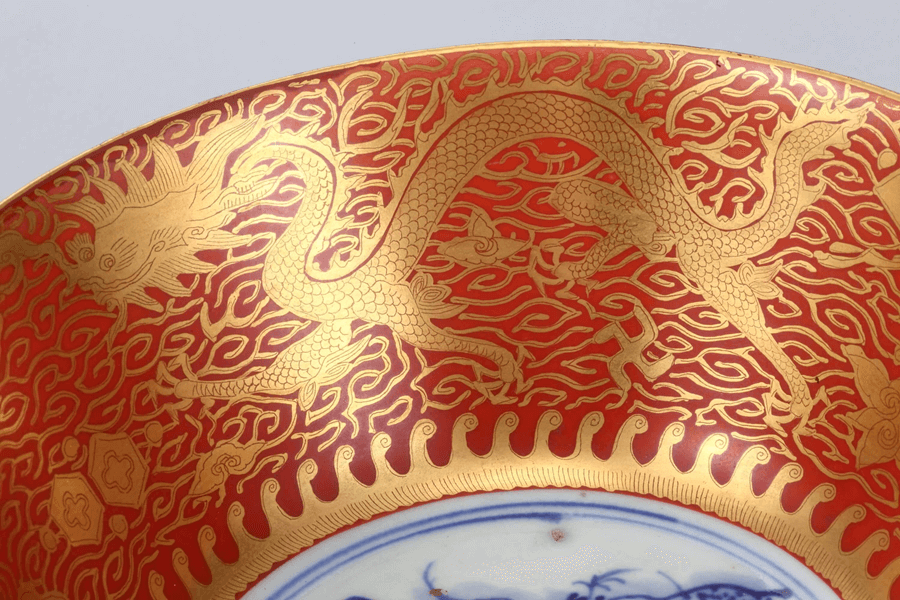
The Mystery of Its Disappearance
Why Ko-Kutani ceased production remains one of Japanese ceramics’ enduring enigmas. Possible reasons include difficulties in obtaining raw materials, political or financial strains within the Kaga Domain, and the loss of technical transmission between generations.
Whatever the cause, this sudden ending elevated Ko-Kutani to mythic status. Its brevity concentrated the creative energy of a whole era into the surviving works, giving them a lasting intensity.
Revival and Reinterpretation
A century later, Kutani ware was revived as “Saikō-Kutani.” Artists such as Yoshidaya and Shozō reinterpreted the colors and vigor of Ko-Kutani through more refined techniques, enriching its legacy.
During the Meiji period, “Ko-Kutani-style” wares flourished again—this time as export porcelains admired worldwide. The form may have vanished, but its spirit continued to shape the future of Japanese overglaze porcelain.
Ko-Kutani in the Present Day
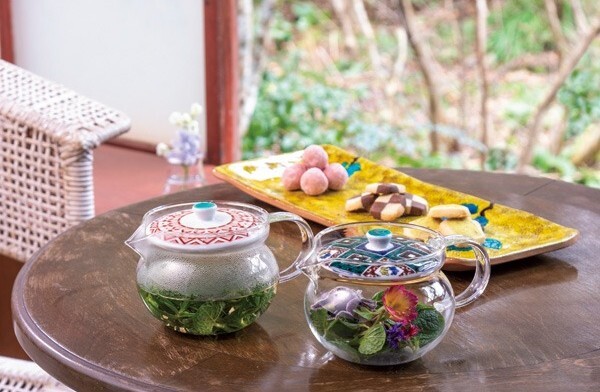
Today, Ko-Kutani masterpieces are preserved and studied with reverence. The Kutaniyaki Art Museum in Nomi City houses representative works such as the No.24 Ao-de Bashō Bowl, celebrated for its dynamic brushwork and depth of color.
Modern ceramic artists continue to learn from Ko-Kutani’s vitality and fearlessness, translating its essence into contemporary forms of expression.
Ko-Kutani’s brevity forged a legend: its fearless color and line still animate Japanese ceramics today.