
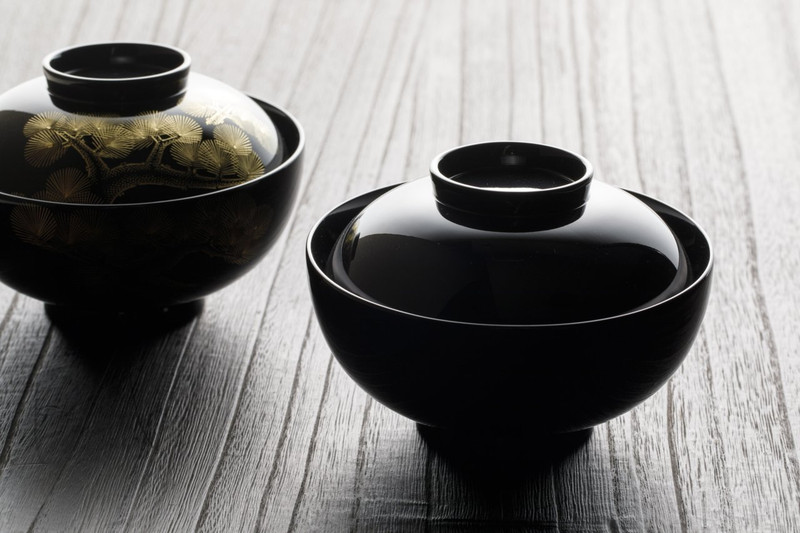
The deep black and the vermilion red the eye reads as "Japanese lacquer" run through pieces made nine hundred years ago and pieces made last year — in the same register, because the makers across the centuries chose to keep them in conversation.
If you are coming to Japanese lacquerware for the first time, here is the short answer most beginner's guides never give you: Japanese lacquerware is not one single thing. The word covers three quite different objects that share a colour vocabulary and a shape language but are built in very different ways. This guide is the small literacy that lets you tell them apart — and choose well.
On this page
2. What "Lacquerware" Means in Japan
3. Traditional Urushi — The Original Form
4. Modern Lacquerware — What Most People Meet
5. How to Read a Lacquerware Piece
6. Common Forms of Japanese Lacquerware
7. Famous Lacquerware Regions
8. Simple Care Notes
9. Quick Terms
10. Frequently Asked Questions
11. Editor's Picks — Three Pieces
12. Closing
1. What Japanese Lacquerware Actually Is
Japanese lacquerware can mean traditional urushi — wooden pieces hand-coated with the refined sap of the lacquer tree, the way the craft was practised for the past nine hundred years and the way a small handful of artisans still practise it today. It can mean modern cashew-resin lacquerware — wooden or resin pieces finished with a synthetic resin distantly related to true urushi, the way most contemporary "lacquer" pieces on a Japanese table are actually made. And it can mean urethane-coated lacquerware-style pieces — pieces made for daily use, often with brass or ABS-resin cores, finished with industrial urethane tinted to the deep blacks and reds of the older tradition.
All three are sold today, often side by side, often with the same regional names — Yamanaka, Wajima, Aizu — printed on the underside. None of them is fake. Each is the form the lacquer tradition has taken to stay alive in a particular moment of its history. Knowing which is which, and what each is for, is the small literacy this guide is meant to provide.
The rest of these pages walks through the three types, how to read a piece in your hand, the regions whose names you will hear, the everyday forms the tradition fills today, and the small everyday care that keeps a piece beautiful for years.
2. What "Lacquerware" Means in Japan
In English, "lacquer" and "lacquerware" are loose words that cover almost any glossy surface — automotive lacquer, nail lacquer, shellac, even some industrial coatings. In Japanese, the words are narrower and more specific. Three are worth knowing.
Urushi (漆) is the sap of the Toxicodendron vernicifluum tree, native to East Asia. It is the original substance from which Japanese lacquerware is built. Tapped from the tree like maple syrup, refined and filtered, then brushed onto a wooden base in thin layers, urushi hardens by reacting with moisture in the air. It is one of the most durable natural coatings known — examples of ancient lacquerware survive in Japanese temple collections today, a testament to the durability of urushi when properly made and preserved.
Shikki (漆器) is "lacquerware" — any object whose surface is finished with urushi or, by modern extension, with a lacquer-like coating. The word covers the full range from finely made urushi pieces to mass-produced modern ware. In everyday Japanese conversation, shikki simply means "a lacquered piece," with no distinction made between traditional and modern.
Nuri (塗) / nurimono (塗物) is the more workshop-grade word for "the coating itself" or "a coated thing." You will see it in compound words: kuro-nuri (黒塗) means "black-finished," shu-nuri (朱塗) means "vermilion-finished," Tsugaru-nuri (津軽塗) means "finished in the Tsugaru style." The compound names describe the finish, not necessarily the material — a kuro-nuri piece may be coated with true urushi or with a synthetic resin tinted to the same deep black.
This is the small word-trap most beginners walk into. To call something "Japanese lacquerware" is to say almost nothing about what it actually is. To know what you are holding, you have to look at the layer below the language.
3. Traditional Urushi — The Original Form
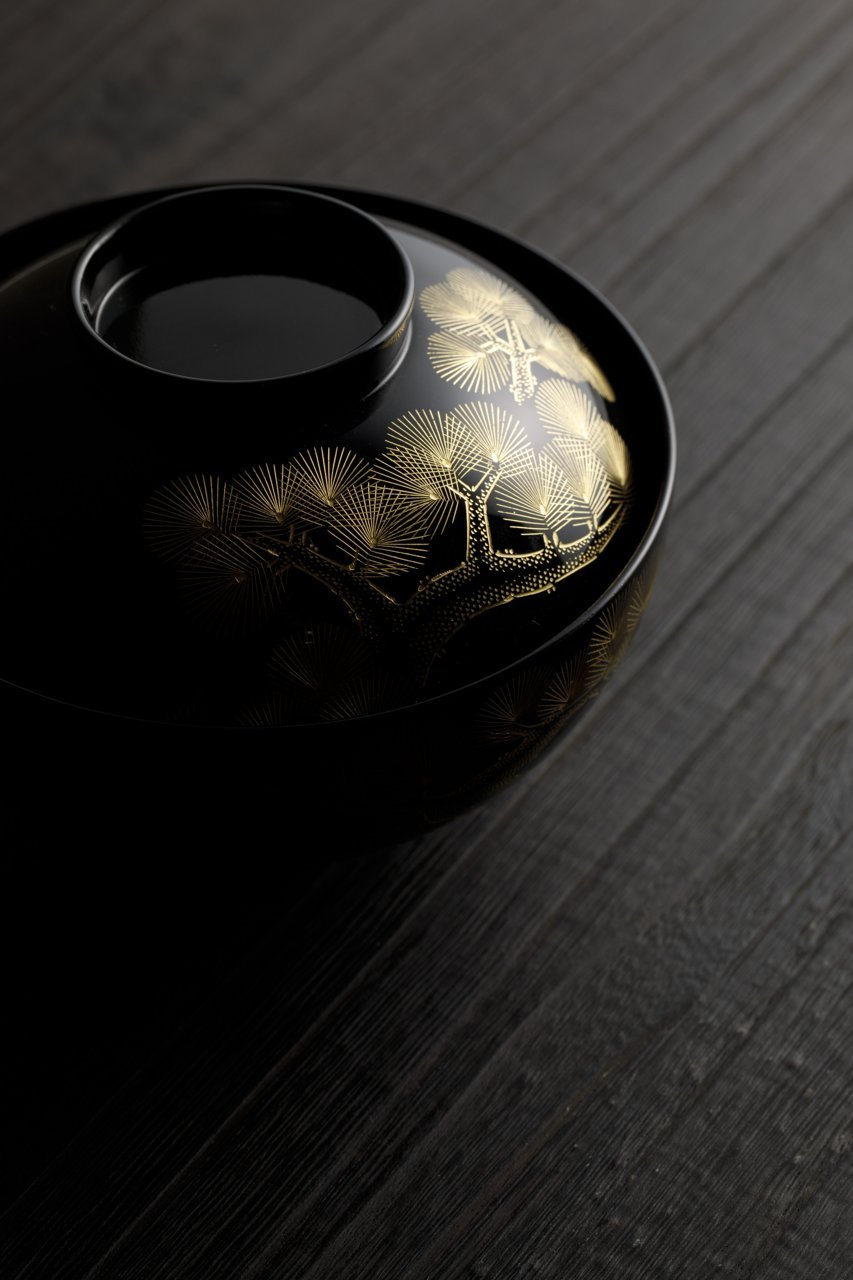
The traditional method is older than written Japanese history. Lacquered combs, bowls, and ceremonial vessels have been excavated from sites dating to prehistoric Japan, and the technique that produced them has been transmitted, with small refinements, for many centuries.
The making is slow. A piece begins as a hand-turned or hand-carved wooden core — often zelkova, cherry, or hinoki — left to season so the wood will not crack later. A coarse base coat called shitaji (下地) is brushed on, mixed from urushi sap and powdered clay or rice paste. In the finest tradition — the Wajima-nuri method from the Noto Peninsula — a layer of hemp cloth (nuno-kise, 布着せ) is wrapped around the wood at this stage to reinforce the edges, then sealed under more lacquer. Above the shitaji go many middle and final coats, each one brushed on, allowed to harden in a humidity-controlled chamber called a furo, then polished with charcoal or fine grit before the next layer goes on. The very last coats, called uwa-nuri (上塗), are applied in a dust-free room with the slow patience of a calligrapher. A single piece — a small bowl, a sake cup — can take many weeks or months from start to finish.
Two qualities are particular to true urushi.
First, the black. Urushi black is not pigment added to a transparent coating. It is the urushi itself, reacted with iron compounds (tetsu-byo, 鉄漿) to produce a black that the eye reads as body rather than as colour. The depth comes from the layered thickness built up over the making — and that depth, polished smooth, holds light in a way no thin synthetic finish quite reproduces.
Second, the ageing. A true urushi piece changes with use. Year by year, the surface softens slightly under the oils transferred from human hands. The black deepens. The vermilion warms. Small dents from daily handling round into the surface rather than chipping out of it. A urushi piece bought new is, in a real sense, only at the beginning of its life — the form it takes after years of an owner's table is its mature form.
This is also the form of lacquerware that comes with the steepest price. A signed bowl from a recognised artisan, made by this method, can cost many times more than everyday lacquerware. Ceremonial pieces by named masters move into a register reserved for museum collections and serious collectors. Traditional urushi still exists today, and is still being made — but fully hand-applied urushi pieces are usually far more expensive and less common in everyday retail than the modern lacquerware most readers will actually encounter.
A small practical note. Once fully cured, urushi is generally safe for normal table use — you can eat from a finished piece, hold it, and hand-wash it without any reaction. Raw urushi sap, however, can irritate the skin during the making process; it contains urushiol, the same compound that causes poison ivy reactions in North America. This is a concern for the artisan at the brush, not for the owner at the table. (Allergic sensitivity to handling brand-new urushi pieces is rare but not unheard of; if you react strongly to poison ivy, give a new piece a week of light handling before regular use.)
4. Modern Lacquerware — What Most People Actually Meet Today
If true urushi is the more expensive, more specialised end of the lacquer world, what fills almost every contemporary Japanese household, gift shop, and online catalogue — including much of our own collection — is modern lacquerware. It is the lacquerware most readers of this guide will actually touch and own. It deserves to be described accurately, not dismissed as a copy.
Modern Japanese lacquerware divides into two broad categories.
Cashew-resin lacquer (カシュー塗料, kashū-toryō). Cashew lacquer is made from compounds derived from cashew nut shell liquid — the oil pressed from the shell of the cashew nut — whose chemistry has similarities to the urushiol-based natural lacquer of the urushi tradition. It was developed industrially in mid-twentieth-century Japan as a more workable, more affordable alternative to urushi: it dries faster, requires no humidity-controlled chamber, can be sprayed or brushed, and costs a small fraction of the price. The visual result, applied skilfully and in multiple coats, is very close to true urushi at the level of casual observation. Many Yamanaka pieces in the contemporary tradition use cashew lacquer over a turned wooden core, finished by hand. The surface is glossy, the colour is deep, and the piece reads in the same visual register as a urushi piece — but the work behind it is days rather than months, and the price is a fraction of a comparable hand-applied urushi piece.
Urethane and acrylic coatings. Further along the spectrum, fully synthetic resin coatings — urethane, acrylic, occasionally polyester — are applied over wooden, resin, or metal cores to produce pieces sold under the lacquerware name. These are typically sprayed in factory conditions, baked, and finished mechanically. The coating is harder against scratches, more uniform in colour, and far cheaper to produce than true urushi. Pieces in this category are made for everyday use: chopsticks for daily meals, bento boxes for office lunches, sake cups for a quiet evening at home. Some contemporary Yamanaka pieces — including sake cups, small tableware, and accessories — use brass, resin, or wooden cores with modern lacquer-style finishes, often produced in collaboration with metal craft workshops in nearby Takaoka and Tsubame-Sanjō.
A small honesty owed to the reader. The marketing language around lacquerware often pretends that only the urushi method is "real" and that everything else is a compromise. This is not how the contemporary Japanese household actually sees the material. A Yamanaka cashew-finished chopstick is not a lesser cousin of a Wajima urushi chopstick. The two are made for different lives. The Wajima chopstick is for the once-in-a-decade dinner with a piece you may pass to your child. The Yamanaka cashew chopstick is for the meal you eat tonight, washed in the sink, used tomorrow. Both are honest objects. Both come from the same craft language. The thing that has changed is not the language but the price tier the market needed each piece to live in.
The colour vocabulary is also the same. Deep black (kuro-nuri, 黒塗) and vermilion red (shu-nuri, 朱塗) are the two register-defining colours that run from finely made urushi through cashew lacquer to industrial urethane. A black bento box from a department store and a black urushi otoso cup from a Wajima atelier share the same visual register because the colour grammar has been deliberately preserved across the technology shift. The craft language of Japanese lacquerware survives not because the materials are the same — they are not — but because the makers chose to keep the colours and the forms consistent across the change.
For the reader new to this material, the most useful working assumption is this: a piece described as "lacquerware" in any contemporary Japanese catalogue is, unless it is explicitly labelled hon-urushi (本漆, "true urushi") and priced accordingly, almost certainly a modern piece. This is not a flaw in the marketing. It is simply how the modern Japanese lacquerware tradition has reorganised itself. Knowing this lets you read prices honestly, ask the right questions, and choose a piece for the use you actually have for it.
5. How to Read a Lacquerware Piece
Once you know the three categories exist, the next small skill is reading a piece in your hand. A few simple checks make the distinction between traditional urushi, cashew lacquer, and urethane-finished pieces clearer than any marketing language.
Weight. True urushi pieces, layered slowly over a turned wooden core, have a particular lightness — the wood is hollow inside, the lacquer thin in absolute terms, and the whole feels less dense in the hand than its size suggests. Cashew-finished wooden pieces feel similar but often slightly heavier from the additional coating. Urethane-coated pieces with brass or resin cores feel notably heavier; the weight of the core, not the lacquer, dominates what the hand reads.
Surface. Run a fingertip slowly across the surface. A true urushi piece has a depth that the eye reads even before the finger does — a soft sheen, not a sharp gloss, with the colour appearing to sit inside the surface rather than on top of it. A cashew finish is similar at first glance but often a touch more uniformly glossy. Urethane finishes can read very smooth and very even, sometimes almost plastic-like under strong light. None of these is a flaw — they are simply different finishes — but the eye learns to tell them apart over time.
Price. This is the most honest signal in everyday retail. Genuine hand-applied urushi pieces, signed by recognised artisans, are priced in a register that immediately makes the method obvious. Mid-priced lacquerware, in the range most everyday buyers consider, is almost always modern (cashew or urethane). Very inexpensive lacquerware-style pieces — bento boxes, basic chopstick sets, party sake cups — are almost certainly urethane-coated. Price alone is not a guarantee of quality, but in lacquerware it is a reasonably reliable signal of which type a piece belongs to.
Material disclosure. Reputable Japanese lacquerware retailers usually disclose the substrate (kiji, 木地, the underlying body) and the finish material on the product card or accompanying paper. Look for these markings: hon-urushi (本漆) indicates traditional urushi; kashū (カシュー) indicates cashew-resin lacquer; uretan tosō (ウレタン塗装) indicates urethane coating. ABS resin substrates (often marked gōsei jushi, 合成樹脂) are common in modern pieces; tennen-moku (天然木) means natural wood. Pieces without disclosure, or with vague language like "traditional finish," are usually modern.
Use guidance. Care instructions are another quiet tell. A piece labelled "dishwasher safe" or "microwave safe" is almost certainly a modern urethane-coated piece — true urushi will never carry these labels, because heat and harsh detergents damage the lacquer. A piece labelled "hand-wash only, avoid prolonged soaking" is more likely traditional or cashew-finished. The labels are pragmatic guidance from makers who know what their material can take.
There is no test that is fully decisive without consulting a specialist, and there does not need to be one. For most owners, knowing roughly which type a piece is — and what kind of life it is suited for — is enough to choose well and care for it correctly.
6. Common Forms of Japanese Lacquerware
Lacquerware fills more roles in the Japanese household than most beginners expect. The same colour grammar and finish vocabulary that builds a ceremonial sake cup also builds a daily commuter's bento box. A short tour of the forms most worth knowing:
Bowls (wan, 椀). The most iconic form. A small lacquered bowl with a domed lid is the standard vessel for miso soup, clear broth, and rice in formal settings. The dark interior makes the colour of the broth read as luminous; the lacquer surface keeps the soup warm against the lip for longer than ceramic would. Vermilion-on-black is the classical pairing — the outside black, the inside red — though black-on-black and modern colour combinations are also widely made.
Trays (bon, 盆). Small lacquered trays — round, square, oval — are used to serve, to carry, and to organise. A black tray under a teacup, a small dish on a cluttered table, immediately changes the visual register of a meal. The everyday lacquered tea-set tray (chataku, 茶托, the small coaster-tray for a teacup) is among the most common entry pieces into lacquerware ownership.
Chopsticks (hashi, 箸). The piece most Japanese households own without thinking of it as lacquerware. Almost every set of formal Japanese chopsticks is finished with some form of lacquer coating — true urushi for the highest tier, cashew for the most common gift sets, urethane for daily-use pairs. Lacquered chopsticks last decades with reasonable care and are a particularly thoughtful first lacquer piece for someone curious about the tradition. Many in our collection come from the Yamanaka workshops and are sold as paired sets — meoto-bashi (夫婦箸, "husband-and-wife chopsticks") — making them a frequent wedding or housewarming gift.
Sakeware (shuki, 酒器). Lacquerware sake vessels — the flat sakazuki (盃) ceremonial cup, the small guinomi (ぐい呑) personal cup, the formal three-tiered otoso (お屠蘇) set used at New Year — sit at the intersection of lacquer and Japanese hospitality tradition. The lacquer keeps cold sake cold and warm sake warm; the dark or vermilion interior makes the sake glow. A black-lacquered sakazuki is a traditional gift for milestone occasions: weddings, retirements, the first cup of the new year.
Fountain pens and writing tools. A more recent direction. The contemporary Yamanaka studios have collaborated with stationery makers and brass casters to produce fountain pens, ballpoint pens, and writing accessories finished in traditional lacquer techniques — often with maki-e (蒔絵, sprinkled-gold inlay) decoration on the barrel. These pieces sit comfortably alongside the older lacquerware forms and have become a contemporary inheritor of the maki-e tradition that older lacquerware decorated with the same technique.
Small accessories. Lacquered chopstick rests (hashi-oki, 箸置), small dishes (mame-zara, 豆皿), tea-ceremony incense containers (kogō, 香合), and increasingly lacquered jewellery and personal accessories all extend the same craft language into smaller objects. These are often the most affordable entry points into the tradition.
The thread that runs through all these forms is consistent. The lacquer is doing more than decorating. It is keeping the wood from cracking, the food from cooling, the user's lip from feeling cold metal, the surface from staining. The decoration is a happy side effect of a coating that was, originally, deeply practical.
7. Famous Lacquerware Regions
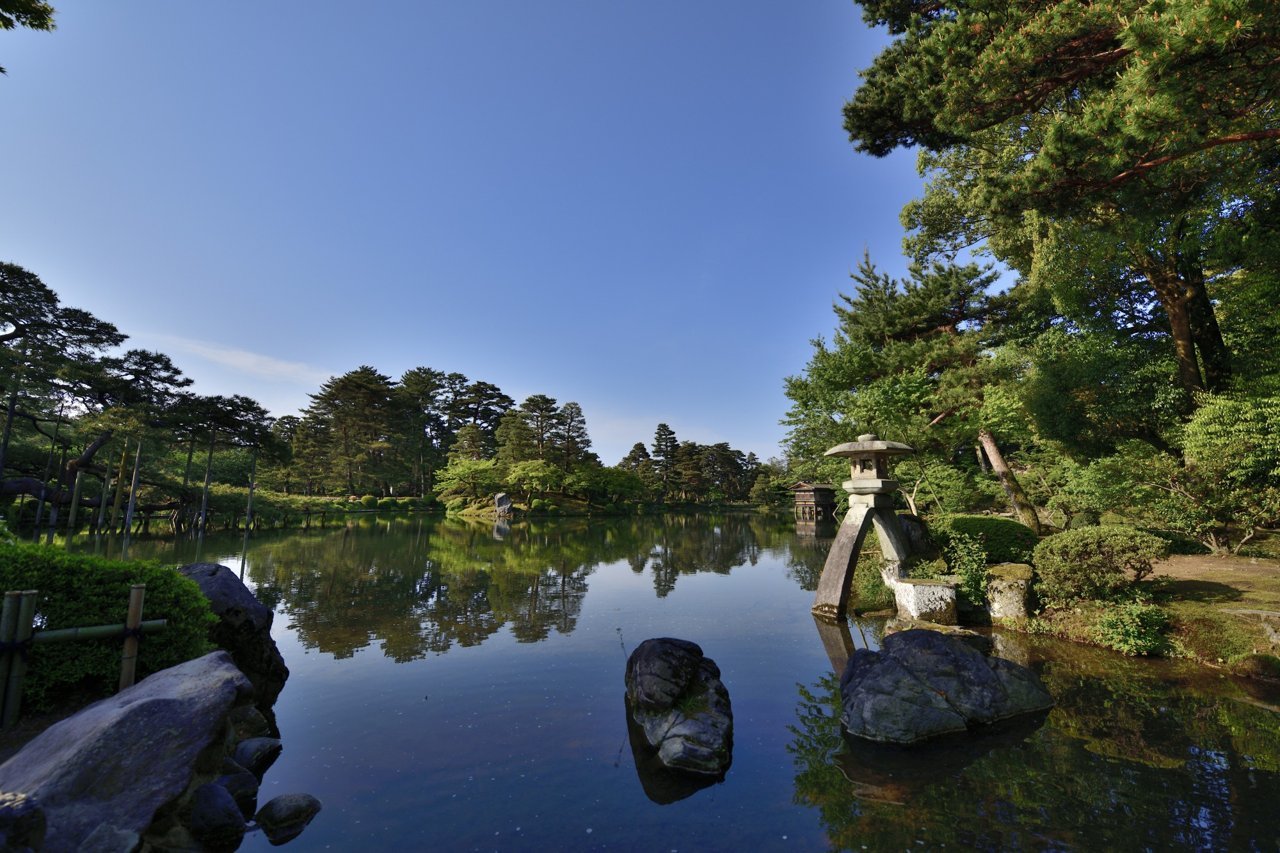
If you spend any time around Japanese lacquerware, several regional names will come up again and again. A brief tour, without going too deep — a separate essay could be written on any one of them.
Yamanaka (山中, Ishikawa). The mountain spa town inland from Kanazawa, and the most design-forward of the contemporary lacquer regions. The specialty is kiji-shi (木地師) work — wood turned on a lathe rather than carved — which gives Yamanaka pieces their characteristic perfect roundness and concentric inner ring patterns. Modern Yamanaka has positioned itself as a design ecosystem, working closely with the metalworkers of nearby Takaoka and, more recently, with the precision metal-spinners of Tsubame-Sanjō in Niigata. Most of the contemporary Yamanaka pieces in our own collection are from these collaborative families.
Wajima (輪島, Ishikawa). On the windward coast of the Noto Peninsula, the historic centre of the most labour-intensive urushi tradition. Wajima-nuri is famous for the nuno-kise (布着せ) hemp-cloth reinforcement layer that gives the pieces their structural durability, and for the slow building of many lacquer coats over the cloth. Wajima pieces are among the most prized and labour-intensive objects of the Japanese lacquer world, and the 2024 Noto Peninsula earthquake damaged several workshops; what remains is more fragile than it was.
Aizu (会津, Fukushima). The mountainous interior of northern Honshu, with a centuries-old folk lacquer tradition. Aizu pieces have historically been more affordable and more populist than Wajima — daily-use lacquerware for ordinary households, often with simple patterned decoration. The region produces a wide range of contemporary pieces in the same accessible price register.
Tsugaru (津軽, Aomori). The northern tip of Honshu, known for Tsugaru-nuri — a distinctive "patterned lacquer" technique in which multiple colours are applied in irregular spots and ground back to reveal a marbled, often quite contemporary-looking surface. The colour vocabulary of Tsugaru pieces is broader than the classical black-and-vermilion tradition, and the pieces have a strong modern-craft character.
Kamakura (鎌倉, Kanagawa). The ancient capital south of Tokyo, known for Kamakura-bori — pieces in which the wooden base is carved in relief patterns before the lacquer is applied, leaving the lacquer to sit slightly thicker in the carved hollows. The pieces have a sculptural depth that the smoother regional traditions do not share.
Regional names matter less in modern lacquerware than the marketing sometimes suggests. A "Yamanaka" cashew-finished bowl and an "Aizu" cashew-finished bowl may be built very similarly; the regional designation is more a brand-historical association than a strict guarantee of method. But the names are still useful as orientation, especially if you are choosing a piece for a particular feeling or a particular gift register.
8. Simple Care Notes
Lacquerware care varies depending on which of the three types you own — but the everyday habits that protect a piece are quiet and few. Here is a short, practical list that works as a starting point regardless of type.
Hand-wash with warm — not hot — water. This is the single most important habit. Hot water expands the coating and the substrate at slightly different rates, which over time can cause fine crazing on traditional pieces. Warm water with a soft cloth or sponge, and a small amount of mild dish soap, is enough for nearly any everyday cleaning.
Avoid the dishwasher. Even pieces labelled "dishwasher safe" — usually urethane-coated modern pieces — will lose their depth and surface quality faster than hand-washed pieces. The high alkalinity of modern dishwasher detergents is the culprit, not the heat alone. If you have a piece you plan to keep for many years, hand-washing is the simple rule.
Avoid the microwave. Lacquerware should never go in the microwave. Metal-bodied pieces (the brass-cored Yamanaka cups, for instance) can arc dangerously; wood-cored pieces can crack from uneven heating; the lacquer itself can blister at high temperatures.
Do not soak. Brief contact with water is fine. Long soaking — leaving a piece in a basin of water while you do something else — can allow water to penetrate any small imperfection in the coating and lift the lacquer away from the substrate over time. Wash, rinse, dry. Do not leave a piece in the sink.
Dry by hand, store dry. Lacquerware that air-dries on a rack is fine, but a quick wipe with a soft cloth is better. Pieces should always be fully dry before being stored. Damp lacquerware in a closed cupboard can develop fine surface clouding that is difficult to remove.
Avoid direct sunlight. Prolonged exposure to UV light fades vermilion lacquer over years and can dull deep blacks. Pieces displayed near a sunny window will visibly age faster than pieces stored in a cupboard between uses.
Use wooden or bamboo utensils when possible. Metal cutlery, scouring pads, and another lacquered piece rubbing against the surface in the sink are the most common sources of fine scratches that, over time, soften the original gloss.
Treated this way, even a modern lacquer-coated piece will last decades — and a traditional urushi piece will arrive at the next generation in better condition than most modern tableware.
9. Quick Terms
A short glossary for the words that will come up most often when you are reading about, shopping for, or being given Japanese lacquerware.
- Urushi (漆) — the refined sap of the Toxicodendron vernicifluum tree, the natural lacquer at the root of the traditional craft.
- Shikki (漆器) — "lacquerware"; any object whose surface is finished with urushi or, by modern extension, with a lacquer-like coating.
- Nuri / Nurimono (塗・塗物) — the workshop word for "coating" or "a coated thing"; appears in compound finish names like kuro-nuri and shu-nuri.
- Hon-urushi (本漆) — "true urushi"; explicit labelling for pieces finished with traditional natural urushi rather than synthetic alternatives.
- Kashū (カシュー) — cashew-resin lacquer; a synthetic finish derived from the cashew tree, chemically related to urushi but easier to work and far less expensive.
- Uretan tosō (ウレタン塗装) — urethane coating; a fully synthetic, factory-applied lacquer-style finish used on most everyday modern lacquerware.
- Kuro-nuri (黒塗) — black-finished; the deep black register of Japanese lacquer, produced traditionally by reacting urushi with iron compounds.
- Shu-nuri (朱塗) — vermilion-finished; the deep, slightly warm red register that pairs culturally with kuro-nuri.
- Maki-e (蒔絵) — "sprinkled picture"; decoration applied by sprinkling gold or silver powder onto wet lacquer, used on the most refined pieces in any tradition.
- Raden (螺鈿) — mother-of-pearl inlay; thin shell pieces set into the lacquer surface as decoration.
- Kiji (木地) — the substrate or "body" of a piece, usually wood; the part the lacquer is applied over. Modern kiji may also be ABS resin or metal.
- Kiji-shi (木地師) — the artisan who turns or carves the wooden body before lacquering begins; particularly central to the Yamanaka tradition.
- Nuno-kise (布着せ) — the hemp-cloth reinforcement layer used in the finest Wajima-nuri work, wrapped around the wooden body before the lacquer coats are built up.
- Furo (風呂) — the humidity-controlled drying chamber in which urushi layers are allowed to harden between coats.
- Urushiol — the active compound in raw urushi sap that can irritate the skin during the making process; effectively inert once the lacquer has fully cured.
- Urushi-kabure (漆かぶれ) — the skin reaction some people develop on contact with raw or freshly applied urushi; a concern for the artisan, not for the owner of a finished piece.
10. Frequently Asked Questions
Q: Is most Japanese lacquerware sold today actually made with urushi?
No. The majority of contemporary Japanese lacquerware — including most pieces sold by everyday retailers and most pieces in our own collection — uses cashew-resin lacquer or urethane coatings rather than traditional urushi. Hand-applied urushi pieces still exist, and they are still being made, but they sit in a much higher price register and are far less common in everyday retail. A piece is most reliably identified as traditional urushi if it is explicitly labelled hon-urushi (本漆) and priced accordingly.
Q: Is "synthetic lacquer" lower quality than traditional urushi?
Not in a simple sense. Synthetic finishes — cashew and urethane in particular — were developed to fill a different role than hand-applied urushi: they make the colour vocabulary and shape grammar of Japanese lacquerware available at everyday prices, in pieces designed for daily use. A well-made cashew-finished Yamanaka piece is an honest contemporary object, not a degraded copy of an urushi piece. The right way to read the difference is by what each is made for, not by ranking them on a single scale.
Q: How can I tell if a piece is traditional urushi or modern lacquer?
Five quiet checks: (1) price — traditional hand-applied urushi sits at a markedly higher price register; (2) weight and balance — true urushi pieces over a wooden core have a particular lightness; (3) surface — urushi has a deep, soft sheen rather than a sharp gloss; (4) material disclosure on the product card — reputable retailers will state hon-urushi, kashū, or uretan tosō directly; (5) care labels — pieces marketed as dishwasher- or microwave-safe are almost certainly synthetic-coated. None of these is fully decisive on its own, but together they tell you reliably what you are holding.
Q: Can I put lacquerware in the dishwasher or microwave?
No, on both counts. Even pieces with urethane coatings marketed as "dishwasher safe" will lose their surface quality faster than hand-washed pieces, and traditional urushi will be damaged outright. Microwaves are unsafe for any lacquerware: metal-cored pieces can arc, wood-cored pieces can crack, and the lacquer itself can blister. Hand-wash in warm water; warm food separately in a microwave-safe container if needed.
Q: Are urushi pieces safe to use? What about urushi allergies?
Yes. A finished urushi piece, fully cured, is completely safe — you can eat and drink from it without any reaction. The compound (urushiol) that causes skin reactions is only active in raw or freshly applied lacquer, which is a concern for the artisan at the brush rather than for the owner at the table. If you have a strong sensitivity to poison ivy (a chemical relative of urushi), give a brand-new piece a week of light handling before regular use, as a small number of people do react to fresh lacquer in its first days after firing.
Q: Does lacquerware change with use?
Traditional urushi pieces do — and this is one of the small pleasures of owning one. Over years, the surface softens slightly under the oils of the hand, the black deepens, the vermilion warms, and small dents from use round into the surface rather than chipping. Modern synthetic-coated pieces are more stable: they look in twenty years much as they did when new. Whether you want a piece that records the years or a piece that holds its first appearance is a matter of preference, not of quality.
Q: What is a good first lacquerware piece to own?
A pair of well-made Japanese chopsticks is the gentlest entry into the tradition: affordable, used daily, lasts for years with simple care. Small lacquered chopstick rests or a tea-set tray are similarly forgiving first pieces. For a more deliberate first piece, a single lacquered sake cup — vermilion or black — sits beautifully on a table without committing to a full sake set, and carries the colour vocabulary of the older tradition in a single small object.
Q: Is lacquerware a meaningful gift?
Yes, and the meaning is woven into the colour and the form. A vermilion or black lacquer sakazuki (盃) is a traditional gift for weddings, retirements, and the first cup of the new year. Paired chopsticks — meoto-bashi (夫婦箸, "husband-and-wife chopsticks") — are among the most quietly thoughtful housewarming and wedding gifts in the Japanese tradition. A maki-e fountain pen or small object marks a graduation or a significant career moment in a register that few other gifts match. The piece carries both its own beauty and the long history of the craft language behind it.
Q: Can a damaged lacquerware piece be repaired?
Often, yes. Traditional urushi pieces can be repaired by kintsugi (金継ぎ, gold-seam mending) — the technique of mending cracks and chips with lacquer mixed with gold powder, turning the repair into a new kind of beauty. The technique works best on true urushi pieces, where the new lacquer bonds properly with the original surface; modern synthetic-coated pieces are more difficult to repair invisibly. If a piece you care about is damaged, do not discard it; speak to a specialist before deciding.
11. Editor's Picks — Three Pieces from Our Collection
Three pieces from our collection that make a gentle first introduction to Japanese lacquerware — across the three everyday forms most people meet first: chopsticks, a sake cup, and a writing piece.
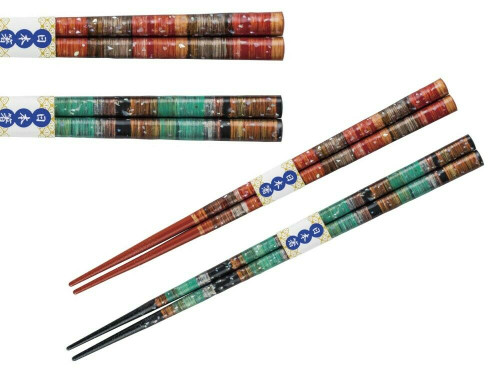
Pick 1 — Yamanaka Paired Chopsticks, Kujaku-zome (Peacock Pattern), Black. Lacquered chopsticks in the meoto-bashi (夫婦箸) tradition — one slightly longer for the husband, one slightly shorter for the wife, paired in a single box. The black ground carries a subtle peacock-feather pattern in the lacquer surface. A daily-use piece in a register that does not feel disposable; an unusually thoughtful housewarming or wedding gift. (See the pair)
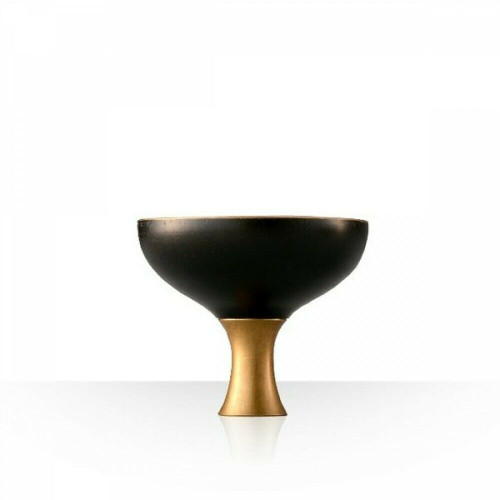
Pick 2 — Yamanaka × Takaoka Brass Guinomi, "HAI" Form, Gold Kuro-urushi. A small sake cup from the contemporary Yamanaka × Takaoka collaborative tradition: a brass body cast in Takaoka, a black lacquer interior with a soft gold flake finish, designed in the Yamanaka studio register. The form is HAI — a slightly tapered profile that sits well in the hand. Catches evening light in a way ceramic does not; weighty enough to feel deliberate; small enough to be the cup chosen for a quiet evening rather than for a celebration. (See the piece)

Pick 3 — Yamanaka Maki-e Fountain Pen, Crane Sunrise. A contemporary direction. The barrel of the pen is finished in lacquer, with maki-e (蒔絵) decoration — gold powder sprinkled onto wet lacquer and sealed under a final clear coat — showing a crane in flight against a sunrise. The piece is an everyday object in the tradition the maki-e technique was originally developed for. A graduation, retirement, or career-milestone gift in a register that few other writing instruments reach. (See the piece)
12. Closing
Japanese lacquerware is not one thing. It is a colour vocabulary, a shape grammar, and a craft history that has continued to find new materials and new forms to live in. The deep black and the vermilion red that the eye reads as "Japanese lacquer" run through pieces made nine hundred years ago in temple workshops and pieces made last year in collaboration studios — and they read in the same register because the makers across the centuries chose to keep them in conversation with each other.
For the new owner, the small literacy this guide has tried to offer is enough: knowing roughly what you are holding, knowing what it is suited for, knowing how to care for it so that it lasts. The rest — the choice of piece, the colour you prefer, the form that will become part of your table — is yours.
Thank you for reading.
— from Osaka, Team Manekineko-A