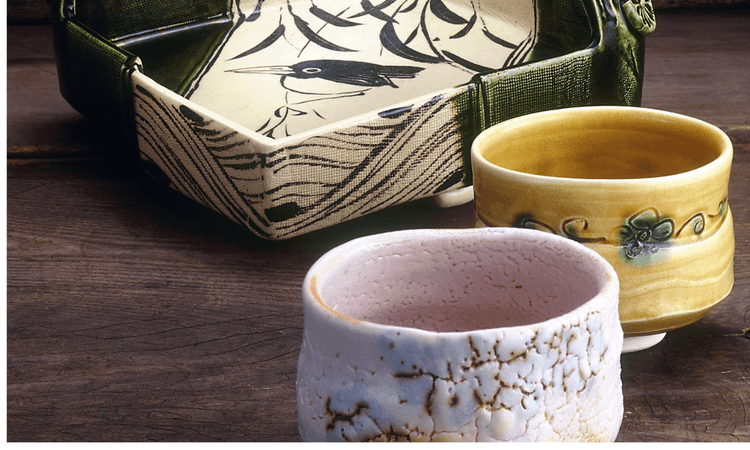
Seto-yaki and Mino-yaki are two of the most historically important pottery traditions of Japan, produced across the border regions of Aichi and Gifu. Seto was one of the Six Ancient Kilns, and its neighbor Mino has been central to Japanese everyday ceramics for centuries.
This region is the birthplace of iconic tea ceremony styles including Oribe (deep green glaze), Shino (warm white and pink), Kiseto (yellow glaze), and Setoguro (black glaze). Today it remains Japan’s largest pottery-producing region, blending classical forms with modern design.
At Manekineko-Ai, we feature Seto and Mino ware for daily dining, tea ceremony, and decorative use — each piece carrying the richness of Japan’s most enduring ceramic heartland.
When choosing Seto & Mino-yaki, look at the variety of glazes and textures — from the soft milky surface of Shino ware to the vivid green of Oribe, and the warm earthy tones of Ki-Seto. Each style offers a different mood and pairs beautifully with both Japanese and Western dishes.
For everyday table use, simple shapes and matte textures work especially well, bringing out the colors of food without overpowering the presentation. For display or tea use, pieces with bold brushwork, carved patterns, or strong color contrasts show the artistic strength of these kilns.
Seto & Mino ceramics are durable and easy to use, making them ideal for daily meals. Their balanced designs and comfortable shapes have made them staples in Japanese kitchens for centuries, blending practicality with quiet beauty.