

There is an old saying among Japanese tea practitioners: “Ichi Raku, ni Hagi, san Karatsu.” First Raku, second Hagi, third Karatsu. For four hundred years, these three kilns have been considered the finest for serving matcha. Raku is for the most formal moments. Karatsu is earthy and generous. Hagi — soft, pale, and famously alive — sits quietly in the middle, beloved by tea masters for a quality almost no other pottery has: it changes as you use it.
This is a guide to Hagi-yaki: where it comes from, why tea people have treasured it for centuries, what the famous “seven changes” actually mean, and how to care for a piece if you bring one home.
A Short History
Hagi-yaki was born in the early 1600s, when the feudal lord of the Hagi domain (in what is now Yamaguchi Prefecture) brought Korean potters across the sea after the Bunroku-Keicho campaigns. Two brothers, Ri Shakko and Ri Kei, established the first kiln at the foot of the mountains near Hagi Castle. Their descendants eventually took Japanese family names (Saka and Miwa), and their lineages are still making pottery in Hagi today, more than four centuries later.
During the Edo period, Hagi ware flourished under the patronage of the Hagi clan and became one of the most treasured tea ceramics in Japan. It was valued not for decoration — Hagi pieces are almost never painted — but for the quiet honesty of the clay, the softness of the glaze, and the extraordinary way each piece transformed in the hands of its owner.
Why Tea People Love Hagi
In the world of Japanese tea, a bowl is not simply a vessel. It is a companion for decades of tea-drinking, and the bowl that was perfect in 1985 will be a different, deeper bowl in 2026. Hagi ware embodies this philosophy more literally than almost any other pottery:
- The clay is coarse and porous. It breathes.
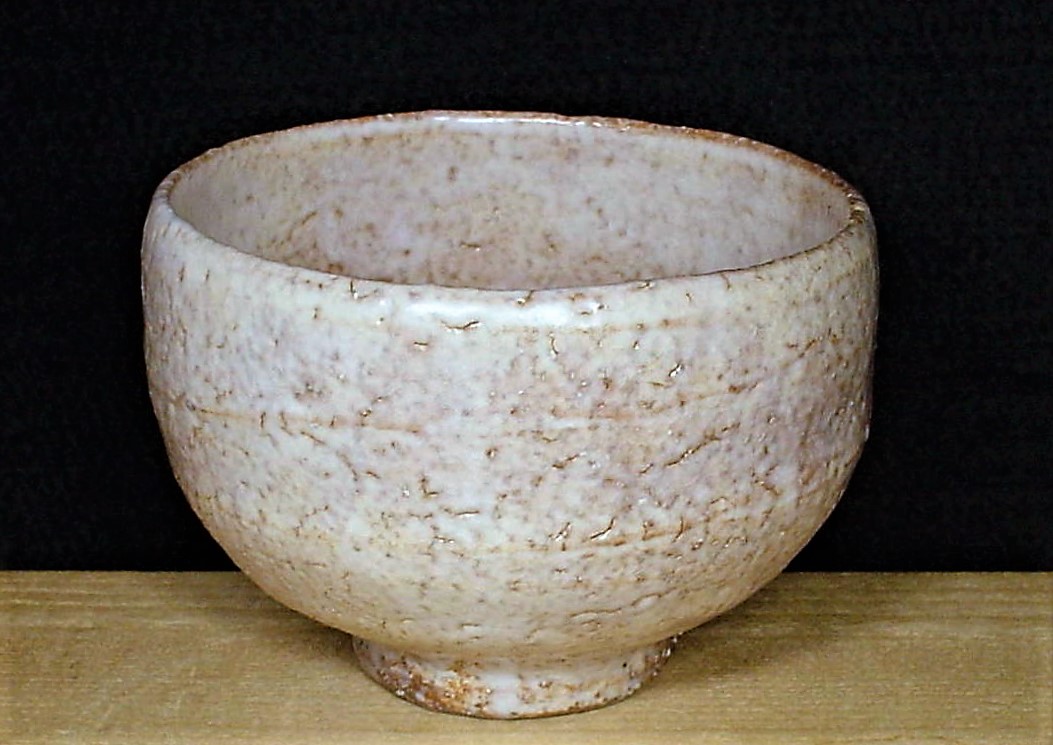
- The glaze is applied softly, often in creams, whites, and pale pinks. It is not meant to be flashy.
- The surface develops a fine network of craze lines (kannyu, 貫入) — tiny cracks in the glaze caused by slightly different expansion rates between the glaze and the clay body.
- As you use the bowl for tea, moisture seeps into those cracks. Very slowly, the surface darkens, yellows, deepens, takes on color.
This gradual transformation is called Hagi no nanabake (萩の七化け) — “the seven changes of Hagi.” A brand-new Hagi bowl and the same bowl twenty years later look almost nothing alike. It is as if the pot has quietly been keeping a record of every tea you ever drank from it.
The Materials That Make It Possible
Hagi’s particular softness comes from the clay itself. Three main clays are used, often blended:
- Daido clay (大道土) — iron-rich and slightly sandy, the main body of most Hagi pieces.
- Mishima clay (見島土) — brought from Mishima island, adds strength and subtle iron spots.
- Kinpo clay (金峯土) — fine white clay used in slip decoration or for lighter-bodied pieces.
The signature pale glaze is most often a straw-ash feldspar mixture, sometimes with rice-straw ash that gives the cream color. Because the clays are coarse and the glaze is soft, Hagi work is fired at a relatively low temperature for porcelain-age Japan — another reason the finished ware remains porous enough for tea to slowly seep in.
Famous Lineages
Two family lineages, both descendants of the original Korean potters, have shaped Hagi ware for four centuries:
The Sakakura line — the Saka family, now in its fifteenth generation. Known for refined, traditional tea wares in the classic Hagi palette. The current head, Sakakura Shinbei XV, continues to fire wood-burning kilns in the same location his ancestors used.
The Miwa line — the Miwa family, famous for their snow-white glaze (Kyusetsu-jiro, 休雪白). Miwa Kyusetsu X and XI were both named Living National Treasures (Ningen Kokuho) for their contribution to Japanese ceramics.
Alongside these great families, countless smaller workshops across Hagi city continue the tradition, each with their own subtle differences in clay mixing, glaze recipe, and firing. This is part of why buying Hagi is so interesting: two bowls that look similar at first glance may reveal completely different temperaments after a year of use.
How to Care for Hagi Ware
Because Hagi is porous and unglazed clay shows at the foot, it asks for a little more care than a modern glazed cup. The effort is well worth it.
Before first use. Soak the piece in cool water for 30 minutes to an hour. This allows the clay to absorb water so that your first cup of tea doesn’t stain unevenly.
Every day. Before pouring tea, a quick rinse in warm water will “wake up” the clay and help the tea settle evenly. Avoid acidic foods, oily dishes, or long contact with alcoholic beverages — these can cause uneven staining or absorb odors that are hard to remove.
If your Hagi ware leaks in the first weeks. This is normal. New Hagi pieces can seep slightly until the craze lines seal from use. If it continues, dry the piece completely, dissolve one tablespoon of cornstarch in 500 ml of water, bring it to a simmer, and pour it into the vessel. Let it sit for six hours and the leaking will stop.
Drying and storage. Dry thoroughly before putting away. Hagi absorbs moisture quickly and can develop mold in a closed cupboard if stored wet. A few hours of air-drying, upside down or on a rack, is enough.
Over time you will notice the changes — a soft yellowing, a deepening of tone, sometimes a faint pattern in the craze. Traditionally, these changes are considered beautiful rather than flawed. A Hagi bowl that has been used daily for a decade is, in the language of the tea ceremony, finally itself.
Finding Your Hagi Piece
Hagi-yaki suits people who want a bowl, cup, or sake set that will slowly become part of their daily life rather than staying the same forever. Some good starting points:
- A Hagi yunomi tea cup — the most everyday way to experience the “seven changes.” Use it every morning for a year and you will see.
- A Hagi chawan (matcha bowl) — the classic choice for anyone practicing tea ceremony or wanting a meditative daily ritual.
- A Hagi sake set — the pale glaze is a beautiful contrast to clear or warm sake.
- A Hagi flower vessel — ikebana practitioners often love Hagi for its quiet presence.
You can browse the full selection in our Hagi-yaki collection, or explore the broader Japanese ceramics range for pieces from other famous kilns.
One Last Thought
There is a saying among Hagi potters: “The bowl is only half-made when it leaves the kiln. The other half is made by the person who uses it.”
That is the quiet magic of Hagi ware. You don’t buy it finished — you buy it halfway, and you finish it yourself over the years, one cup of tea at a time.
For a wider view of how Hagi fits within the Japanese craft tradition, see our primer on why Japanese crafts feel different. If you’re curious about other Japanese pottery traditions, our complete guide to regional pottery styles is a good next step.