
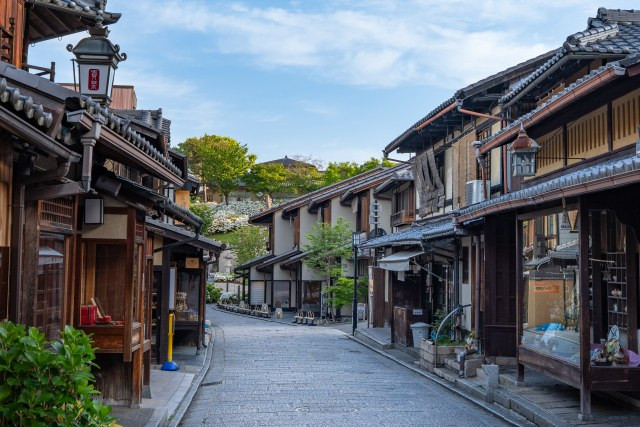
A juzu is one of the most quietly personal objects in Japanese life — a loop of beads held in the hands, said to help steady the mind and mark a moment as set apart.
Of all Japanese craft objects, the juzu (数珠) — prayer beads, also called nenju (念珠) — is among the most personal and the least understood outside Japan. Visitors often admire them without quite knowing how to choose one: Which beads? How many? Is there a men's and a women's kind? Does it matter which Buddhist school it belongs to? These are exactly the questions a Kyoto juzu shop answers as a matter of course — and this guide introduces that specialist knowledge in a way that is clear for readers outside Japan, so that choosing a juzu, for quiet keeping or as a meaningful gift, feels approachable rather than daunting.
We will keep the religion light and the practical knowledge full. A juzu can be held with reverence at a temple or kept simply as a beautiful, calming object; either way, understanding what you are looking at is the first pleasure of owning one.
On this page
2. The Parts of a Juzu
3. Formal and Informal — Start Here
4. Men's and Women's Juzu
5. Materials — Wood, Stone, and More
6. Choosing by Stone — Birthstone and Meaning
7. The Tassel
8. How to Choose — a Short Path
9. As a Gift, and How It Is Held
10. Frequently Asked Questions
11. Editor's Picks — Three Kyoto Juzu
12. Closing
1. Why Kyoto
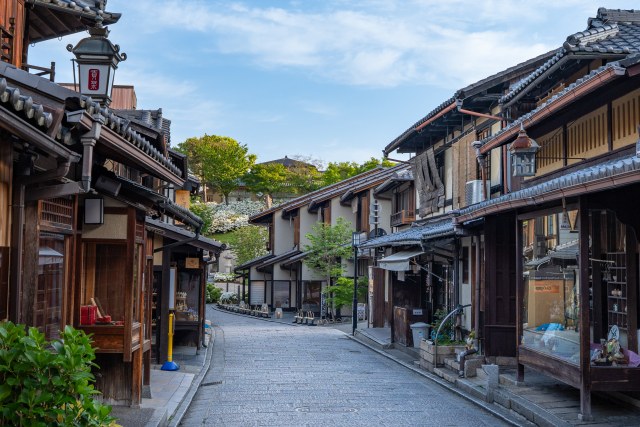
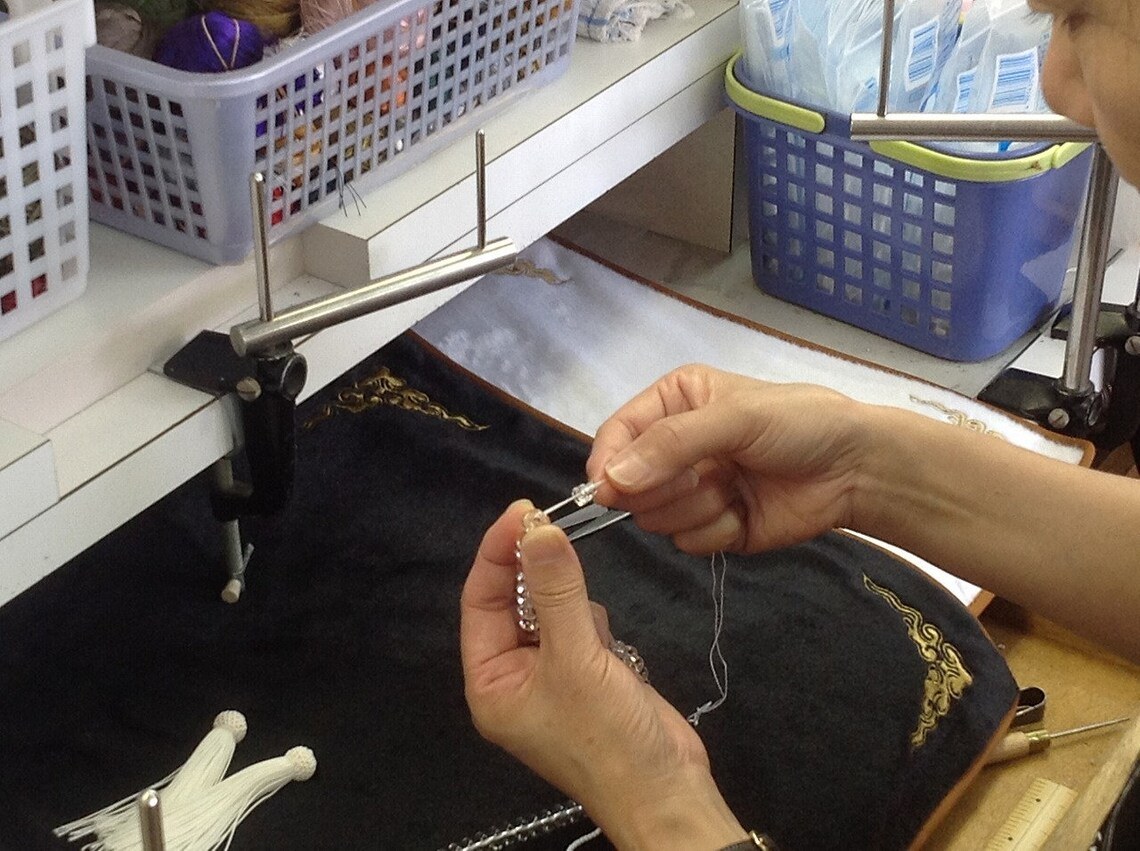
Kyoto has been a center of Japanese juzu-making for centuries. The city's beadworkers supplied the great temples of the old capital, and the craft that grew up around them, Kyō-juzu (京念珠, Kyoto juzu), is still associated with fine prayer beads today. The character of a Kyoto juzu lies less in any single material than in the craftsmanship carried through each stage — selecting and drilling the beads, making the tassel, and assembling the whole. Materials and styles vary widely; what shows is the quality of the making: how evenly the beads are matched, how the thread is strung, and how the piece balances in the hand.
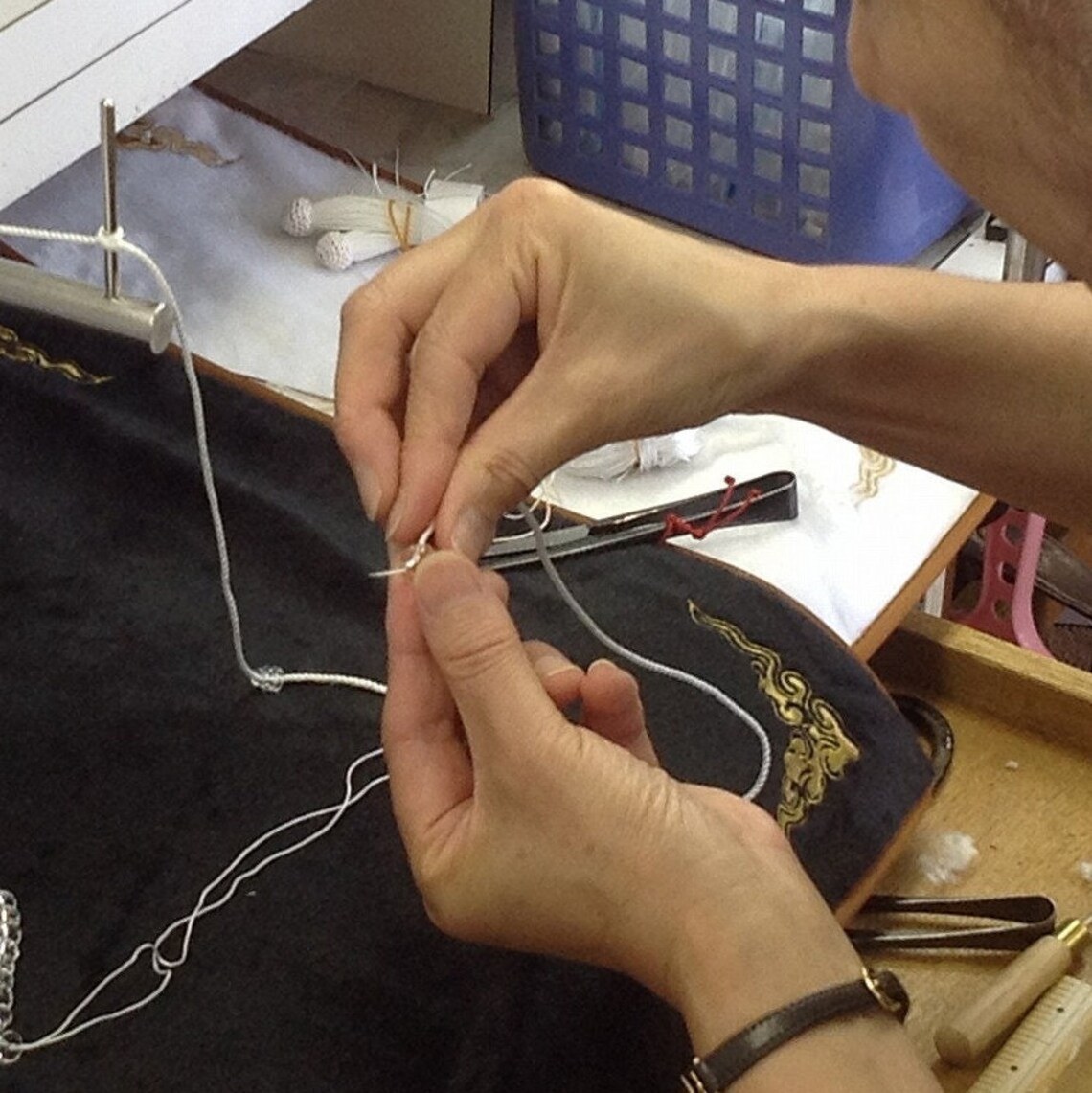
This standing is recognized formally. Kyō-juzu is a regional collective trademark, managed by the Kyoto Juzu Manufacturers' Cooperative (京都珠数製造卸協同組合), and juzu made by its member workshops carry the association's tag. The Kyoto juzu in our collection carry that tag — a simple assurance that a piece was genuinely made within the Kyoto tradition, rather than merely styled to resemble it.
2. The Parts of a Juzu
A juzu looks like a simple loop, but each part has a name and a place — knowing them makes the object easier to understand.
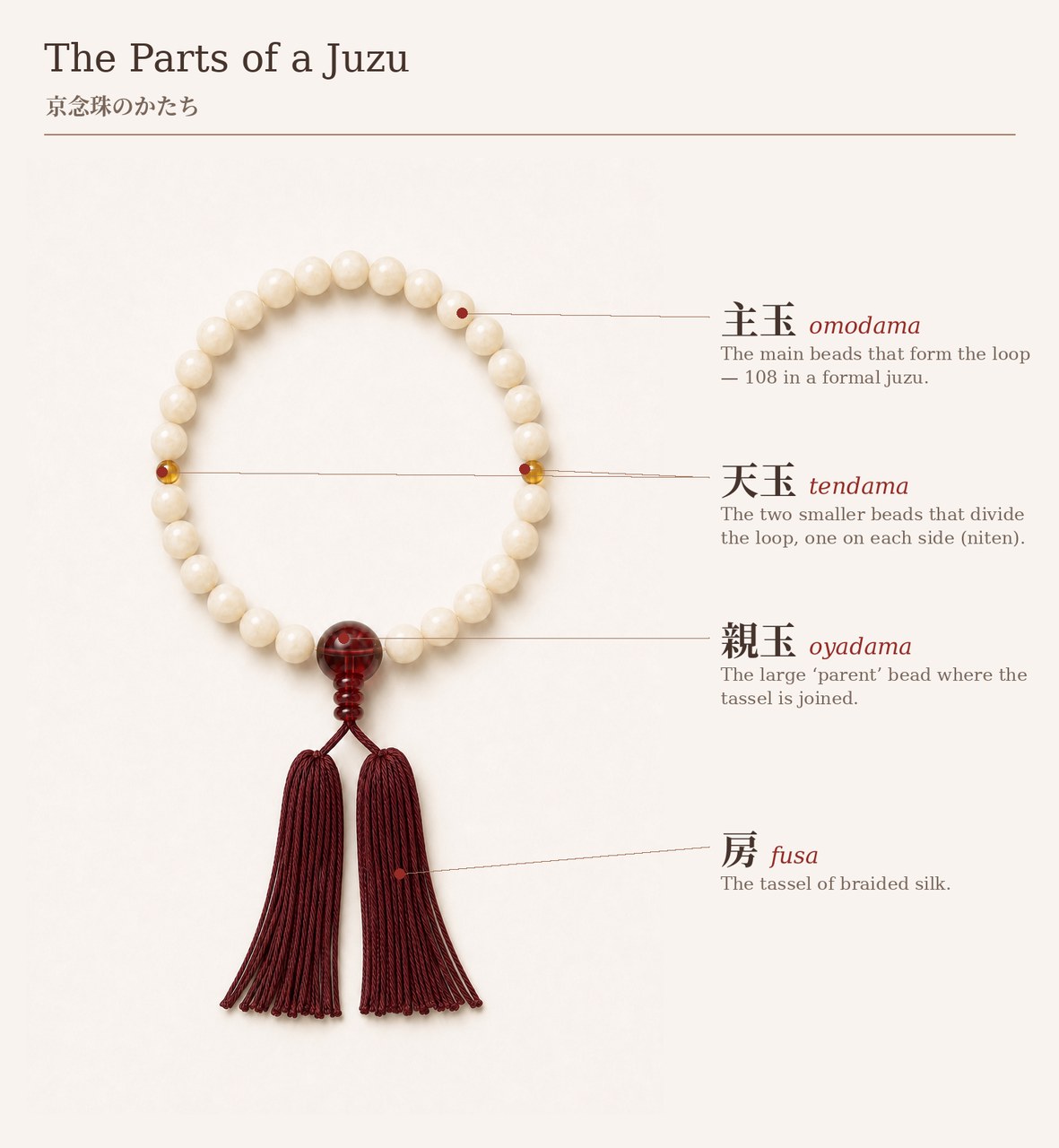
The oyadama (親玉, "parent bead") is the single largest bead, the anchor of the loop, from which the tassel hangs. The omodama (主玉, "main beads") form most of the loop; in a formal juzu they traditionally number 108, a number often said to represent the earthly desires (bonnō) or the stages of practice. Smaller tendama (天玉) punctuate the loop, dividing it at set points — in an informal juzu, the two small dividing beads are sometimes called niten. And the fusa (房) is the tassel that hangs below the oyadama — a signature of the style, made in various threads such as silk, rayon, or cotton.
3. Formal and Informal — Start Here
The single most useful thing to understand is that juzu come in two kinds, and the choice between them shapes much of the rest.
A formal juzu (honshiki, 本式) is made to the specification of one particular Buddhist school — Tendai, Shingon, Jōdo, Jōdo Shinshū, Sōtō, Rinzai, Nichiren, and others each have their own bead count, structure, and way of holding. A formal juzu is complete and correct for its school.
An informal juzu (ryakushiki, 略式) — often a single loop, the katate-juzu or "one-hand" beads — is generally usable regardless of school, and is widely chosen by people who do not know their family's school or who are buying their first juzu. Because customs can differ by school and by temple, anyone buying for formal use within a specific tradition may wish to confirm the right form — but for general use and for gifts, the informal single loop is the practical, widely-chosen answer.
4. Men's and Women's Juzu
In Japan, juzu are traditionally divided into men's and women's forms — this is a standard product distinction, not merely a label. The main difference is the size of the beads and the overall balance.
A men's juzu uses larger beads, roughly 10 to 12 mm across, often in deeper materials such as ebony or rosewood, for a substantial feel in a larger hand. A women's juzu uses smaller beads, roughly 6 to 8 mm, frequently in clear or softly colored stones such as crystal, and reads as finer. The bead counts and tassels differ by tradition as well.
Use the traditional men's/women's division as your starting guide, and then choose the one that suits you in the hand: a juzu that sits comfortably, with the tassel falling freely, is the right one.
5. Materials — Wood, Natural Stone, and More
Juzu are most often made of wood or natural stone, but other materials are used too — bodhi beads, amber, coral, pearl, shell, and glass among them. The choice is mostly one of feeling.
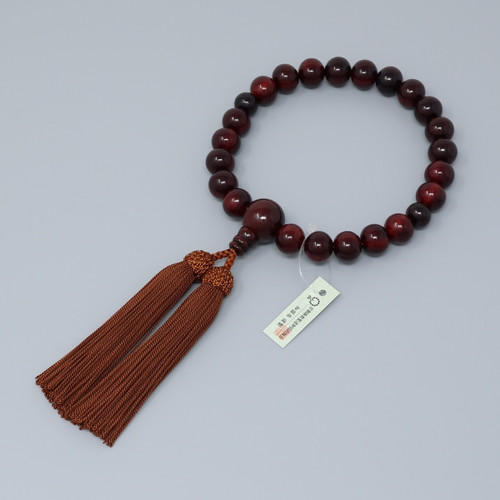
Wood is the older, warmer choice — ebony (kokutan), rosewood (shitan), sandalwood (byakudan), and bodhi beads (bodaiju), made from the seeds or fruits of plants bearing the "bodhi" name, such as star-moon bodhi and kongō bodhi. Wooden beads are light and quiet in the hand, and are often said to deepen in color and take on a soft sheen over years of being held.
Natural stone is cooler, clearer, and more various — crystal (suishō), agate, jade, lapis — prized for luminosity and for the small individuality of each polished bead. Clear crystal is a classic women's choice.
Amber deserves its own mention: warm and golden, it is fossilized tree resin — an organic material rather than a stone — long valued for its glow and its sense of age.
Neither wood nor stone is more correct. Wood for the person who likes an object that changes gently with time; stone for the person drawn to clarity and light in the hand.
6. Choosing by Stone — Birthstone and Meaning
For a stone juzu, there is a lovely additional way to choose, beyond size and color: by the stone itself. Kyoto juzu are made in a wide range of stones, and each is traditionally linked with certain associations — a language of stones that lets a juzu be chosen for a birth month or for a wish, the way one might choose a piece of jewelry. These associations are cultural traditions rather than medical claims, but they make a juzu a more personal object, and a more thoughtful gift.
A short guide to the stones we work with:
- Amethyst — the birthstone of February, purple and calm, traditionally linked with serenity and a clear mind.
- Rose quartz — soft pink, long associated with gentleness and affection; a favorite for a first juzu and a warm gift.
- Clear crystal (quartz) — associated with April and with clarity and purity; the classic bright, versatile choice.
- Citrine — the birthstone of November, warm gold, tied by tradition to brightness and good cheer.
- Lapis lazuli — deep blue flecked with gold, linked with September, and long associated with wisdom.
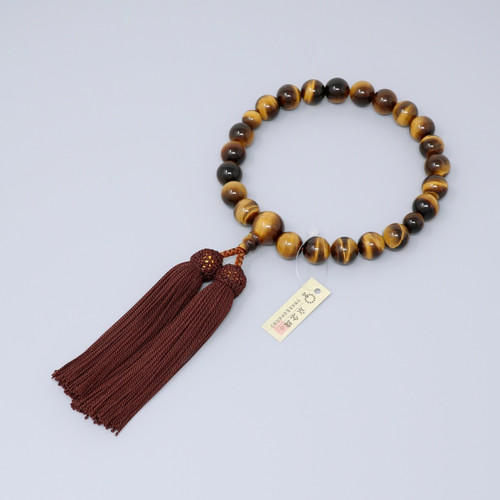
- Tiger's eye — banded gold and brown, traditionally regarded as a stone of courage; a popular men's choice.
- Jade — cool green, associated across East Asia with harmony and good fortune.
- Amber — warm and ancient, carrying associations of warmth and long life.
- Onyx and agate — grounding darks and banded stones, linked with steadiness and calm.
Choosing by birth month makes a juzu a natural personal gift — a February friend's amethyst, a grandmother's warm amber — while choosing by meaning lets the beads carry a quiet wish. Either way, the stone becomes part of why this juzu, and no other, is the one you choose.
7. The Tassel
The fusa (房), the tassel below the oyadama, is part of a juzu's character. It is made in silk, rayon, cotton, and other threads, in several forms: the atama-tsuki-busa (頭付房), a full tasseled head; the kiri-busa (切房), a neat cut tassel; and the bonten-busa (梵天房), a rounded pompom-like form. For an informal juzu the choice is largely one of taste — the tassel's fall and finish are among the small details that give a piece its feeling.
8. How to Choose — a Short Path
Bring the questions down to four, in order. Formal or informal? — informal unless you are buying for a school you already know. Size? — start from the men's/women's division; men's beads run larger, women's smaller, and the piece should sit comfortably in the hand. Material? — wood to change gently with you, stone for clarity and light; and if you choose stone, a birth month or a stone's meaning can guide you. Color and tassel? — for solemn occasions, quiet tones (black, brown, gray, purple, or clear) are the usual choice; for personal keeping, follow what draws you.
And one reassurance a Kyoto shop will often offer: an inexpensive juzu is not disrespectful. A modest wooden loop, chosen with care, is no less sincere than the costliest amber. What matters most in a juzu is the care with which it is chosen and kept.
9. As a Gift, and How It Is Held
A juzu can be a thoughtful gift — for a graduation, a milestone, or simply for someone drawn to Japanese craft and calm. Because an informal juzu is usable regardless of school, it can be given without knowing the recipient's tradition, which makes it easier to give than many people expect. A gift juzu is best presented in its box or pouch, with a short note explaining formal-versus-informal for a first-time owner.
In use, an informal single-loop juzu is generally held over the left hand with the tassel hanging down, or placed over both hands joined in prayer (gasshō). Both are accepted; customs can vary by school and occasion, and handling the juzu with care matters most. After use, wipe away any moisture or marks gently with a soft cloth and keep the juzu in its pouch or box. Store it away from direct sunlight, high heat and humidity, and sudden changes in temperature or humidity.
10. Frequently Asked Questions
Q: Can I use one juzu even if I attend services of different Buddhist schools?
Generally yes — an informal (ryakushiki) single-loop juzu is usable regardless of school, which is why it is the one most households own and the easiest to give as a gift. Only a formal (honshiki) juzu is tied to a particular school. For formal use within a specific school, it is worth confirming the right form.
Q: Is a cheaper juzu disrespectful?
No — Kyoto juzu shops say so plainly. Sincerity, not price, is what matters. A simple wooden juzu chosen and kept with care is entirely respectful; the range of prices reflects materials and craft, not degrees of devotion.
Q: What is the difference between a juzu and a juzu bracelet?
A traditional juzu is a full loop held in the hands. A wrist juzu (腕輪念珠) is worn on the wrist for everyday wear; it differs in form and use, and is not a substitute for a prayer juzu at formal occasions. For funerals or formal services, the traditional held single-loop juzu, or a formal juzu matched to your school, is the usual choice. Some shops also distinguish a wrist juzu from an ordinary fashion bracelet.
Q: How do I care for a juzu?
After use, wipe it gently with a soft cloth and keep it in its pouch or box, away from direct sunlight, high heat and humidity, and sudden changes in temperature or humidity. Silk tassels should not be tugged or crushed; a tangled tassel can be combed straight with the fingers. Natural stone tends to change less in appearance than wood, but the thread and tassel wear with use, so it is worth checking them from time to time.
Q: Men's or women's — does it really matter?
It is a standard traditional distinction, mainly in bead size and balance — women's beads roughly 6–8 mm, men's roughly 10–12 mm. Use the division as your guide, and then choose the piece that sits naturally in the hand.
Q: Can I choose a juzu by birthstone or by the meaning of the stone?
Yes, and it makes a lovely, personal choice — especially for a gift. A stone juzu can be chosen for a birth month (amethyst for February, citrine for November, and so on) or for a traditional association (rose quartz for gentleness, tiger's eye for courage, jade for harmony). These meanings are cultural traditions rather than medical claims, but they let the beads carry a quiet wish, the way a piece of jewelry might.
11. Editor's Picks — Three Kyoto Juzu
Three Kyoto-made juzu from our collection, arranged as a short path — an easy first loop, a formal juzu for a known school, and a stone juzu to choose by birth month.
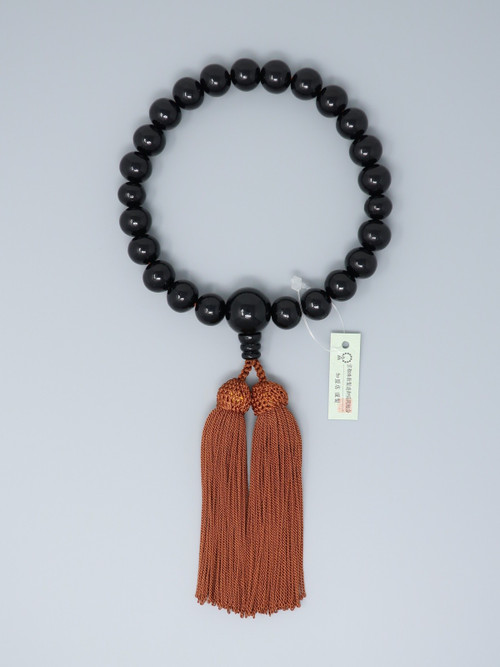
Pick 1 — Ebony Informal Juzu, an Easy First Loop. A Kyoto informal (ryakushiki) single loop in ebony — usable regardless of school, and a natural first juzu or gift. The dark wood is light and quiet in the hand, and warms in color over years of holding. If you are not sure where to begin, begin here. (See the juzu)
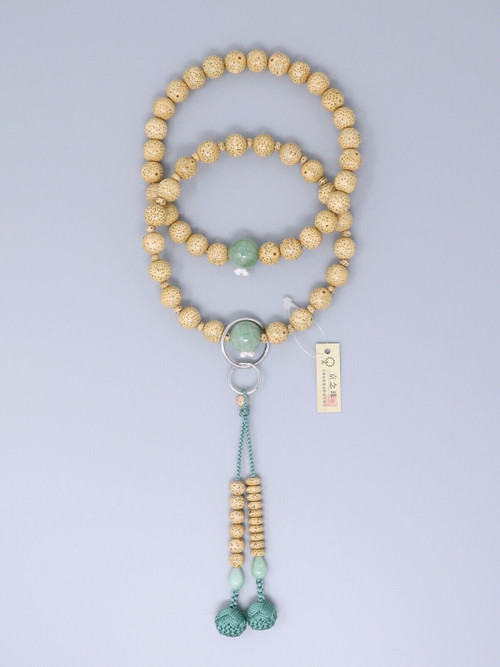
Pick 2 — Formal Jōdo-shū Juzu, for a Known School. A Kyoto formal (honshiki) juzu made to the Jōdo-shū form, in star-moon linden bodhi with jade — for when you or the recipient's school is clearly known. This is the register of piece a Kyoto shop is made for: complete and correct for its tradition, and finished to be handed down. (See the juzu)
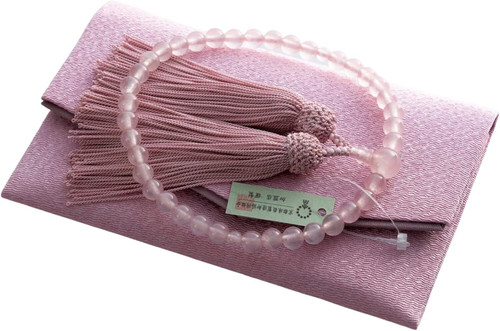
Pick 3 — Rose Quartz Juzu, the Personal Gift. A Kyoto women's single loop in rose quartz — soft pink, long linked with gentleness, and a warm choice for a first juzu or a gift. It is the most personal of the three: a stone to choose by birth month or by meaning. For a men's stone juzu in the same spirit, the tiger's eye men's juzu — banded gold and brown, a stone of courage — is its natural counterpart. (See the juzu)
12. Closing
A juzu rewards a little understanding: know the few things that matter — a formal juzu if your school is clear, an informal single loop if you would like one usable across schools; then wood or stone, and a stone by birth month if you like — and choosing one becomes simple, whether for quiet keeping or as a gift with real meaning. If you would like help choosing a juzu for yourself or for someone else, we are always glad to help.
— from Osaka, Team Manekineko-Ai