
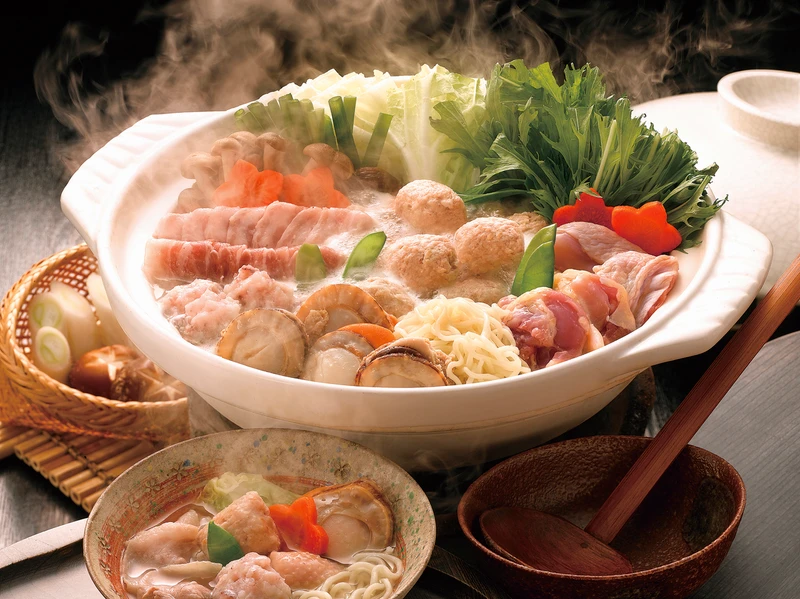
What would make everyone linger over one more bowl? Steam rises from the pot in the middle, with small bowls waiting beside each pair of chopsticks.
Japanese hot pot at home begins with that shared space. There is something to pass, something to dip, and room for the next helping. The pot draws everyone toward the center; the bowl in front of each person makes the meal their own.
Nabe is the word you will meet for Japanese hot-pot dishes. For a first evening, three names offer useful starting points: yosenabe, shabu-shabu, and sukiyaki. Each suggests a different flavor, and a slightly different place for the small bowl beside your plate. Choosing the one that sounds good is a more inviting beginning than assembling an entire new cupboard.
Three kinds of nabe for a shared table
Picture a light broth with fish, tofu, and vegetables. A cod yosenabe recipe from Japan’s Ministry of Agriculture, Forestry and Fisheries brings those ingredients together with mushrooms and greens. Soy sauce and salt season the broth; ponzu is an optional addition at the table. It is one example of yosenabe, a mixed hot pot, rather than a fixed list every household must follow.
For a reader drawn to broth and a varied bowlful, that is an appealing place to start. Imagine a piece of fish, a fold of cabbage, and tofu sharing the same little bowl. The pleasure is in the contrast within that one serving: soft tofu beside leafy cabbage, a piece of fish, then a spoonful of broth. There is room to notice each ingredient.
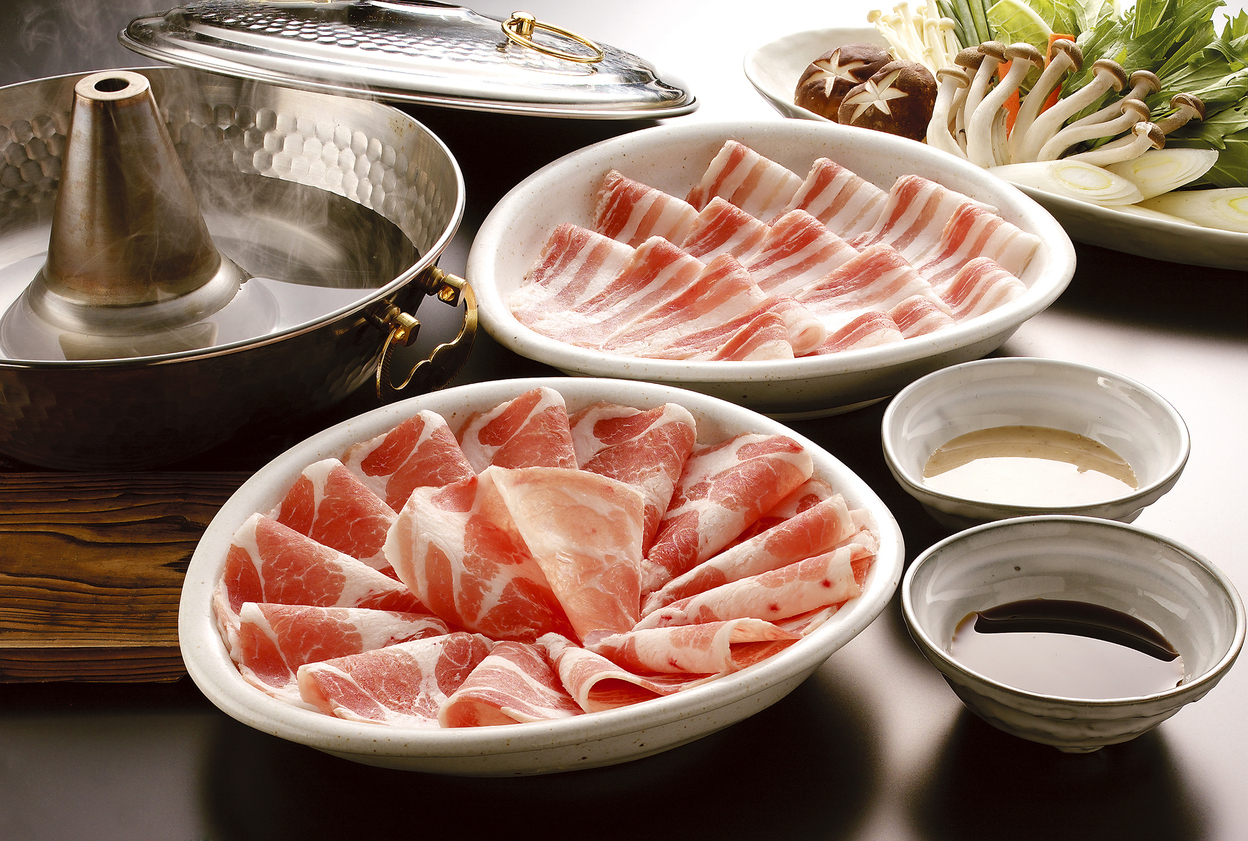
Shabu-shabu offers another direction: thinly sliced meat, vegetables, and tofu in a clear broth, with ponzu or sesame sauce alongside. Here, the dipping bowls are part of the picture from the beginning. One holds a sharper, citrus-led flavor; another offers sesame richness. The interest lies partly in moving between the pot and those separate tastes.
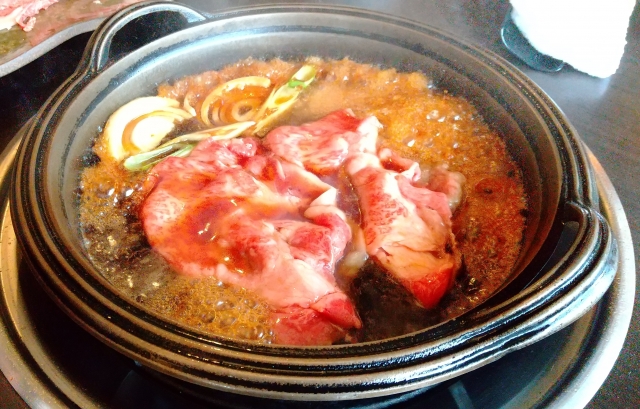
Sukiyaki takes a sweeter, more savory route. Beef and vegetables meet a seasoning of soy sauce, mirin, and sugar, often called warishita. Its darker sauce makes a different visual impression from the clear broth of shabu-shabu. There are regional approaches to preparing it, but a first introduction need not become a map of every variation.
These three names are invitations to choose a mood: a mixed bowlful, a meal with dipping sauces, or sweet-savory richness. Once a dish has caught your attention, a dedicated recipe can supply its quantities and cooking directions. This is the table around that recipe: the pot, the bowls, and the space between them.
Do you need a donabe?
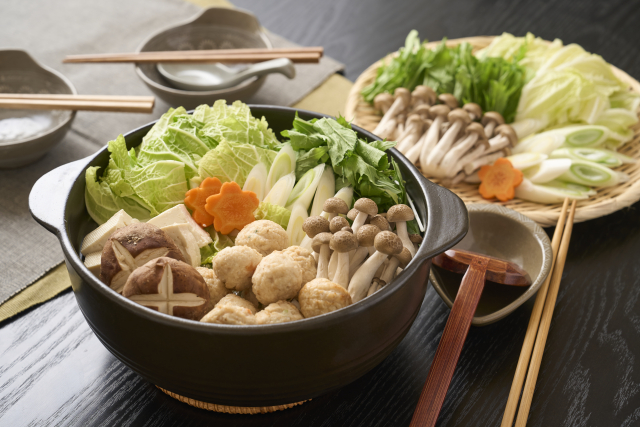
A donabe is a Japanese earthenware cooking pot. It can be a lovely centerpiece, but it is not a requirement for enjoying nabe. A suitable pot already in the kitchen may be the starting point for the recipe you choose. The shared meal does not depend on everyone owning the same kind of cookware.
It helps to keep the two words separate. Nabe names the meal here; donabe names a type of vessel. A picture of a clay pot may capture the atmosphere you want, without becoming a shopping list that has to be completed before dinner.
For anyone considering a donabe, the product’s own directions govern heat-source compatibility, seasoning, and care. Appearance alone cannot tell you whether a particular pot suits your setup. The Donabe & Clay Pots collection is a place to explore the vessel as part of your table, with those individual details in mind.
There is also a visual choice to enjoy. A dark pot can give pale tofu and greens a strong outline. A lighter one may sit quietly beside patterned bowls. Neither needs an elaborate surrounding display. A pot with room around it, a serving utensil, and a few bowls already give the table a sense of welcome.
Explore our Donabe & Clay Pots collection
A bowl for every place at the table
The large pot gets the first glance. The small bowl is where the meal comes closer.
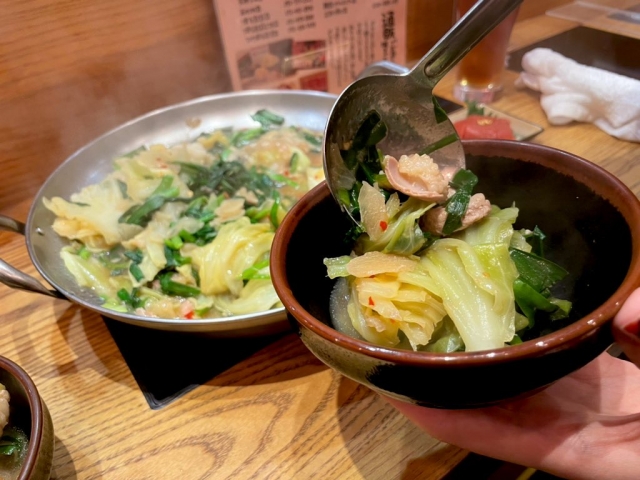
Tonsui are small Japanese hot-pot bowls, often recognizable by a single projecting lip or handle. In this setting, they receive a portion from the shared pot. Their shape becomes part of the meal as soon as they hold a little broth and a few pieces from the pot.
Think of a serving of tofu and vegetables, with a little broth visible around them. A bowl’s interior is now part of what you see: a pale surface beneath dark mushrooms, or a darker glaze beside cabbage and tofu. The food and the vessel introduce each other without a separate explanation of pottery.
A familiar small bowl can also serve a place at the table. If choosing something specifically for hot pot, the useful question is what that person will receive: a portion with broth, a few dipped pieces, or a separate sauce. Those are different arrangements, and there is no need to crowd them into one tiny dish.
The Tonsui, Hot Pot Bowls collection offers a way to consider that personal part of the meal. A matching set can keep the table quiet; different bowls can give each place its own character. This is a styling choice, not a rule about the proper way to eat.
One filled bowl in front of you, with the shared pot still in reach, changes the scale of the dinner. The pot belongs to everyone; this helping belongs to you. A little space beside the bowl leaves room for chopsticks, a spoon, or a sauce dish without making the place setting feel crowded.
Which dipping sauce suits the pot?
For shabu-shabu, ponzu and sesame sauce provide two familiar starting points. Ponzu brings a citrus note; sesame sauce offers a richer, nutty direction. Separate dishes keep those choices visible and let the meal’s different tastes have their own space.
A mixed hot pot may already have a seasoned broth, so a dipping sauce need not be the center of every bowl. The cod yosenabe example includes optional ponzu, grated daikon, or shichimi, a Japanese spice blend. That small detail leaves room for contrast without suggesting that every nabe requires the same accompaniments.
Two little sauce dishes beside a serving bowl can make an inviting place setting. A dark sauce against a pale glaze, a beige sesame sauce in a deeper bowl: small differences give the table interest. The dishes do not have to match perfectly to belong beside each other.
Sukiyaki’s sweet-savory seasoning is already part of its identity. A portion of beef, tofu, and vegetables can take the foreground in its serving bowl. The arrangement need not repeat the two-sauce setting of shabu-shabu. The dish itself gives the table a different character.
The last of the pot: rice or udon
The pot need not disappear as soon as the main ingredients are gone. Shime is the closing part of a meal; for some hot pots, rice or noodles make that final bowl.
MAFF’s white-fish dumpling hot pot suggests rice for zosui, a rice soup, or udon as a finish. It is one way for the same meal to take another form, with the broth still at its center.
Imagine udon in a little remaining broth, with one small serving beside the pot. Earlier, the bowl was full of vegetables and tofu. Now there are broad, pale noodles, a little green garnish, and a spoon for the broth. The table has grown quieter, but the meal is still unfolding.
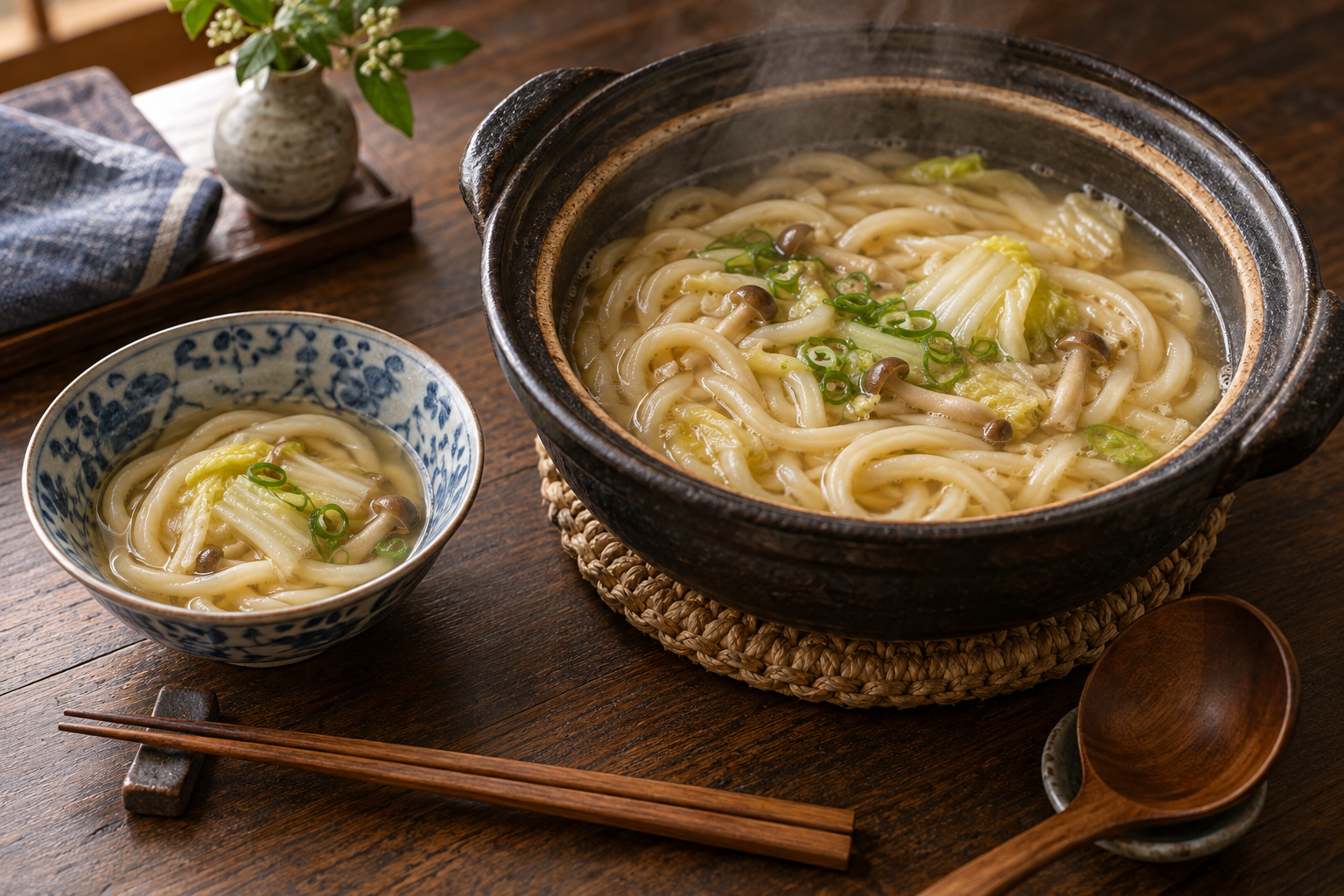
Rice and udon are alternatives here. There is no need to show both, or to imply that every kind of nabe finishes in exactly the same way. The finish can be small. It only needs to make sense with the pot you have enjoyed, leaving the evening with a final taste rather than a whole new course.
Japanese hot pot FAQ
Q: What is Japanese hot pot called?
The broad Japanese term is nabe, used for both the pot and the meal shared from it. Donabe names a clay cooking pot. It is one possible vessel for nabe, not the name of every Japanese hot pot.
Q: What goes into Japanese hot pot?
There is no single ingredient list. One MAFF yosenabe example brings fish, tofu, mushrooms, and vegetables together in seasoned dashi. Shabu-shabu and sukiyaki make different choices, so let the style of pot guide what you set out.
Q: Is shabu-shabu Japanese hot pot?
Yes. MAFF describes shabu-shabu and sukiyaki as two hot pot dishes. Shabu-shabu pairs thin slices of meat and vegetables with a relatively light broth and individual dips such as ponzu or sesame sauce.
Q: Is Japanese hot pot spicy?
Not by definition. The examples here range from a seasoned yosenabe broth to shabu-shabu with chosen dips and sweet-savory sukiyaki. Whether your bowl has heat depends on the broth and condiments you choose.
Q: How do you eat Japanese hot pot?
Serve cooked food from the shared pot into a small individual bowl, such as a tonsui. Use a separate sauce dish when the style calls for one. Keep utensils that handle uncooked ingredients separate from those used for eating.
A table to return to
Perhaps the first thing that caught your attention was the steam, or the glossy sauce of sukiyaki. Perhaps it was a small bowl with a shape you had not noticed before.
The evening can begin with that one detail. A dish that sounds inviting, a pot suited to it, and bowls that leave each person a little space of their own. The next helping is close enough to share.
May there be another bowl, and time to stay for it.
Explore our Tonsui, Hot Pot Bowls collection →
Explore our Donabe & Clay Pots collection →