
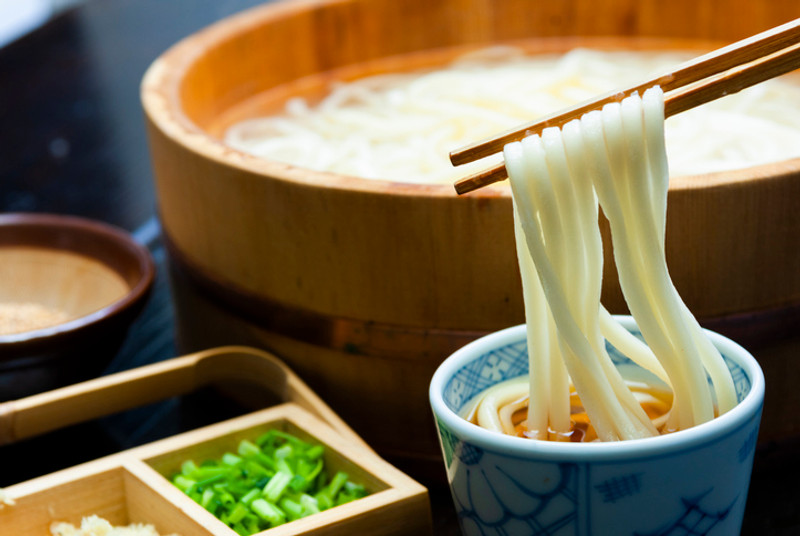
Wheat flour, salt, water—simple ingredients, endless personalities.
This friendly primer covers what udon is, how it’s made, quick regional styles, and easy tableware tips. We’ll end by heading toward Sanuki in Kagawa.
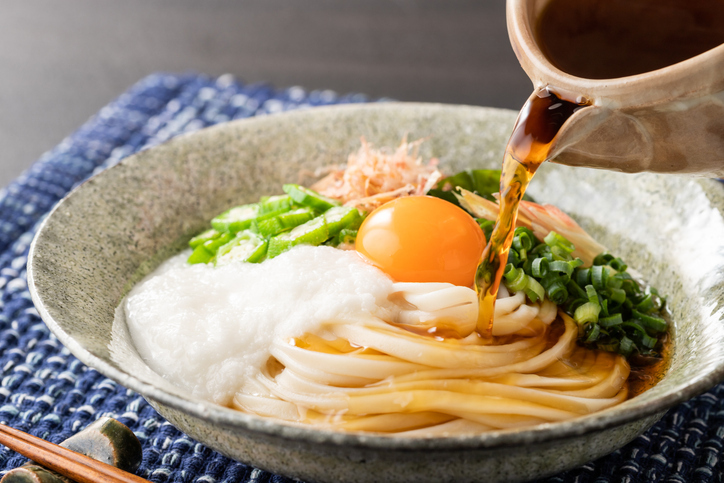
What is udon?
Thick, chewy Japanese wheat noodles. Texture changes with flour blend, salt level, resting time, and cutting width.
Think square-edged and bouncy Sanuki (Kagawa), silky hand-stretched Inaniwa (Akita), wide-flat Kishimen (Aichi), and soft, comforting Hakata (Fukuoka).
How to make udon (at a glance)
- Salted water: slightly salty to tighten the dough.
- Mix → knead: bring the dough together quickly—don’t overheat it.
- Foot-press: even the gluten; this builds chew.
- Rest: let the dough relax; rolling becomes smooth.
- Roll & cut: thickness and width decide the bite.
- Boil & chill: lots of boiling water; for cold dishes, finish in ice water for a crisp snap.
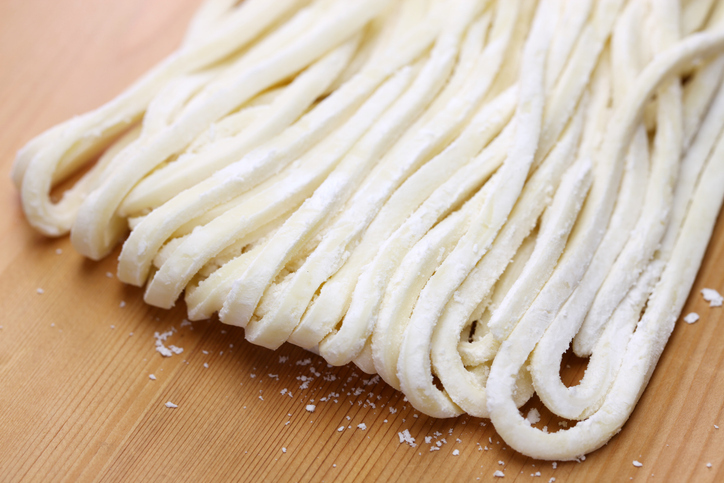
Home tip: a bigger pot + more water + a strong rolling boil. These three alone level up your bowl.
Regional style quick guide
- Kagawa | Sanuki: square-edged medium-thick to thick; lively chew; clean iriko (dried anchovy) broth. Kake (hot broth) / bukkake (thick sauce poured over) / kama-tama (hot noodles with raw egg).
- Akita | Inaniwa: hand-stretched, fine; silky and elegant; great chilled or on a bamboo tray.
- Aichi | Kishimen: wide, flat ribbons; fluttery bite; aromatic bonito broth; hearty miso-nikomi, too.
- Mie | Ise: extra thick and soft; a dark, rich sauce clings to the noodles.
- Gunma | Mizusawa: glossy “tsuru-mochi” bite; chilled with soy or sesame dip.
- Gunma | Himokawa: ultra-wide ribbon sheets; fun for dipping and hot pots.
- Fukuoka | Hakata: softer noodles with airy chew; beloved with burdock-root tempura.
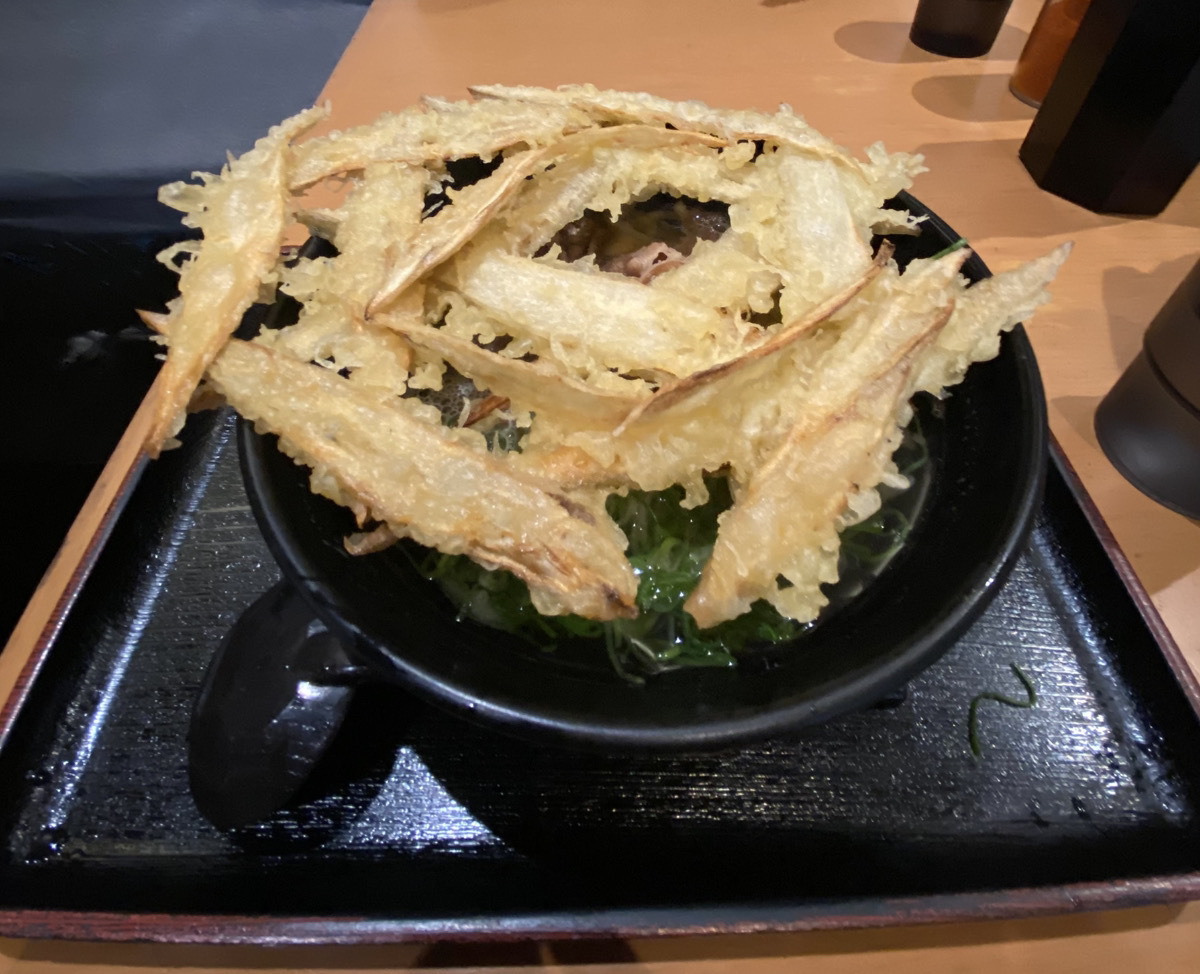
"Hakata gobo-ten udon from Fukuoka — burdock tempura on soft noodles in light broth"
Shops vary—flour blends, resting, and cutting widths change the vibe even within the same region.
Broth culture: Western Japan (Kansai — Osaka/Kyoto area) vs. Eastern Japan (Kanto — Tokyo area)
- Western Japan (Kansai): pale yet deep umami from kombu + bonito (often iriko in some coastal areas). Lets the noodle speak.
- Eastern Japan (Kanto): a bolder soy profile with bonito/soda-bonito aroma for a sharper edge—great with tempura or sweet fried tofu.
Tip: you can also phrase it as “Western-style broth” and “Eastern-style broth” when readers are new to the terms Kansai and Kanto.
Editor’s picks for better udon

Mino-ware “Ginsai Black” Noodle Bowl
A wide mouth with just-right depth—great for kake (hot broth), bukkake (thick sauce over noodles), and kama-tama (hot noodles with raw egg).
The calm metallic sheen flatters white noodles and rising steam.
Restaurant-grade build brings a “special” look to everyday bowls.

Yamanaka Lacquerware Pair Chopsticks (Mt. Fuji)
An auspicious Mt. Fuji motif with a refined gloss.
Non-slip tips make the noodle “lift” stable—great for guests and gifts.
Carefully handcrafted in Japan.
Pairing idea: the calm Ginsai Black bowl + the Mt. Fuji chopsticks—clean for chilled udon, rich for hot bowls.
Quick FAQ
Is udon gluten-free?
Traditional udon uses wheat flour, so it contains gluten. Look for labeled gluten-free alternatives if needed.
What’s the difference between udon and ramen?
Ramen uses alkaline kansui and is thinner/springier; udon is thicker and chewy without kansui.
Best bowl size for a single serving?
Roughly 18–21 cm diameter with enough depth to hold broth and toppings.
Onward to Kagawa: Sanuki mornings and steaming kama-age
Next comes a field note from Kagawa—early-morning noodle shops, fresh kama-age (pulled straight from the pot), and that crisp iriko (dried anchovy) edge.
I’ll share bowls worth traveling for and the feel of true Sanuki chew.